

Voseo Morphology: Present, Commands, and Subjunctive
The reader can conjugate and recognize voseo forms in major patterns.
Long-form Spanish articles for learners who want structure, evidence, examples, and linguistic explanations that do not collapse into slogans.
23 articles tagged Dialect & variation.
The reader can conjugate and recognize voseo forms in major patterns.

The reader can use and interpret “take” verbs with regional awareness.
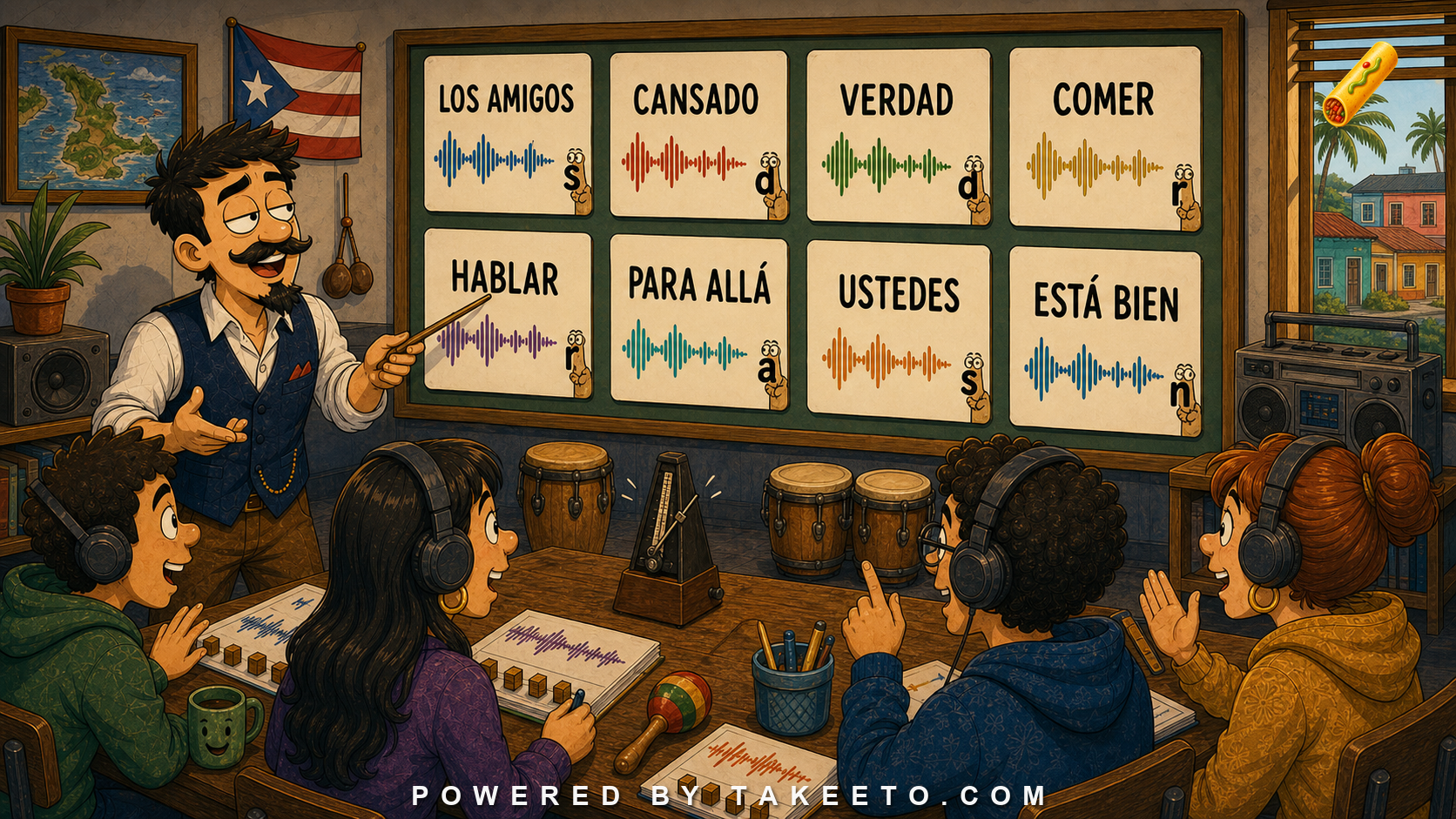
The reader can analyze Caribbean pronunciation without dismissing it as merely fast.
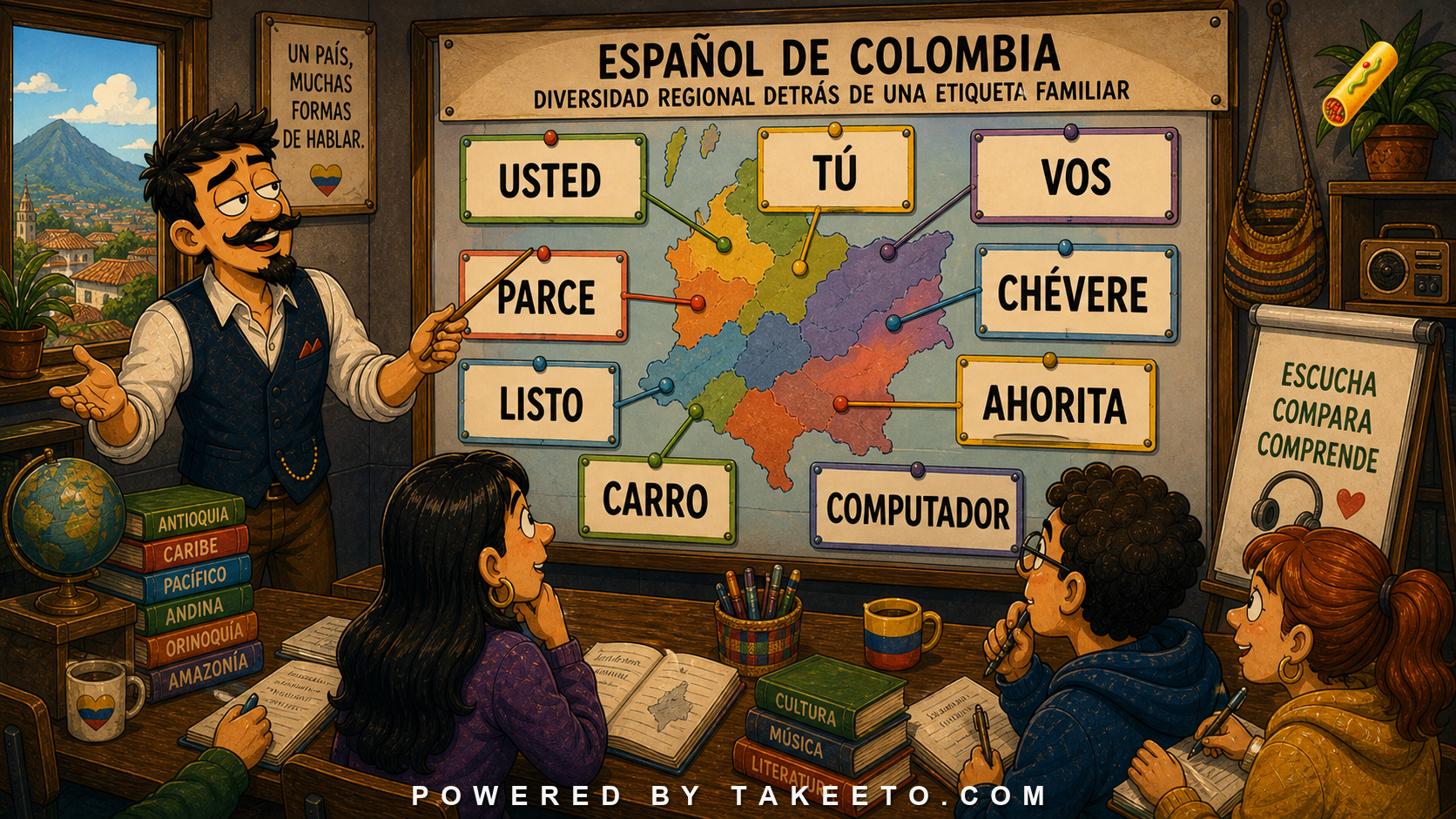
The reader sees Colombian Spanish as multiple regional systems with different prestige associations.
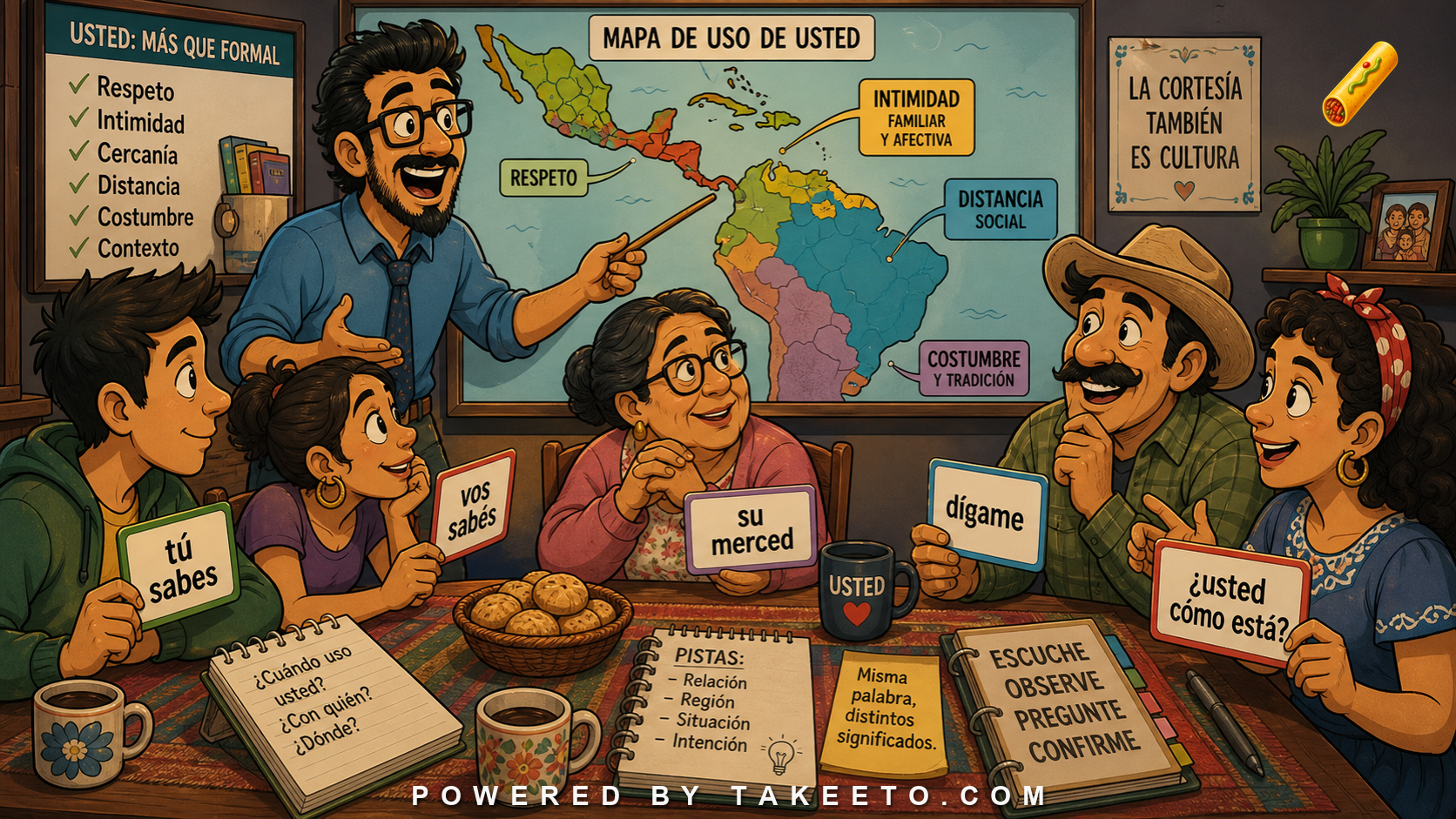
The reader understands usted as a regional social tool, not only formal distance.
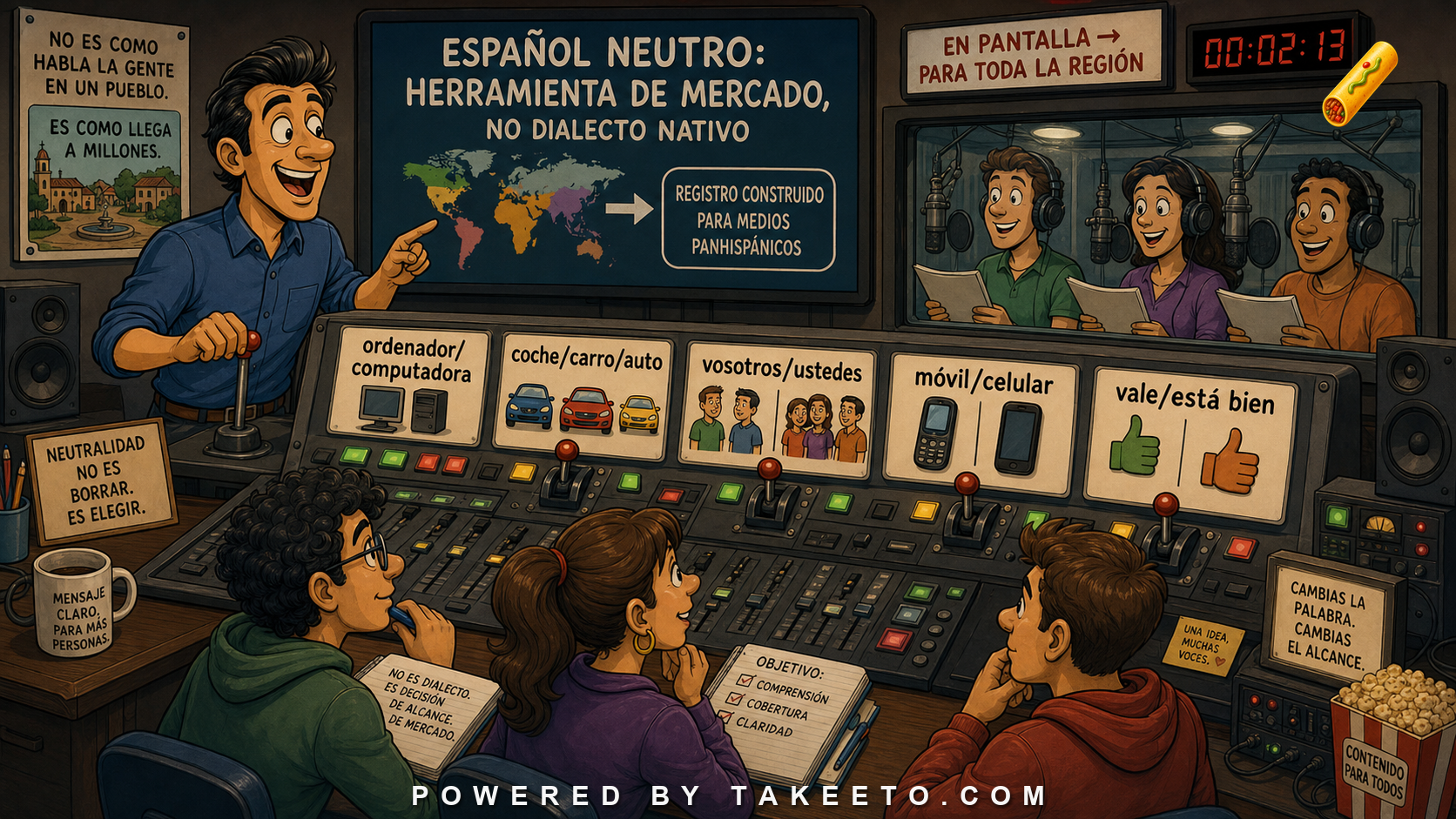
The reader understands neutral Spanish as a constructed media register.
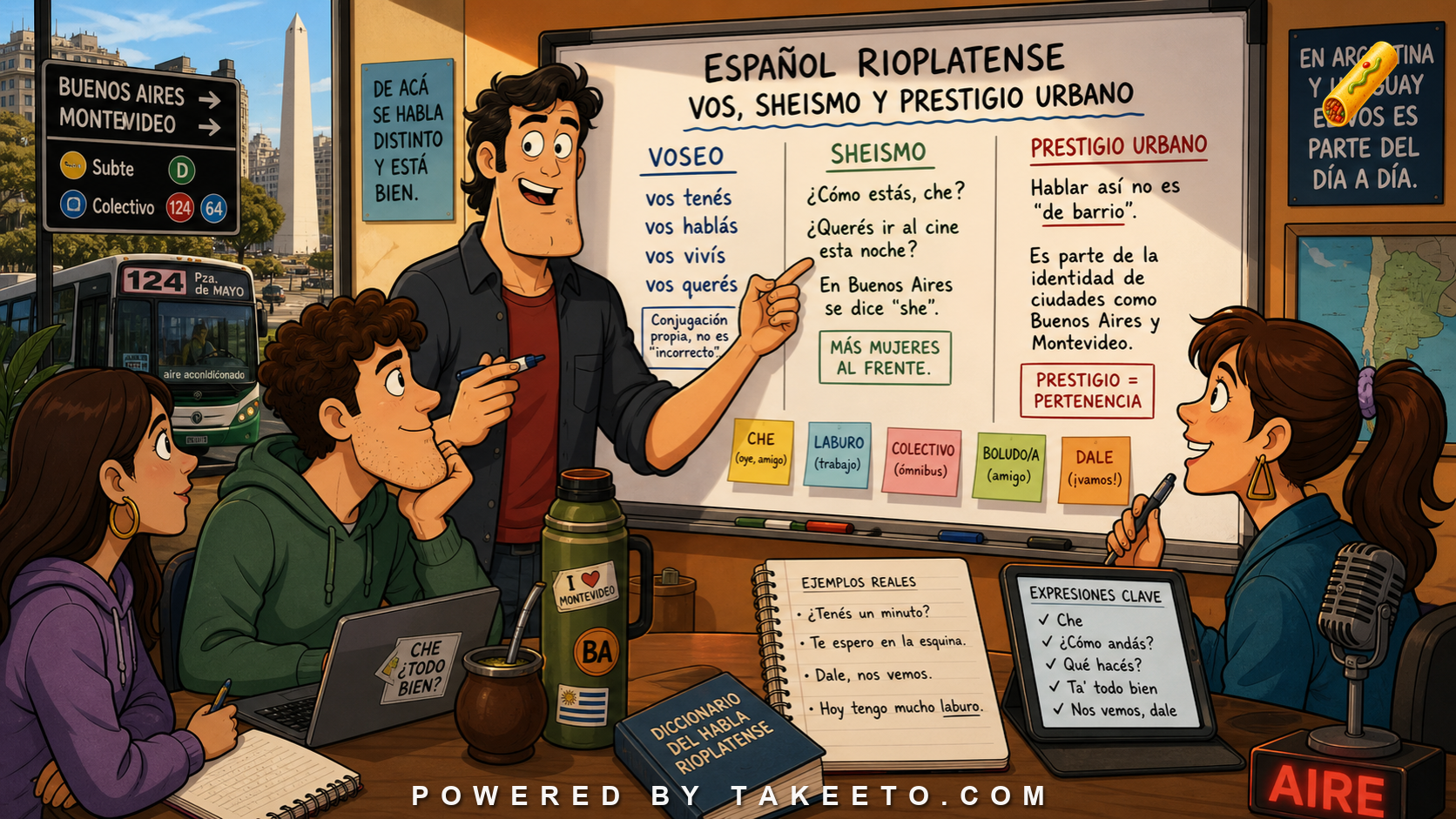
The reader can identify major features of Argentine and Uruguayan Spanish.
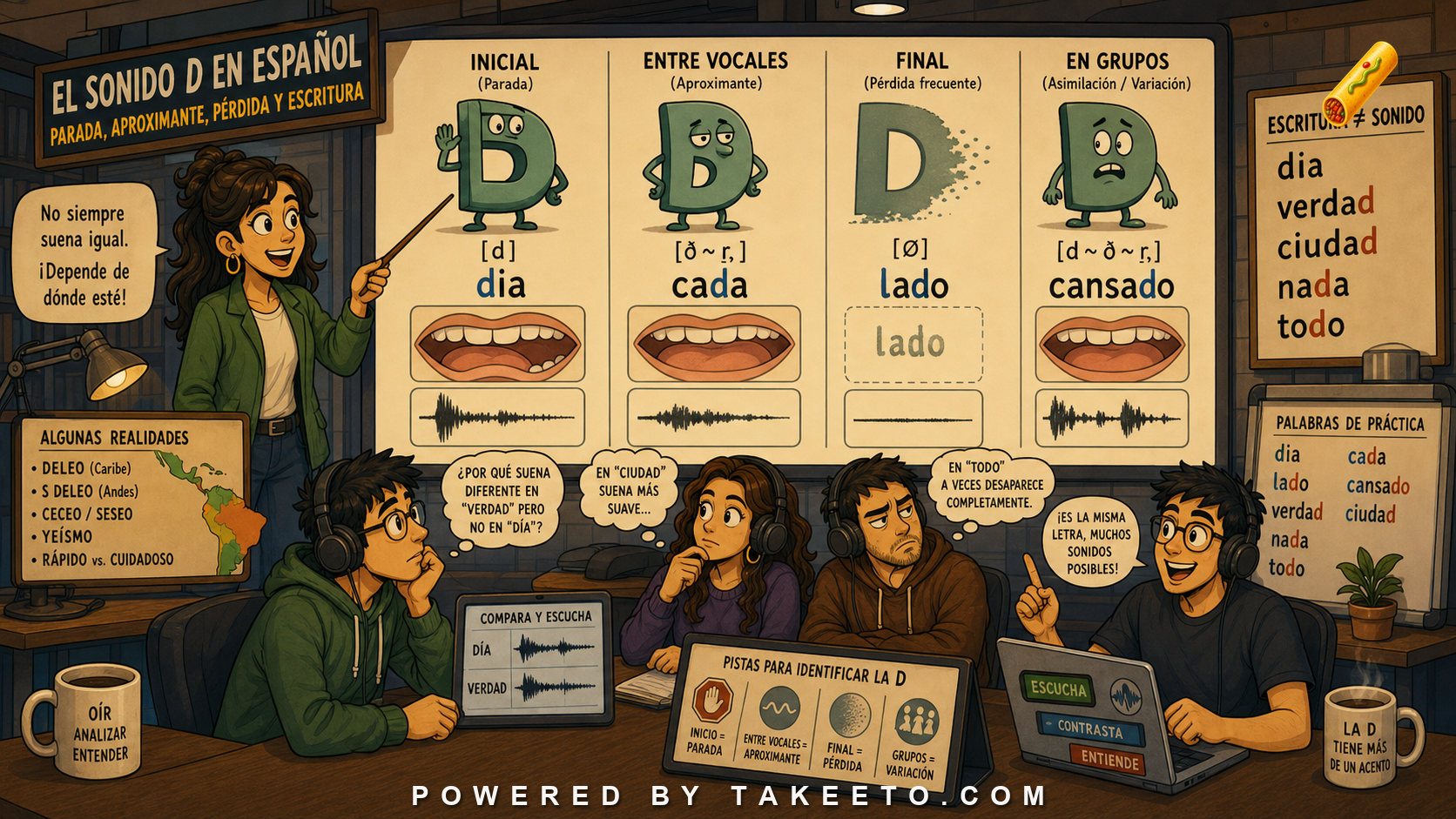
The reader can hear and analyze Spanish d variation across contexts and regions.
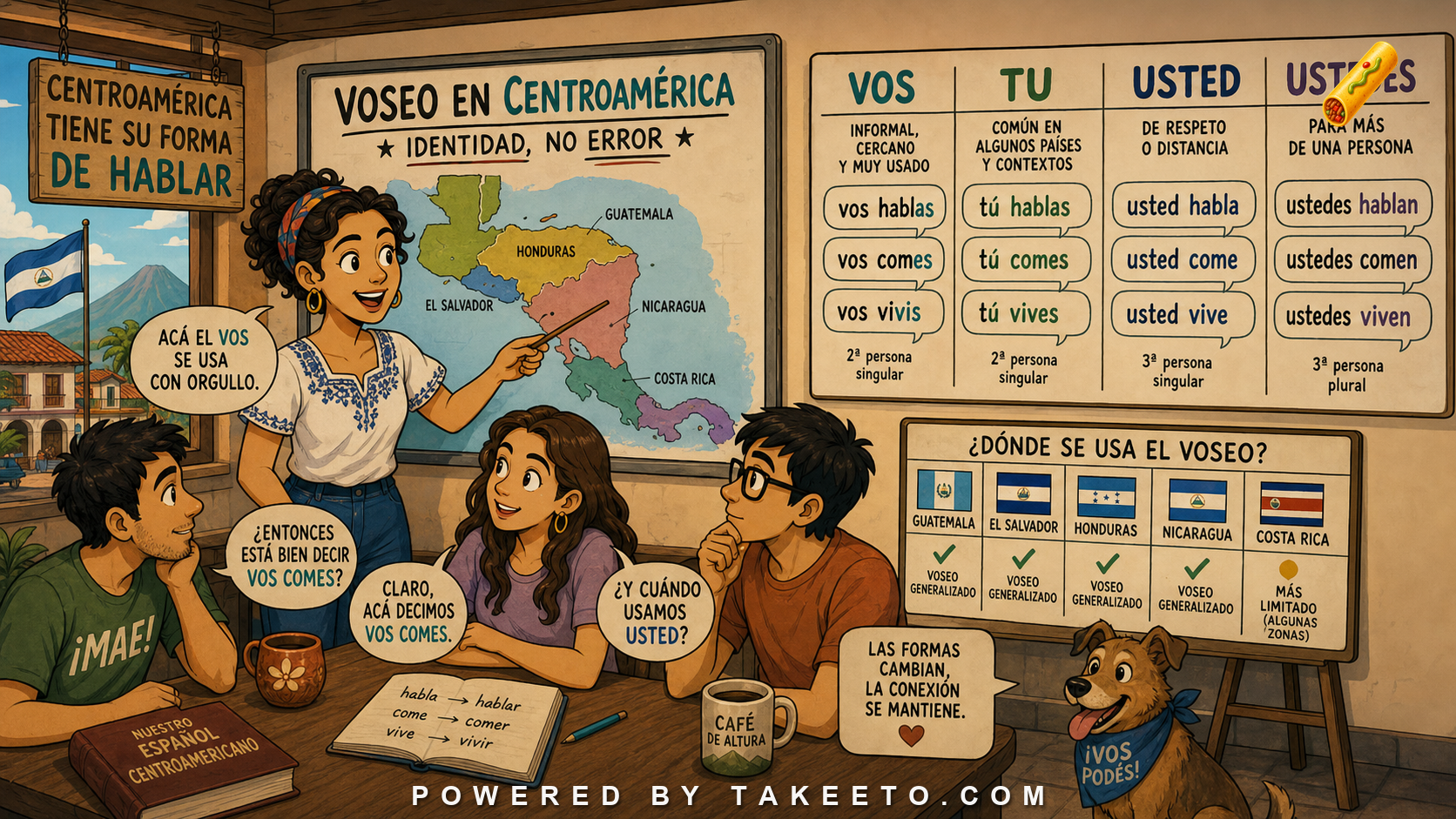
The reader can understand voseo beyond Argentina.
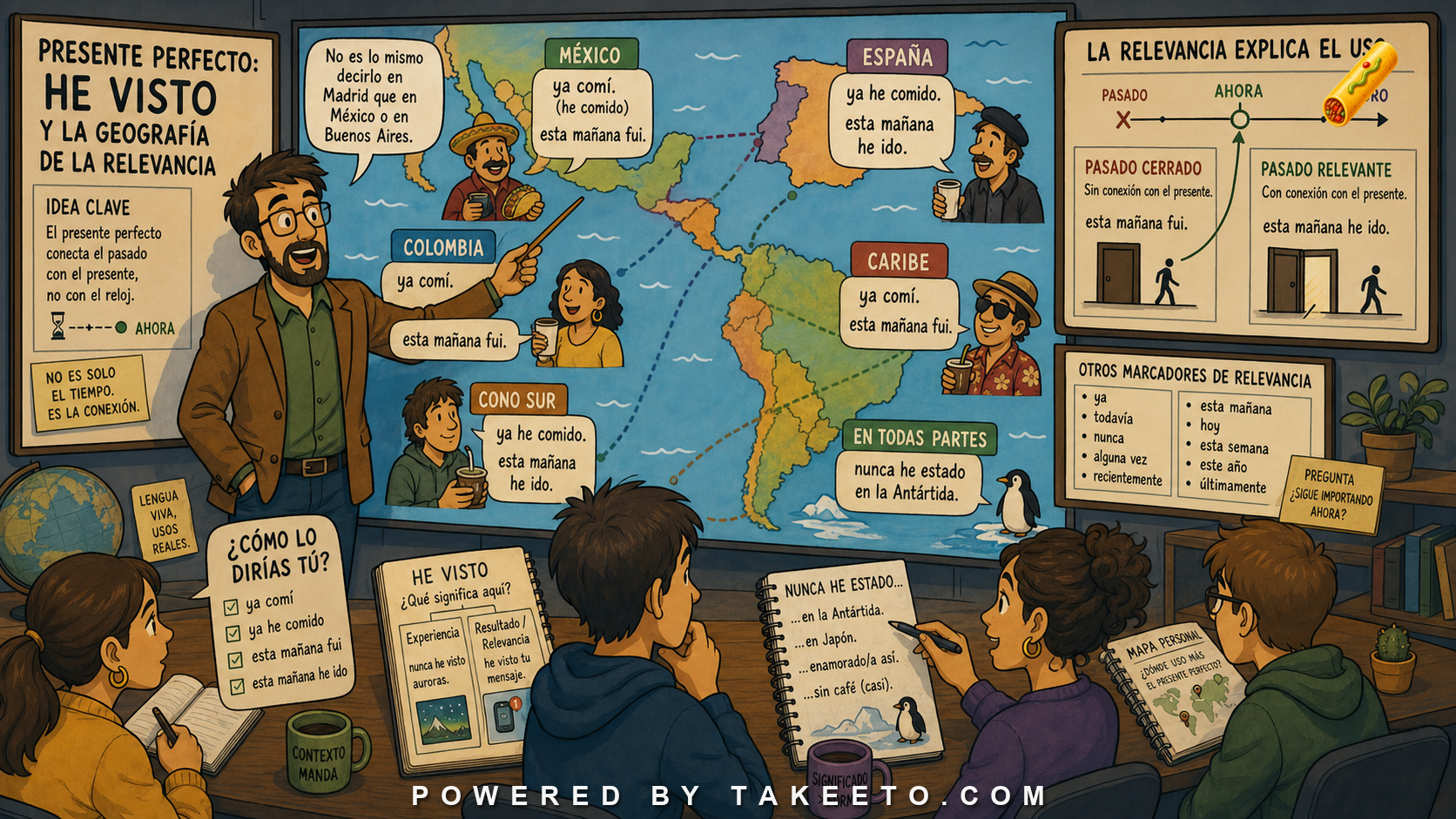
The reader understands present perfect as a tense whose usage varies sharply across the Spanish-speaking world.
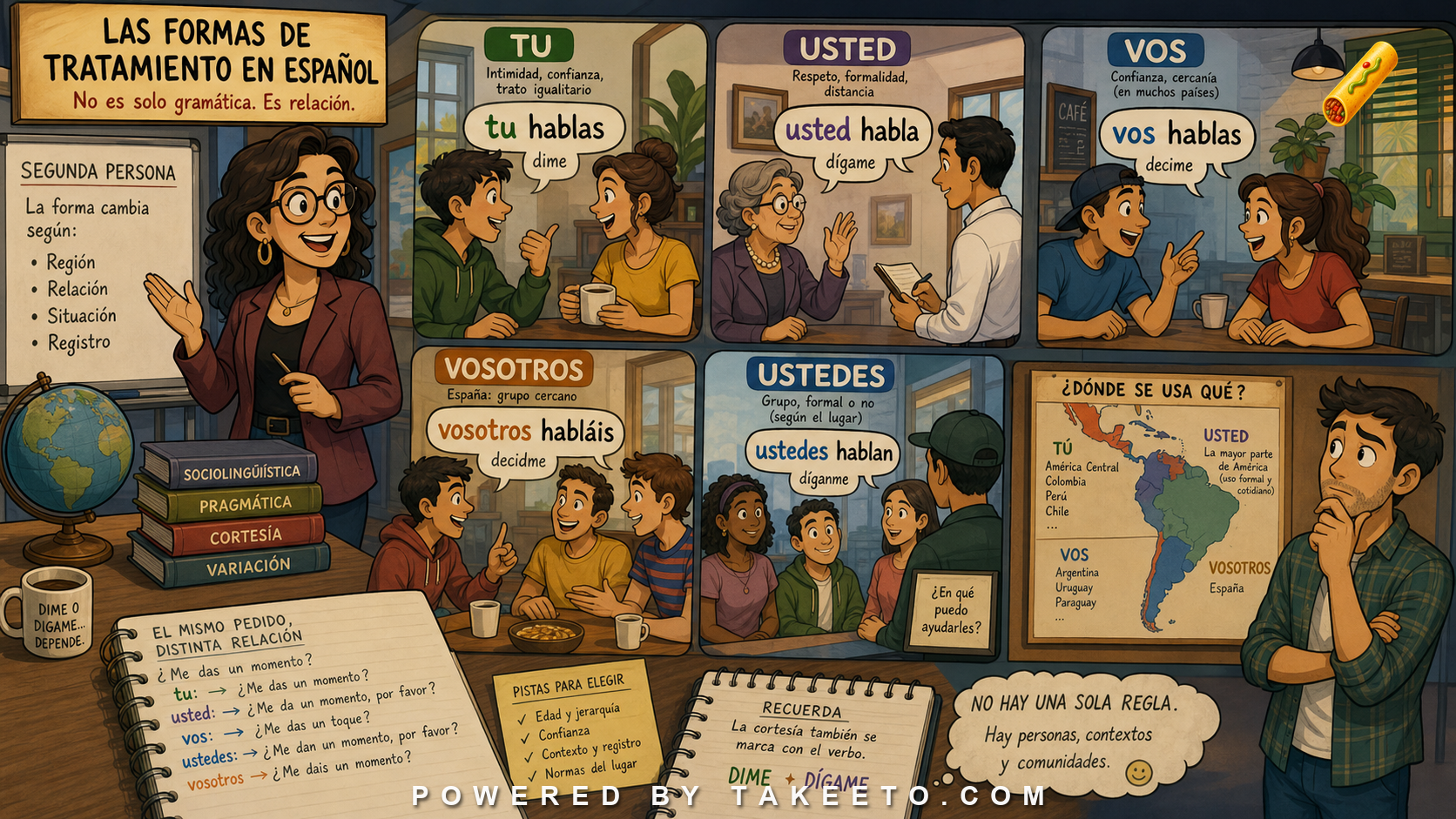
The reader can describe Spanish second-person systems across regions and social contexts.
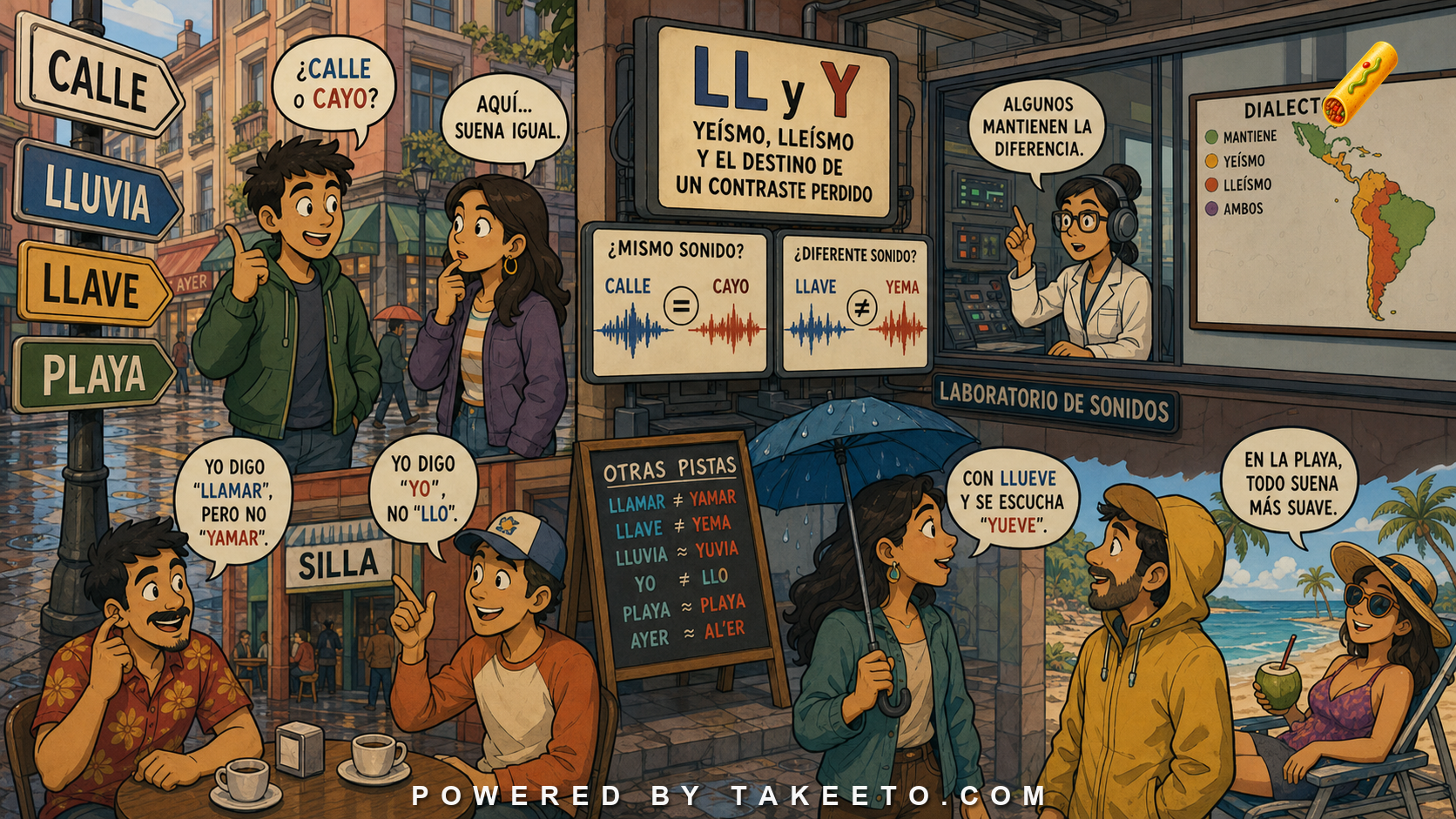
The reader understands why calle and cayó sound alike for many speakers but not all.

The reader can recognize vosotros forms and understand their place in Spain Spanish.

The reader can separate real systemic differences from stereotypes.

The reader understands Andean Spanish as shaped by geography, history, and indigenous-language contact.
The reader can use country names, demonyms, and regional adjectives accurately.
The reader can explain why casa and caza may or may not sound alike depending on region.
The reader can identify major object-pronoun variation and its social meaning.
The reader can analyze U.S. Spanish as a real Spanish-speaking ecology.
The reader can choose a primary Spanish model while remaining broadly literate.
The reader understands Mexican Spanish as internally diverse and globally influential.
The reader can choose speech verbs according to content, interaction, and region.
The reader can approach Chilean Spanish as a coherent system rather than a comprehension failure.