
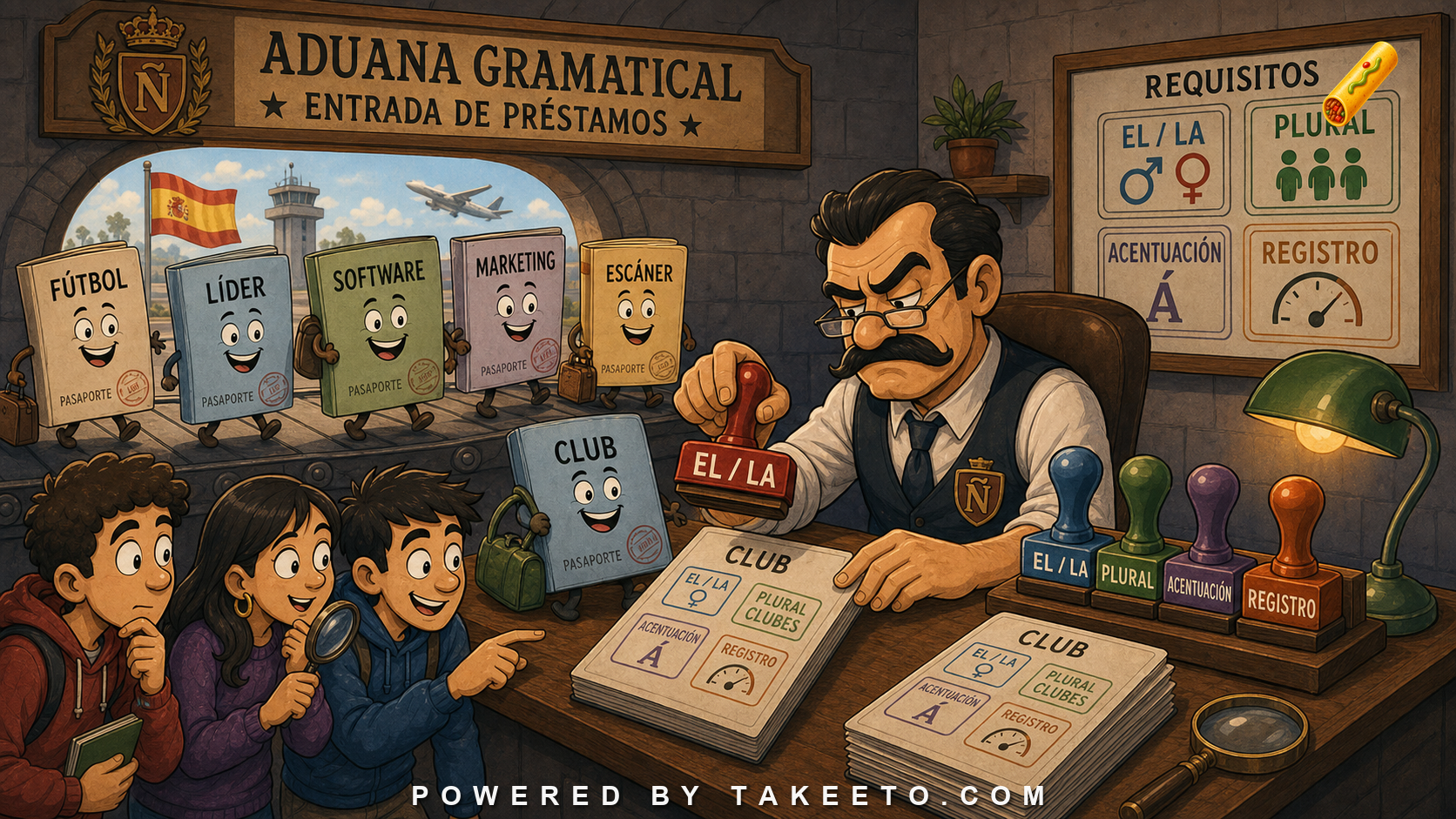
Loanwords in Spanish: Adaptation, Gender, Plural, and Register
The reader can analyze how borrowed words enter Spanish and become grammatical.
Long-form Spanish articles for learners who want structure, evidence, examples, and linguistic explanations that do not collapse into slogans.
365 articles, mixed by topic instead of numbered sequence.
The reader can analyze how borrowed words enter Spanish and become grammatical.
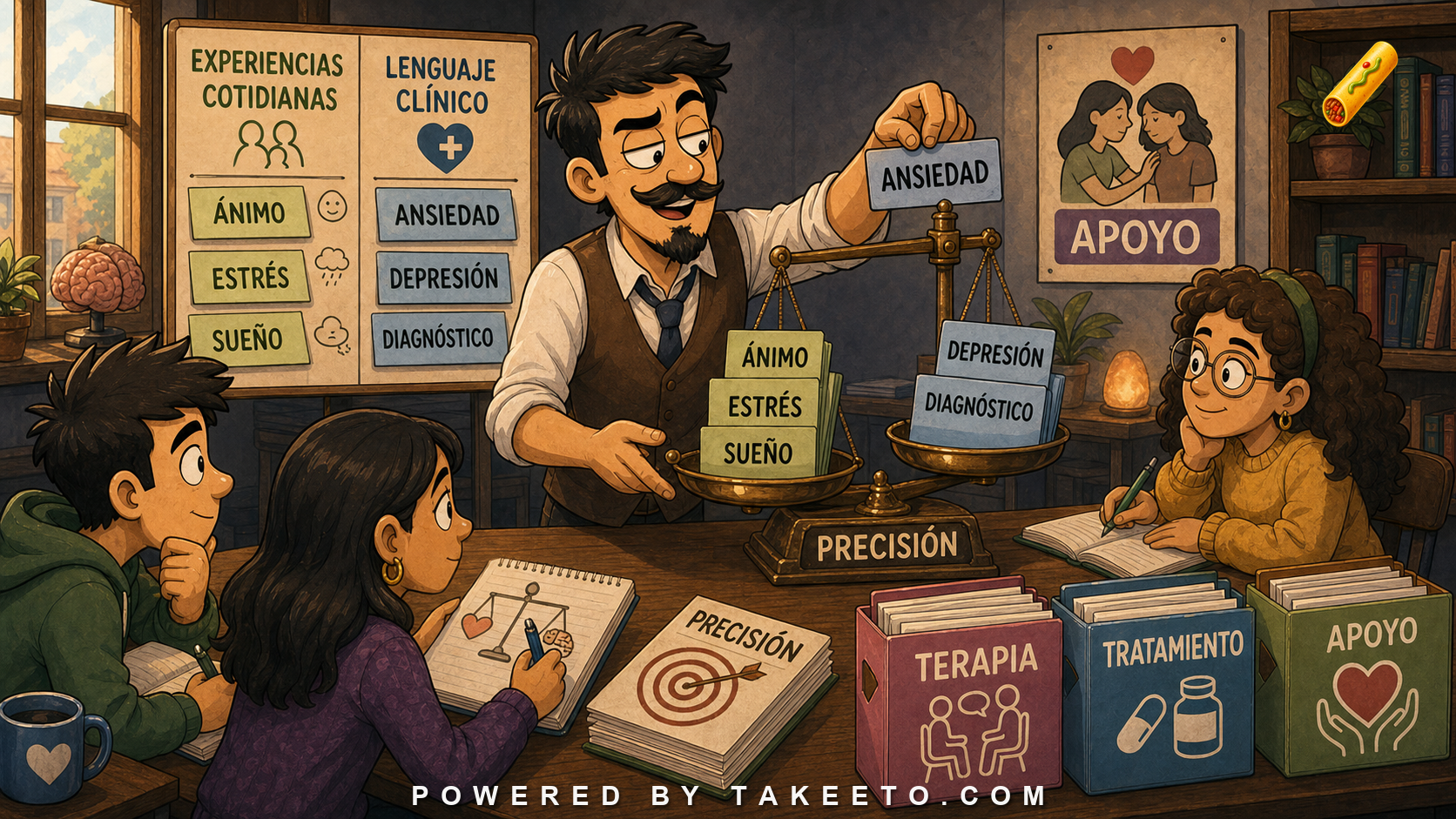
The reader can distinguish careful mental-health vocabulary from casual misuse.

The reader can decode Spanish j-like sounds across spelling, region, and historical spelling conventions.
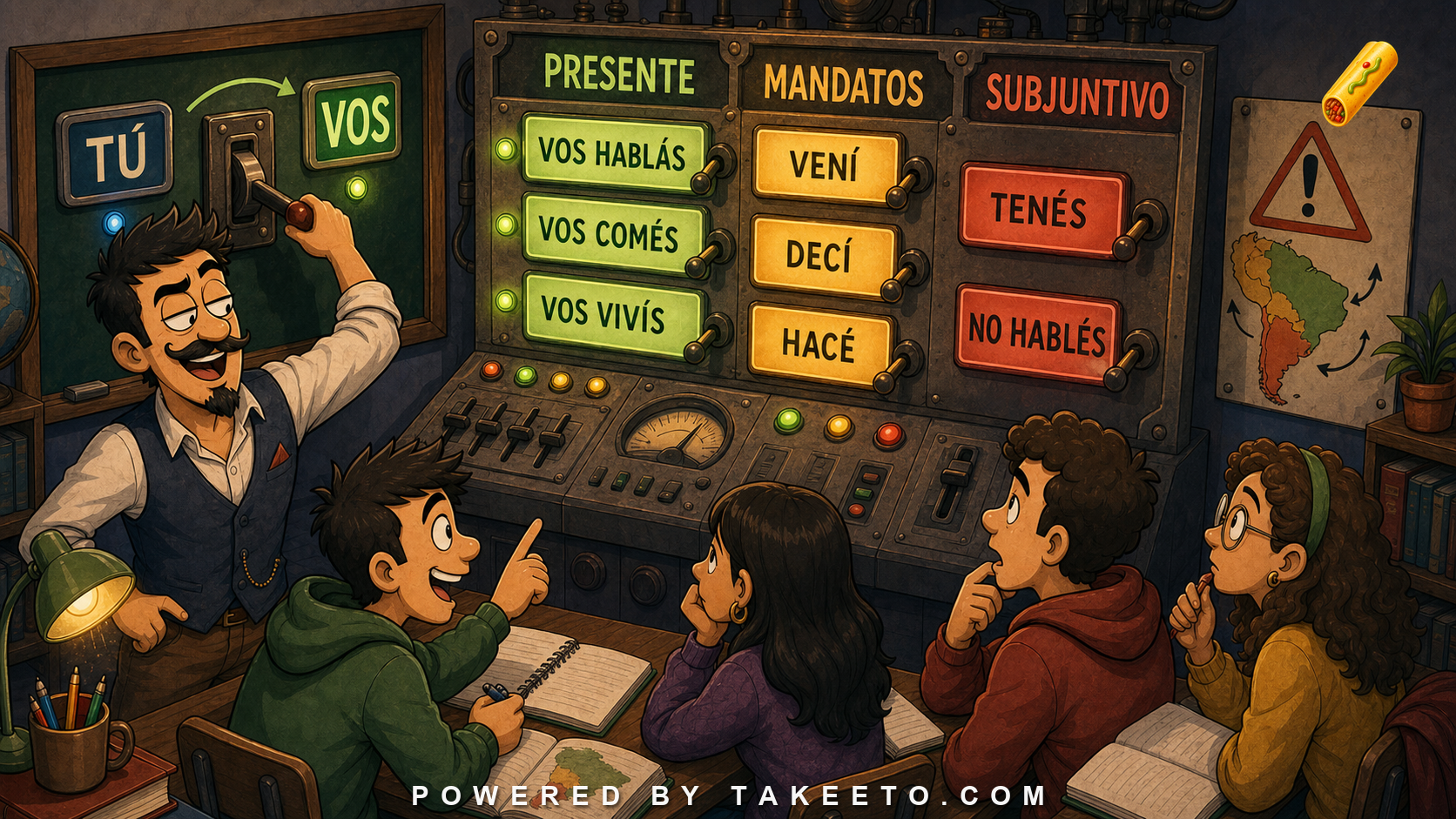
The reader can conjugate and recognize voseo forms in major patterns.
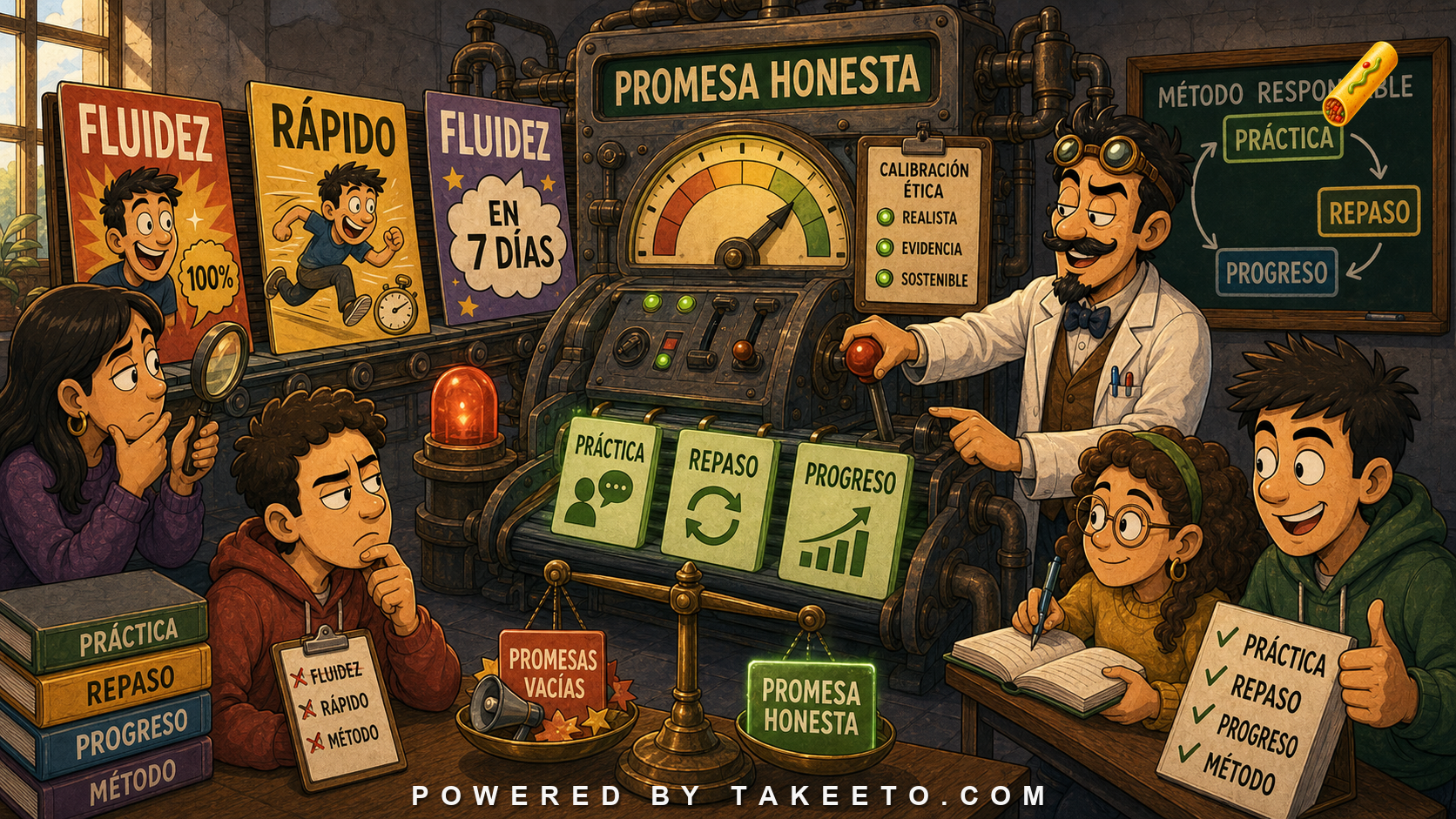
The reader can evaluate Spanish-learning claims critically and replace vague promises with honest, evidence-aware product language.
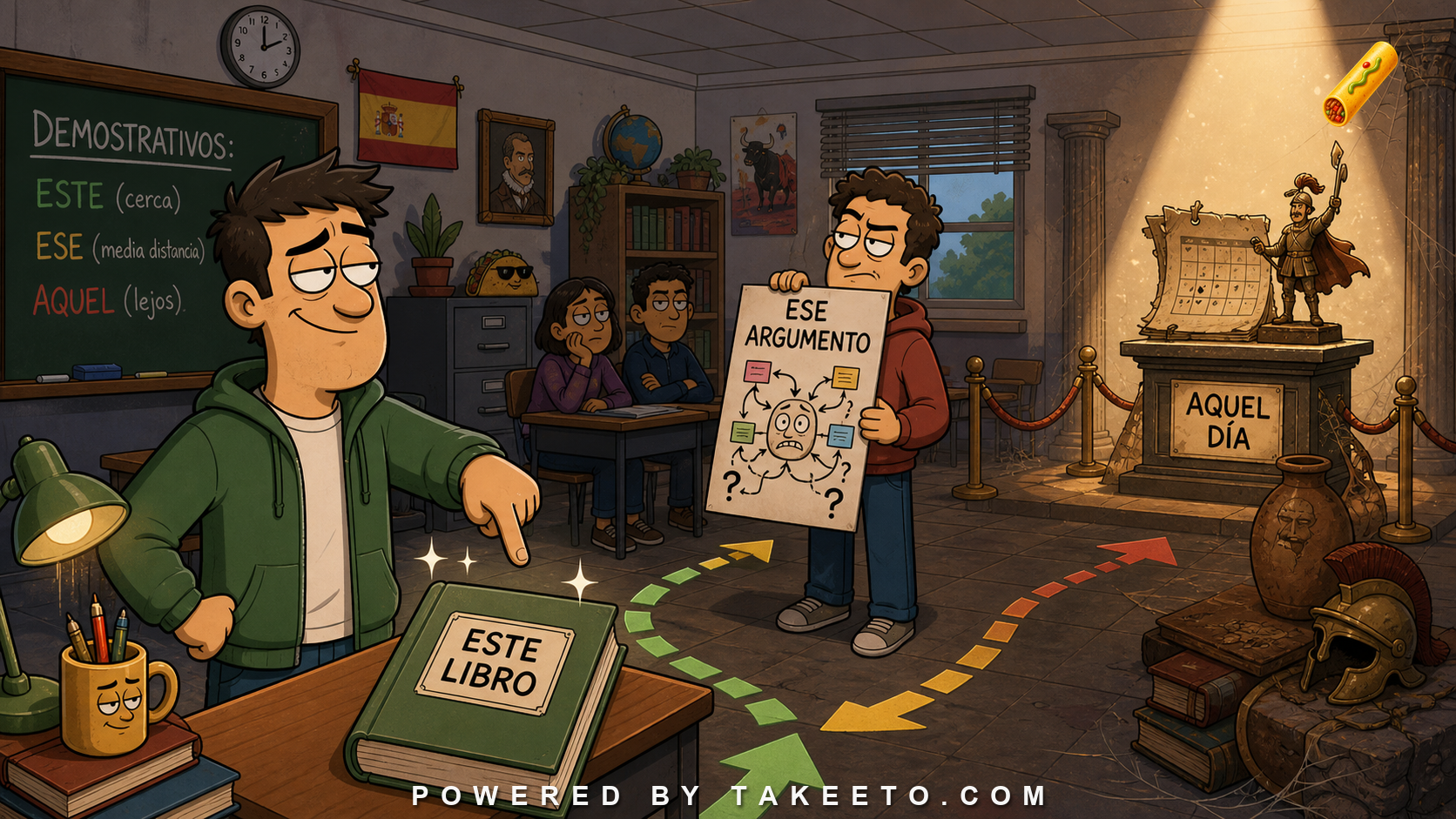
The reader can use demonstratives for physical, temporal, textual, and emotional distance.
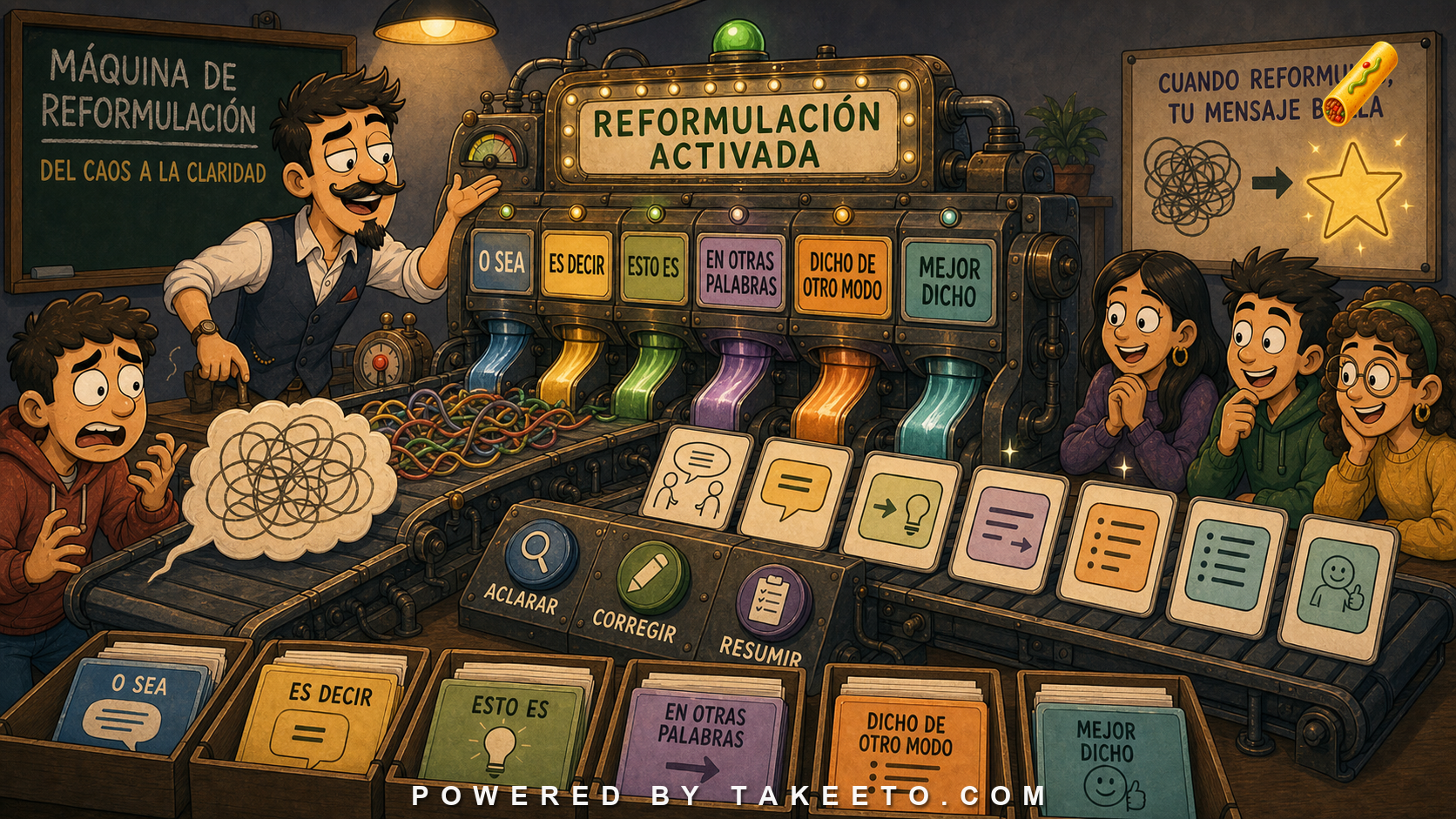
The reader can identify clarification, correction, summary, and technical restatement.
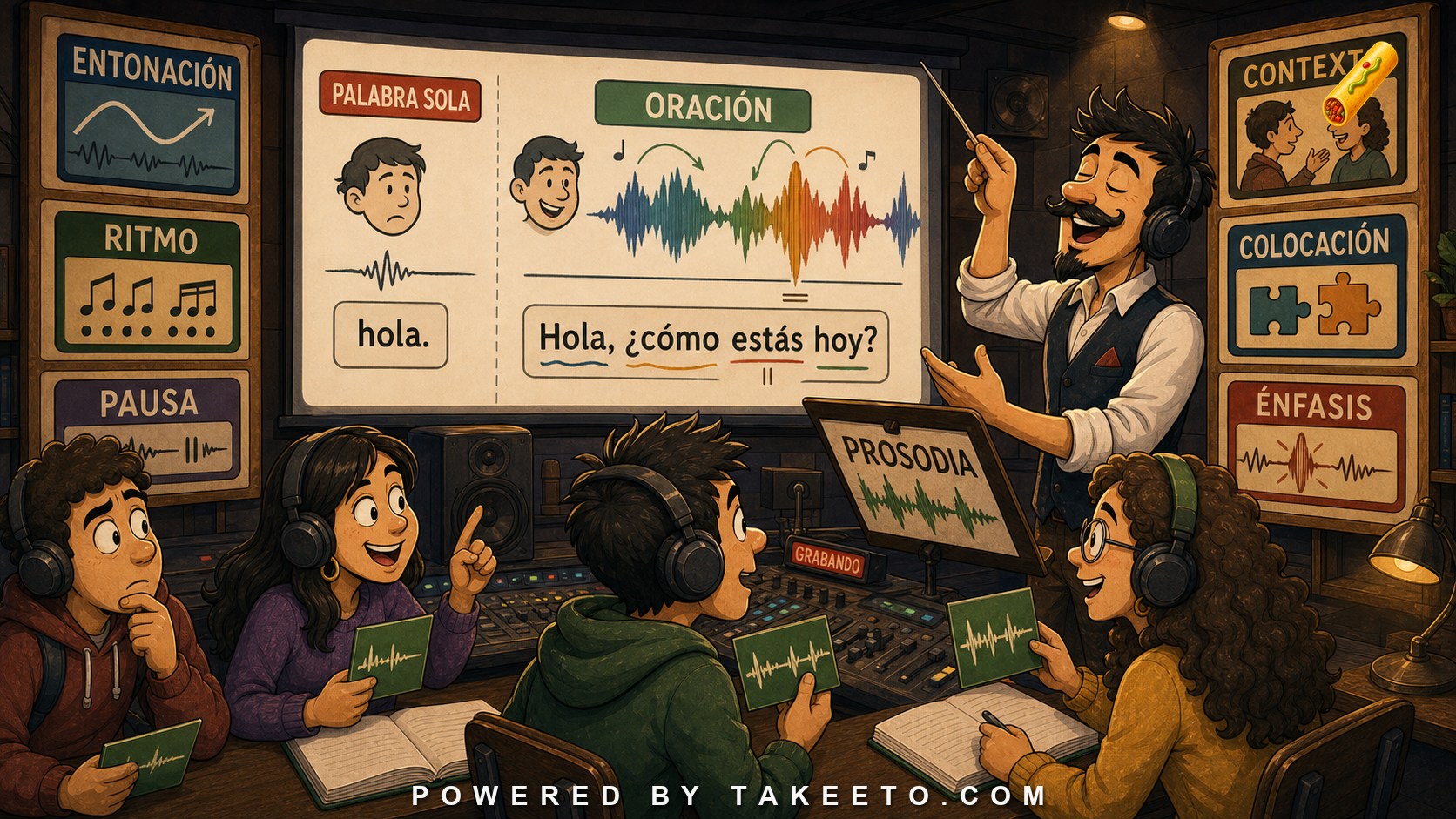
The reader understands why sentence audio teaches rhythm, syntax, and collocation differently from isolated word audio.
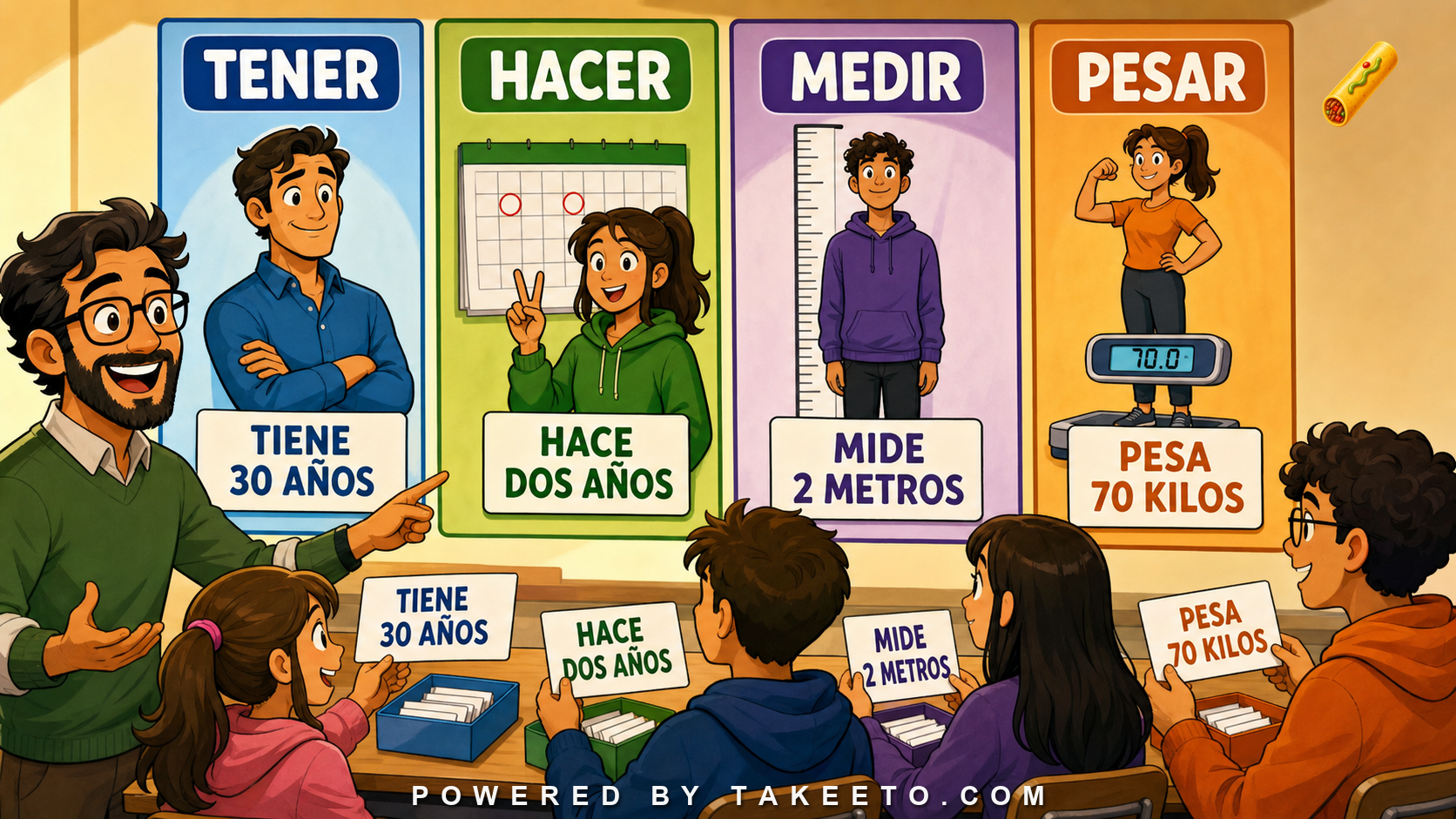
The reader can express age, duration, height, weight, and measurements naturally.
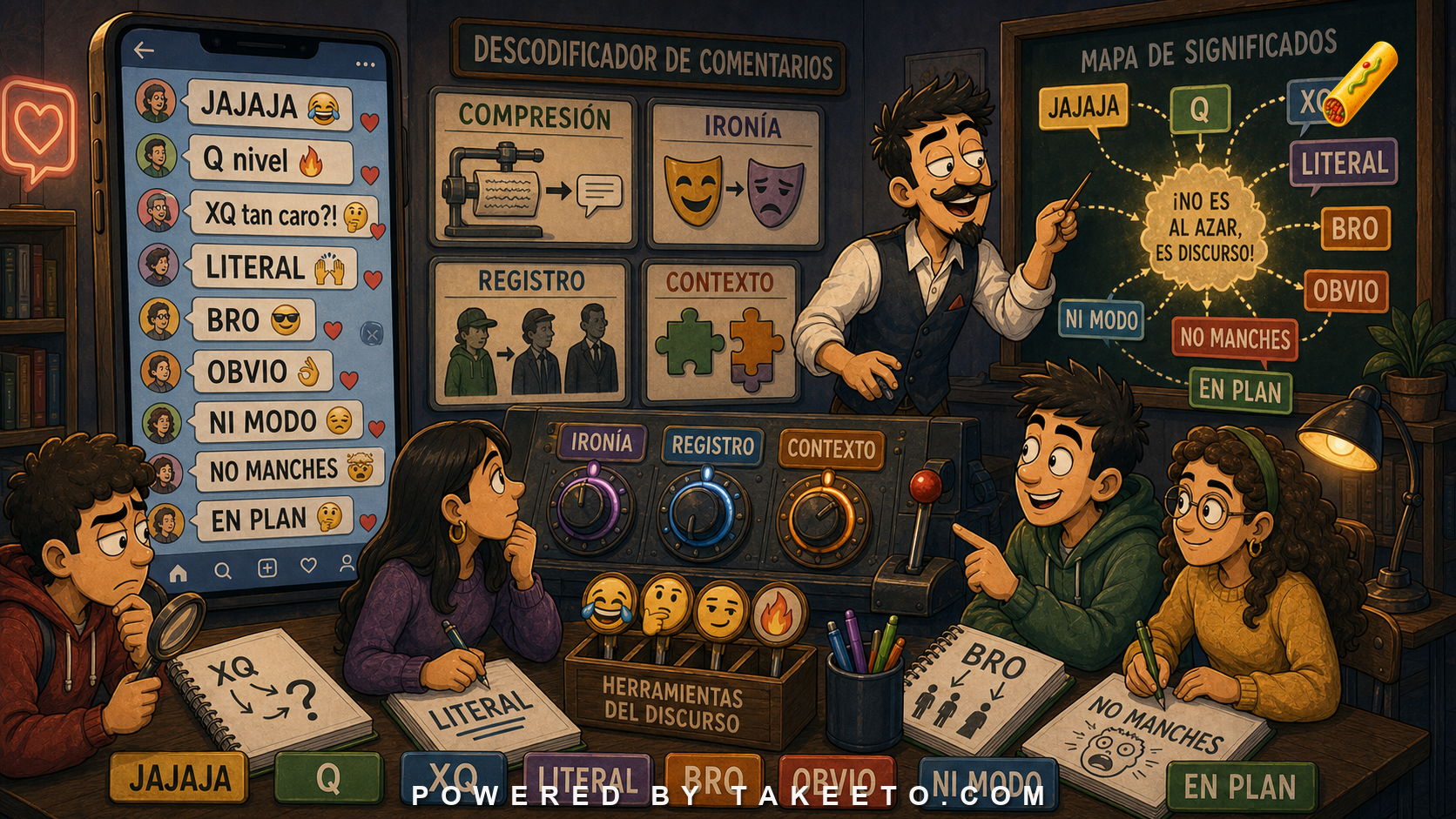
The reader can interpret comments without mistaking informal forms for random errors.
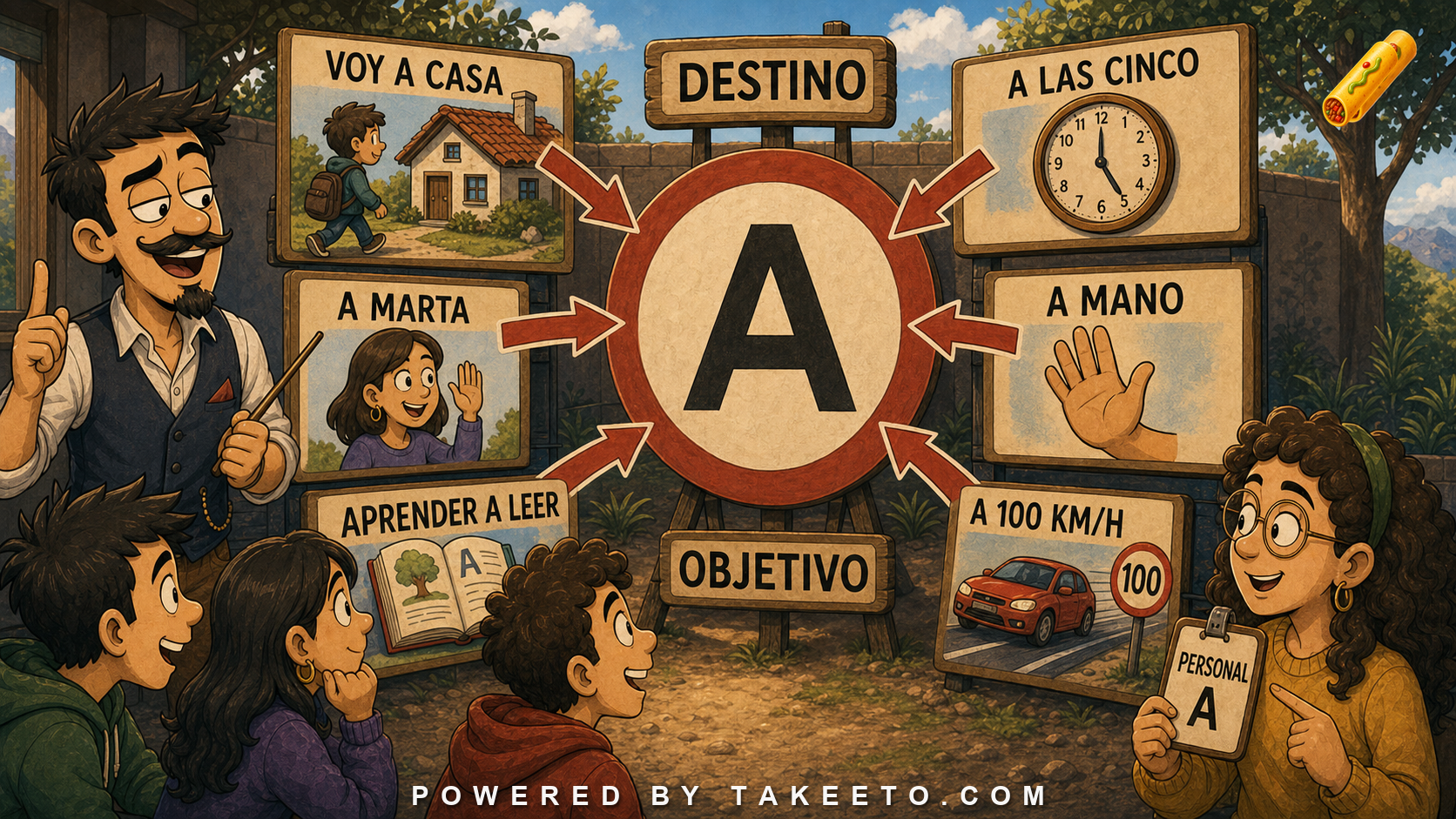
The reader can unify the many uses of a around endpoint, target, and relation.
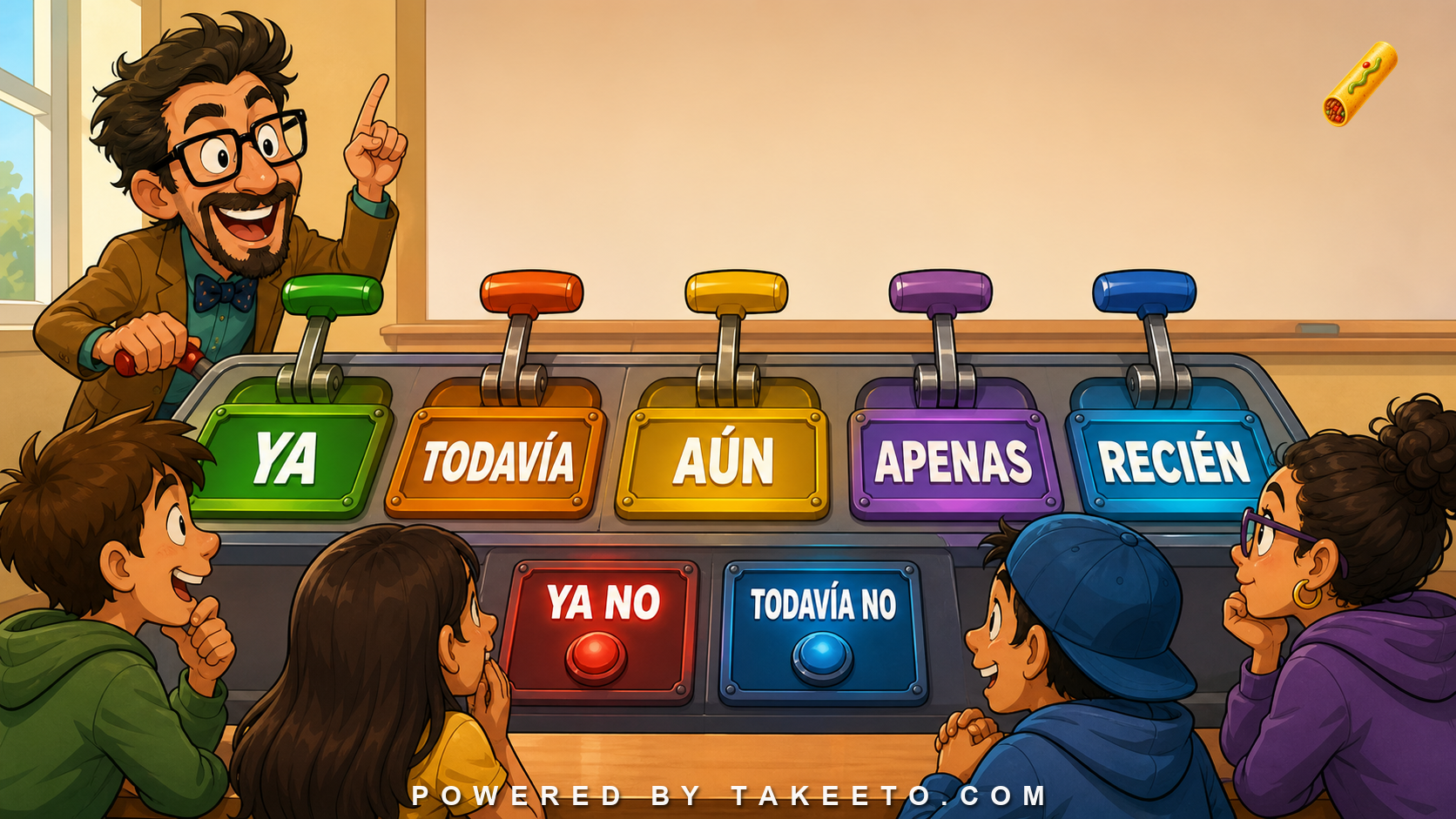
The reader can interpret temporal adverbs that manage expectation and sequence.
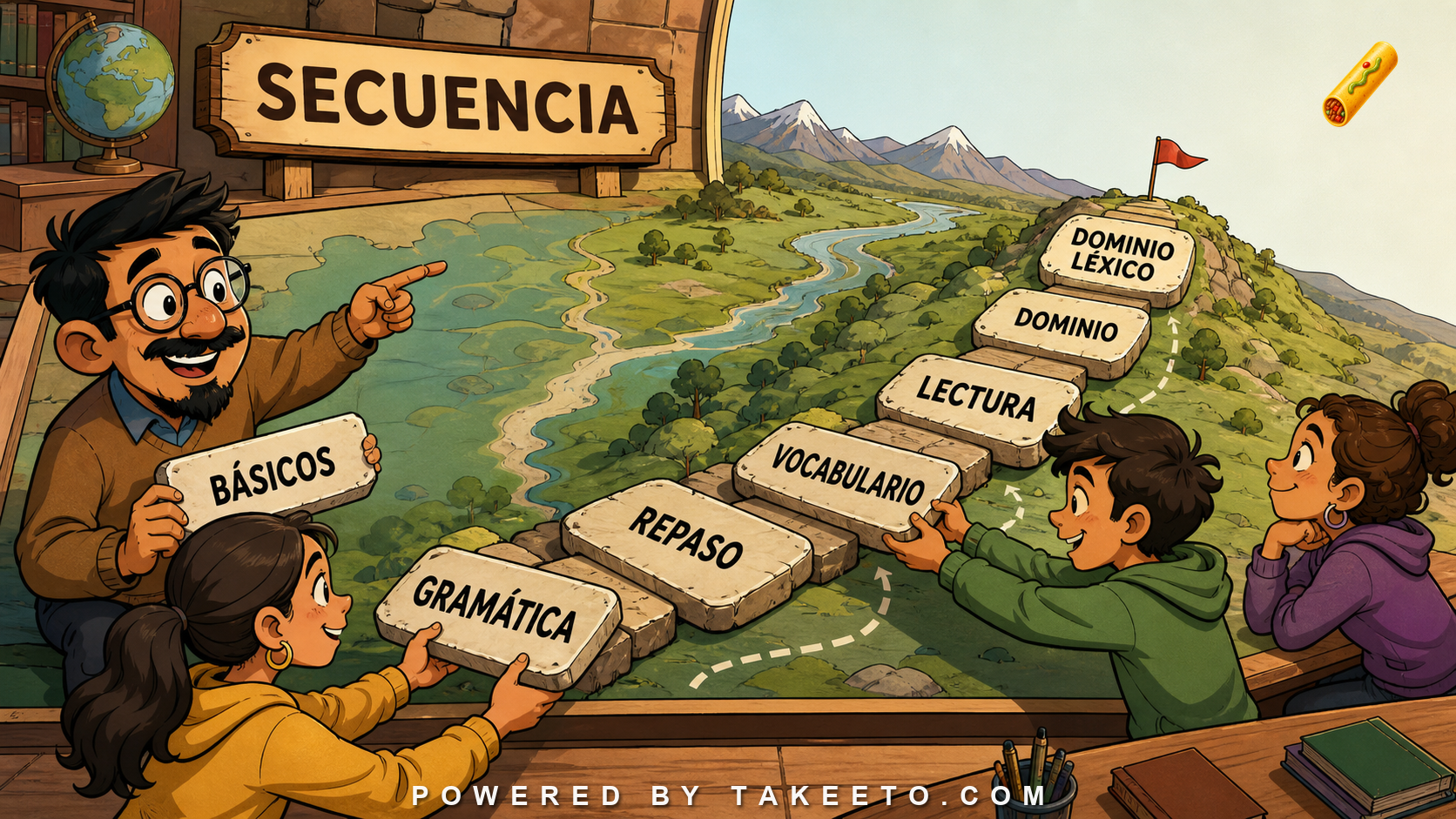
The reader can understand why a Spanish curriculum should progress from structure to text domains.
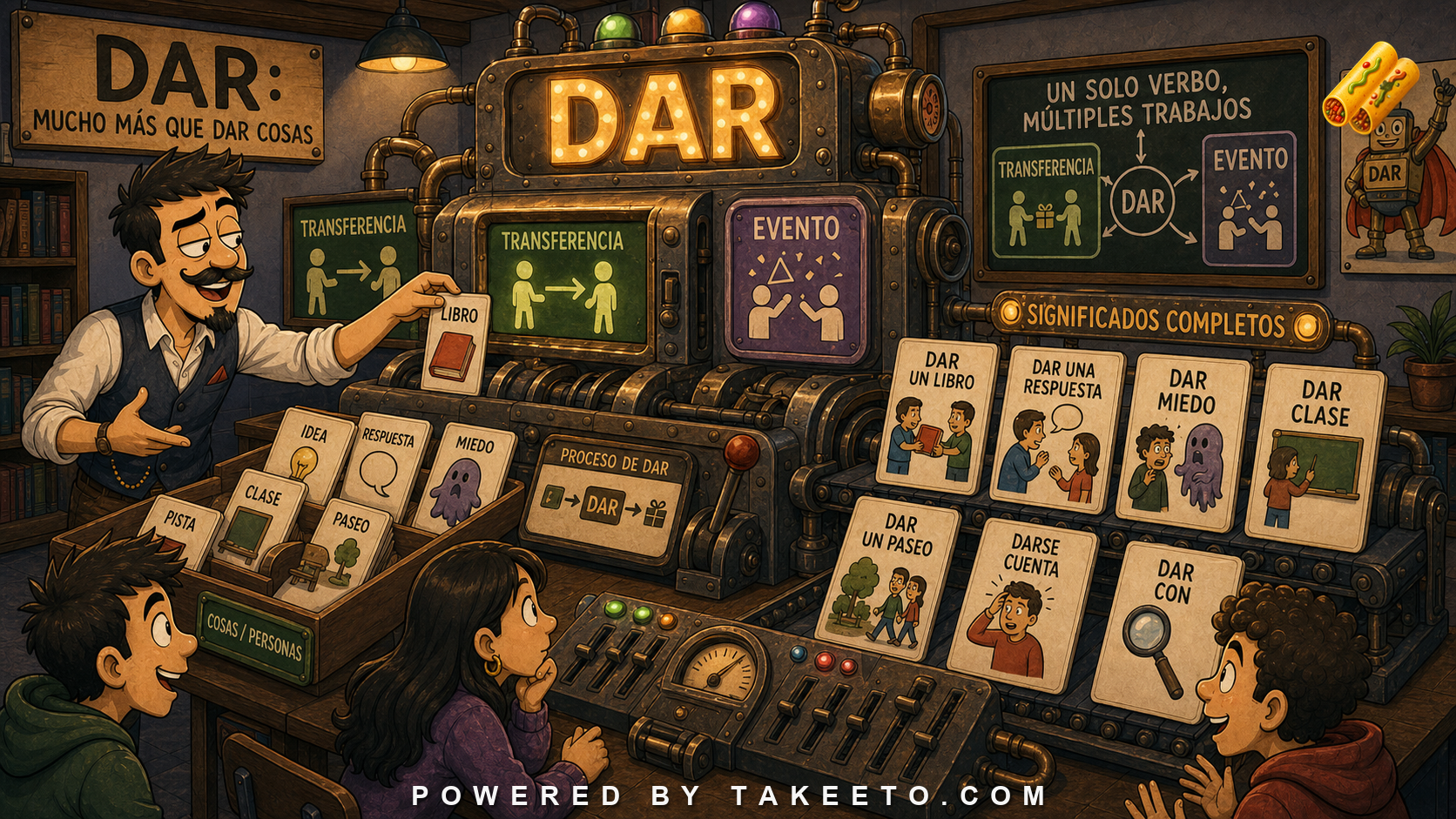
The reader can recognize dar in literal transfer and abstract event constructions.
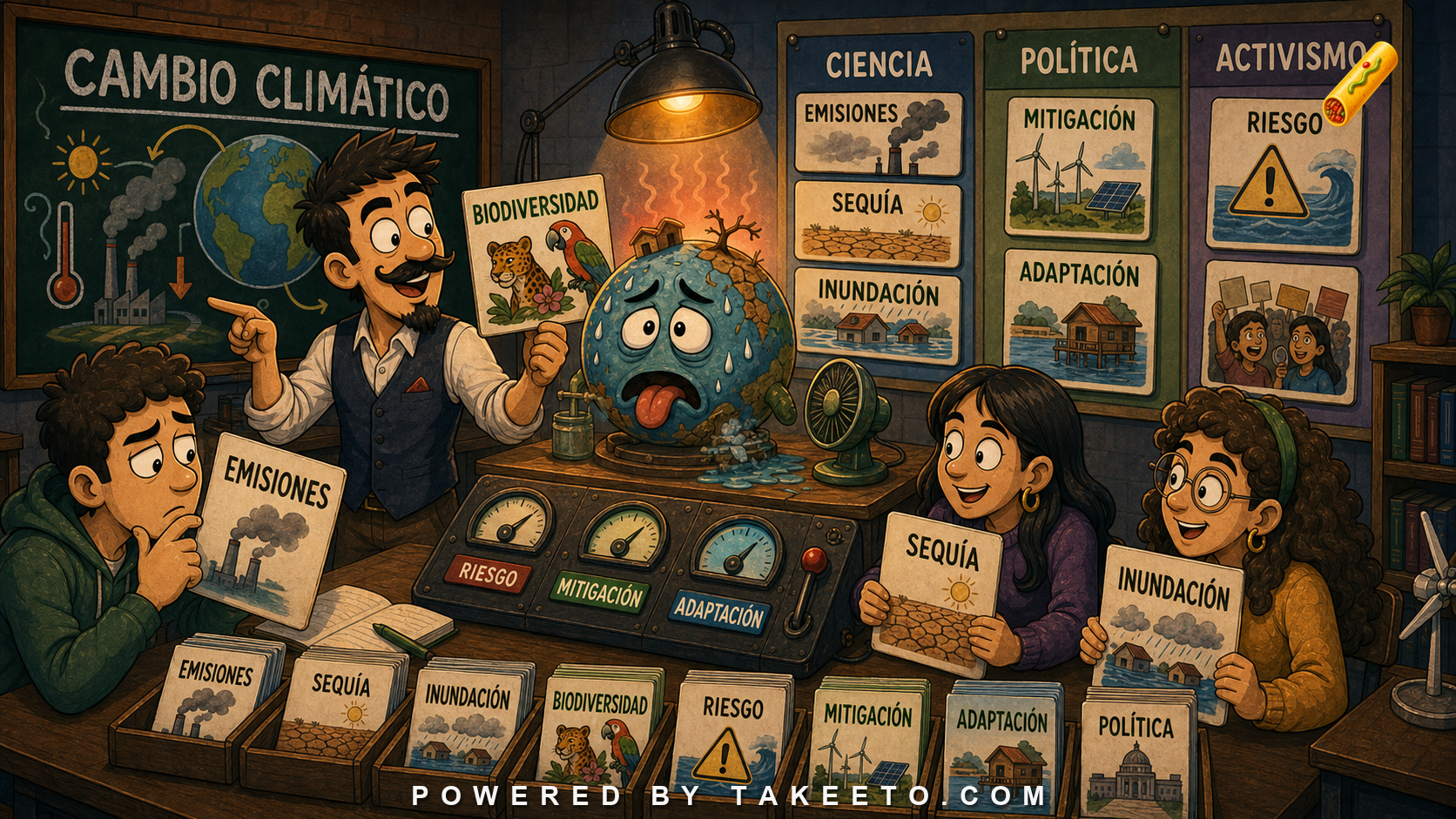
The reader can read climate and environmental Spanish across scientific, policy, and activist registers.
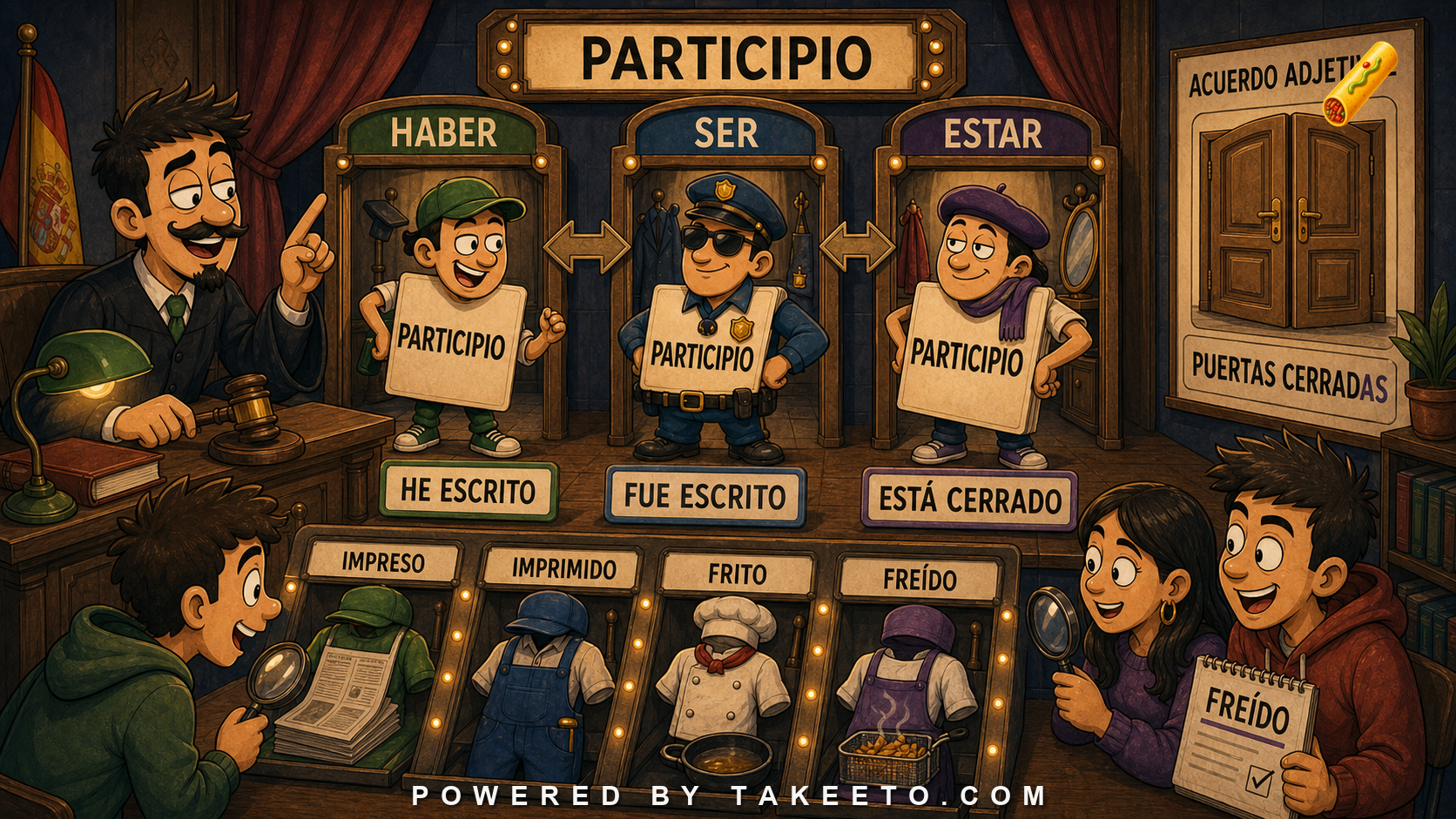
The reader can distinguish participles in perfect constructions, passive clauses, and adjectives.
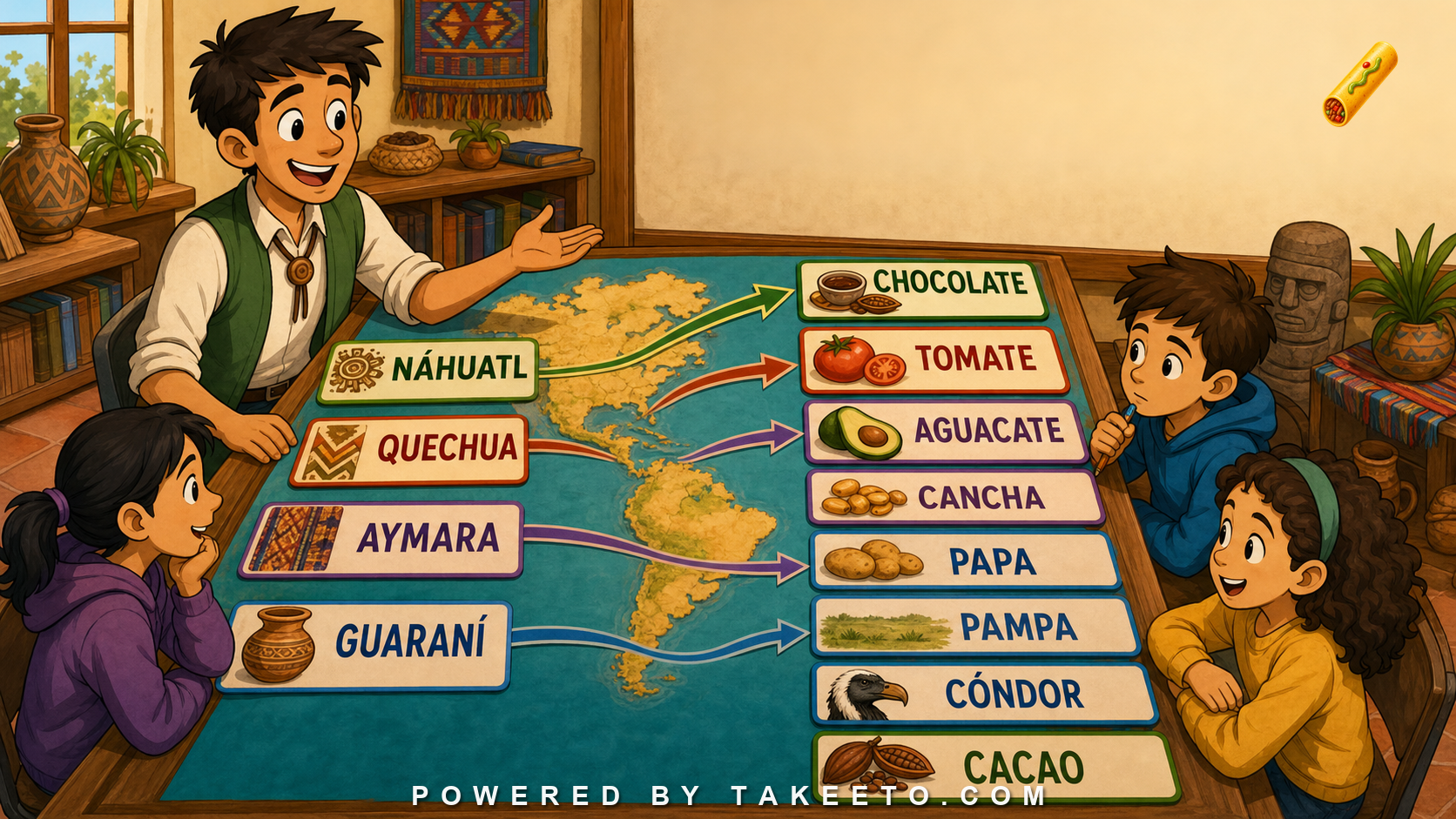
The reader can identify lexical and structural effects of indigenous-language contact with appropriate caution.
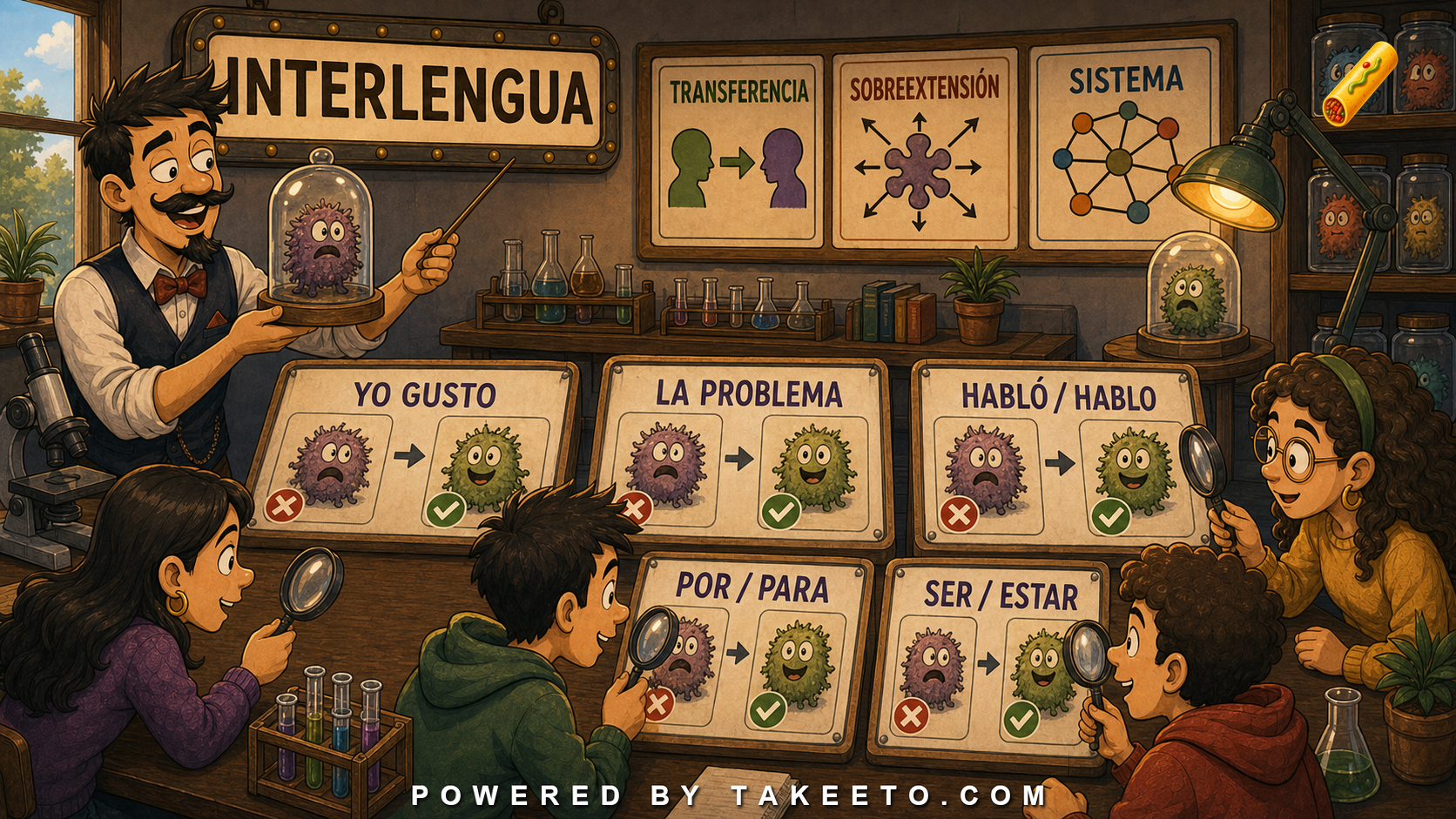
The reader can analyze errors as evidence of developing systems.

The reader can interpret past unreal conditions and regrets in Spanish.
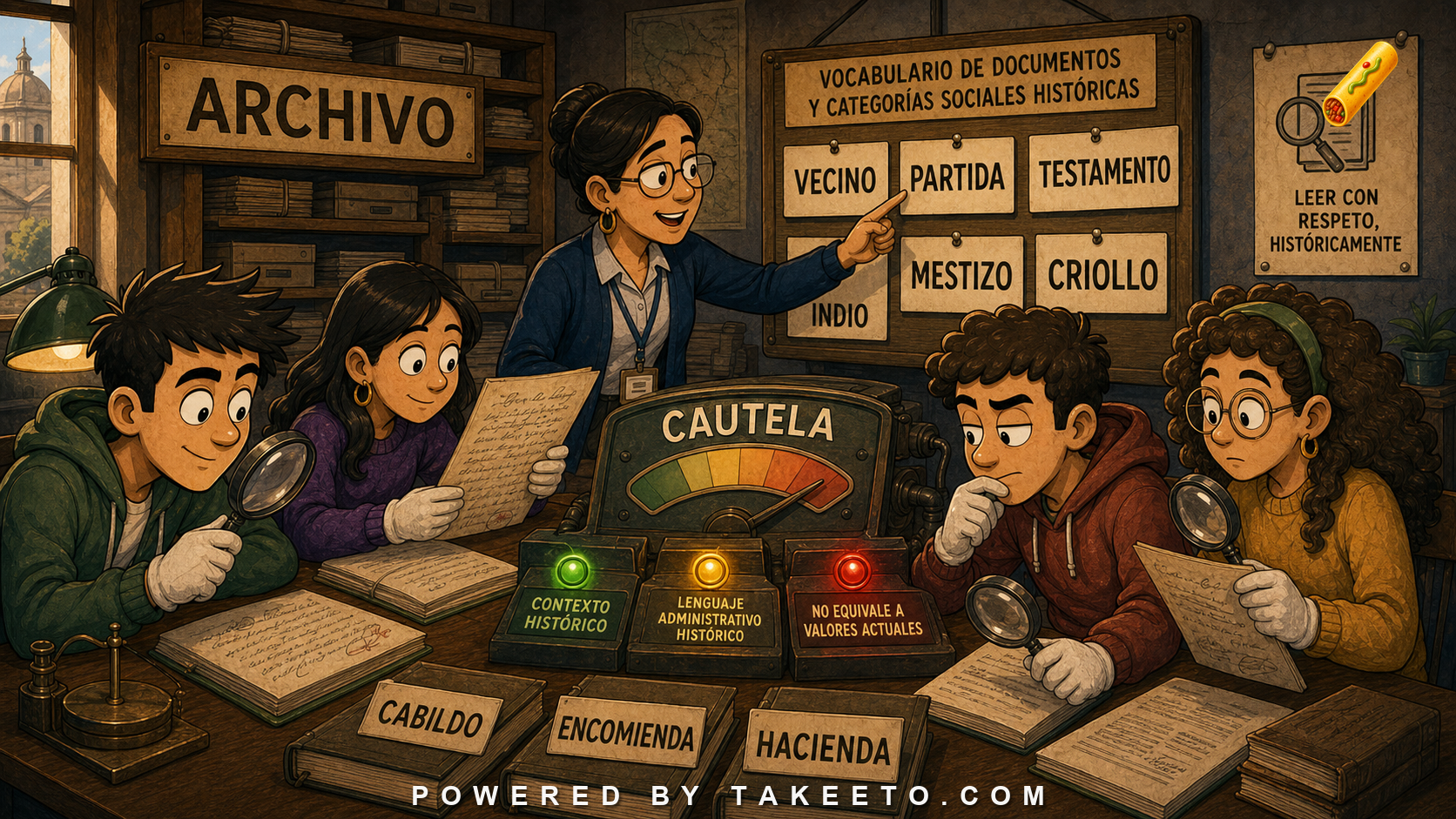
The reader can recognize colonial-document vocabulary while treating social labels critically.
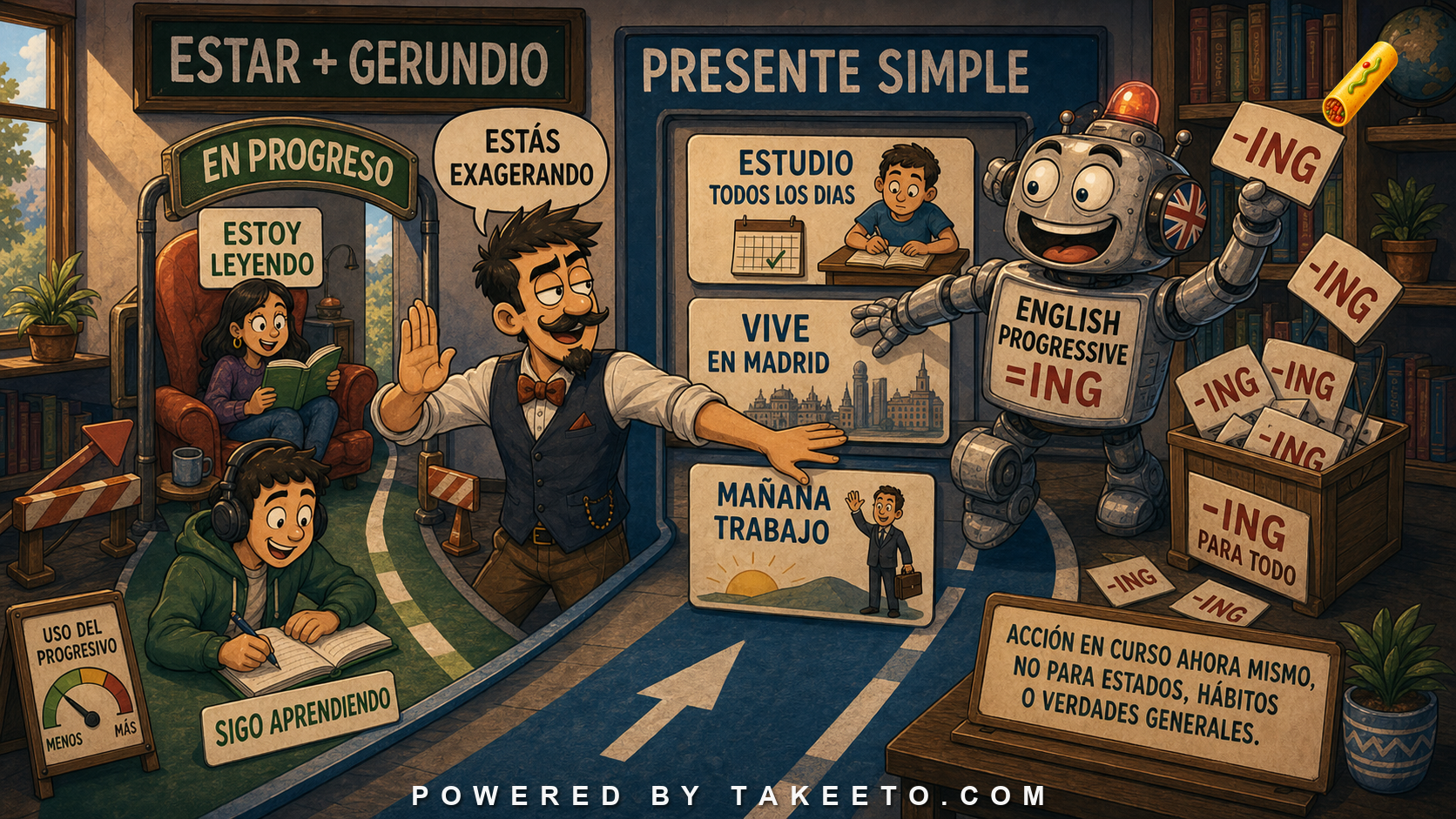
The reader can use the Spanish progressive for ongoing action without overextending it.
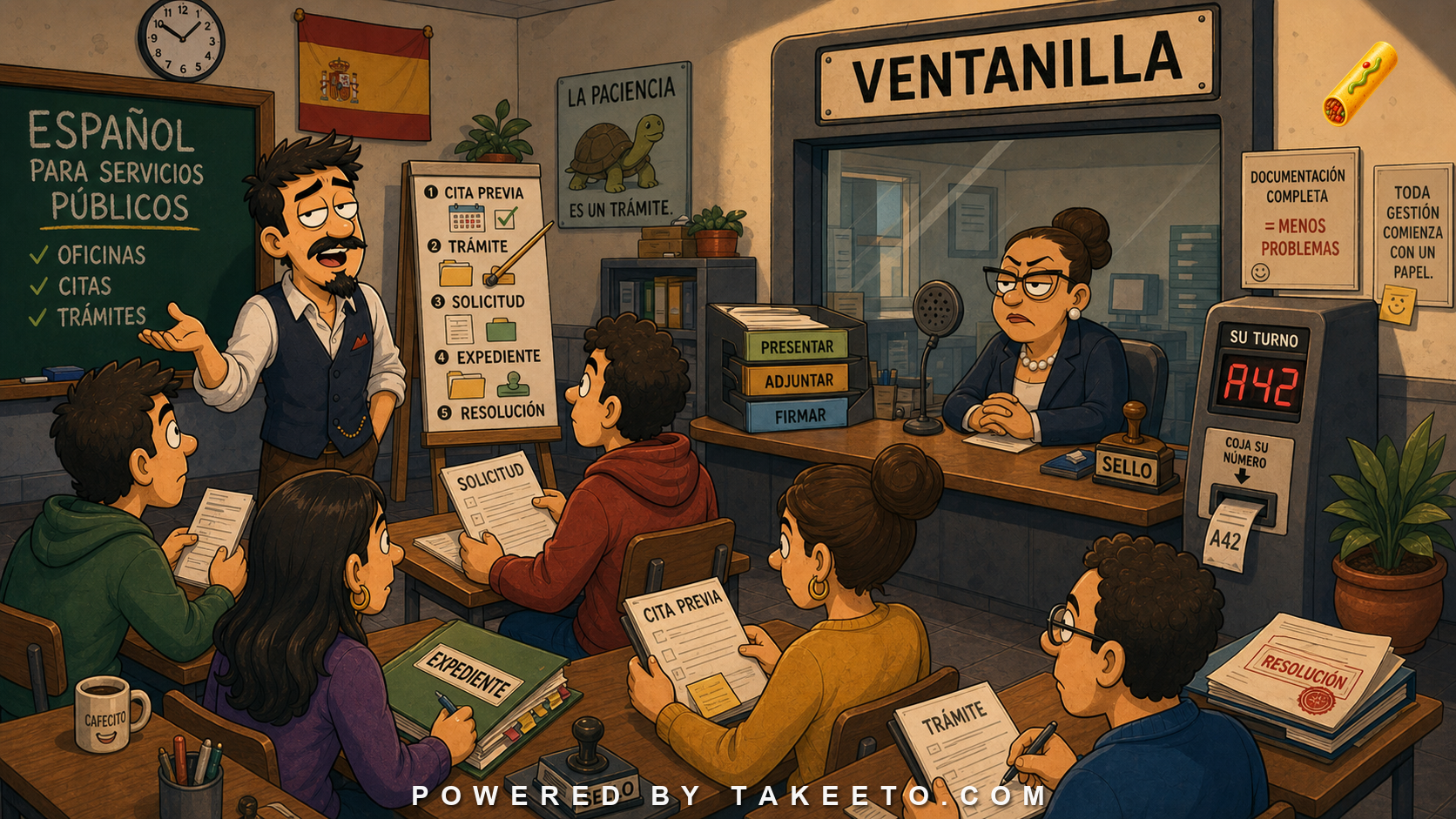
The reader can follow government-office Spanish and procedural instructions.

The reader can follow scholarly argument through reporting verbs.
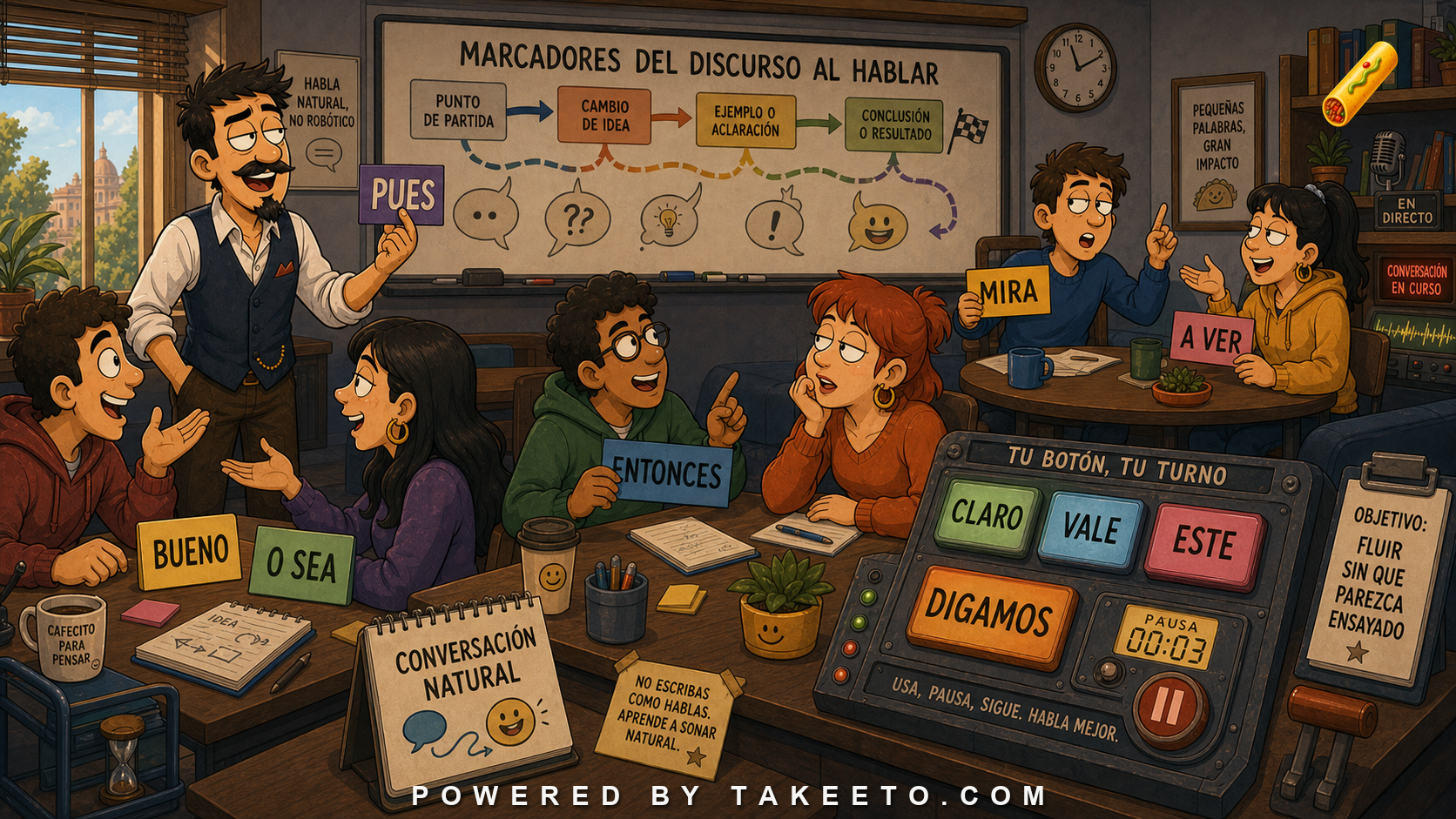
The reader can hear discourse markers as conversation-management tools rather than filler.
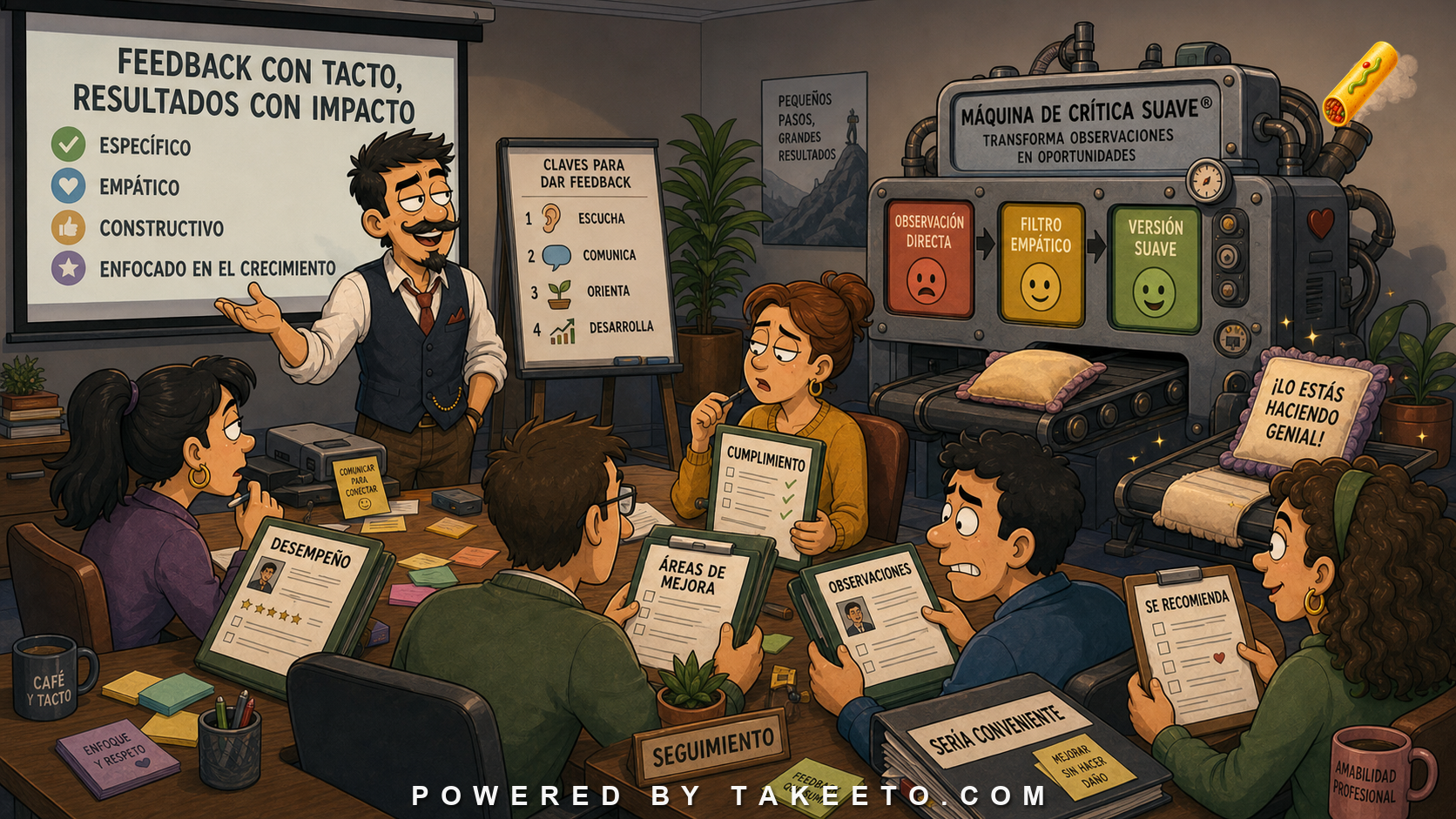
The reader can understand feedback language and indirect criticism in professional Spanish.
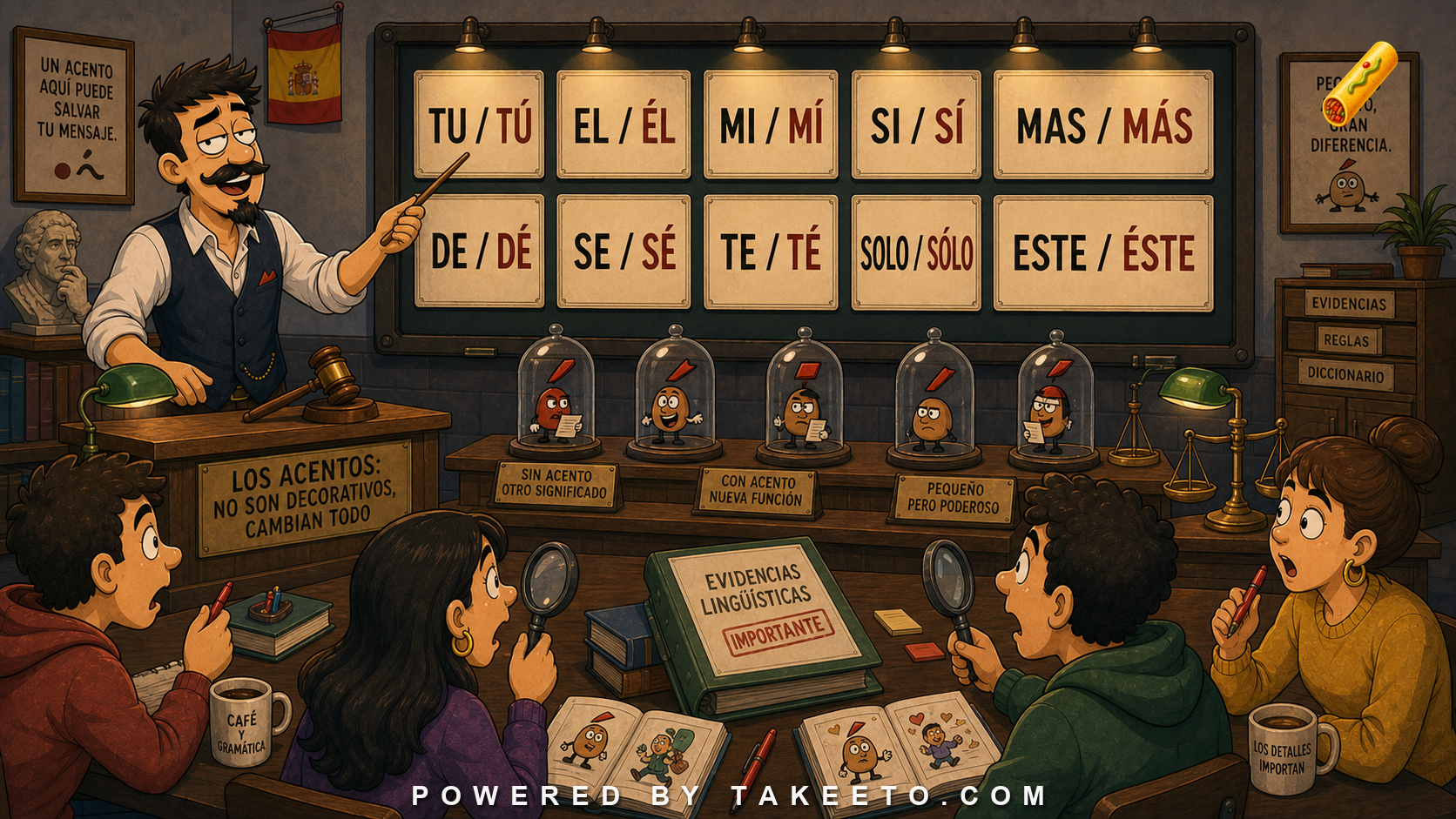
The reader sees diacritical accents as grammatical signs, not pronunciation aids alone.

The reader can choose apology and attention-getting formulas appropriately.
The reader can use corpus tools to investigate Spanish usage while respecting limits of sampling, register, dialect, and interpretation.
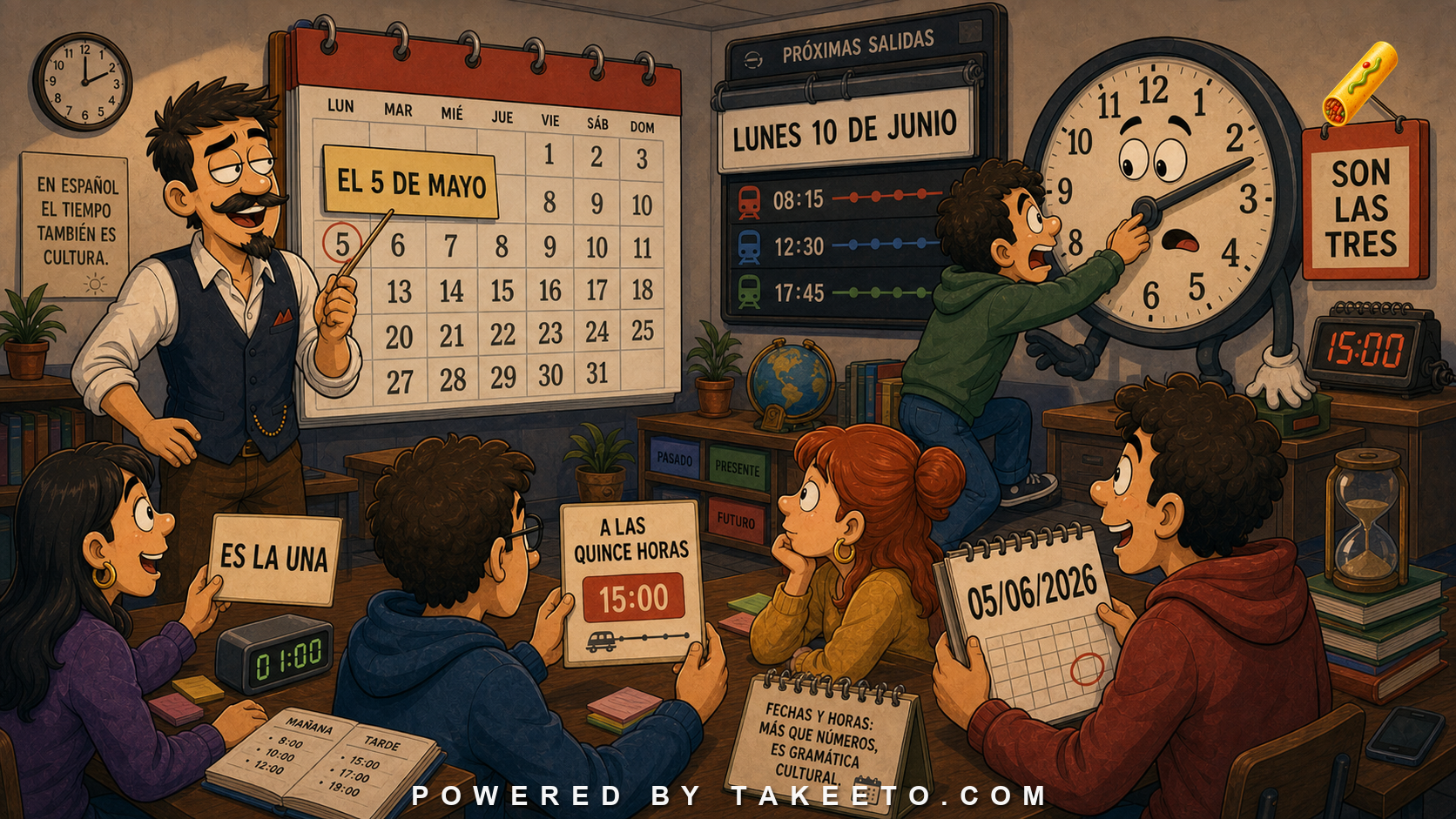
The reader can read and produce dates, clock times, and calendar phrases in Spanish.
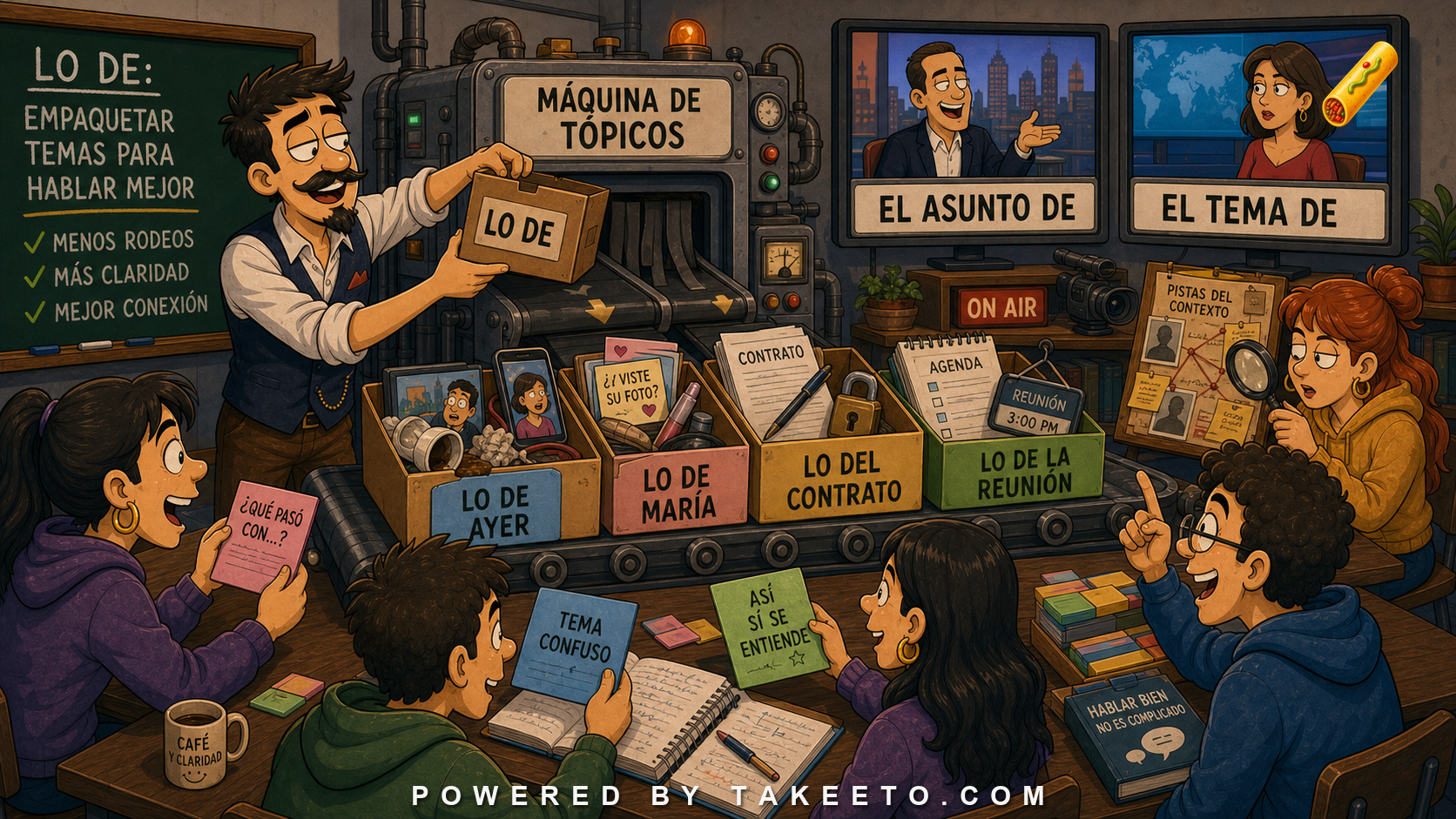
The reader can interpret lo de as a compact reference to events, issues, and topics.
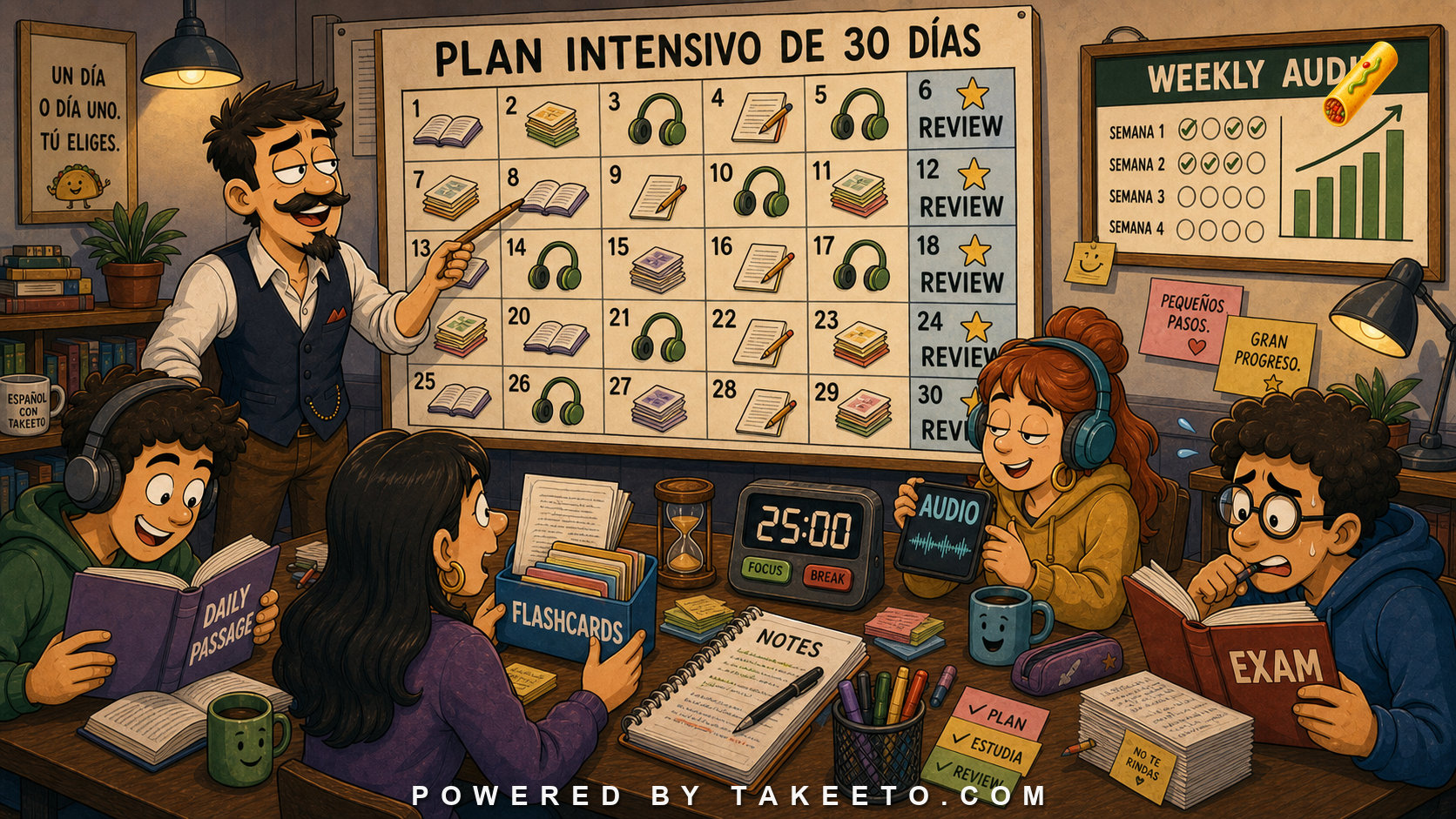
The reader can turn Takeeto-style materials into a month-long serious study routine.
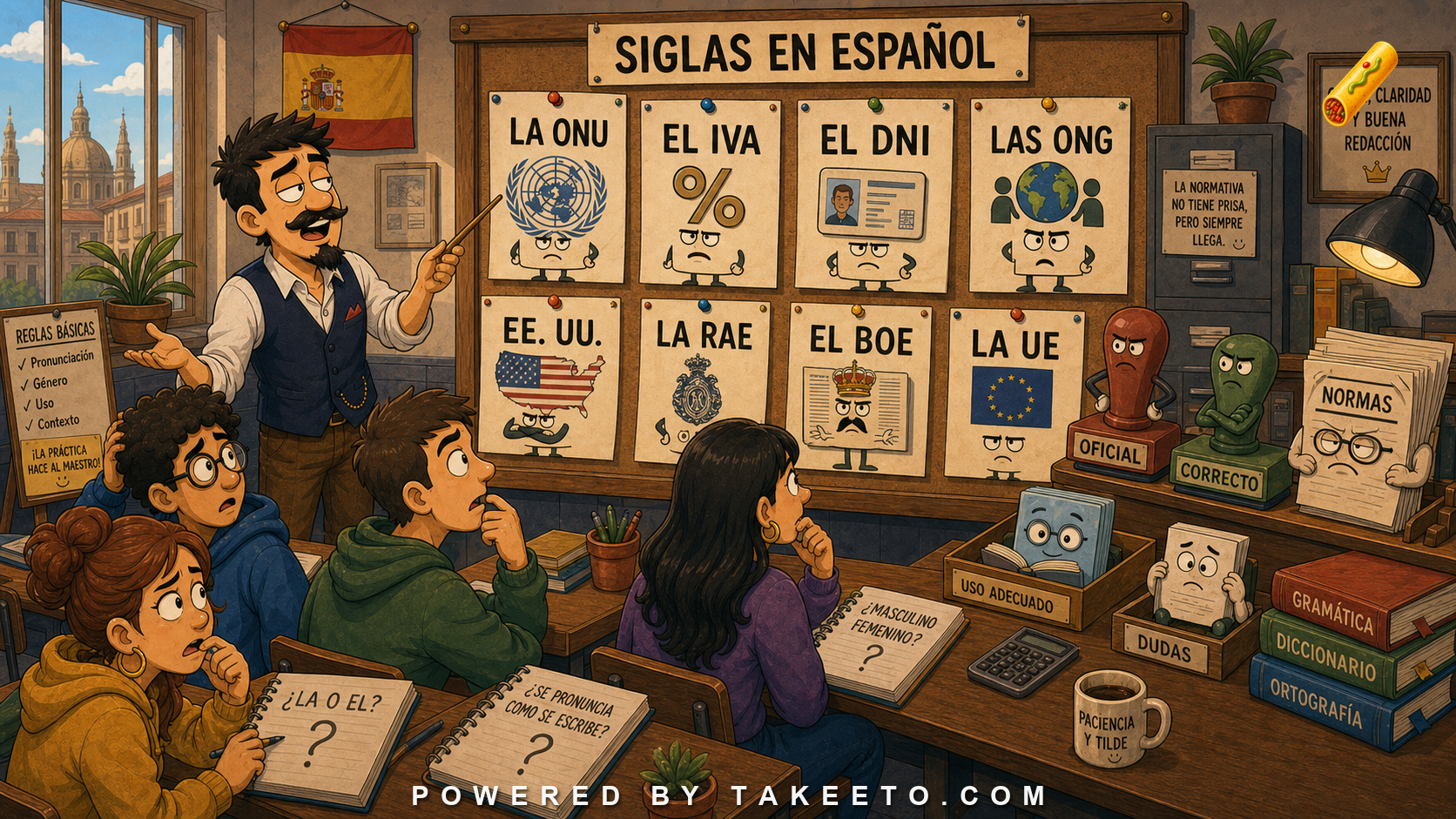
The reader can read Spanish acronyms and understand gender, pronunciation, and plural conventions.
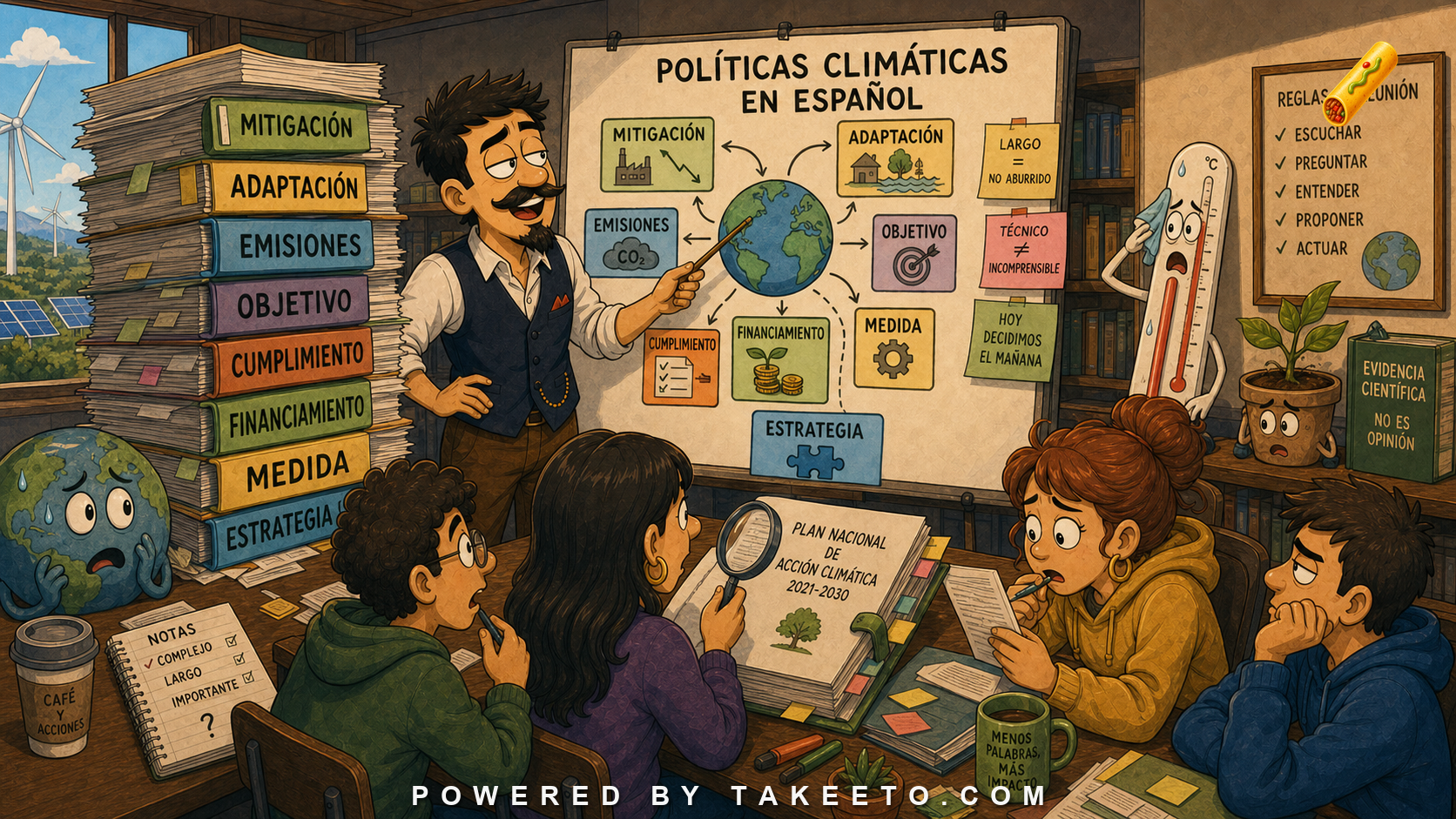
The reader can parse policy goals, timelines, measures, and obligations.
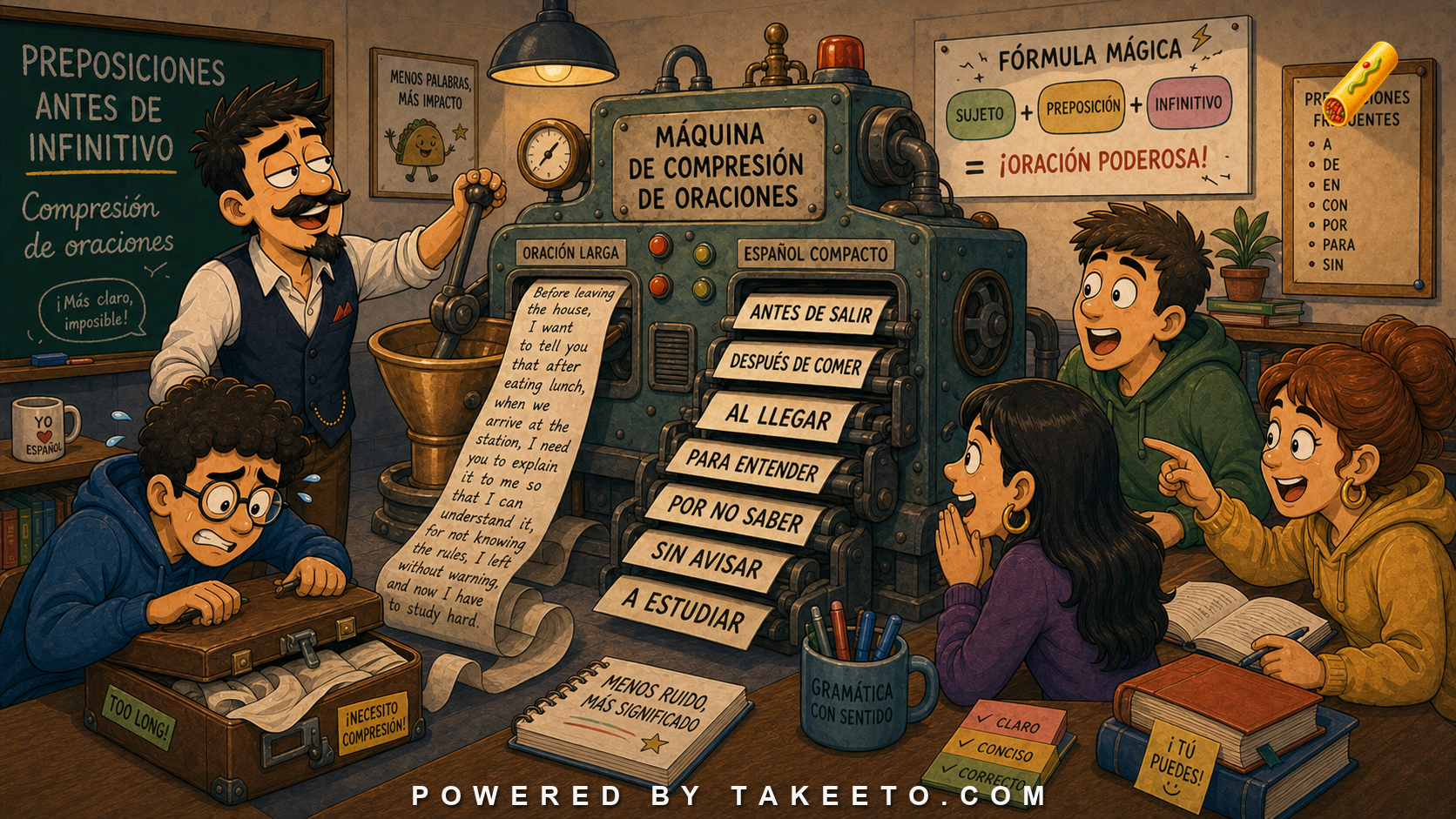
The reader can read and produce preposition + infinitive structures in dense Spanish.
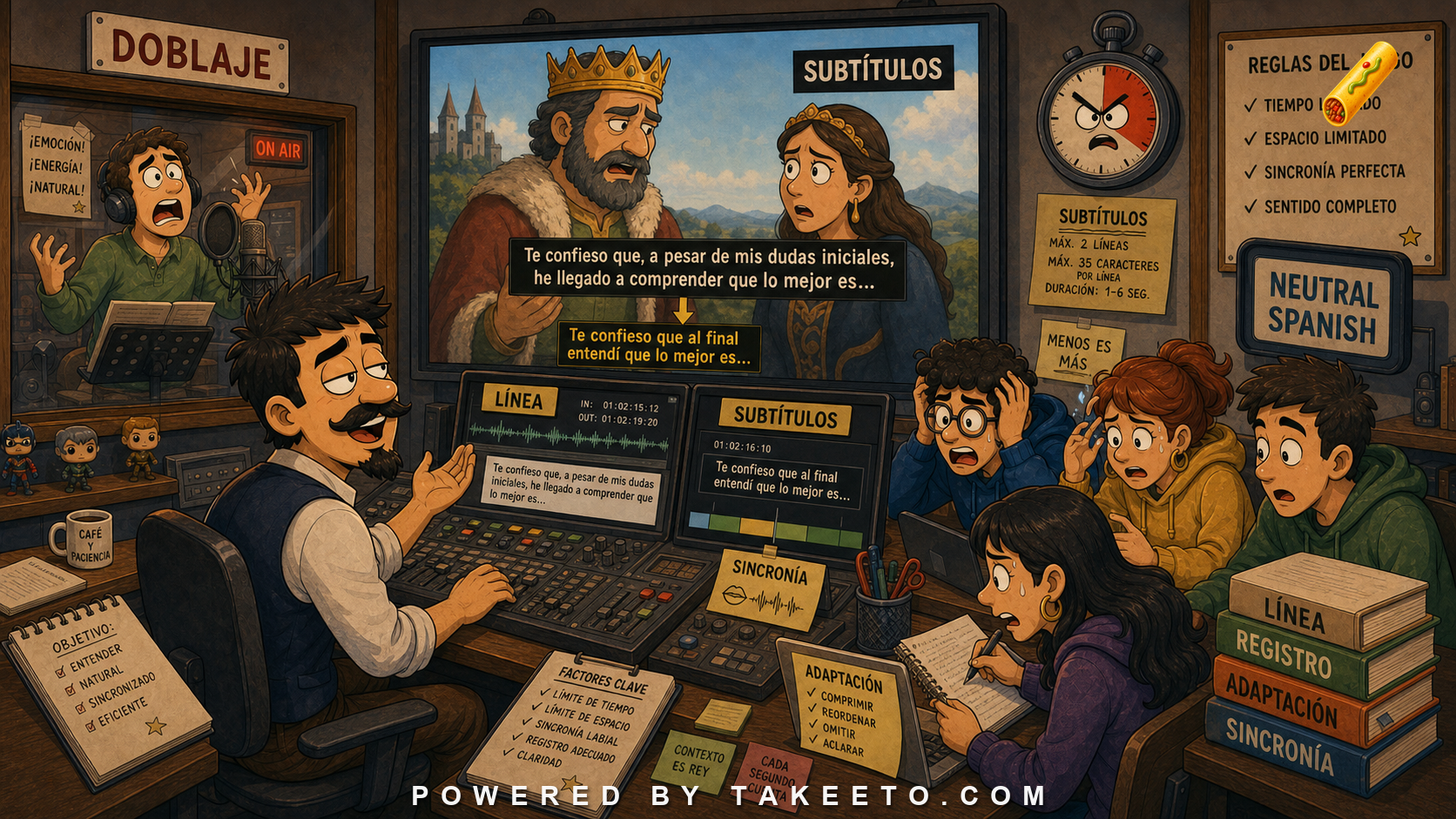
The reader understands why subtitle Spanish often diverges from literal dialogue.
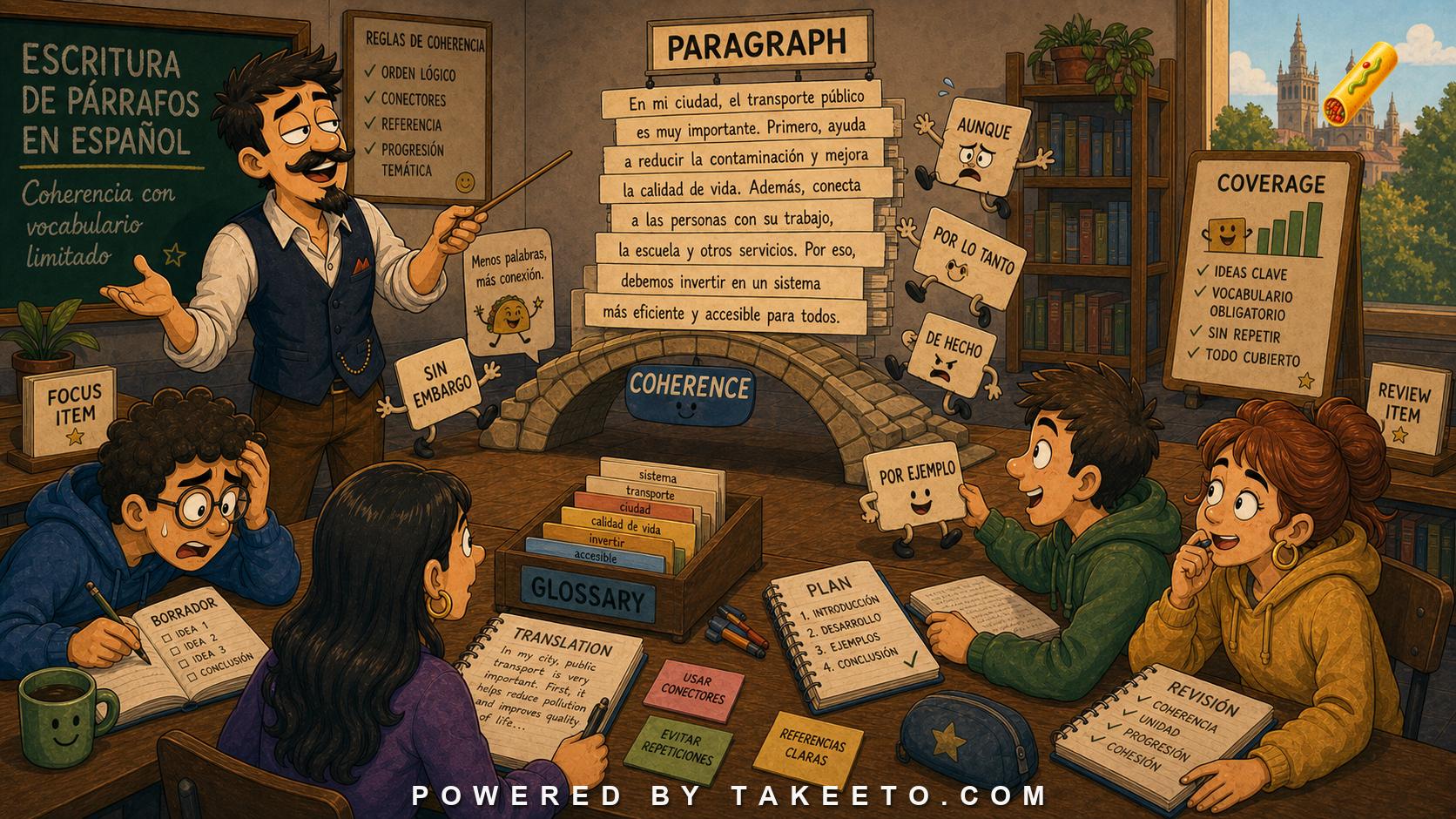
The reader can write coherent passages that include required learning items without sounding like a word list.
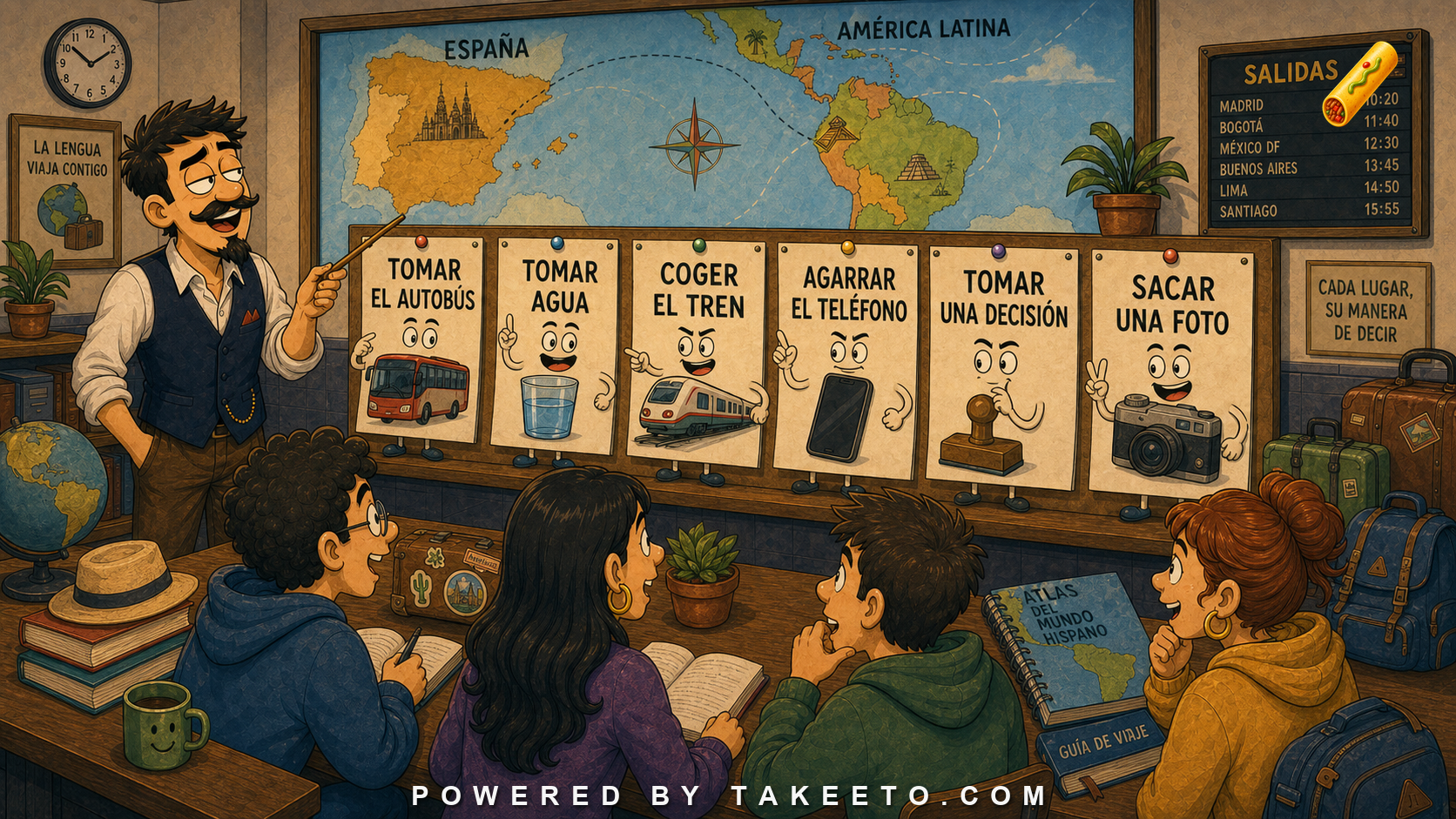
The reader can use and interpret “take” verbs with regional awareness.

The reader can decode Spanish property listings without mistaking compressed sales language for complete legal information.
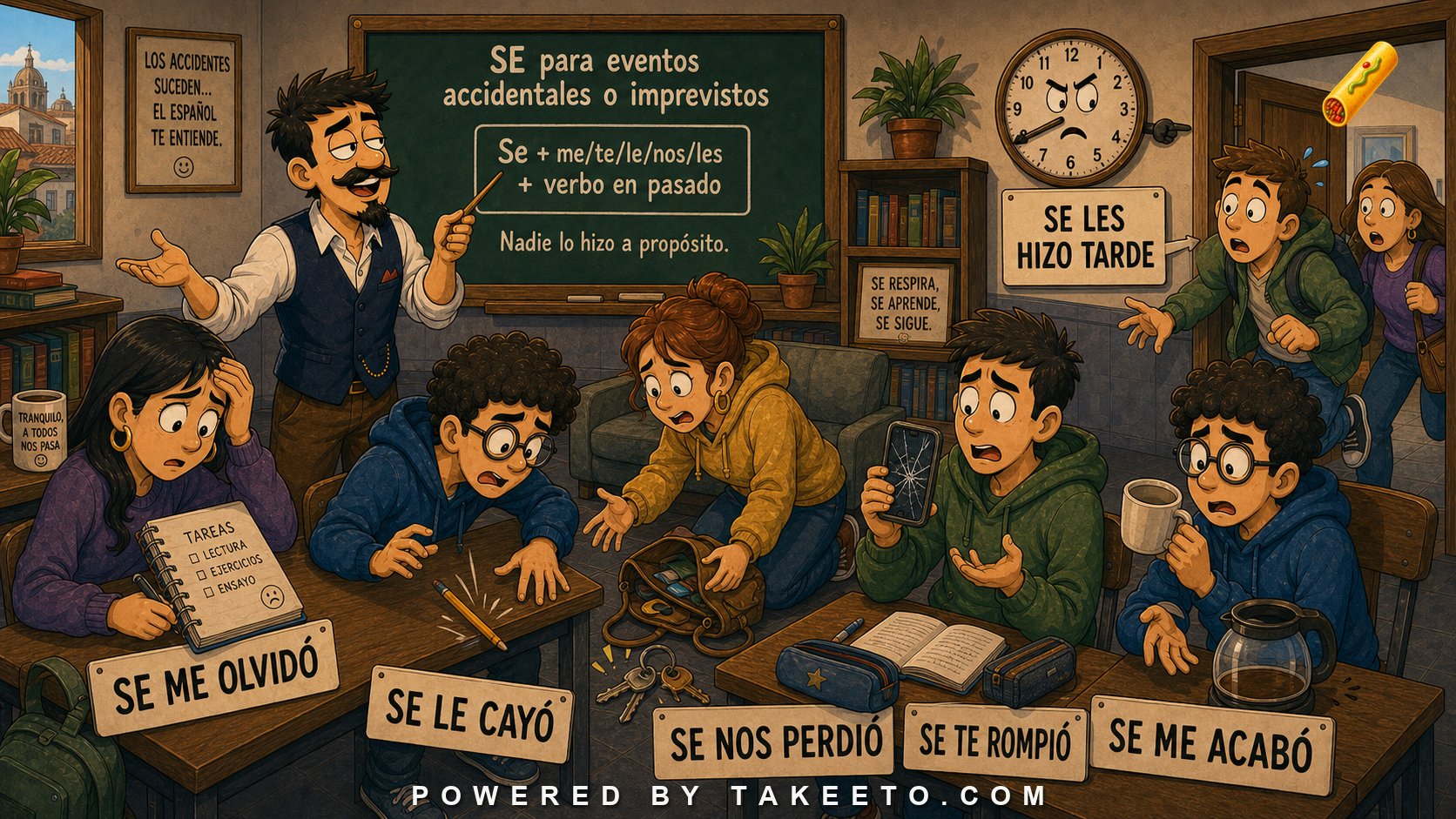
The reader can interpret se constructions that background agency and foreground affected participants.
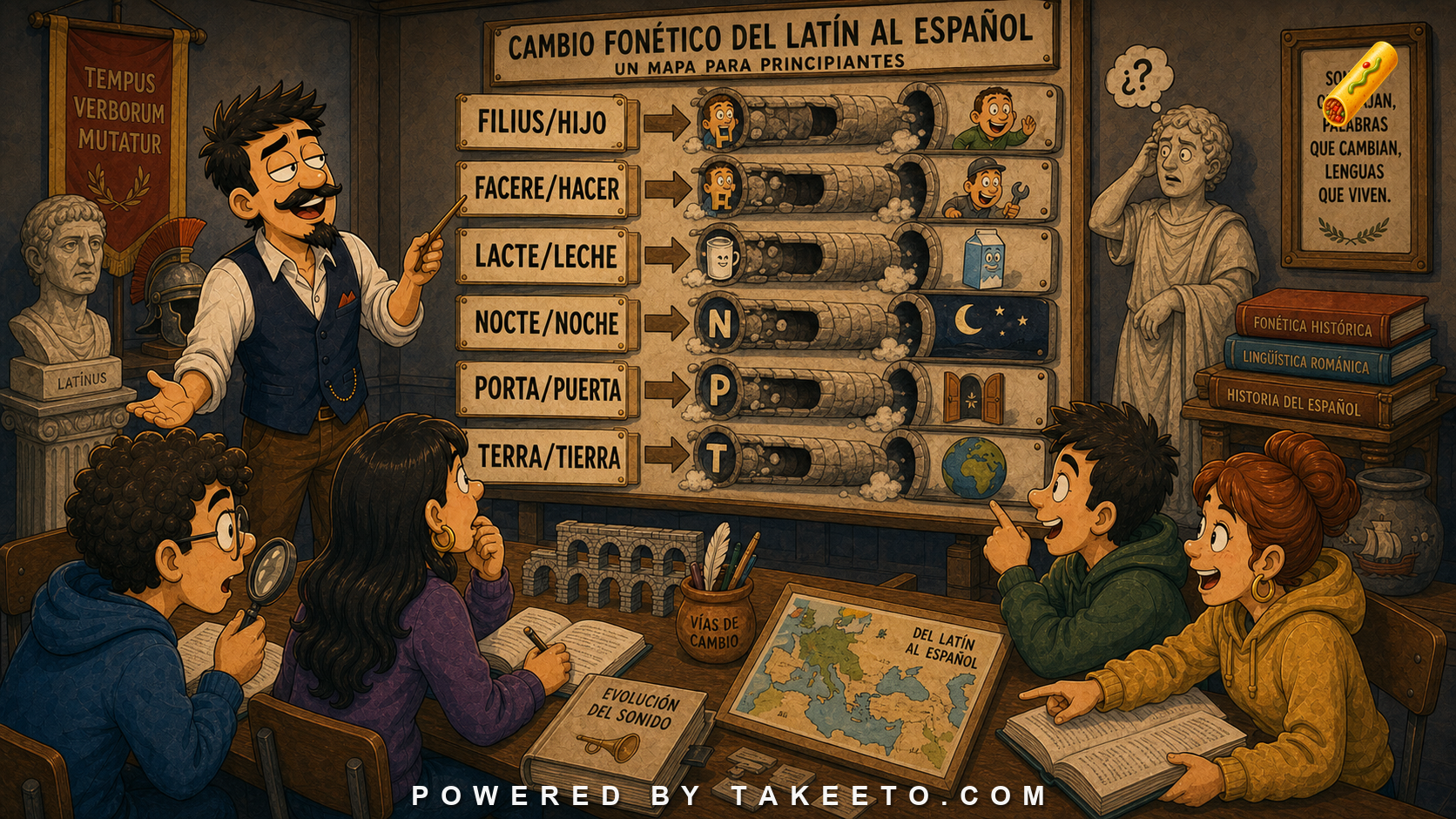
The reader can recognize major sound changes that explain modern Spanish word forms.
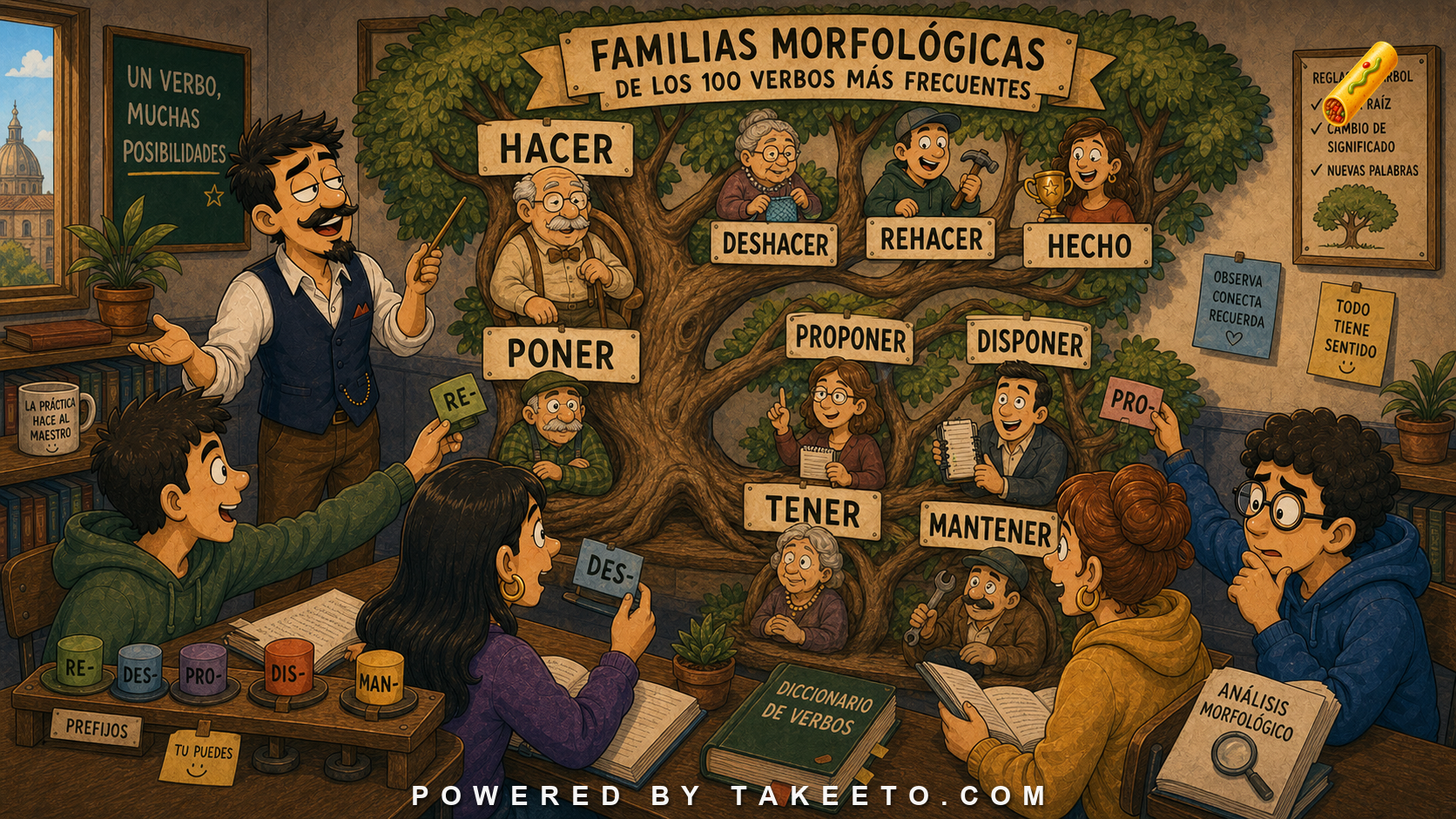
The reader can use high-frequency verbs as roots for broad lexical growth.
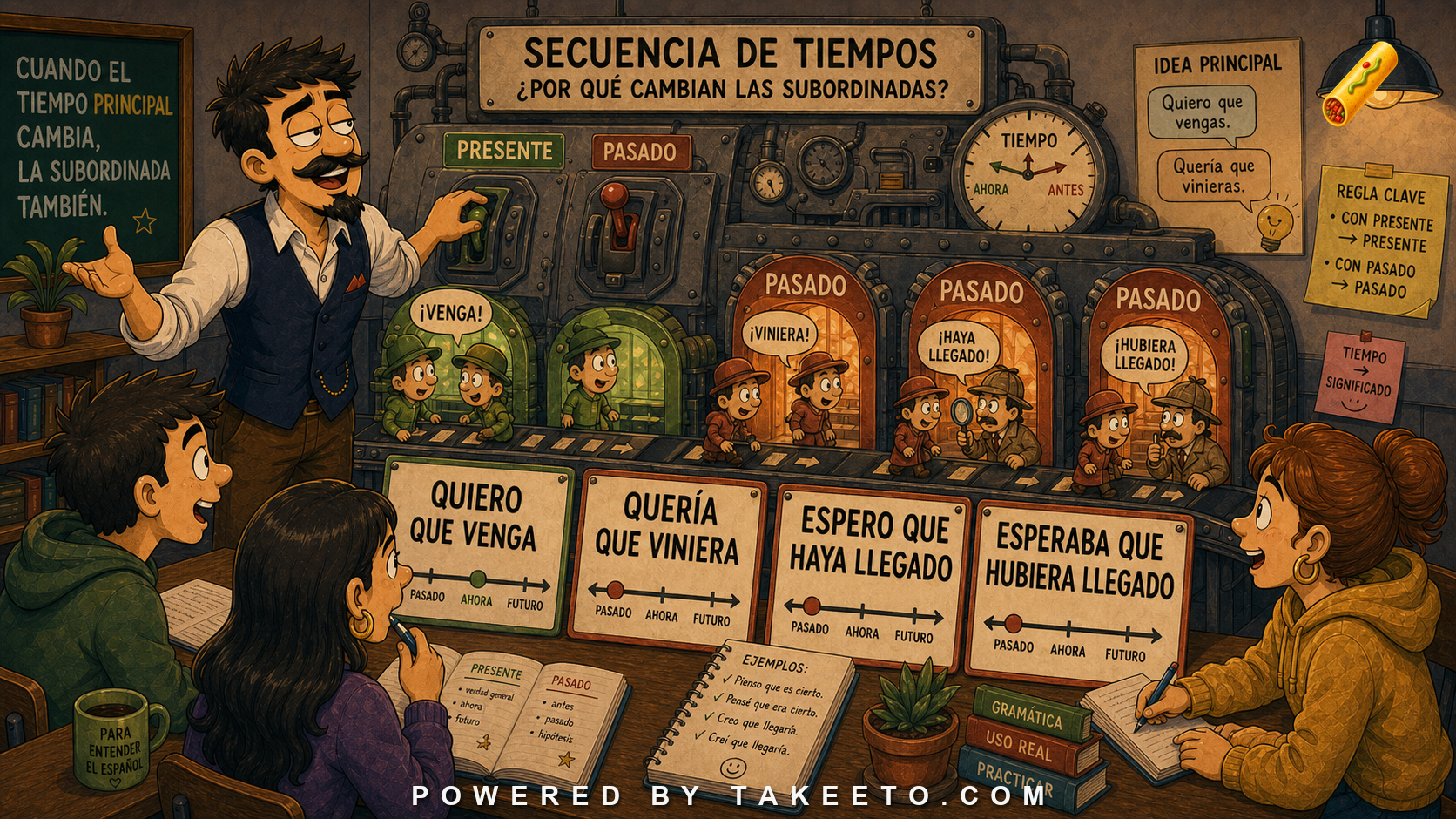
The reader can manage tense relationships across main and subordinate clauses.

The reader can parse Spanish political discourse and institutional vocabulary.
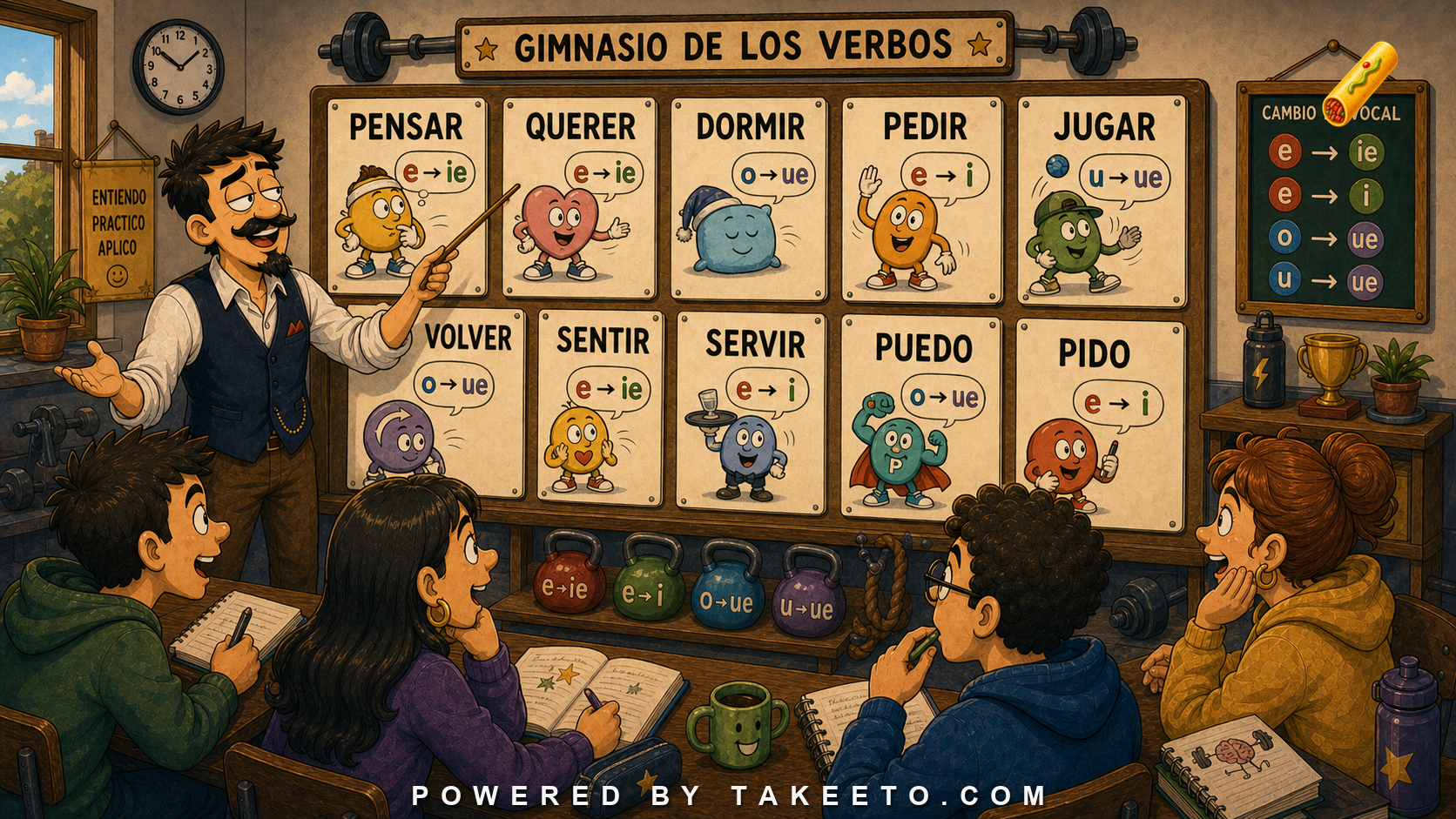
The reader can predict where and why stem changes appear in present and related forms.
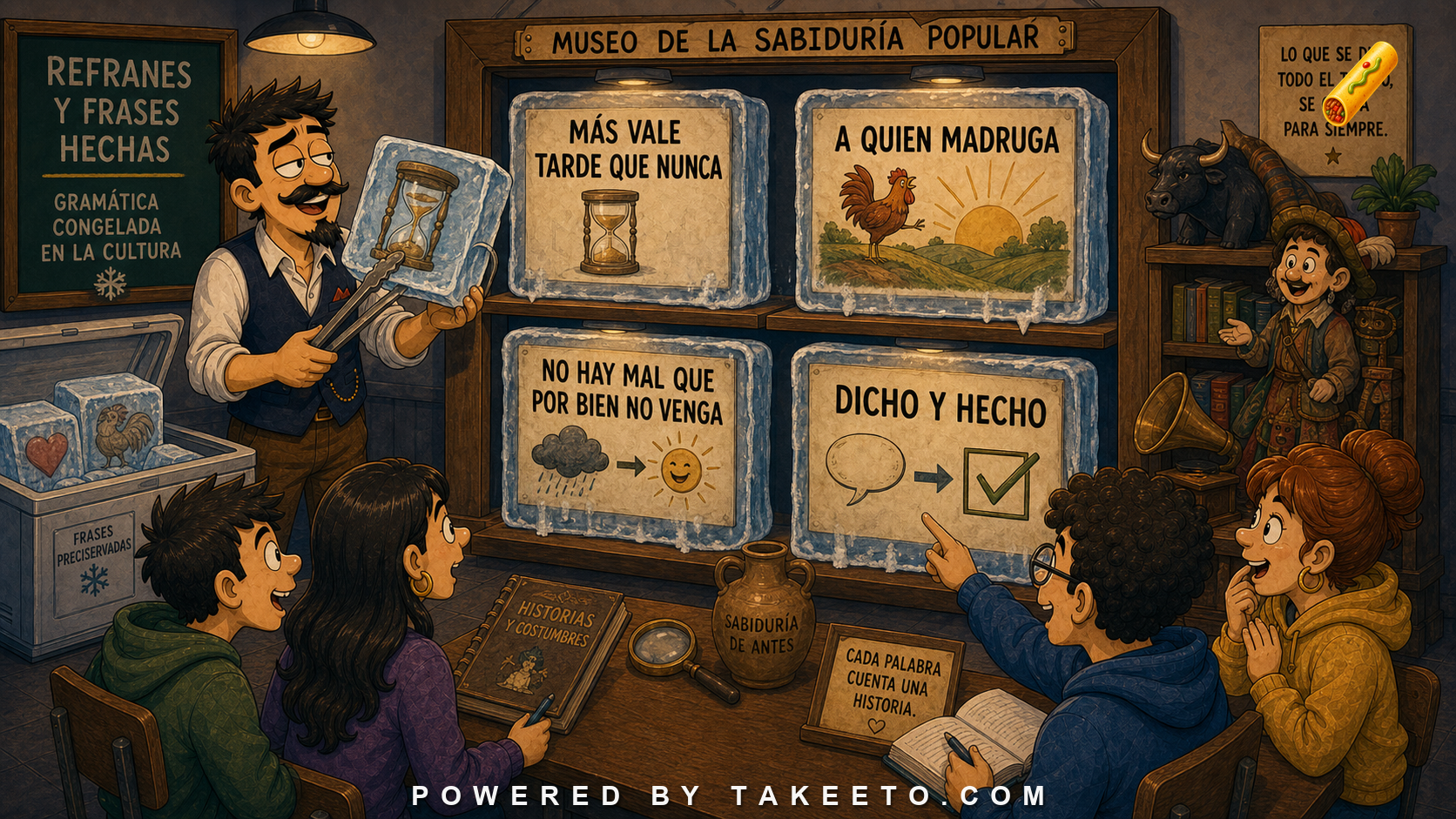
The reader can analyze proverbs as fixed expressions with grammar, history, and pragmatic force.
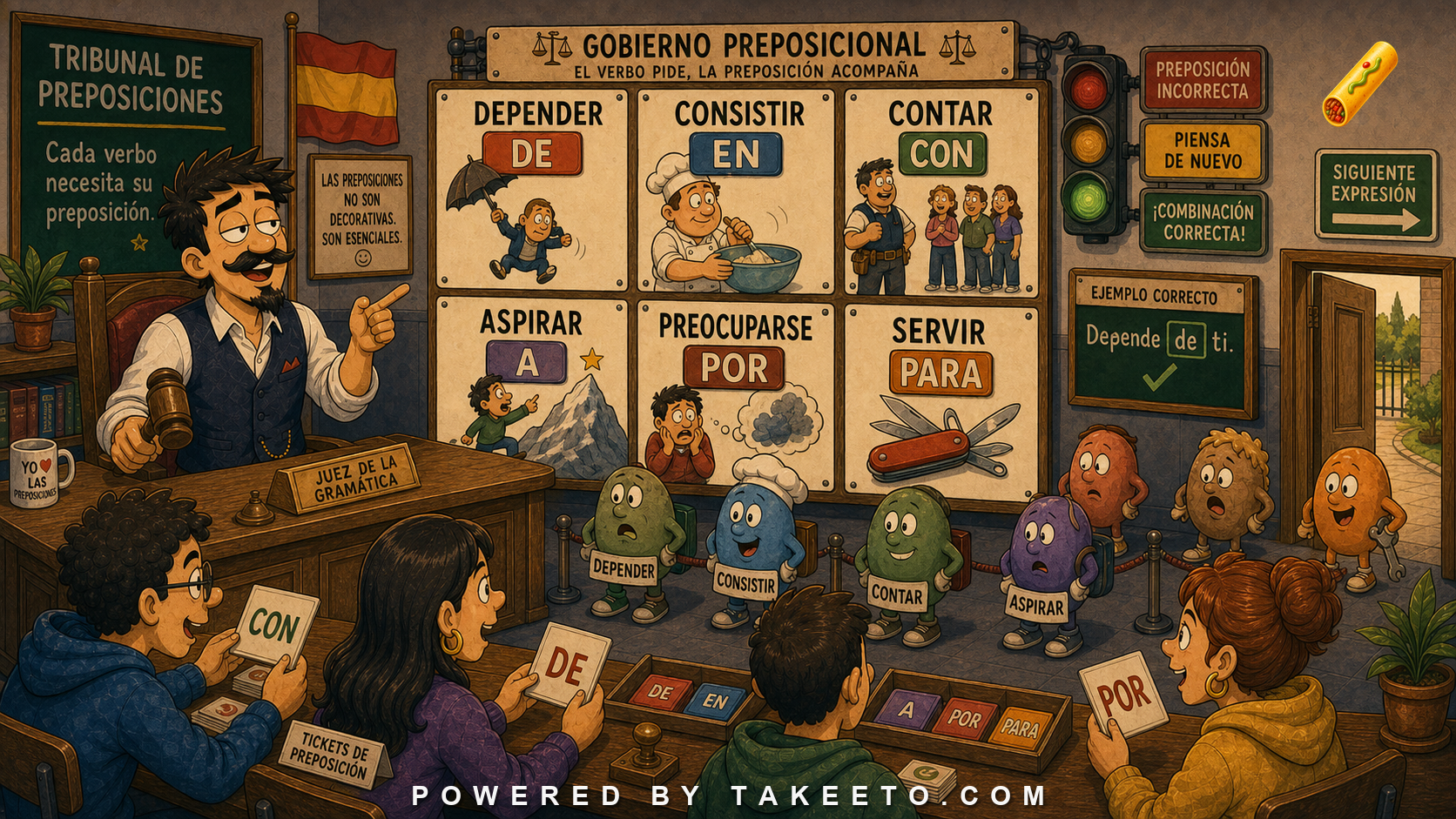
The reader can learn verb-preposition pairs as part of lexical competence.
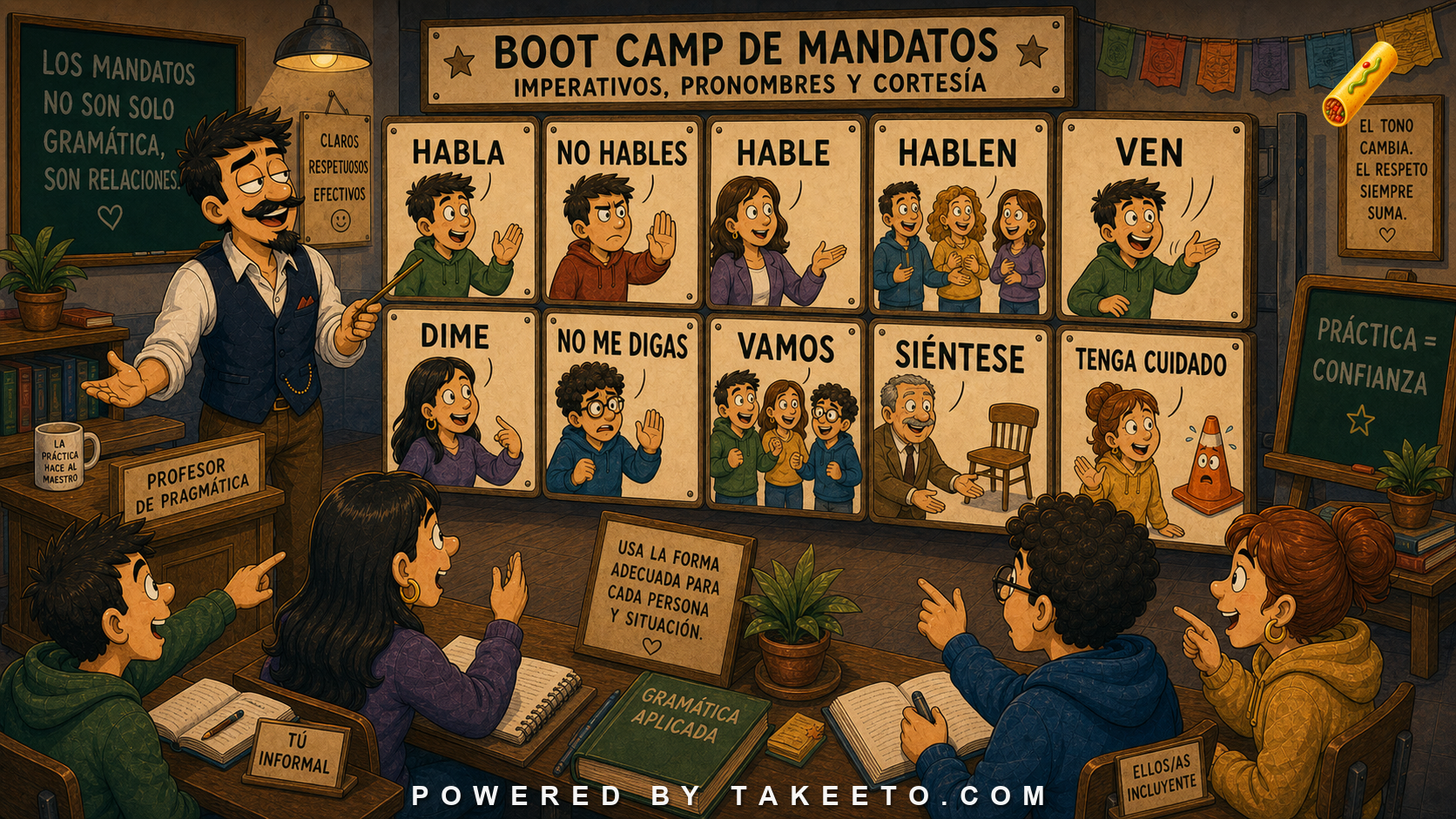
The reader can form commands and understand their social force.
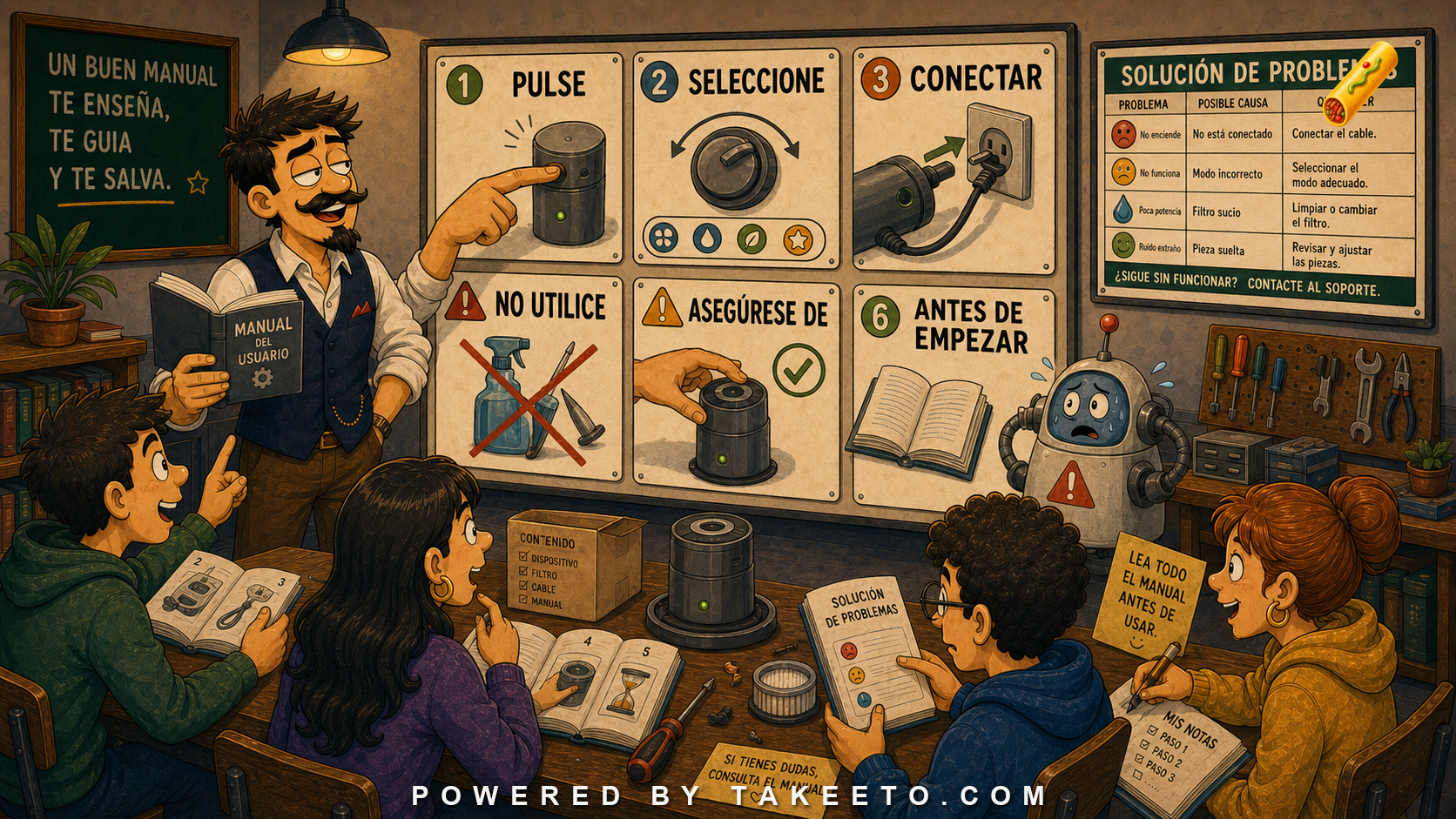
The reader can read and write Spanish instructions clearly.
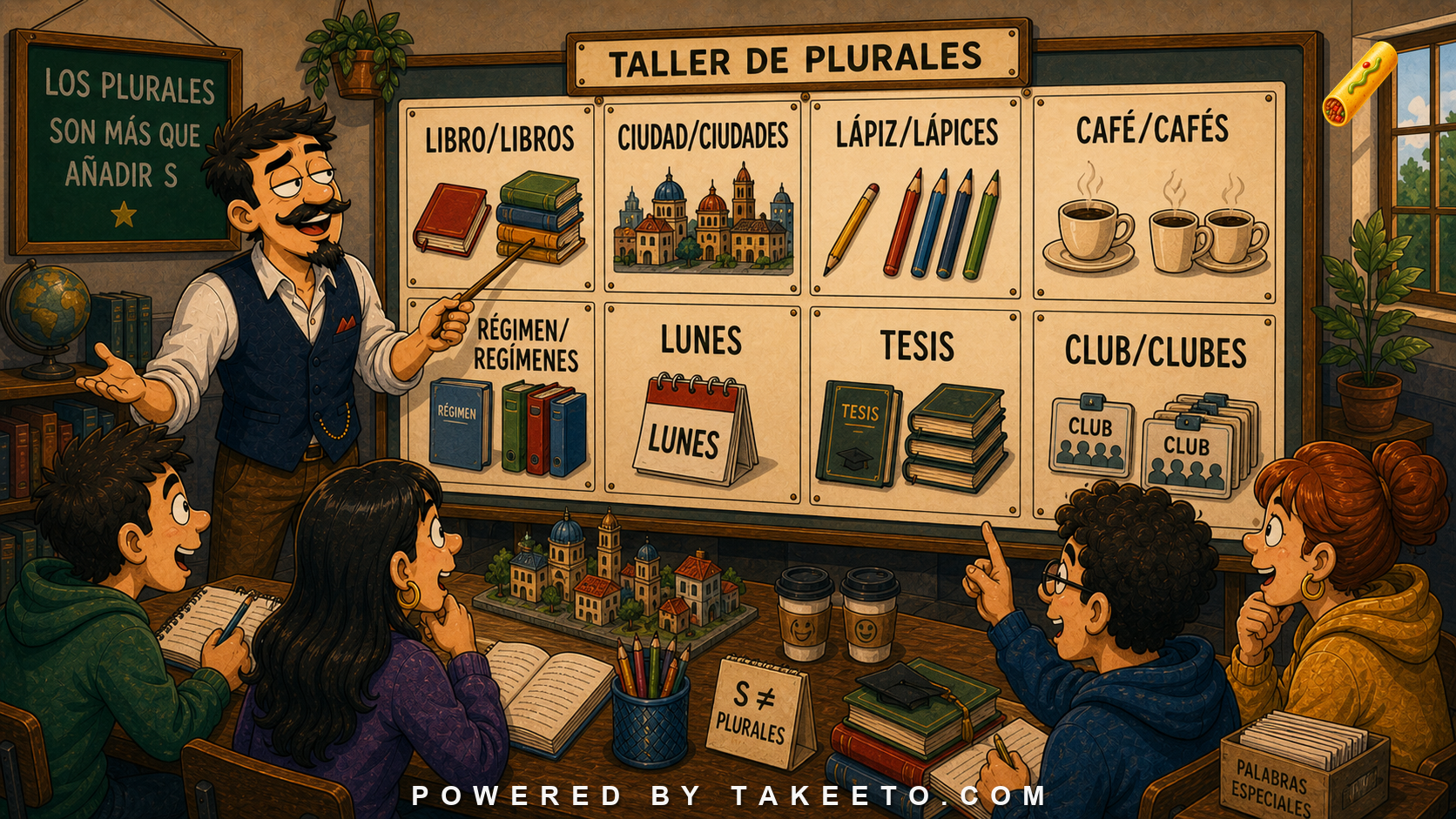
The reader can form and interpret plural nouns across stress changes, final consonants, and loanwords.
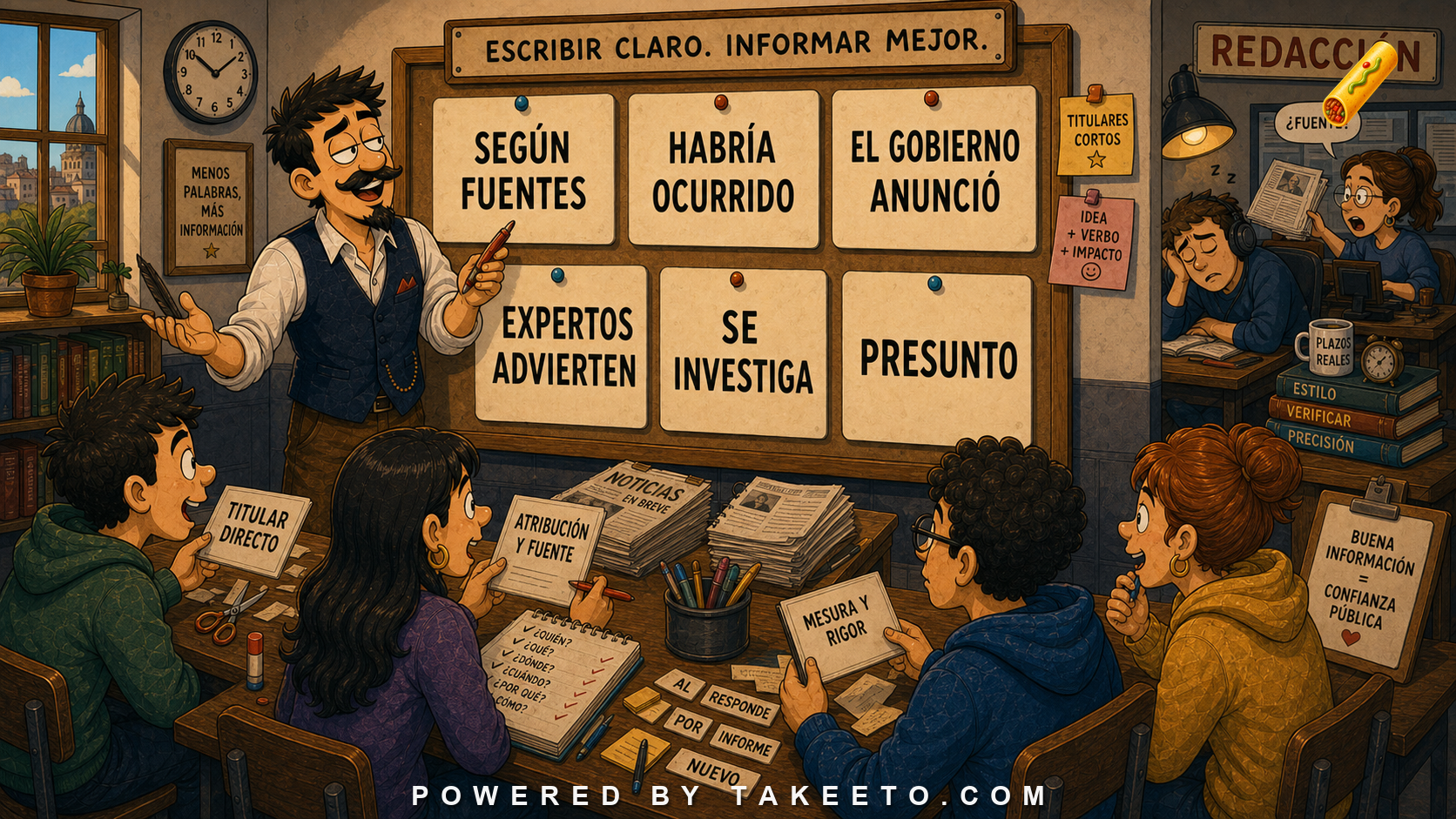
The reader can parse Spanish news style and identify source framing.
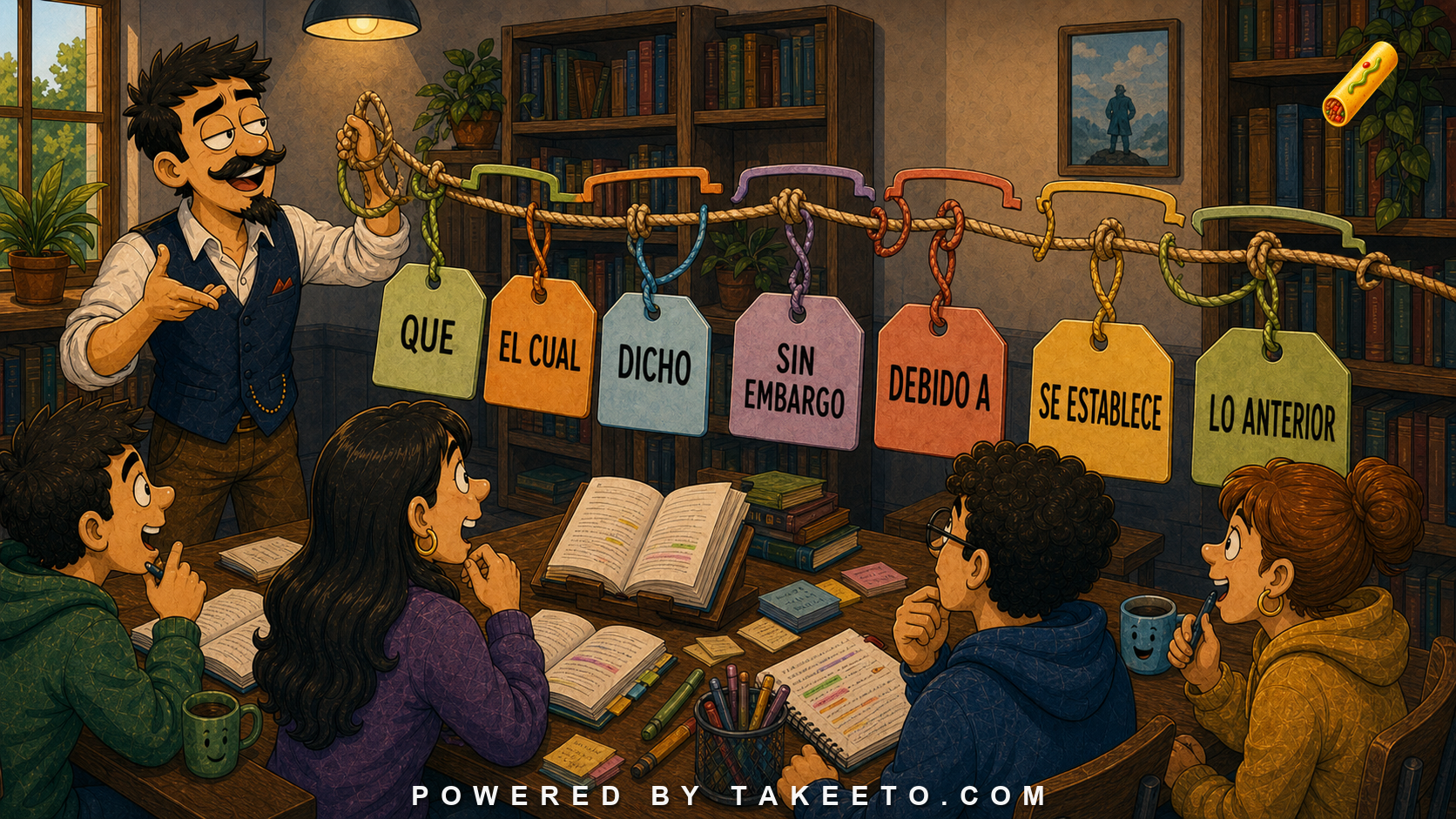
The reader can approach long Spanish sentences through clause structure, reference chains, and discourse markers.
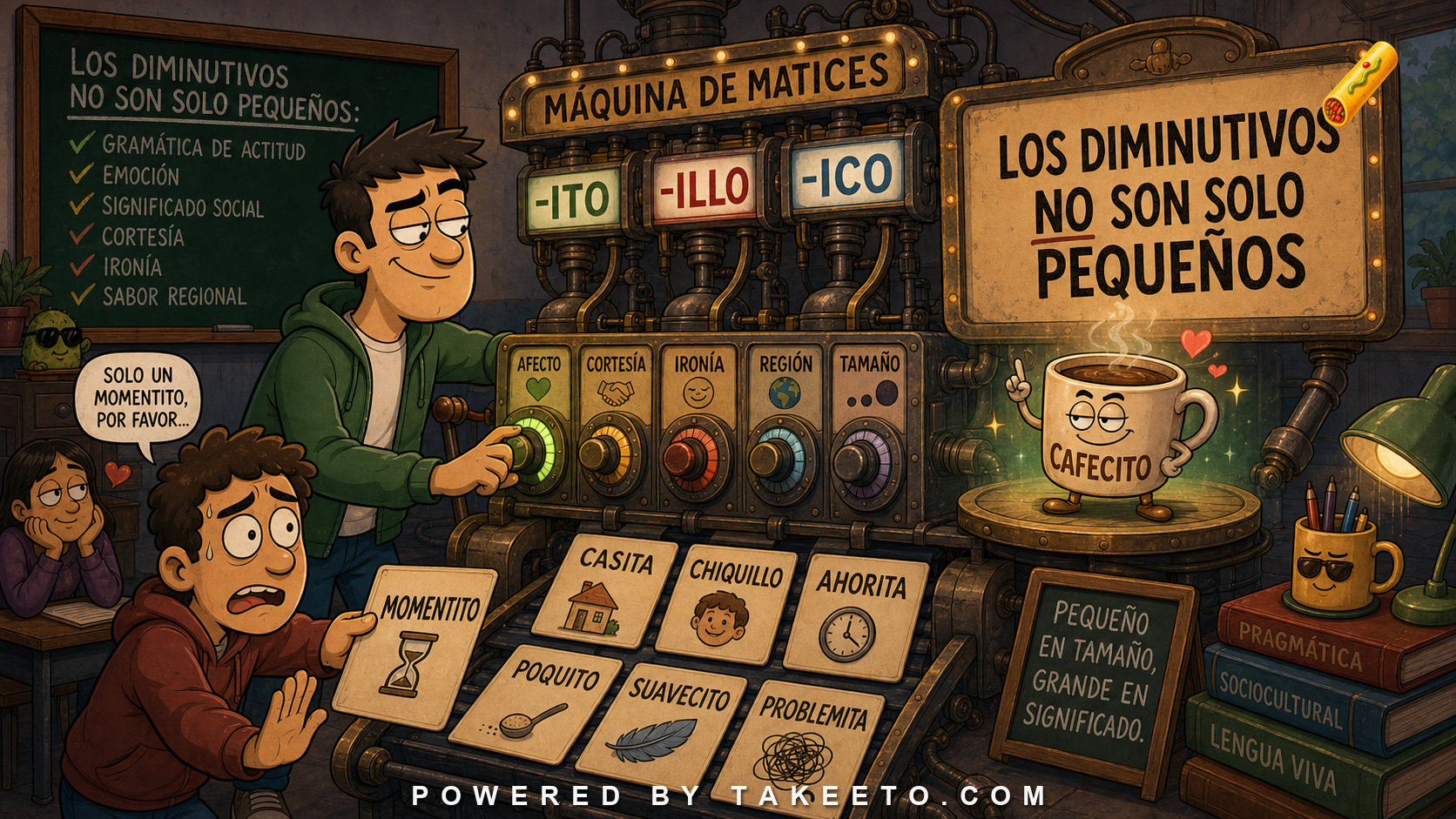
The reader understands diminutives as emotional, social, and regional markers, not only markers of small size.
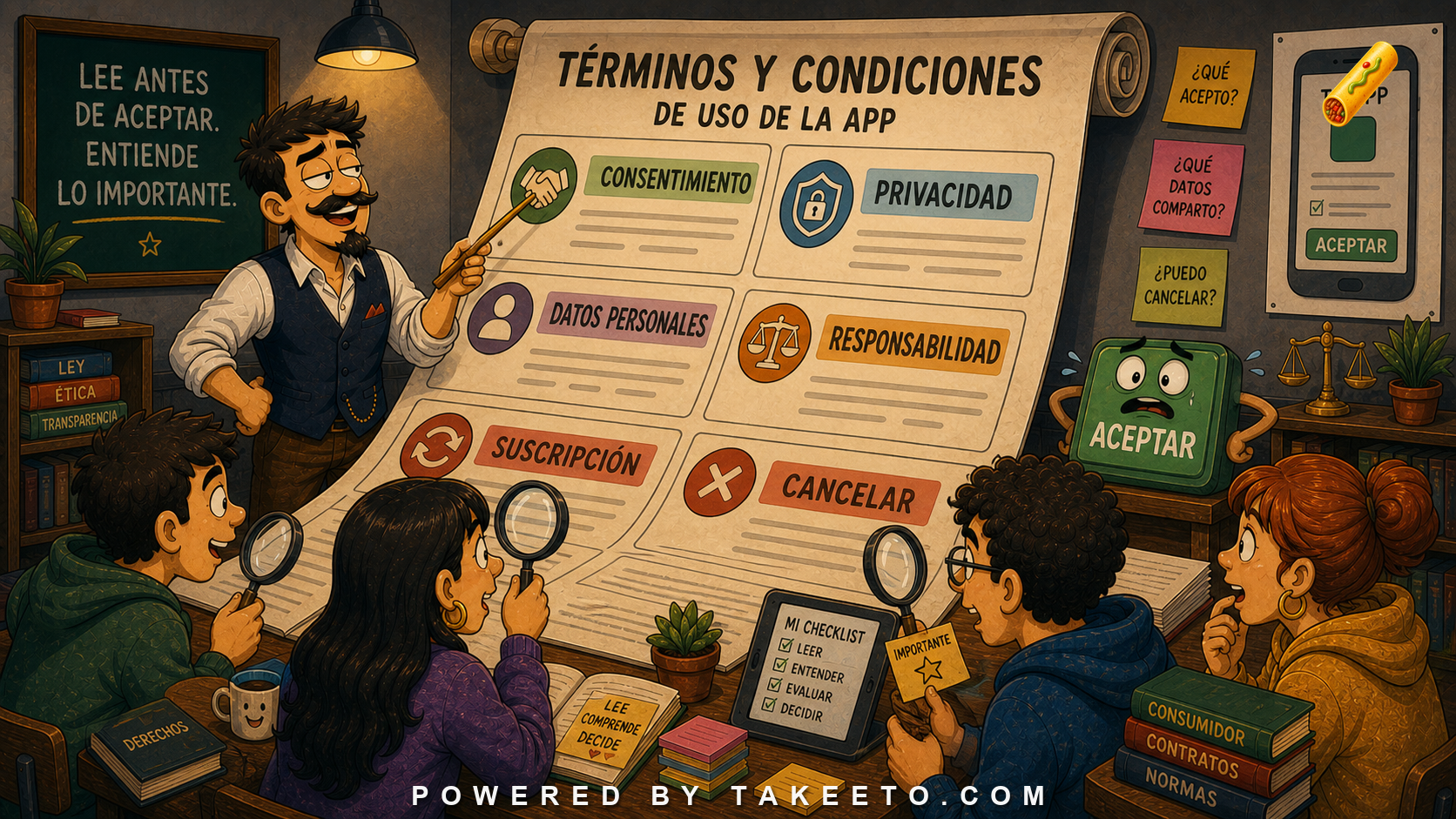
The reader can parse app and website legal Spanish.
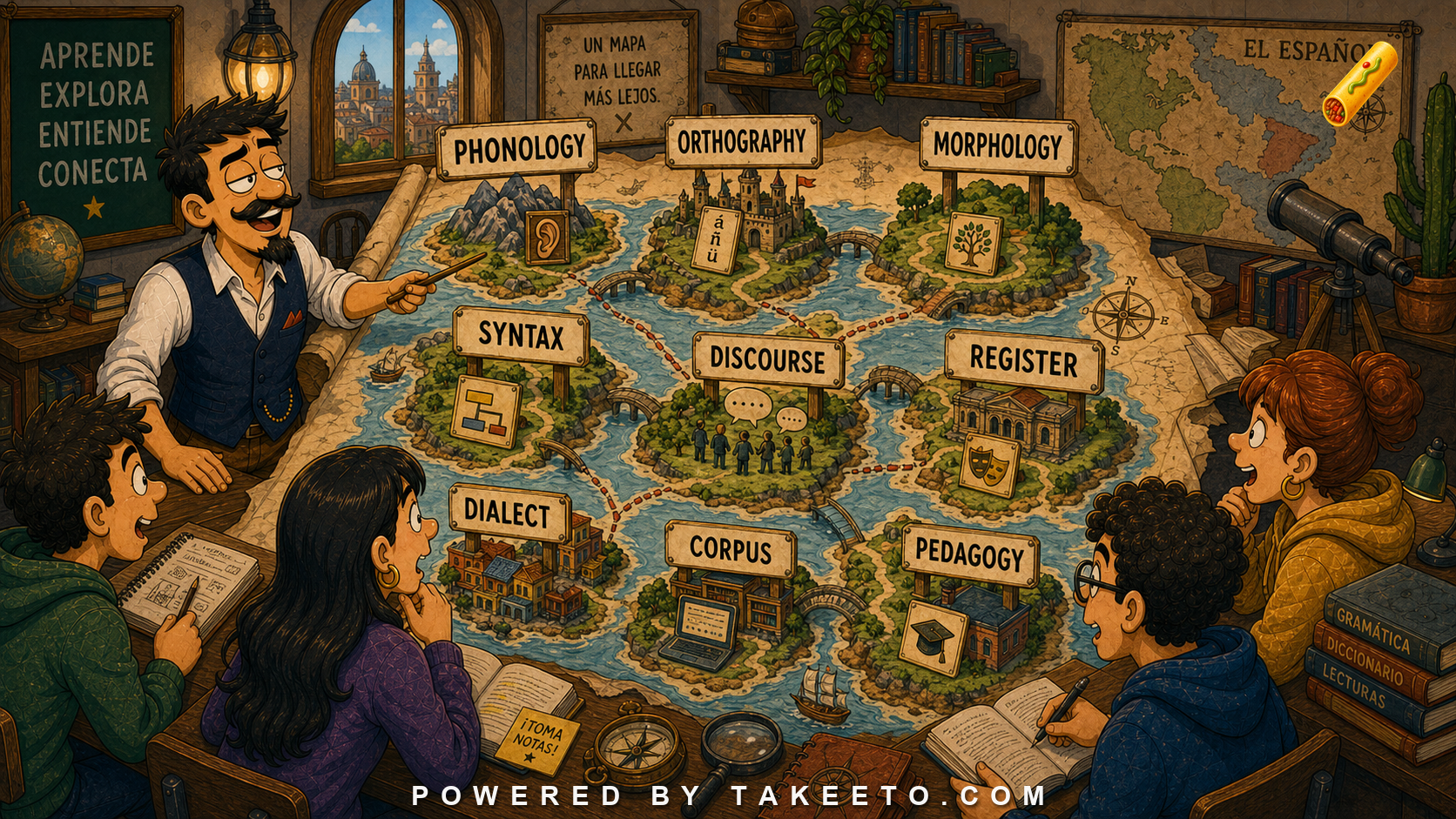
The reader sees the full 365-article project as a connected map of Spanish literacy.
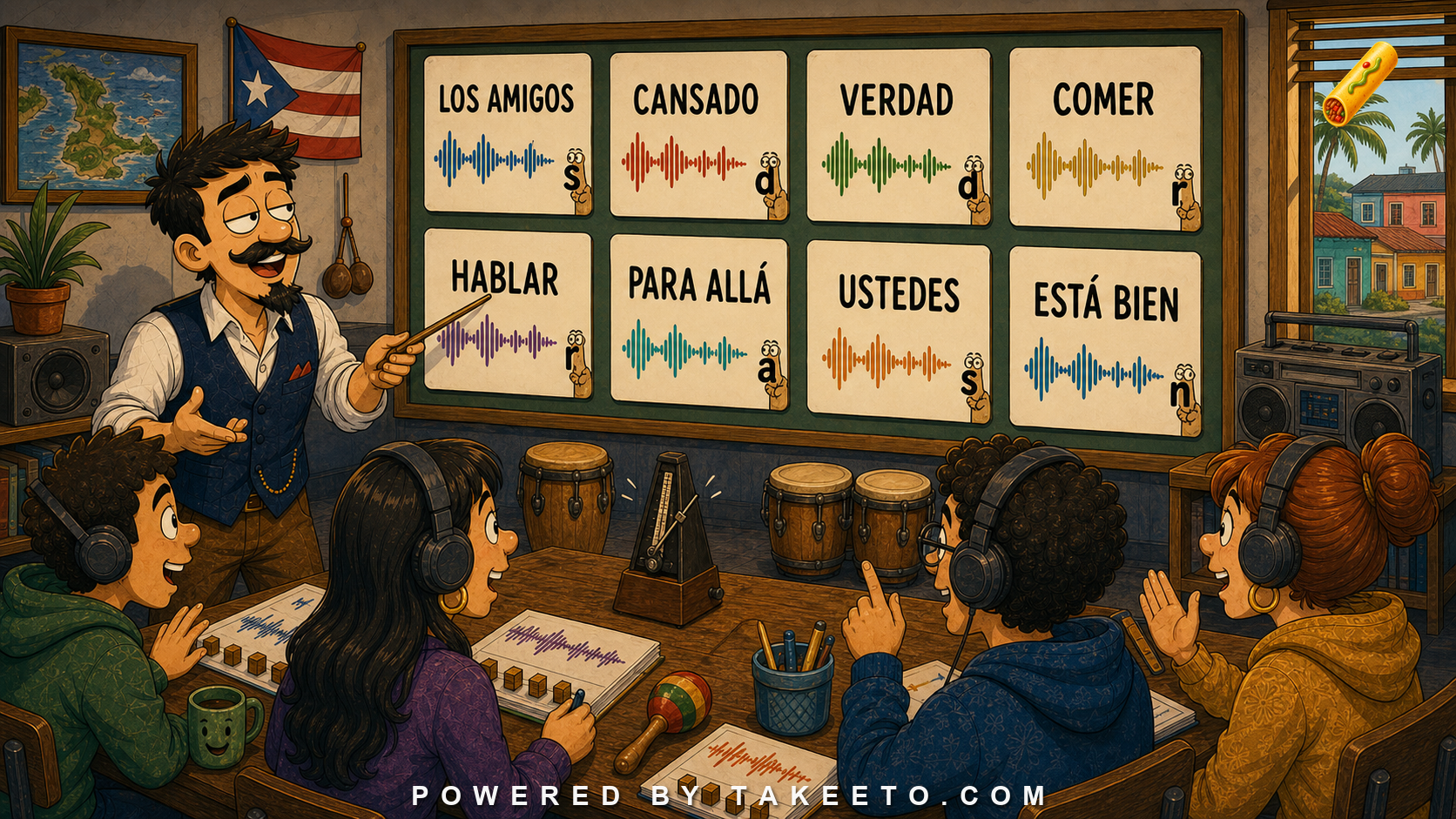
The reader can analyze Caribbean pronunciation without dismissing it as merely fast.
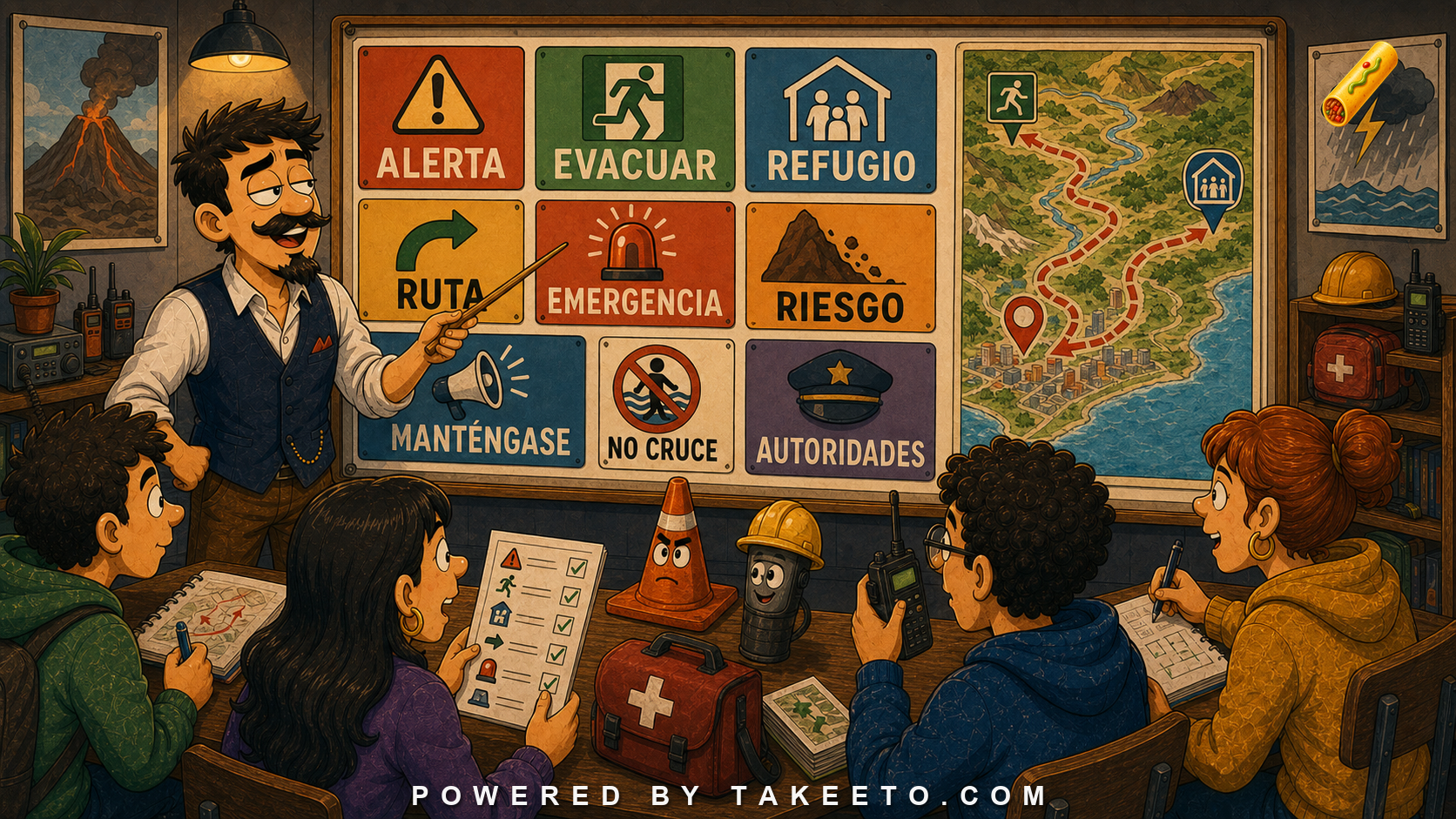
The reader can understand urgent Spanish alerts by extracting hazard, location, instruction, time, and authority.
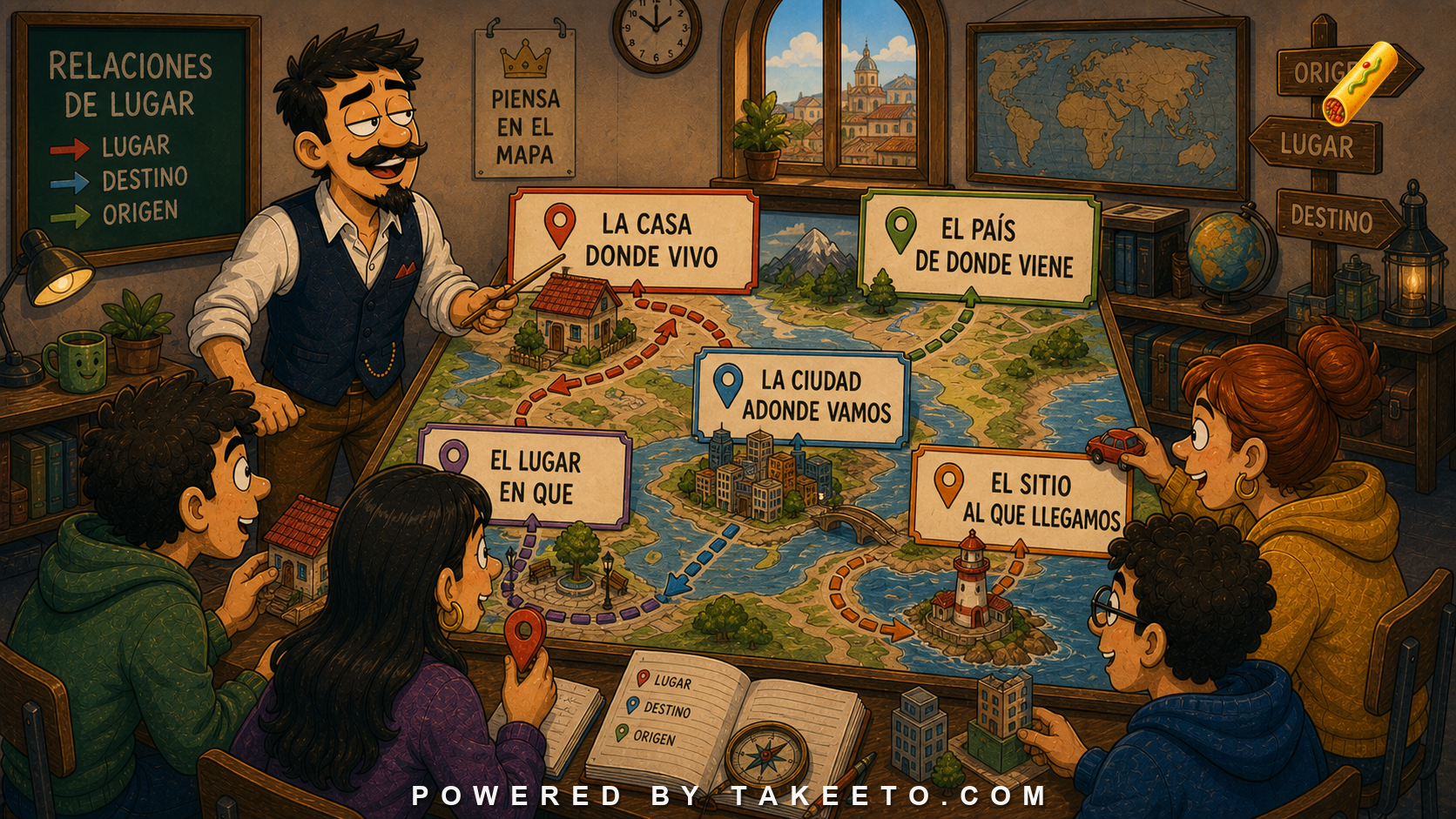
The reader can mark location, destination, and source in Spanish relative clauses.
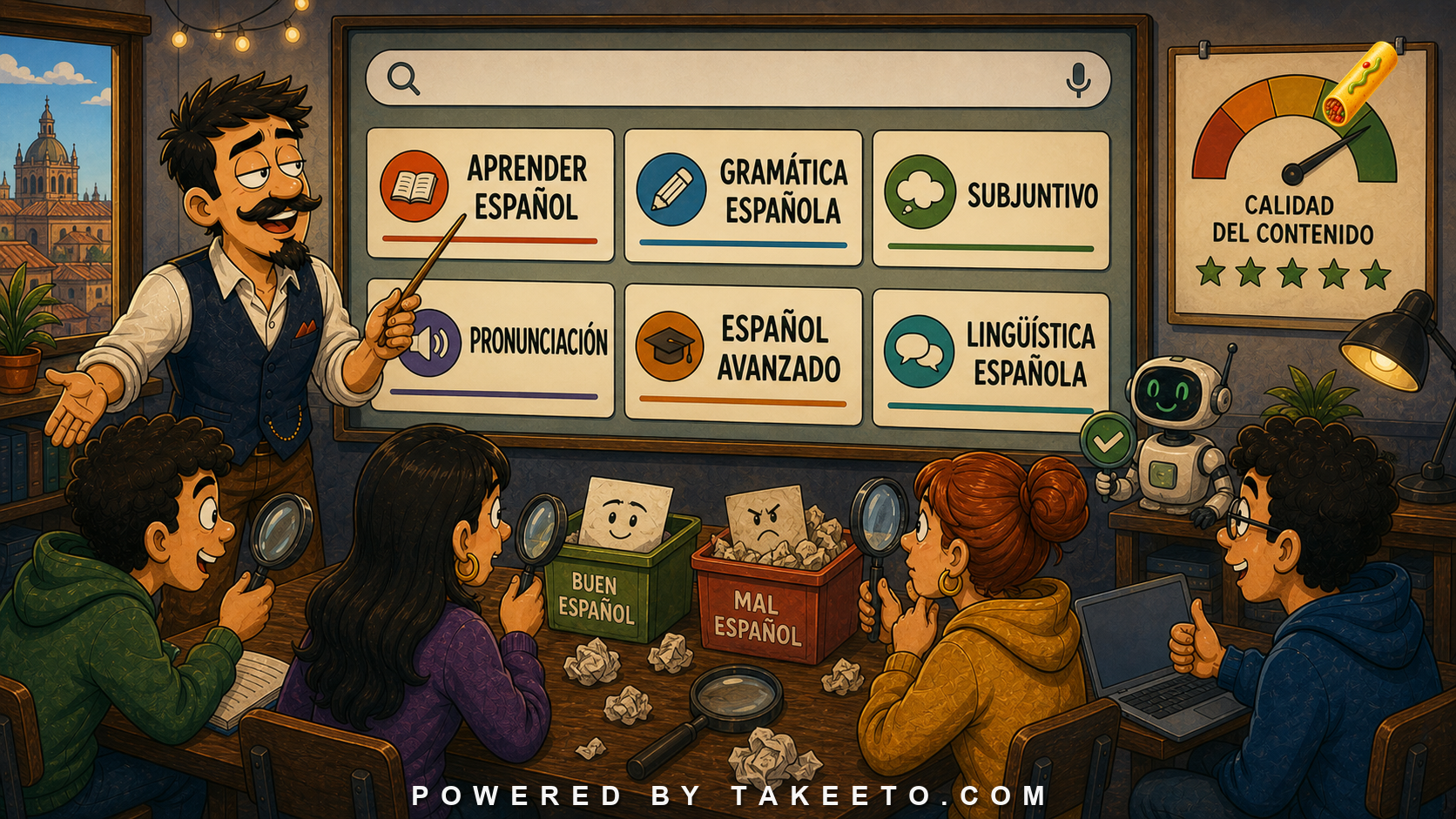
The reader can write search-visible Spanish that still respects grammar and reader trust.
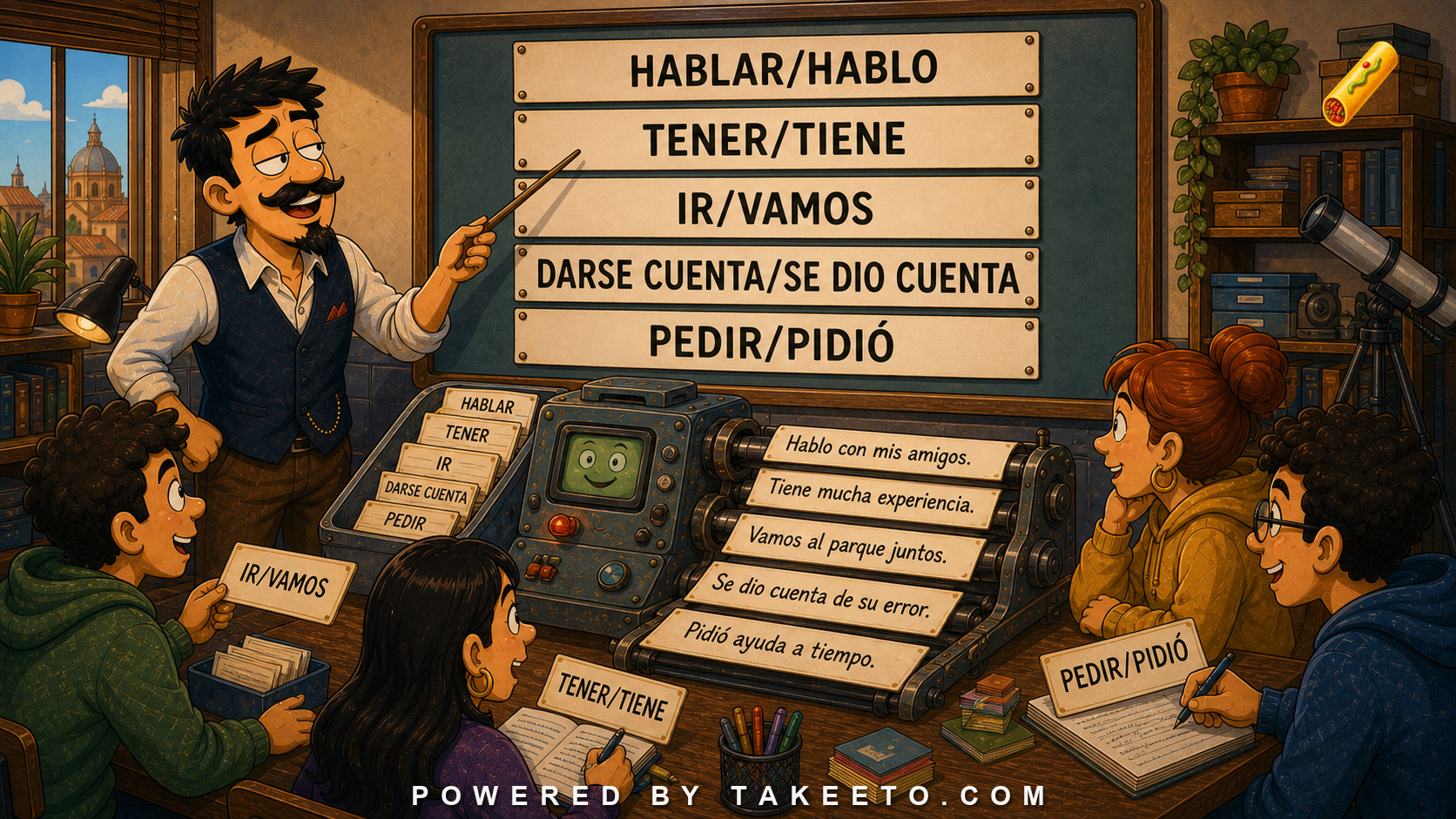
The reader understands how to represent verbs when passages need natural conjugated forms.
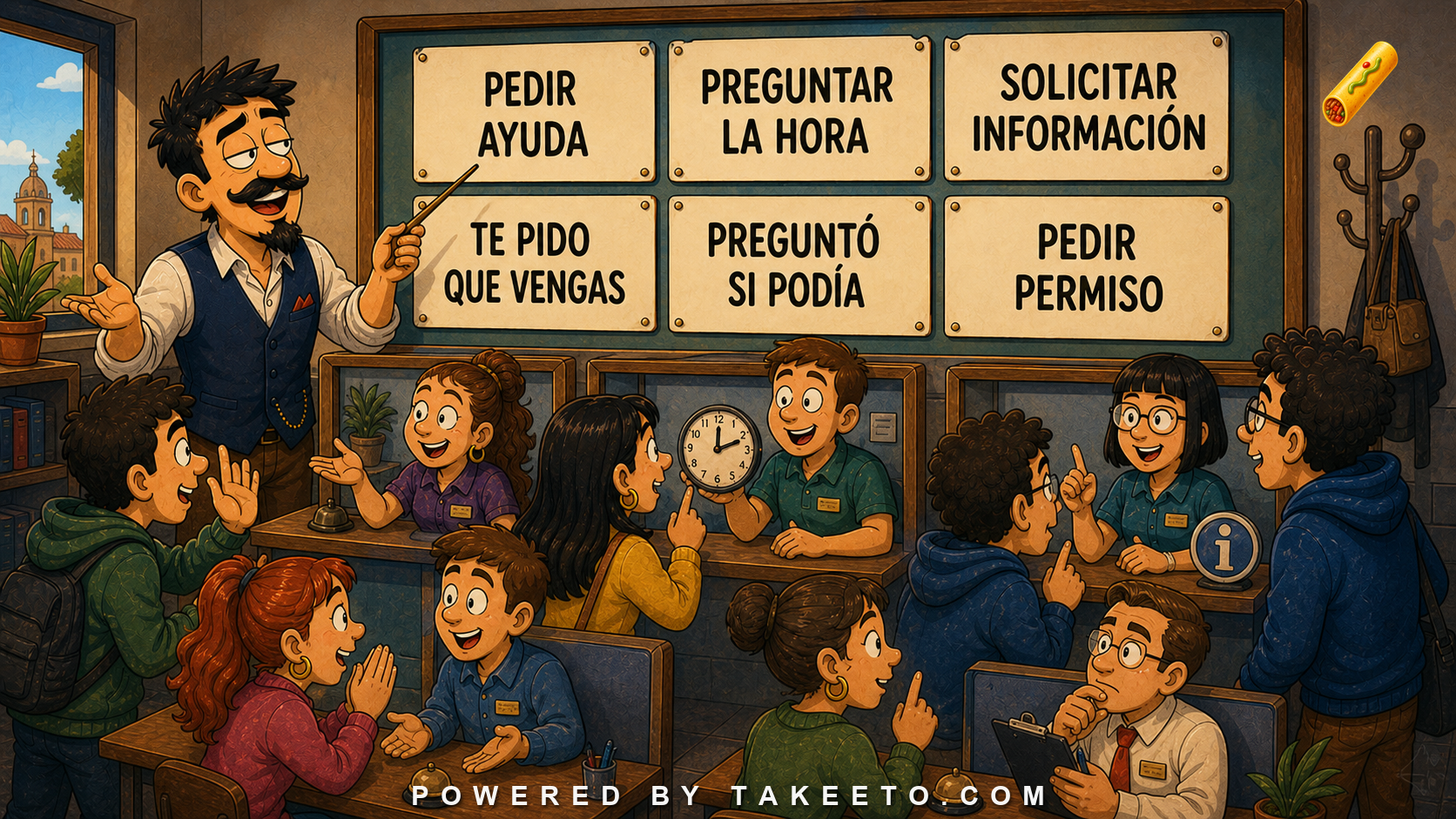
The reader can avoid the common error of using preguntar for requests.
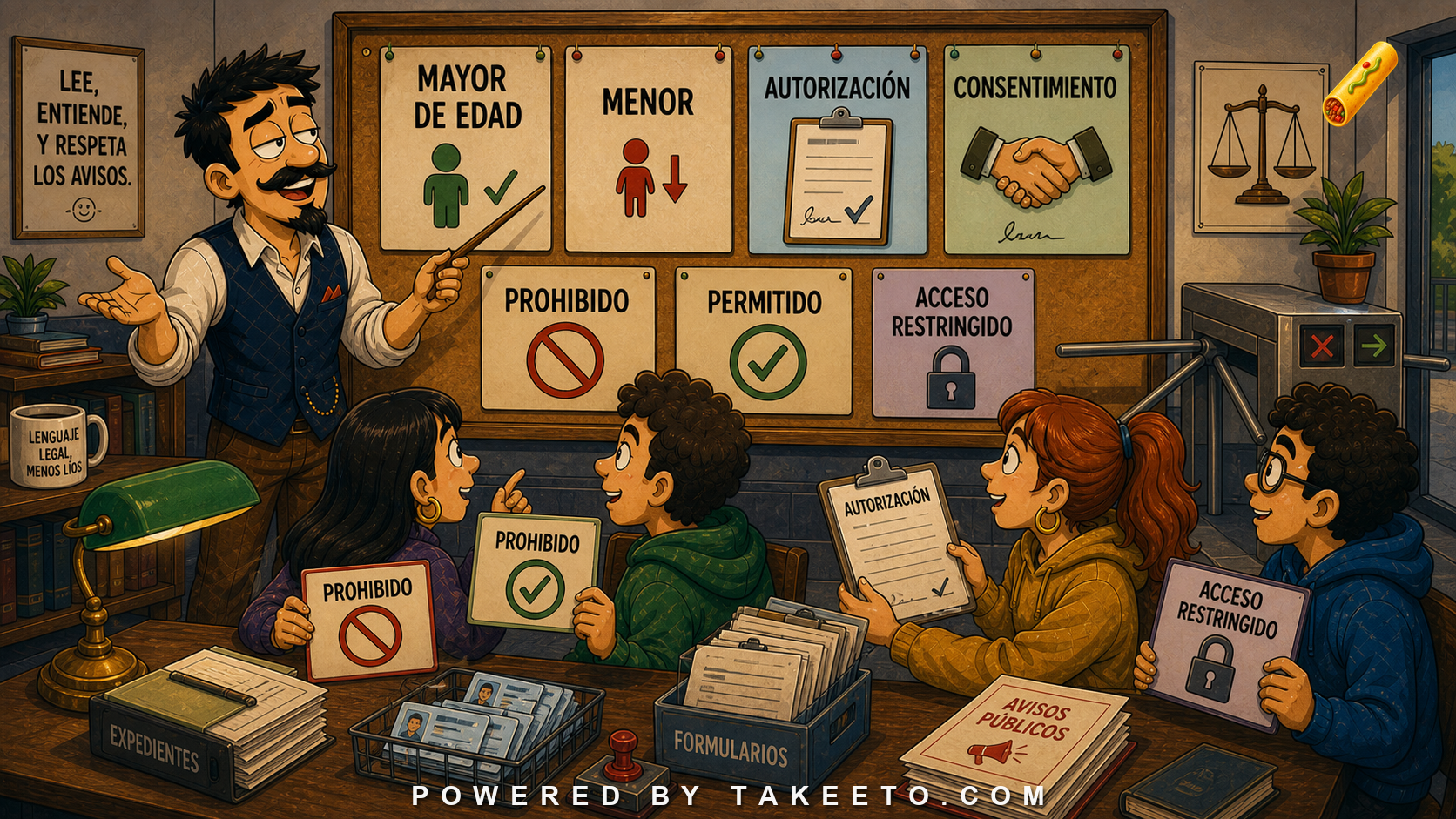
The reader can understand age restrictions and permission/prohibition notices while recognizing country-specific legal risk.
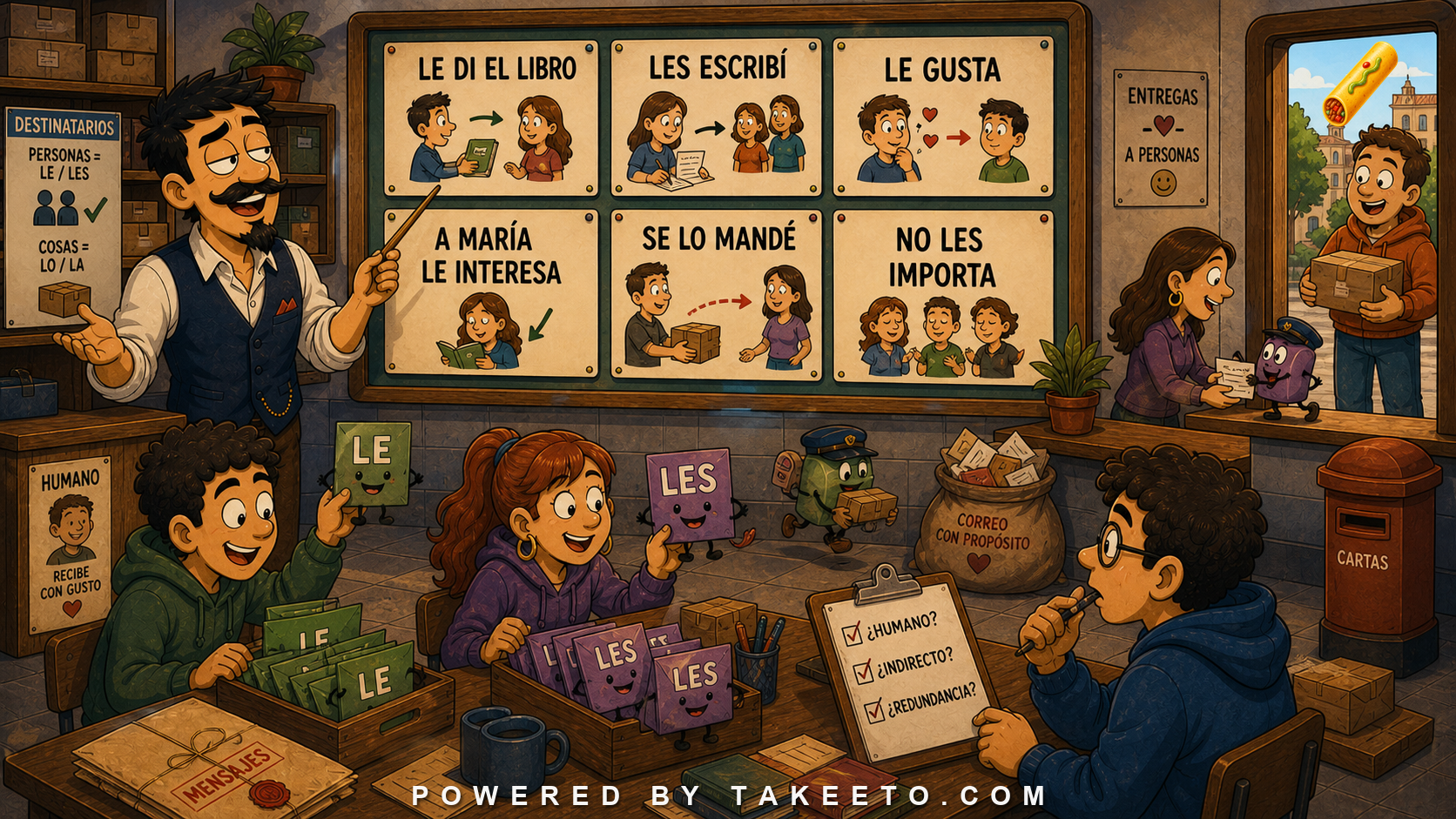
The reader understands indirect object pronouns as core argument markers, not optional clutter.

The reader can place Galician in the Romance landscape and understand its relation to Spanish and Portuguese.
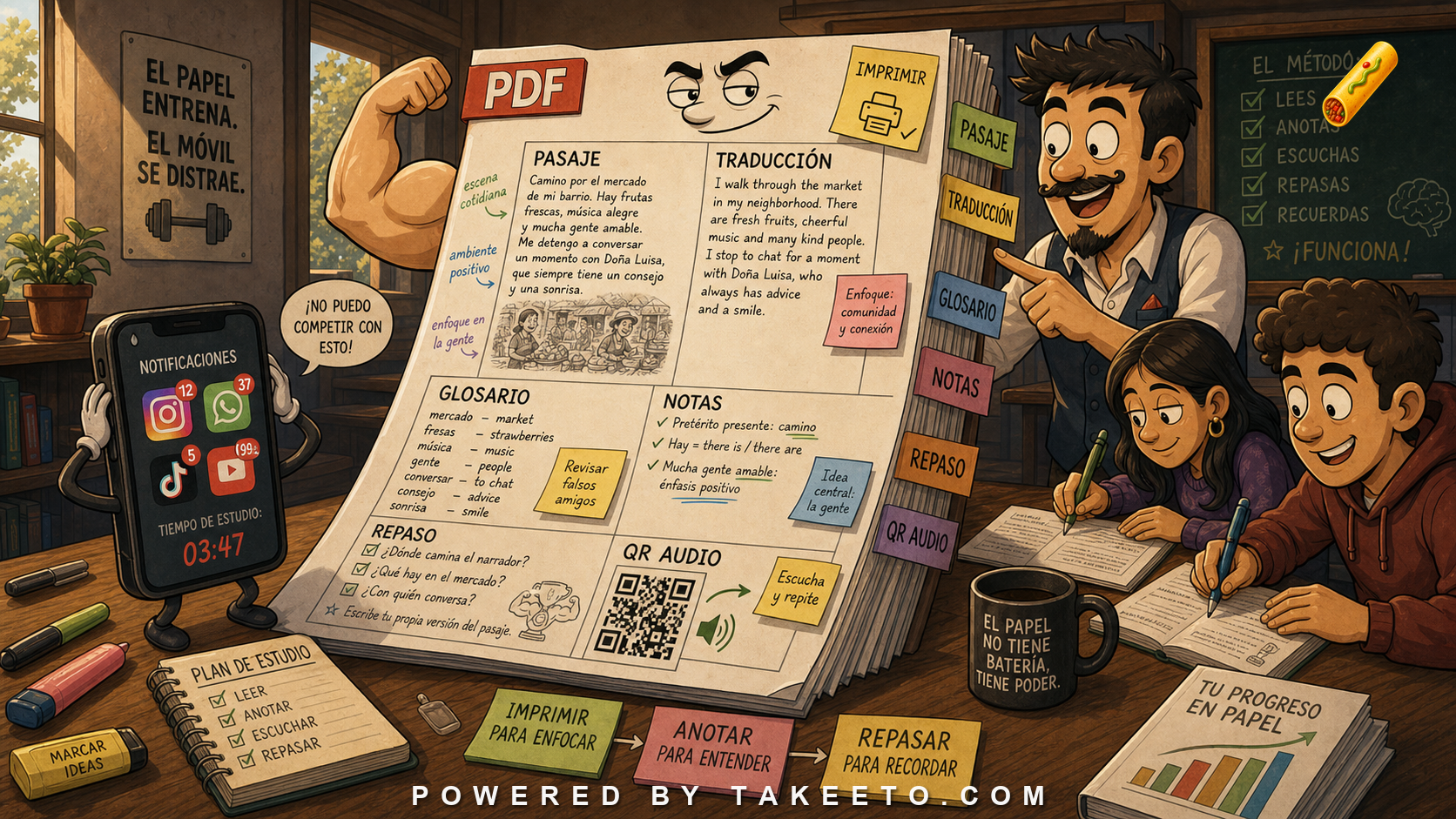
The reader understands the pedagogical role of printable passage packets.
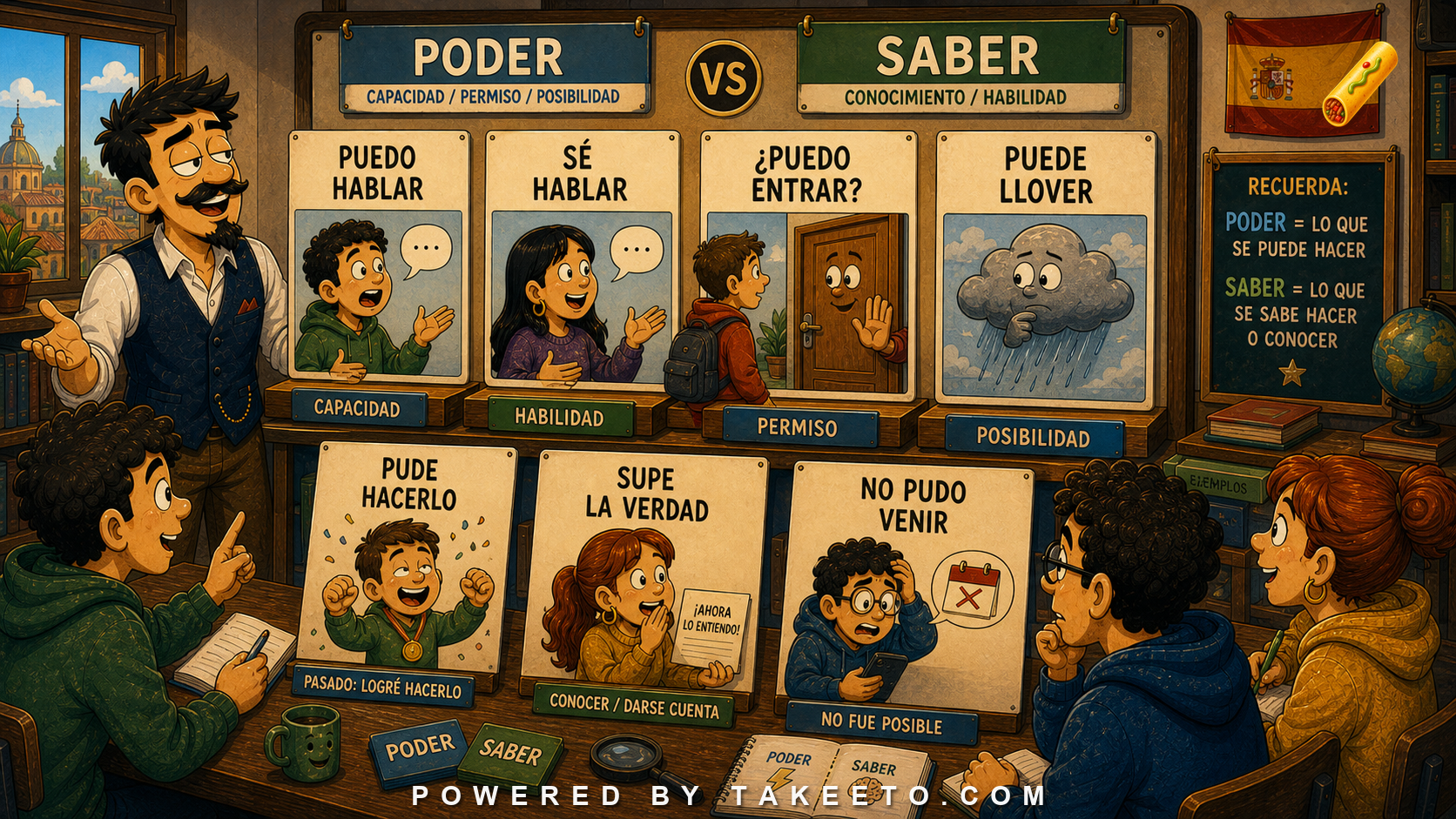
The reader can distinguish capacity, permission, possibility, and learned skill.
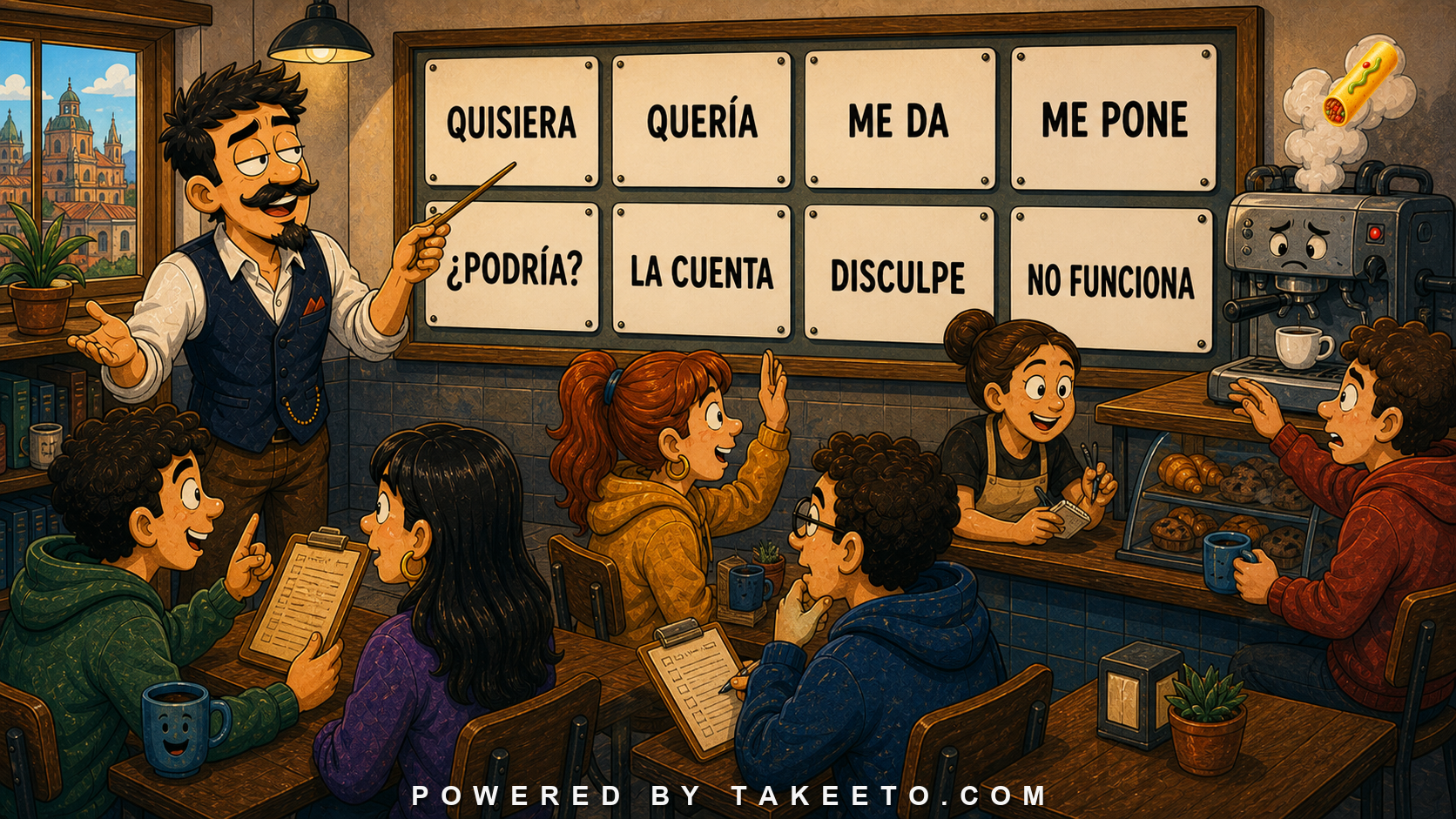
The reader can manage service interactions respectfully and precisely.
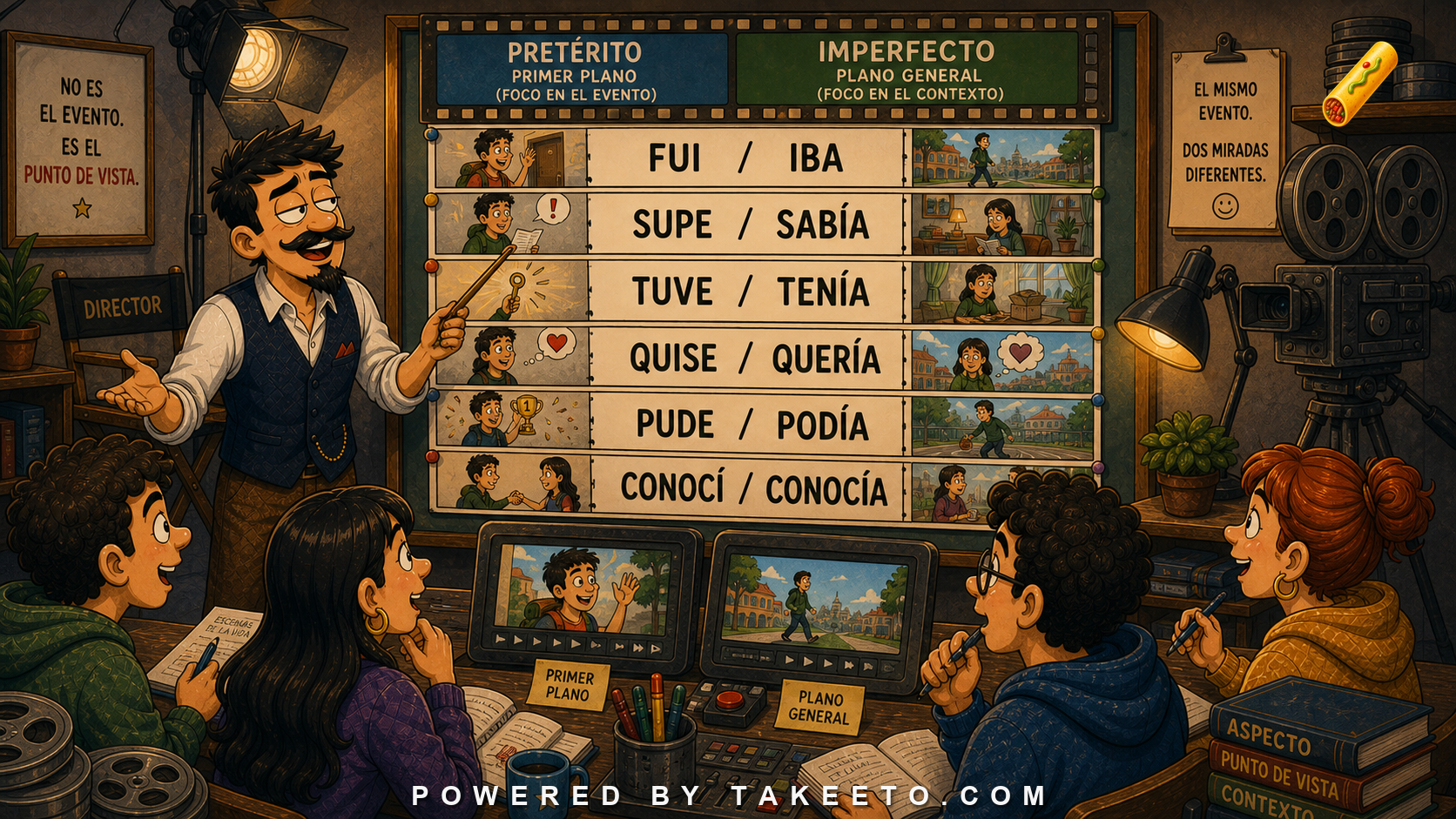
The reader learns to choose between preterite and imperfect by narrative viewpoint rather than vocabulary lists.
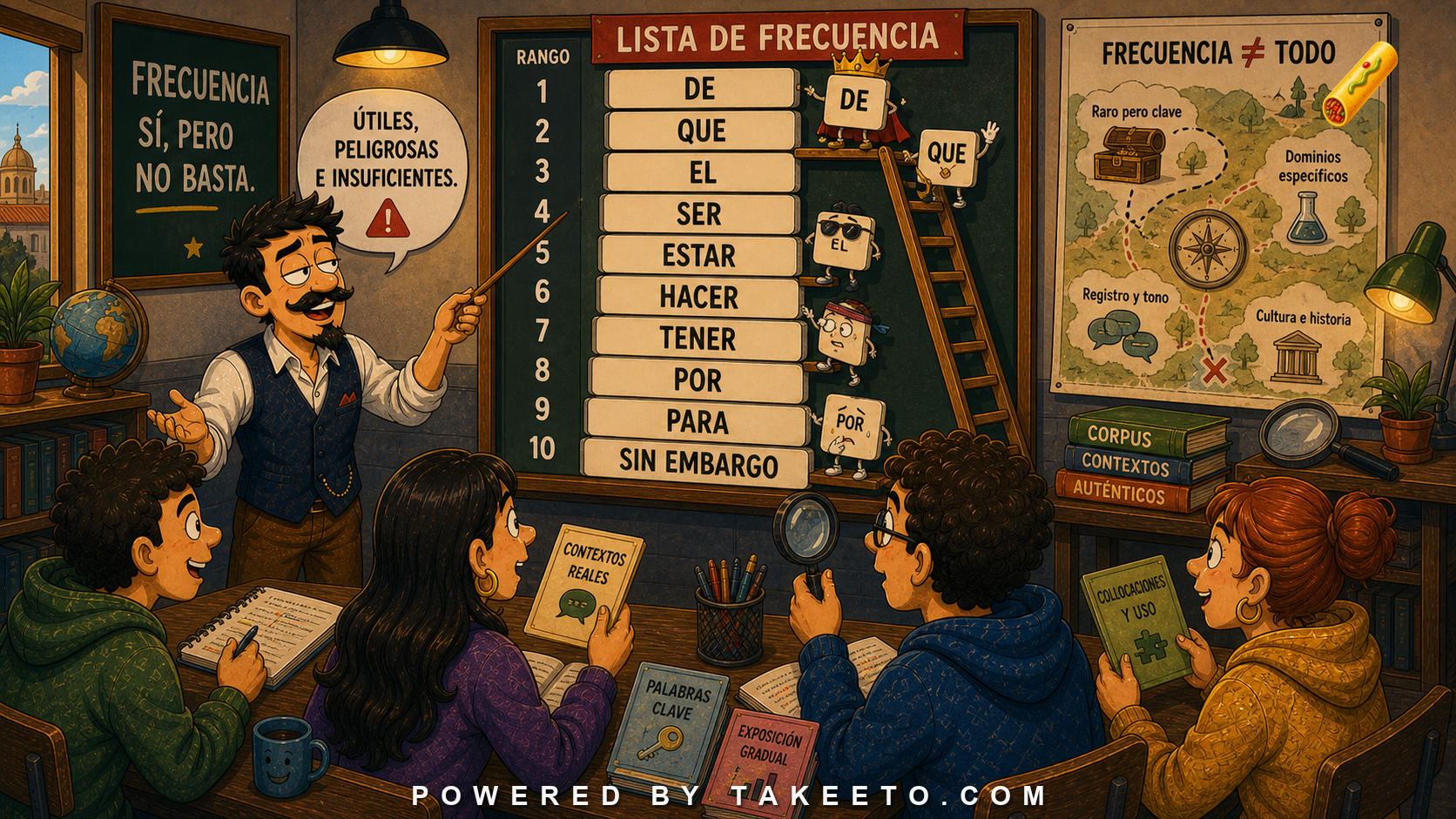
The reader can use frequency data without confusing it with curriculum design.
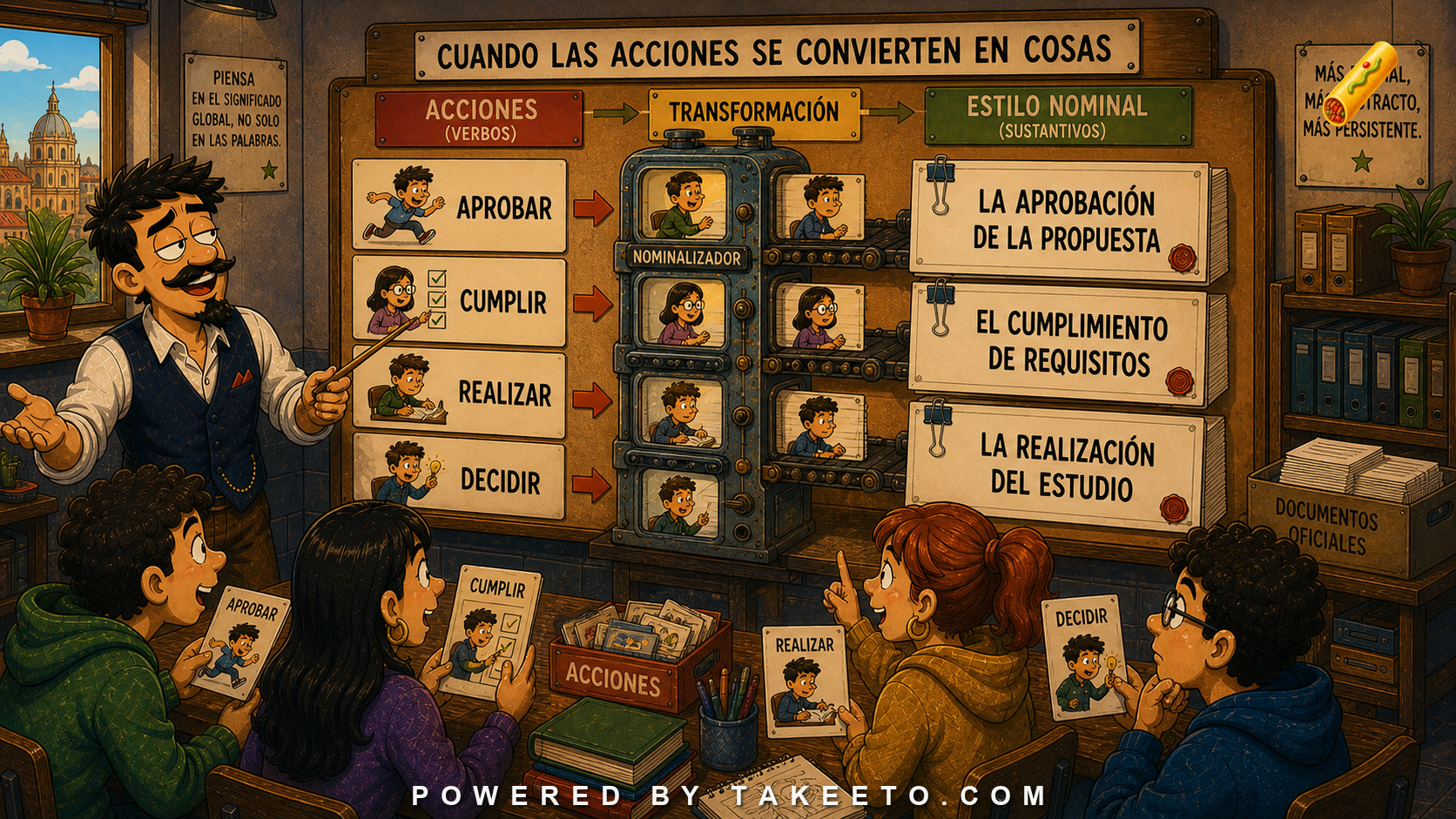
The reader can read nominalized Spanish and decide when to use it.
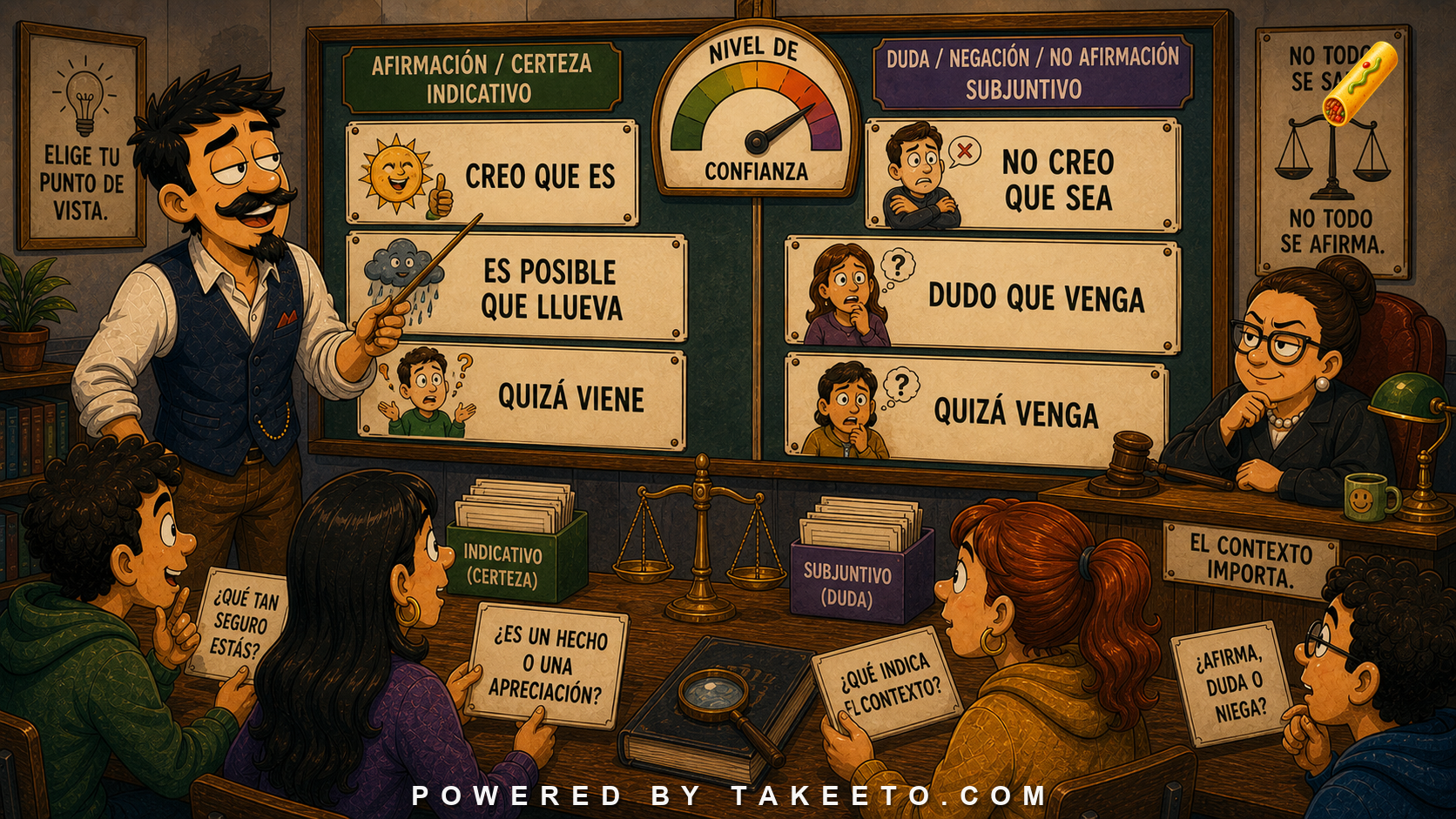
The reader can explain why negated belief and uncertainty often select subjunctive.
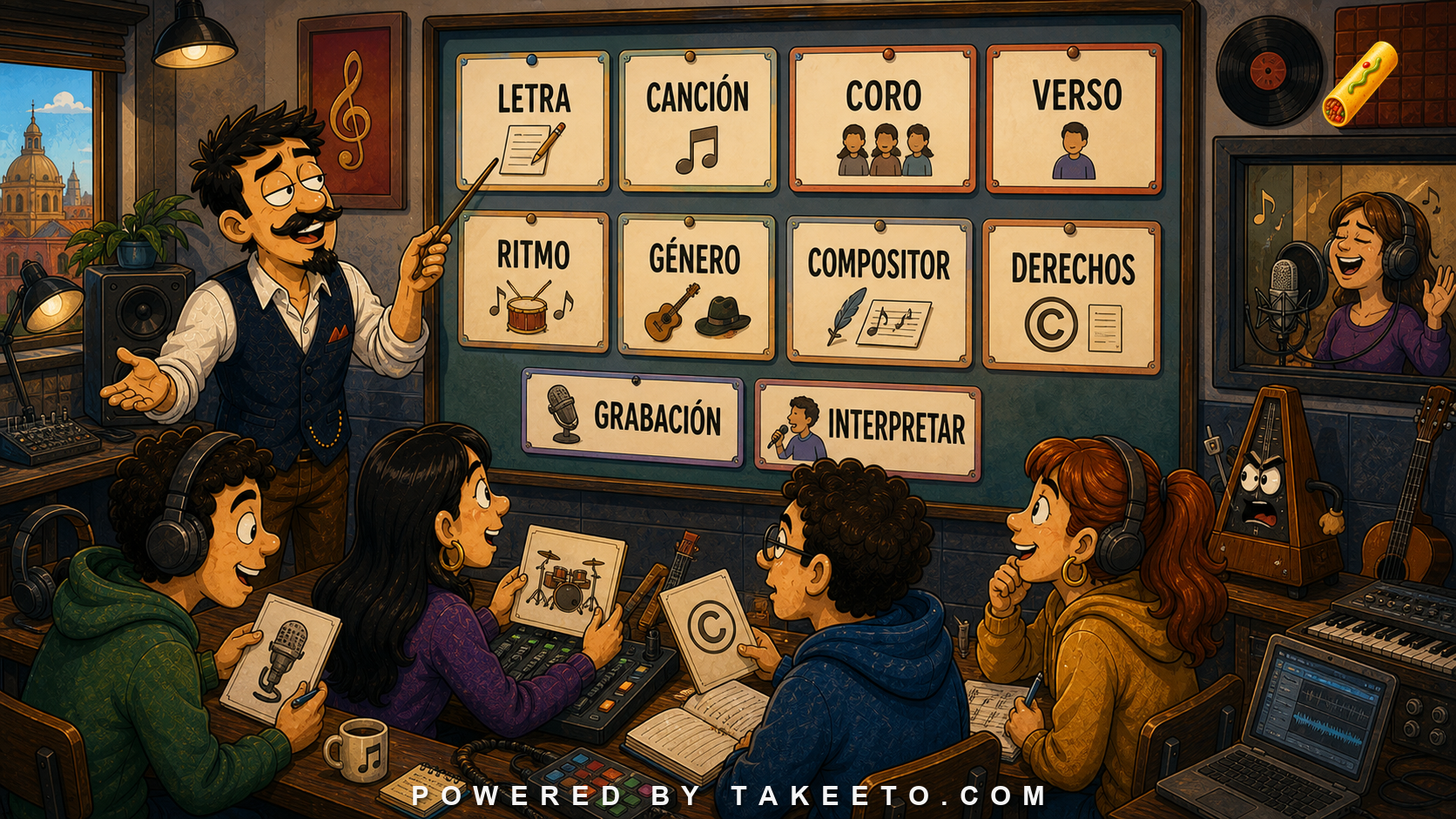
The reader can discuss music in Spanish beyond genre labels.
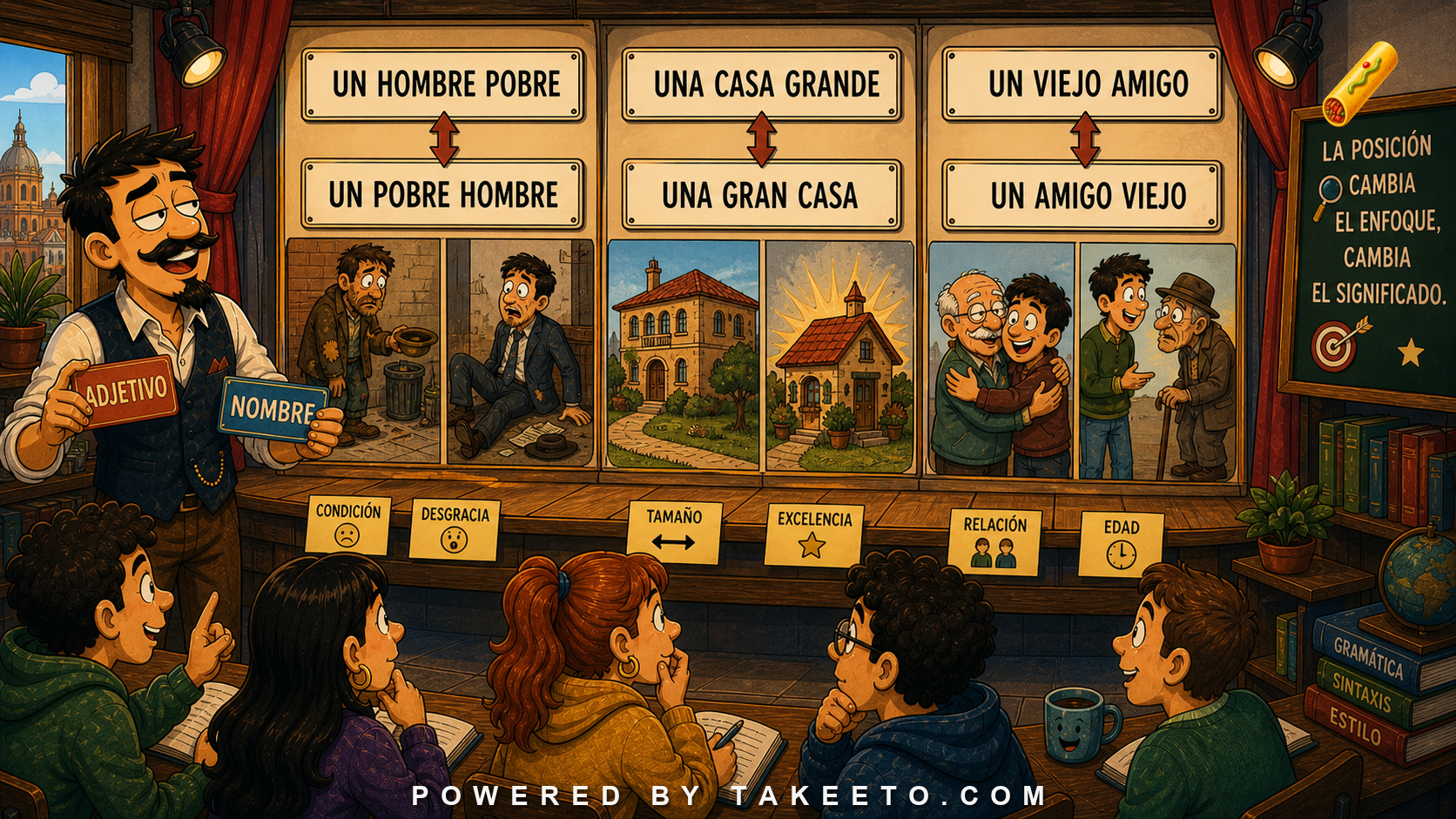
The reader understands how adjective placement affects meaning, evaluation, and discourse.
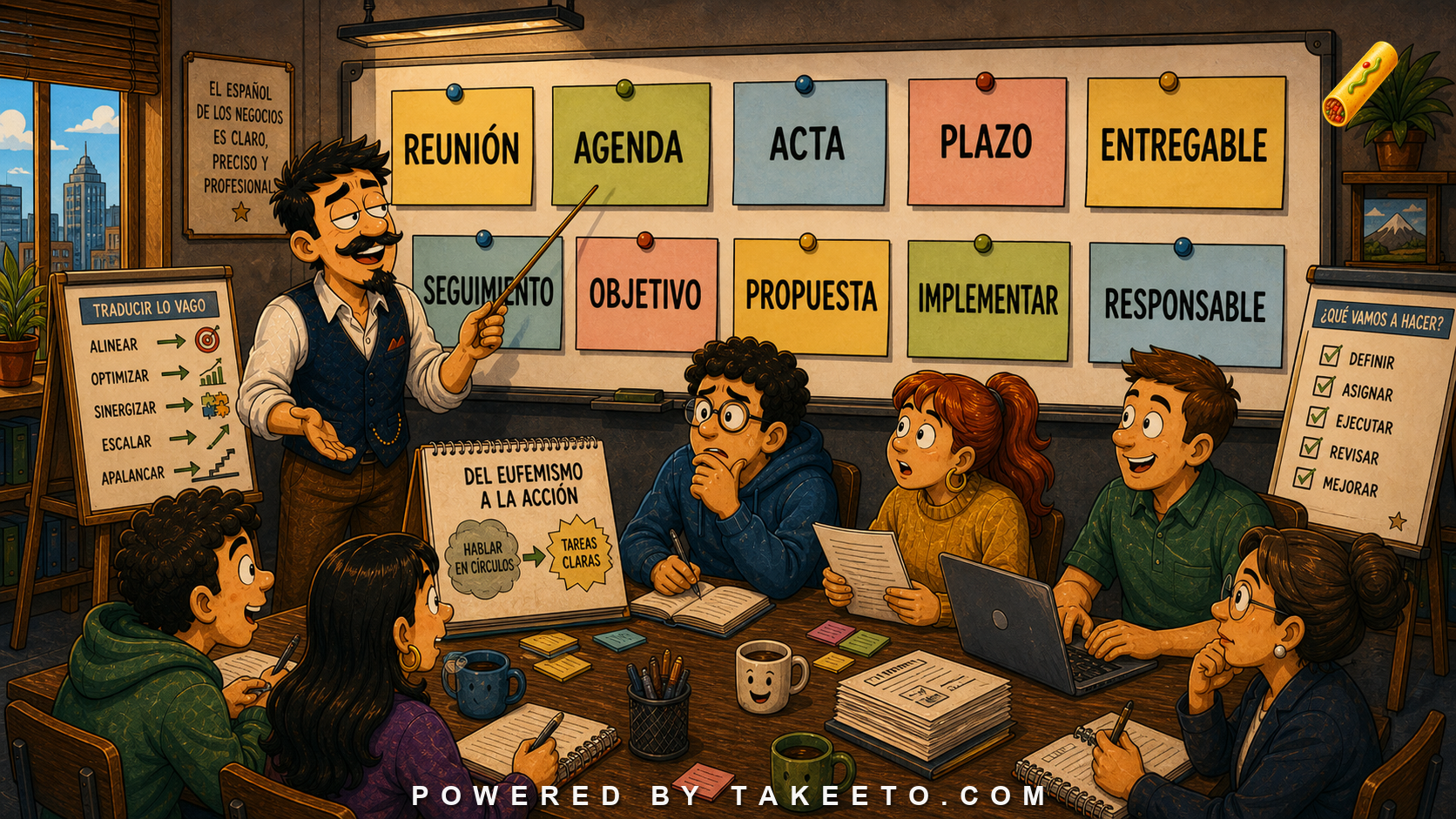
The reader can understand business Spanish without relying on English corporate calques.
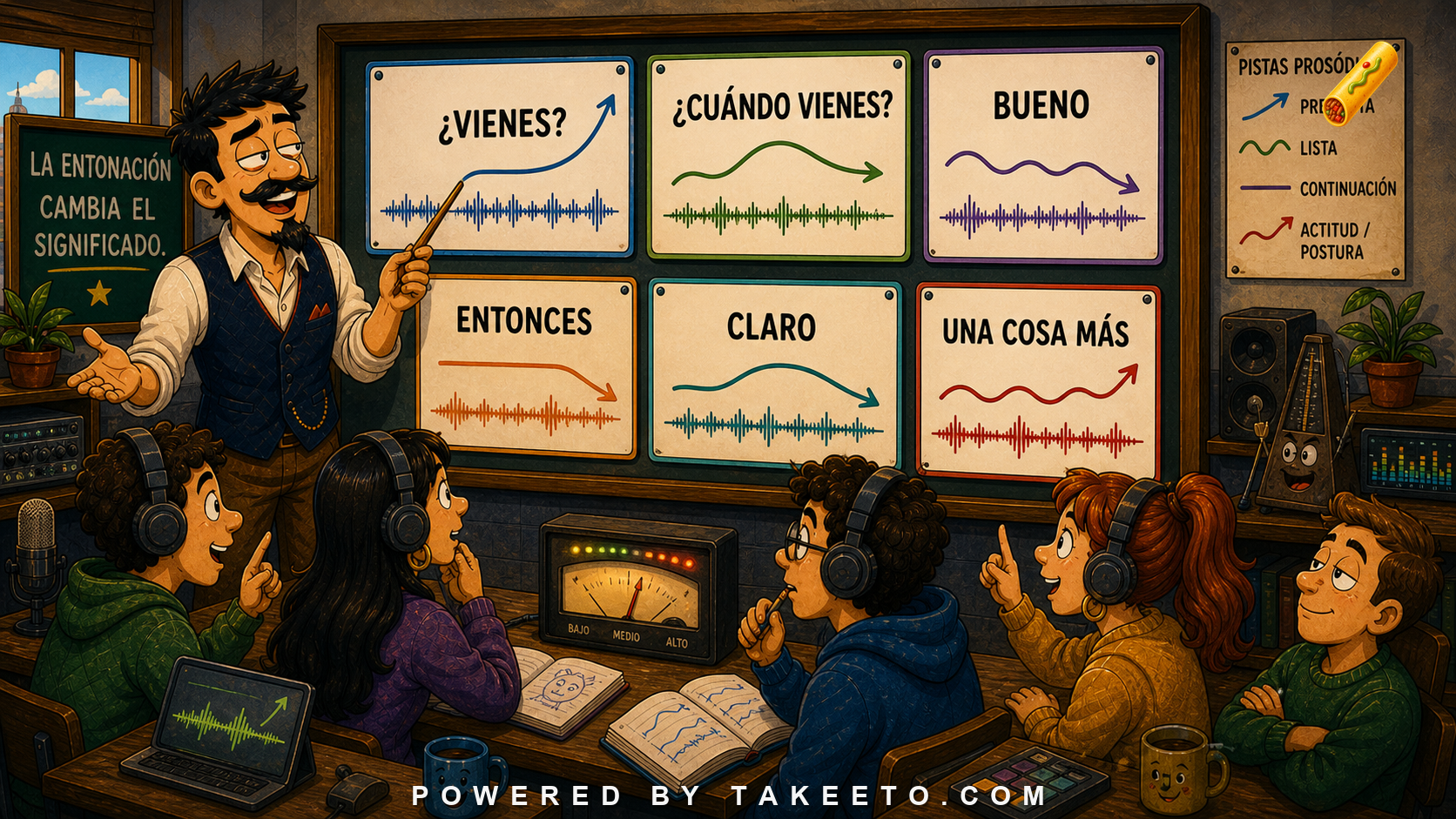
The reader understands intonation as part of meaning, not decoration.
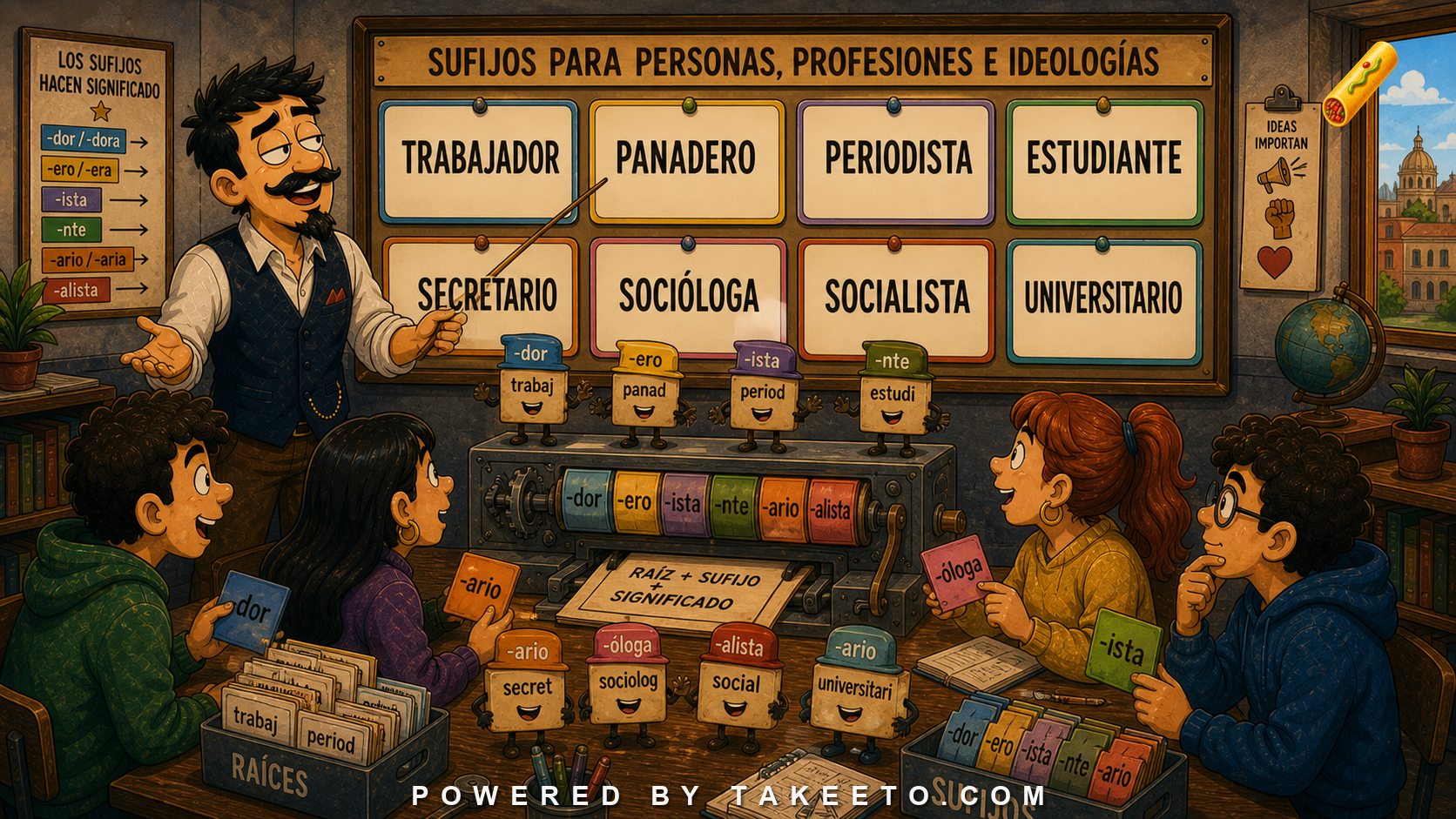
The reader can parse Spanish nouns for agents, professions, affiliation, and ideology.
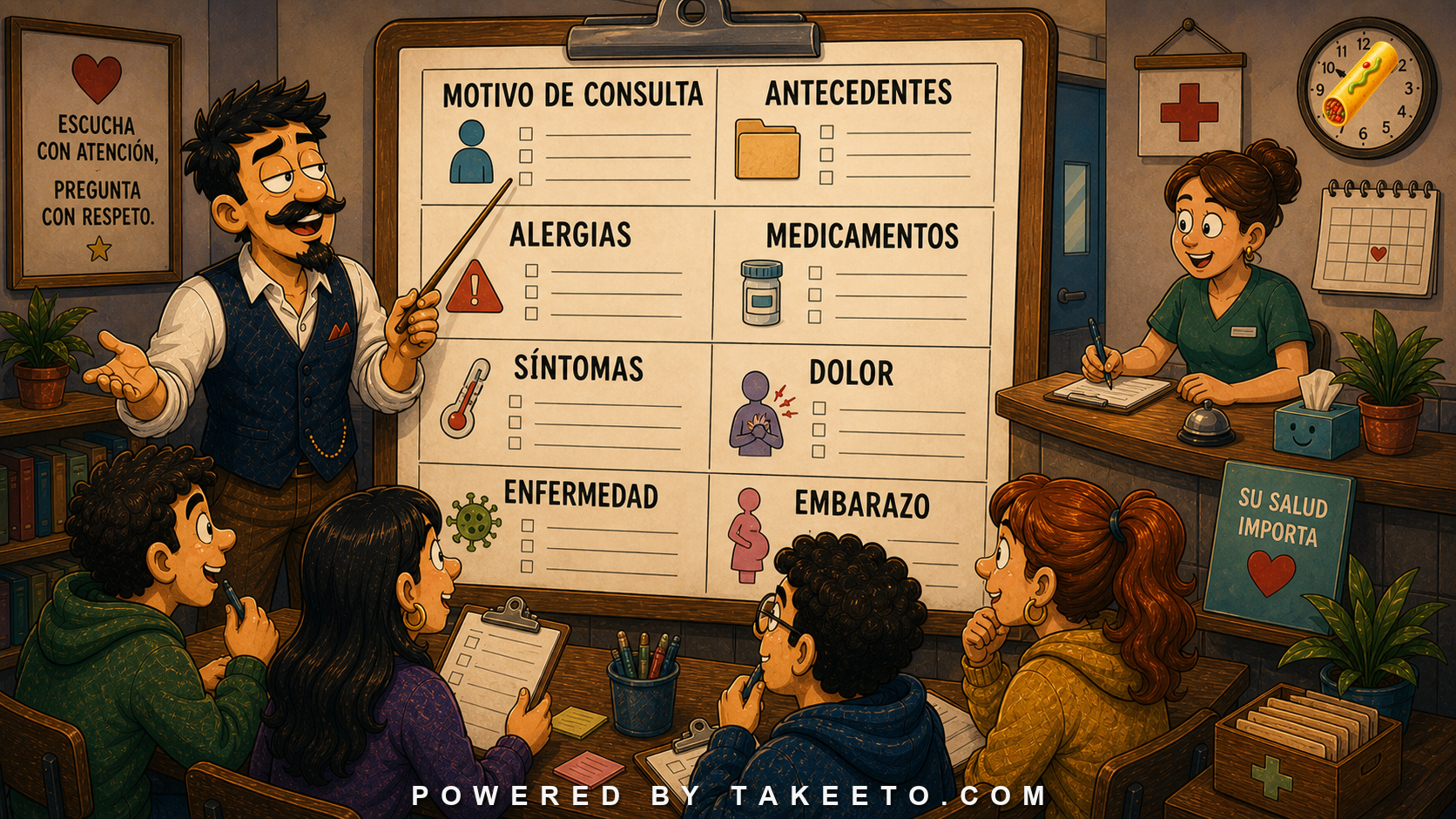
The reader can understand common intake fields and patient-history language.
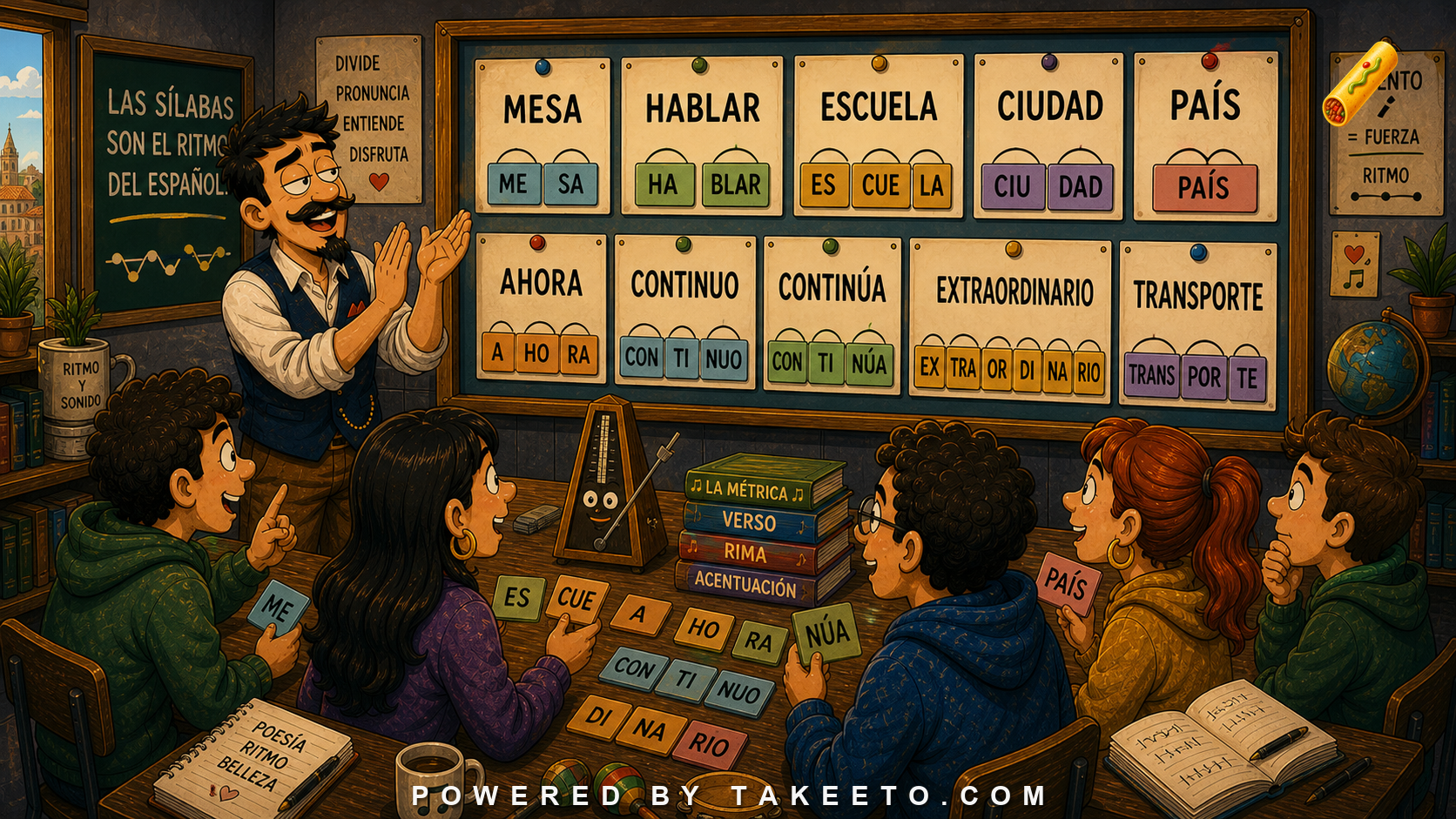
The reader can divide Spanish words into syllables and understand how syllable structure shapes stress and rhythm.
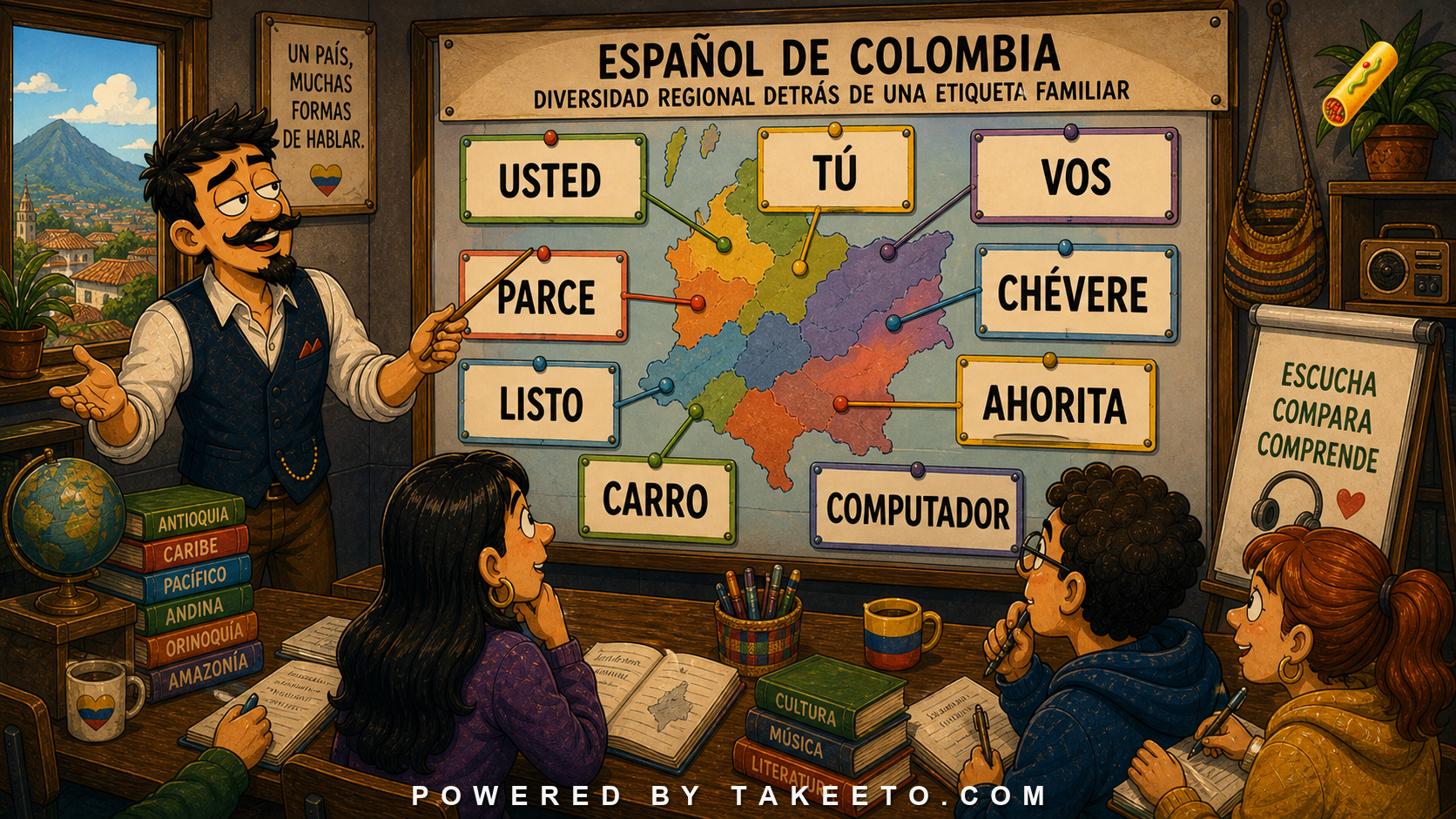
The reader sees Colombian Spanish as multiple regional systems with different prestige associations.
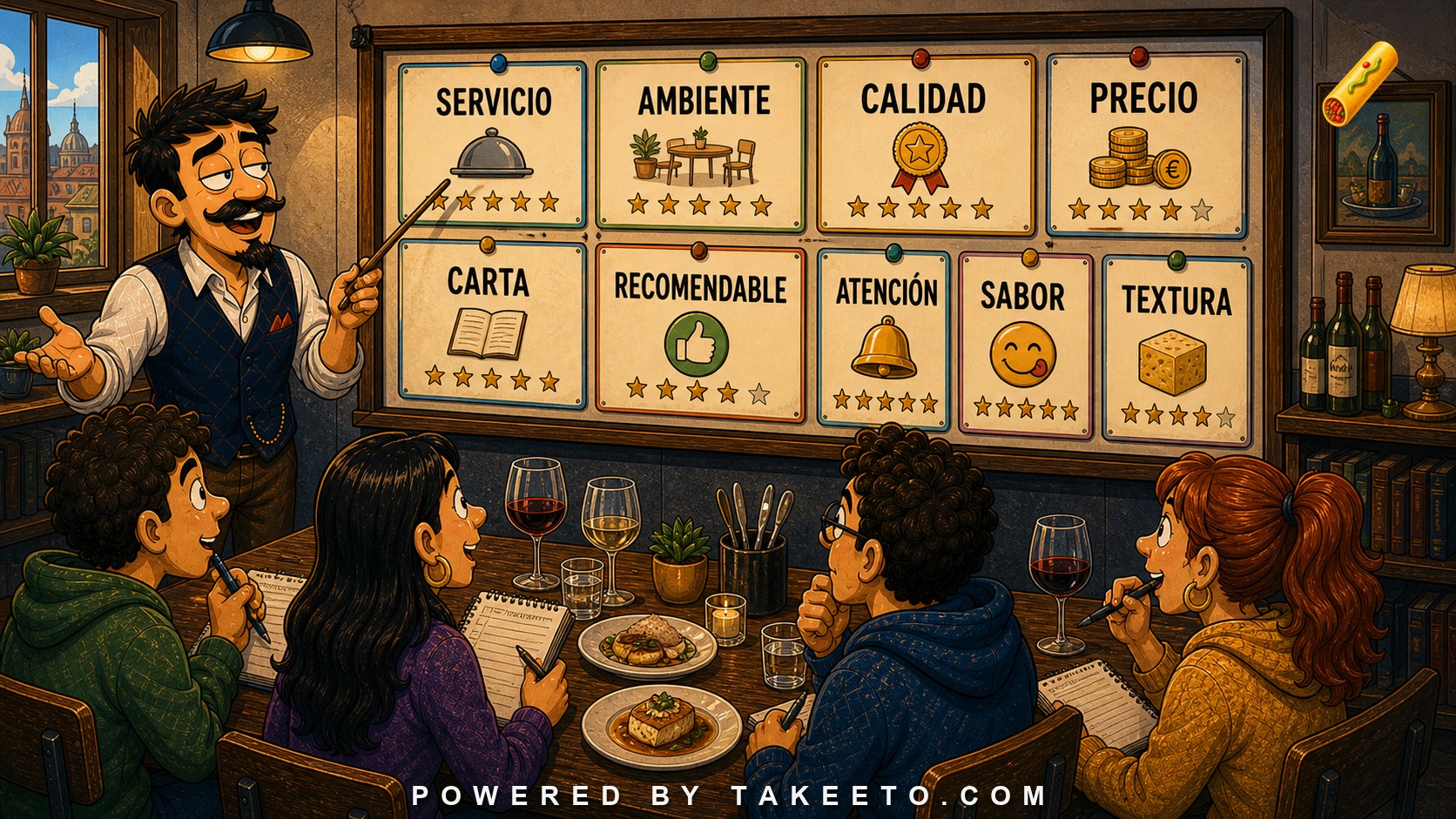
The reader can distinguish restaurant recommendation, complaint, platform review, and professional criticism in Spanish.
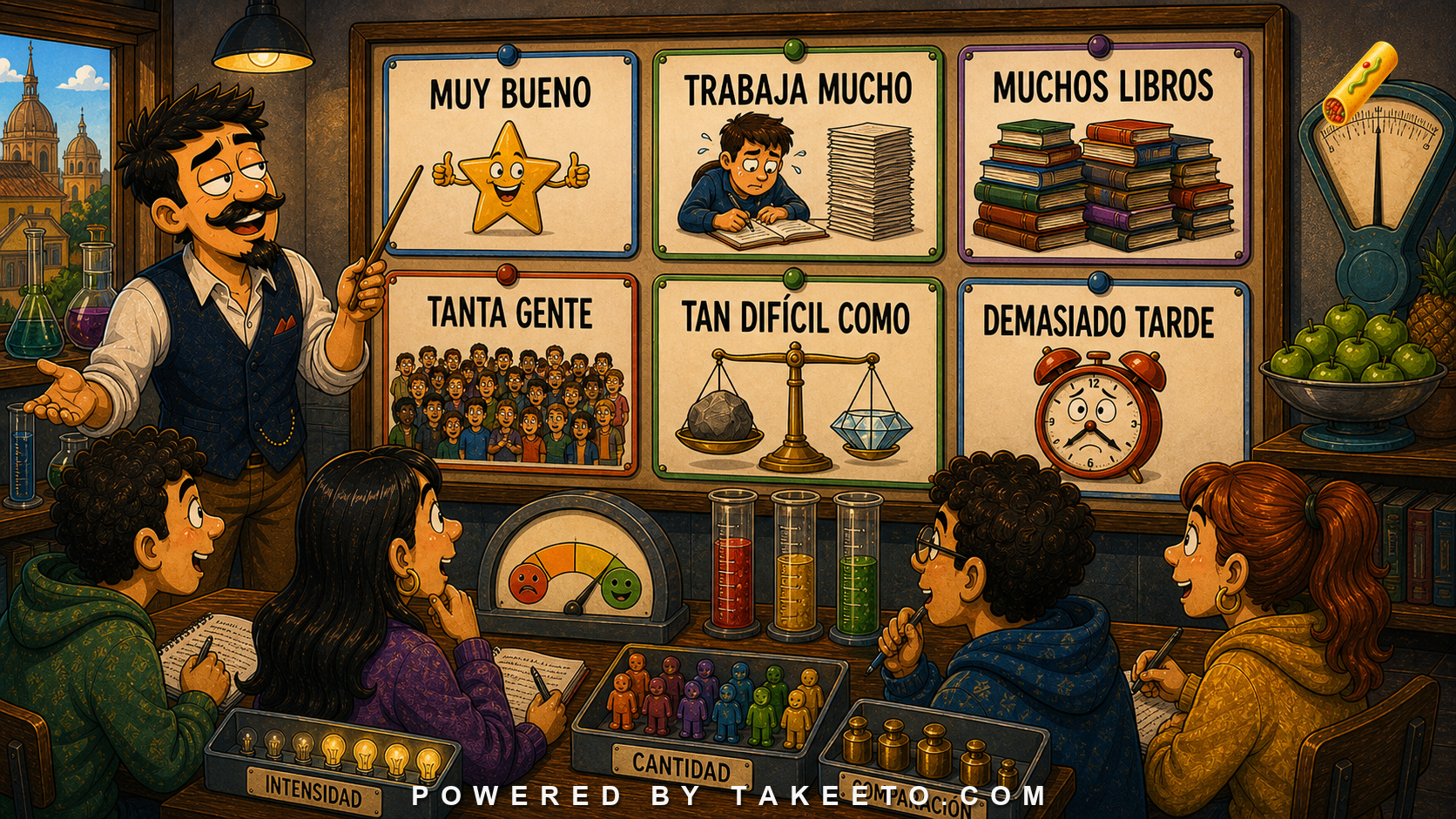
The reader can distinguish intensifiers, quantifiers, and comparison structures.

The reader can identify source attribution, documentary evidence, and evidential distance.
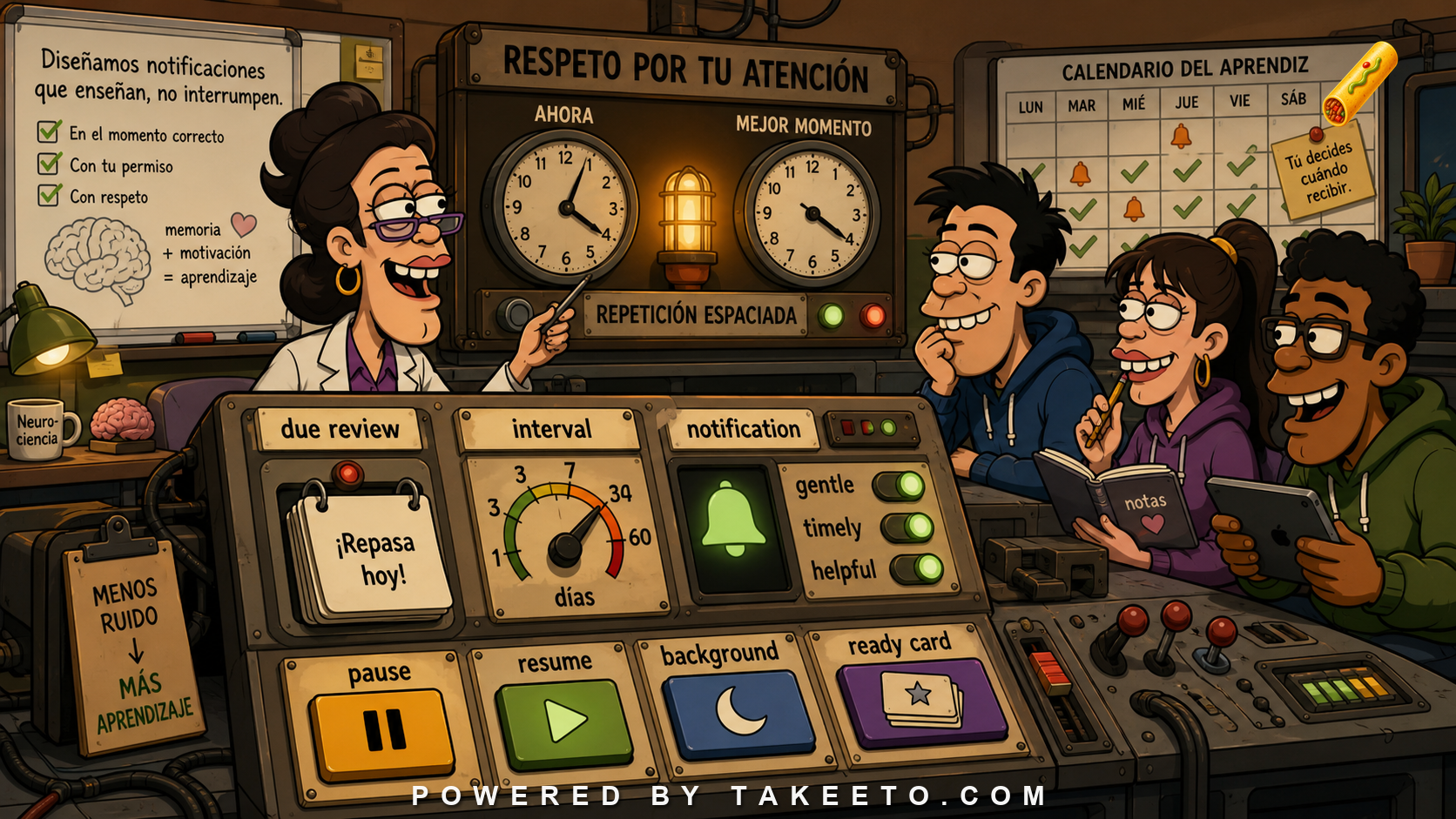
The reader understands notification design as part of pedagogy.
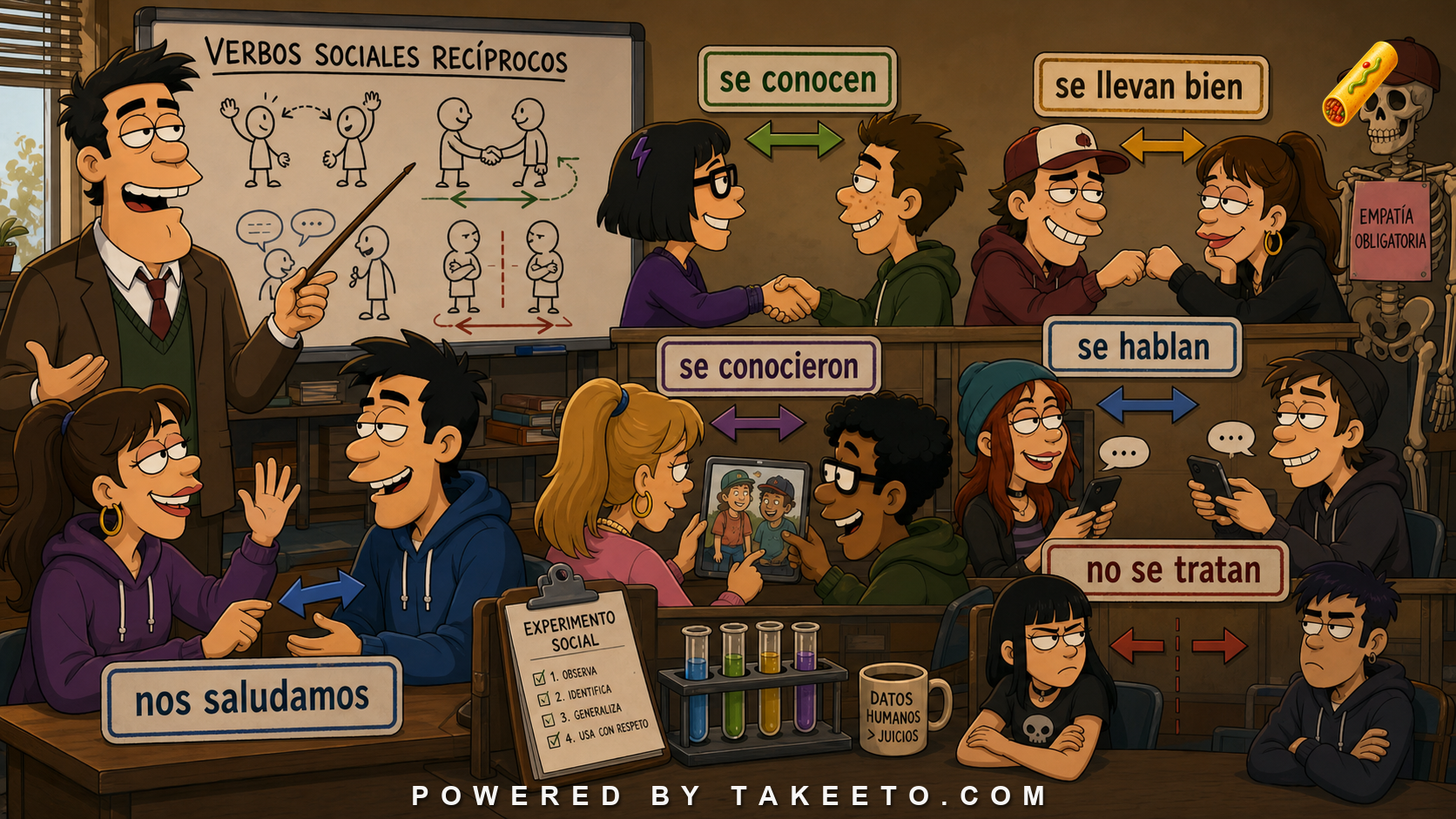
The reader can interpret reciprocal social actions and relationship predicates.
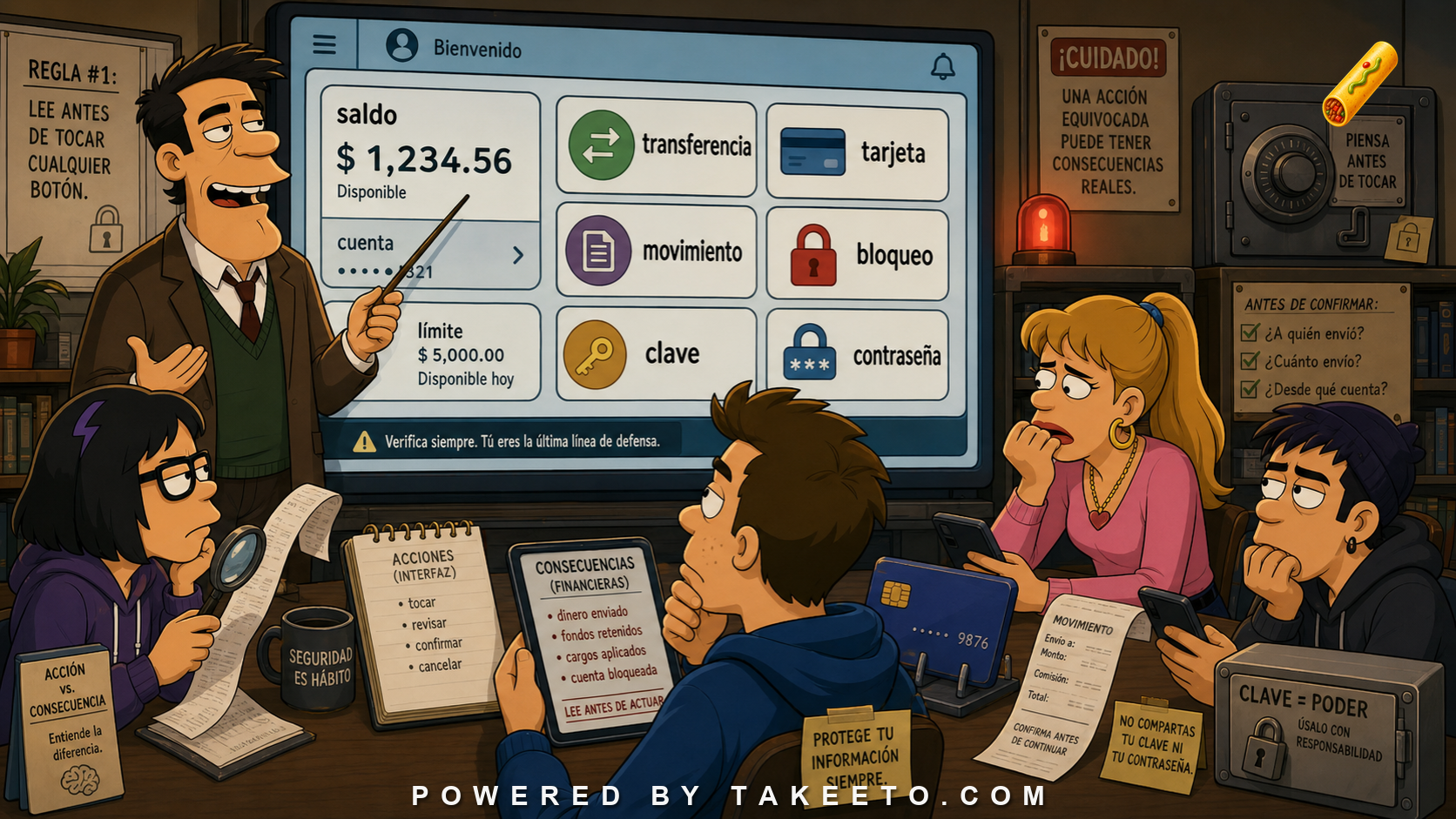
The reader can read banking app Spanish safely and distinguish interface actions from financial consequences.
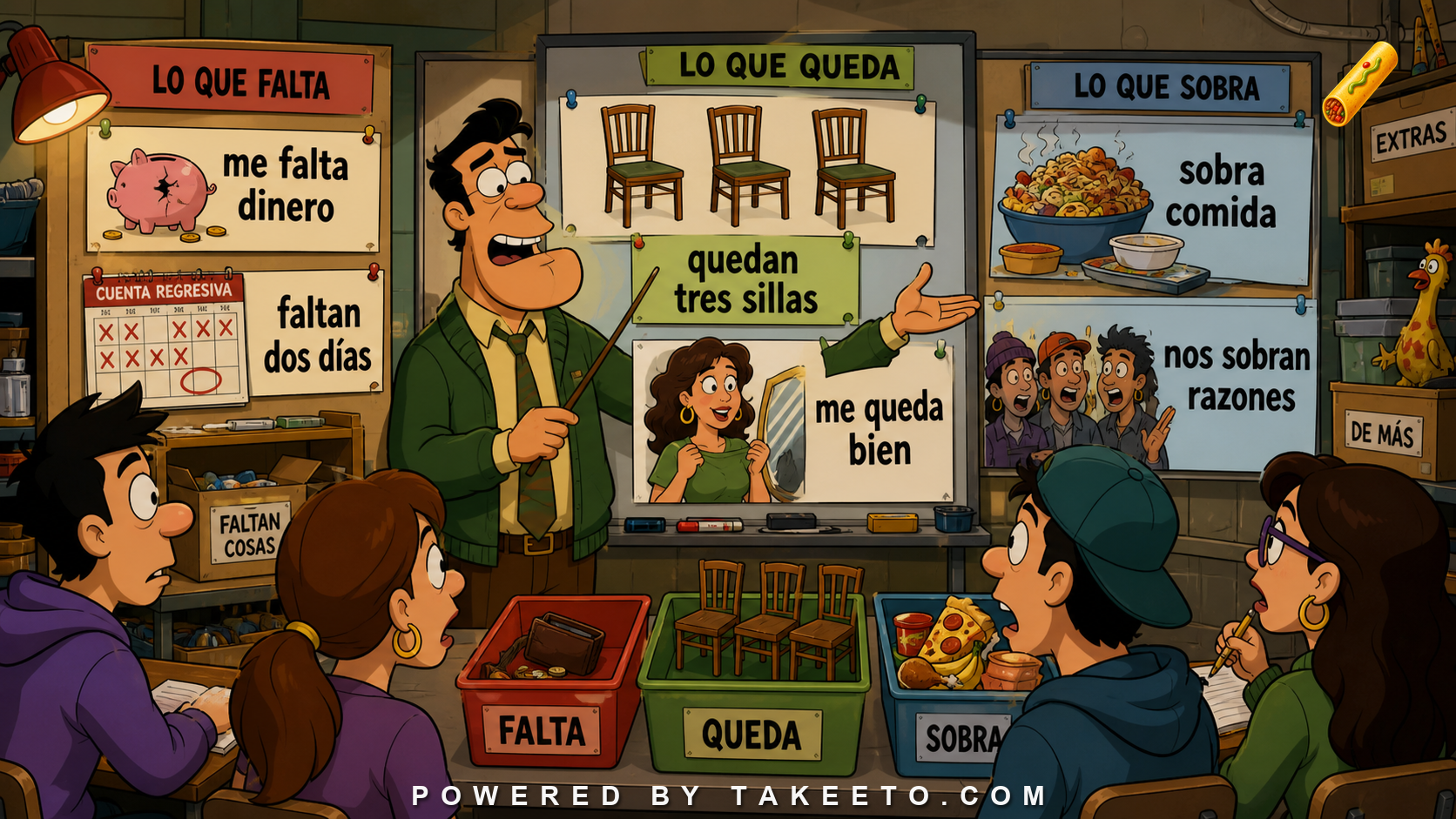
The reader can parse quantity-state verbs that often confuse English speakers.
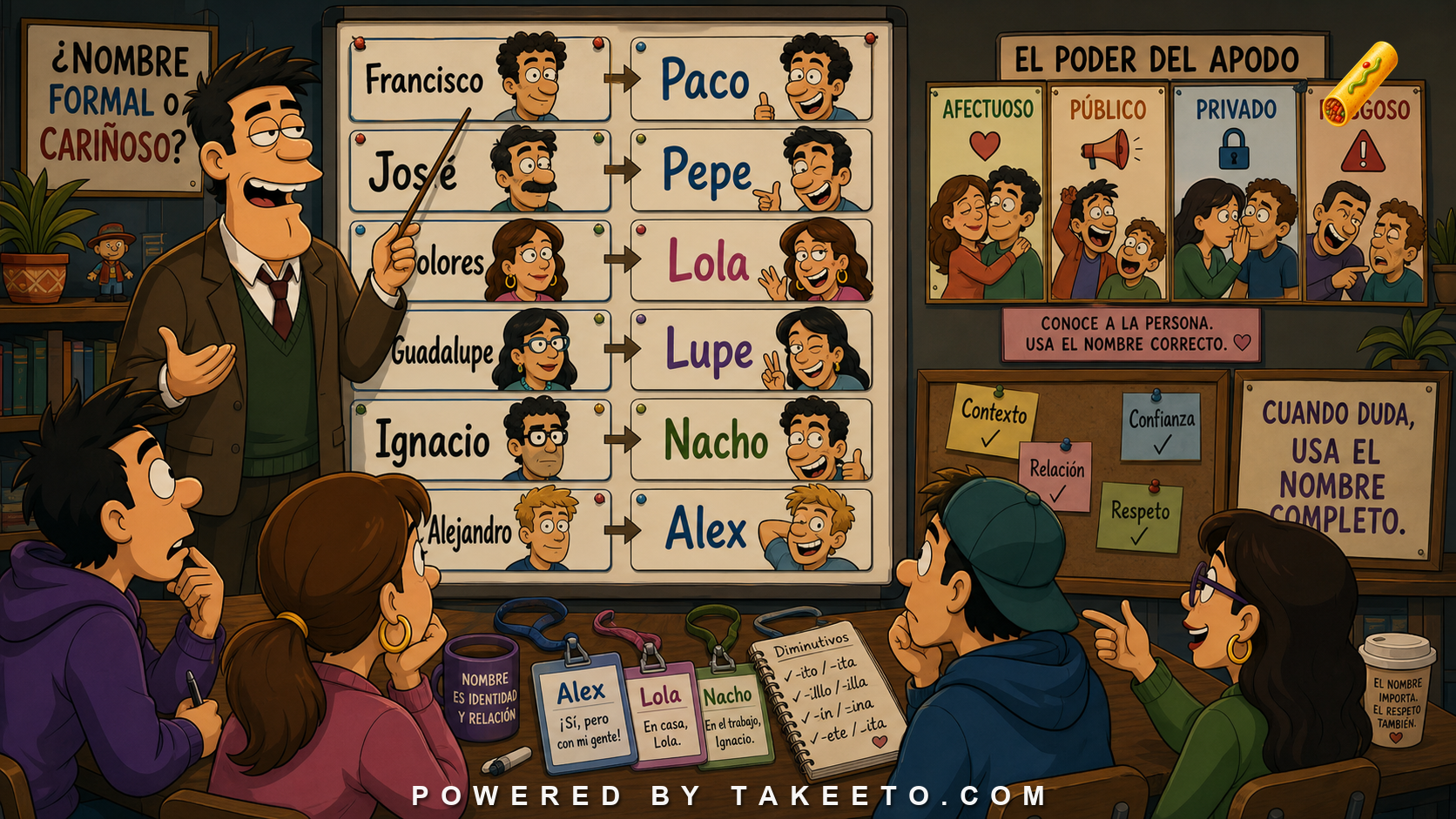
The reader can recognize common nickname formation and its social force.
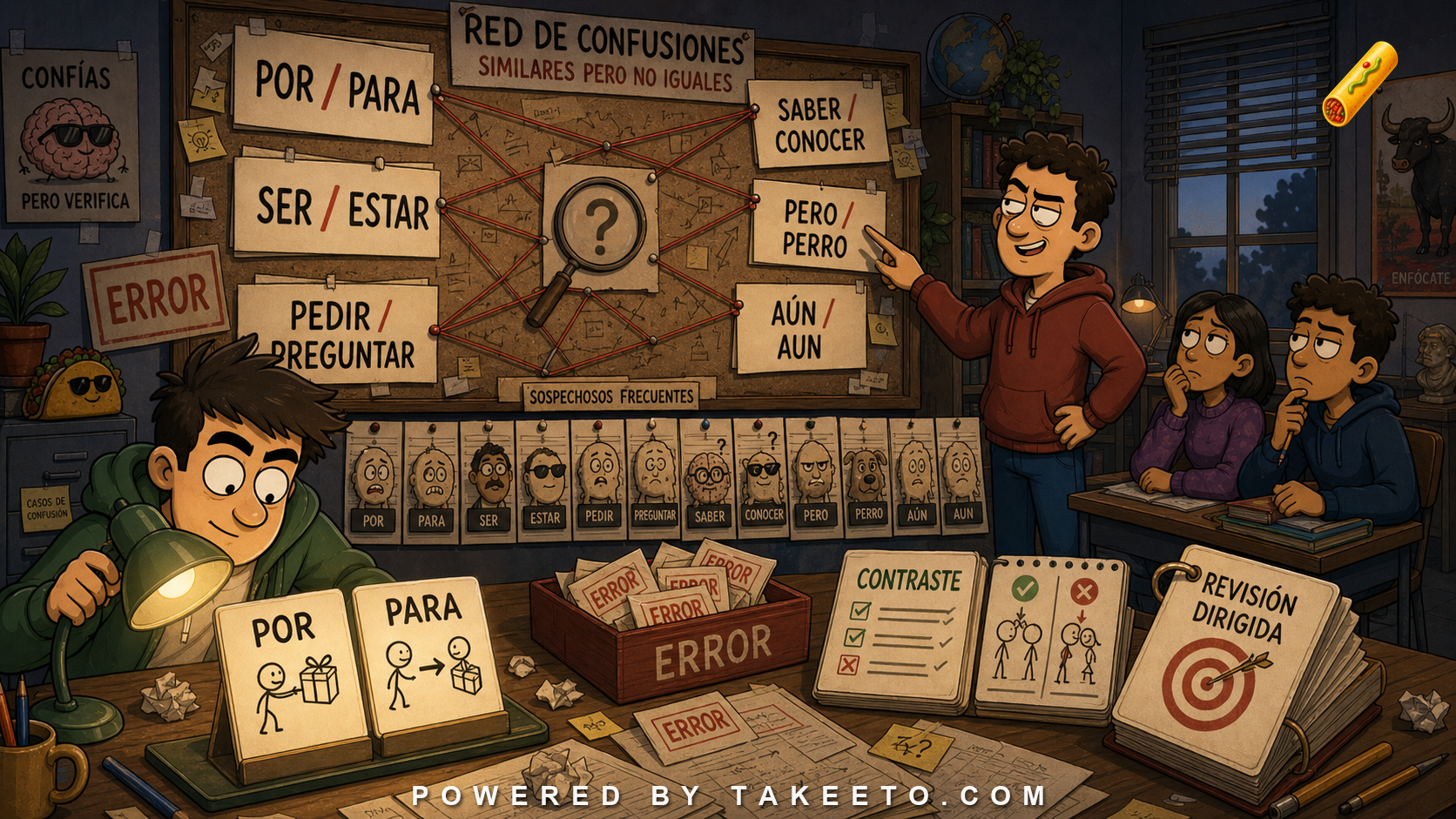
The reader can use mistakes to create targeted contrast sets.

The reader can choose among Spanish becoming verbs based on type of change.
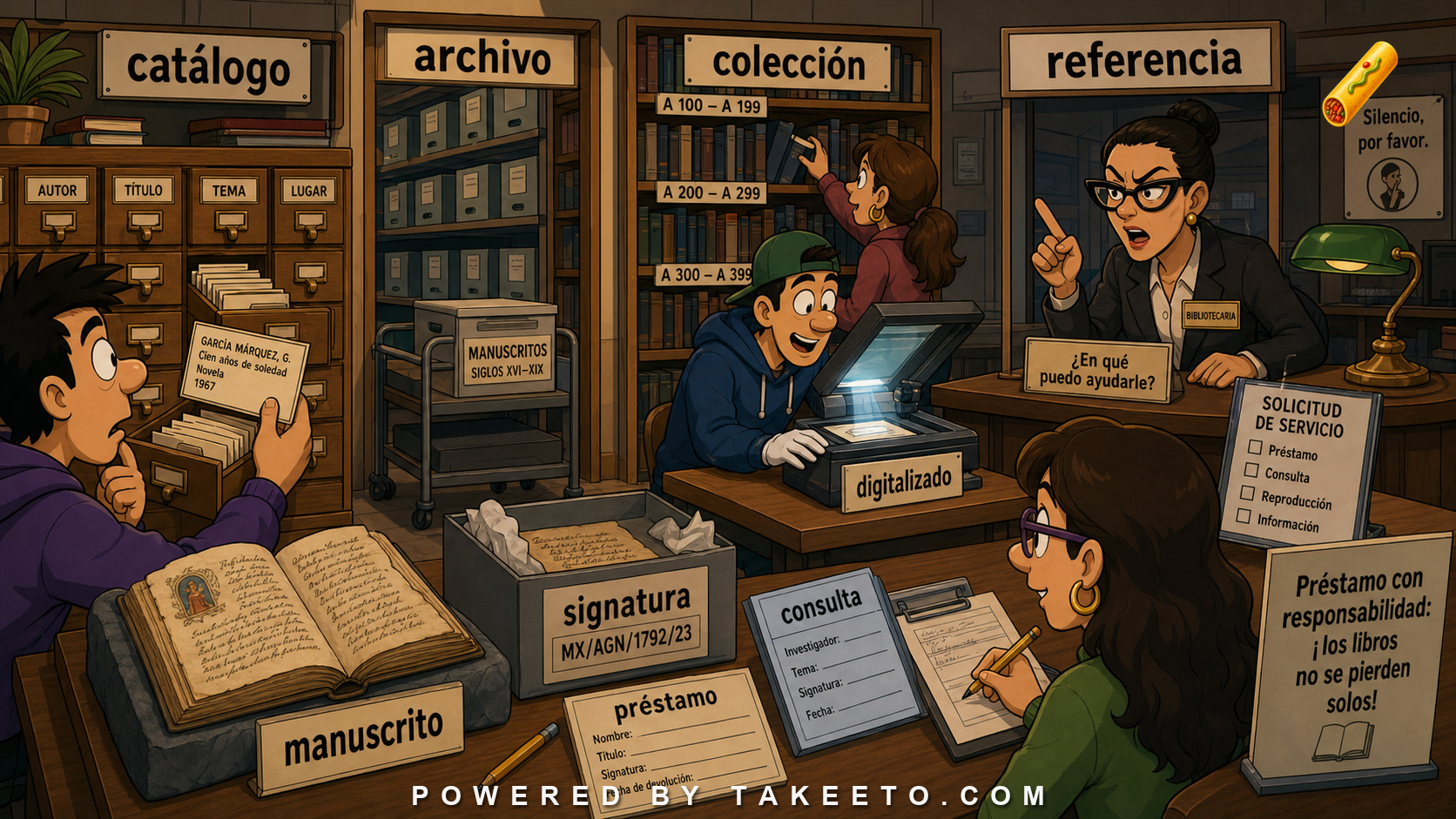
The reader can navigate catalogs, archives, and research requests in Spanish.
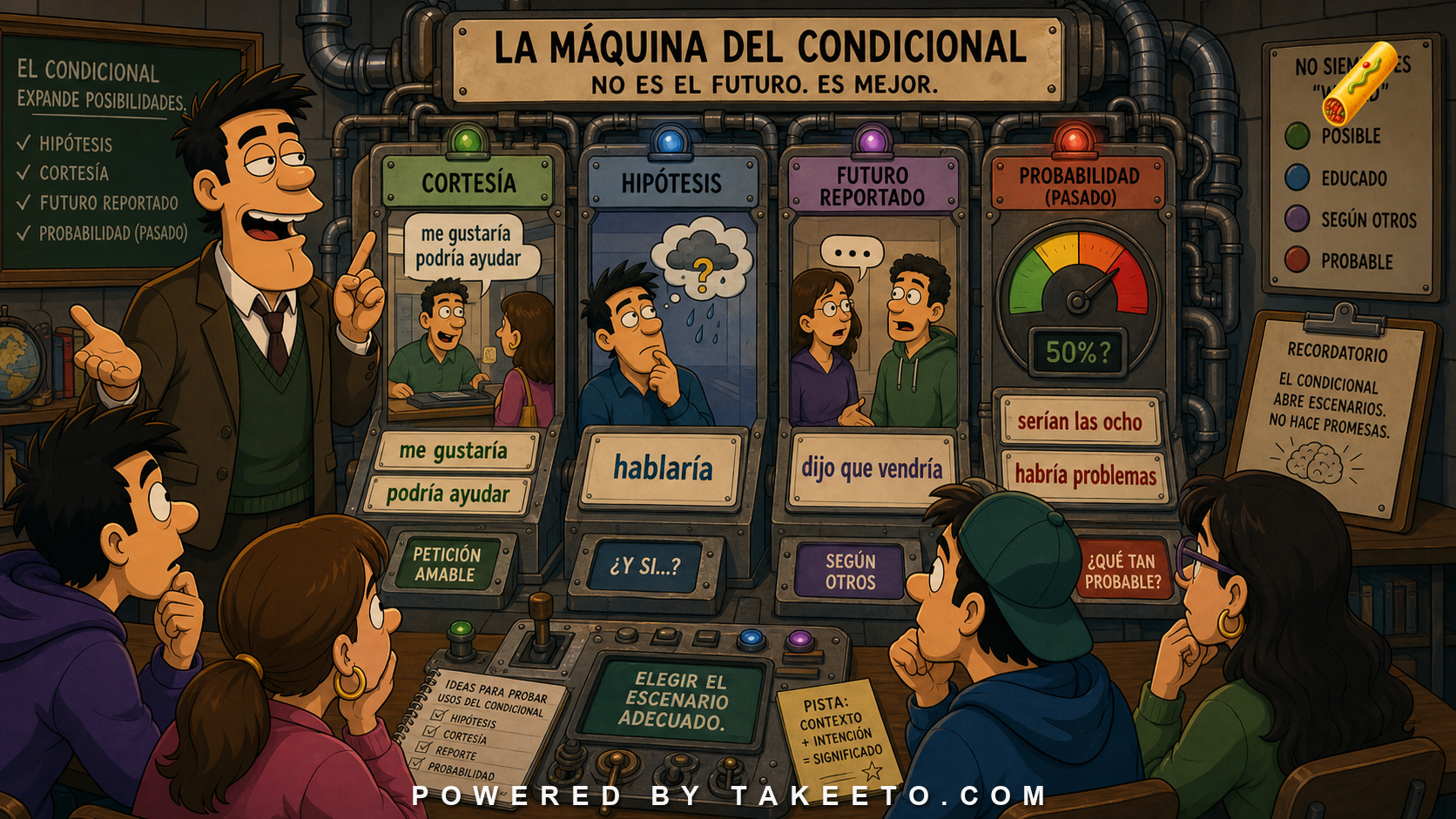
The reader can interpret the Spanish conditional beyond “would.”
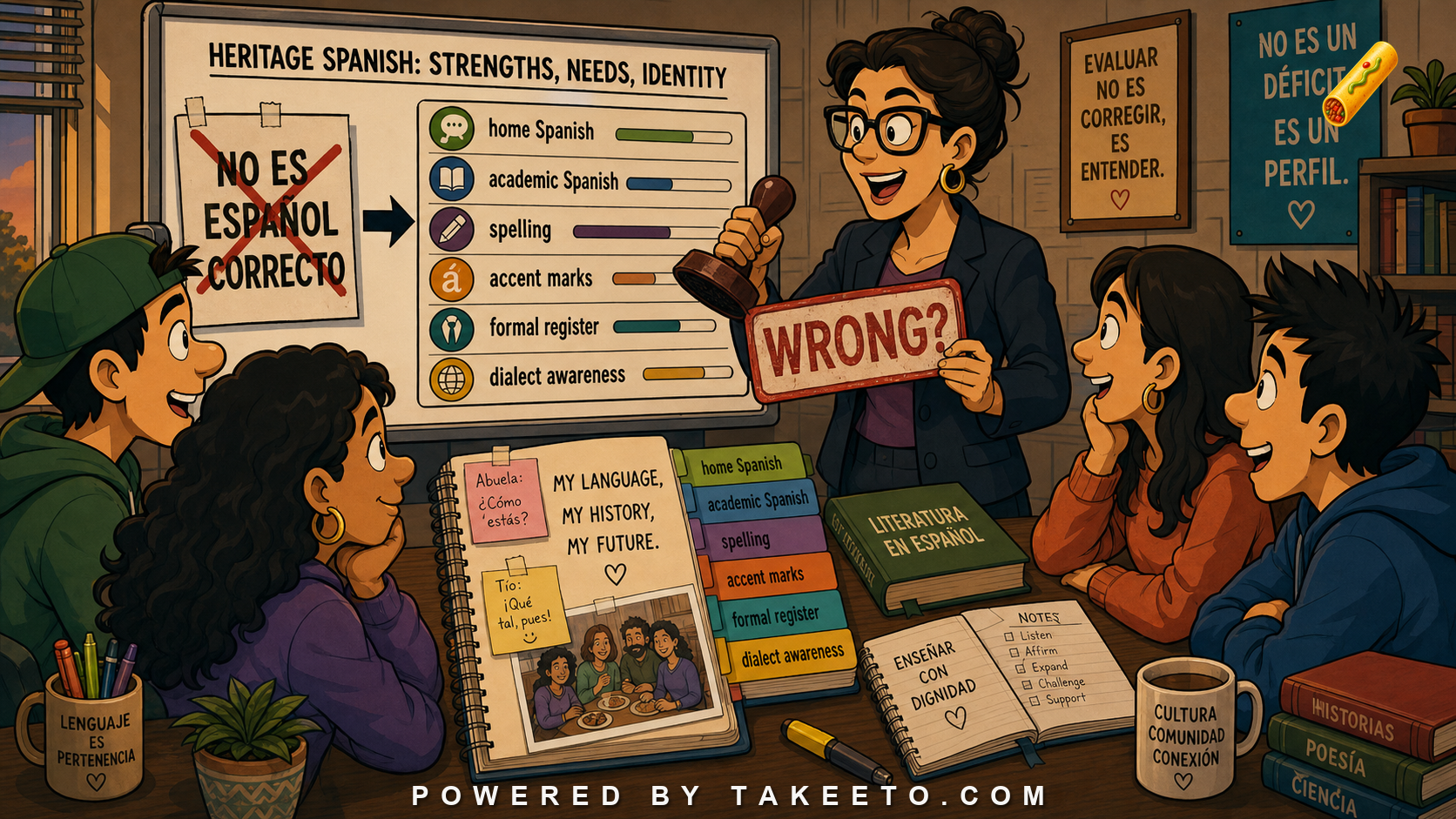
The reader understands heritage Spanish as a legitimate linguistic profile with specific learning needs.
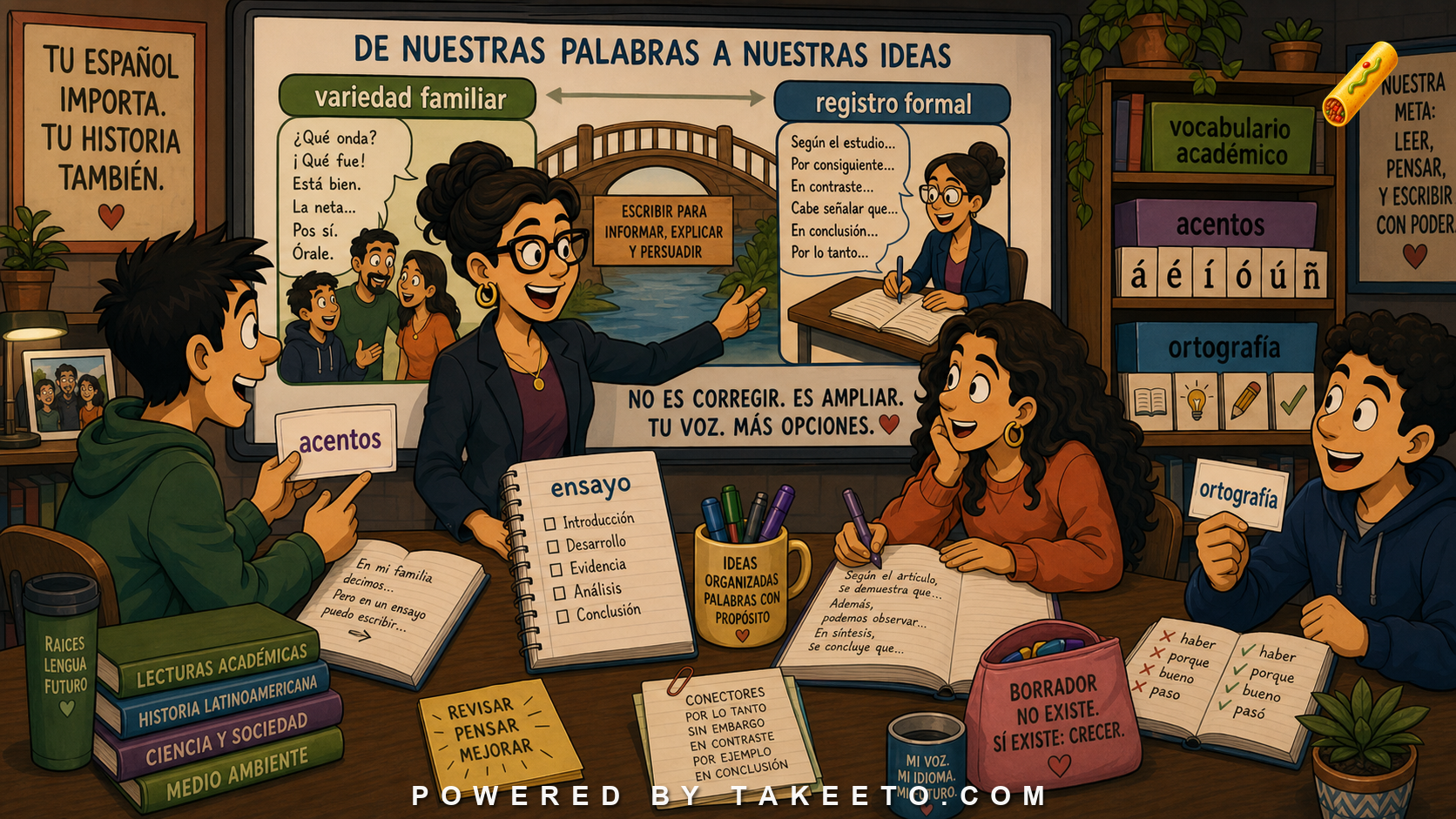
The reader can design study around literacy expansion rather than correction alone.
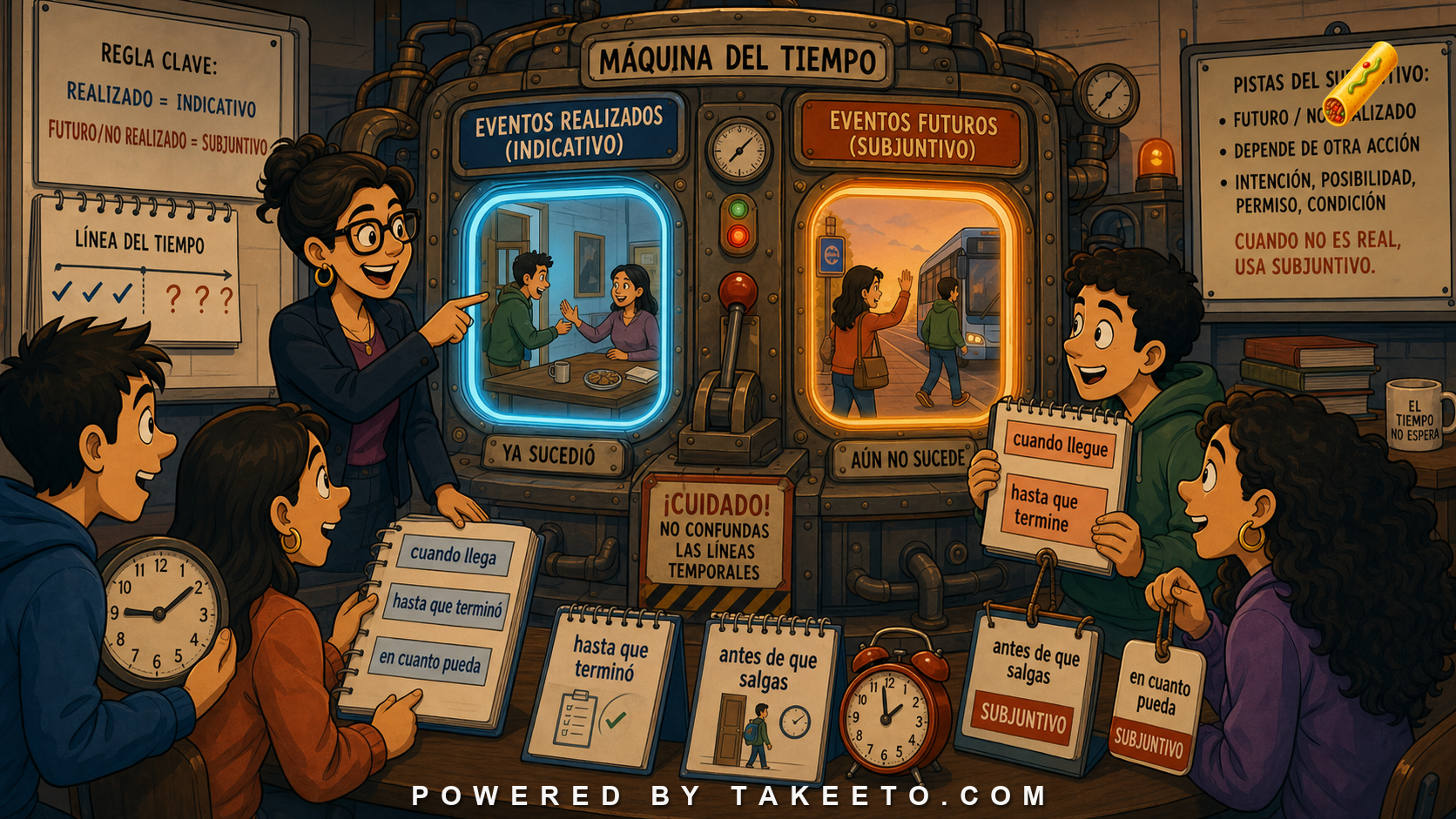
The reader can choose indicative or subjunctive in temporal clauses based on realized versus future events.
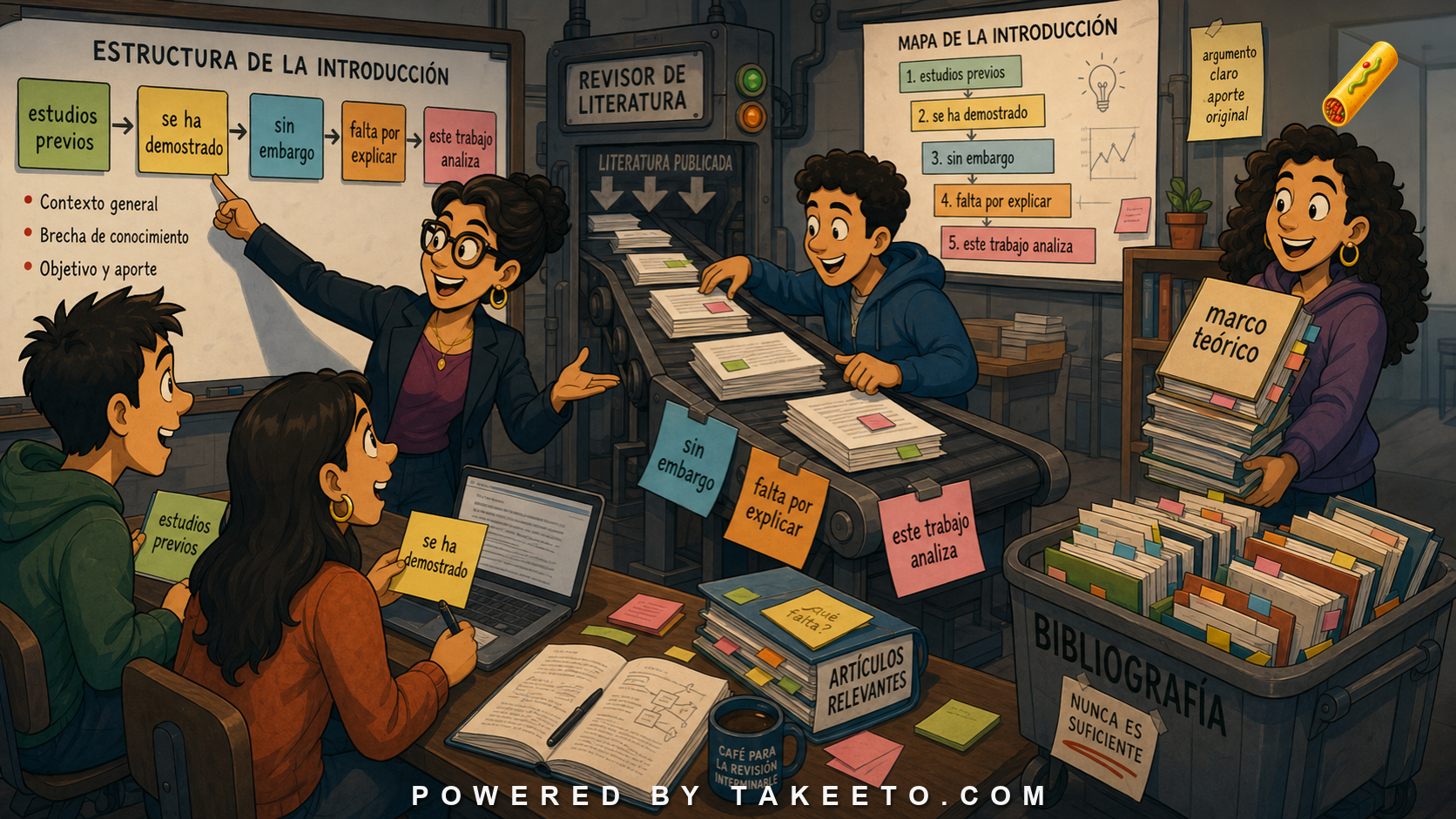
The reader can follow how Spanish academic articles establish a problem and prior research.
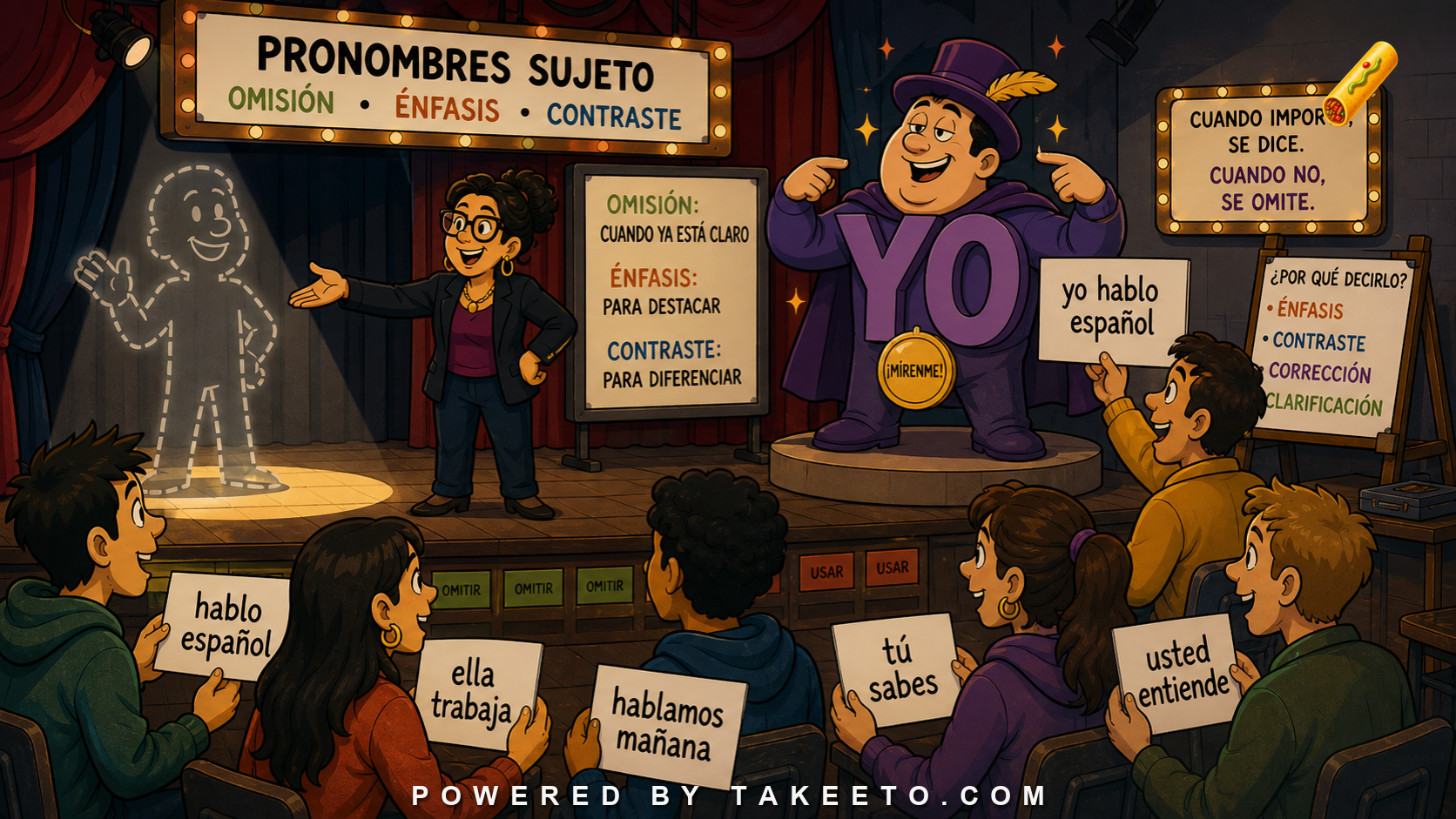
The reader can explain when Spanish omits subject pronouns and when explicit pronouns carry meaning.
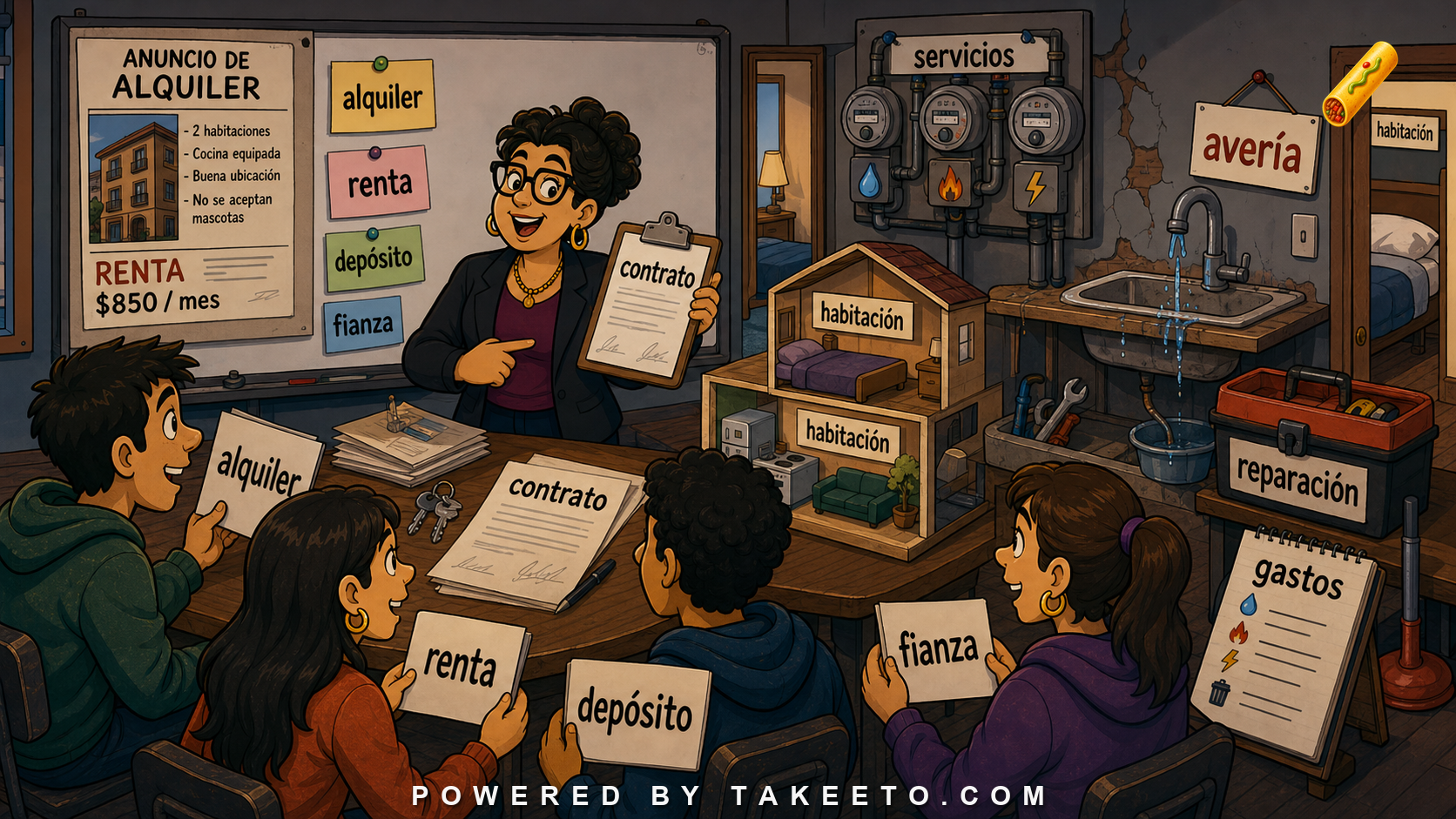
The reader can read housing listings, leases, and repair messages.
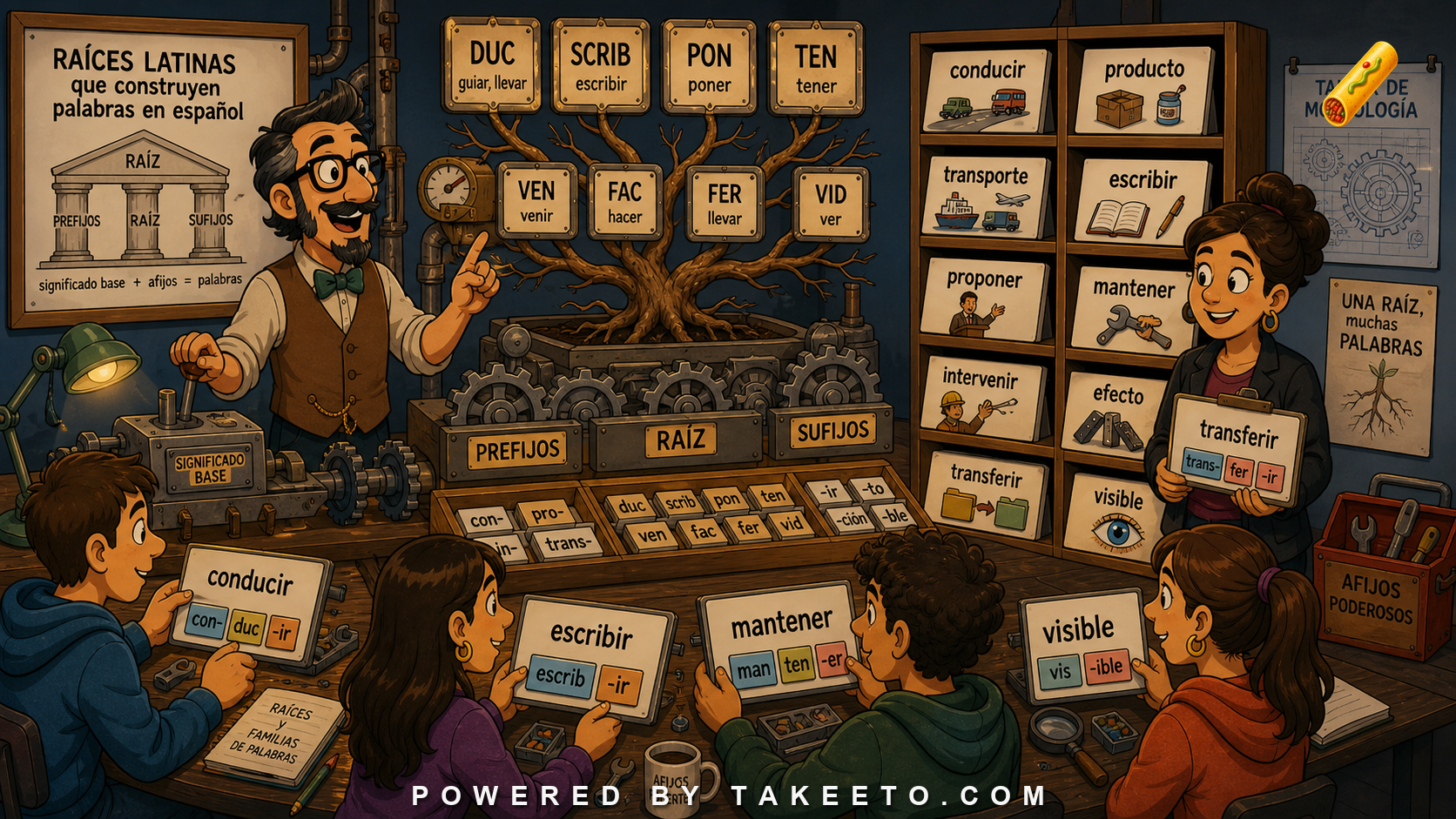
The reader can build advanced vocabulary from recurring Latin roots and affixes.

The reader can identify calques and evaluate when they are accepted, contested, or awkward.
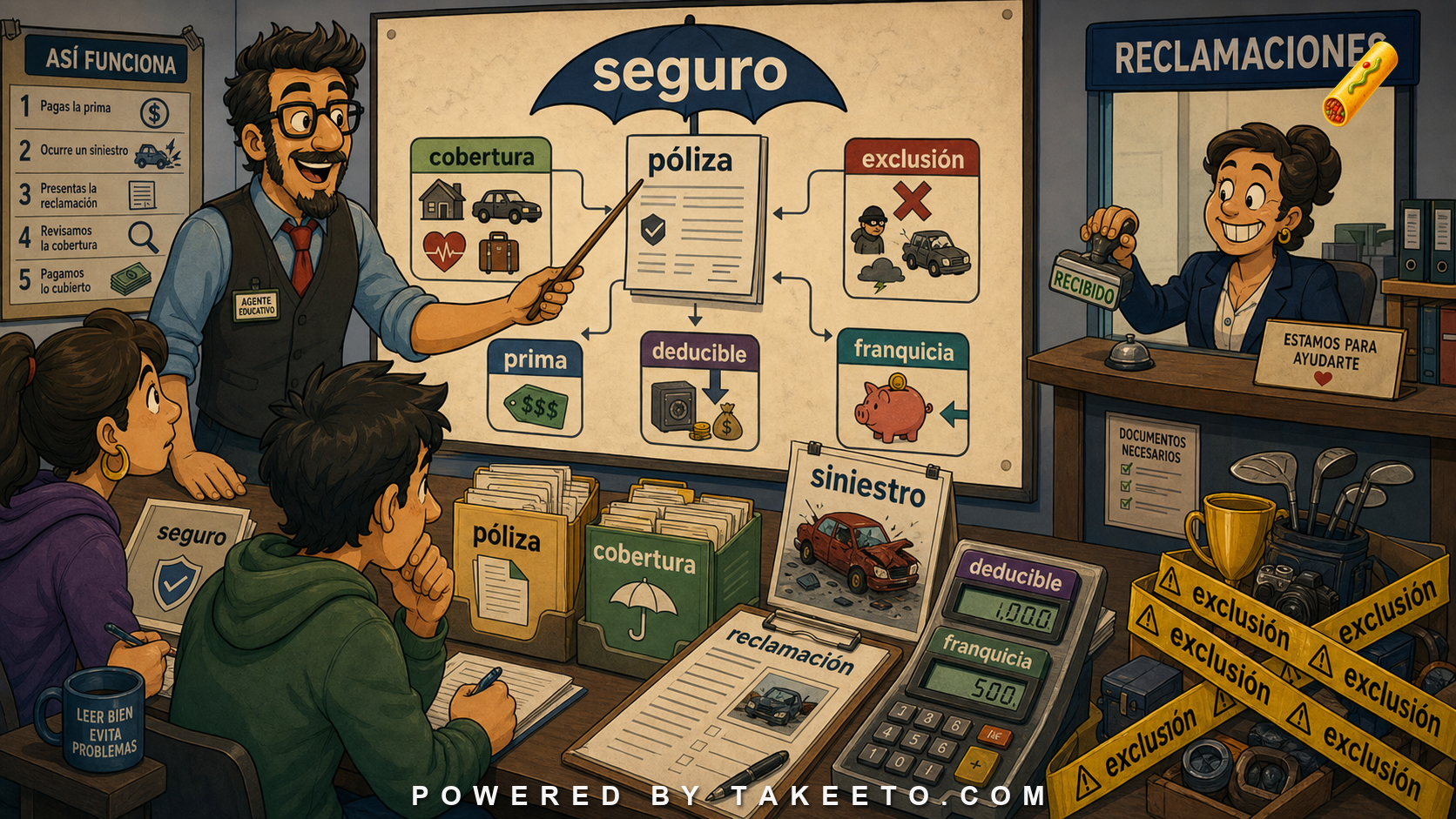
The reader can parse core insurance vocabulary in Spanish policies and claims.
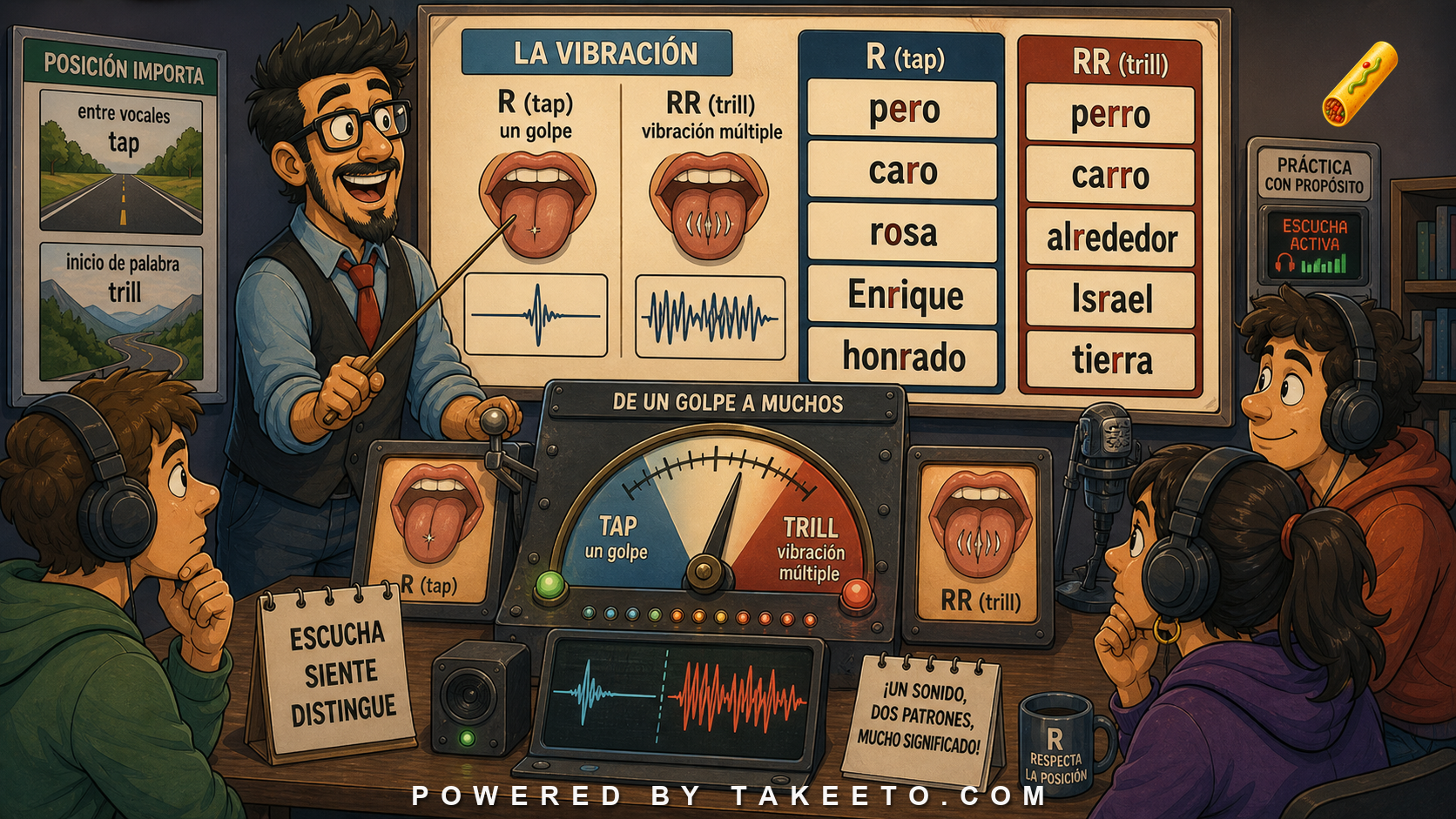
The reader can distinguish the Spanish tap and trill as separate phonemic and positional patterns.
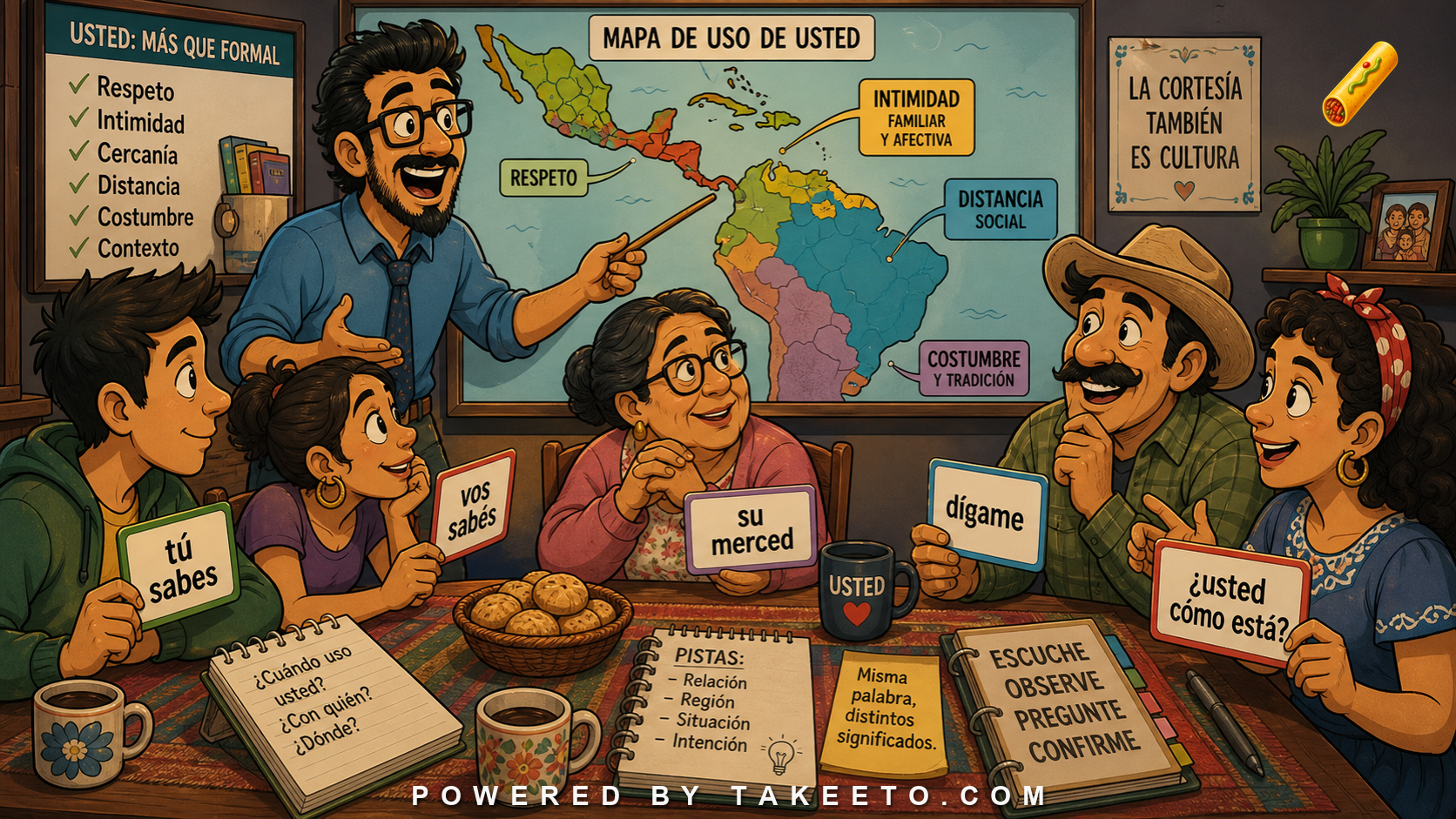
The reader understands usted as a regional social tool, not only formal distance.
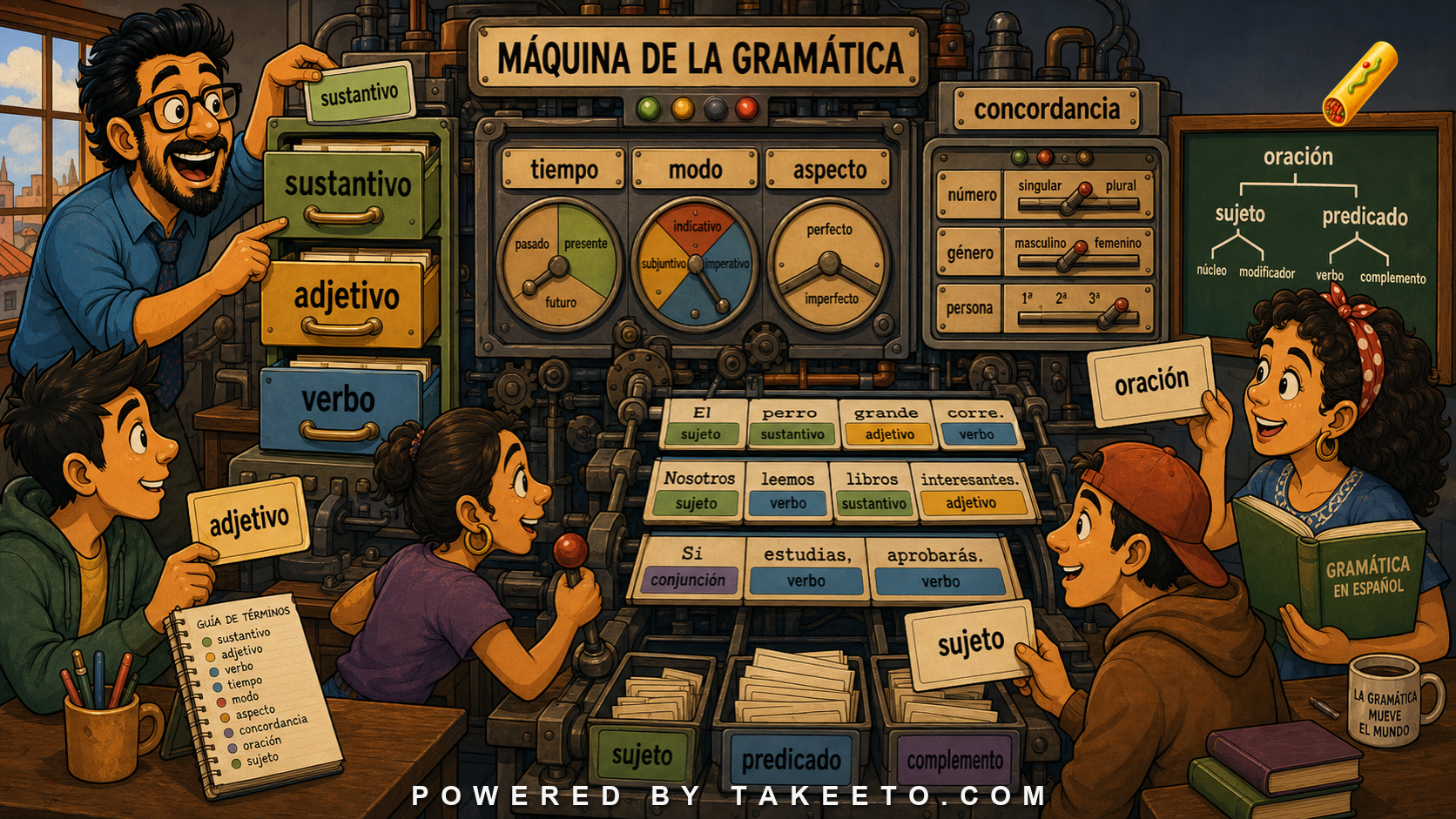
The reader can read Spanish grammar explanations written in Spanish by recognizing key terminology for parts of speech, verbs, agreement, and clauses.
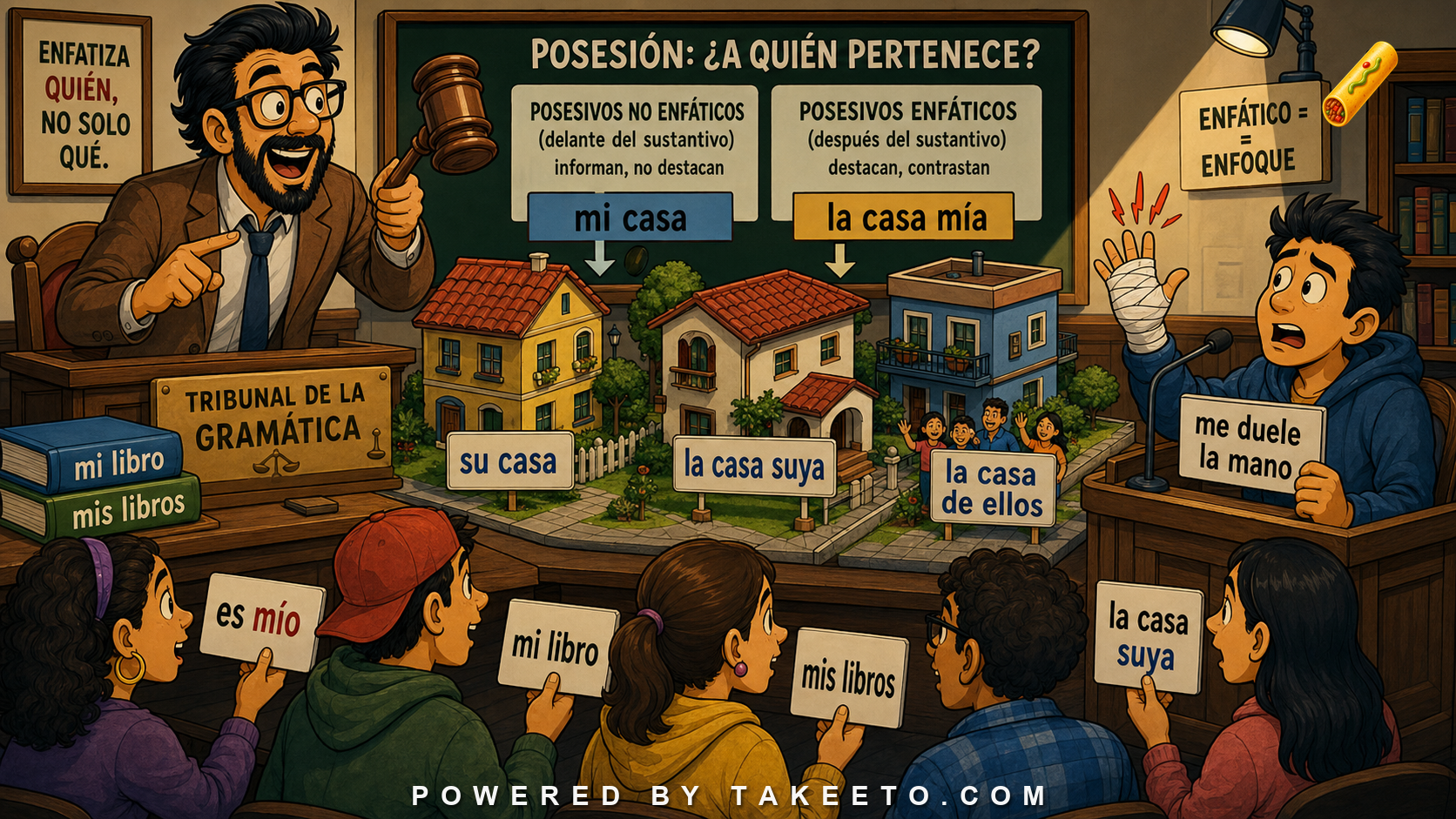
The reader can distinguish unstressed and stressed possessives and their discourse effects.
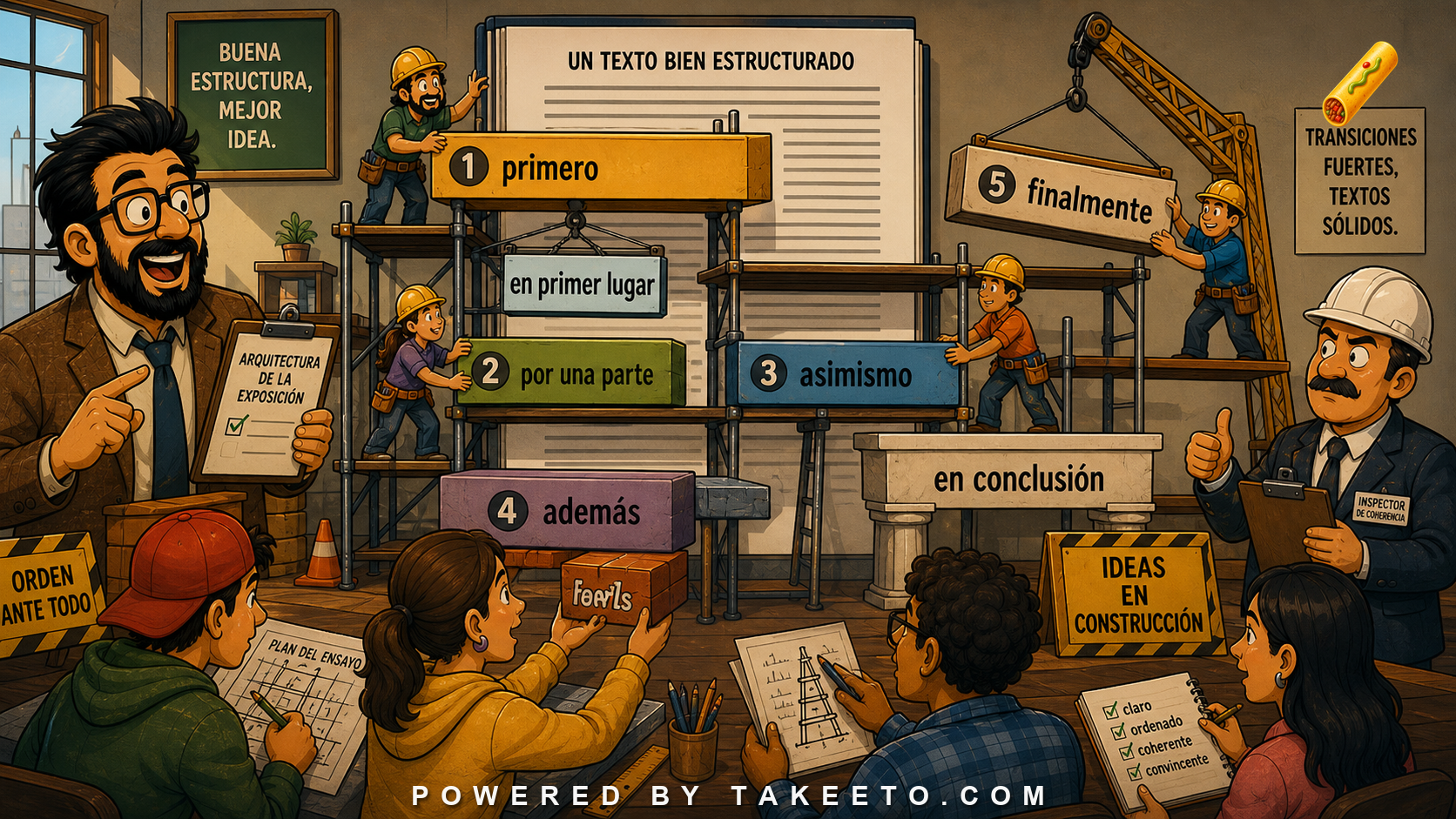
The reader can follow and produce structured Spanish exposition.
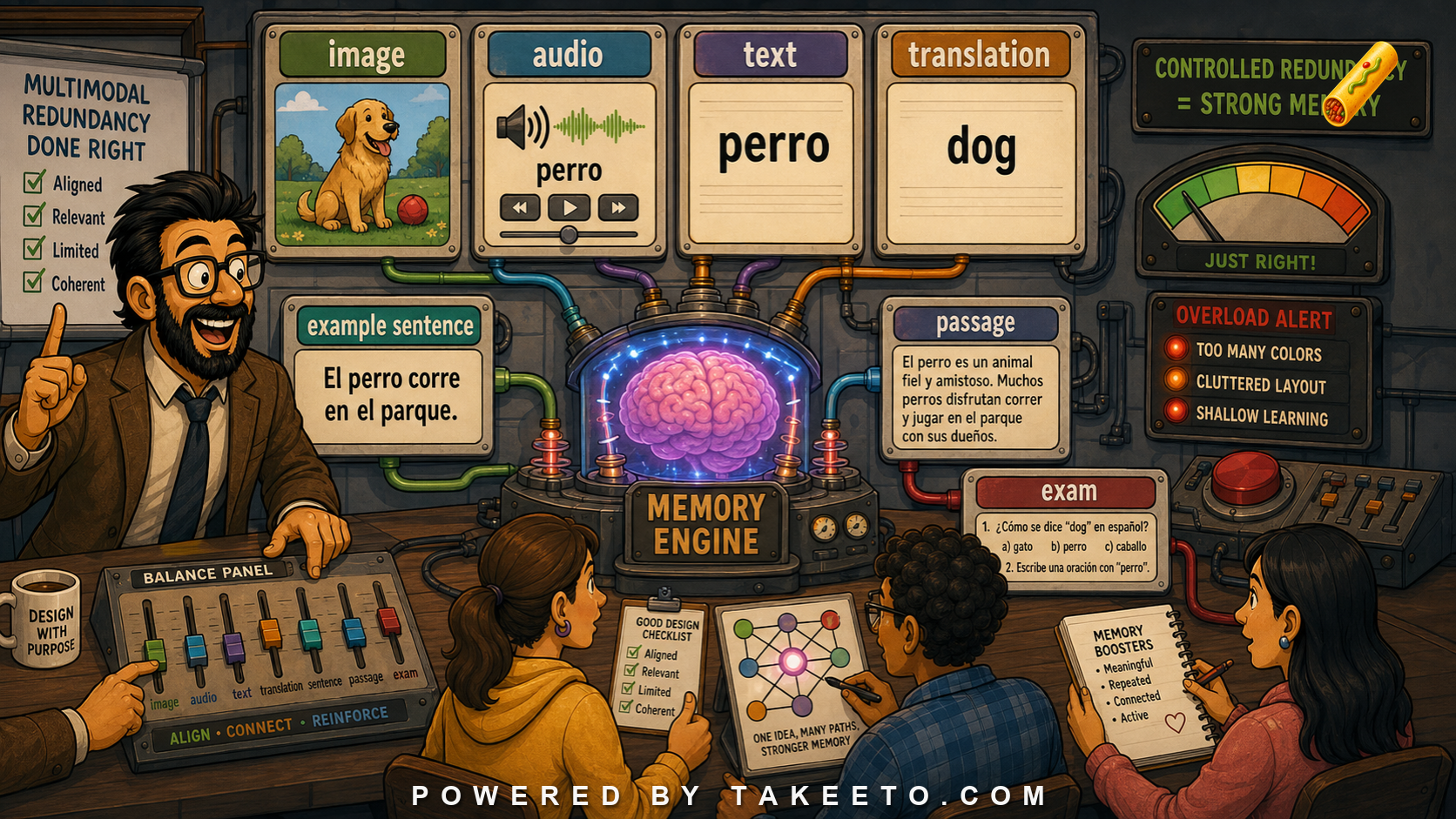
The reader understands how multiple cues can strengthen Spanish memory without creating visual clutter or shallow picture-dictionary learning.
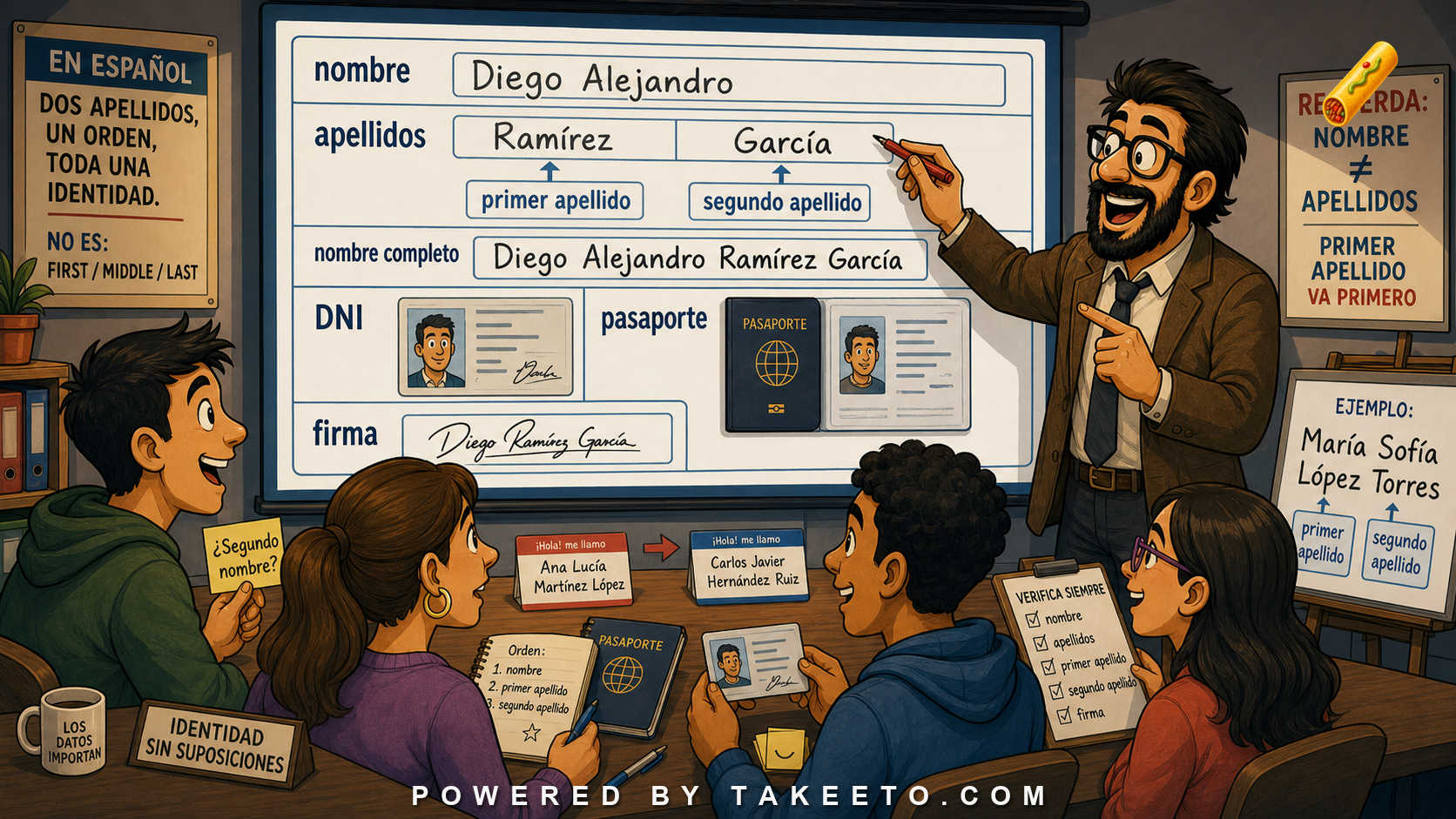
The reader can parse Spanish-name fields and avoid English assumptions about first, middle, and last names.
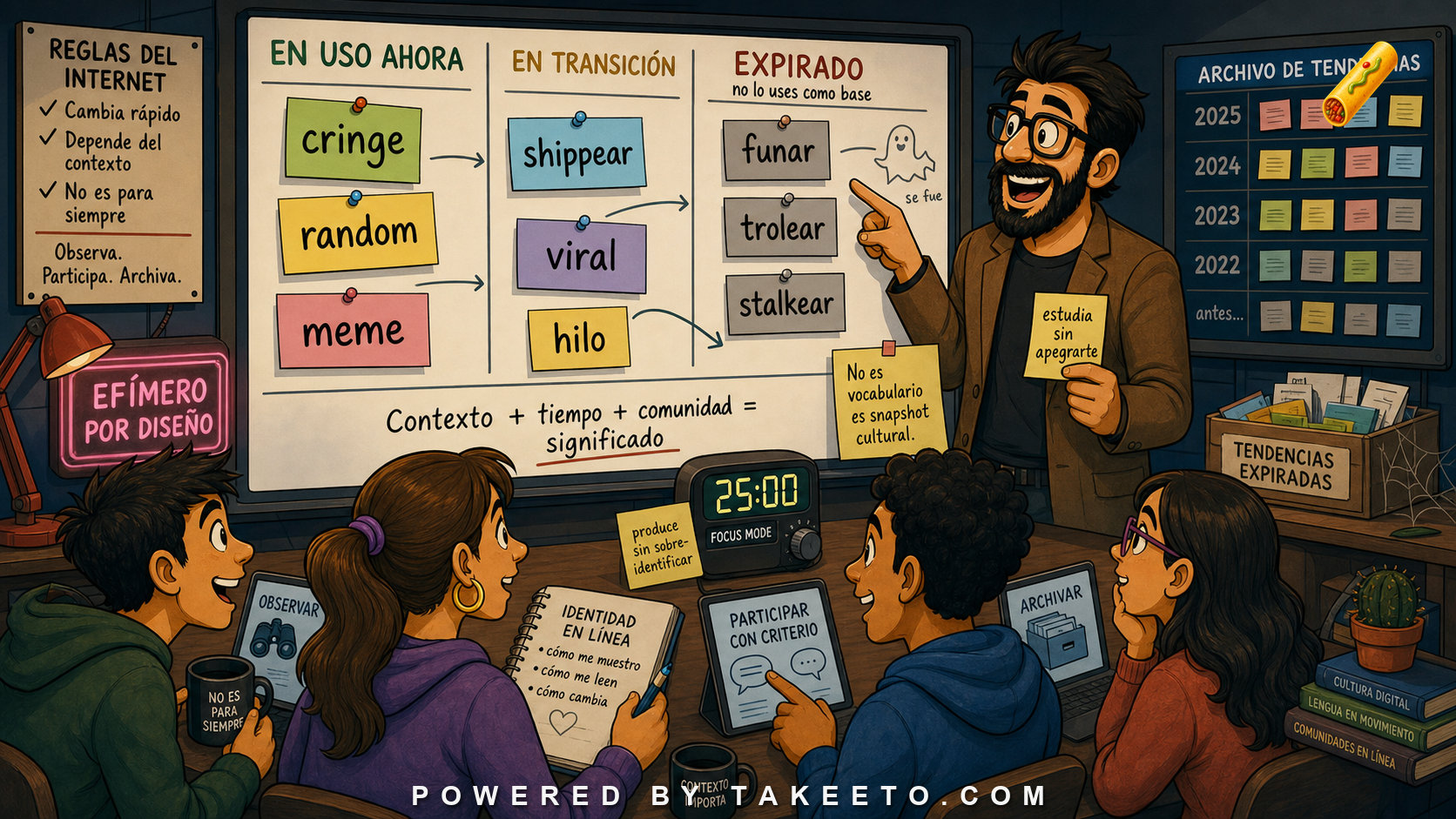
The reader can study slang without treating it as stable core vocabulary.
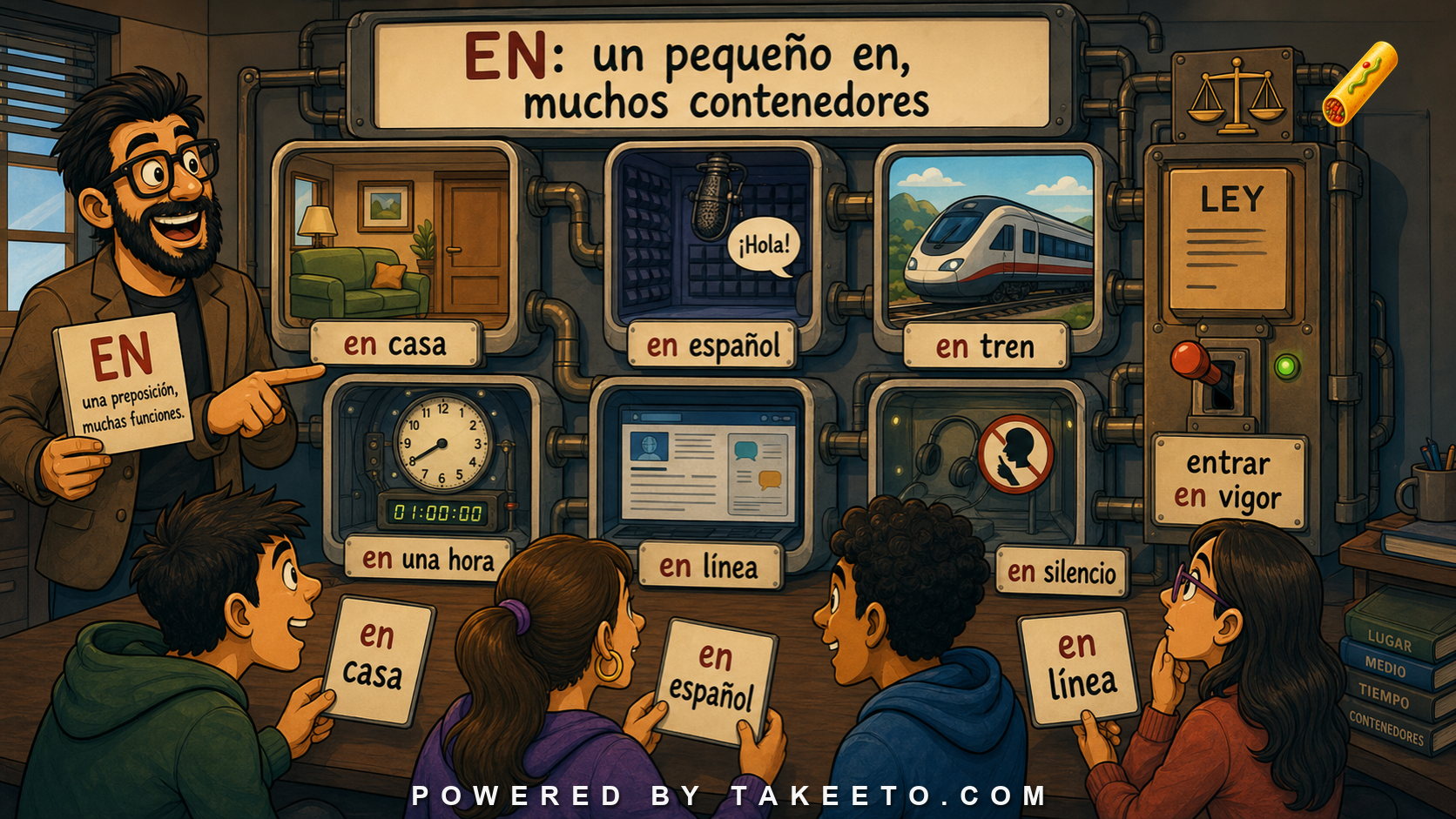
The reader can parse en across physical, temporal, and abstract contexts.
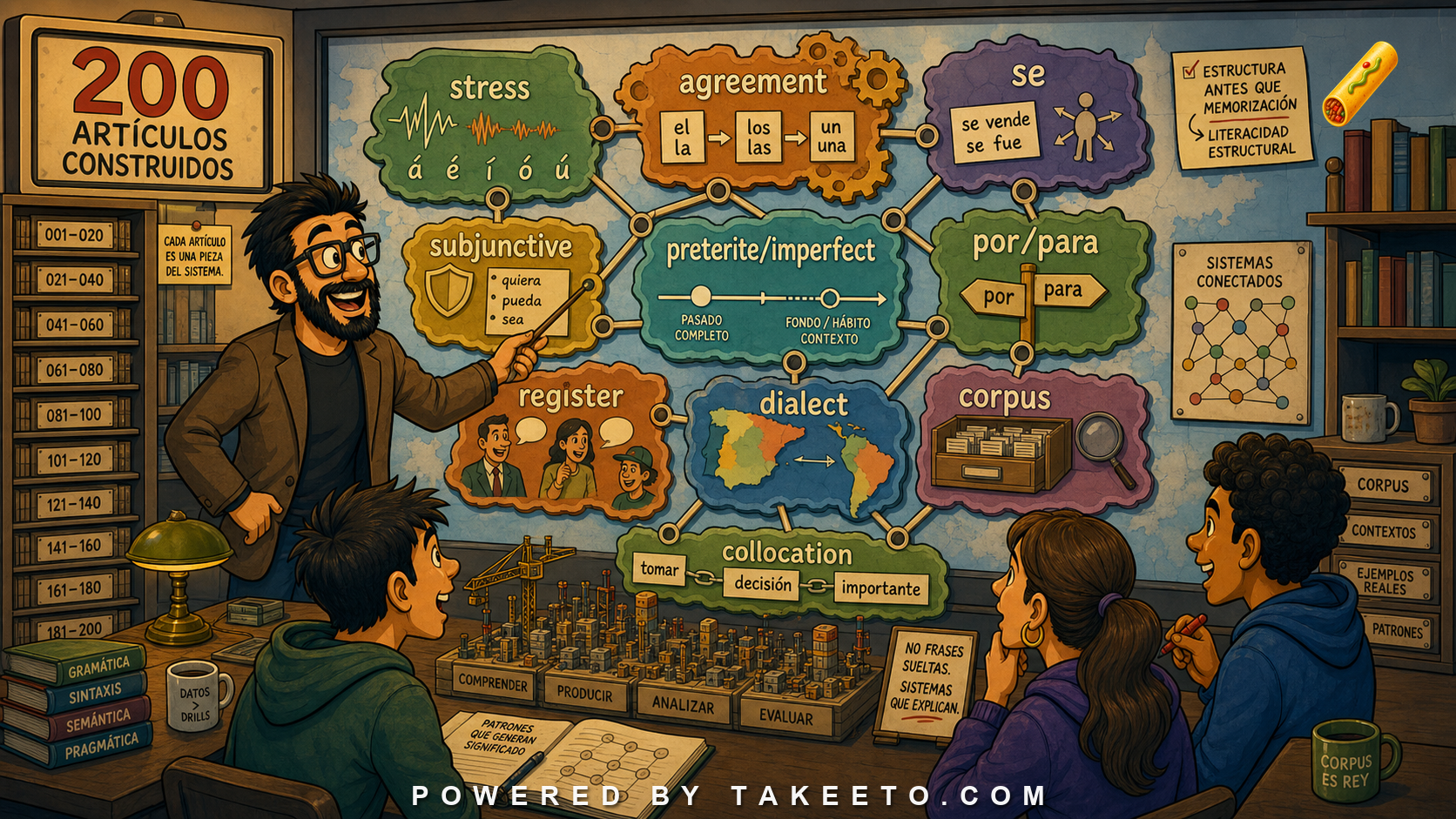
The reader sees Spanish study as cumulative structural literacy rather than memorized phrases.
The reader understands how changes in vocabulary lists affect passages, audio, PDFs, and exams.
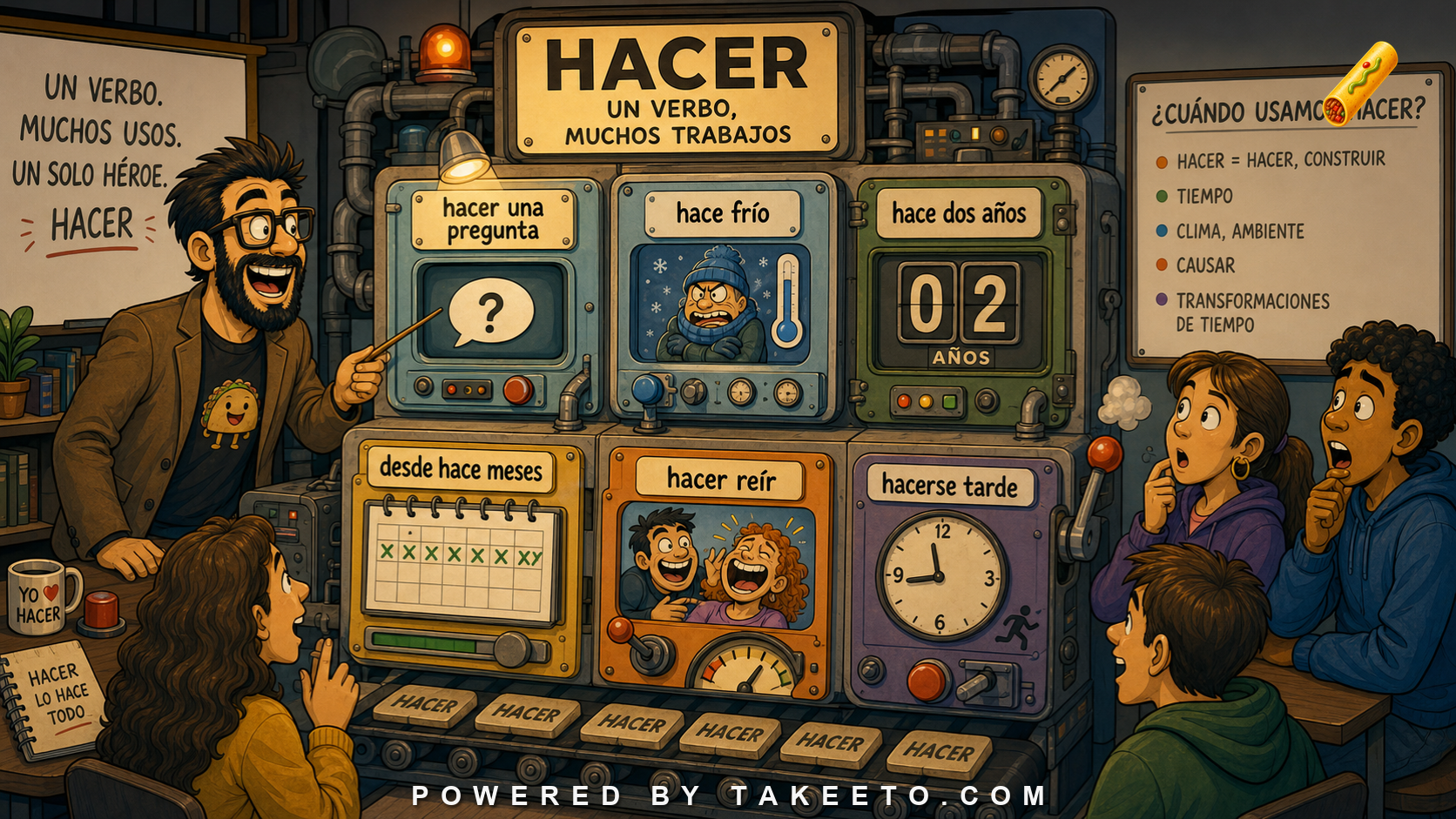
The reader can parse hacer across concrete, temporal, environmental, and causative uses.
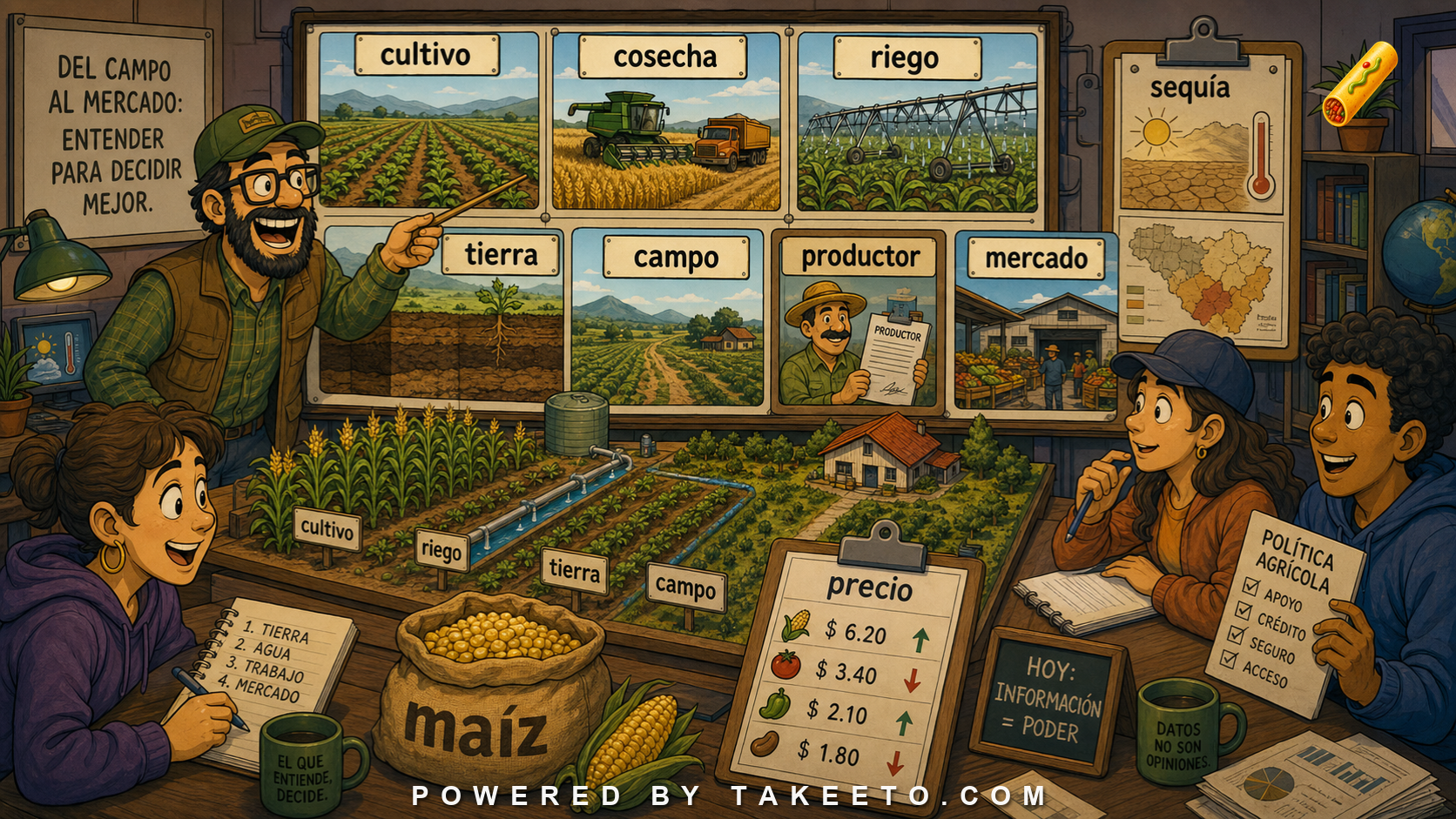
The reader can parse agriculture-related Spanish in news, policy, and trade.
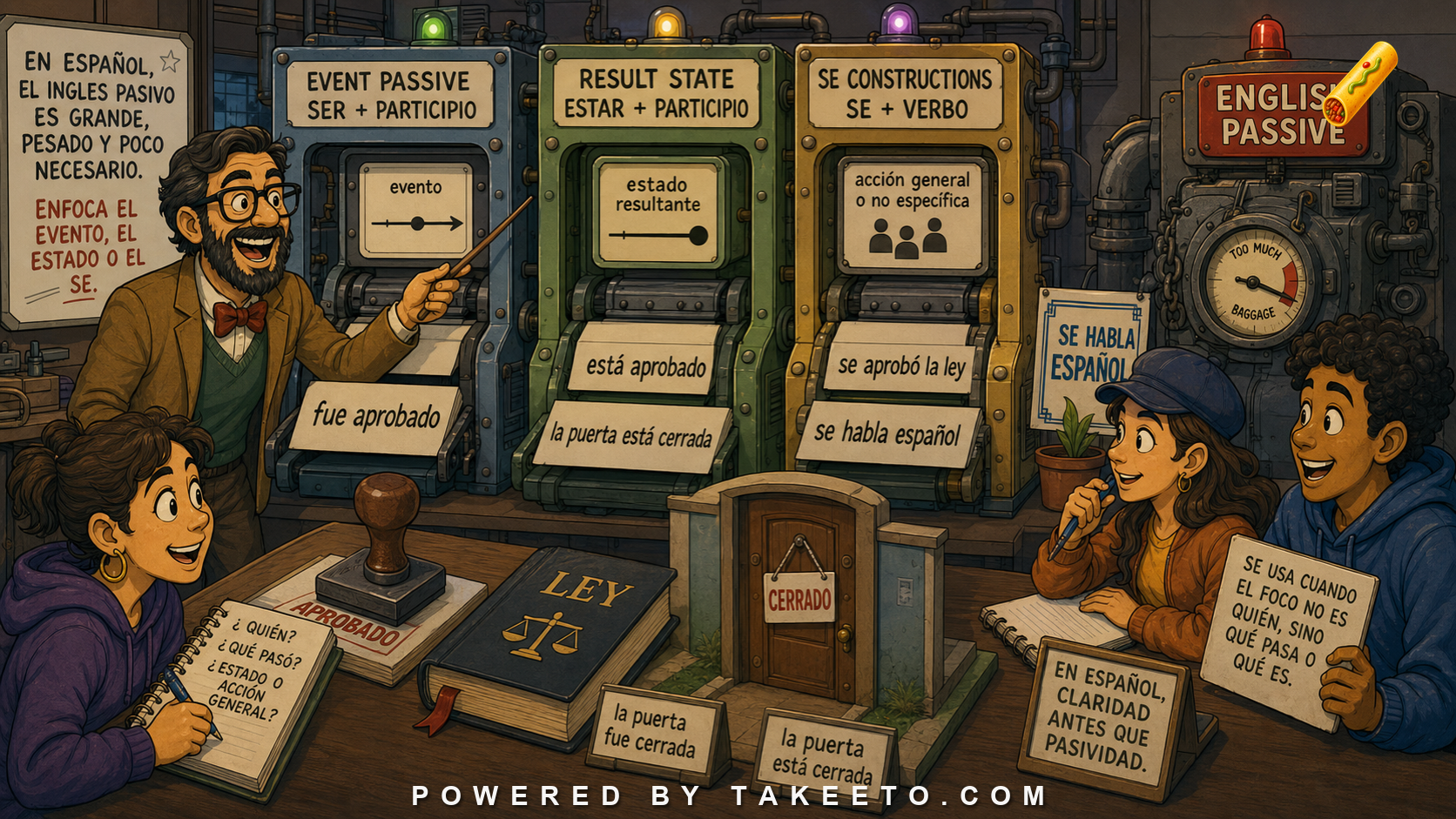
The reader can distinguish event passive, resultative state, and se constructions.
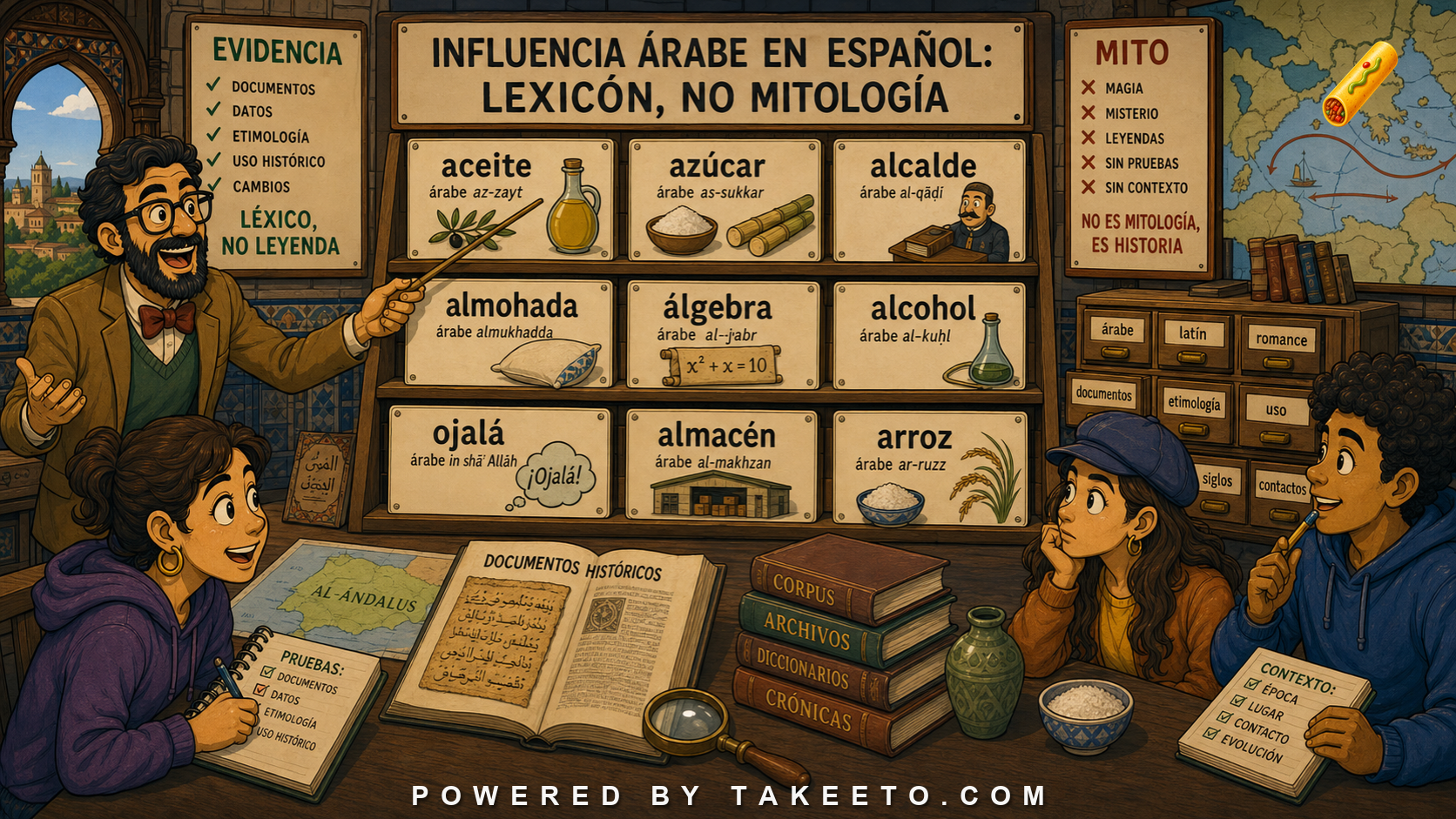
The reader understands Arabic influence in Spanish with precision and context.

The reader understands how durable Spanish knowledge forms through repeated corrective contact.
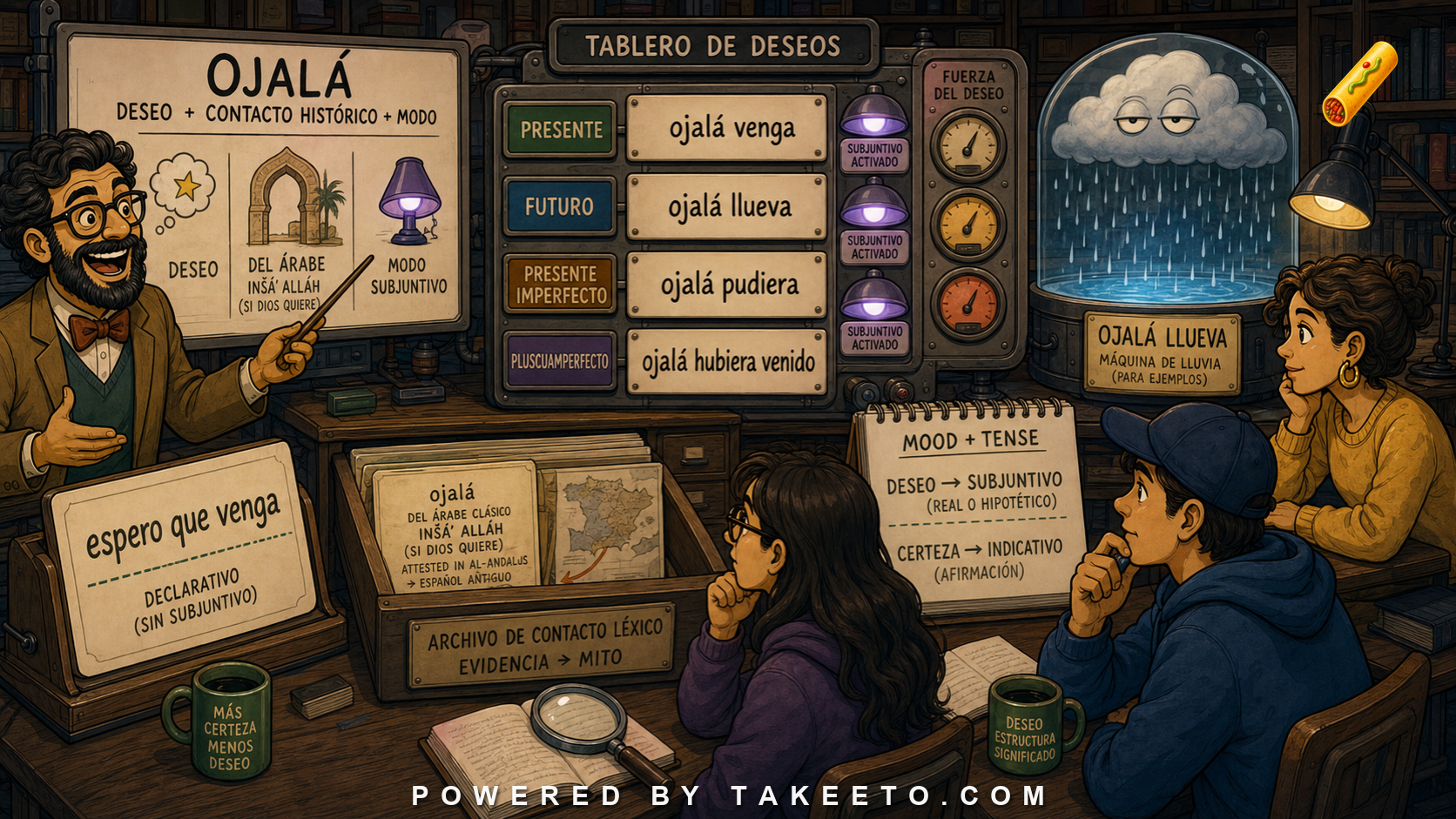
The reader understands ojalá as a desire marker tied to mood, tense, and historical contact.
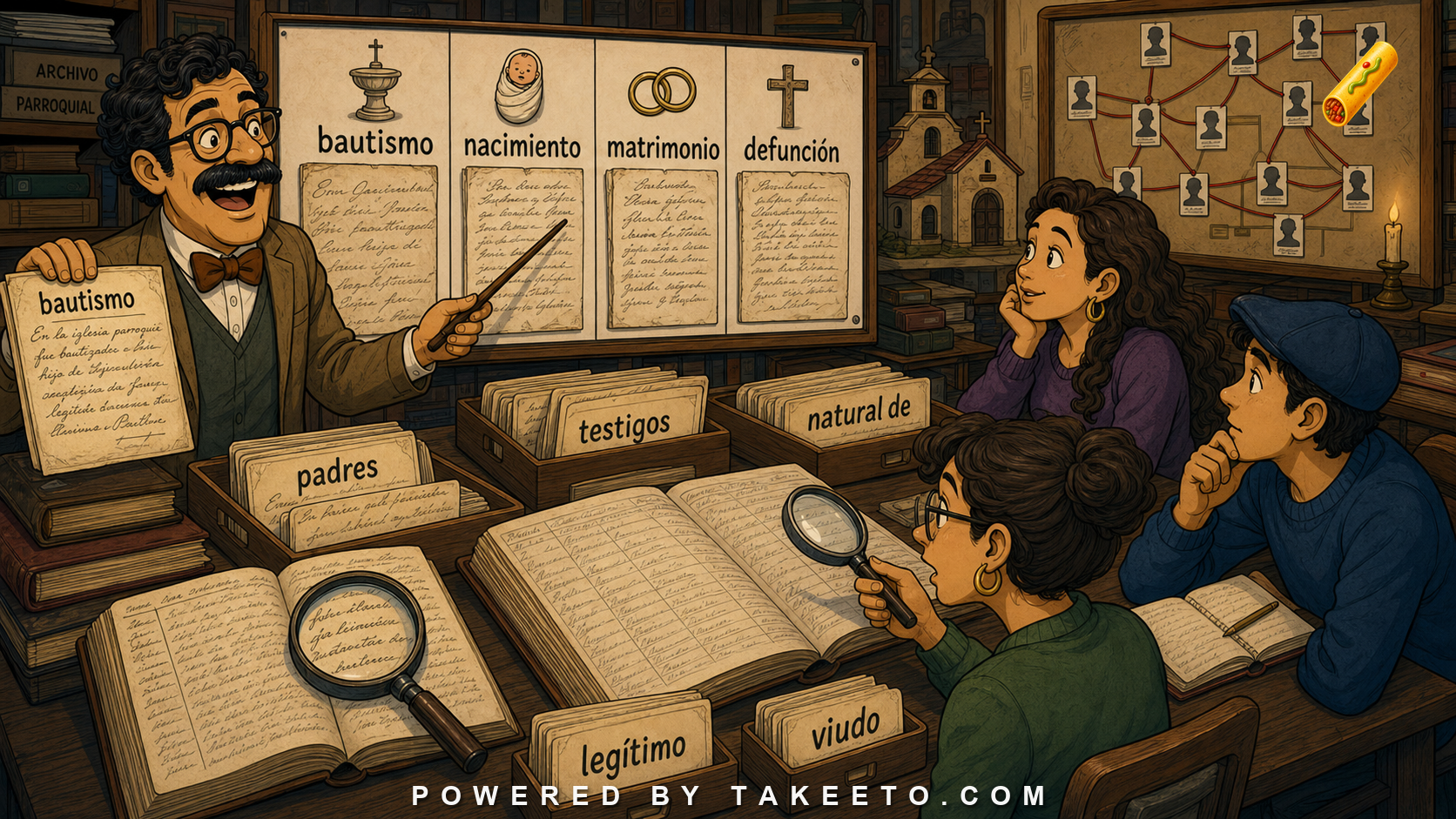
The reader can identify common terms in Spanish genealogical records.
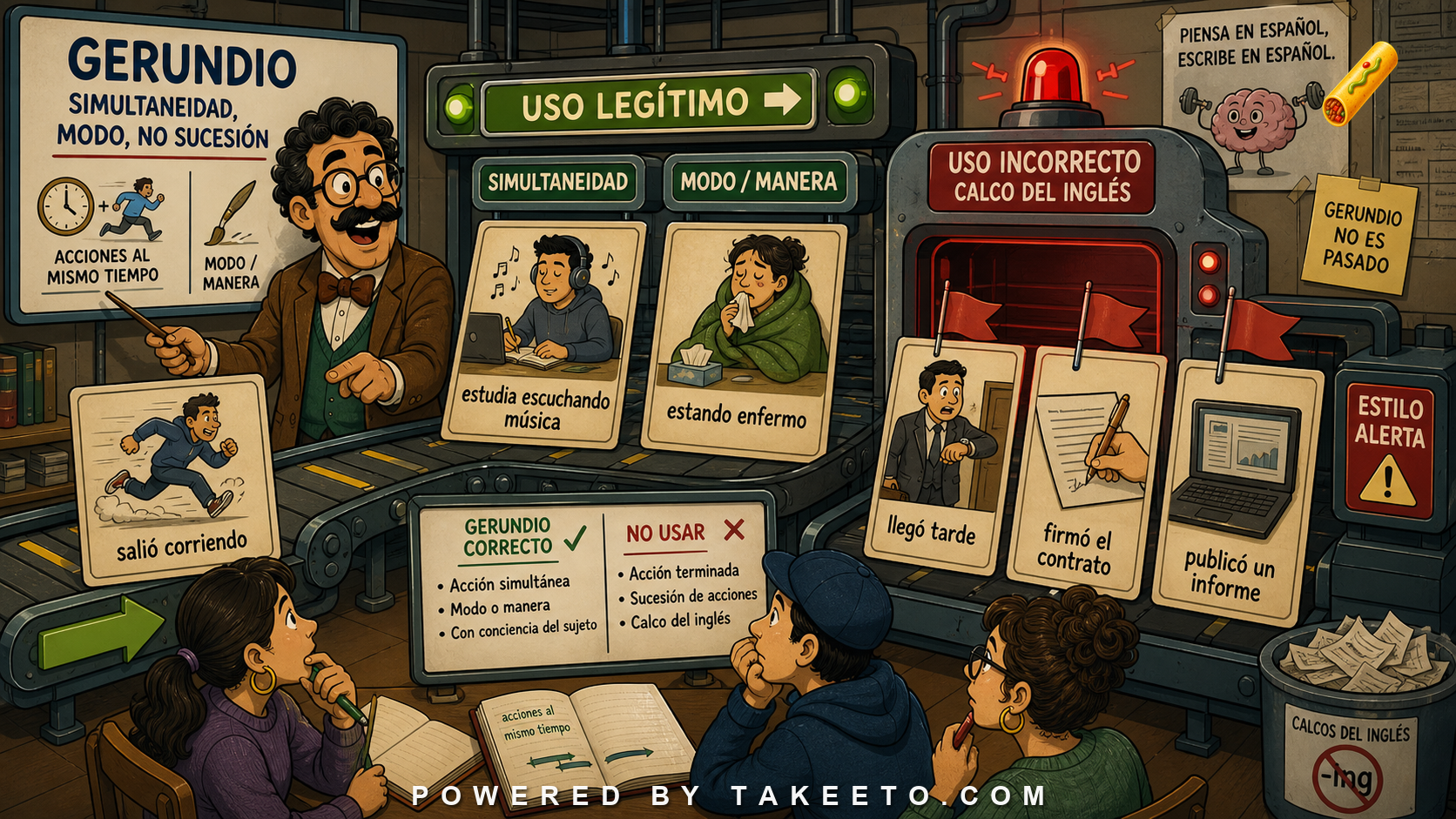
The reader can identify legitimate Spanish gerund use and avoid English-shaped participial clauses.
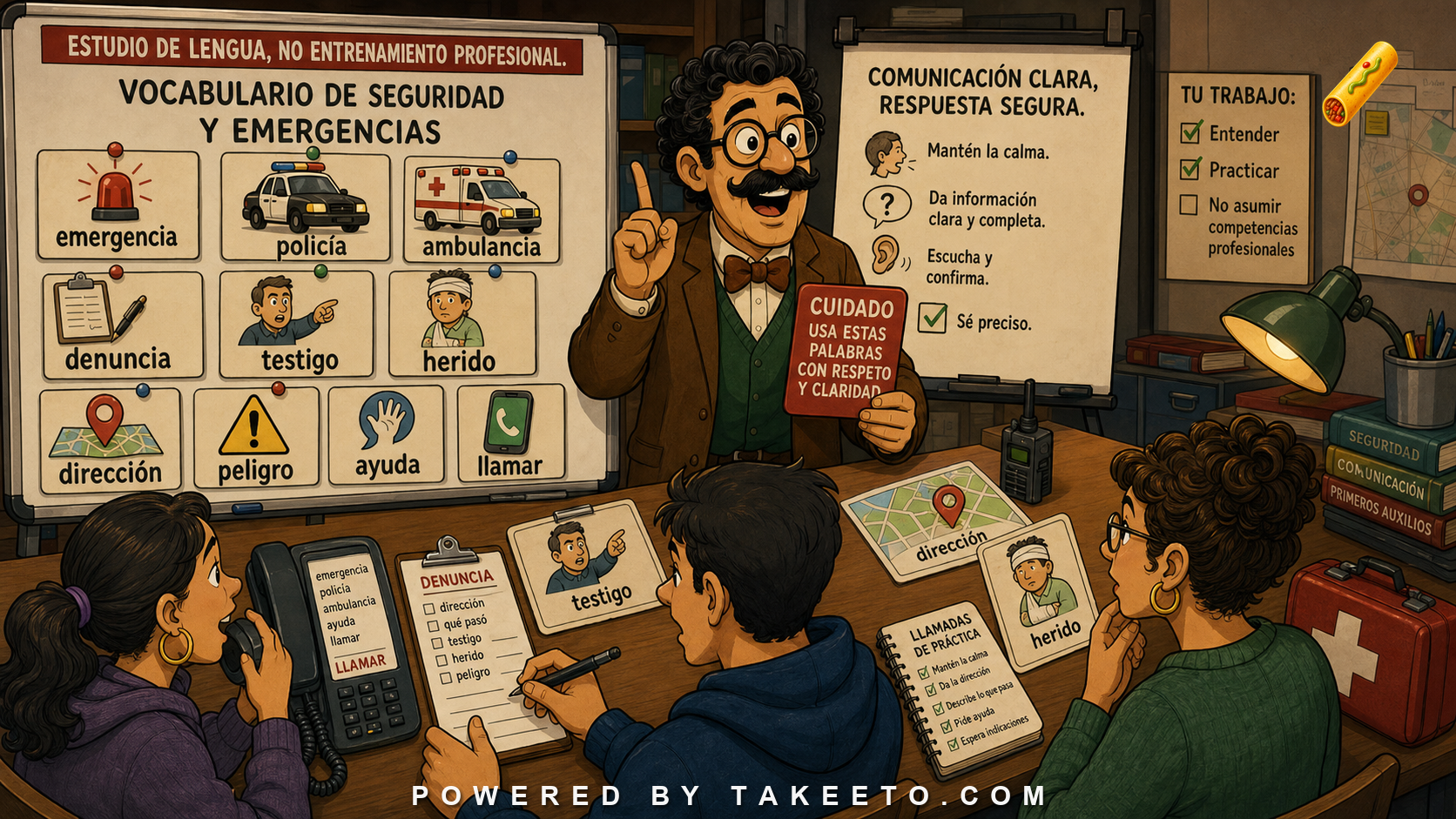
The reader can understand basic safety and emergency vocabulary without overclaiming professional competence.
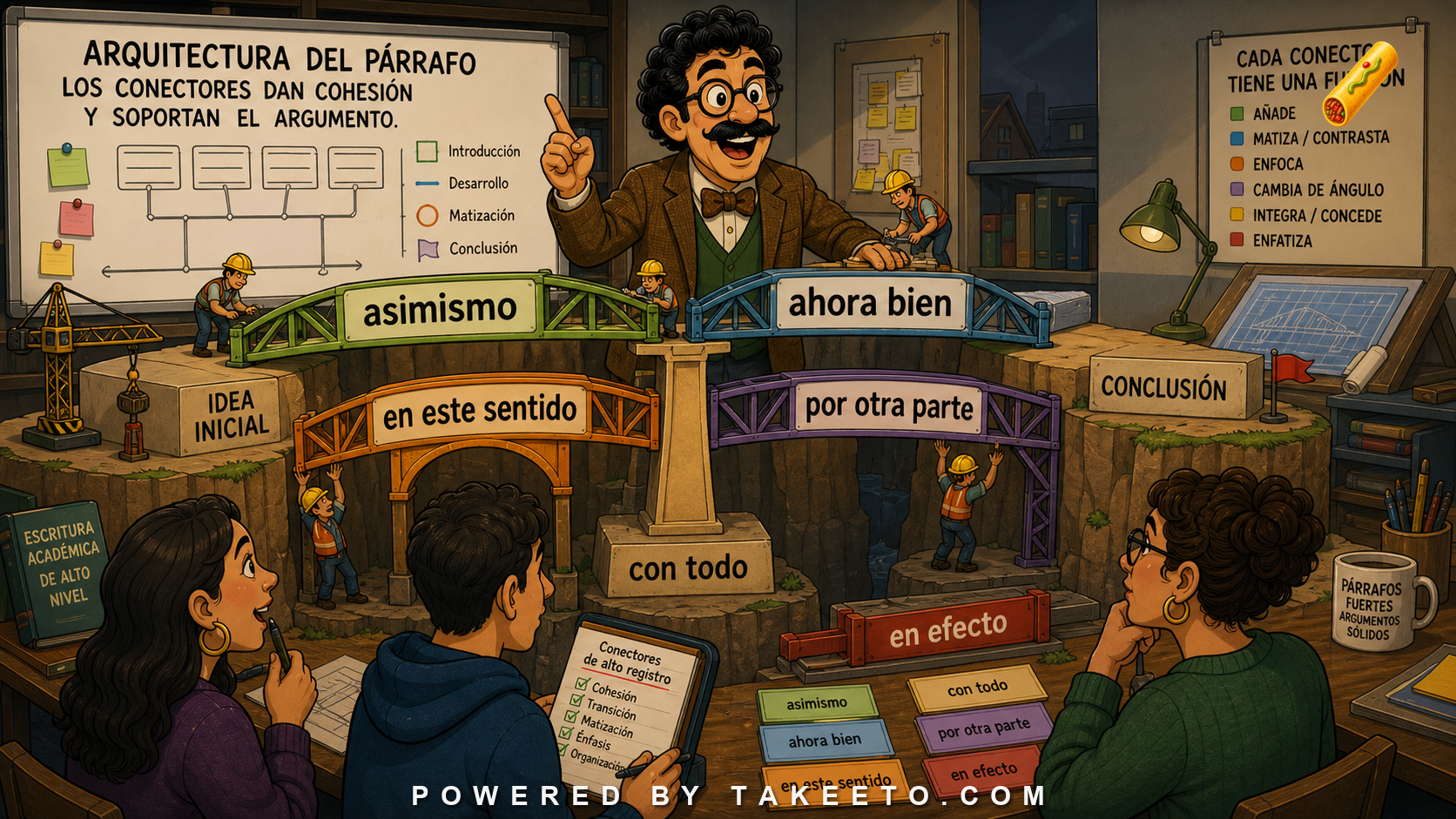
The reader can interpret high-register connectors as paragraph architecture.
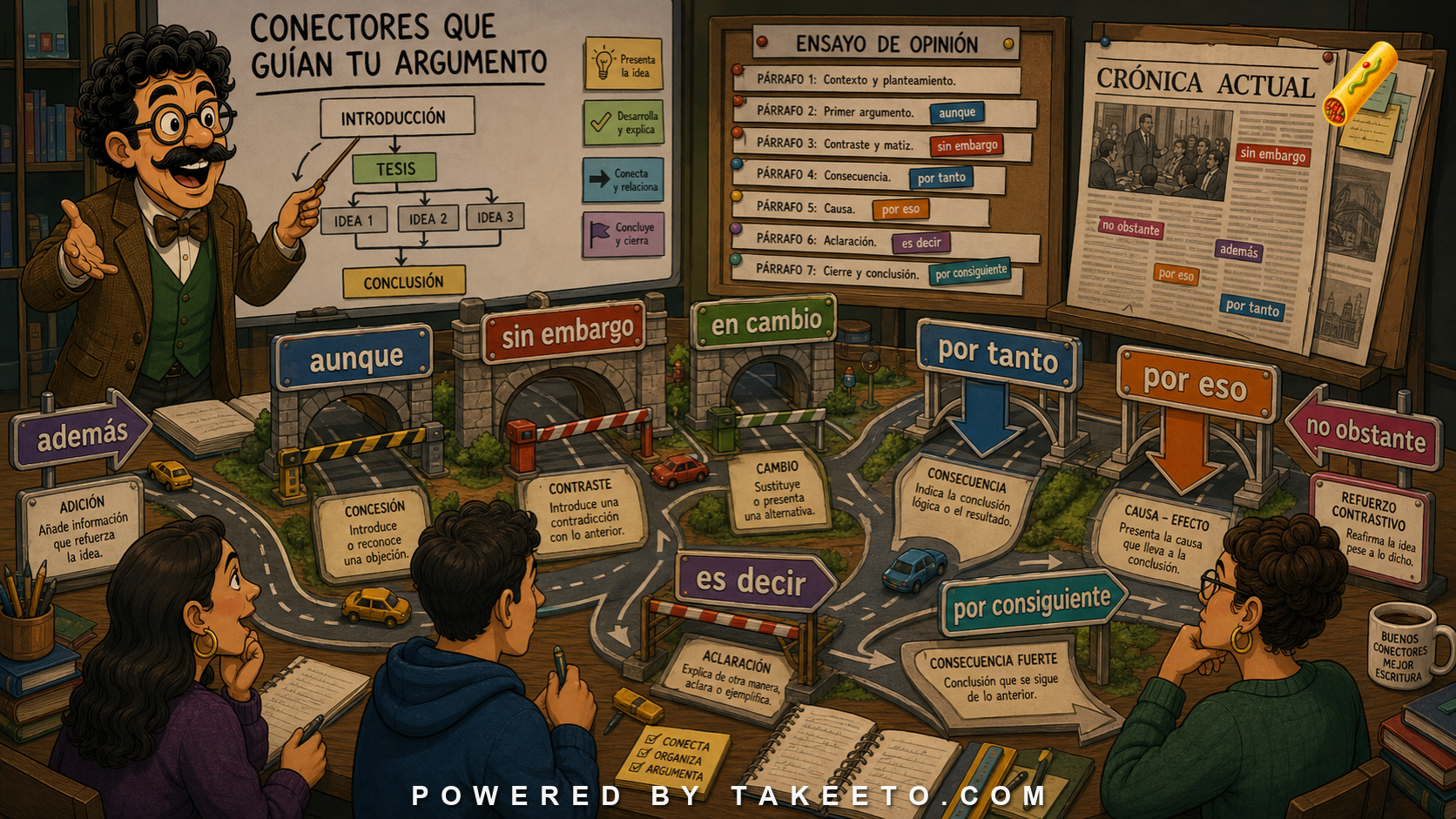
The reader can follow argument structure in essays, journalism, and academic prose.
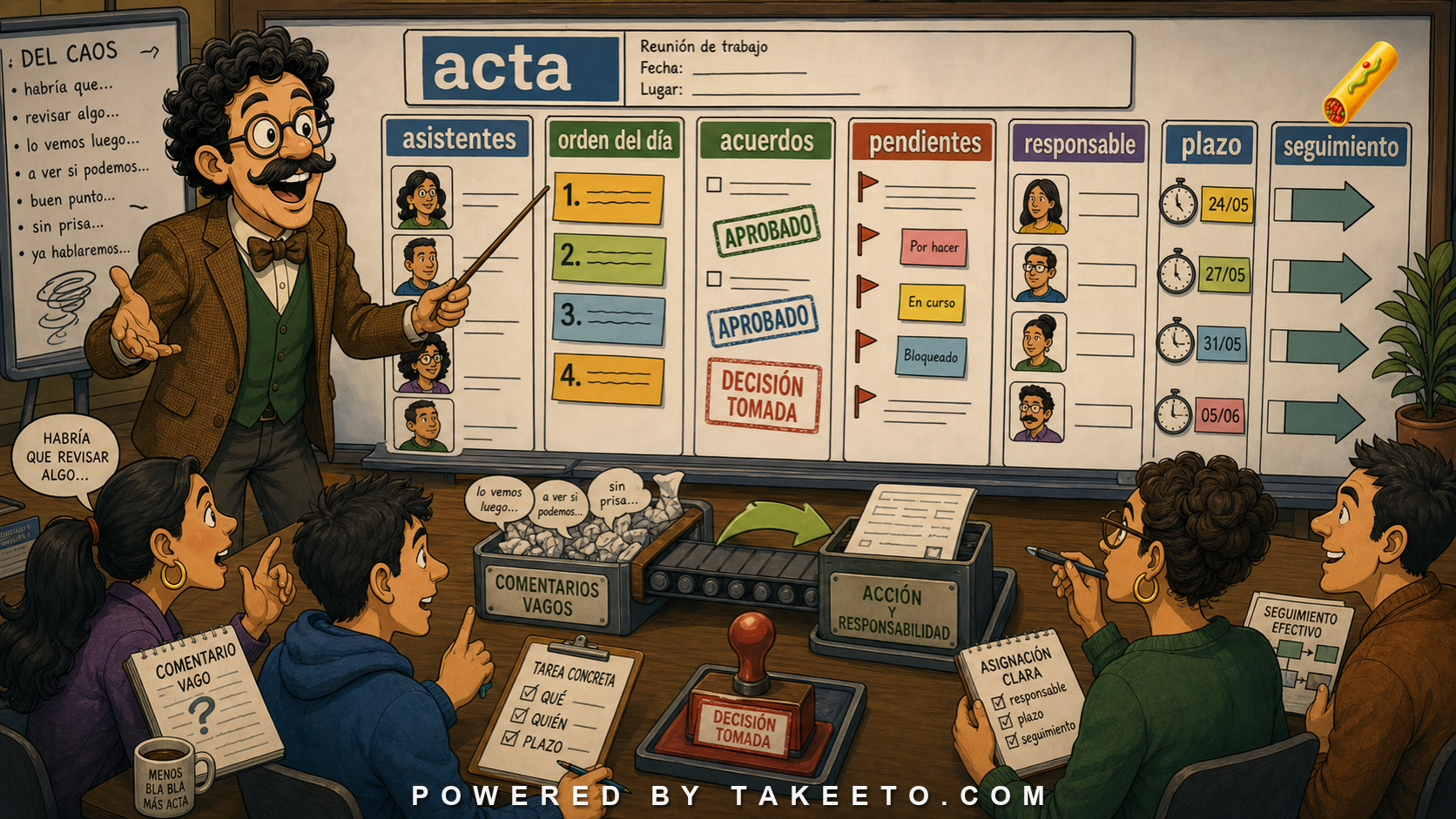
The reader can write and read actas and meeting summaries.
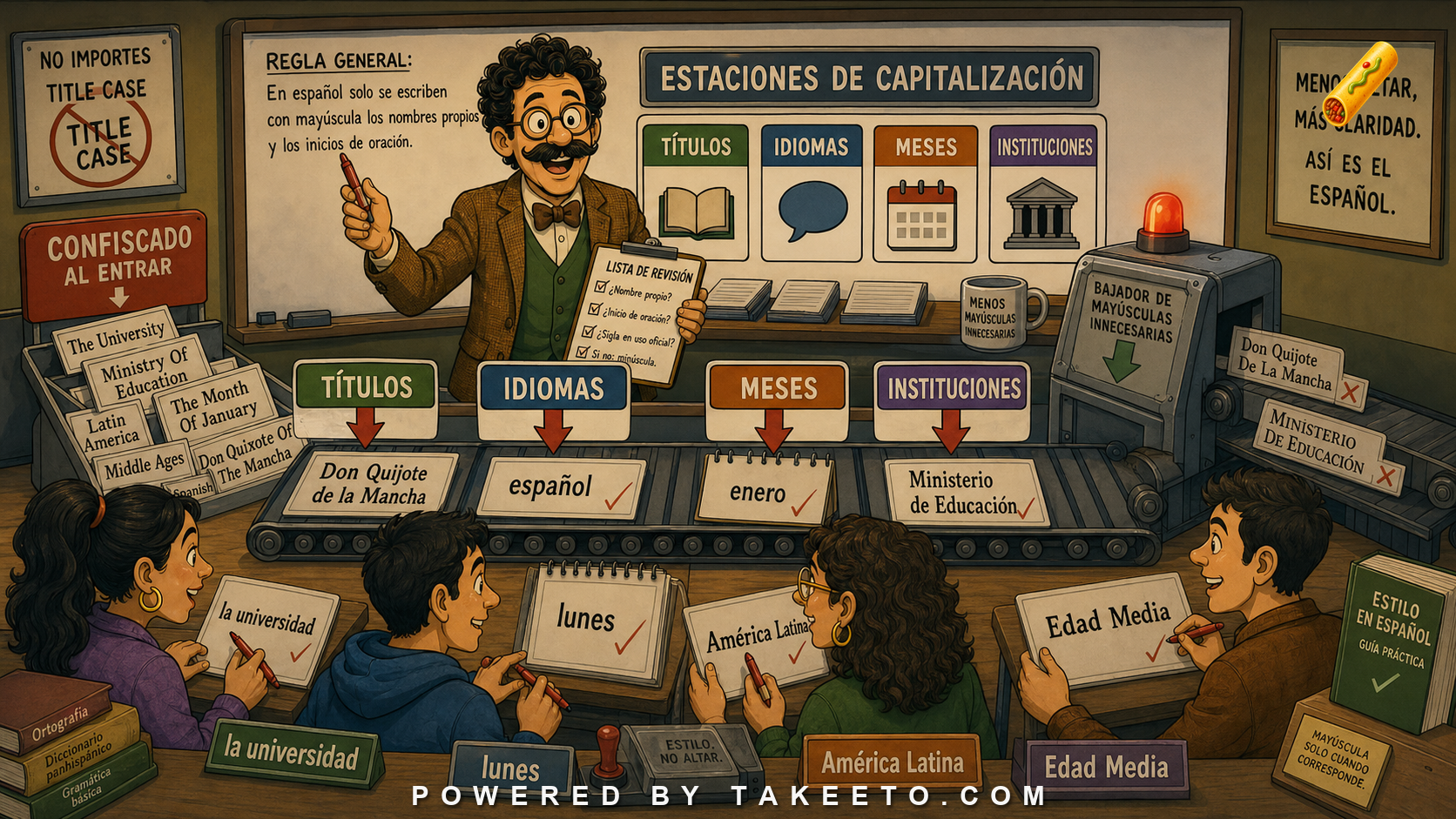
The reader can apply Spanish capitalization norms instead of importing English title-case habits.
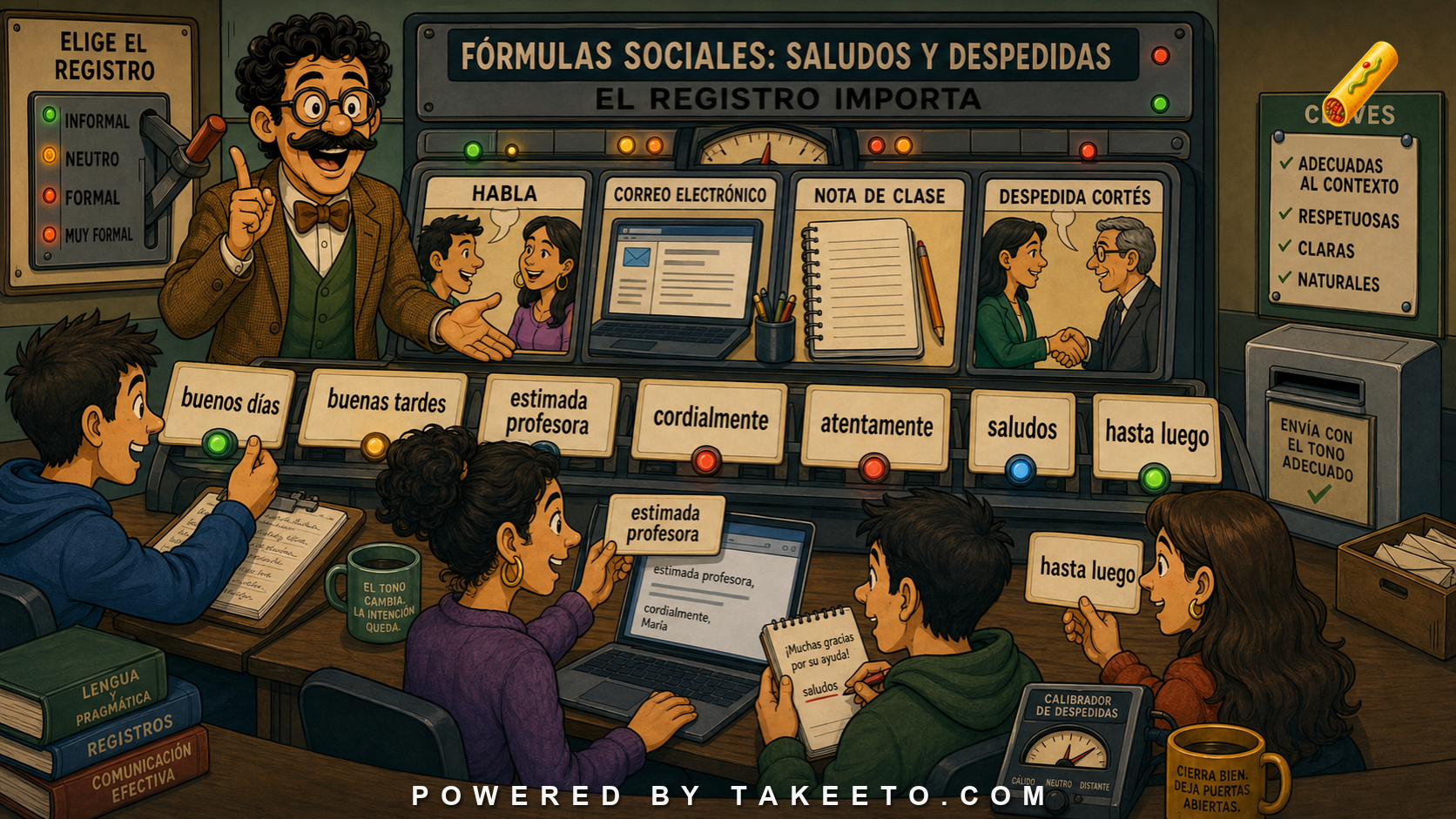
The reader can open and close interactions naturally in speech, email, and formal writing.
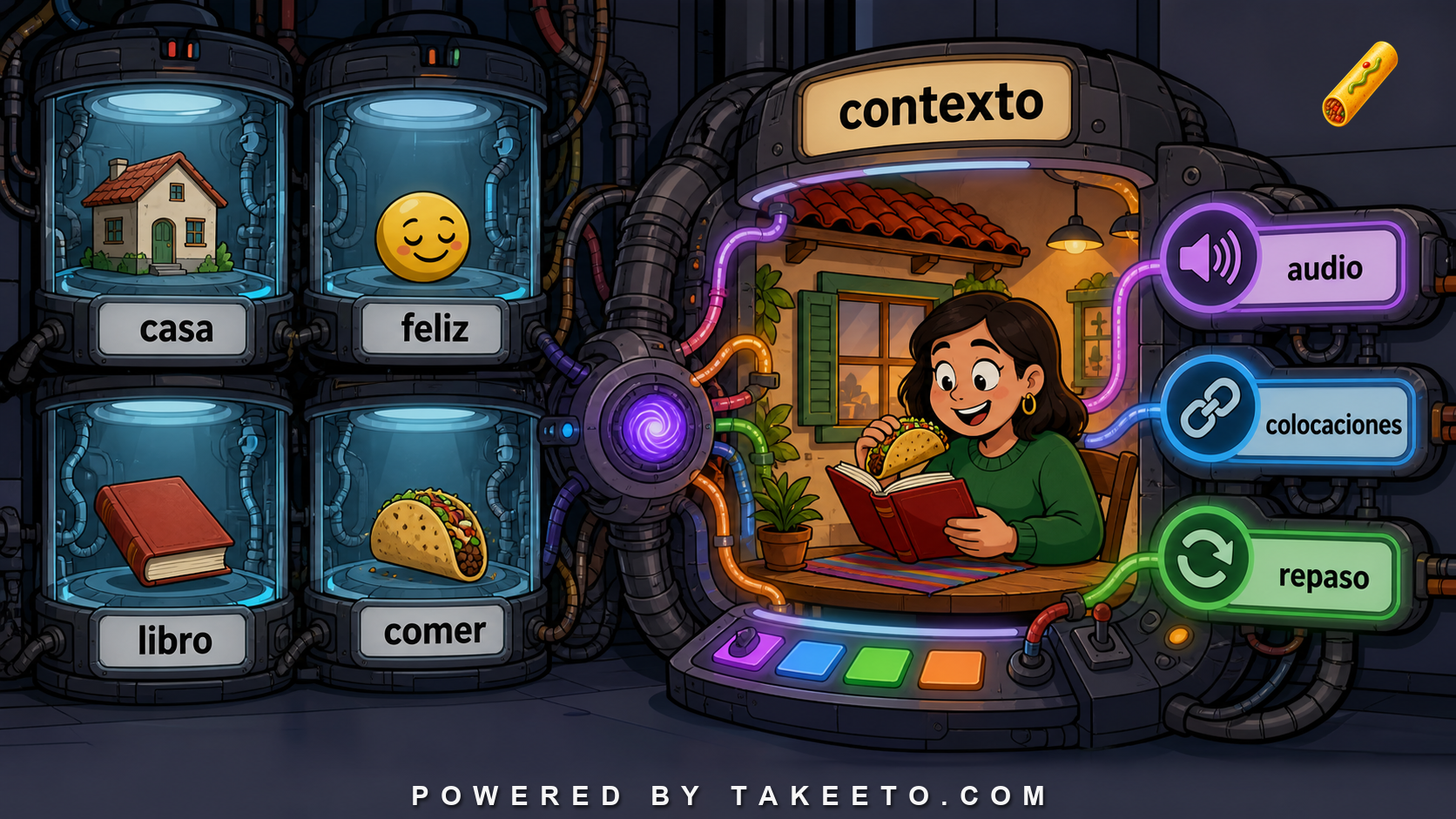
The reader understands why Spanish vocabulary should be reviewed with context, grammar, audio, collocation, and retrieval rather than isolated word-to-translation pairs alone.
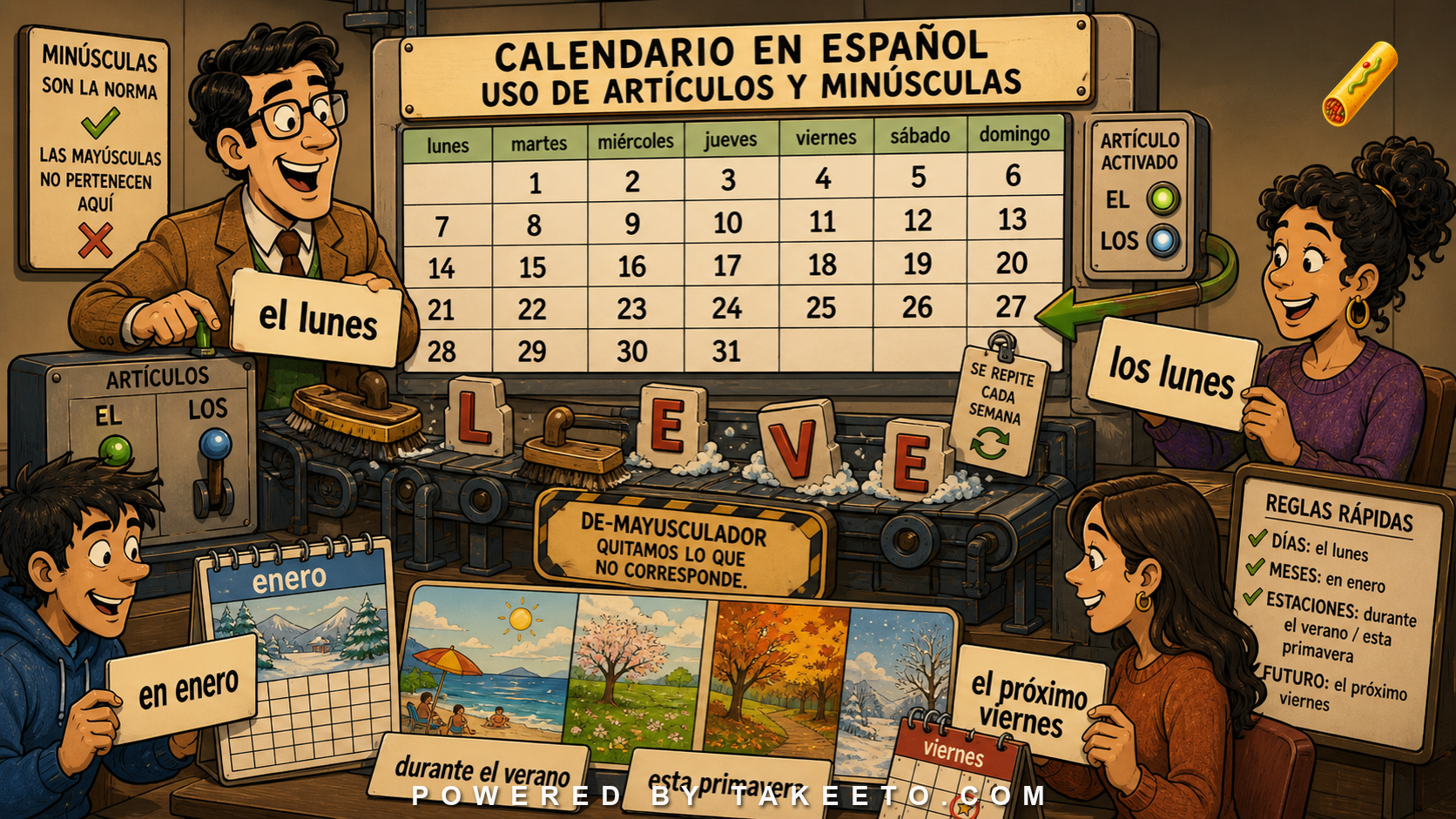
The reader can use calendar vocabulary in natural Spanish.
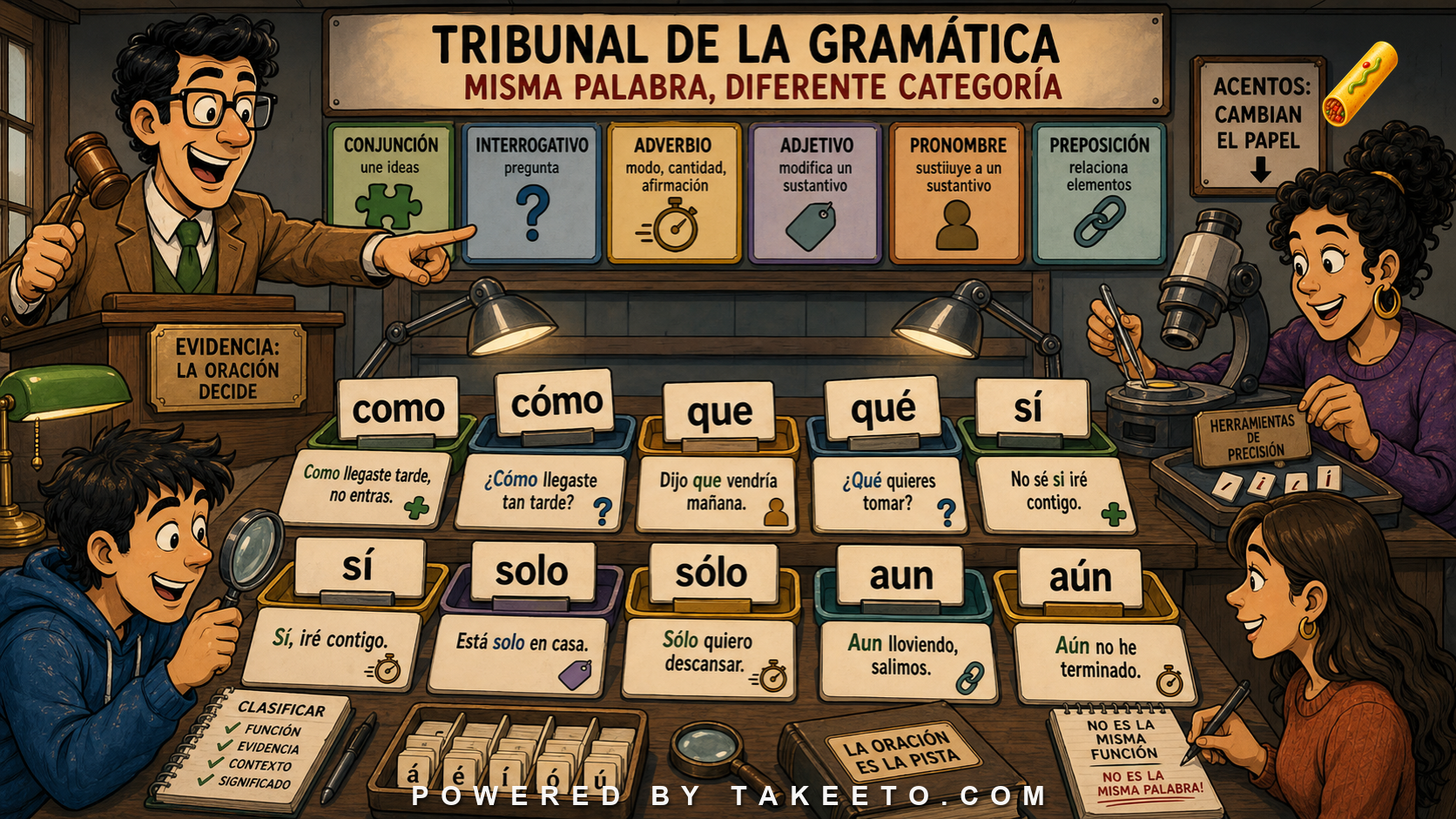
The reader can classify high-frequency forms by syntactic role rather than spelling alone.

The reader can pursue a serious three-month program that balances structure and volume.
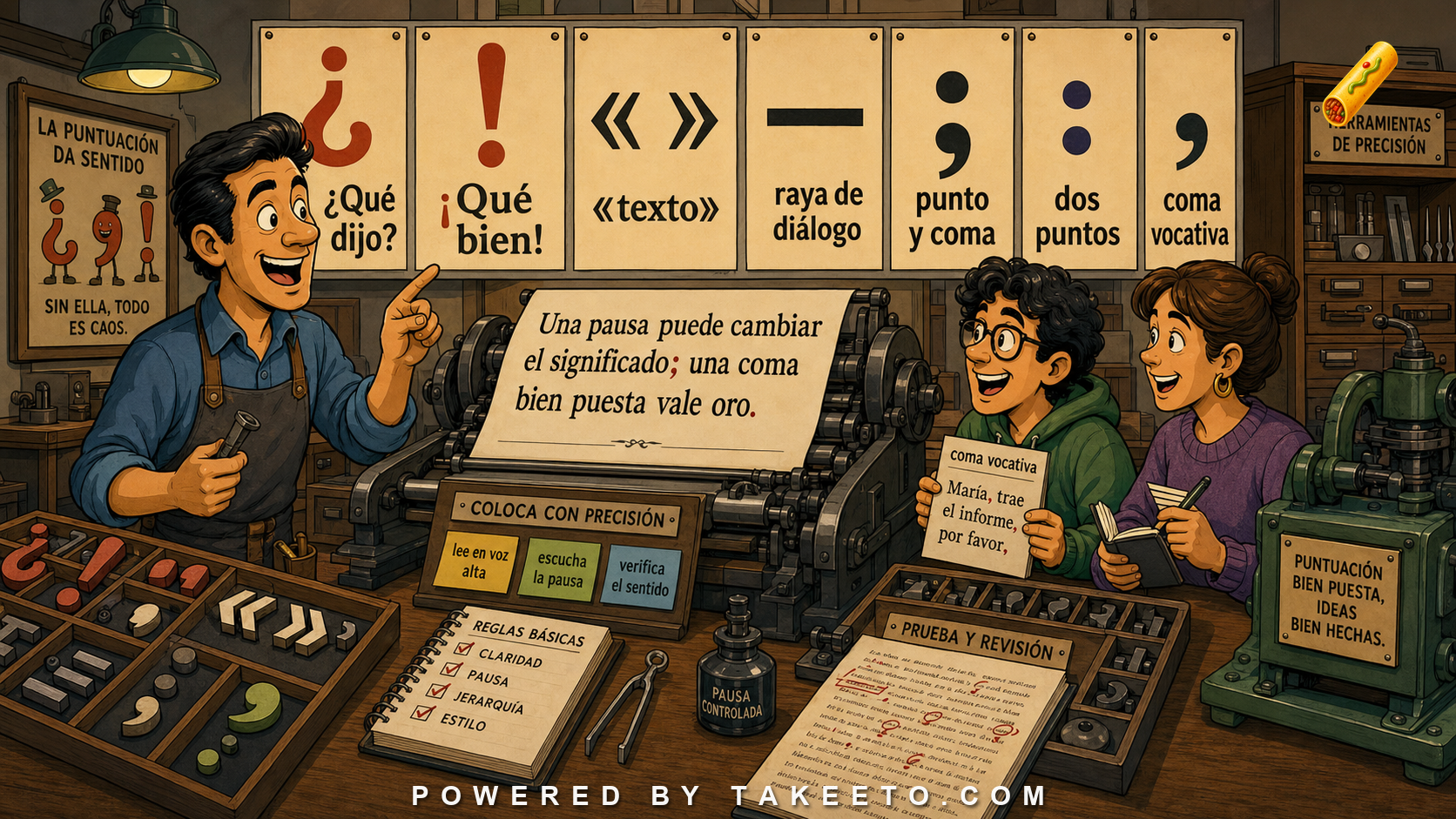
The reader can read and write Spanish punctuation in formal prose and dialogue.
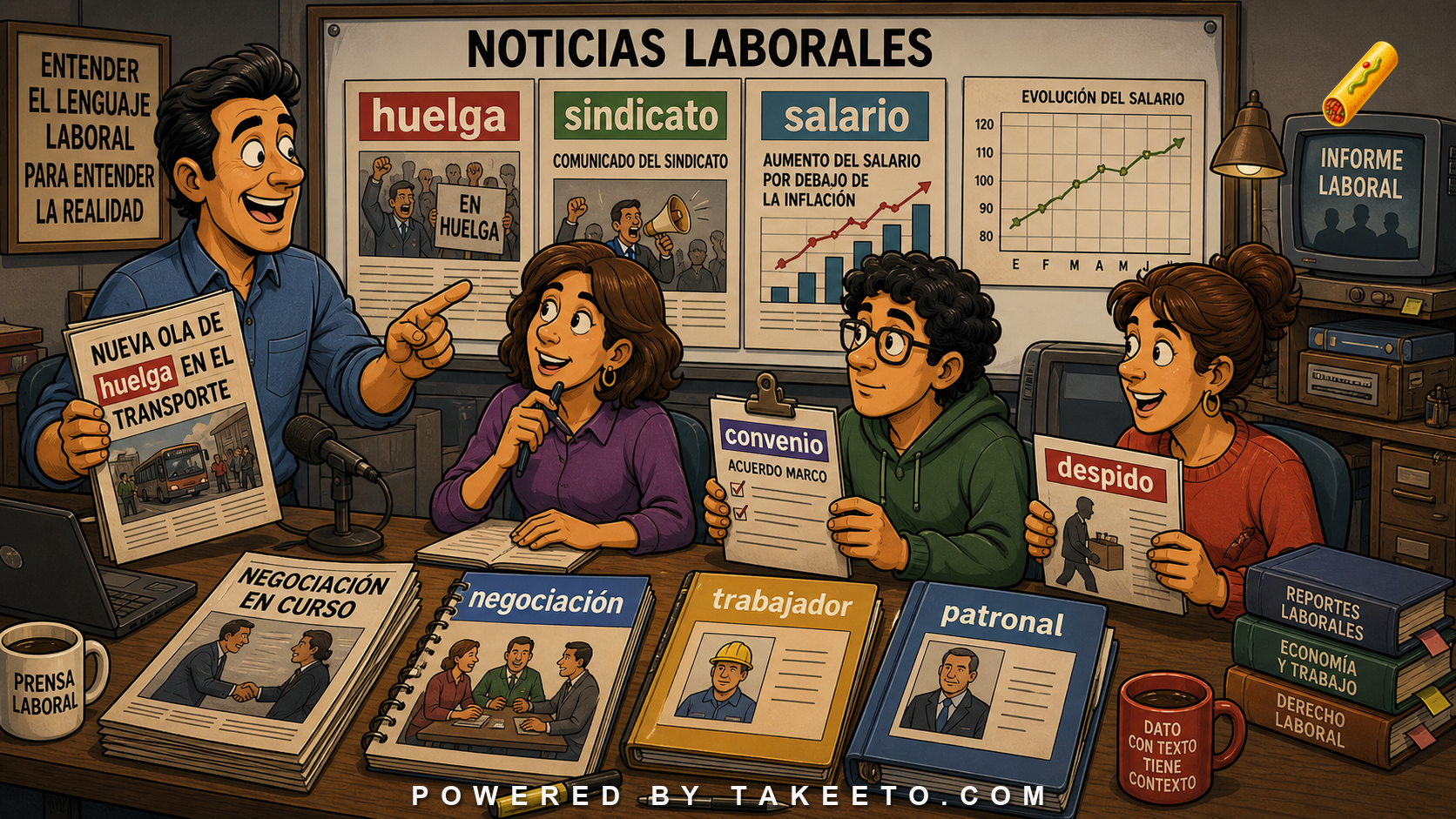
The reader can understand labor reporting and union statements.
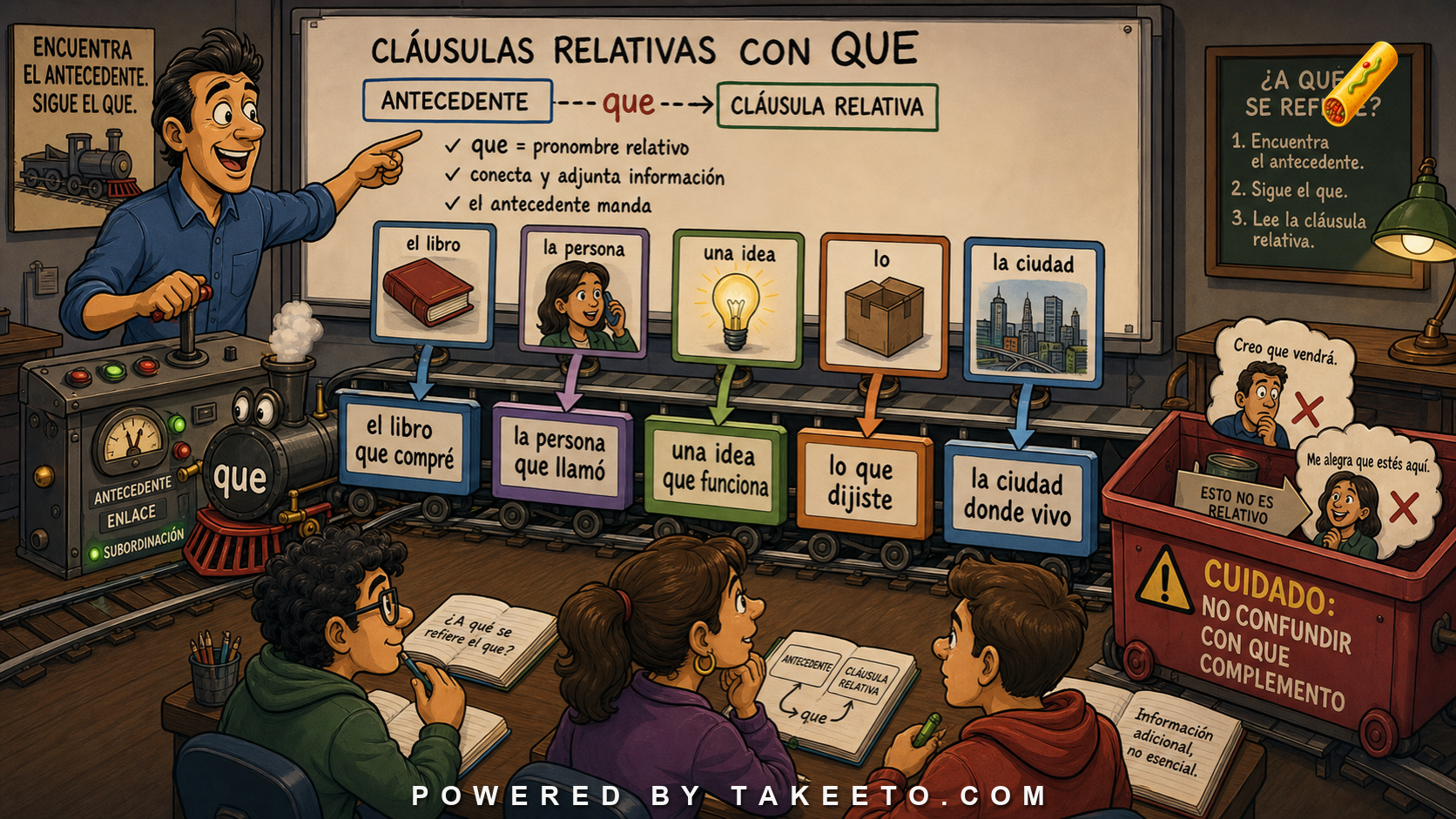
The reader can parse que relative clauses, find their antecedents, and avoid confusing relative que with complement que.
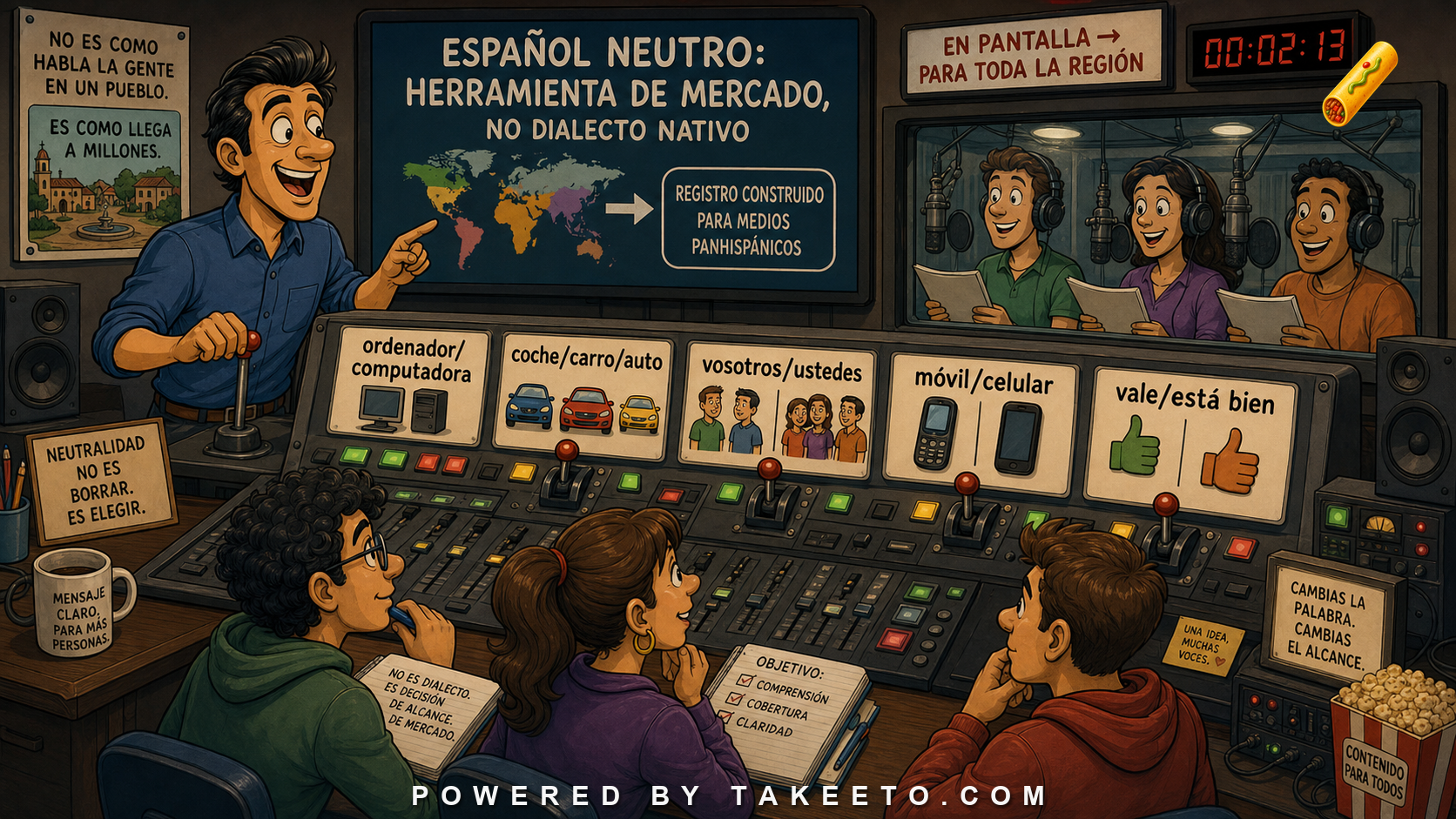
The reader understands neutral Spanish as a constructed media register.
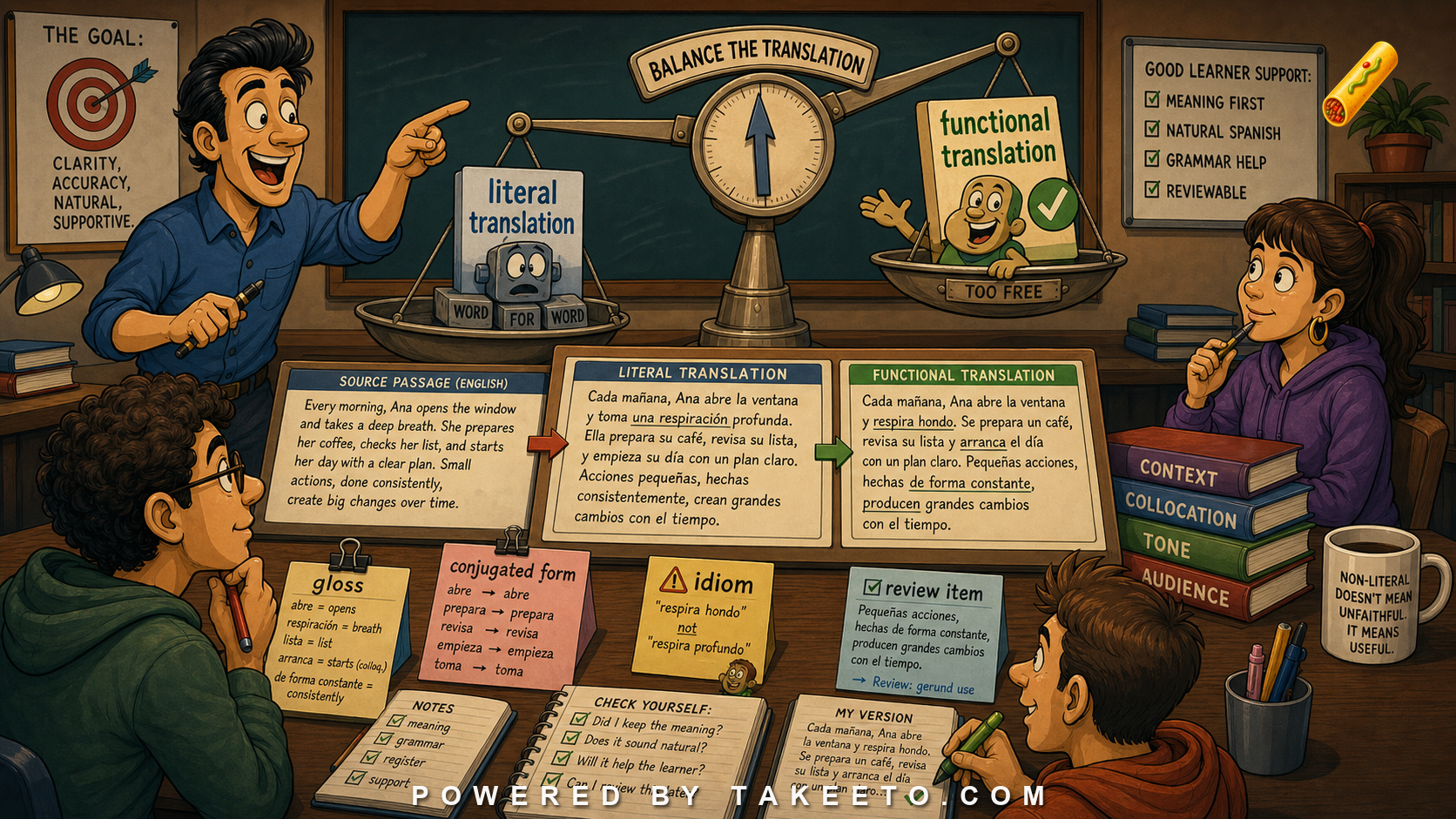
The reader can translate pedagogical passages while preserving meaning and learner support.
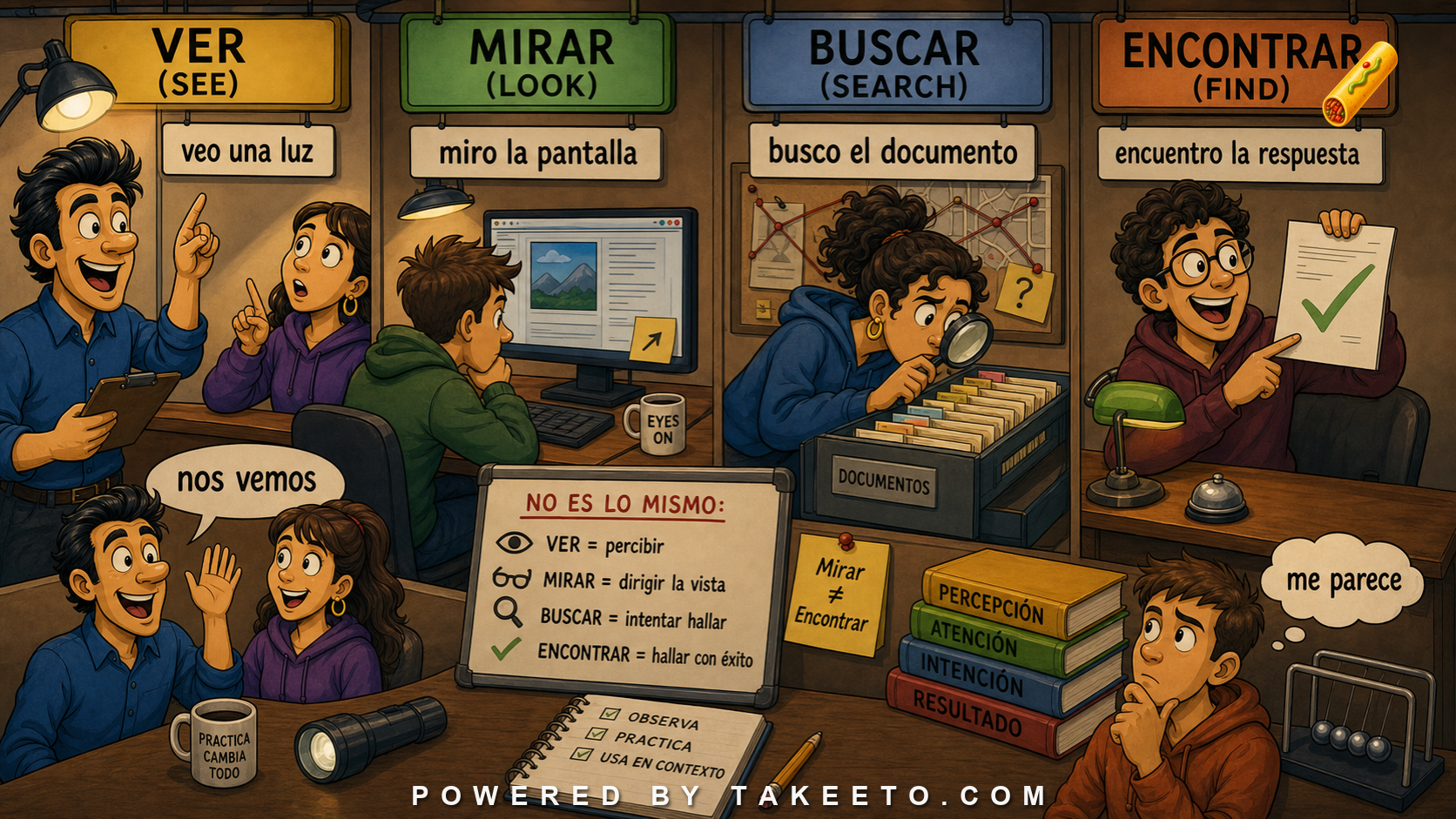
The reader can distinguish seeing, looking, searching, and finding.
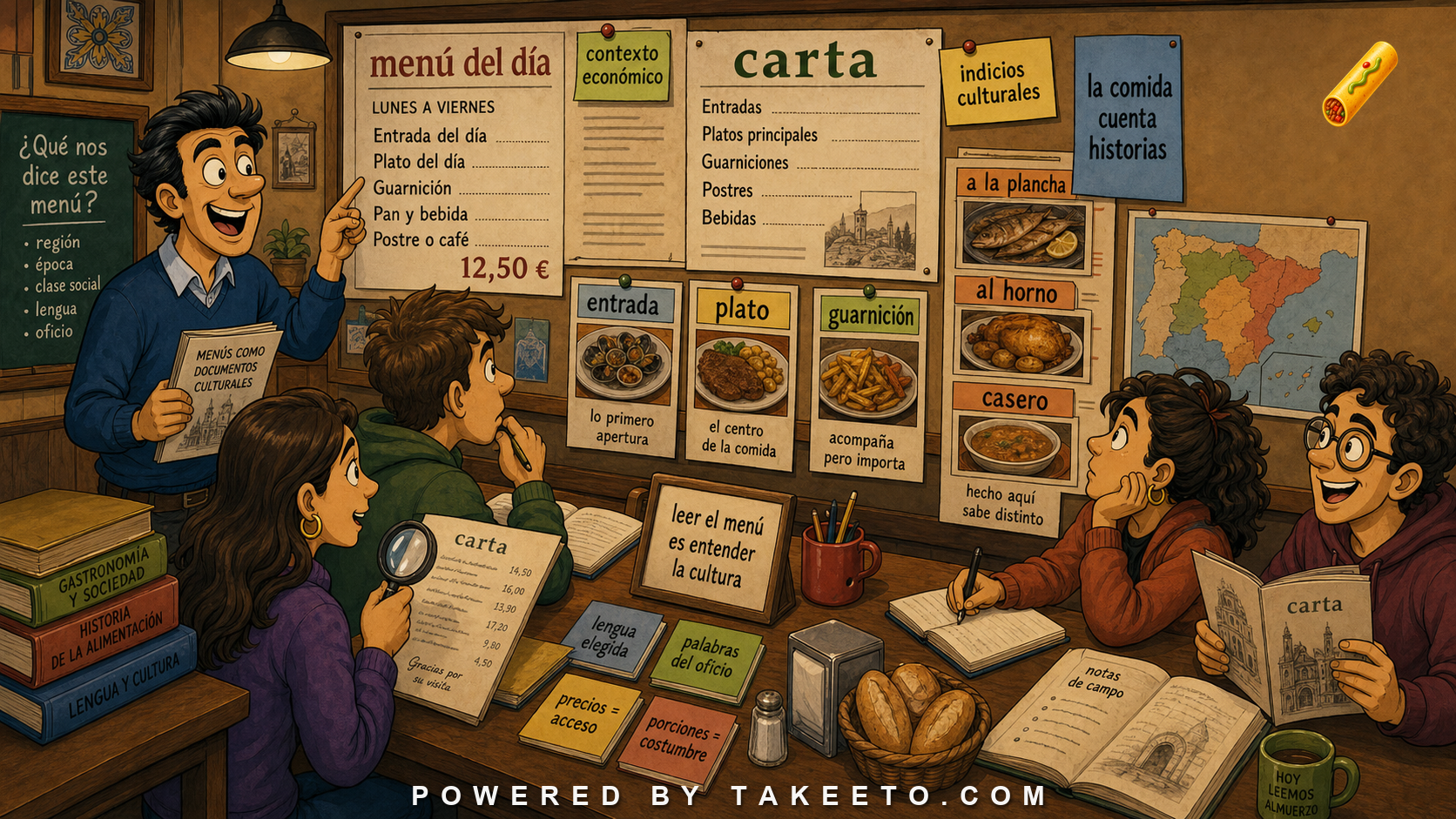
The reader can read menus as regional, economic, and linguistic artifacts, not just food lists.
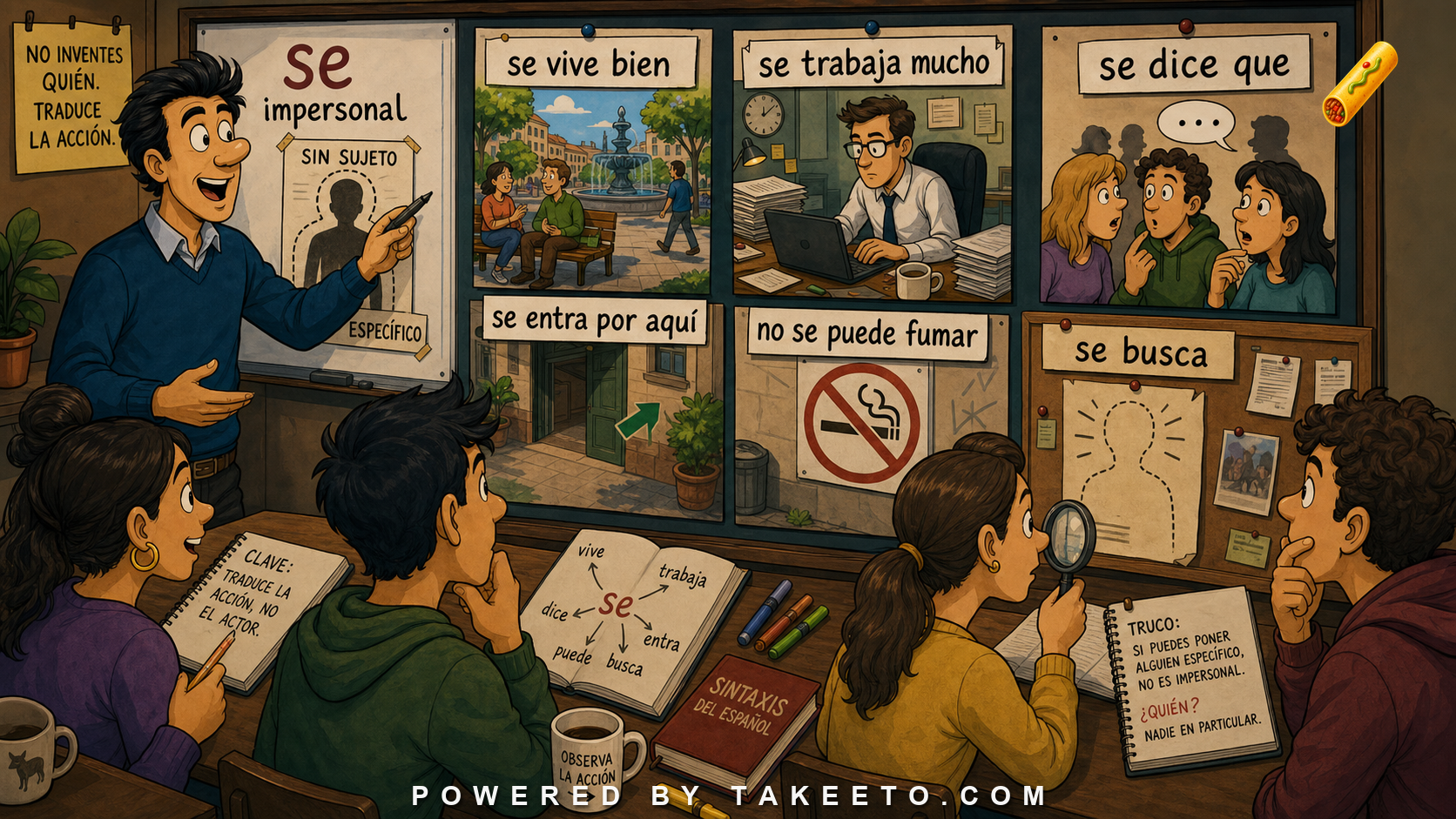
The reader can identify impersonal se and translate it without inventing a specific agent.
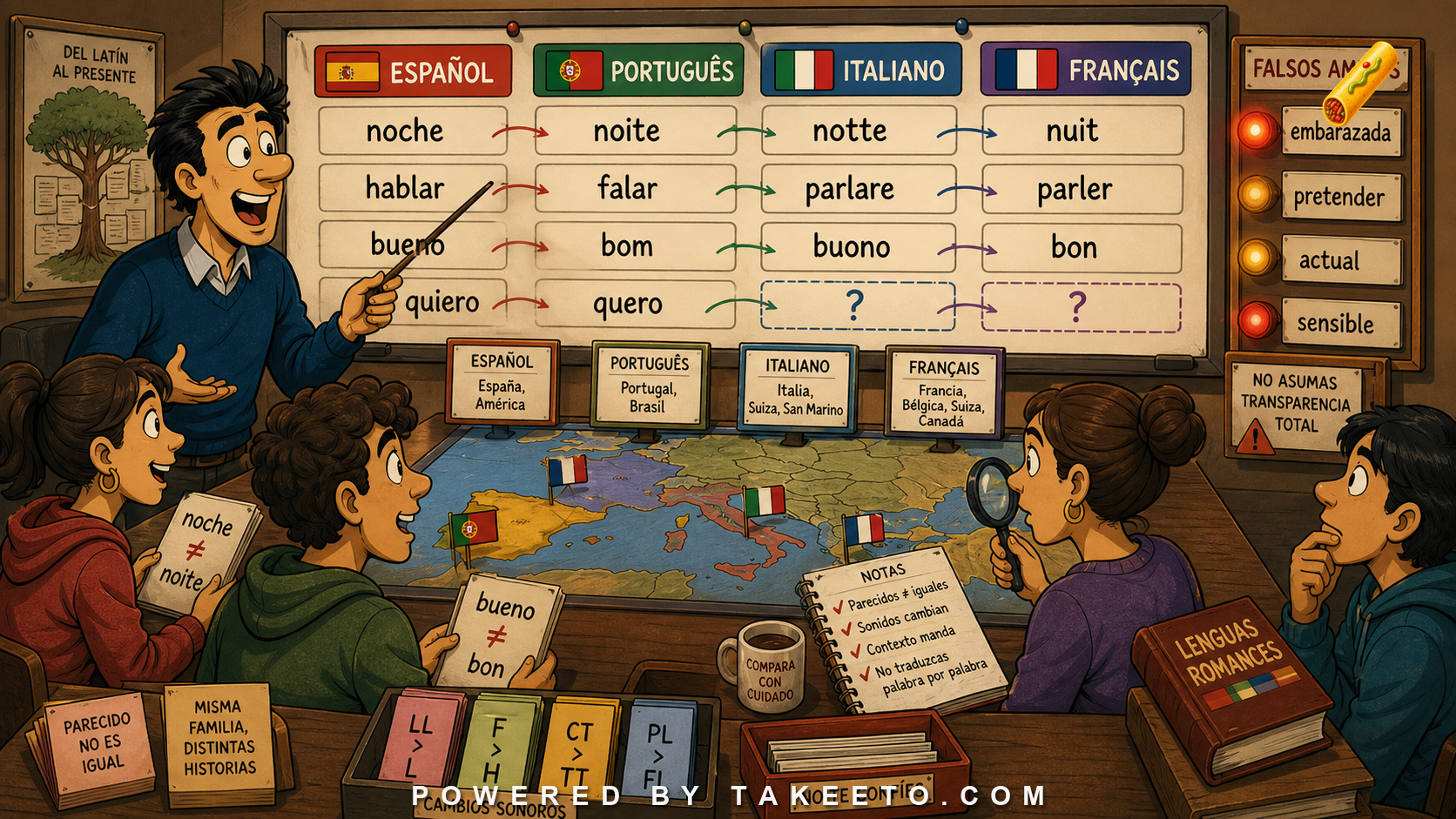
The reader can compare Spanish with other Romance languages without assuming mutual transparency.
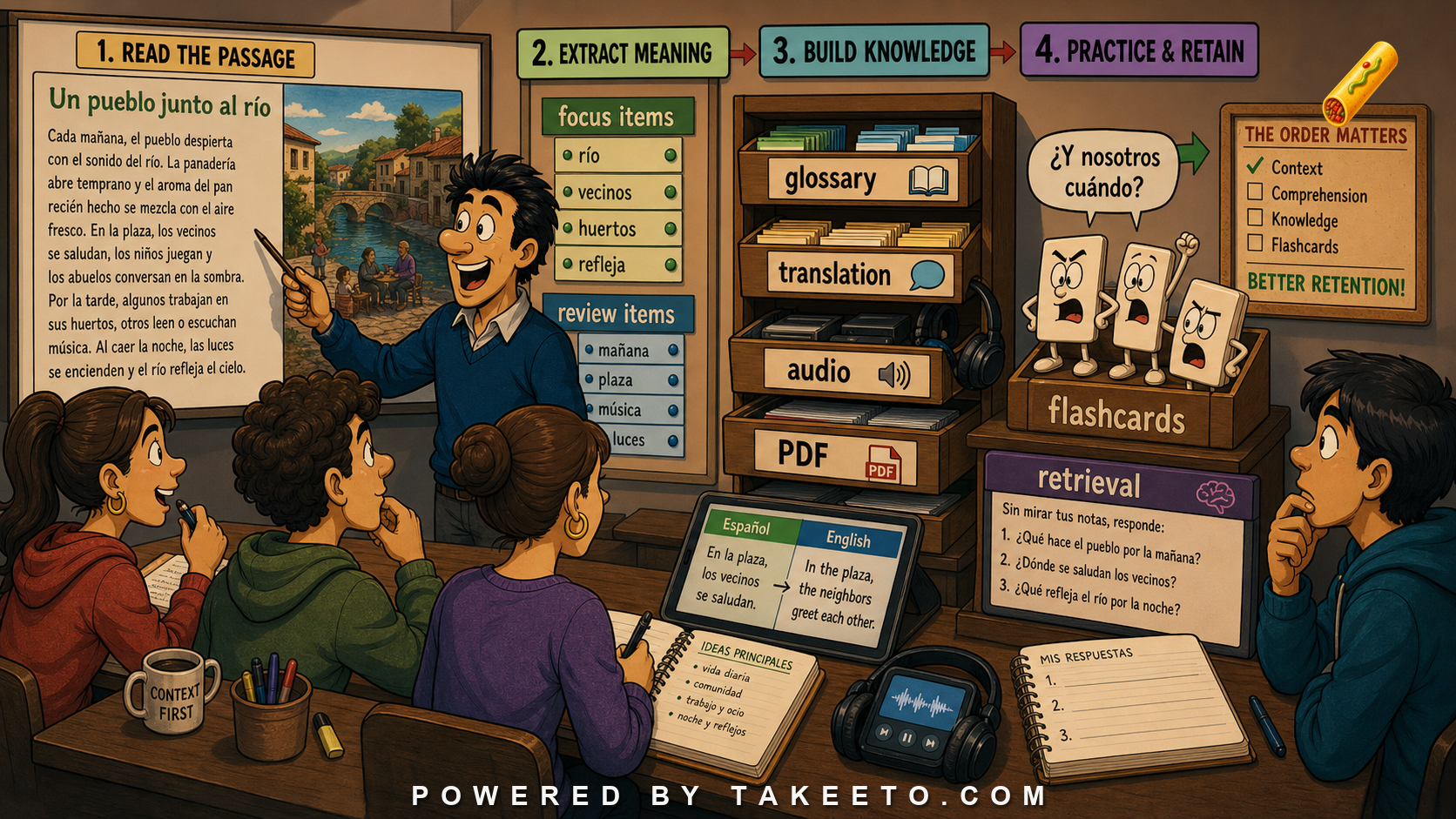
The reader understands why reading deck passages before flashcards improves comprehension and retention.
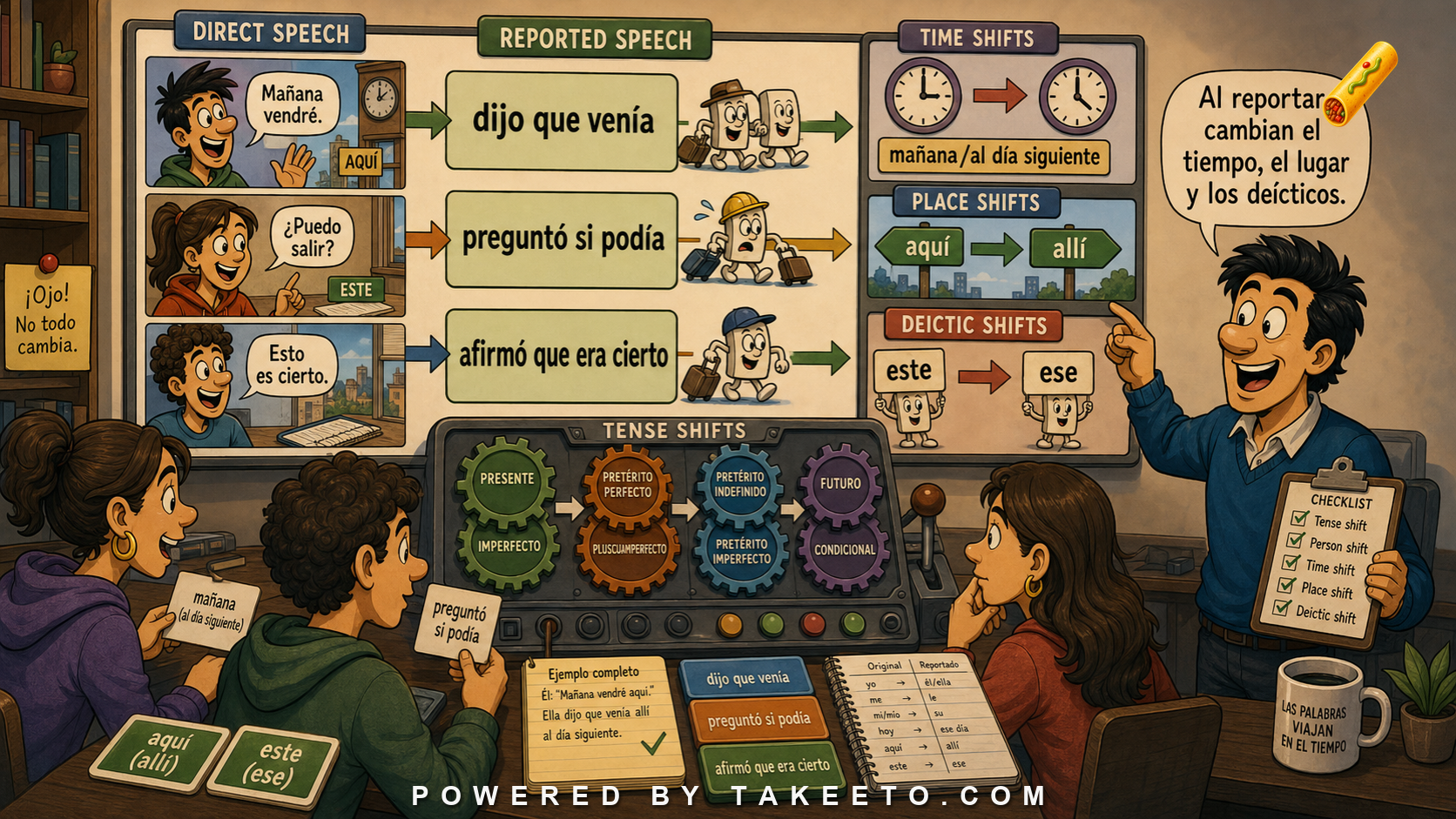
The reader can transform direct speech into reported speech while tracking tense, person, and time references.
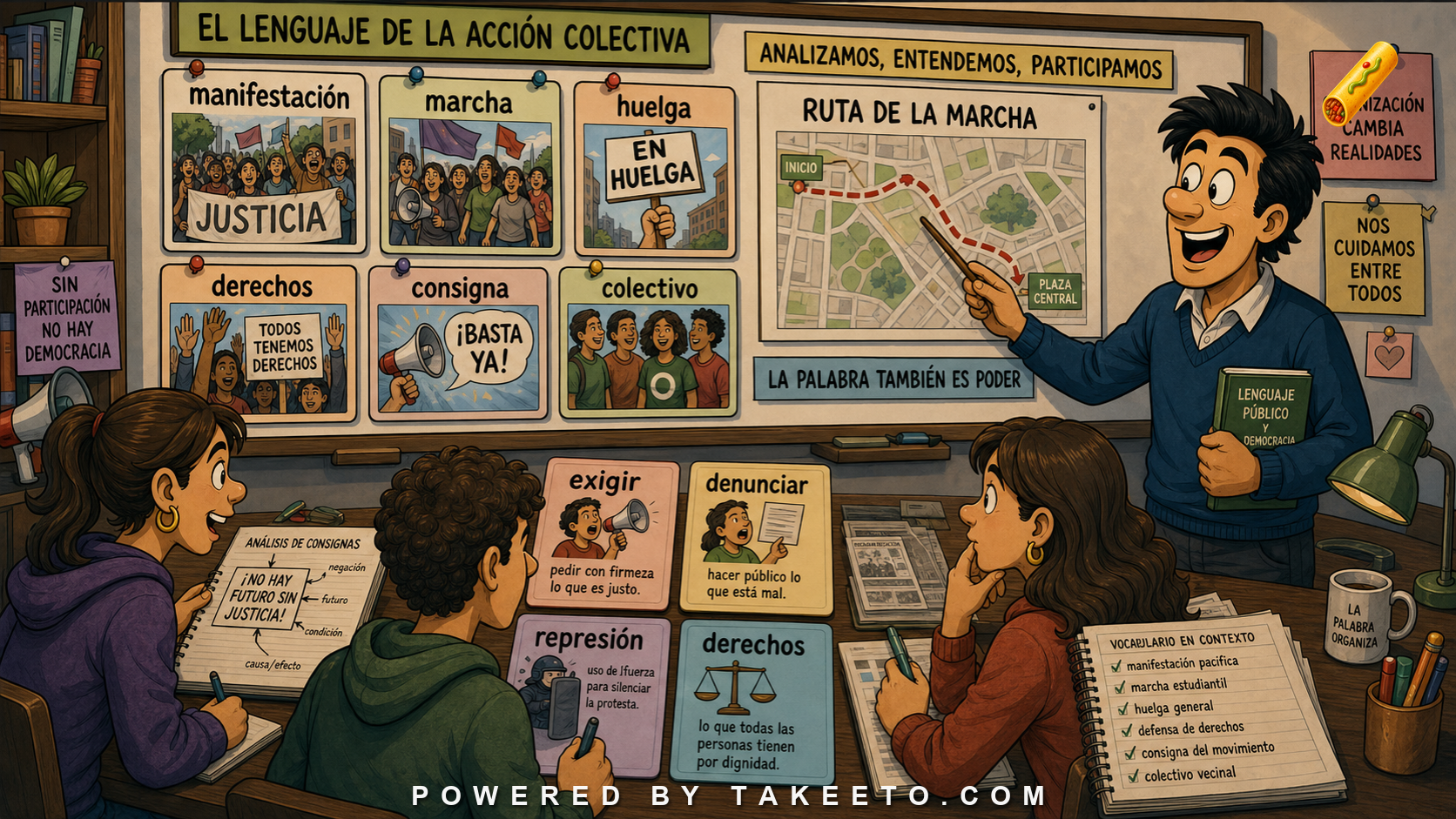
The reader can understand demonstration, activism, and rights language.
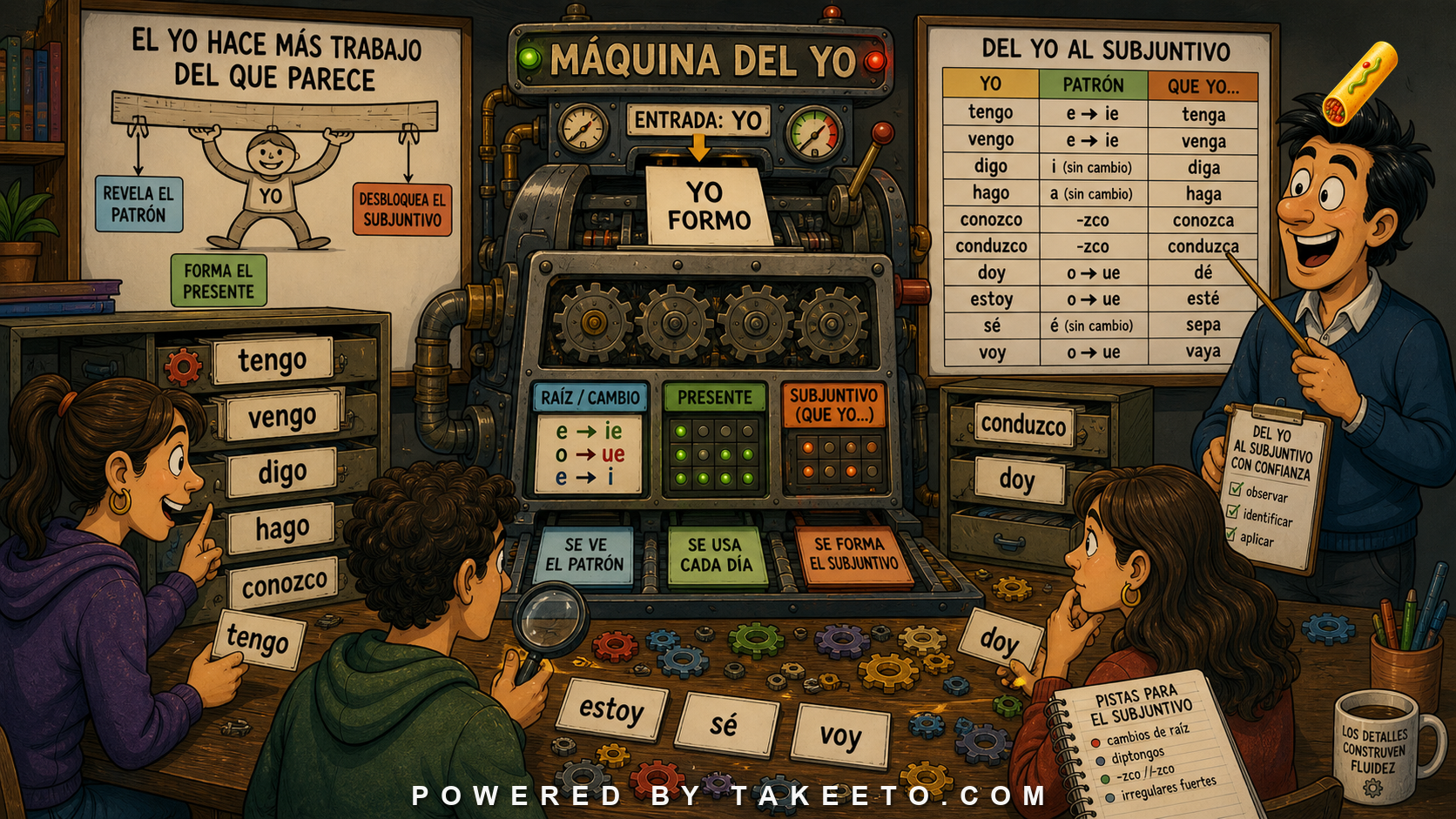
The reader understands common present-tense irregularities and their role in subjunctive formation.
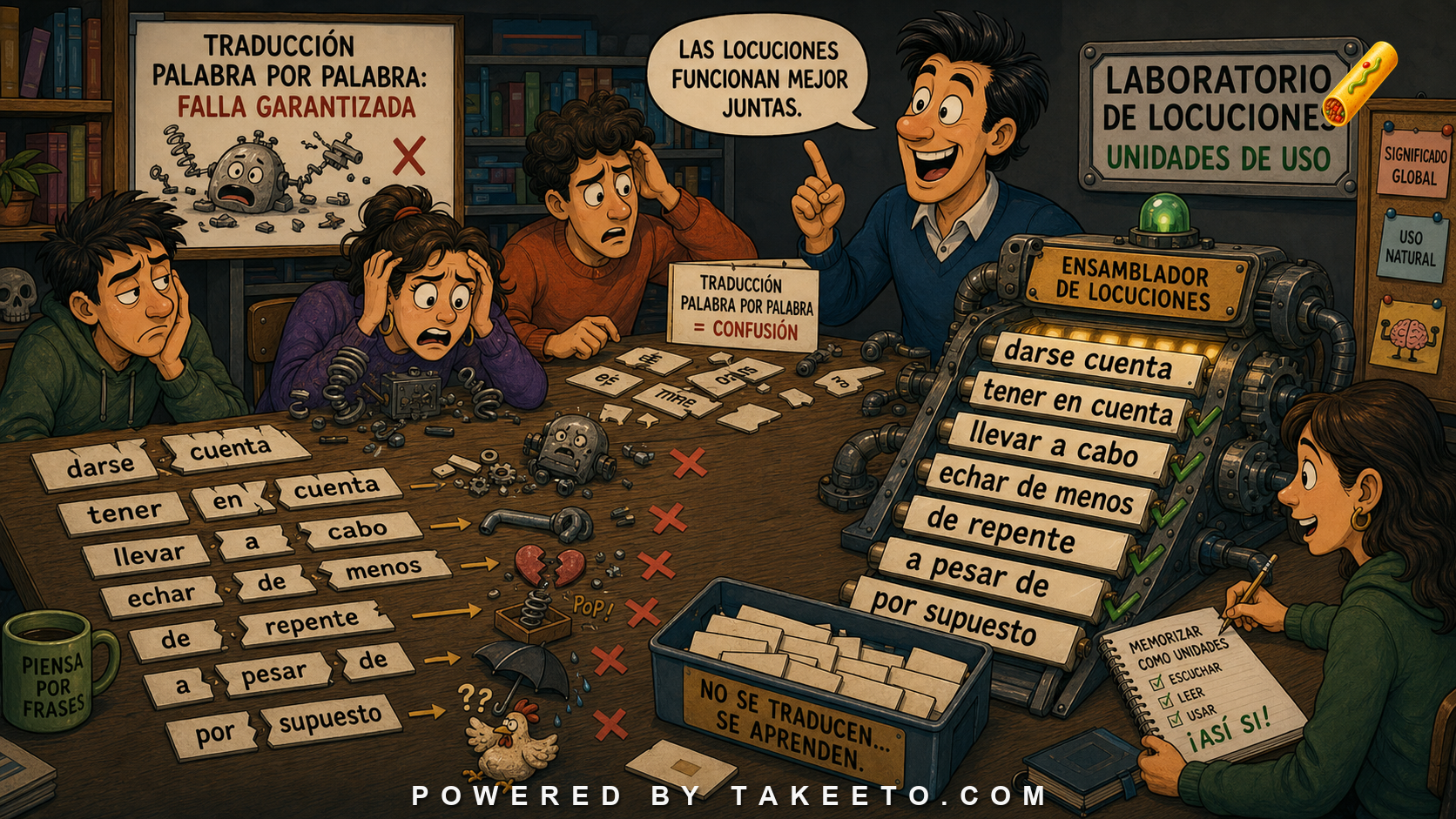
The reader can recognize fixed phrases and store them as units of use.
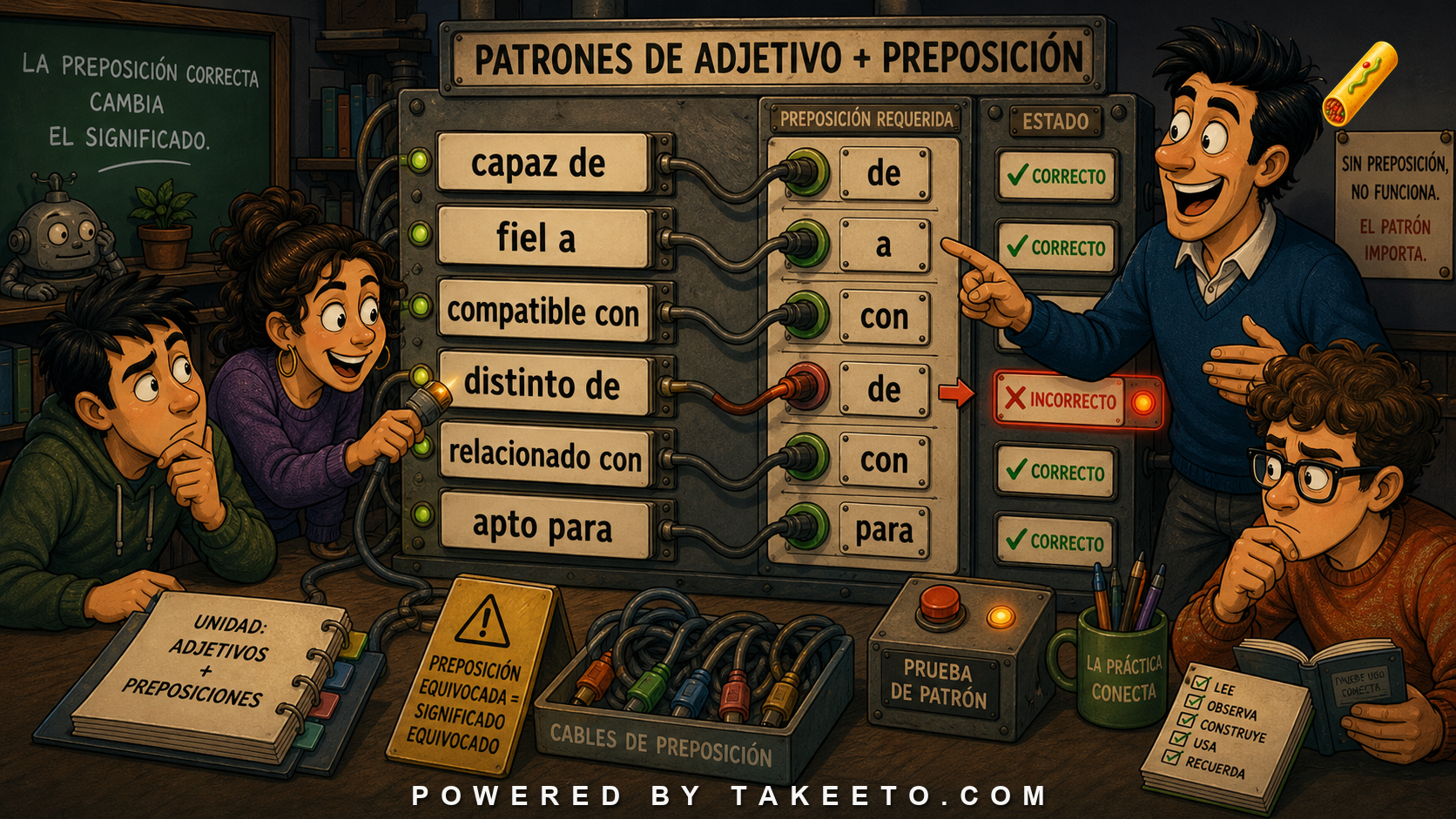
The reader can use adjective-preposition patterns accurately.
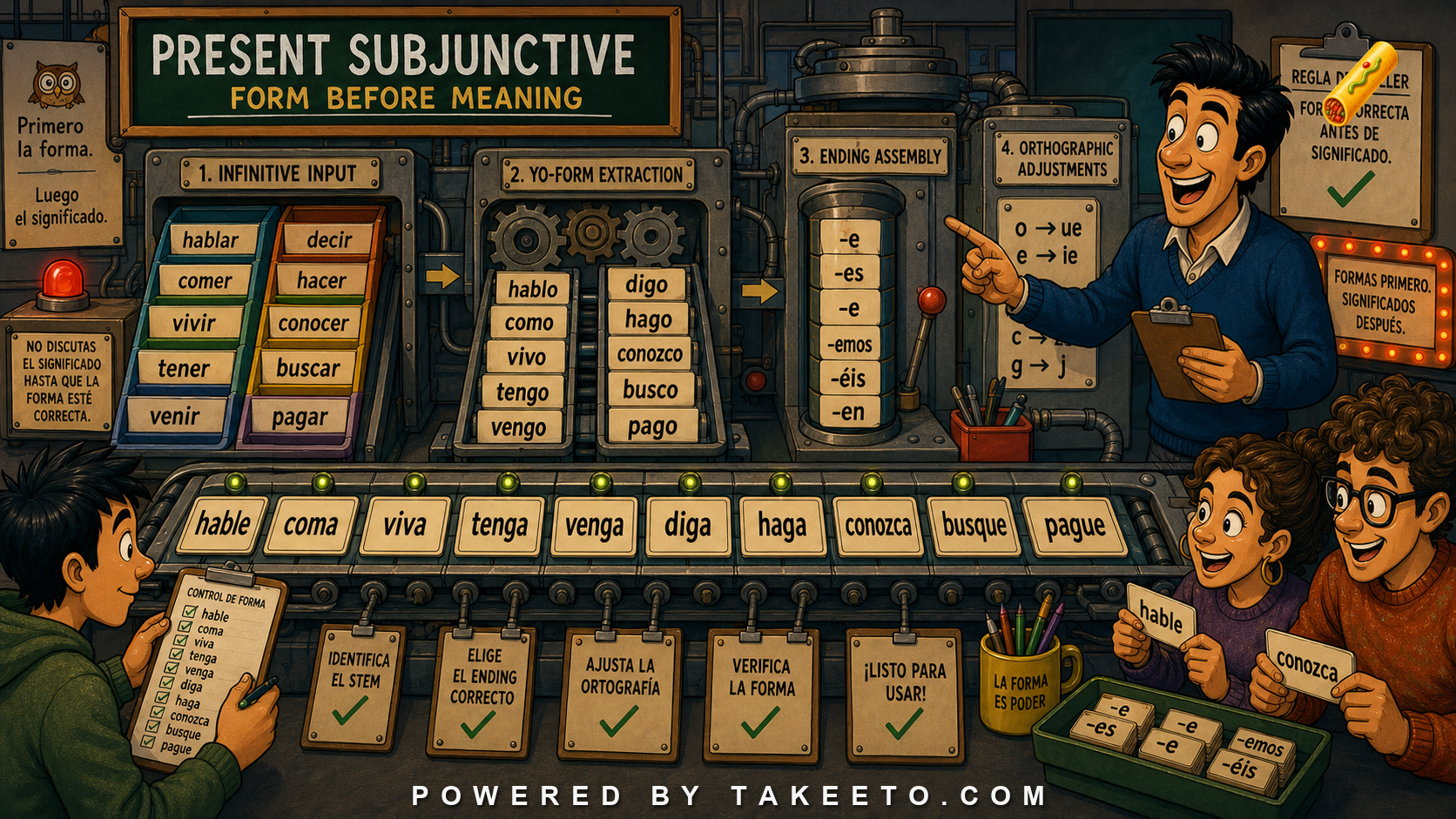
The reader can form the present subjunctive accurately before confronting its semantic range.
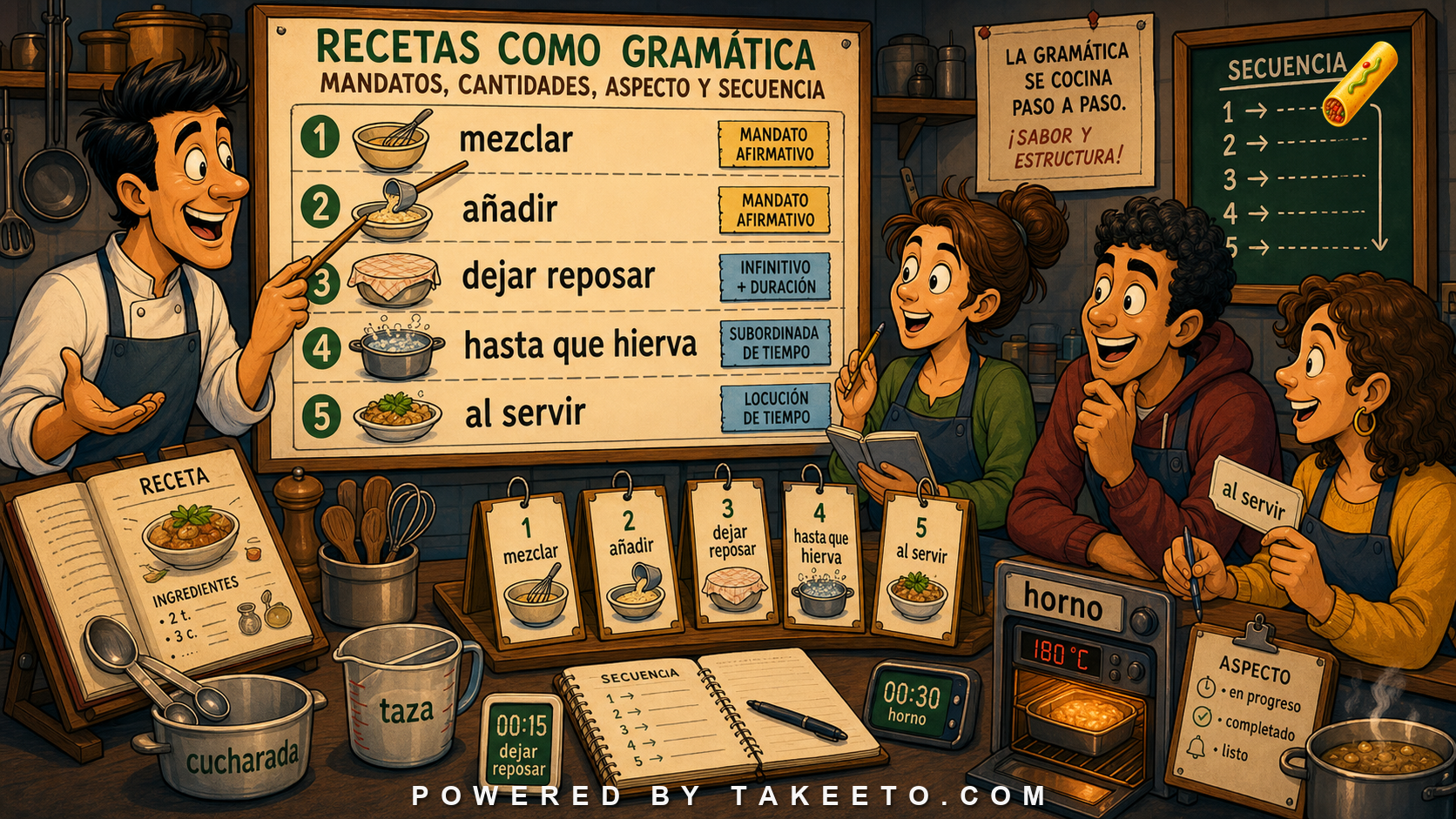
The reader can use recipes to study imperative, infinitive, and sequence structures.
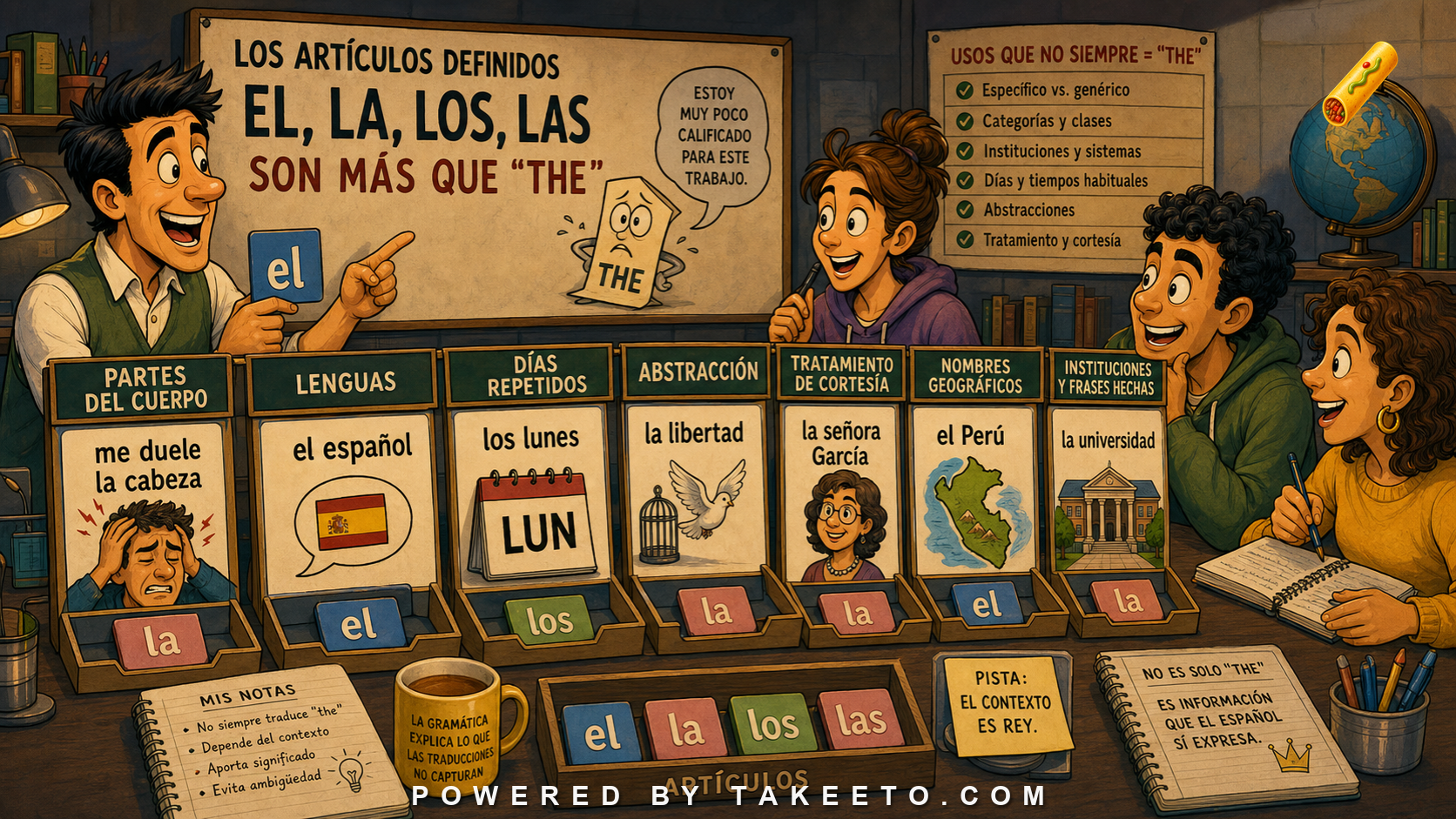
The reader can explain major Spanish article uses that do not map neatly onto English.
The reader can recognize basic legal structures without mistaking them for everyday grammar.
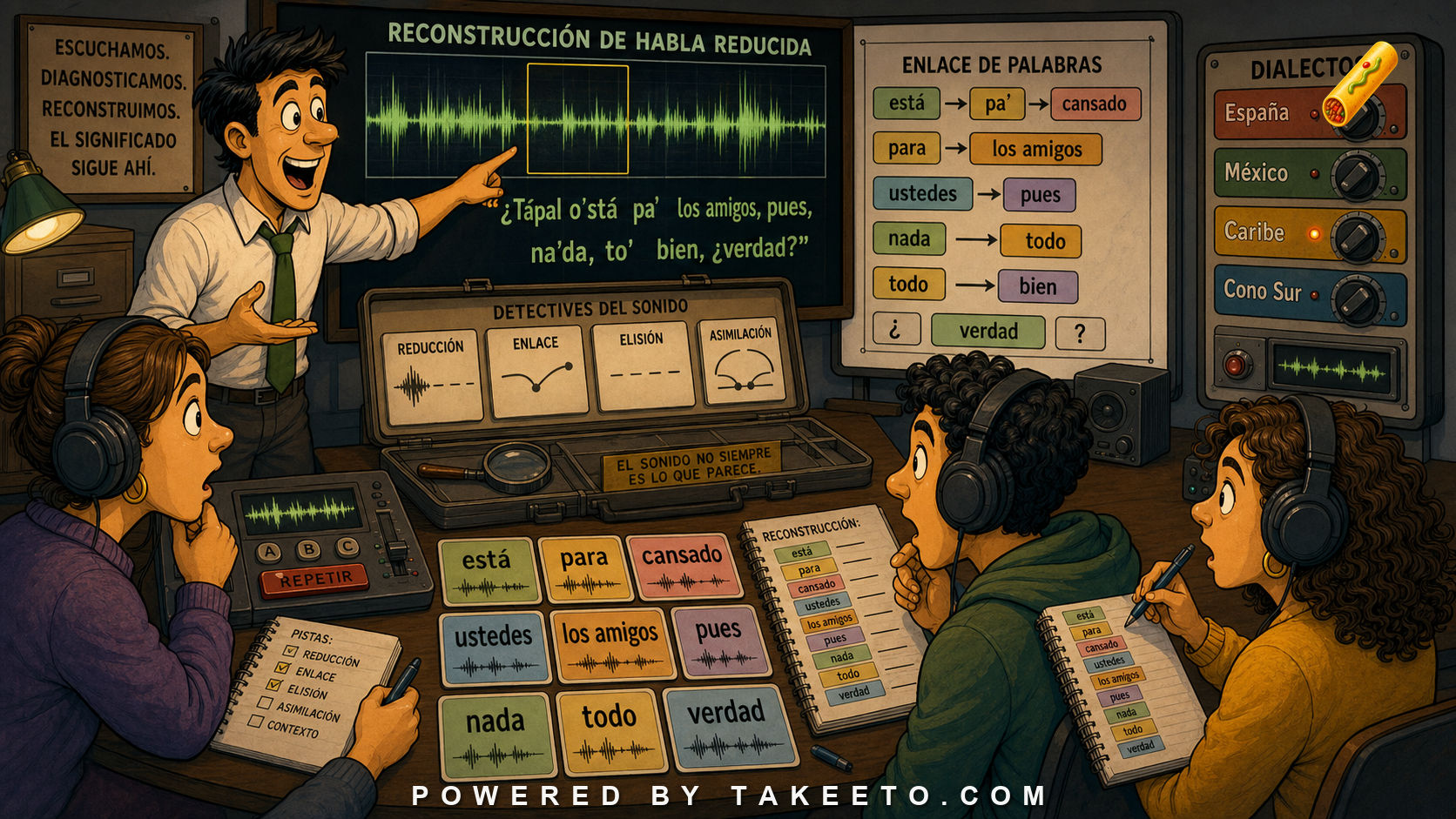
The reader can diagnose listening difficulty as predictable sound reduction, linking, and dialect exposure.
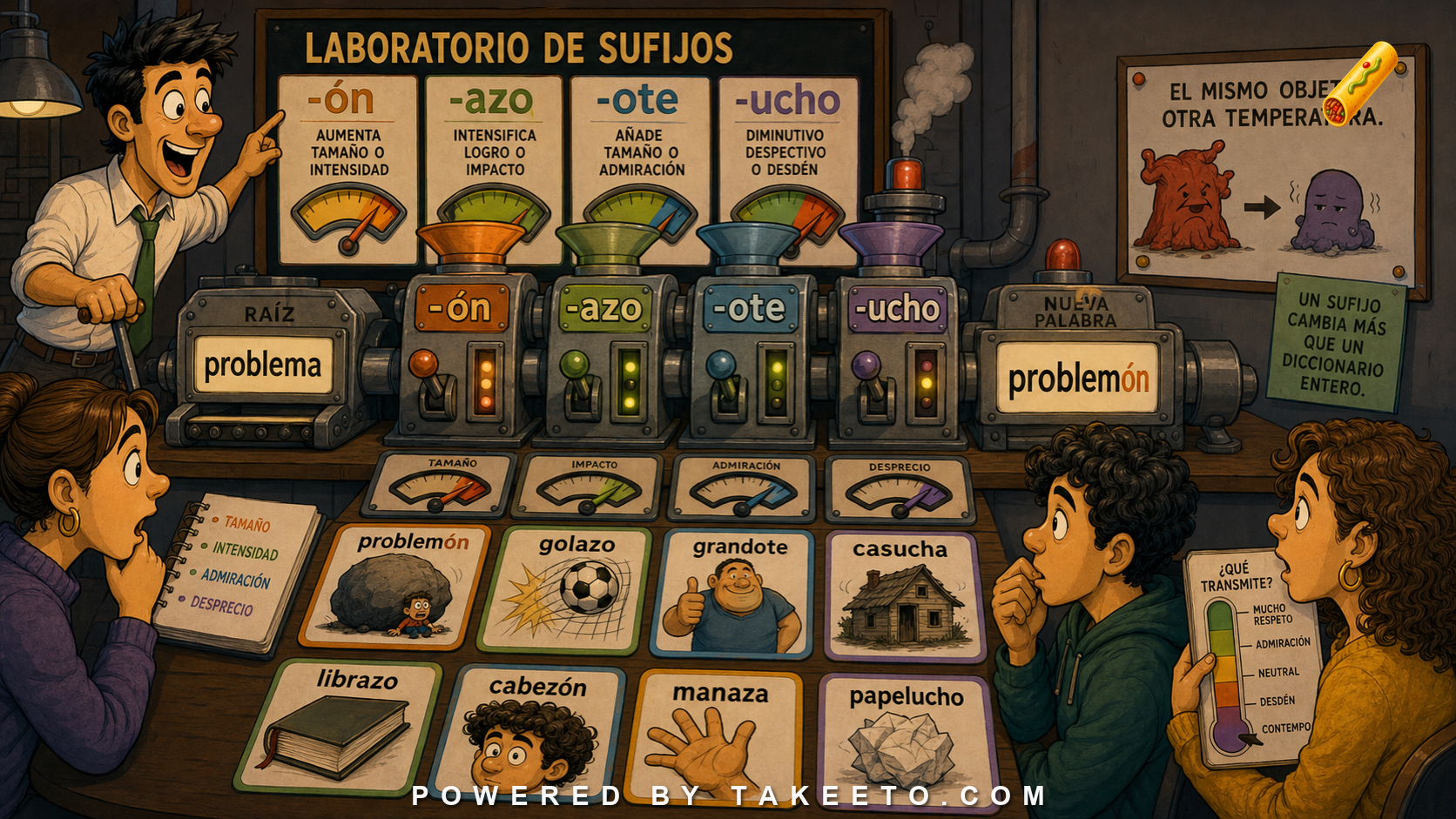
The reader can interpret size, intensity, admiration, and contempt in Spanish suffixes.
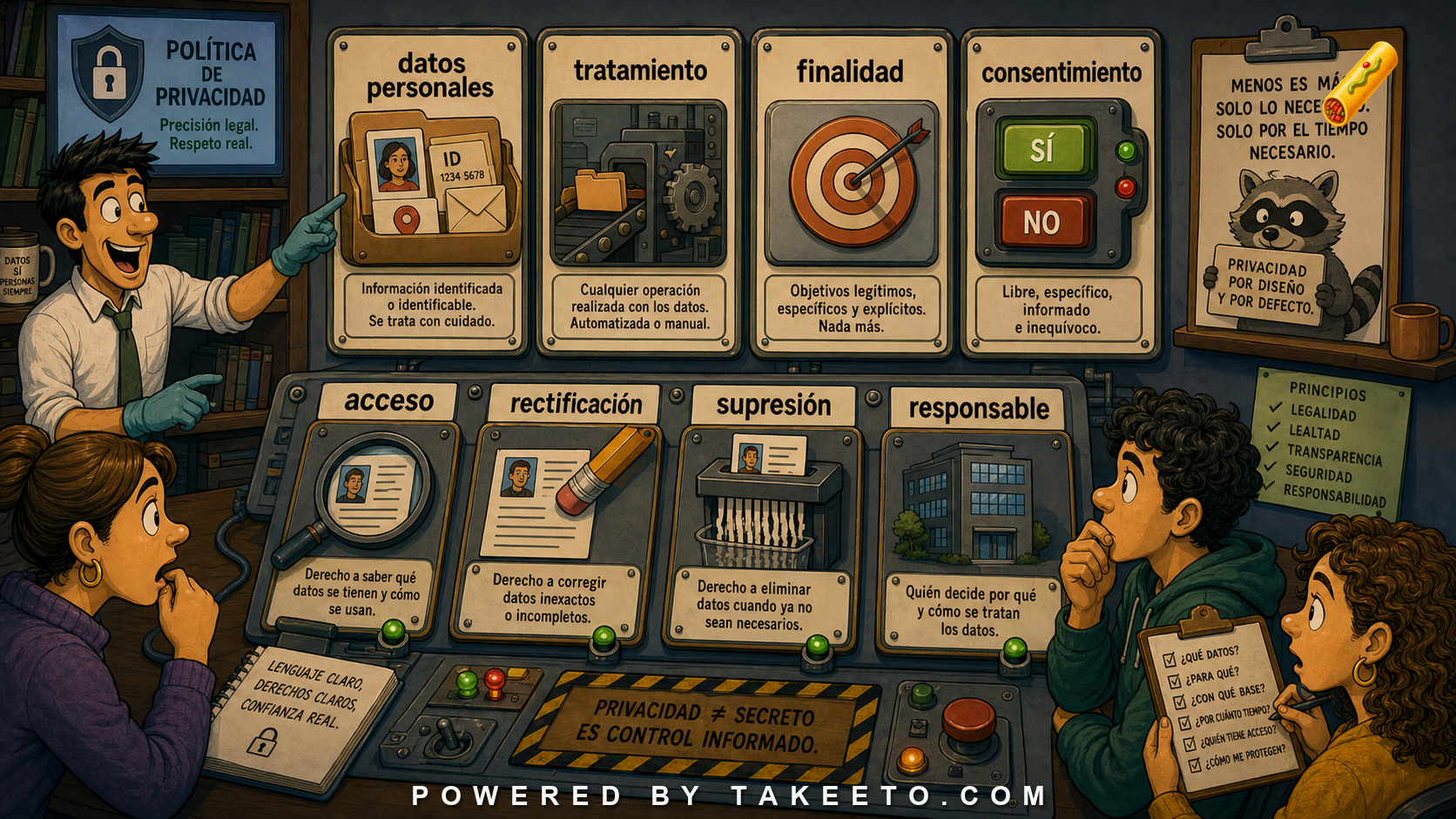
The reader can recognize core privacy and data-protection vocabulary.
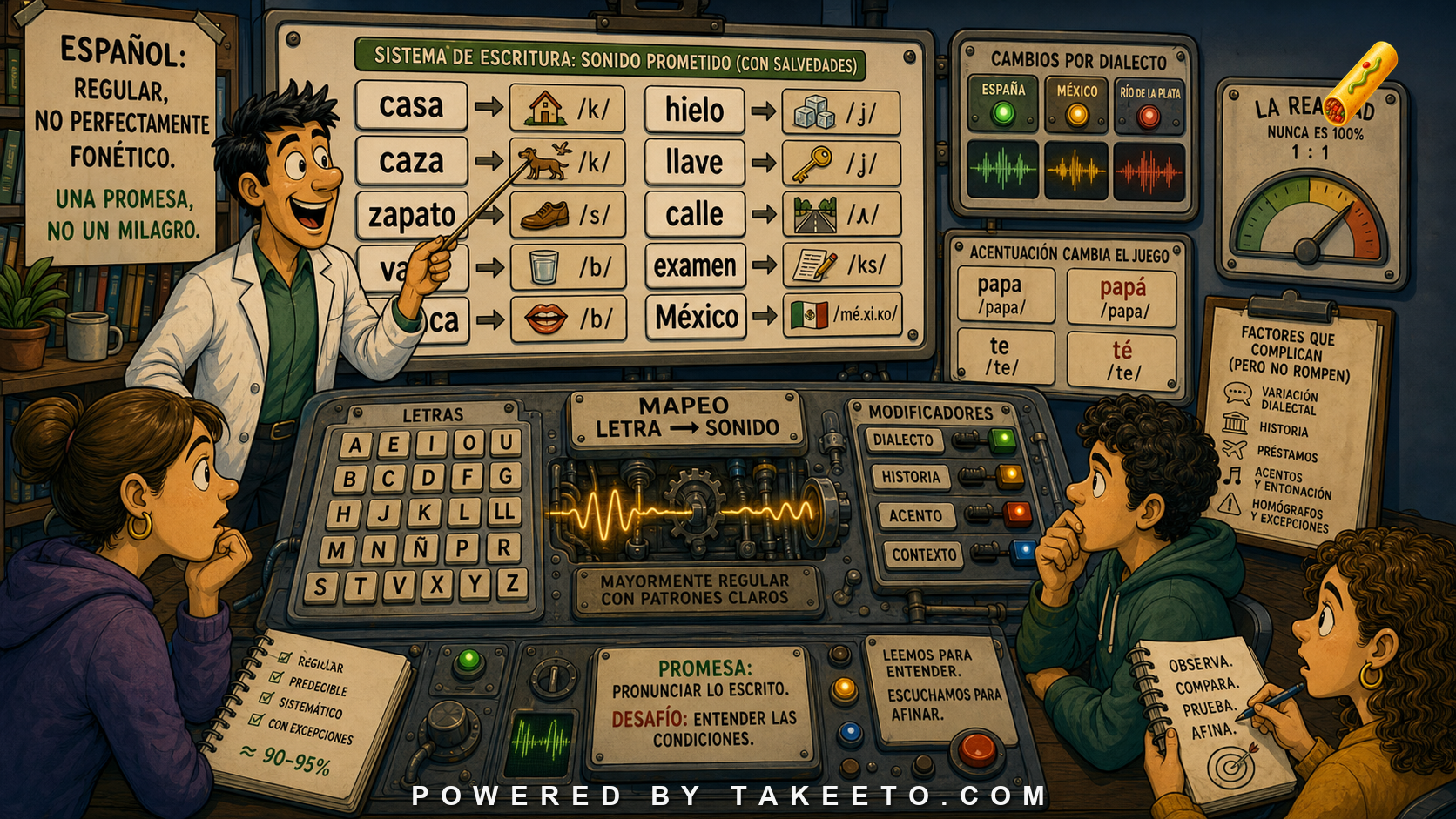
The reader understands Spanish spelling as a mostly regular mapping system with dialectal, historical, and stress-related complications.
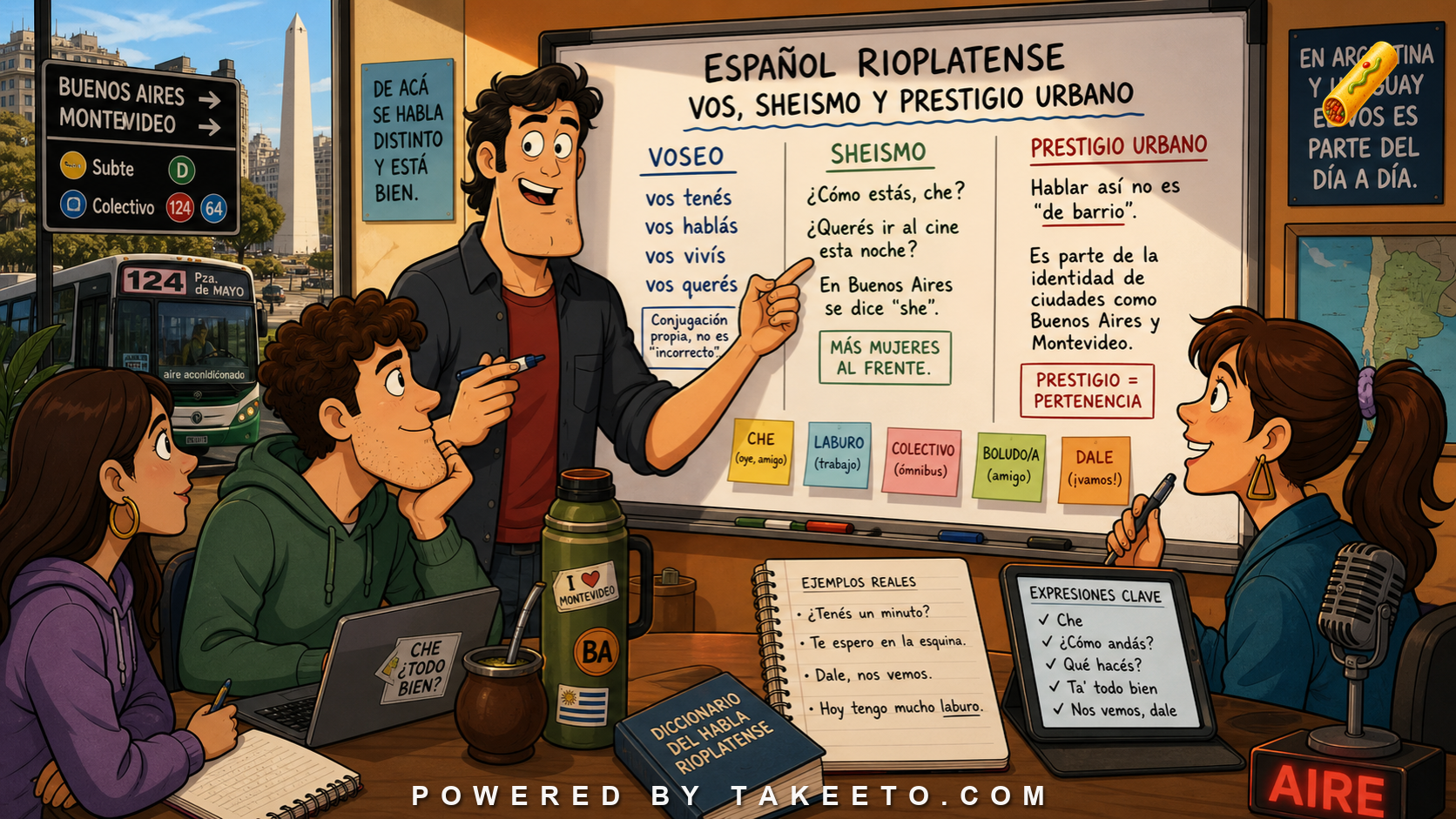
The reader can identify major features of Argentine and Uruguayan Spanish.
The reader can interpret signs as compressed institutional speech, not as incomplete textbook sentences.
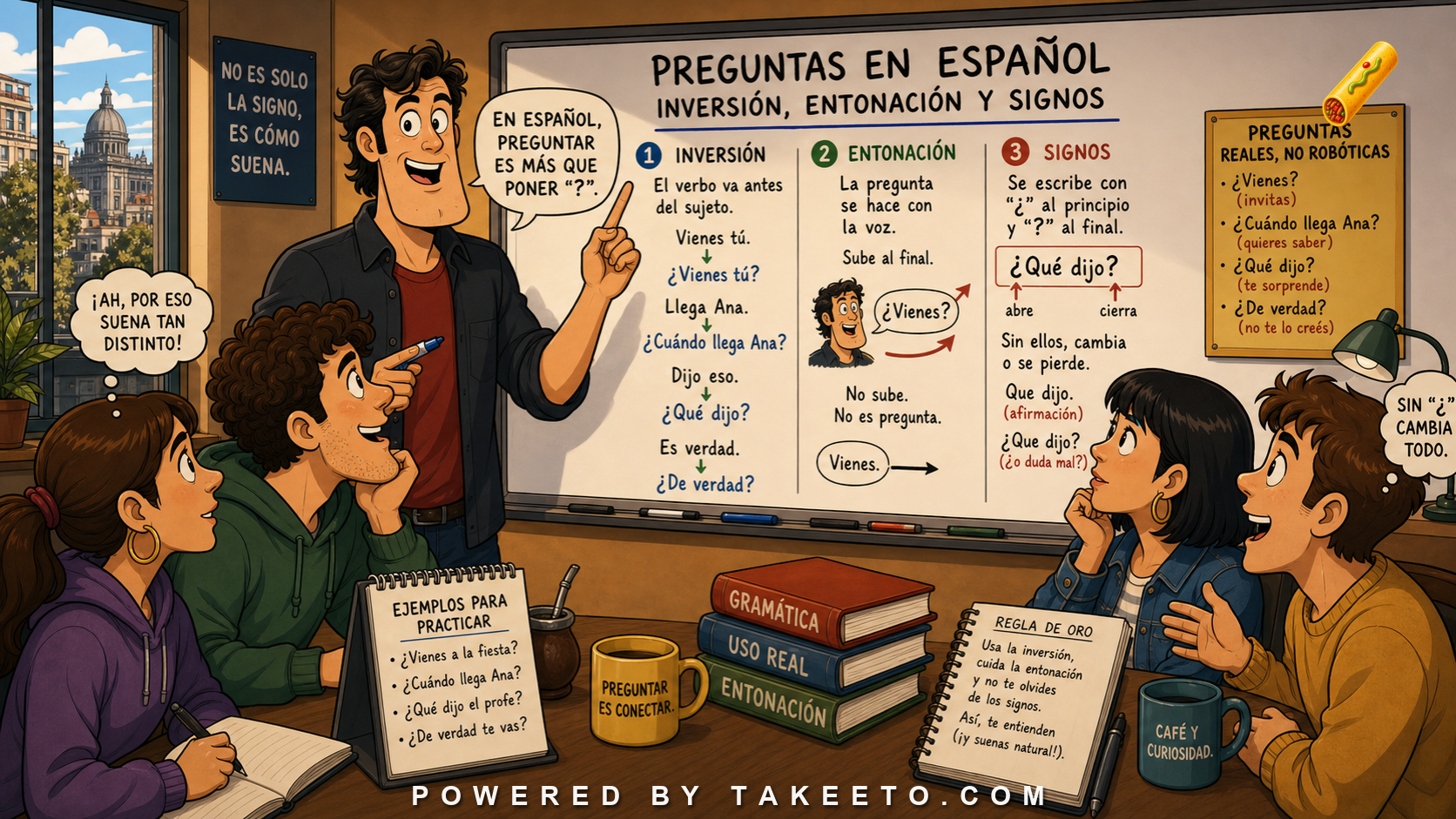
The reader understands Spanish question formation beyond adding question marks.
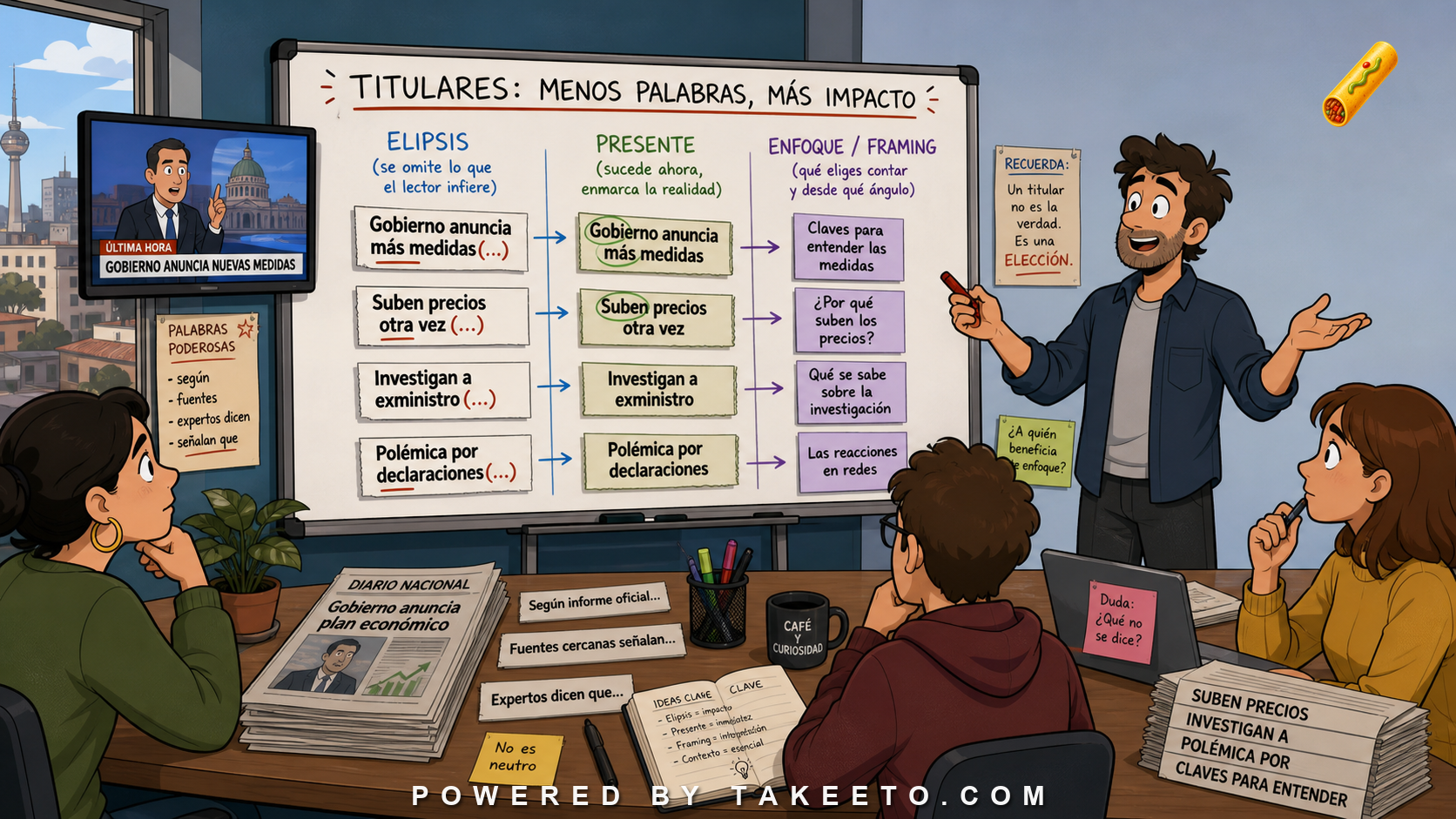
The reader can unpack Spanish headlines into full propositions and identify stance.
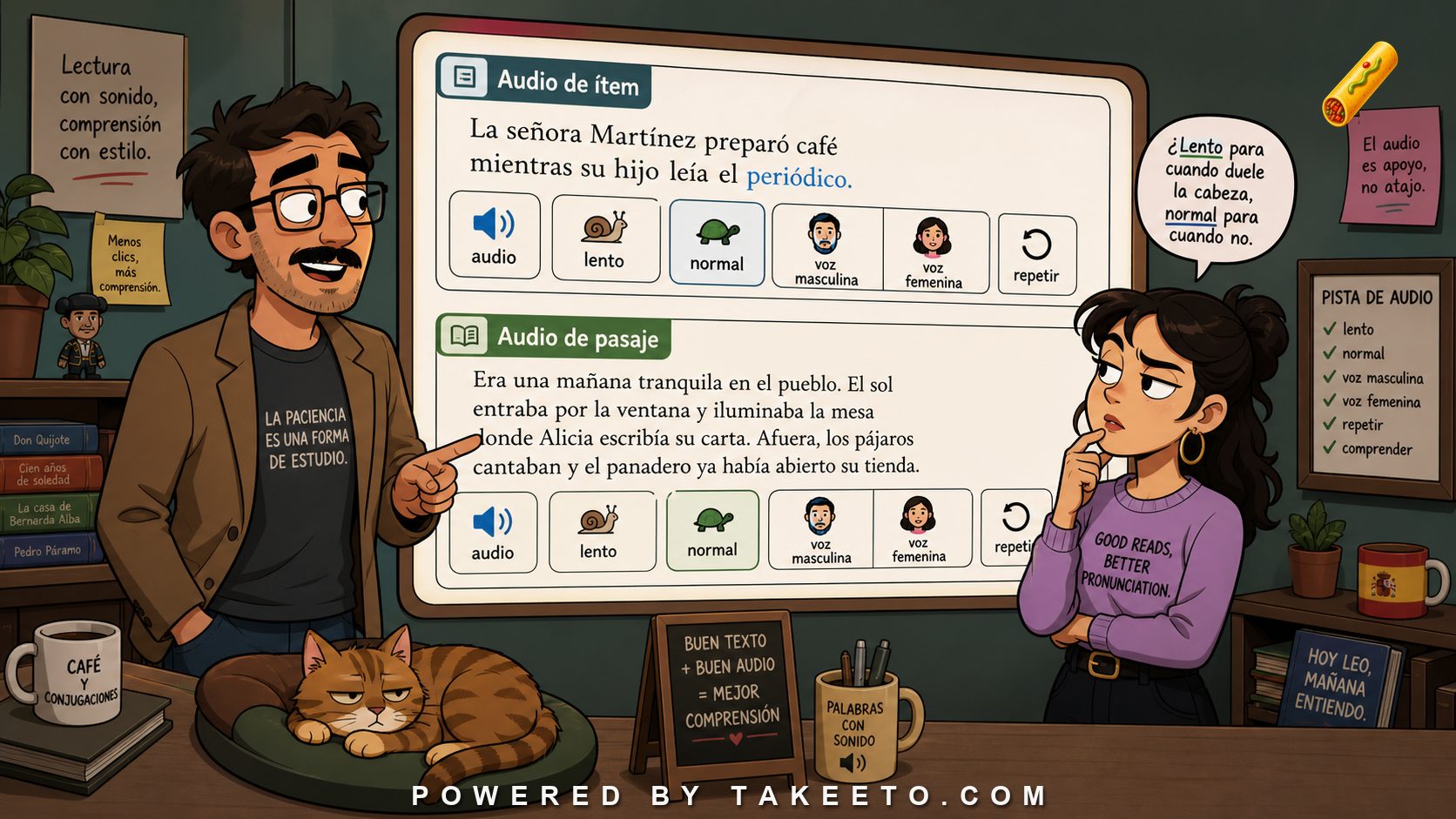
The reader can design audio affordances that reinforce reading without cluttering the page.
The reader can distinguish factual/skill knowledge from familiarity and acquaintance.
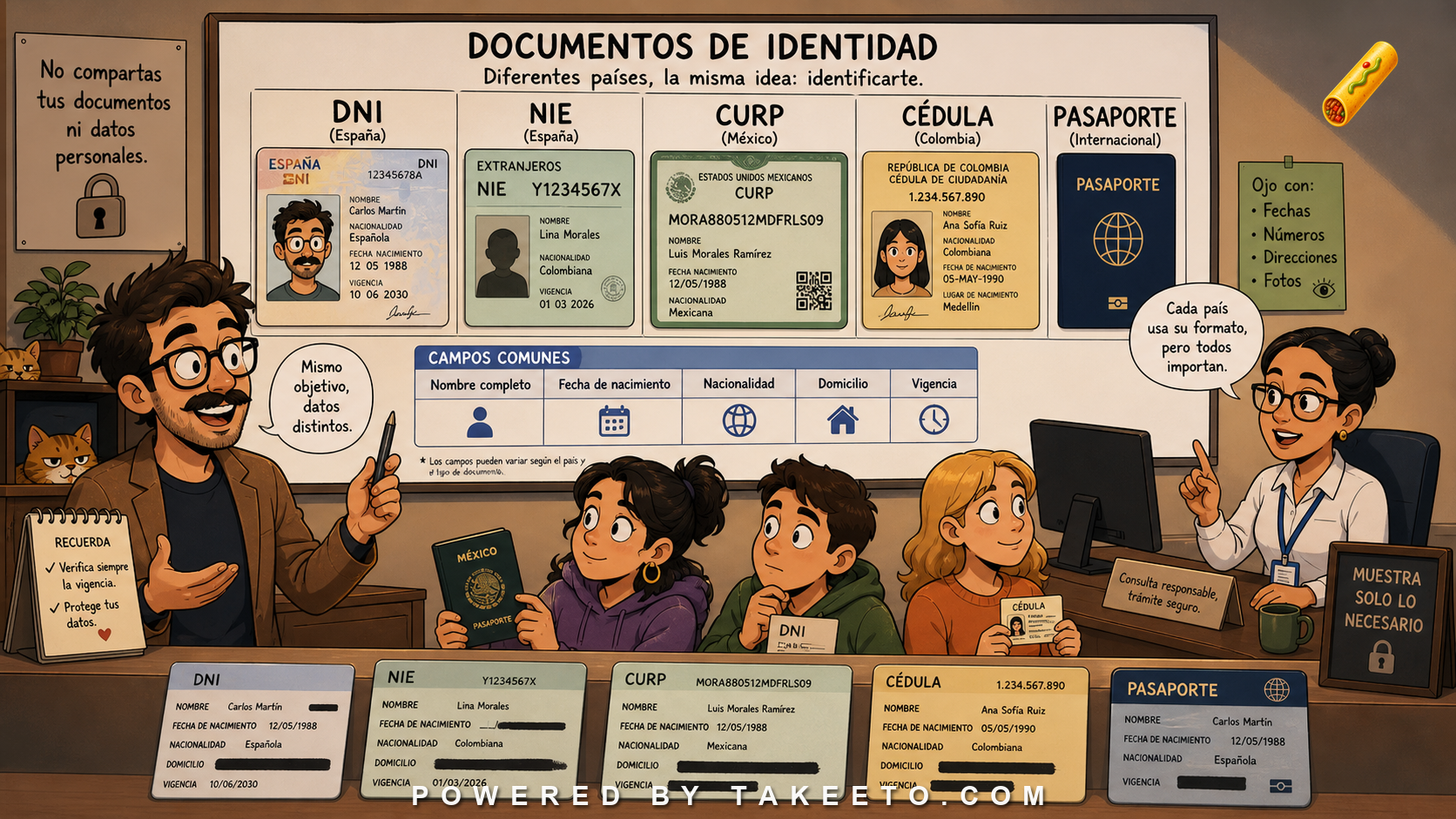
The reader can recognize identity-document vocabulary across countries and understand common fields with privacy caution.
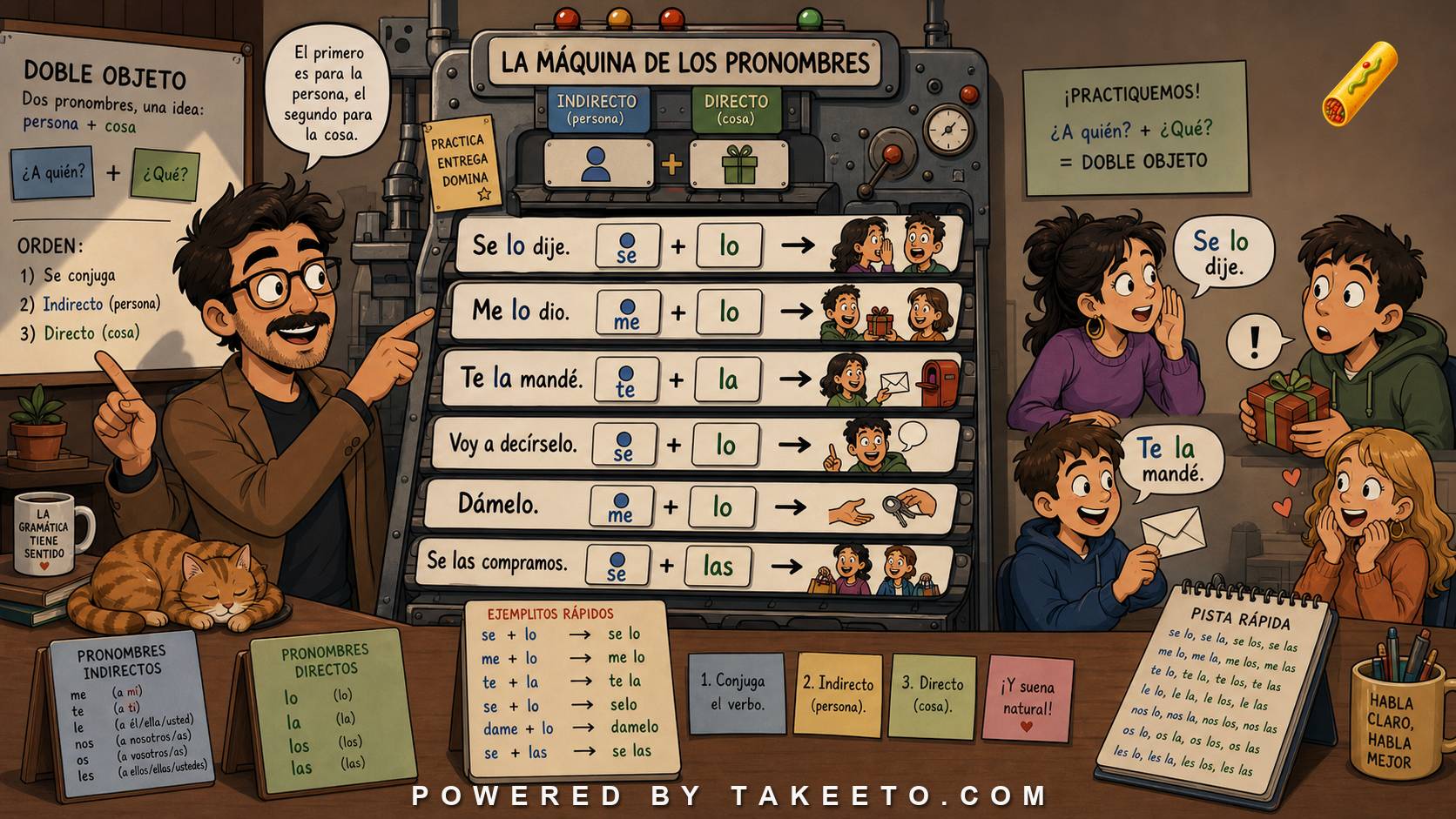
The reader can form and parse Spanish double-pronoun sequences.
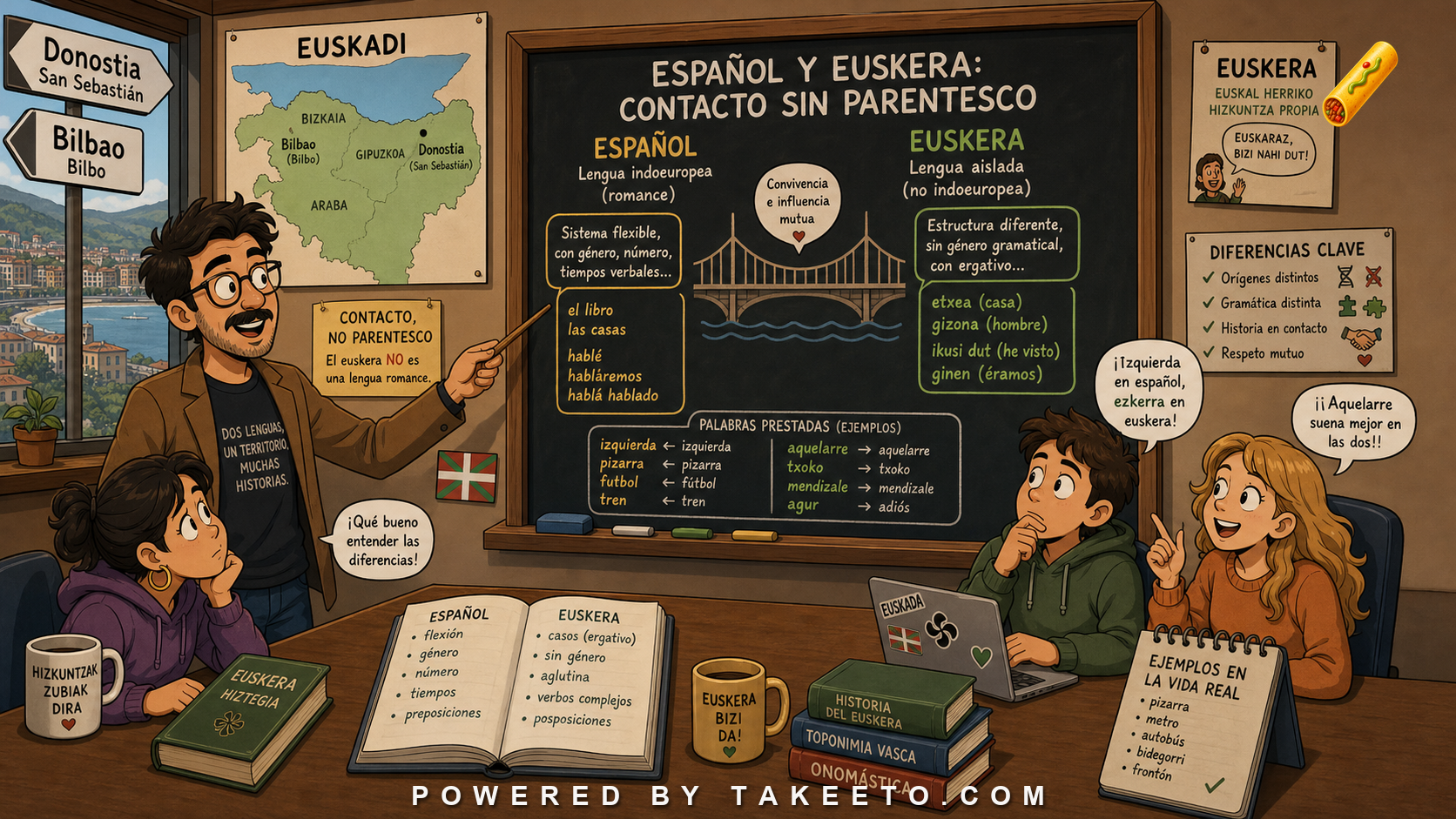
The reader understands Basque-Spanish contact without treating Basque as a Romance language.
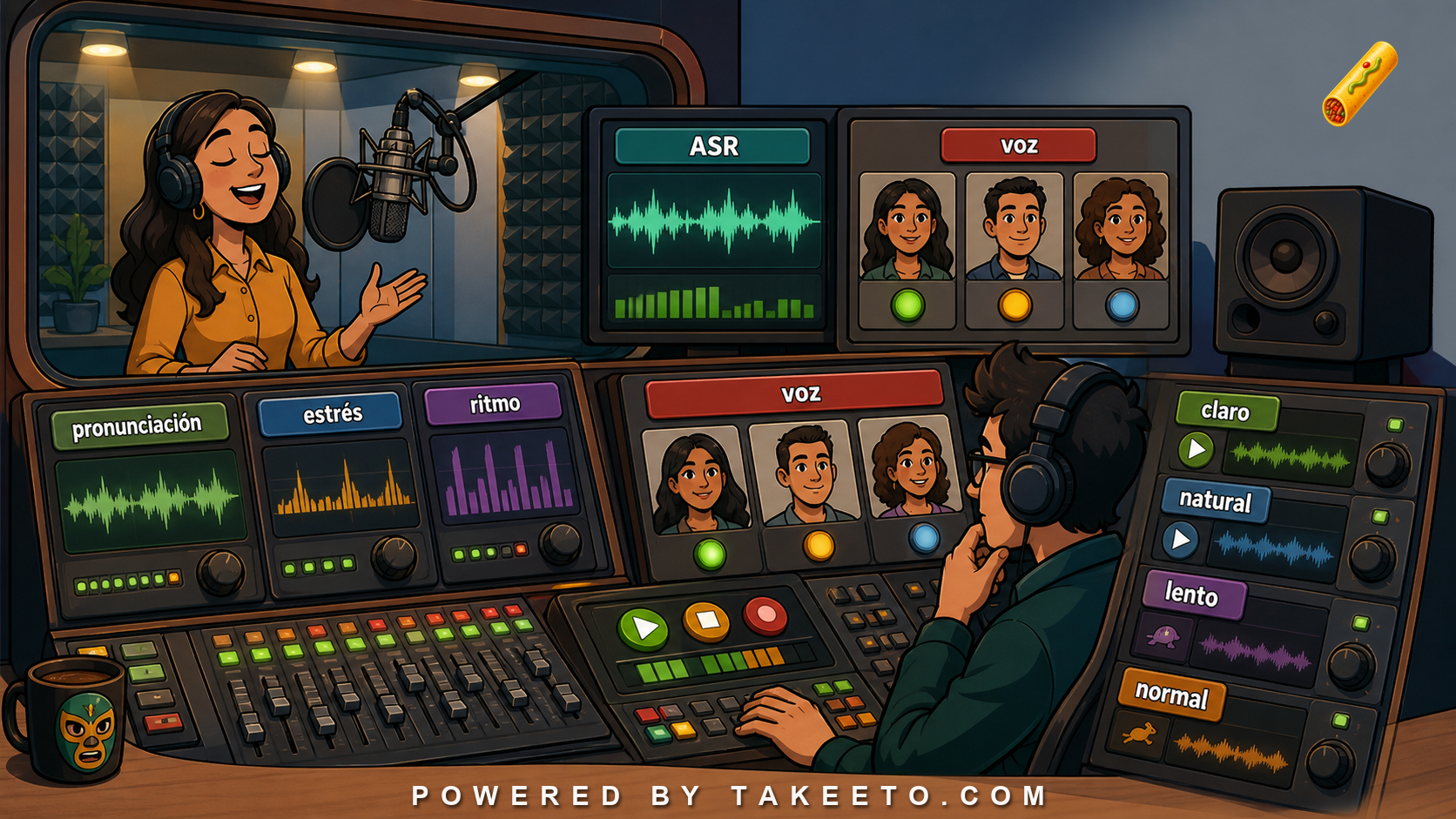
The reader can evaluate whether learning audio is useful, accurate, and consistent.
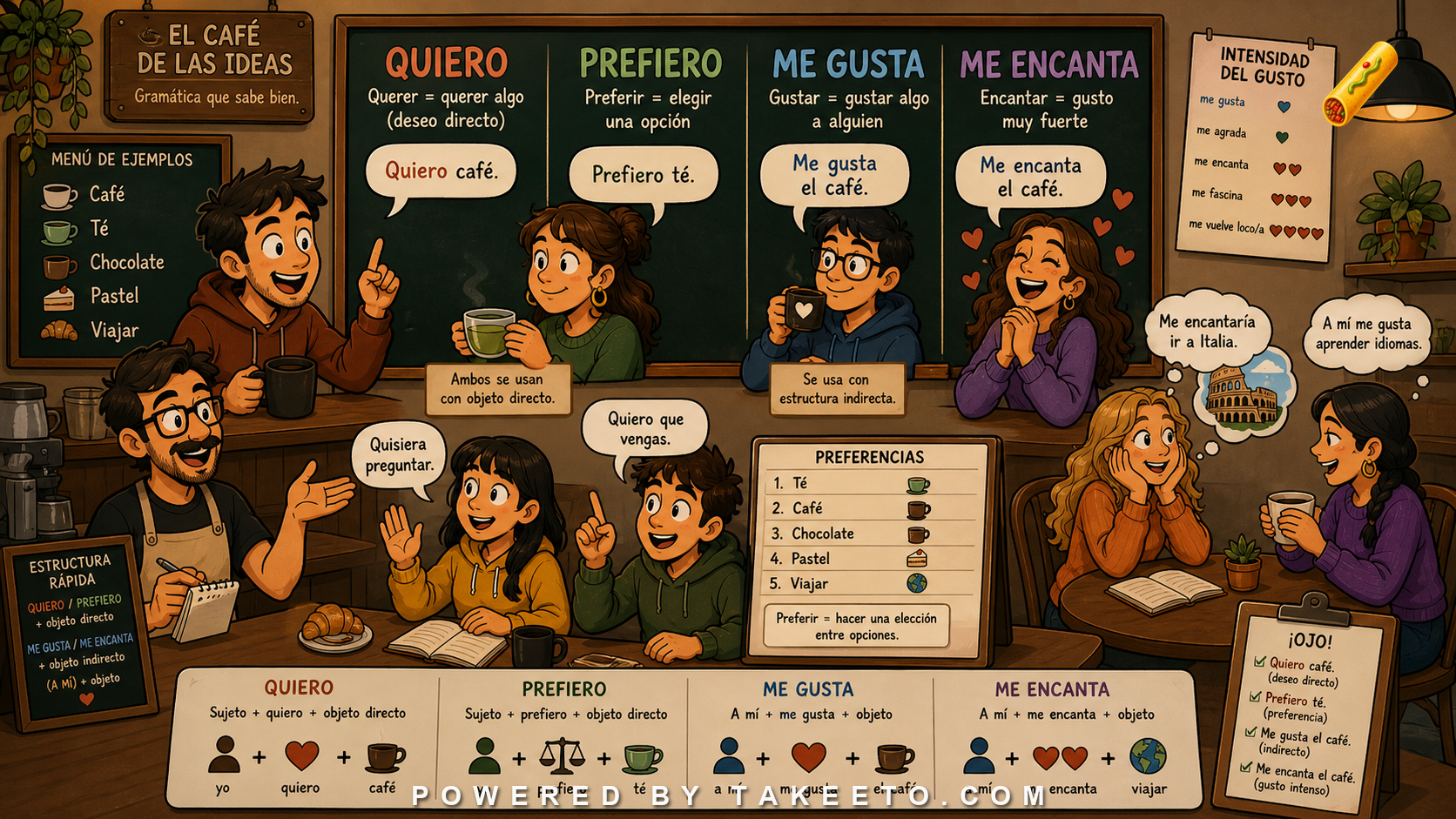
The reader can separate wanting, liking, preference, and affective intensity.
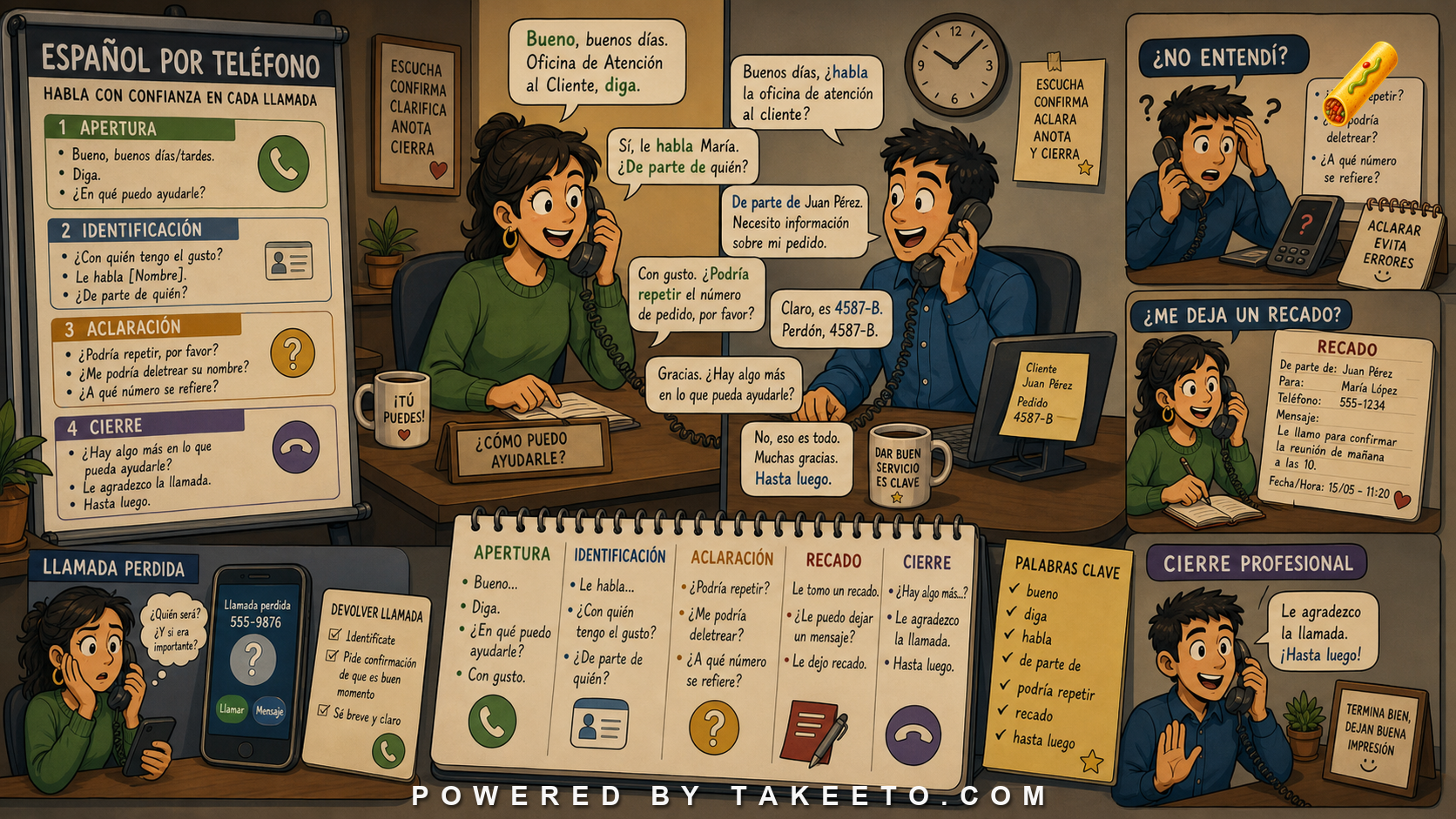
The reader can handle phone interactions with scripted confidence.
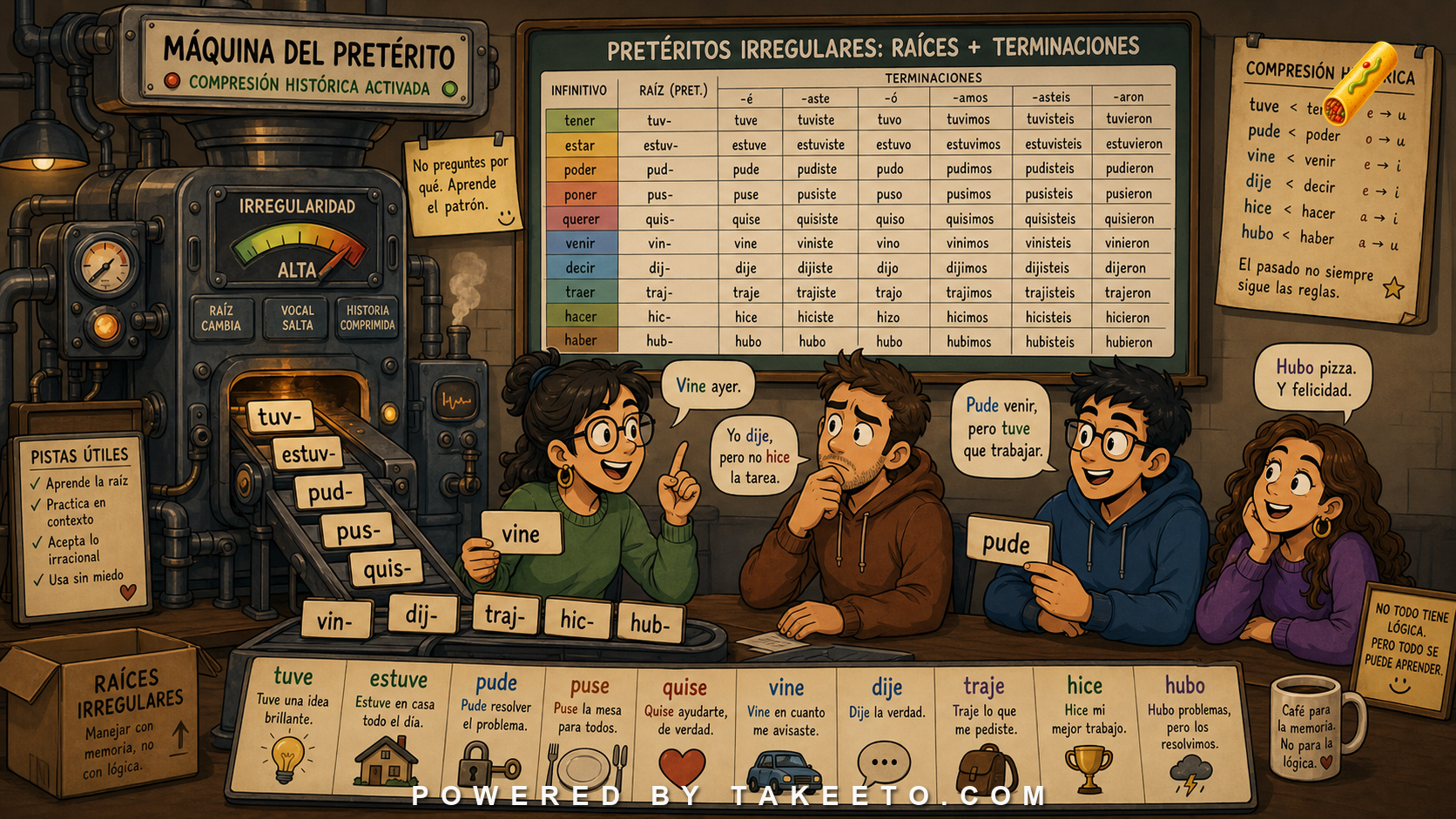
The reader can recognize and organize high-frequency irregular preterite stems.
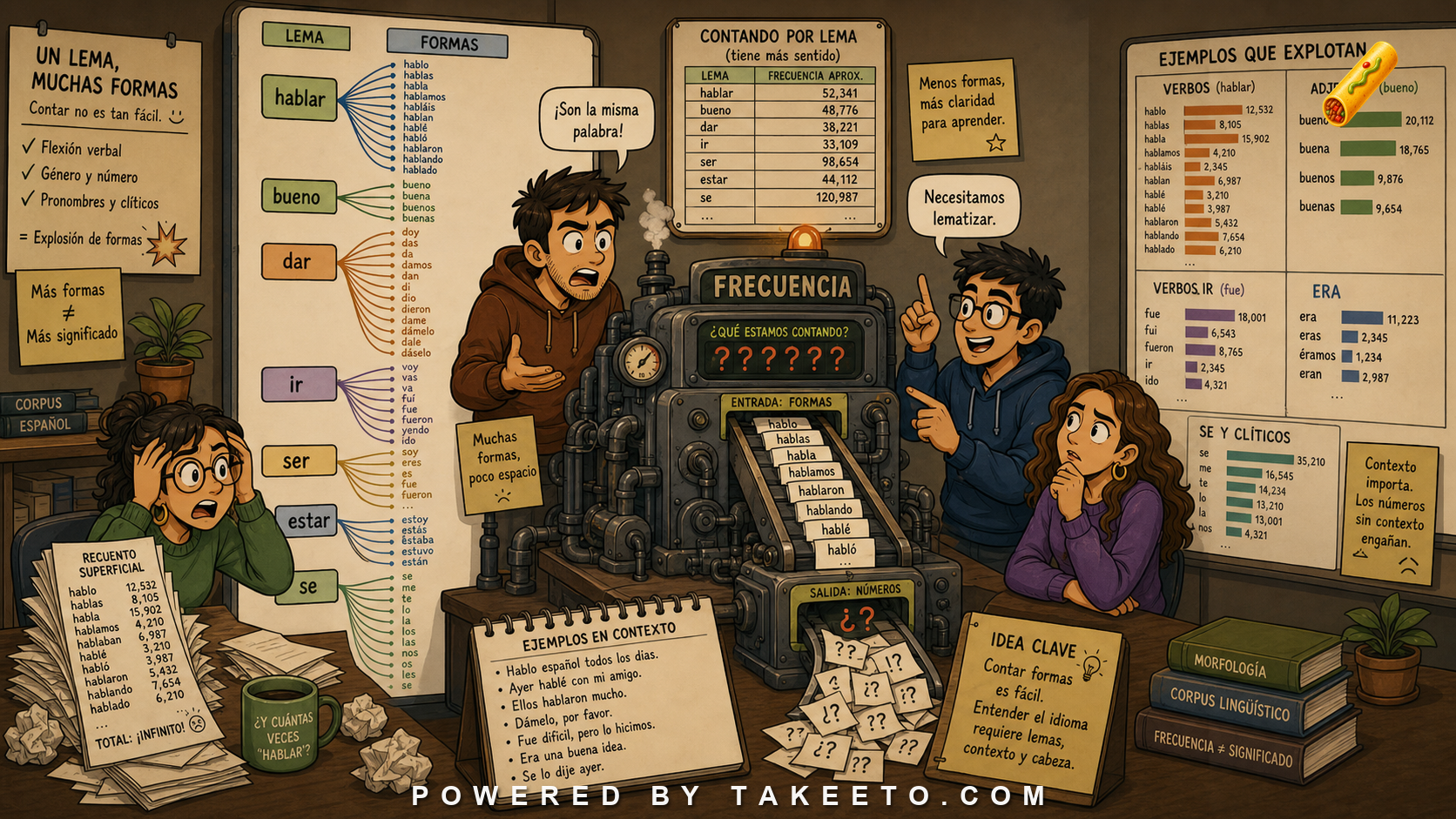
The reader understands why Spanish morphology complicates word counting.
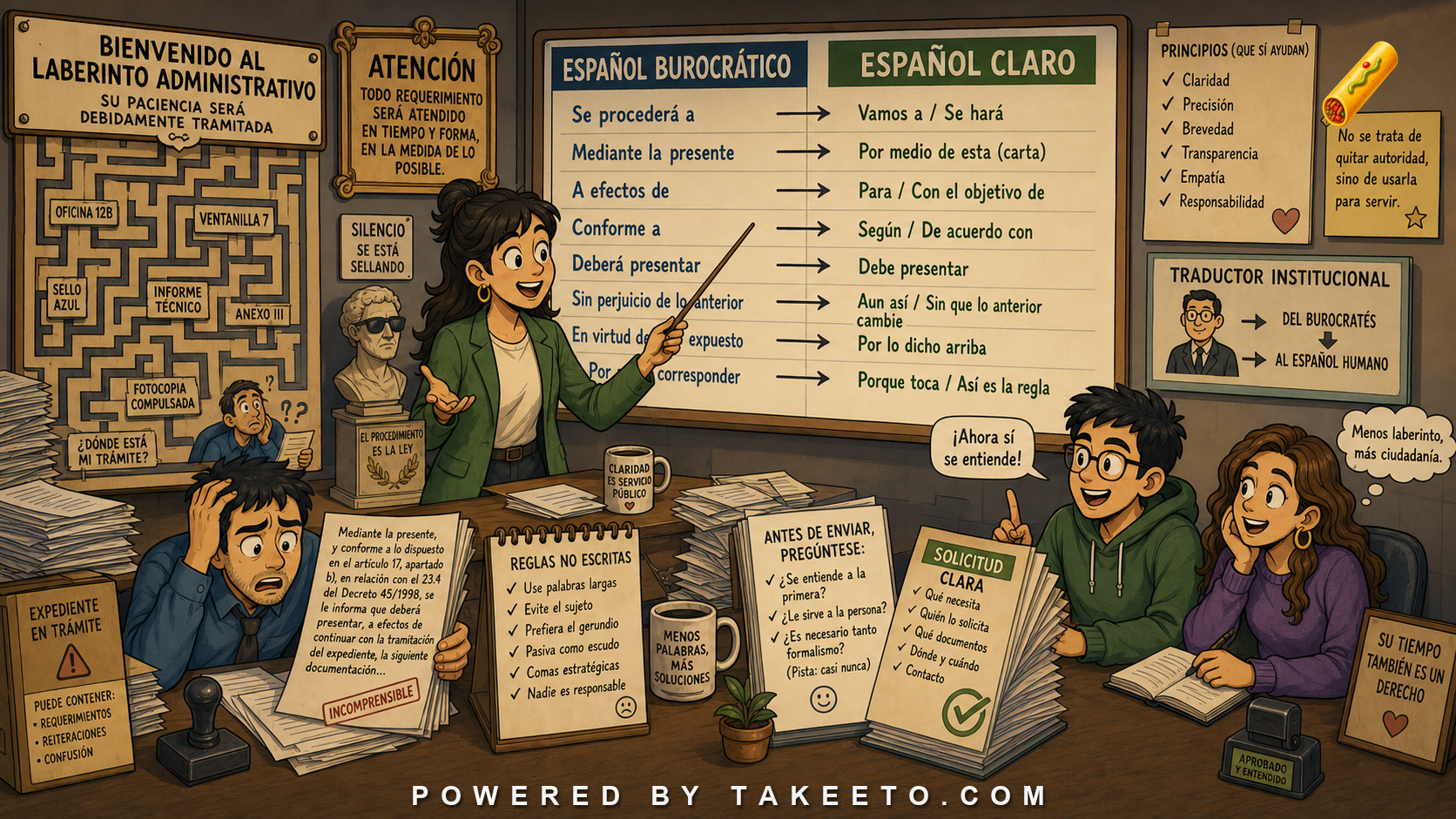
The reader can unpack bureaucratic Spanish without adopting its worst habits.
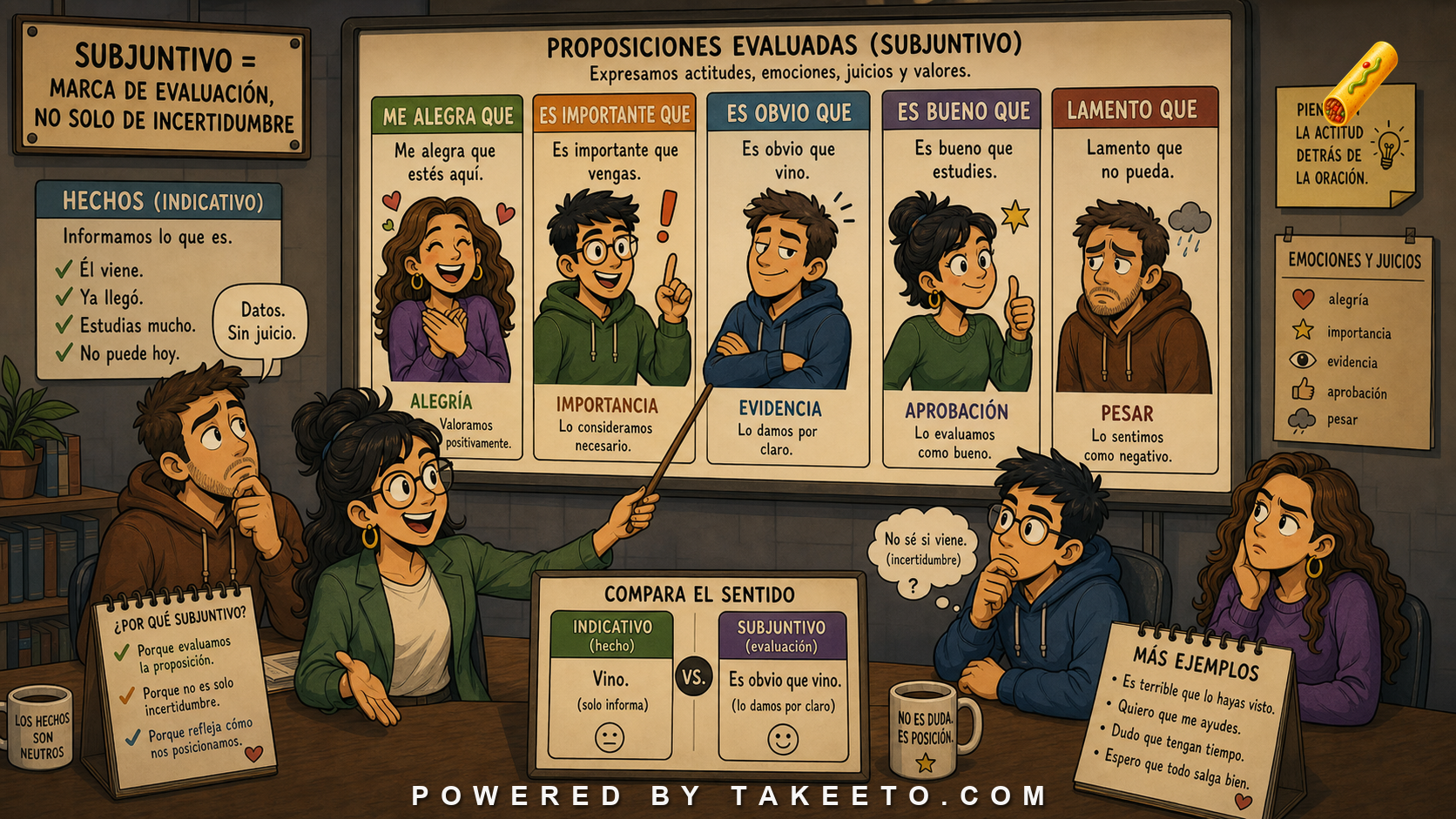
The reader sees subjunctive as marking evaluated propositions rather than simply uncertainty.
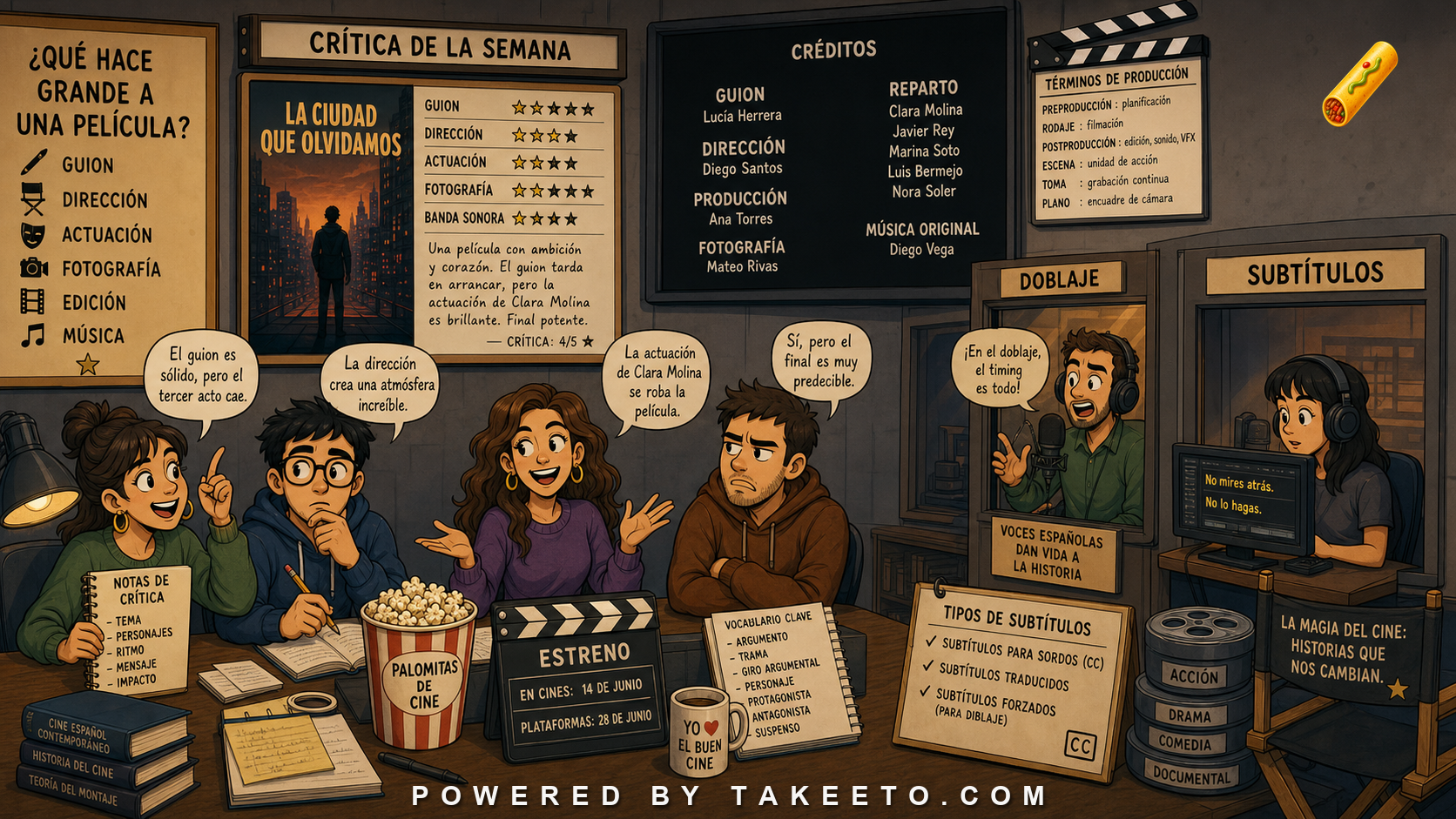
The reader can read reviews, credits, and production descriptions.
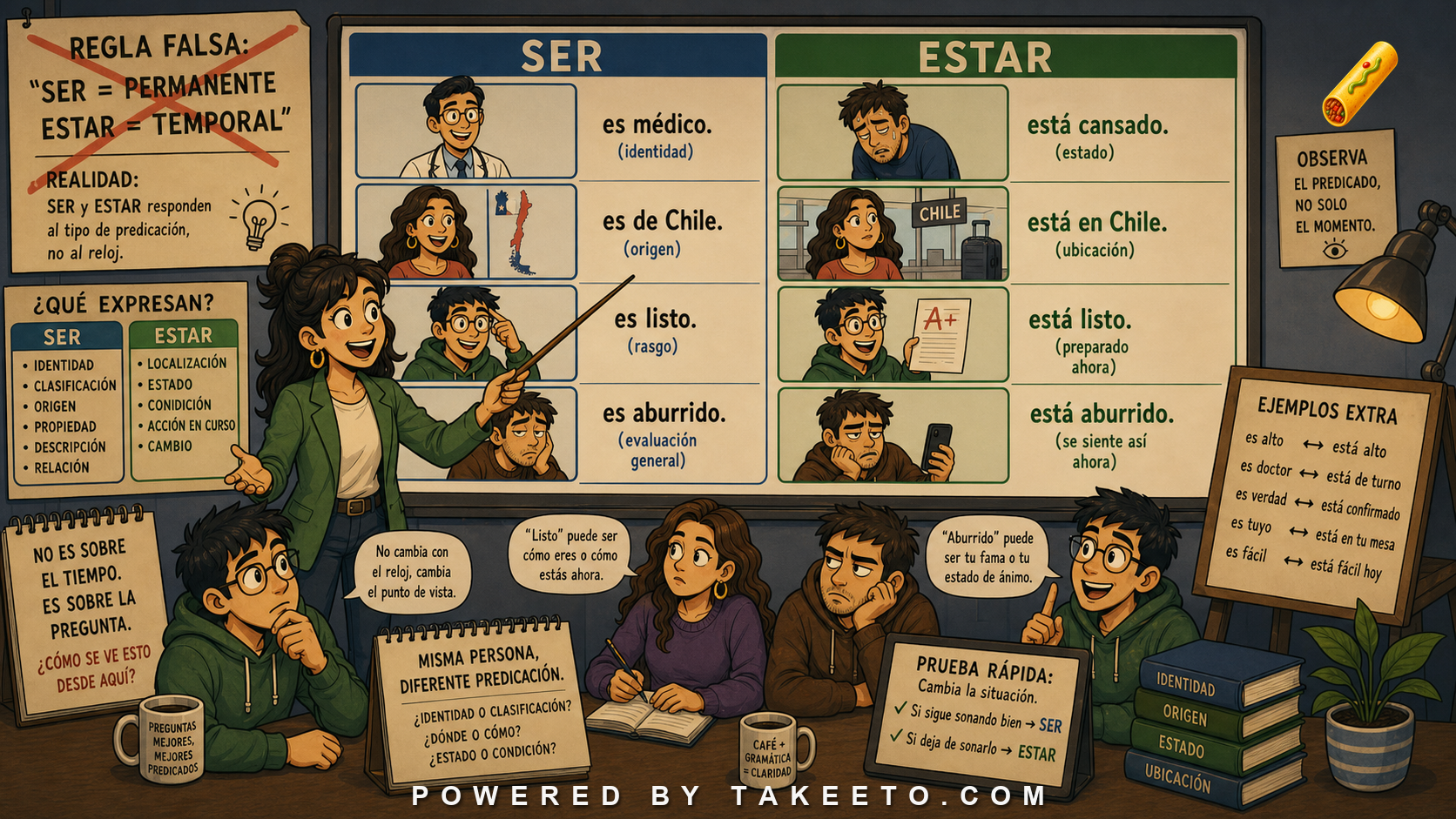
The reader replaces the permanent/temporary shortcut with a more accurate account of predication.
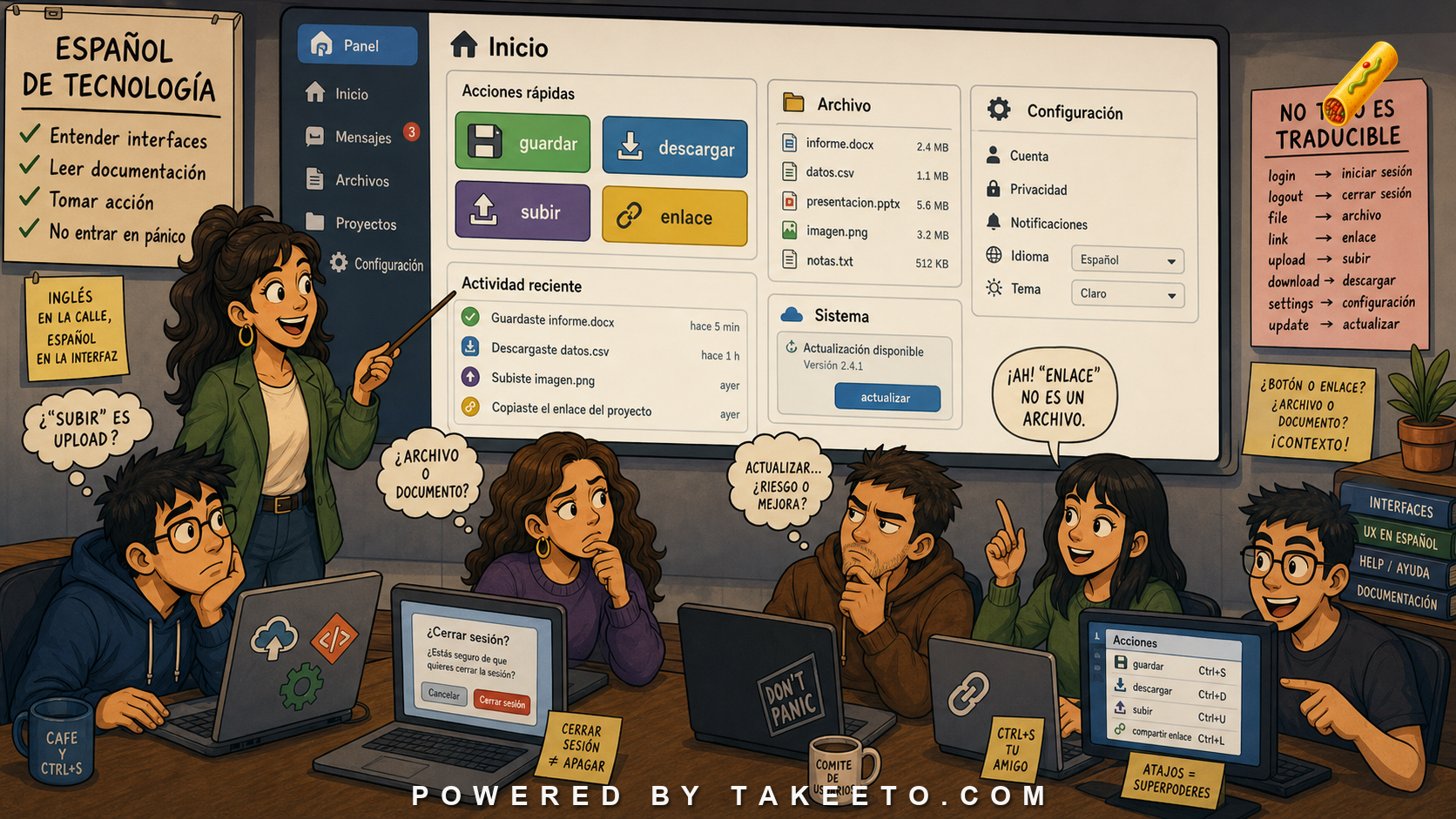
The reader can parse Spanish software interfaces and tech writing.
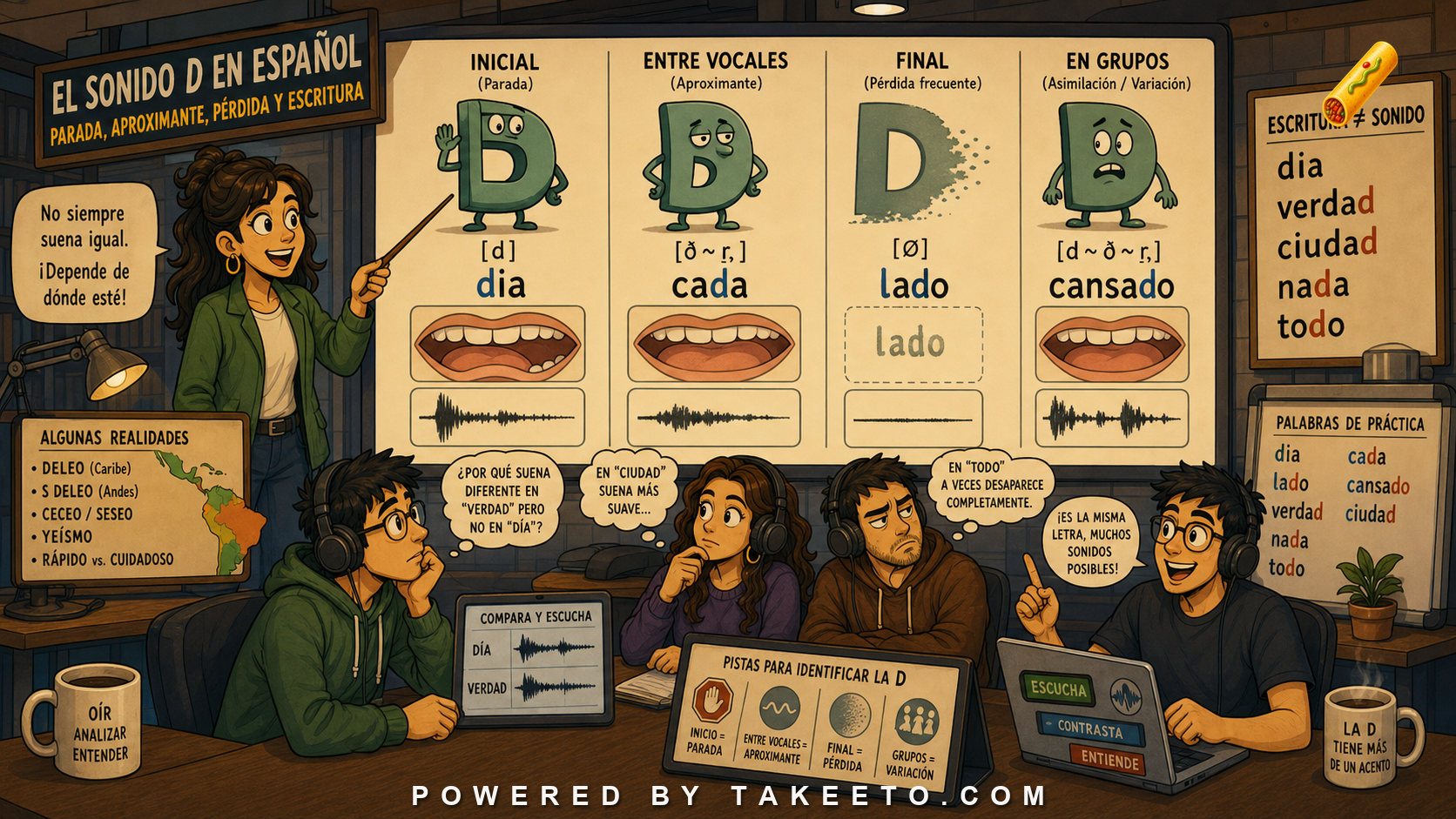
The reader can hear and analyze Spanish d variation across contexts and regions.
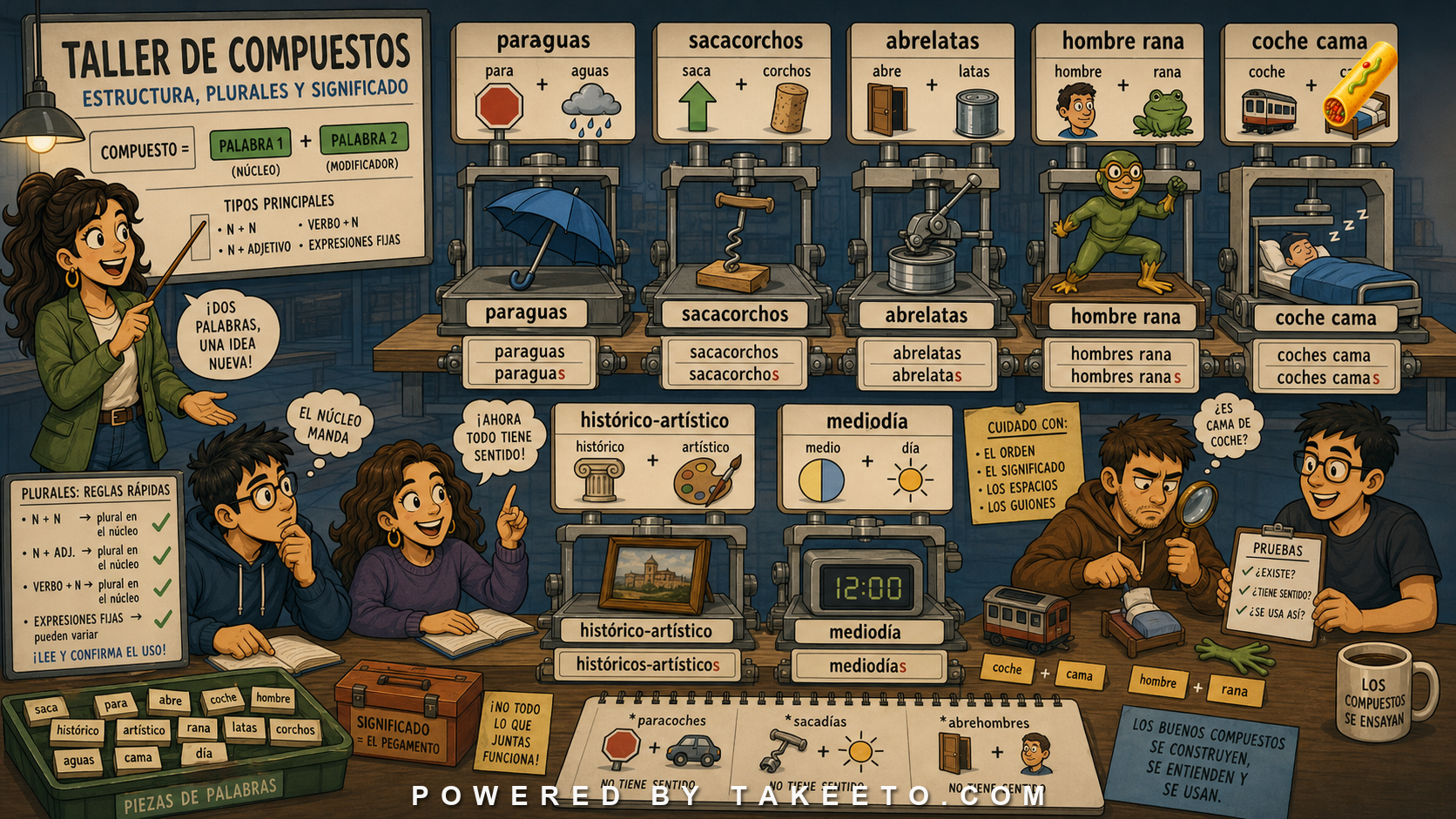
The reader understands how Spanish compounds are formed and pluralized.
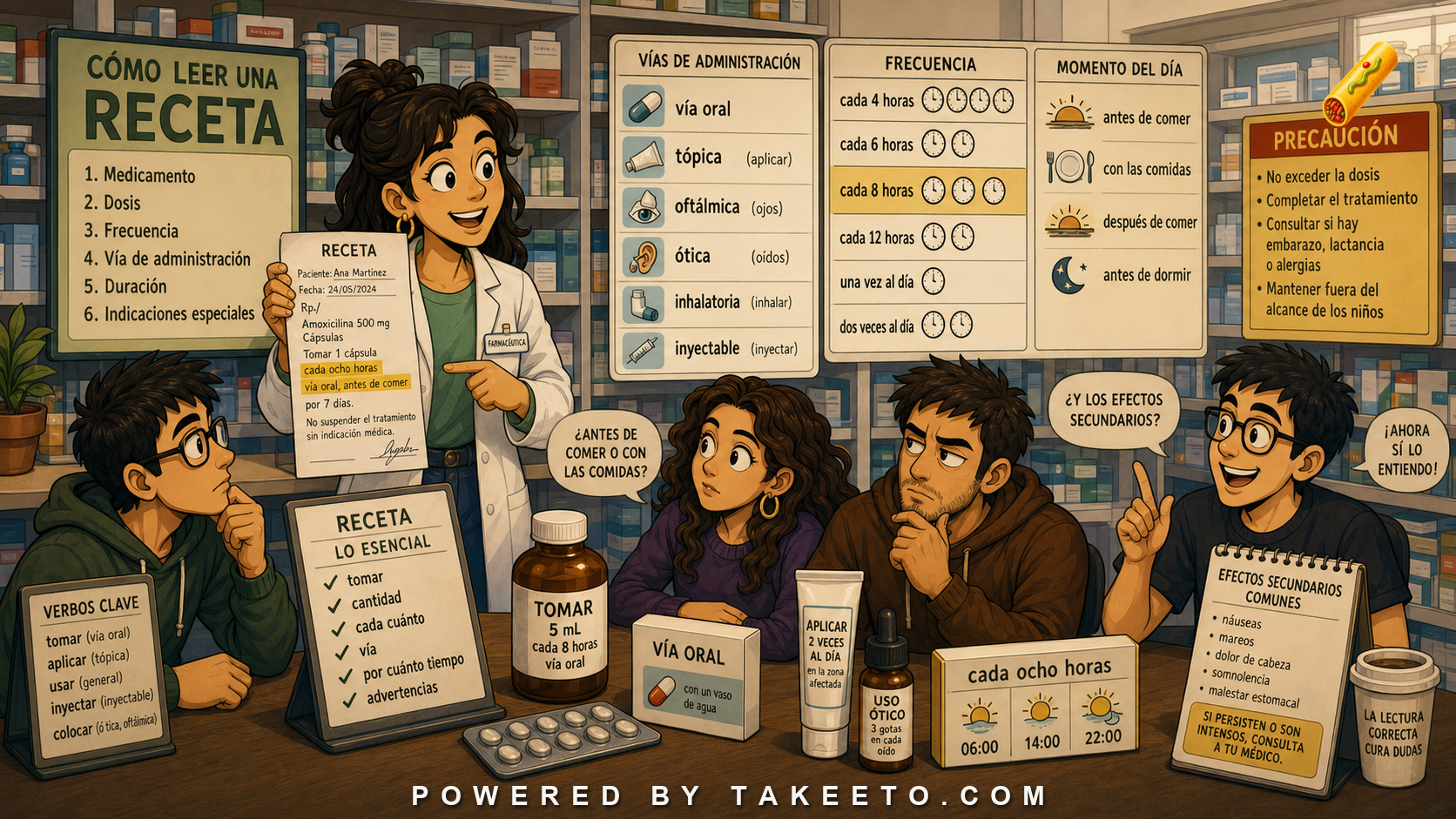
The reader can read dosage, frequency, route, warnings, and duration in Spanish medication texts.
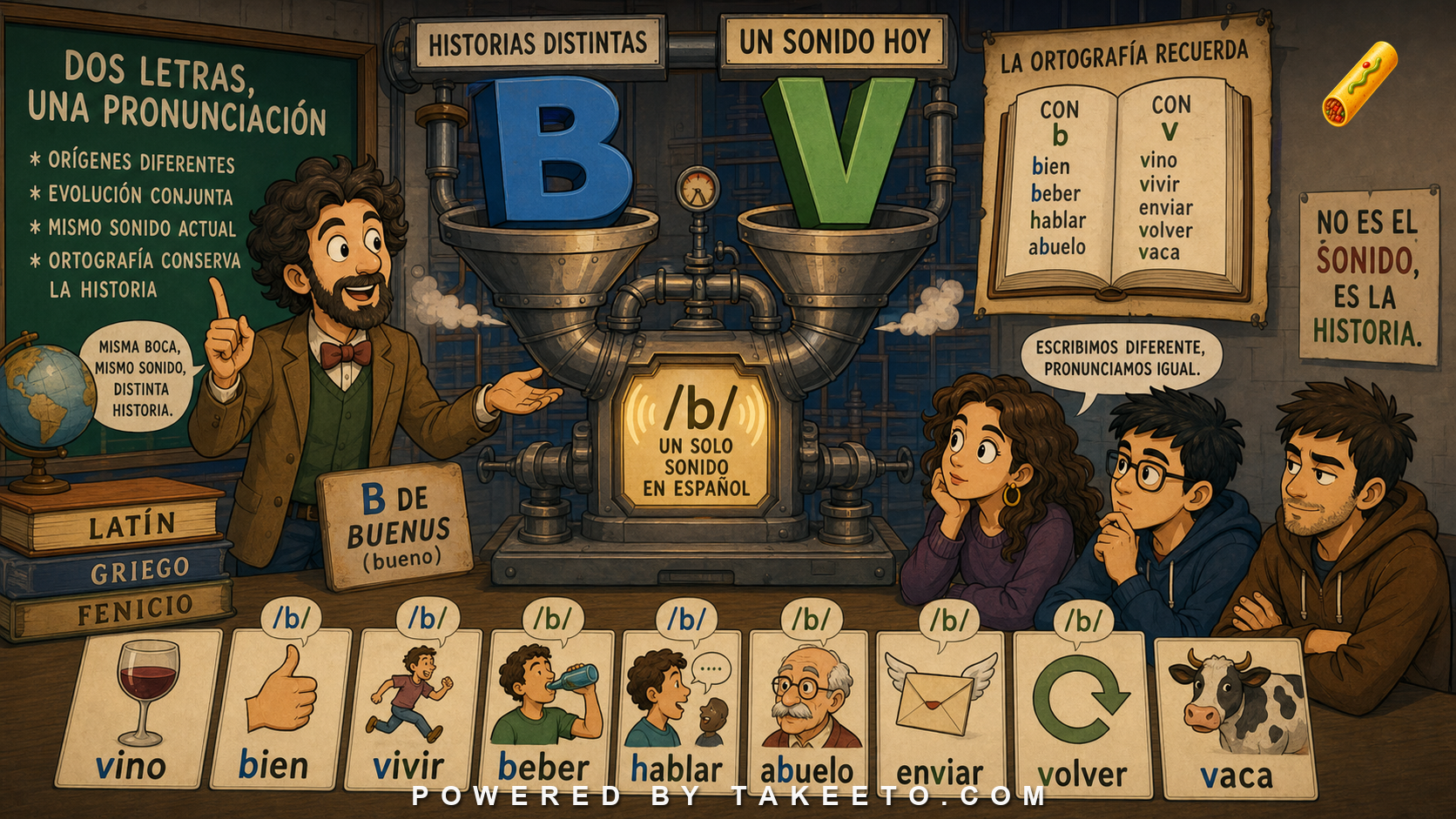
The reader understands why b and v are normally not separate sounds in modern Spanish and why spelling still preserves the distinction.
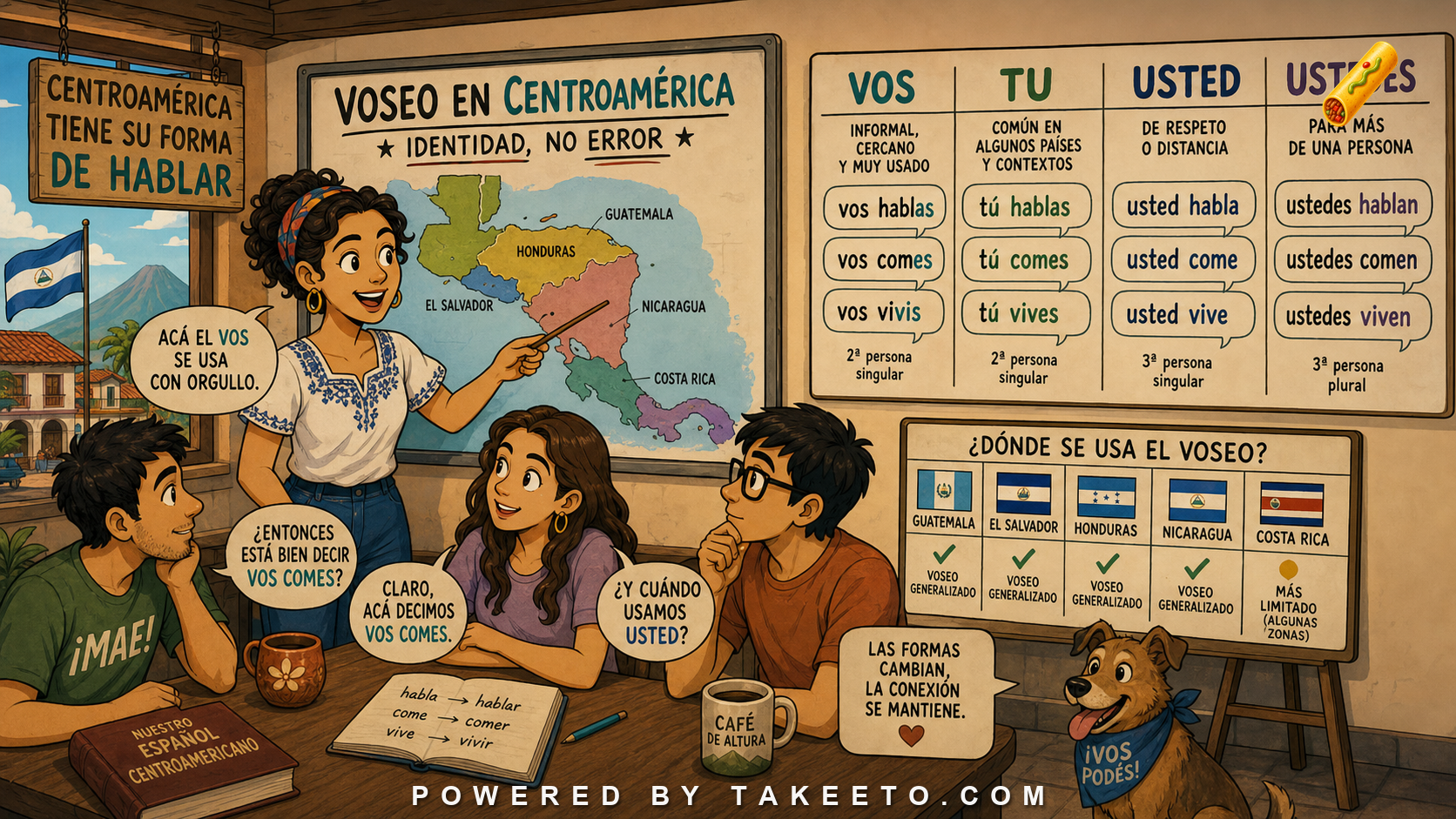
The reader can understand voseo beyond Argentina.
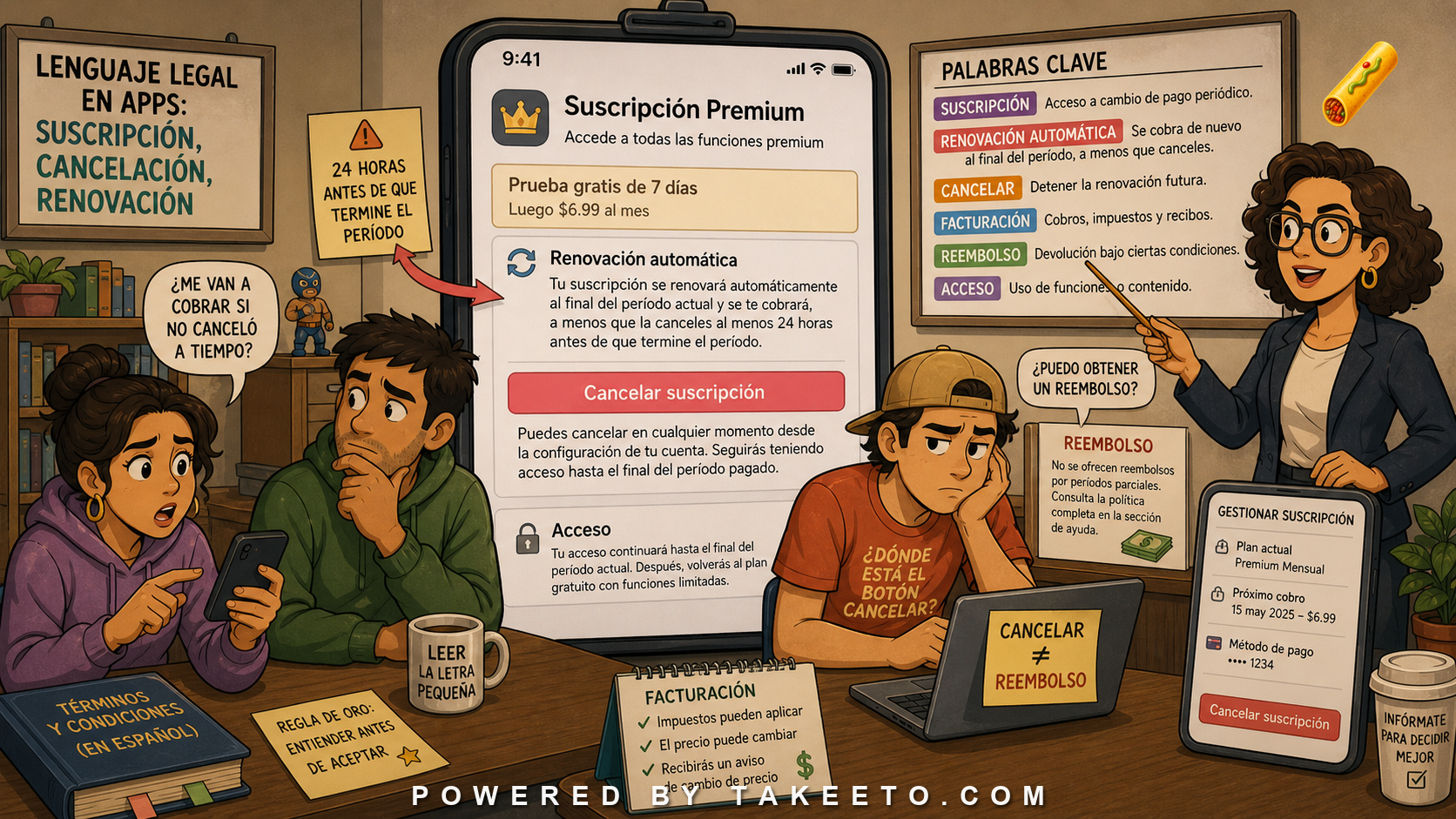
The reader can understand Spanish subscription notices, renewal language, cancellation conditions, billing terms, and user obligations.
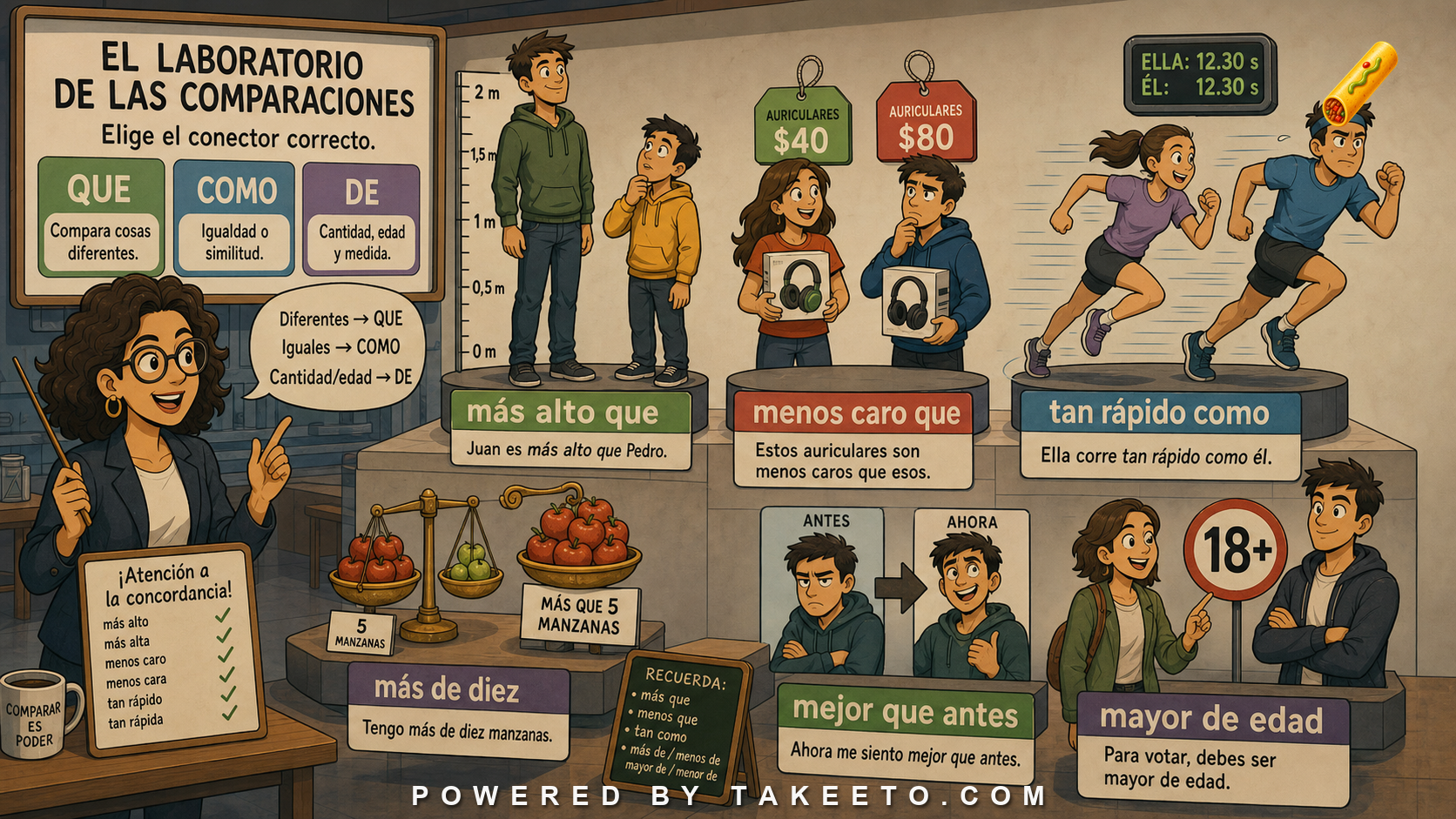
The reader can form Spanish comparisons with correct connectors and agreement.
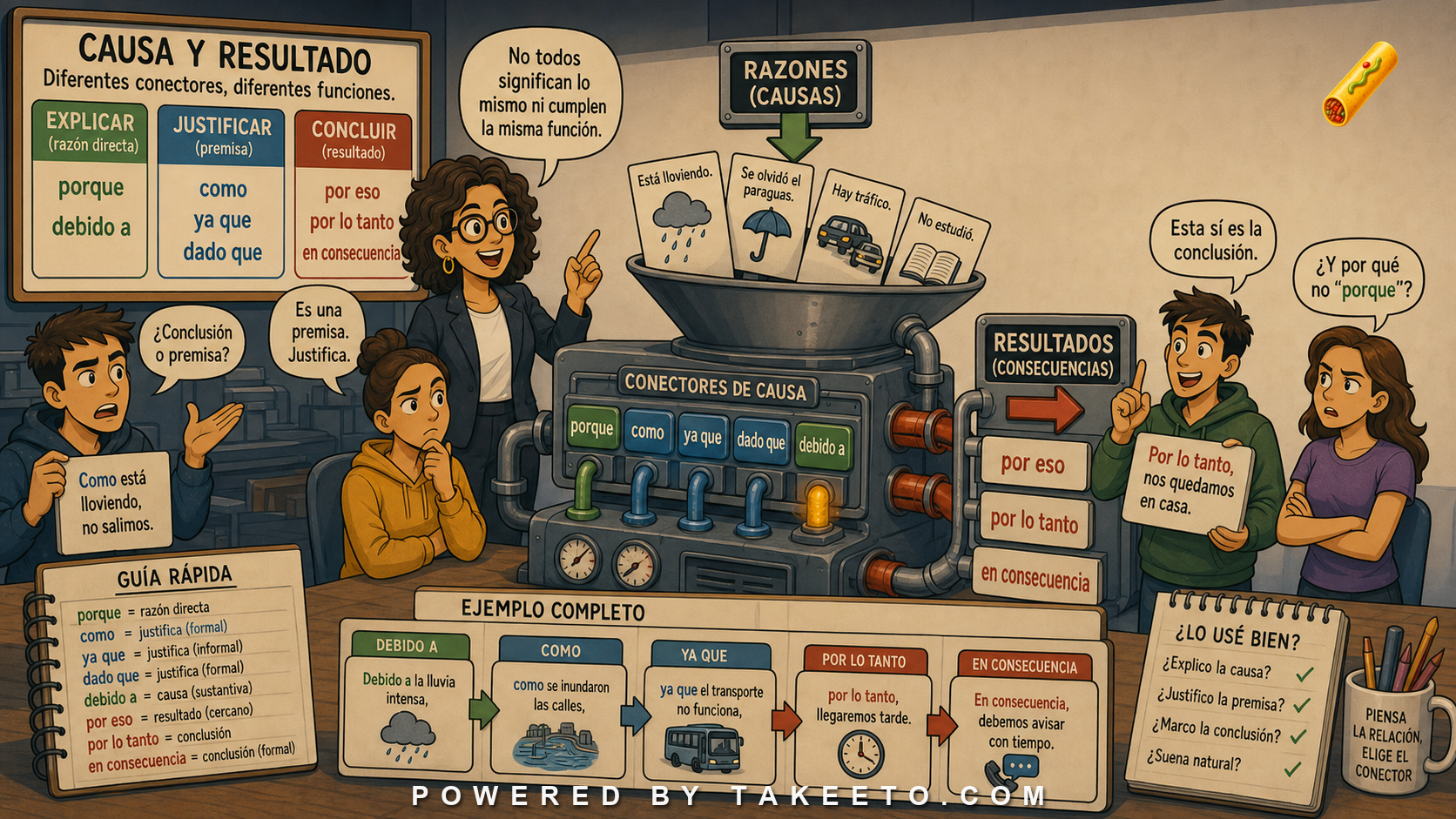
The reader can distinguish causal explanation, premise, and conclusion in Spanish.
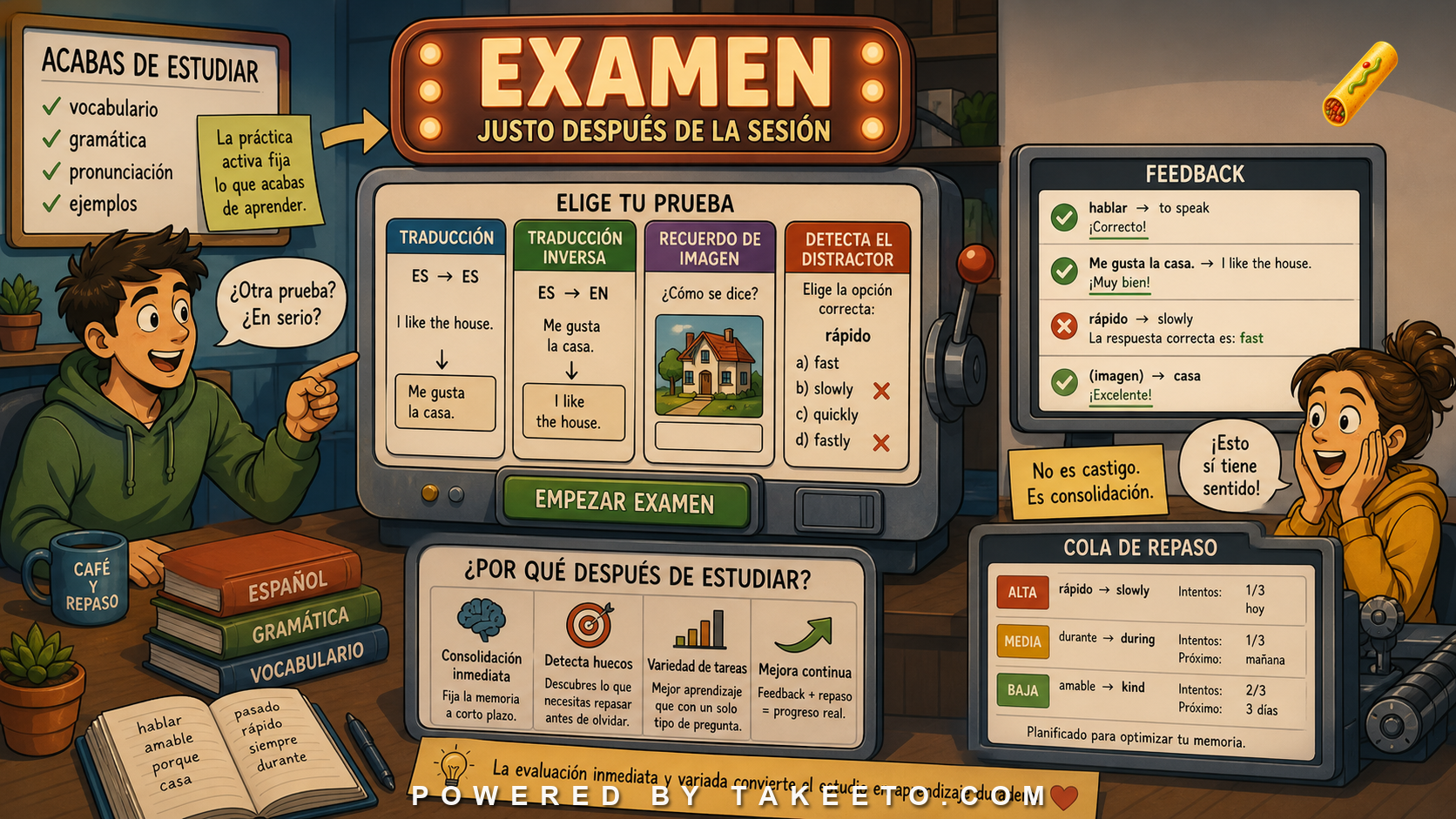
The reader understands post-session exams as consolidation rather than punishment.
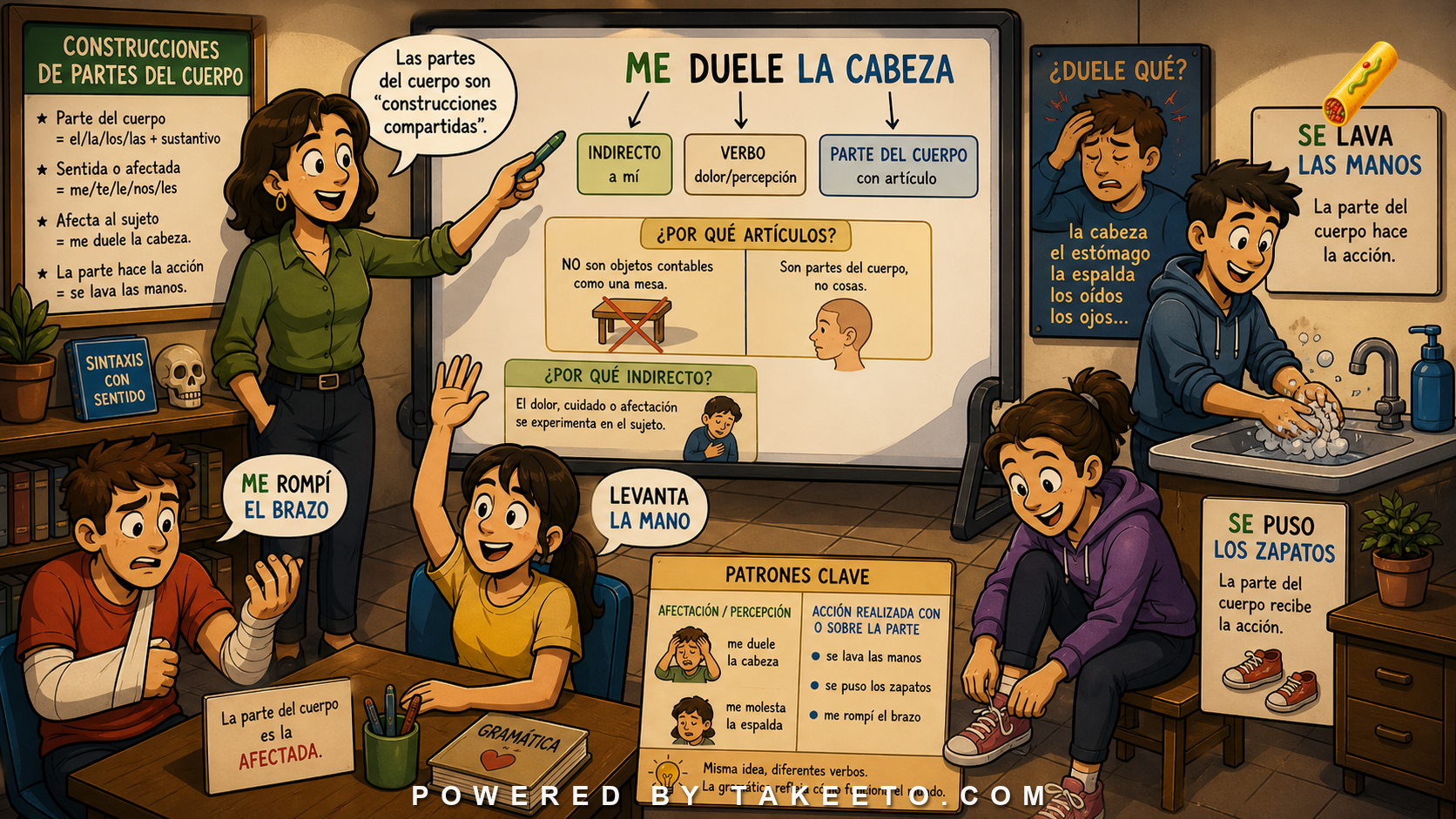
The reader understands why Spanish uses articles and indirect objects with body parts.
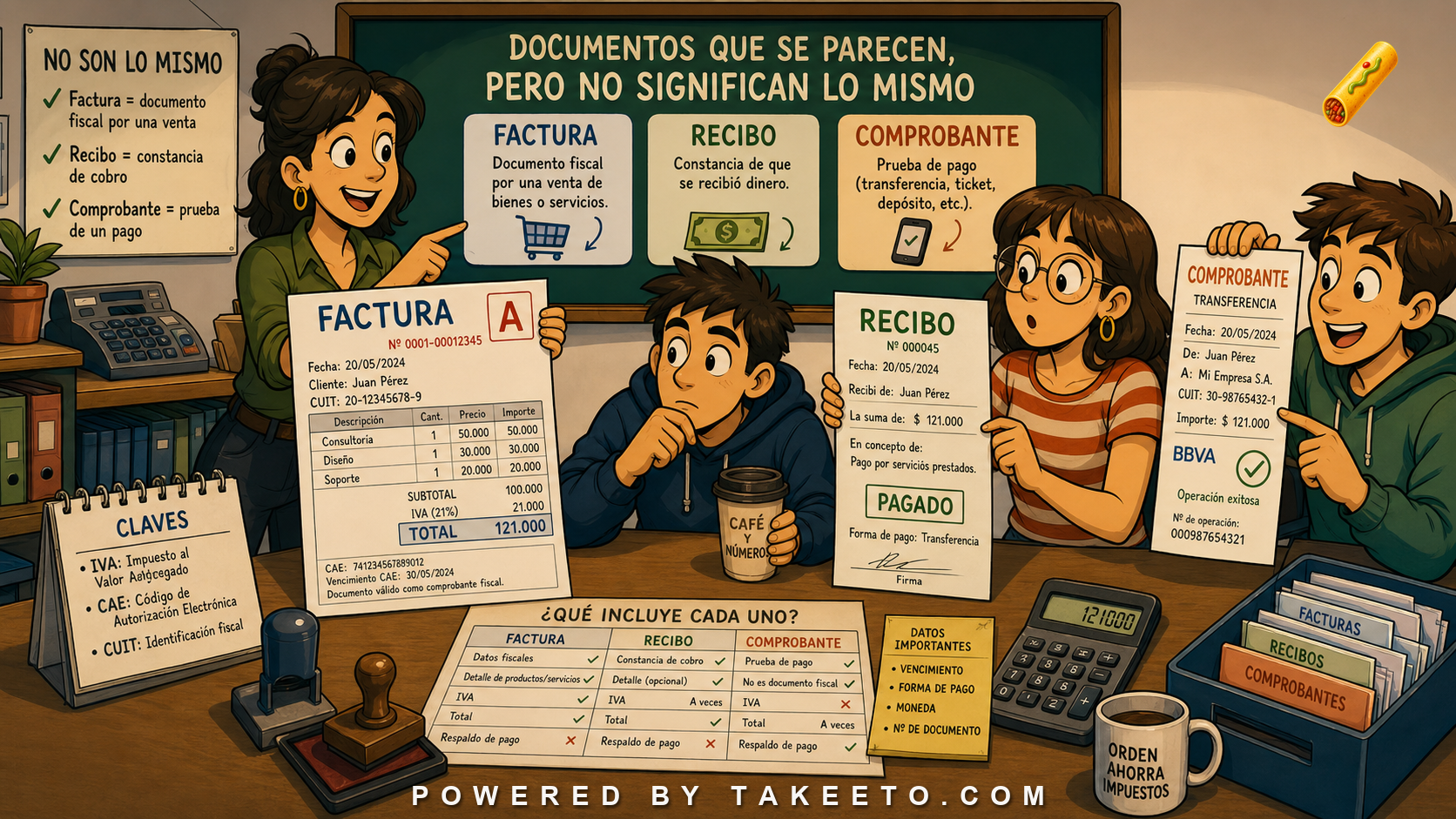
The reader can distinguish invoice, receipt, proof of payment, and tax document.
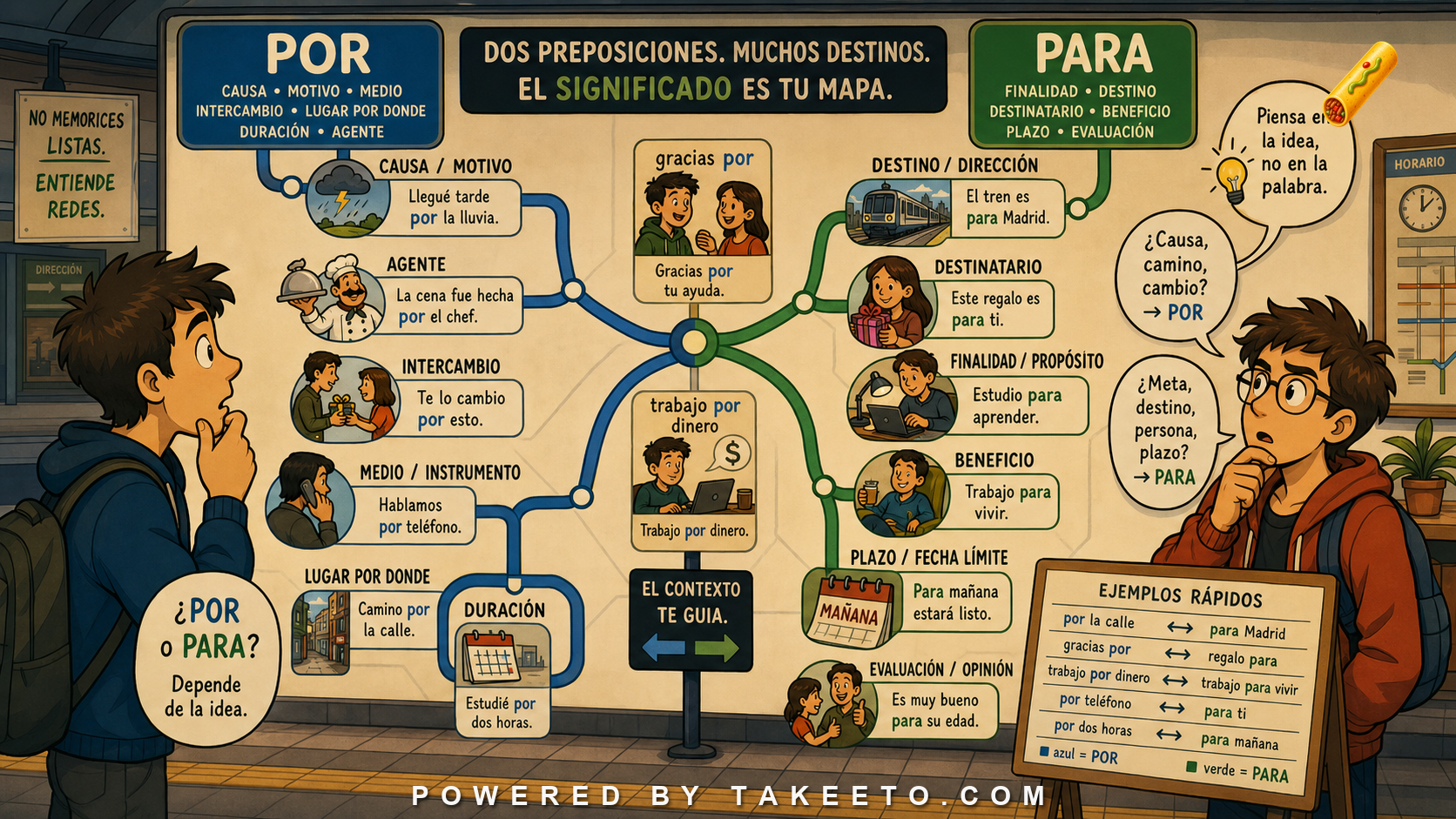
The reader replaces memorized lists with semantic networks for por and para.
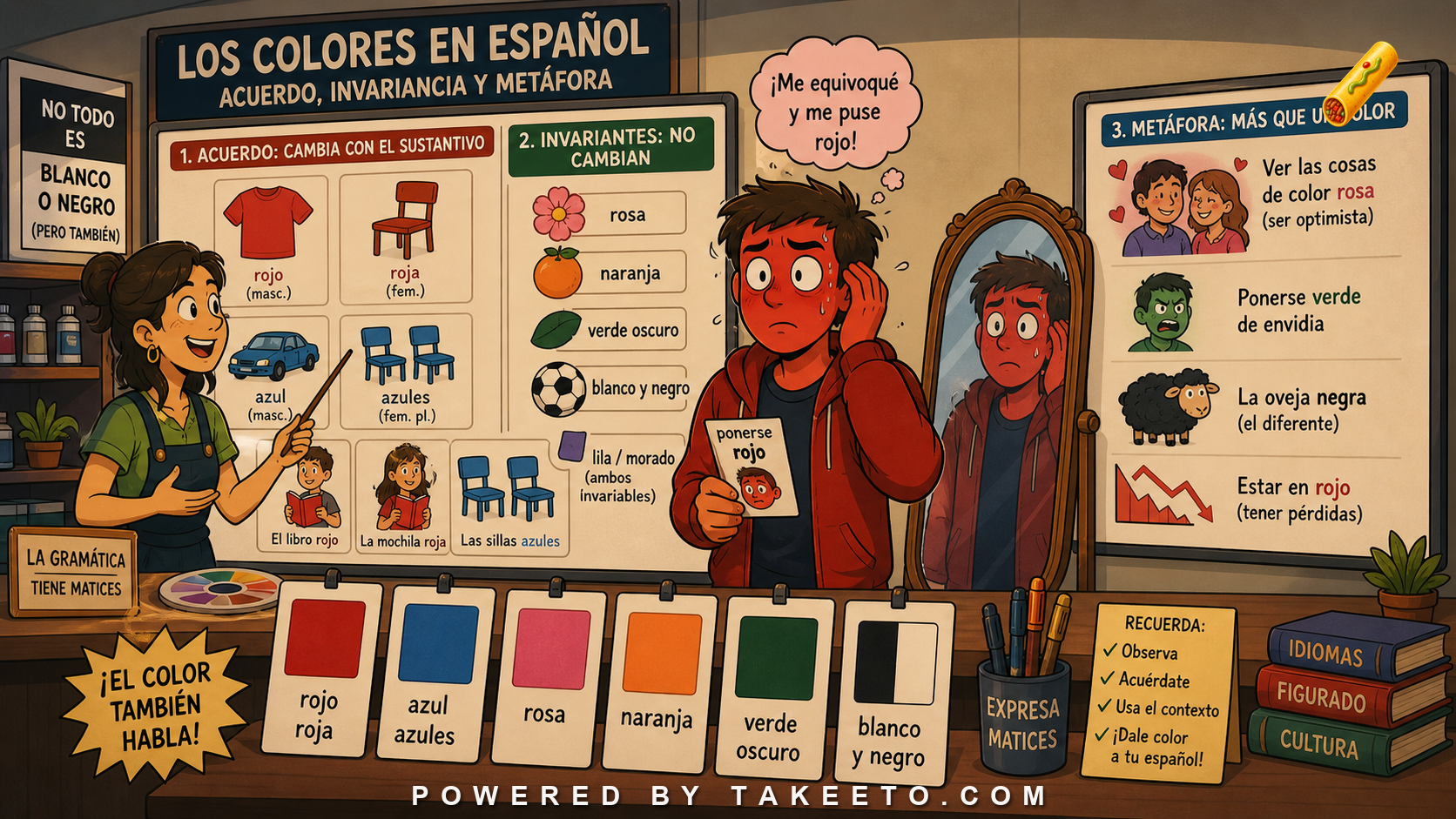
The reader can use color adjectives and interpret figurative color language.
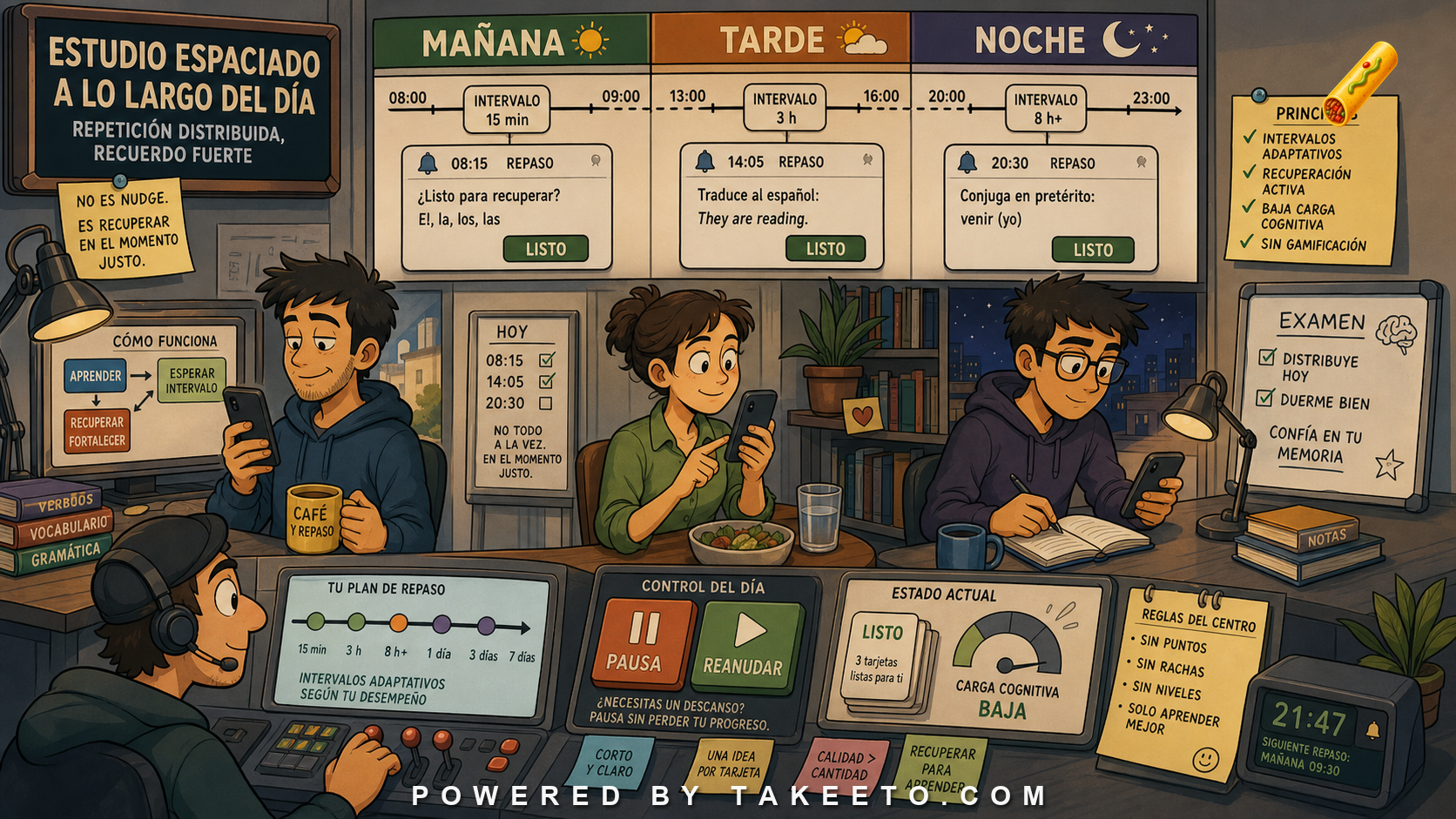
The reader understands interval-based study as distributed retrieval, not mere habit nudging.
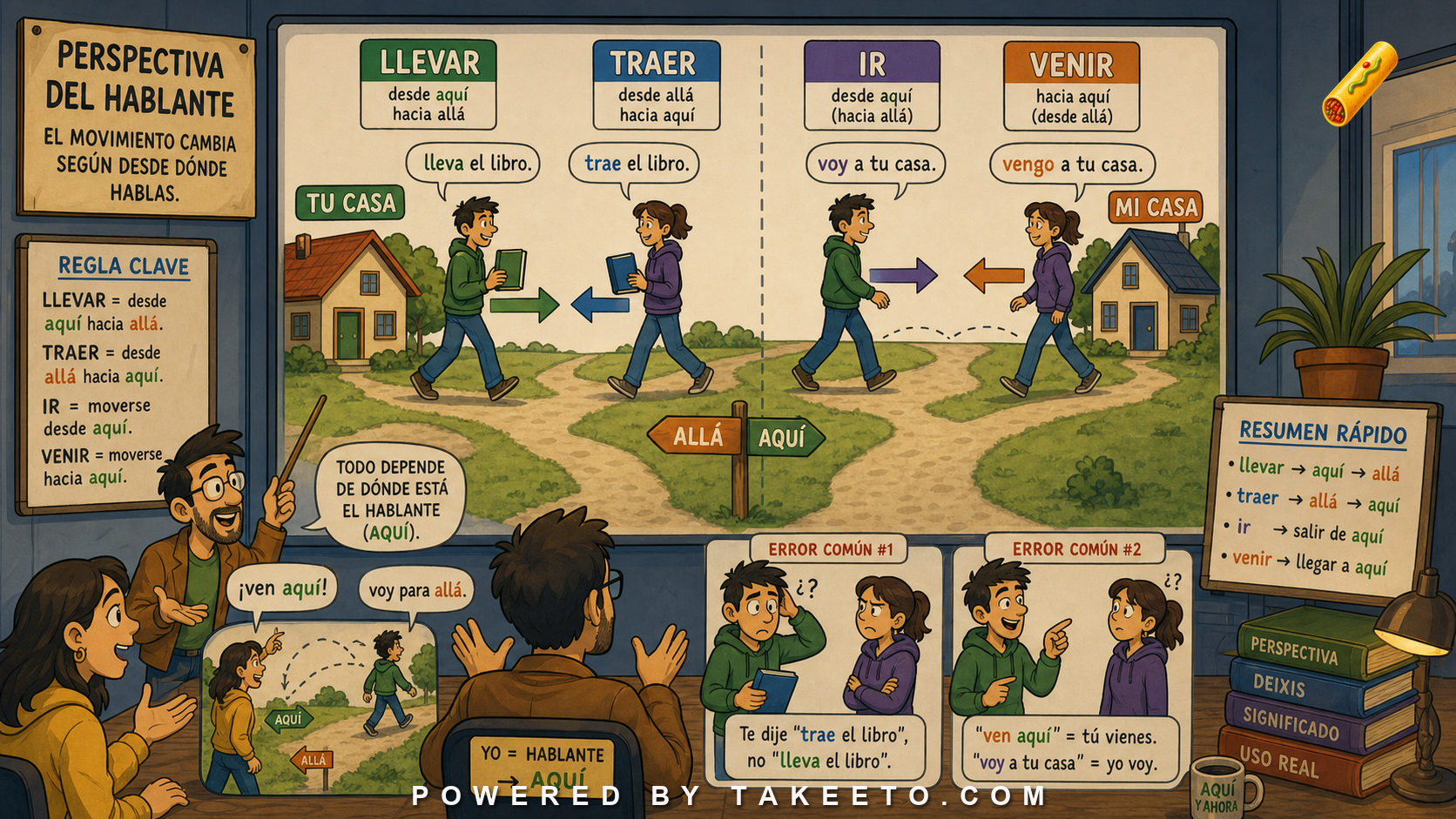
The reader can use motion and transfer verbs from the correct perspective.
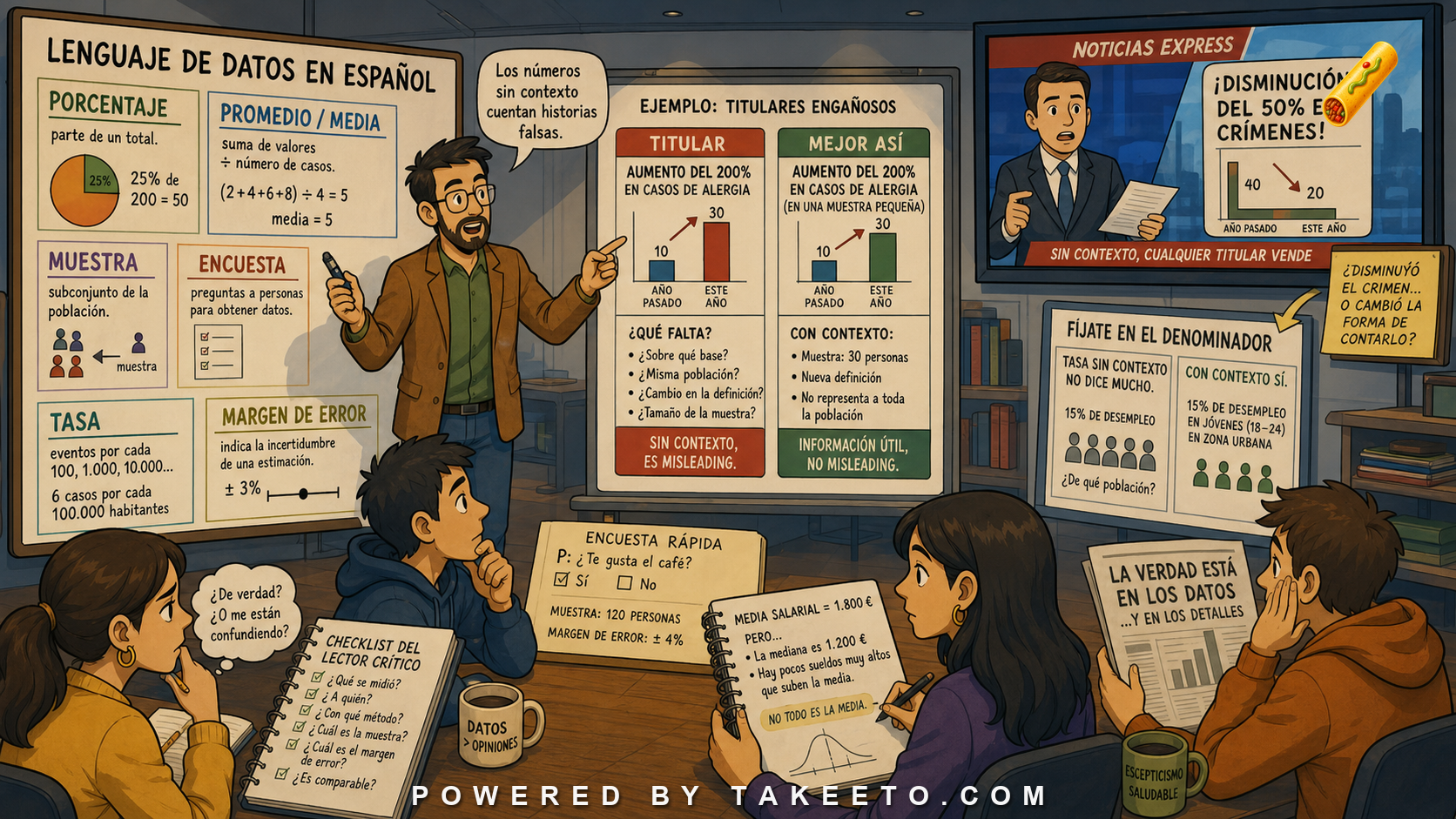
The reader can read basic statistical claims in Spanish without being misled by vague comparison, weak denominators, or media framing.
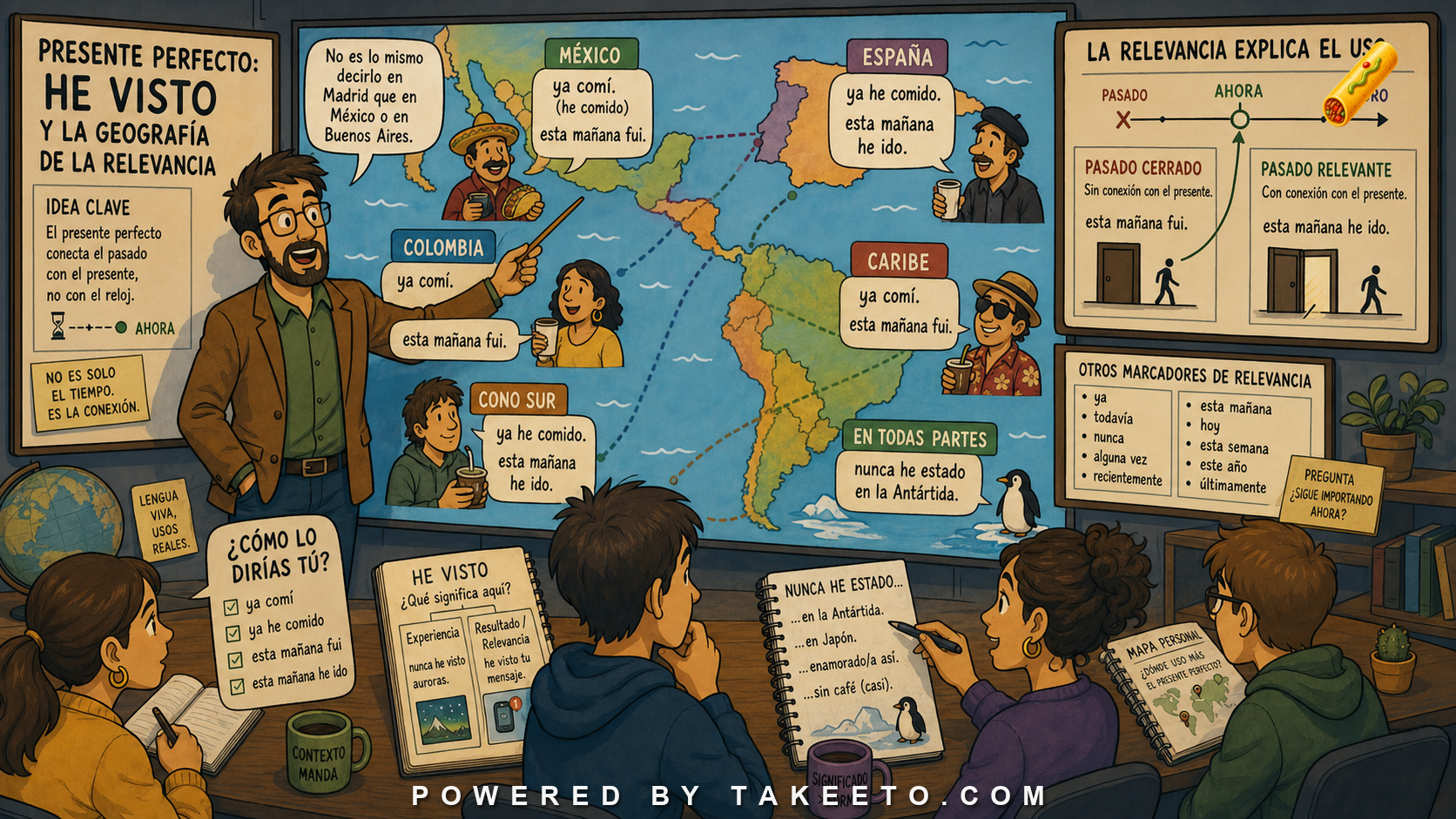
The reader understands present perfect as a tense whose usage varies sharply across the Spanish-speaking world.
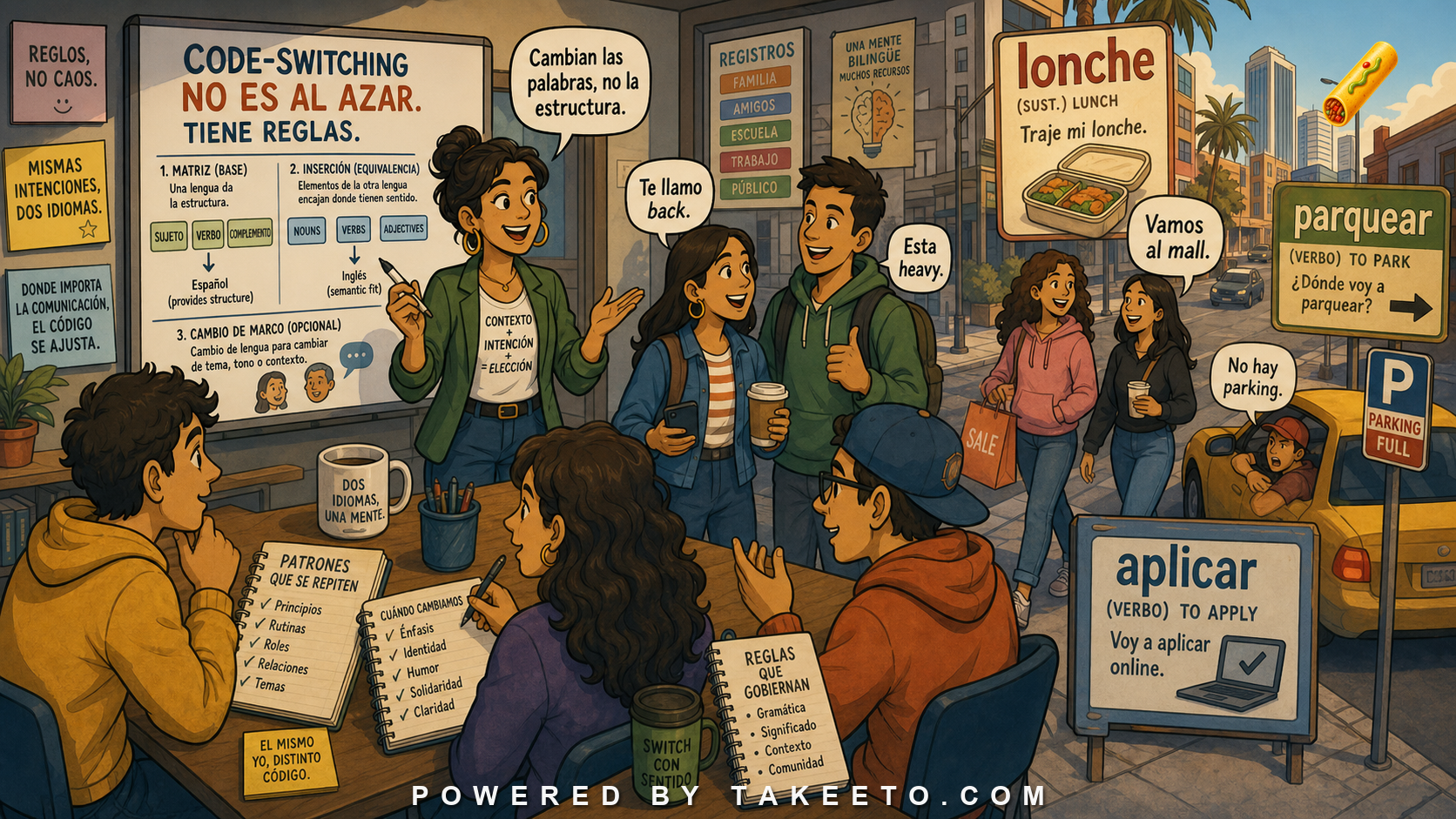
The reader understands Spanish-English code-switching as rule-governed bilingual behavior.
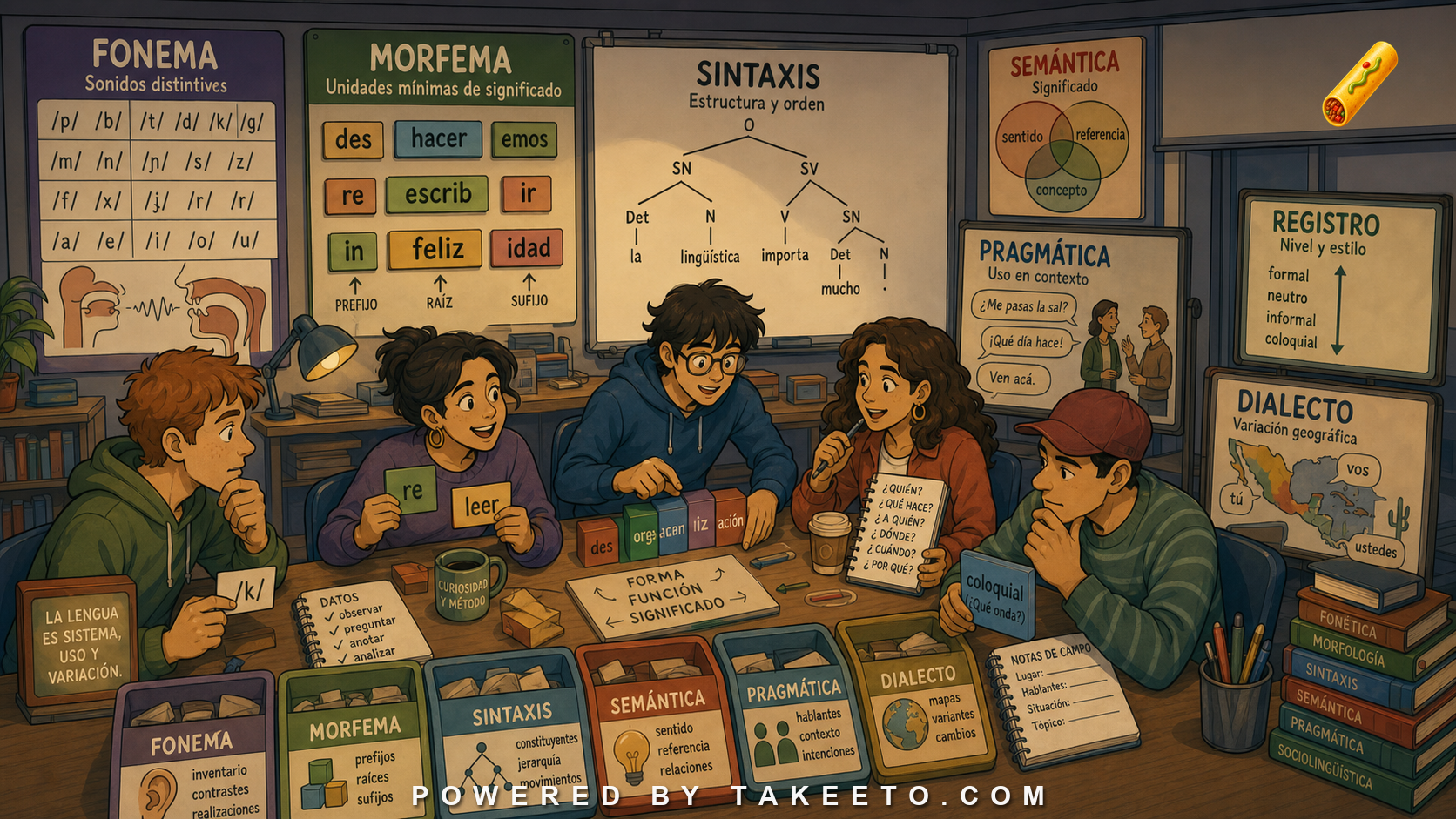
The reader gains the linguistic categories needed to analyze Spanish seriously.
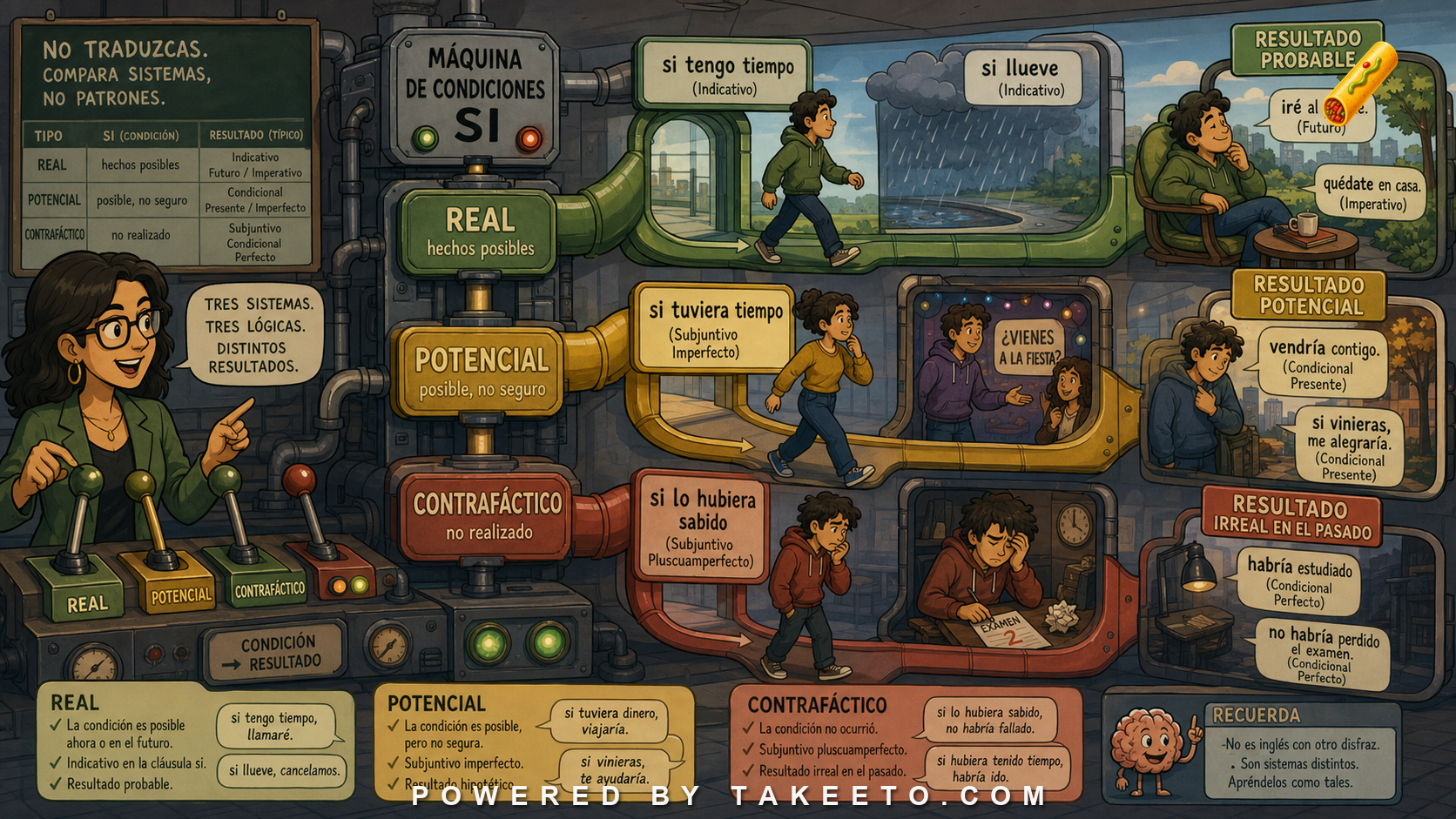
The reader can parse Spanish conditional systems without forcing English if-clause patterns onto them.
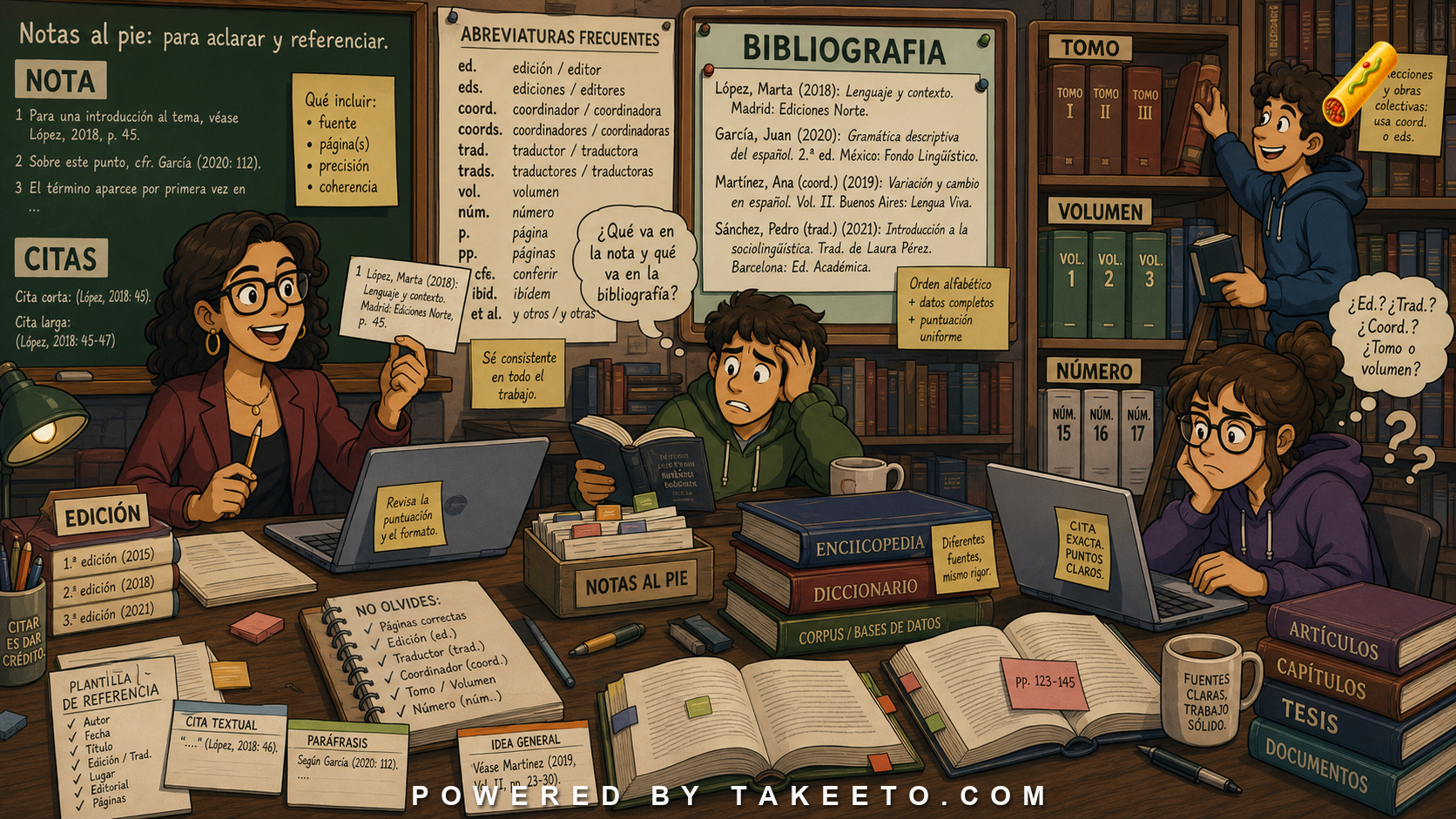
The reader can decode Spanish citation practices and bibliographic terminology.
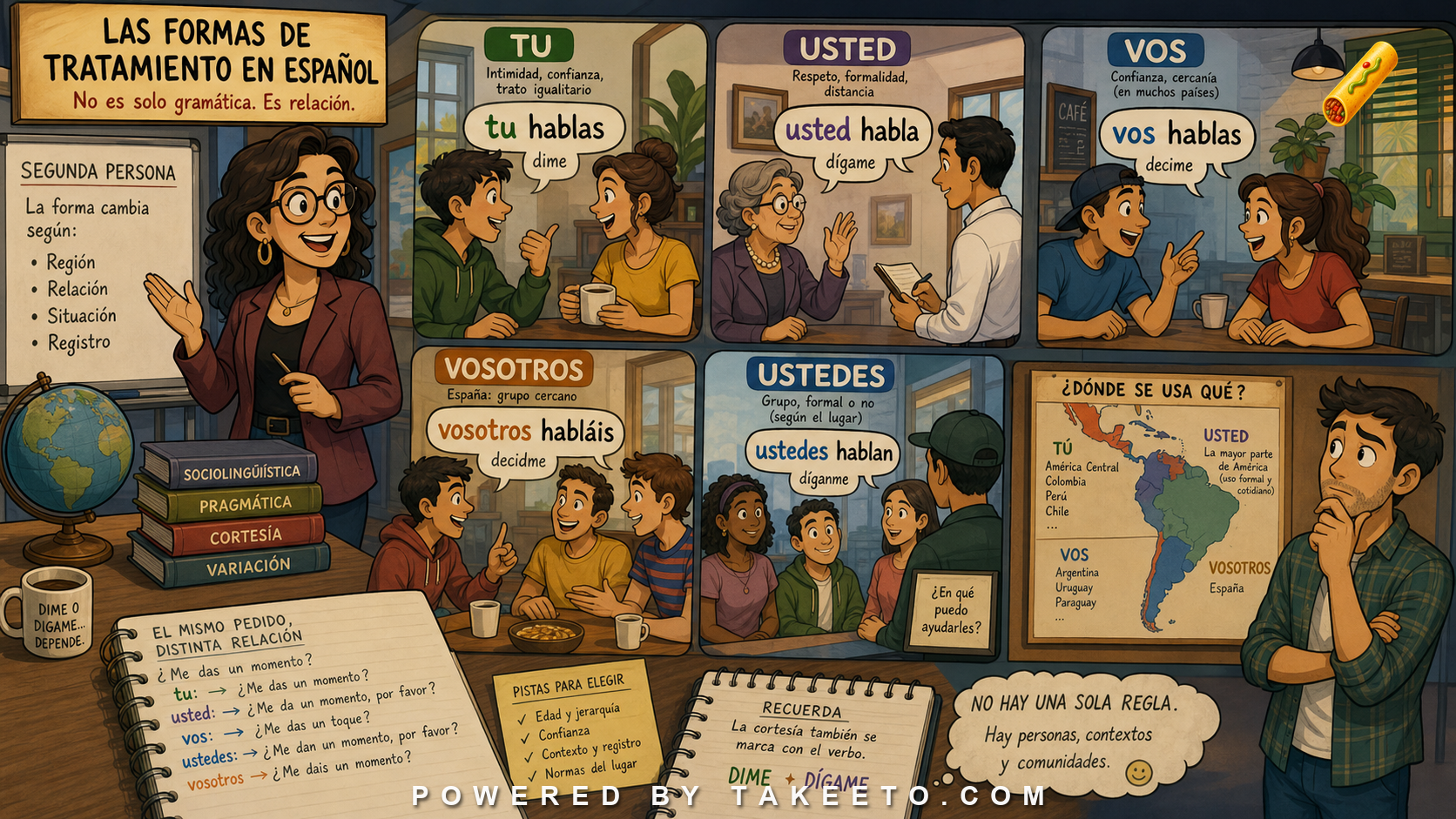
The reader can describe Spanish second-person systems across regions and social contexts.
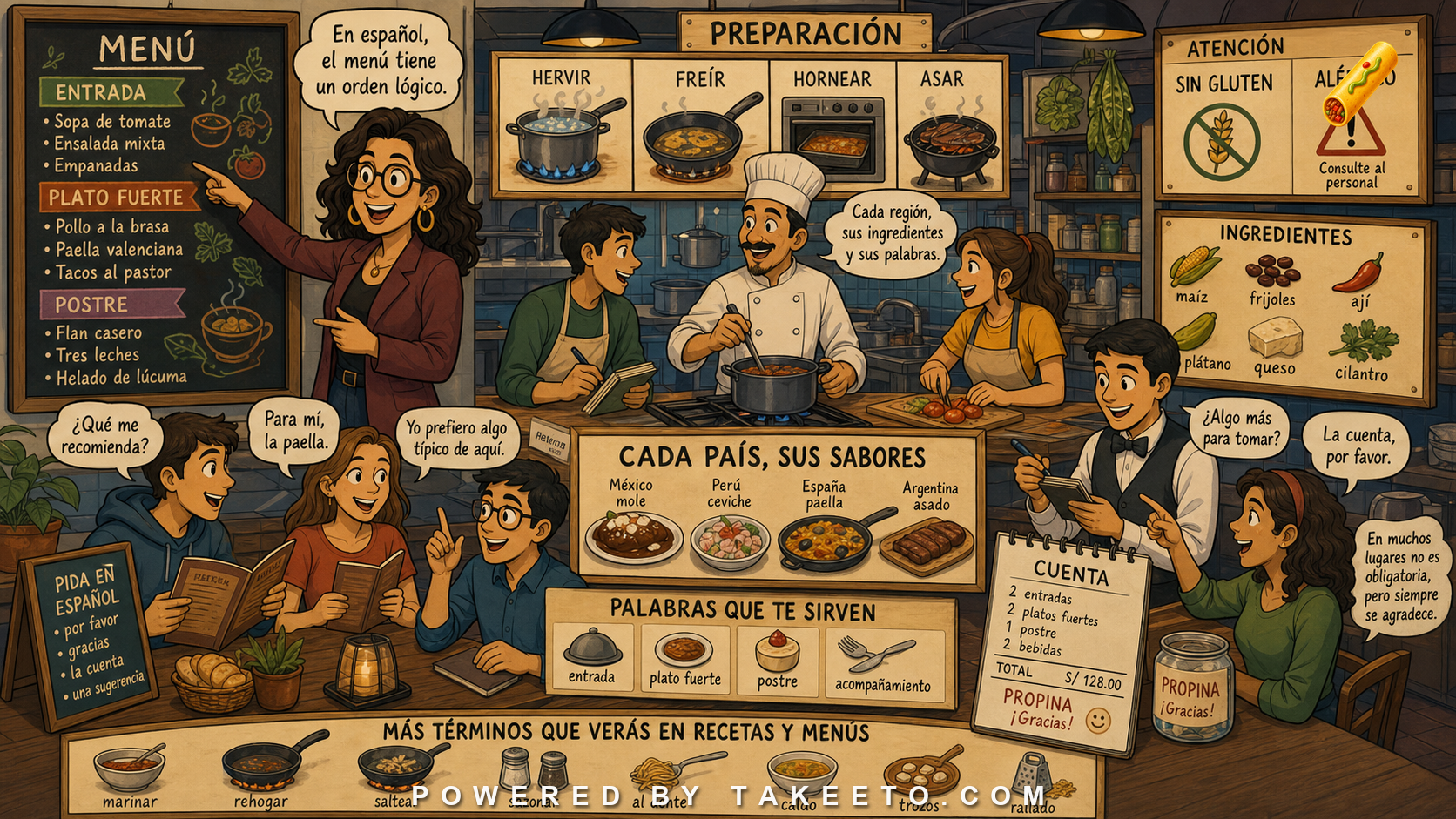
The reader can read menus and recipes with attention to regional variation.
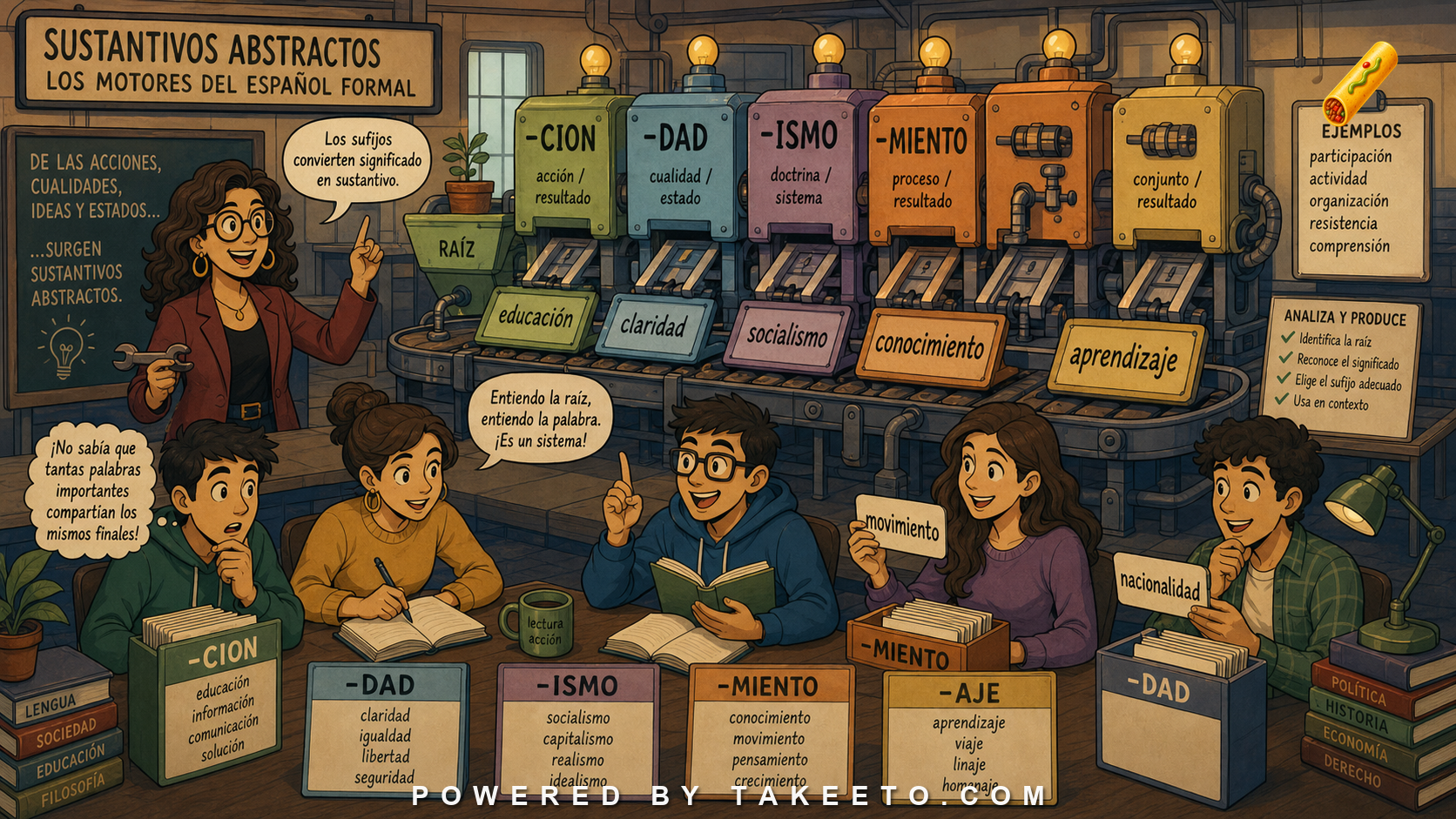
The reader can parse and produce abstract nouns that dominate formal Spanish.
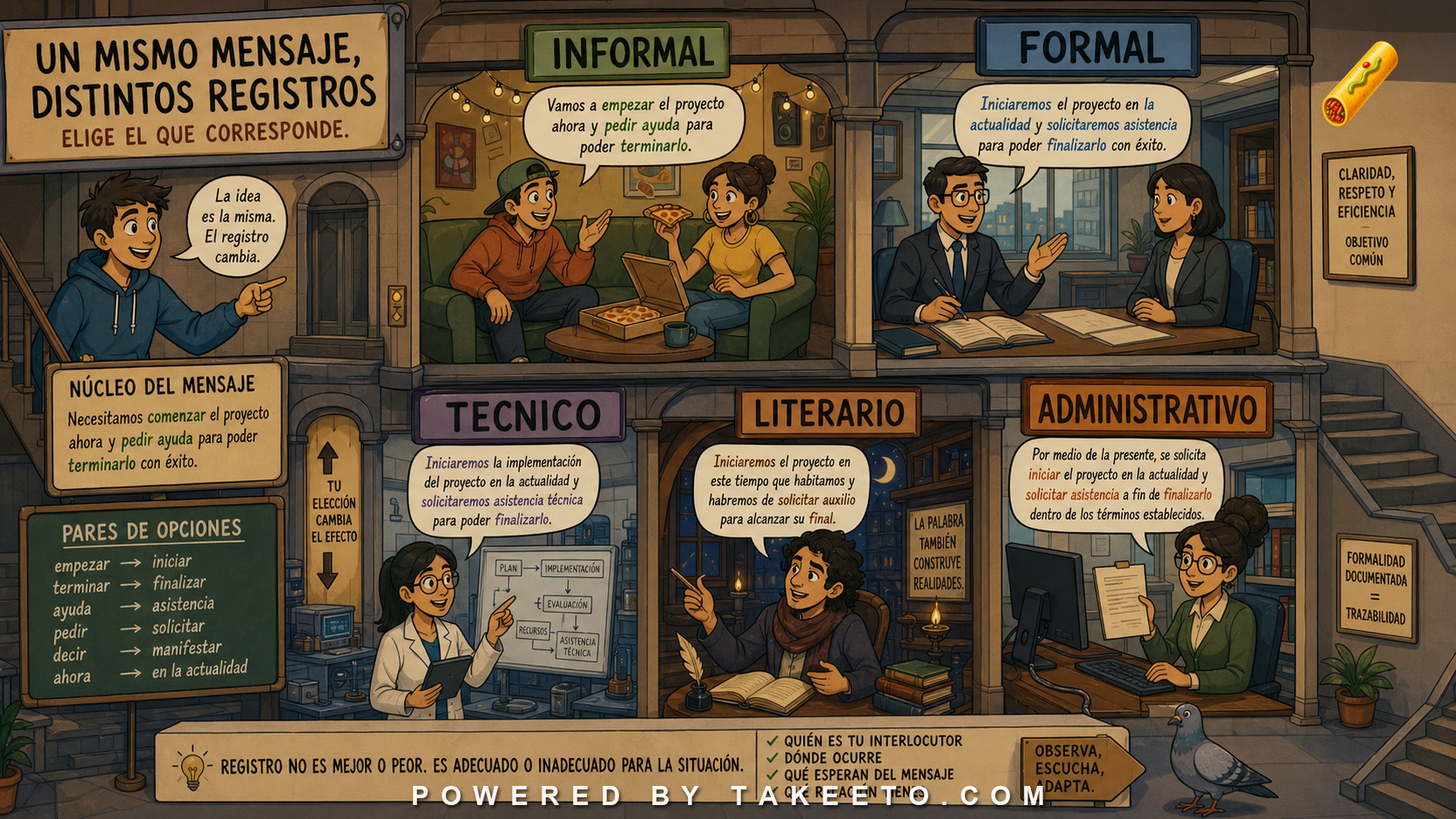
The reader can recognize register shifts and choose vocabulary appropriate to context.
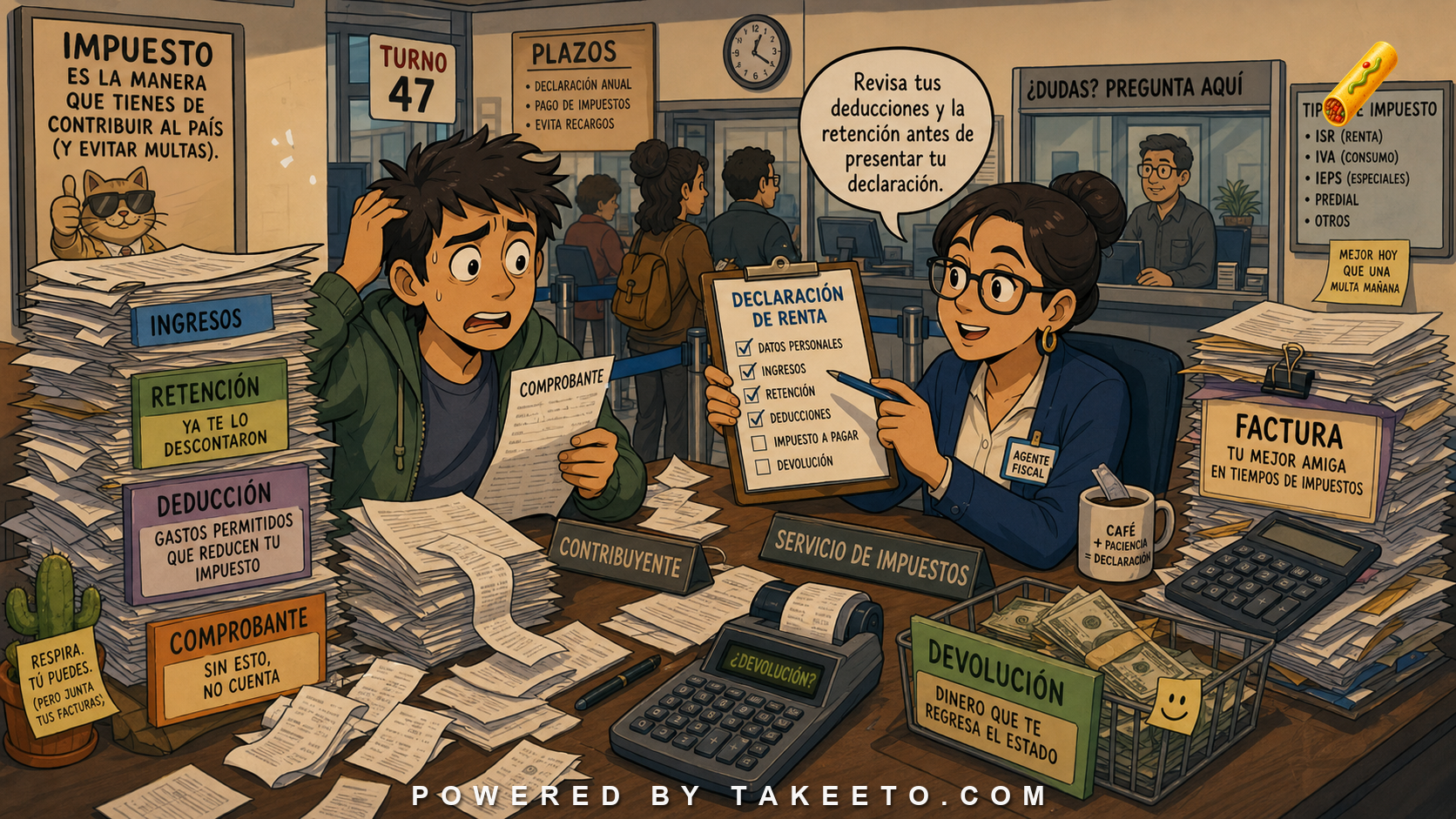
The reader can recognize basic tax vocabulary across Spanish-speaking contexts.
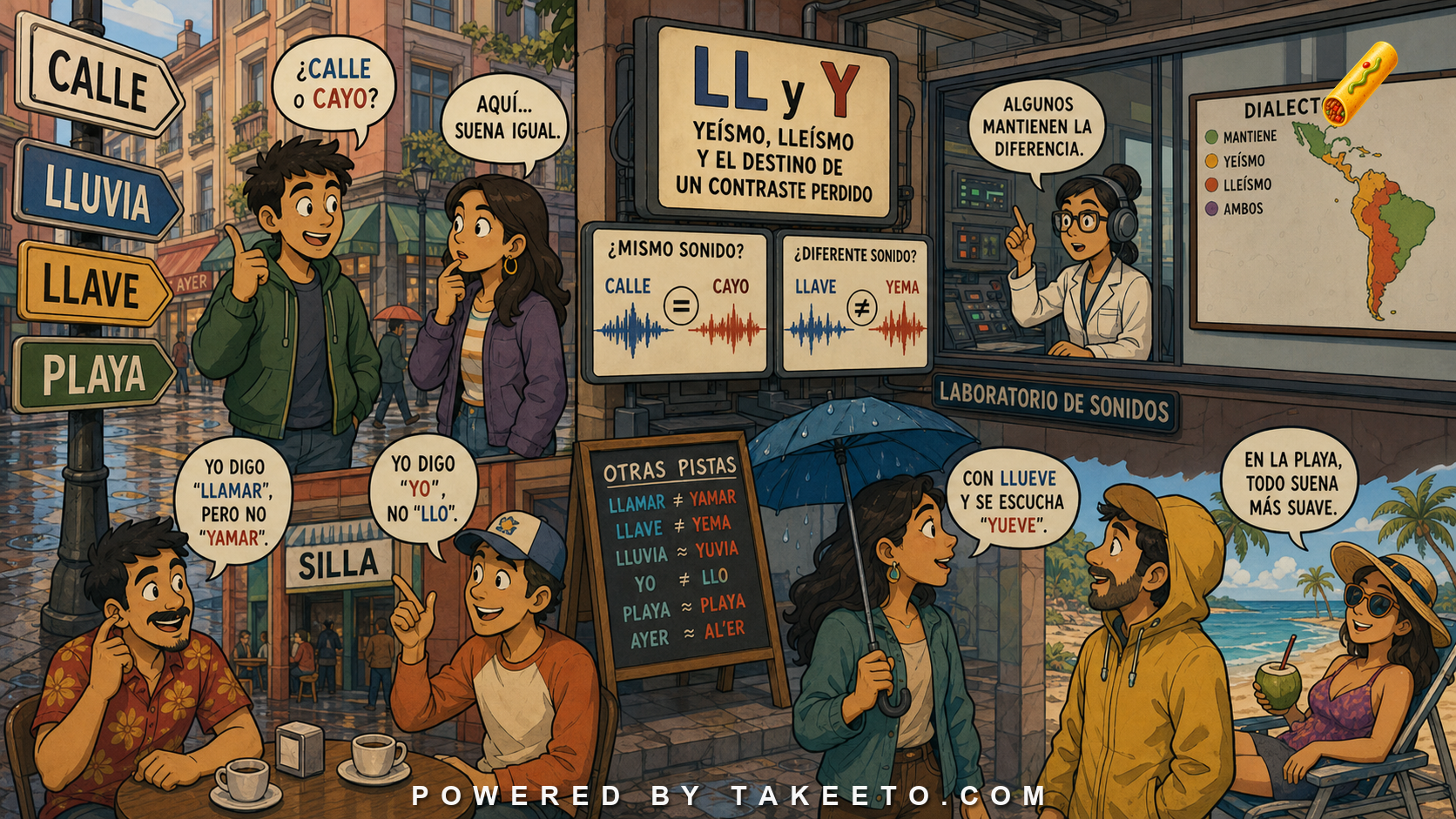
The reader understands why calle and cayó sound alike for many speakers but not all.
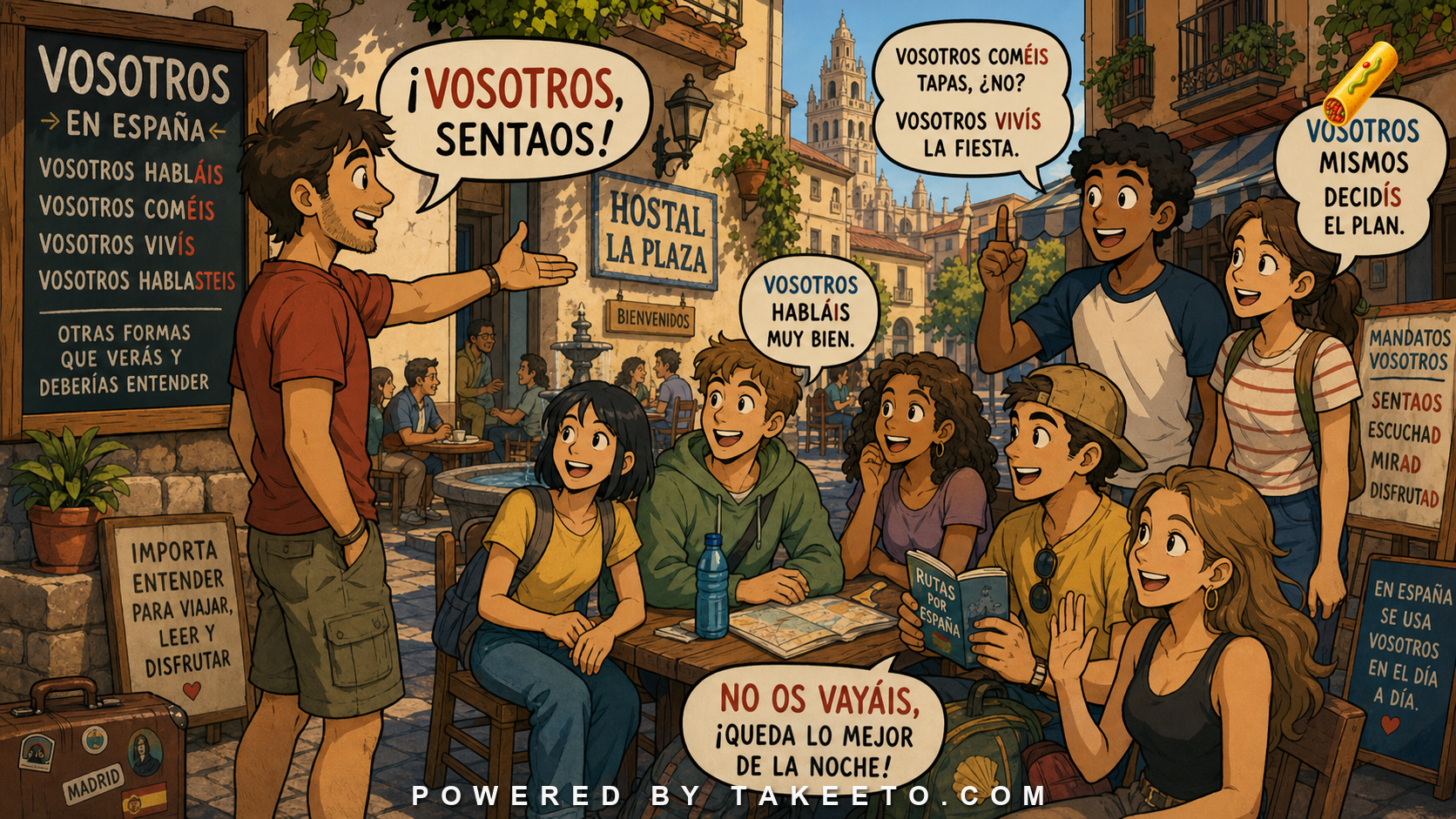
The reader can recognize vosotros forms and understand their place in Spain Spanish.
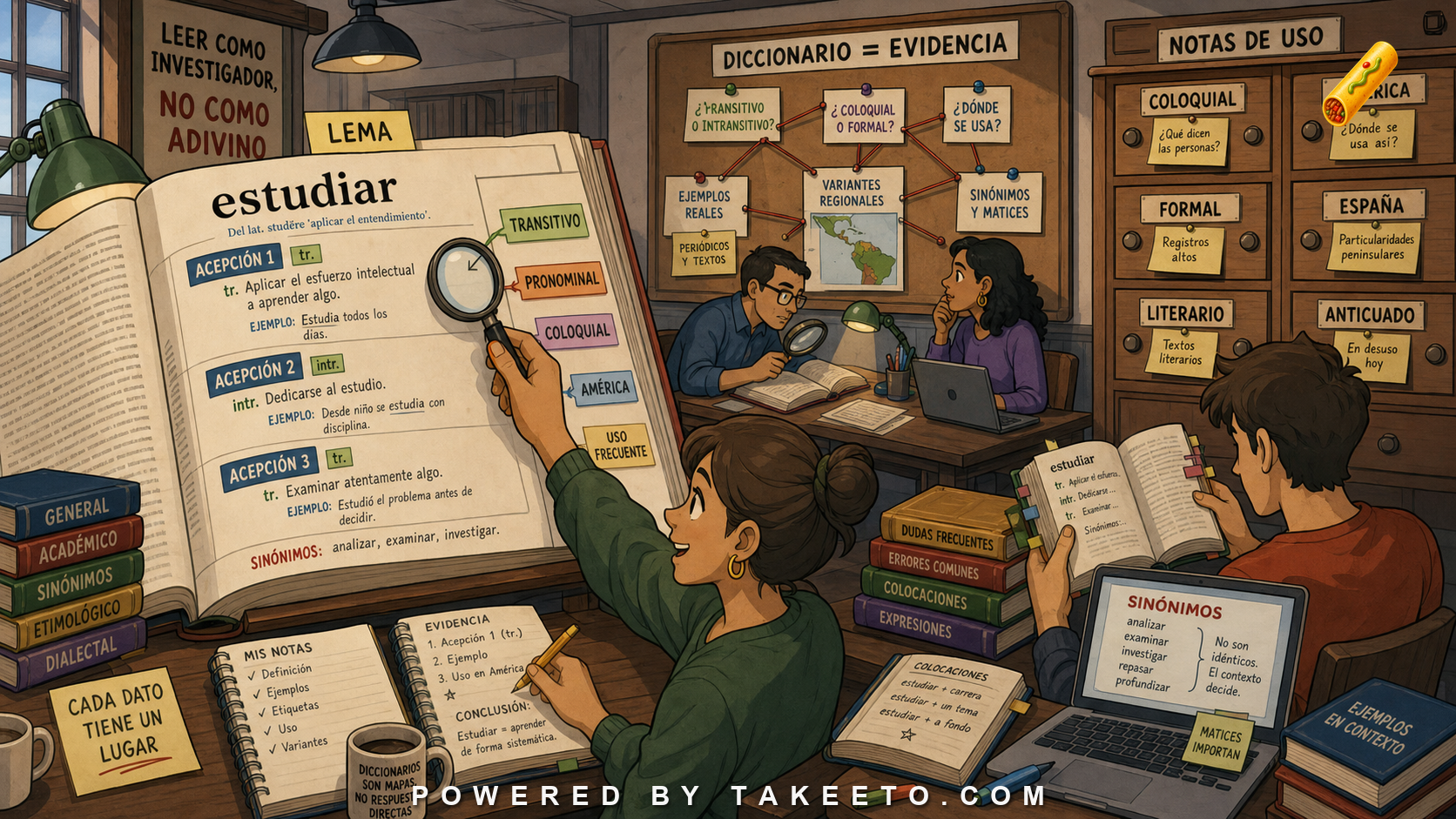
The reader can use Spanish dictionaries as structured evidence rather than answer boxes.
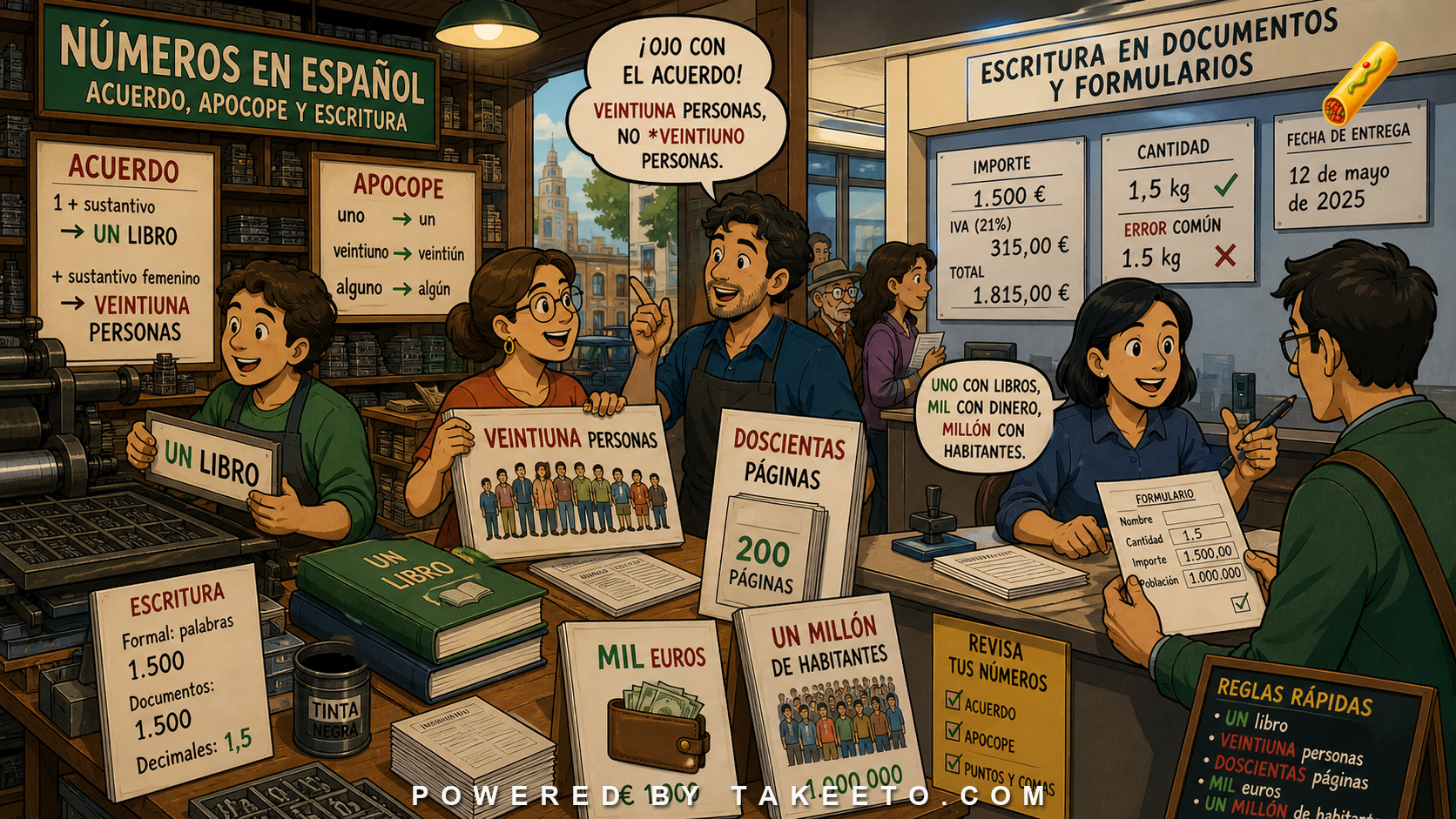
The reader can use cardinal numbers correctly in speech, forms, and formal writing.
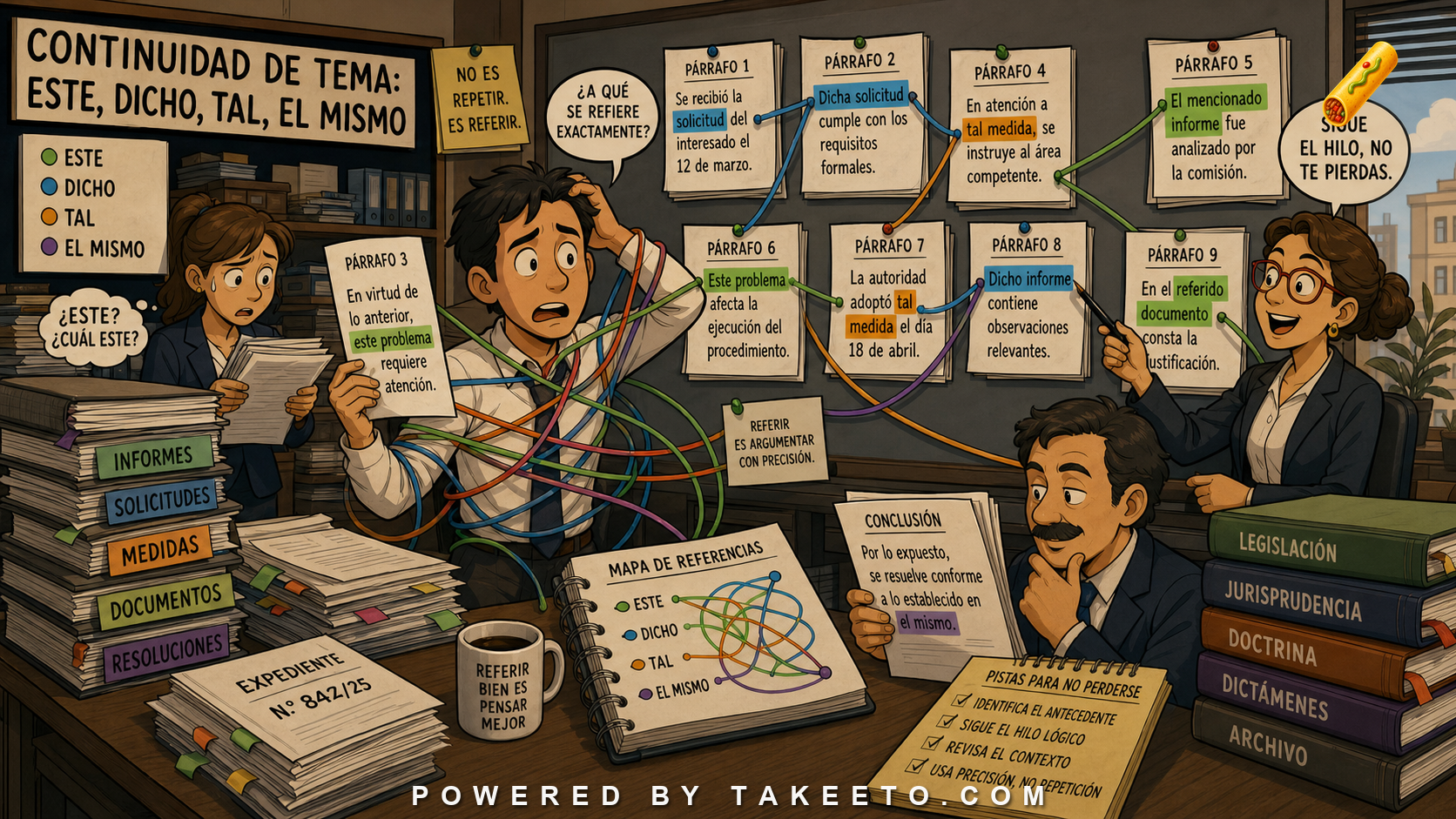
The reader can track reference across formal Spanish paragraphs.
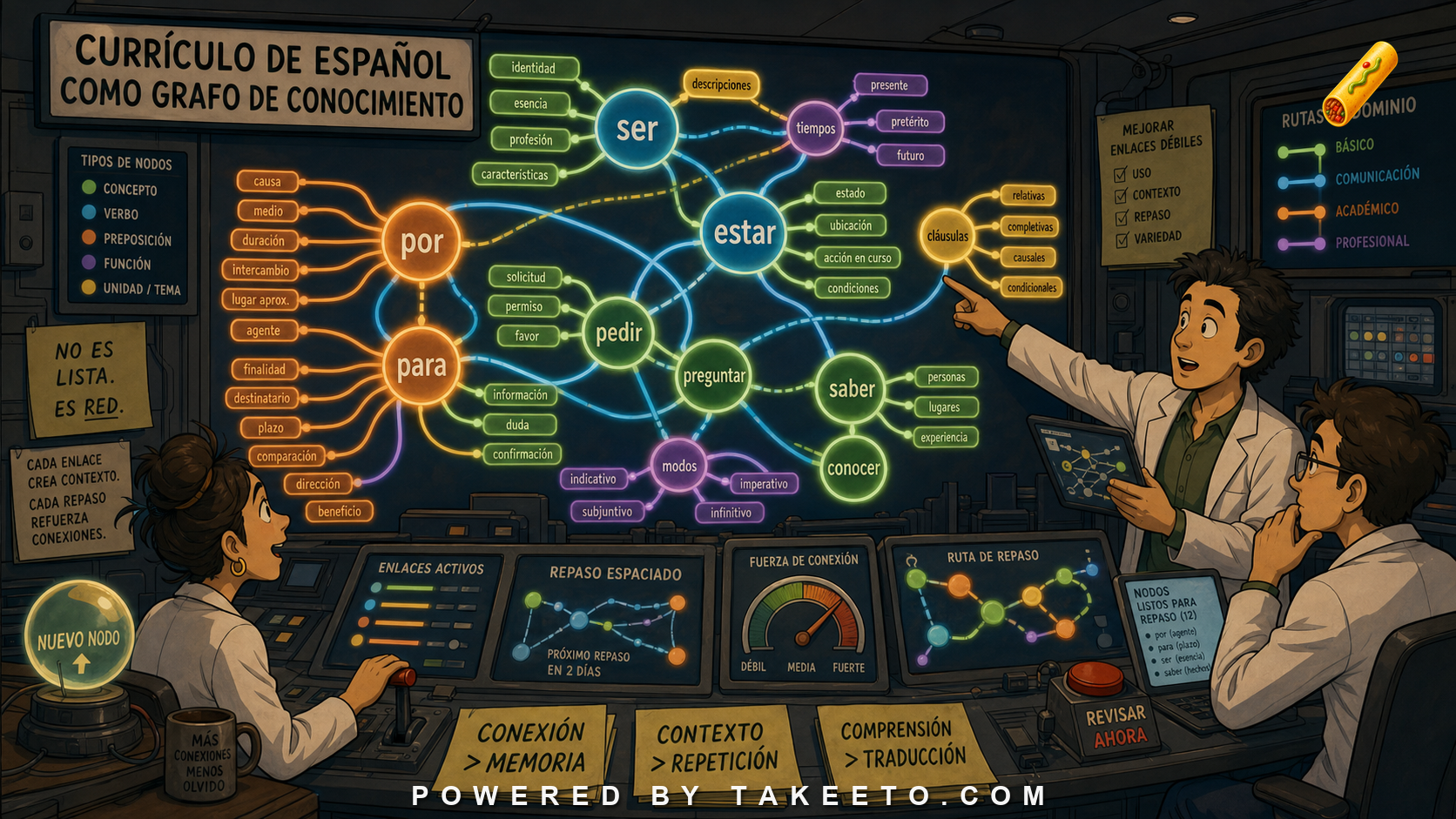
The reader can model Spanish learning items as connected nodes rather than a flat list of words, decks, and lessons.
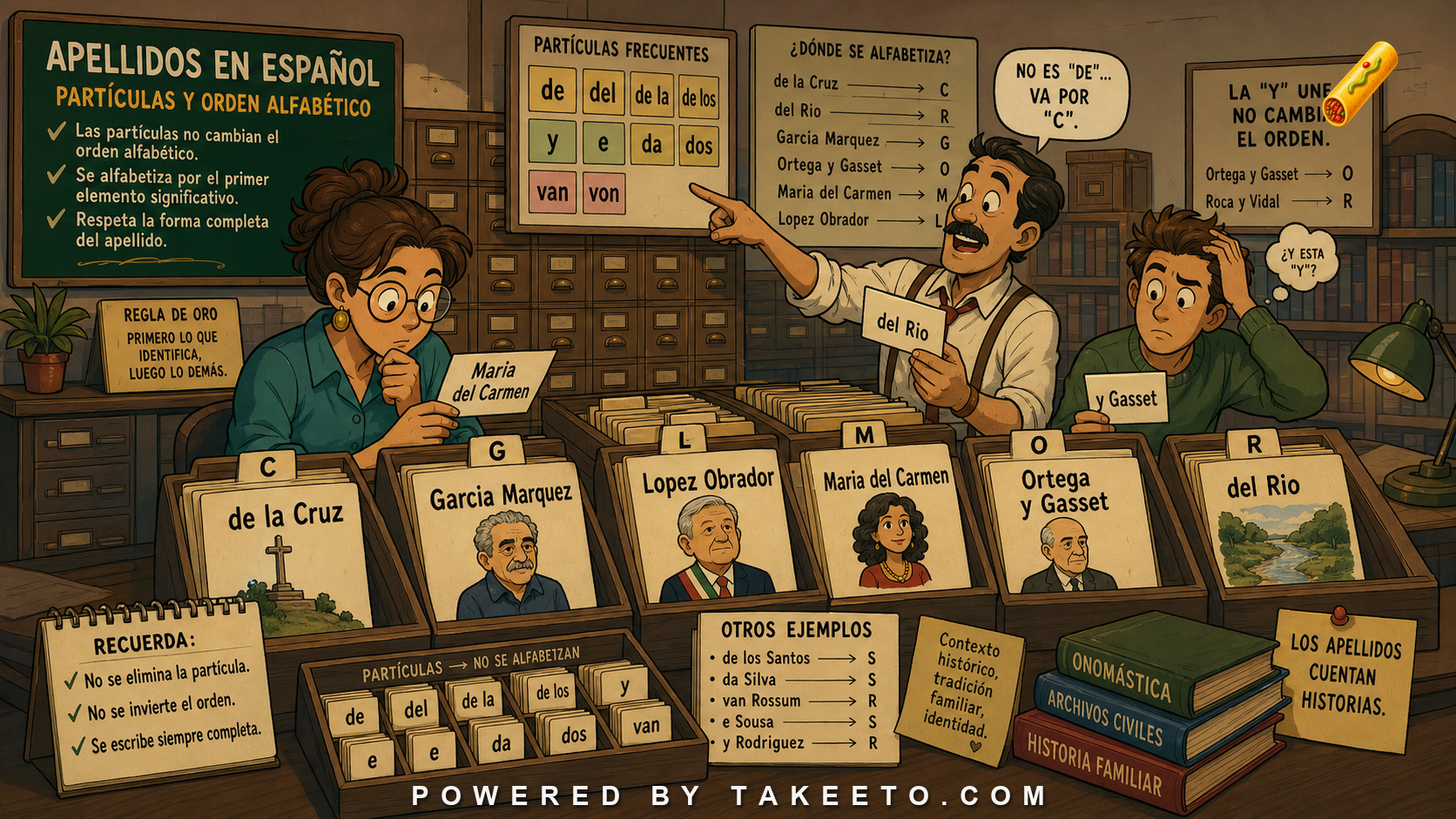
The reader understands surname particles and filing conventions in Spanish-speaking contexts.

The reader can parse Spanish gaming vocabulary and its heavy English contact.
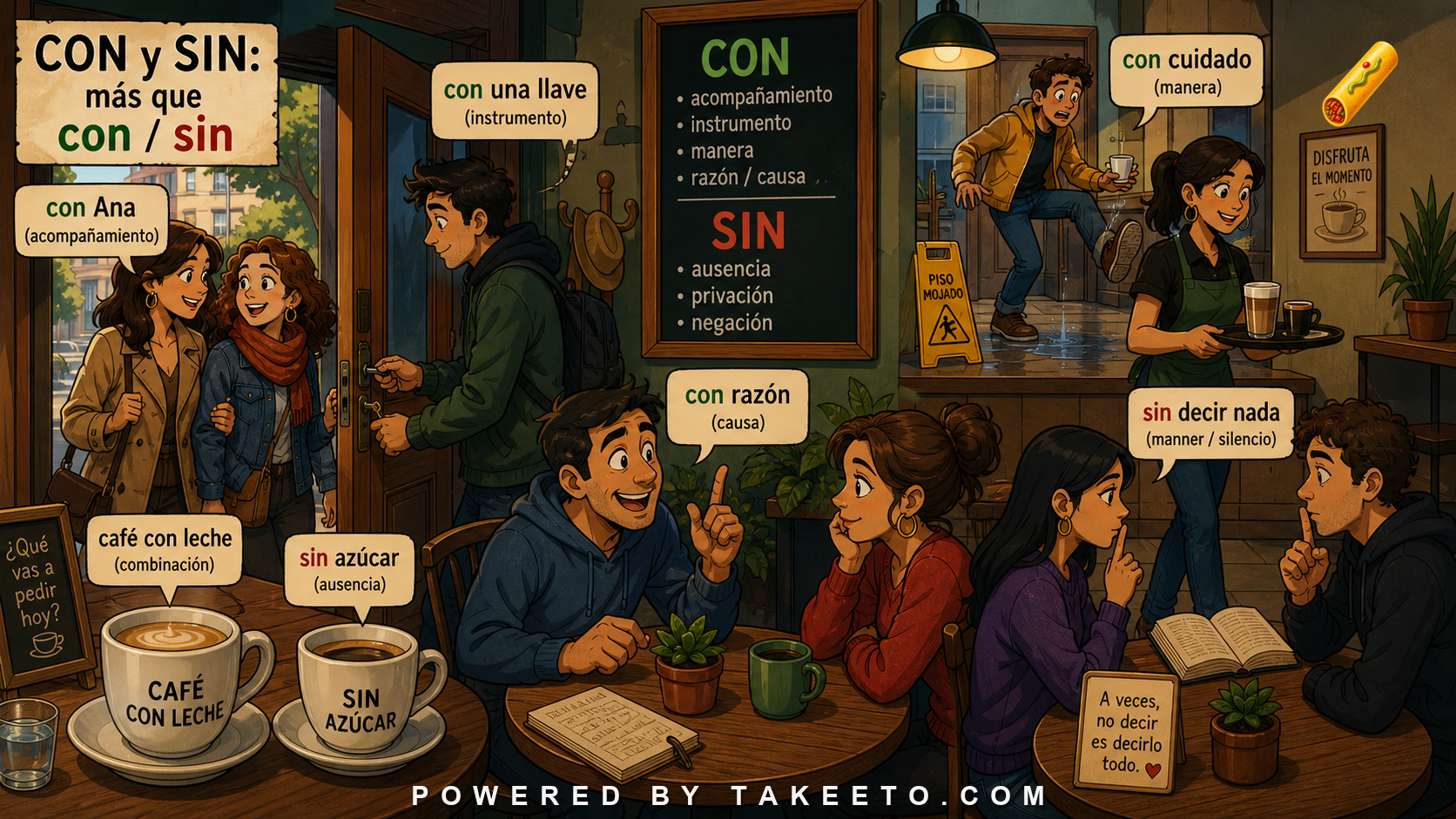
The reader can interpret con/sin as more than "with/without."
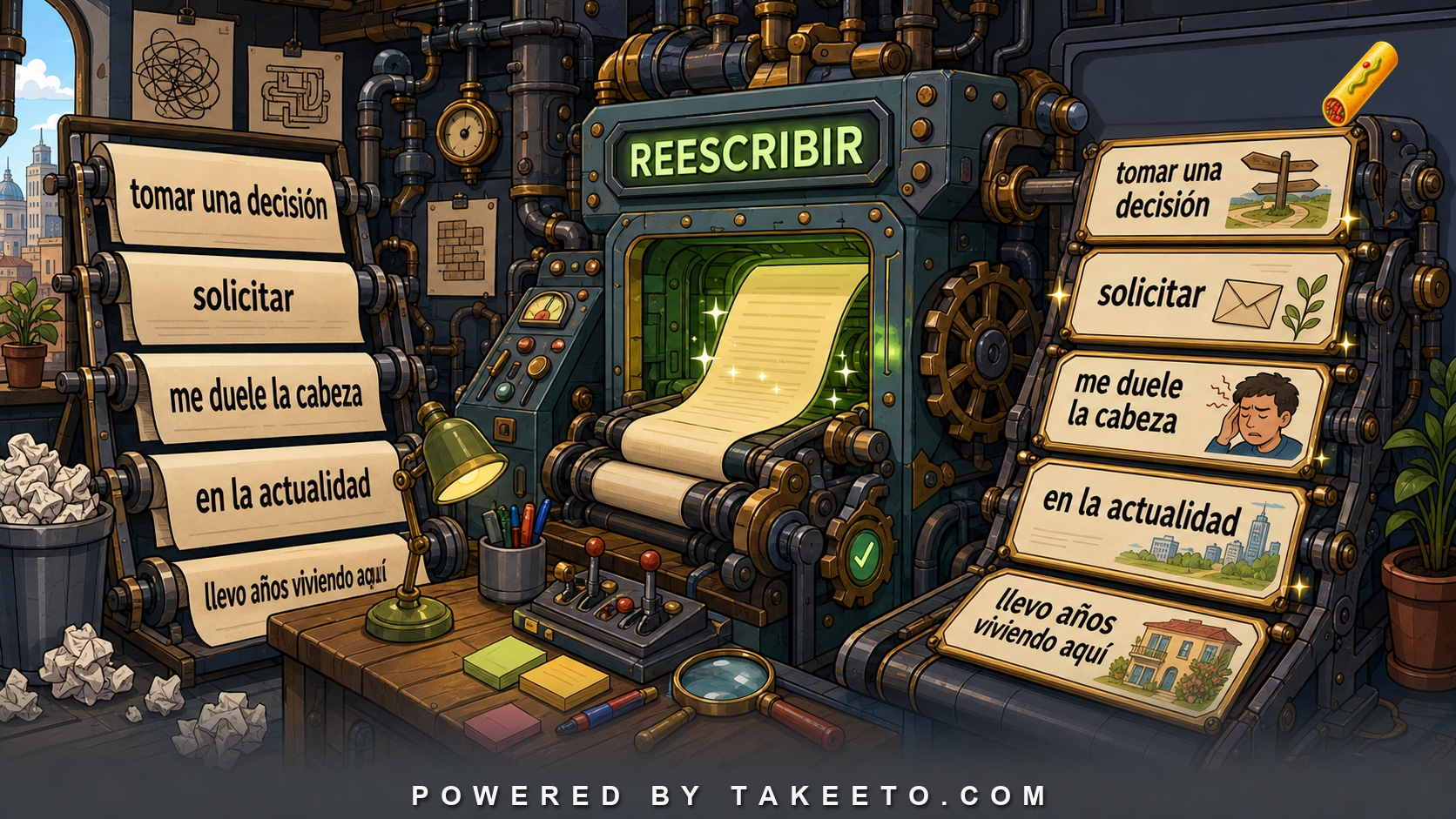
The reader can identify Spanish that is grammatical but shaped too heavily by English syntax.
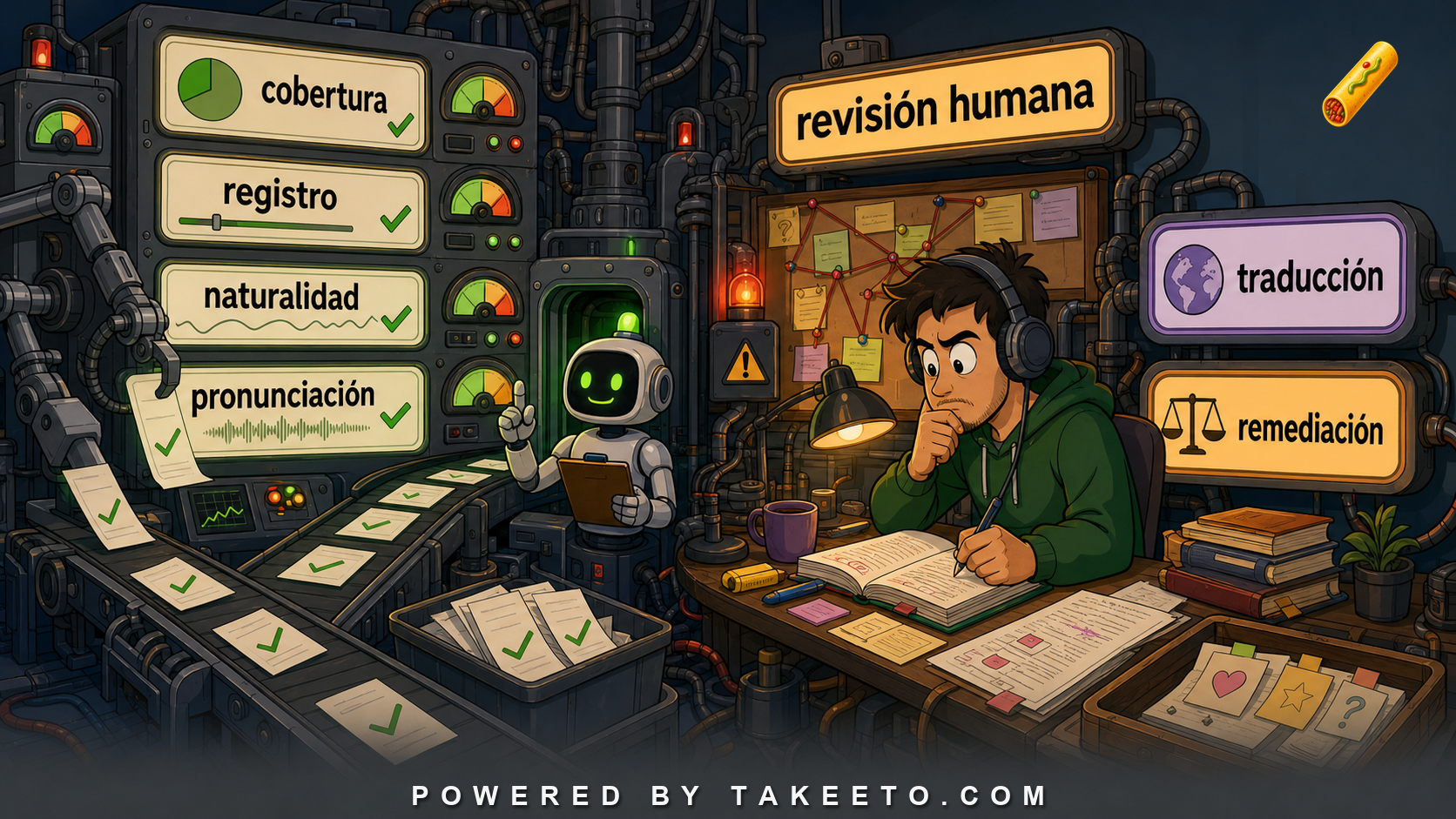
The reader understands the role of human review in language learning materials.
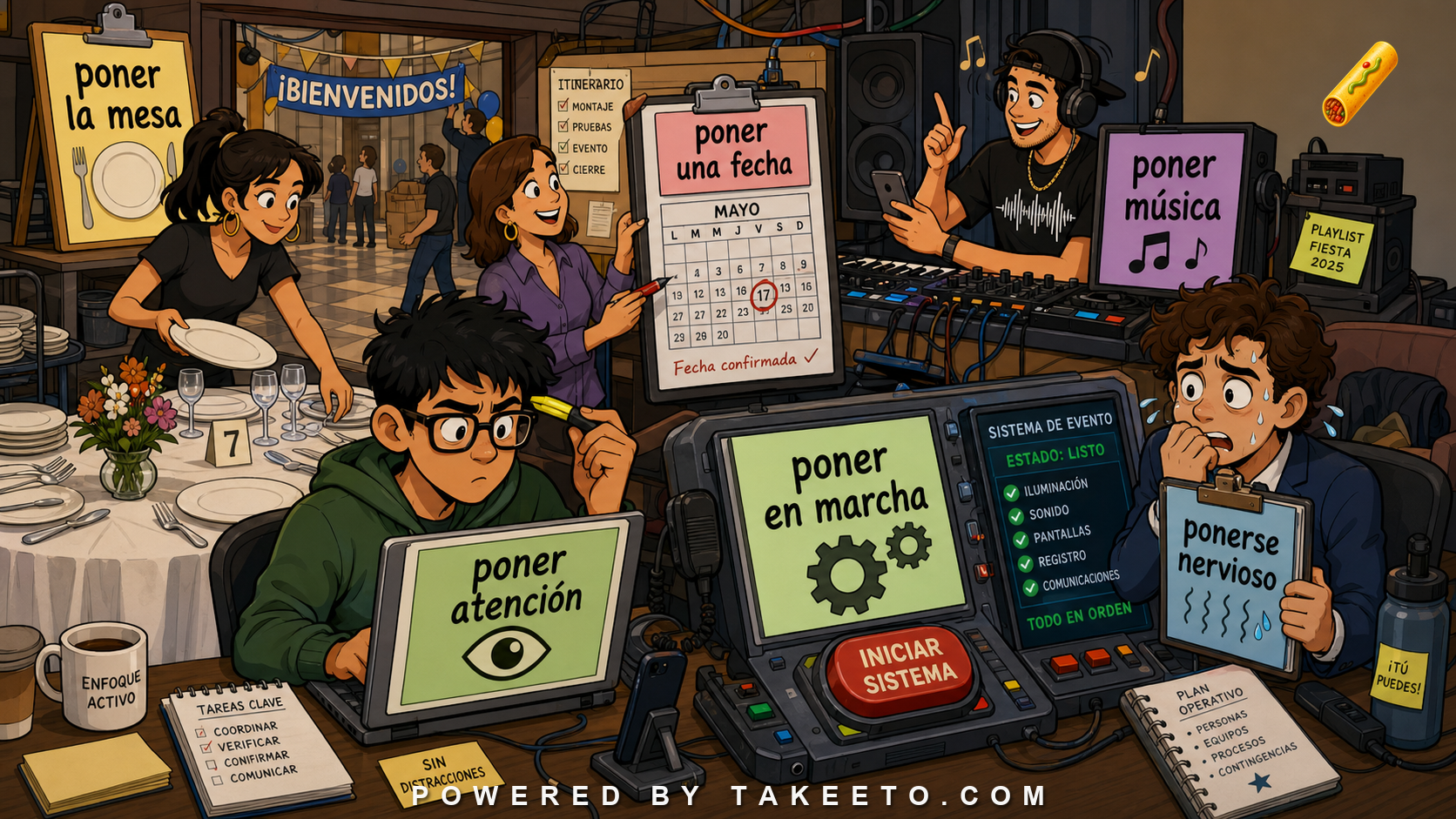
The reader can interpret poner beyond physical placement.

The reader can understand city-planning and municipal Spanish.
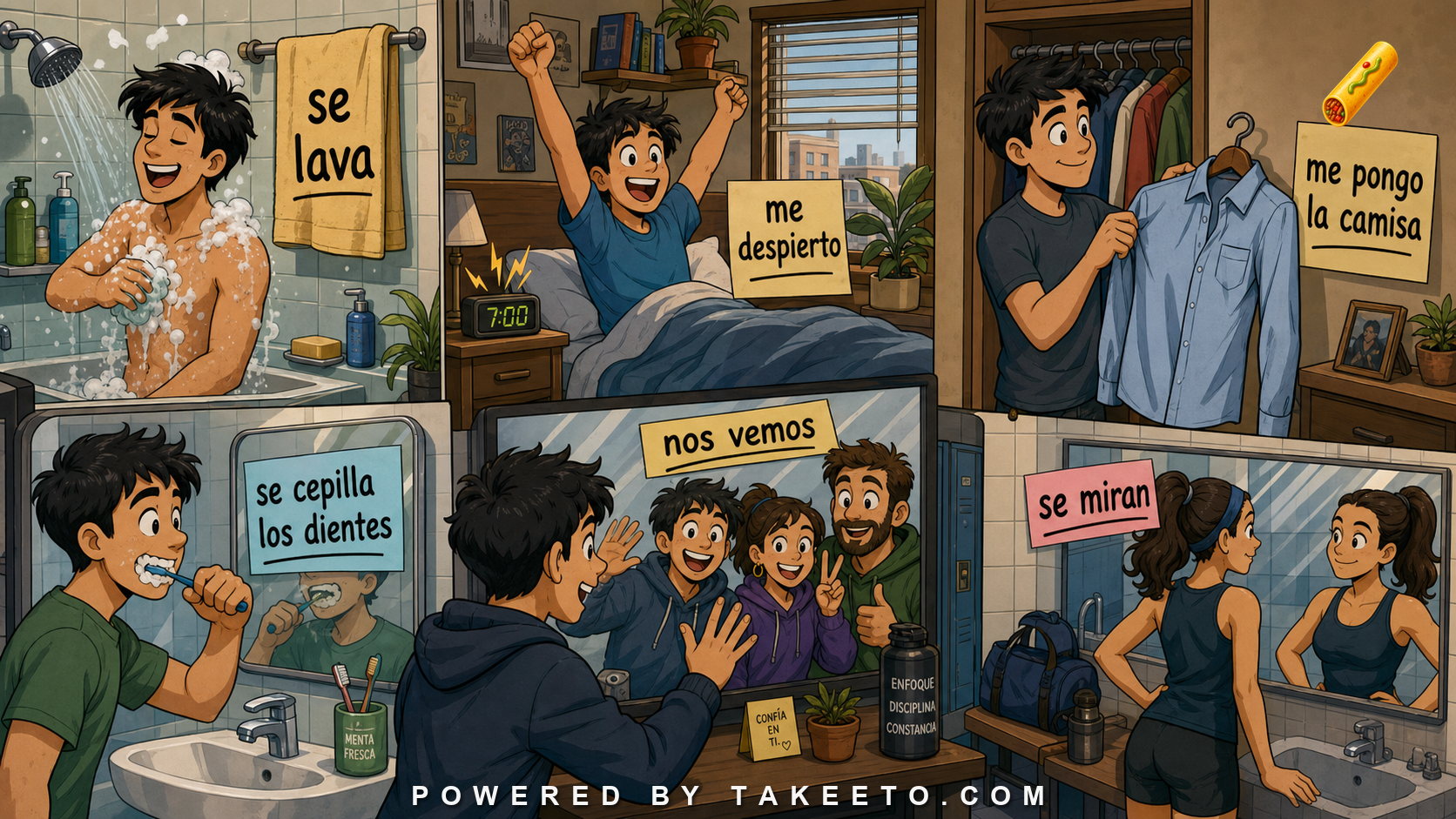
The reader can identify reflexive se and distinguish it from other se uses.
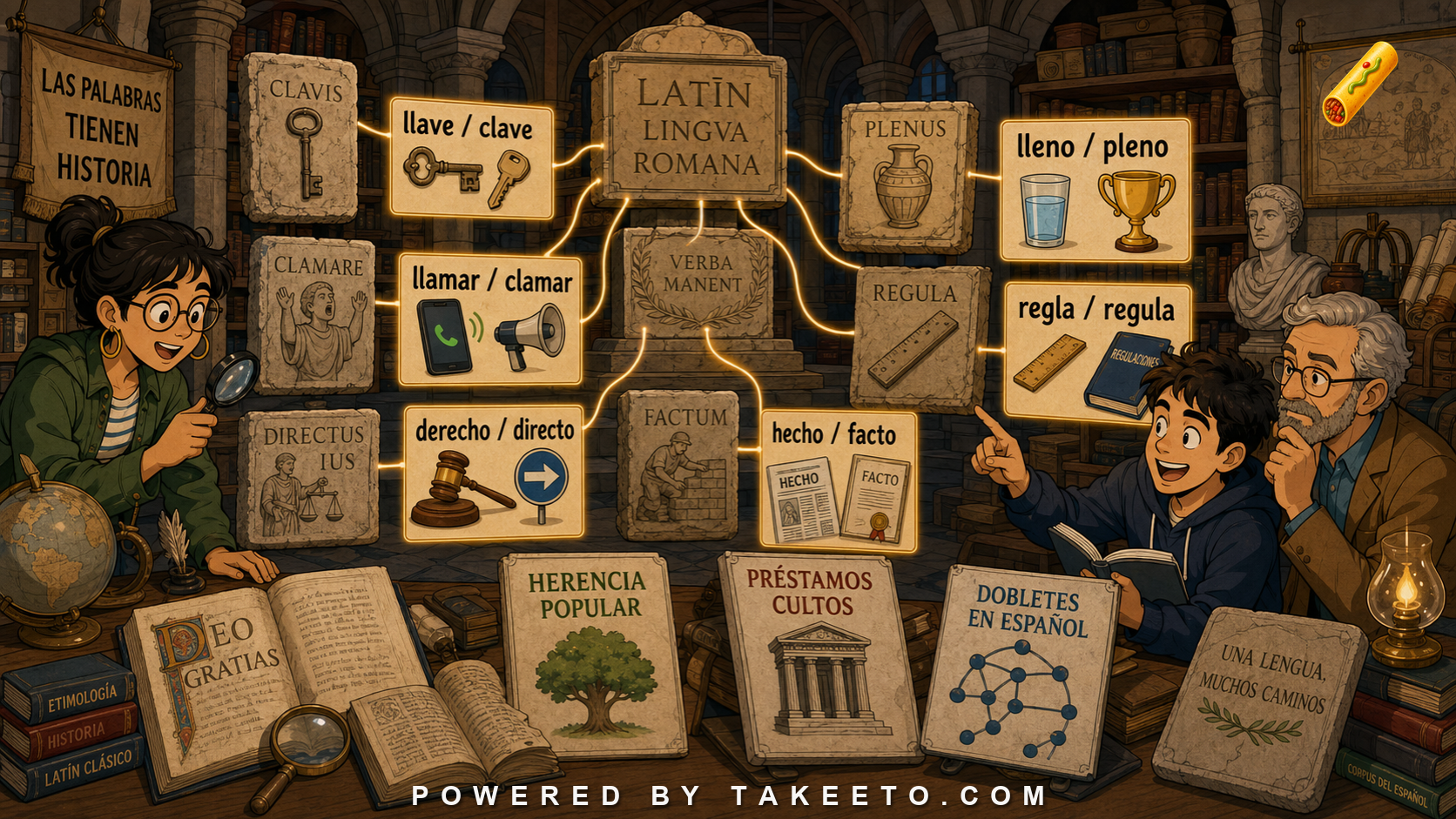
The reader can distinguish inherited words from learned Latinisms and doublets.
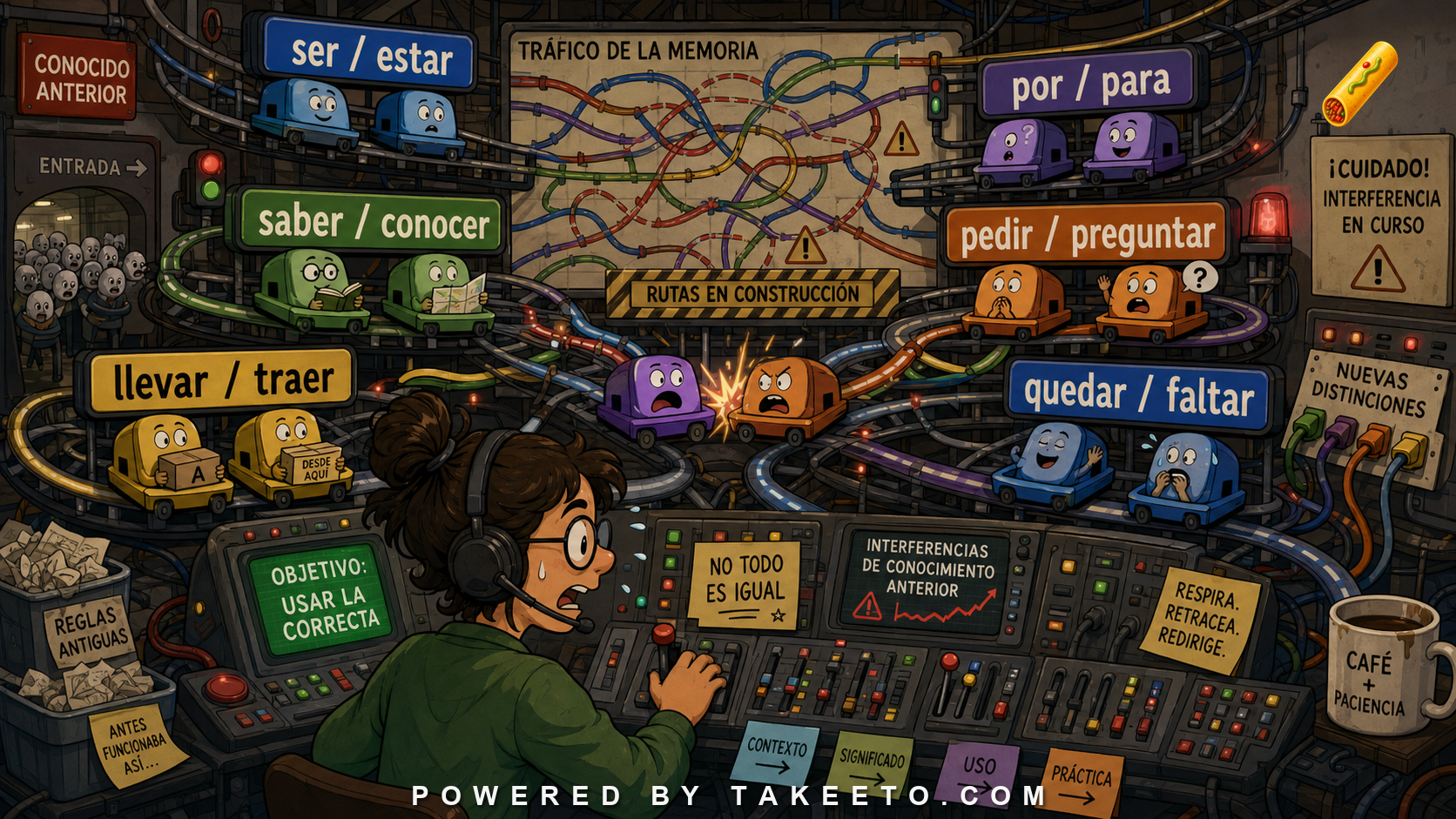
The reader can diagnose interference between similar forms and meanings.
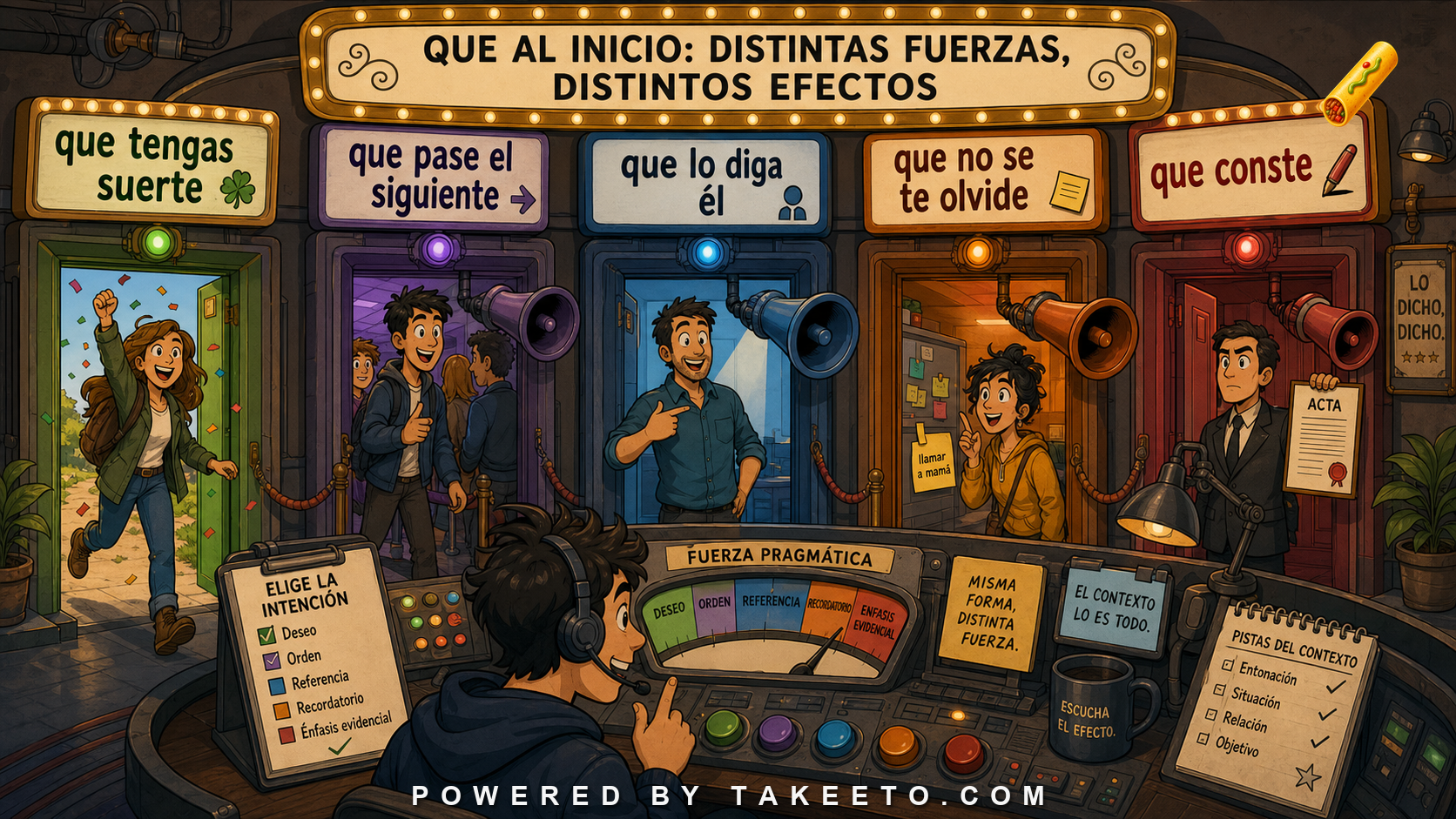
The reader can interpret independent que clauses and their pragmatic force.
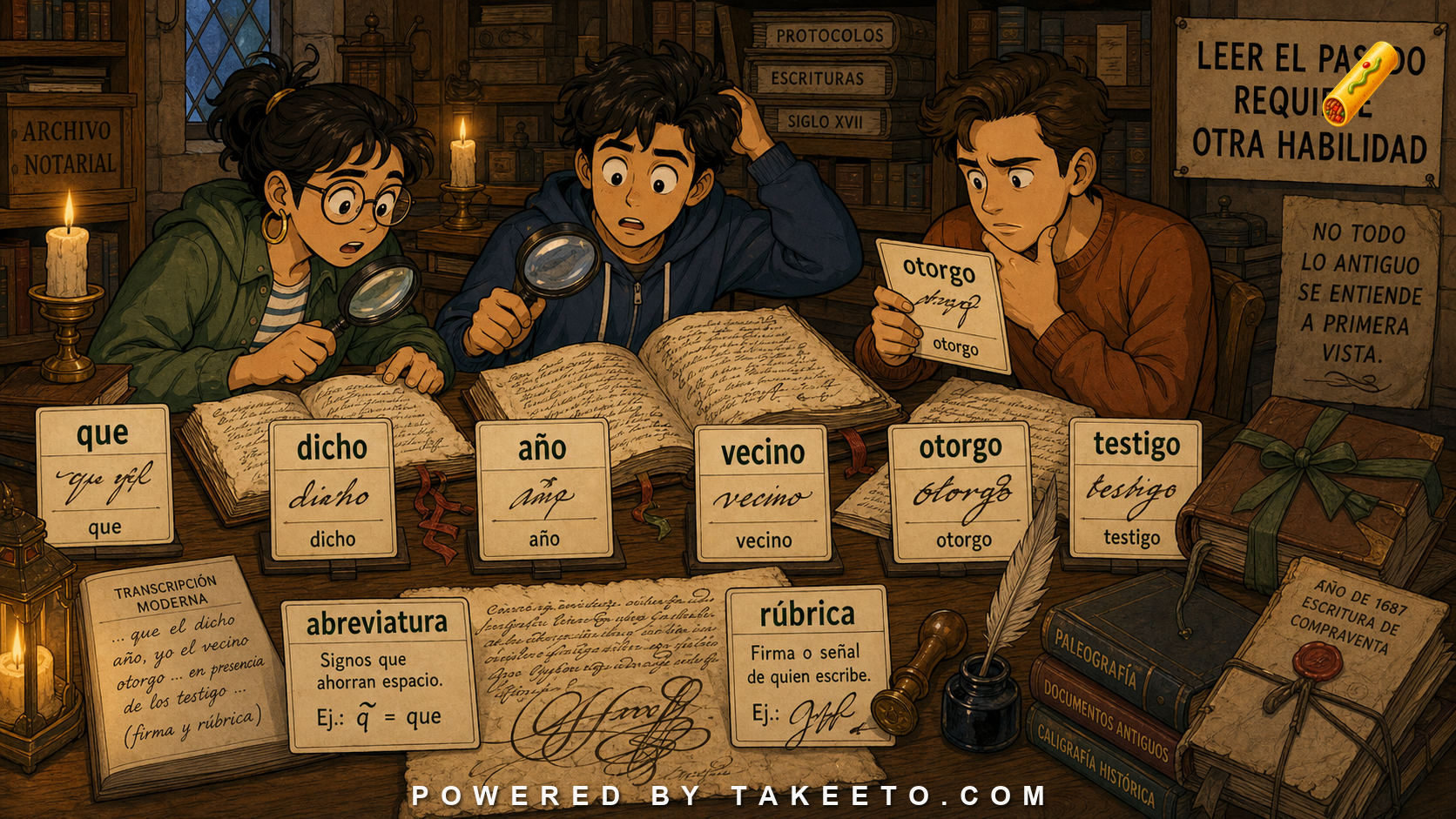
The reader understands why older handwritten Spanish requires separate skills.
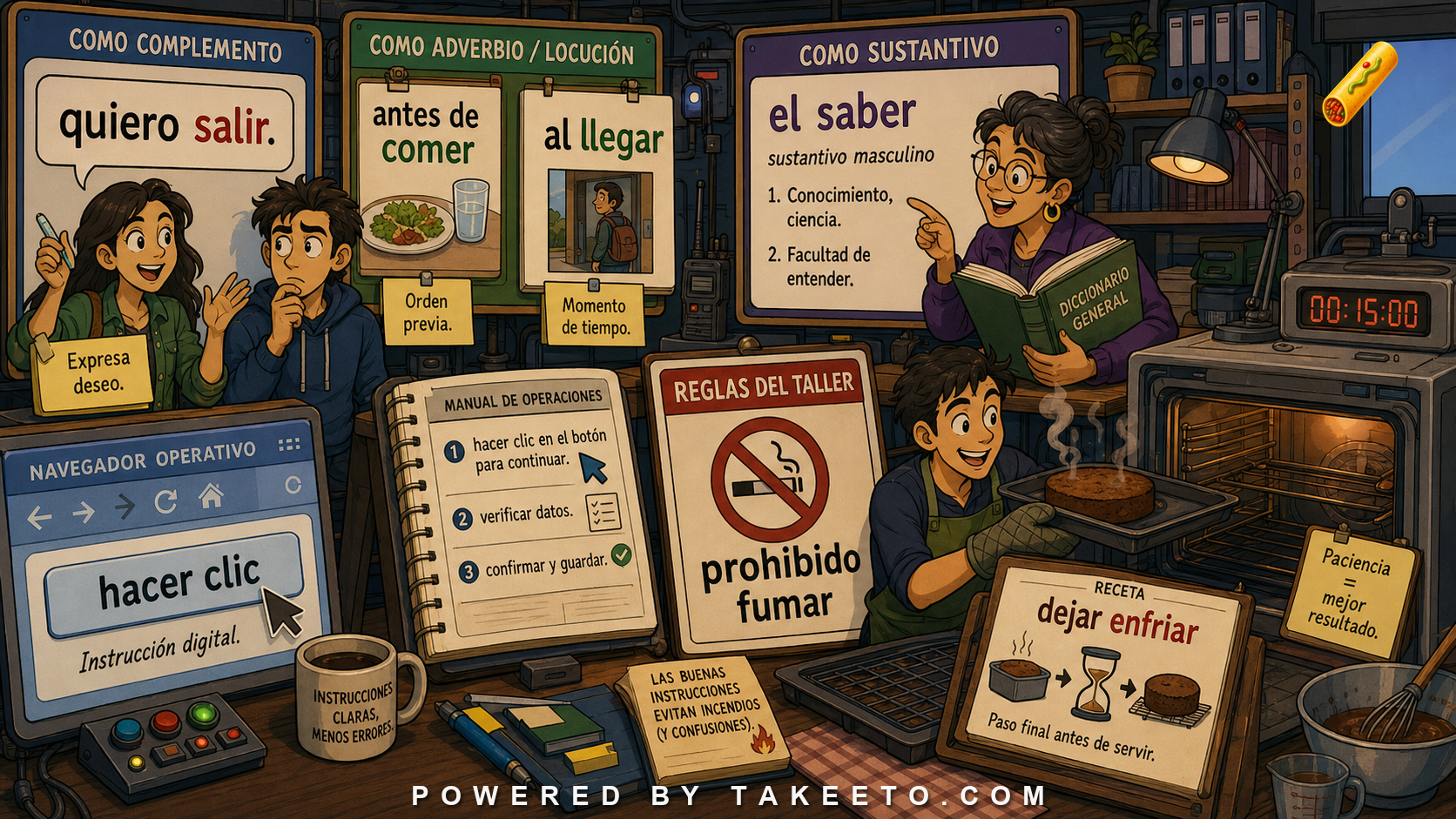
The reader can interpret infinitives in dictionary entries, instructions, complements, and nominalized uses.
The reader can read Spanish fiction with attention to tense, viewpoint, and style.
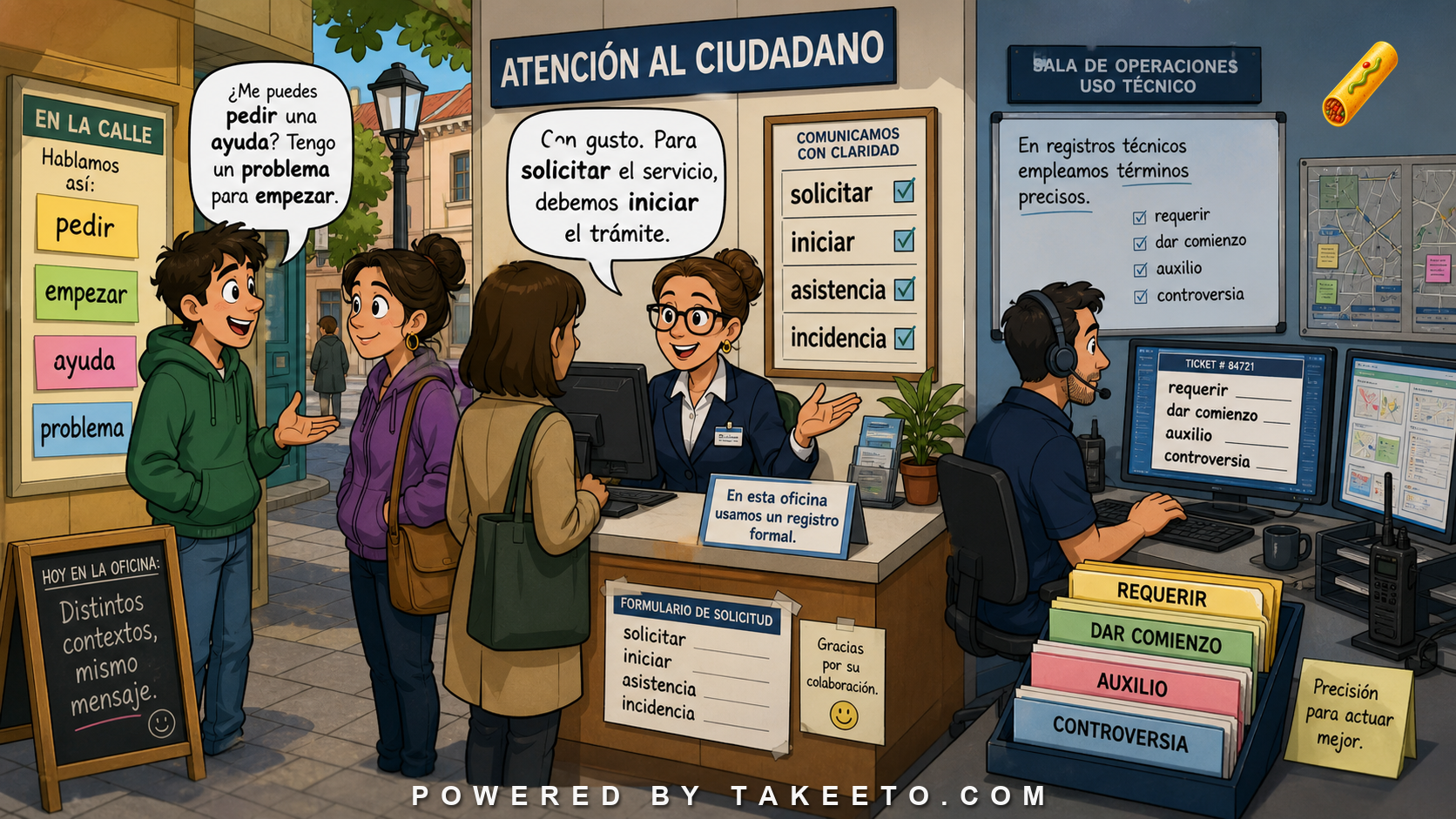
The reader can choose vocabulary by register rather than relying on one translation.
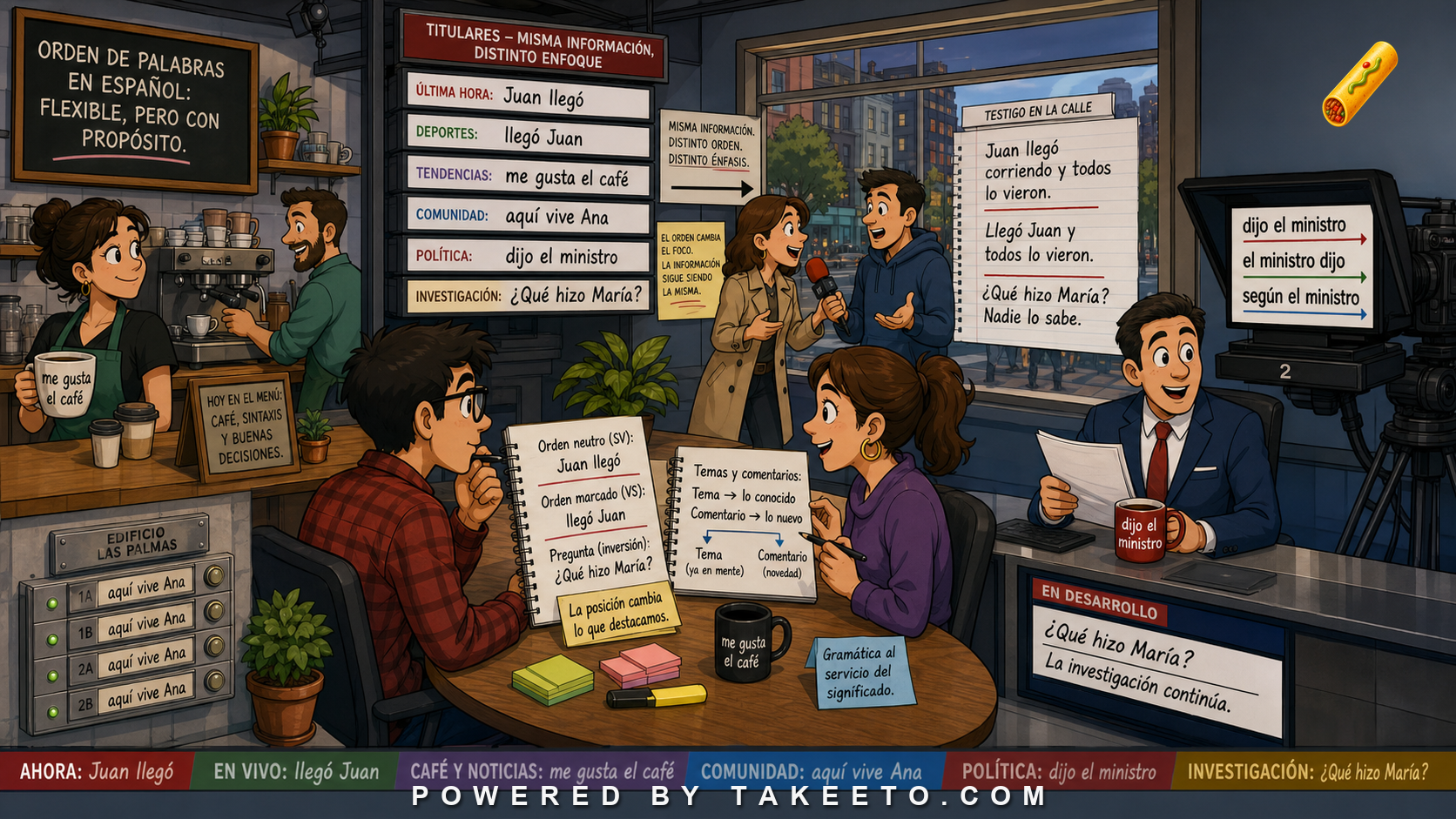
The reader understands Spanish word order as flexible but motivated by grammar and information flow.
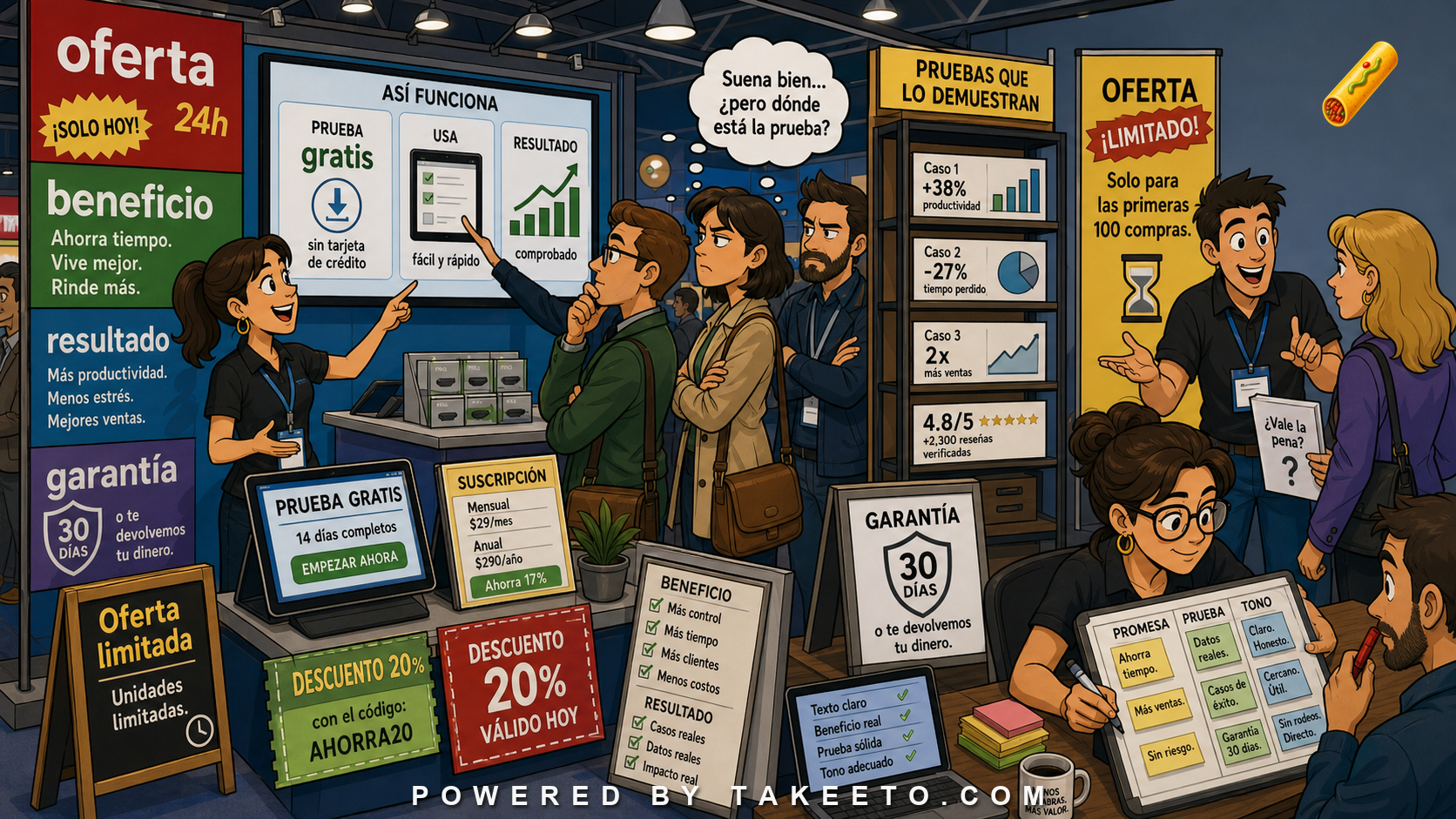
The reader can evaluate Spanish marketing copy for clarity, register, and evidence.

The reader can predict many noun genders while recognizing lexical and semantic exceptions.
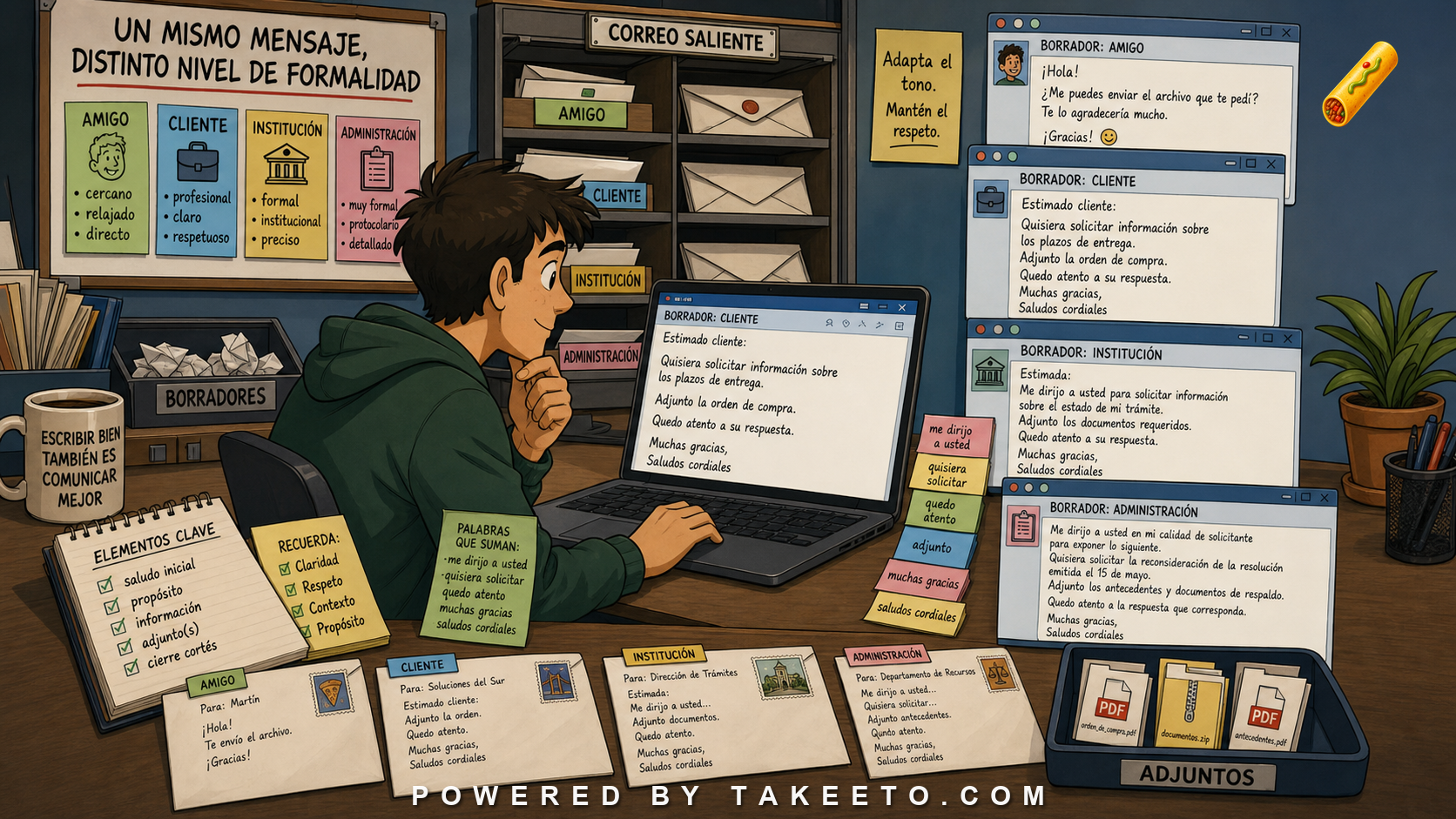
The reader can write Spanish emails with appropriate structure and register.
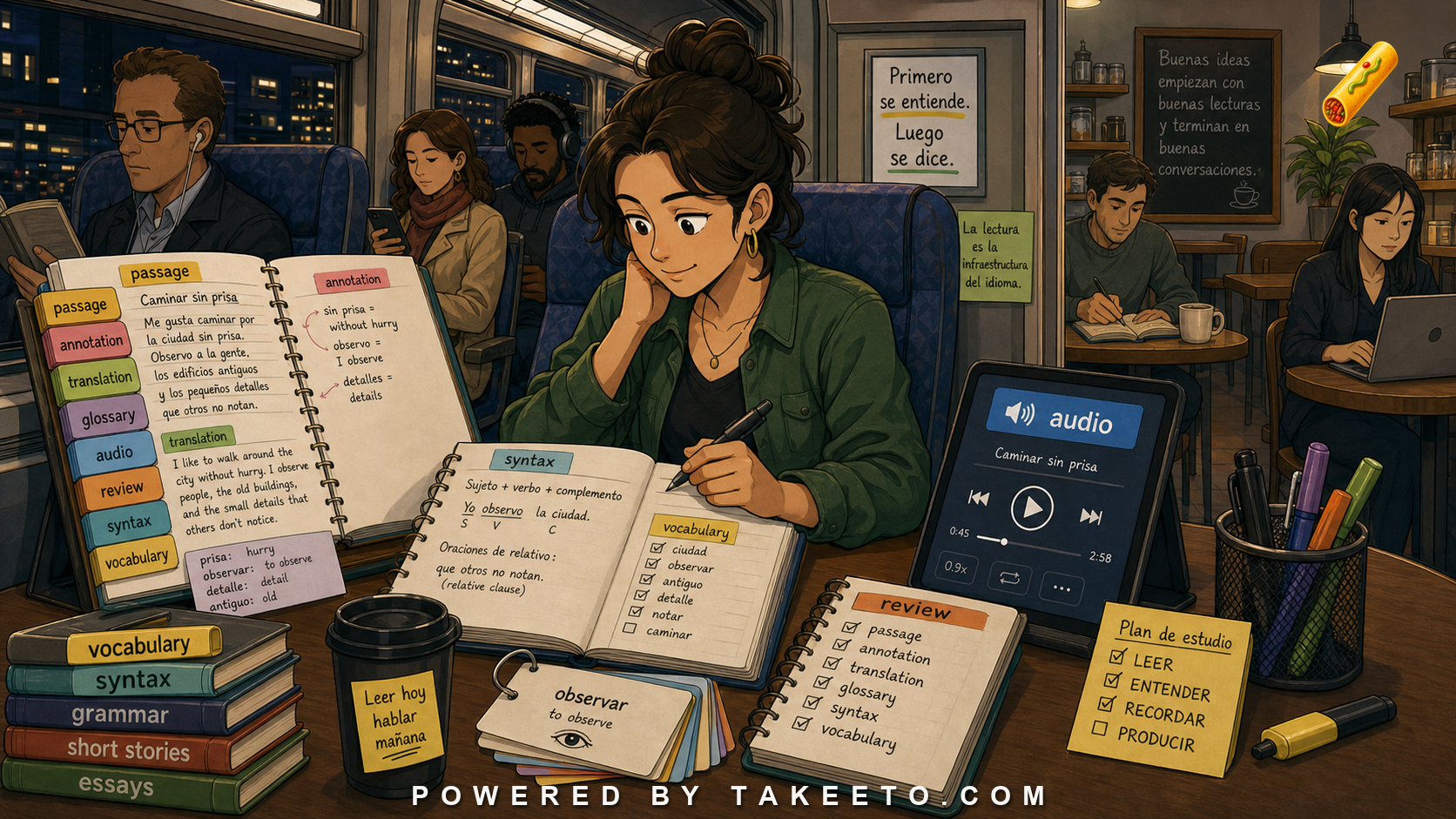
The reader understands reading as a serious foundation for grammar, vocabulary, discourse, and later production rather than passive avoidance of speaking.
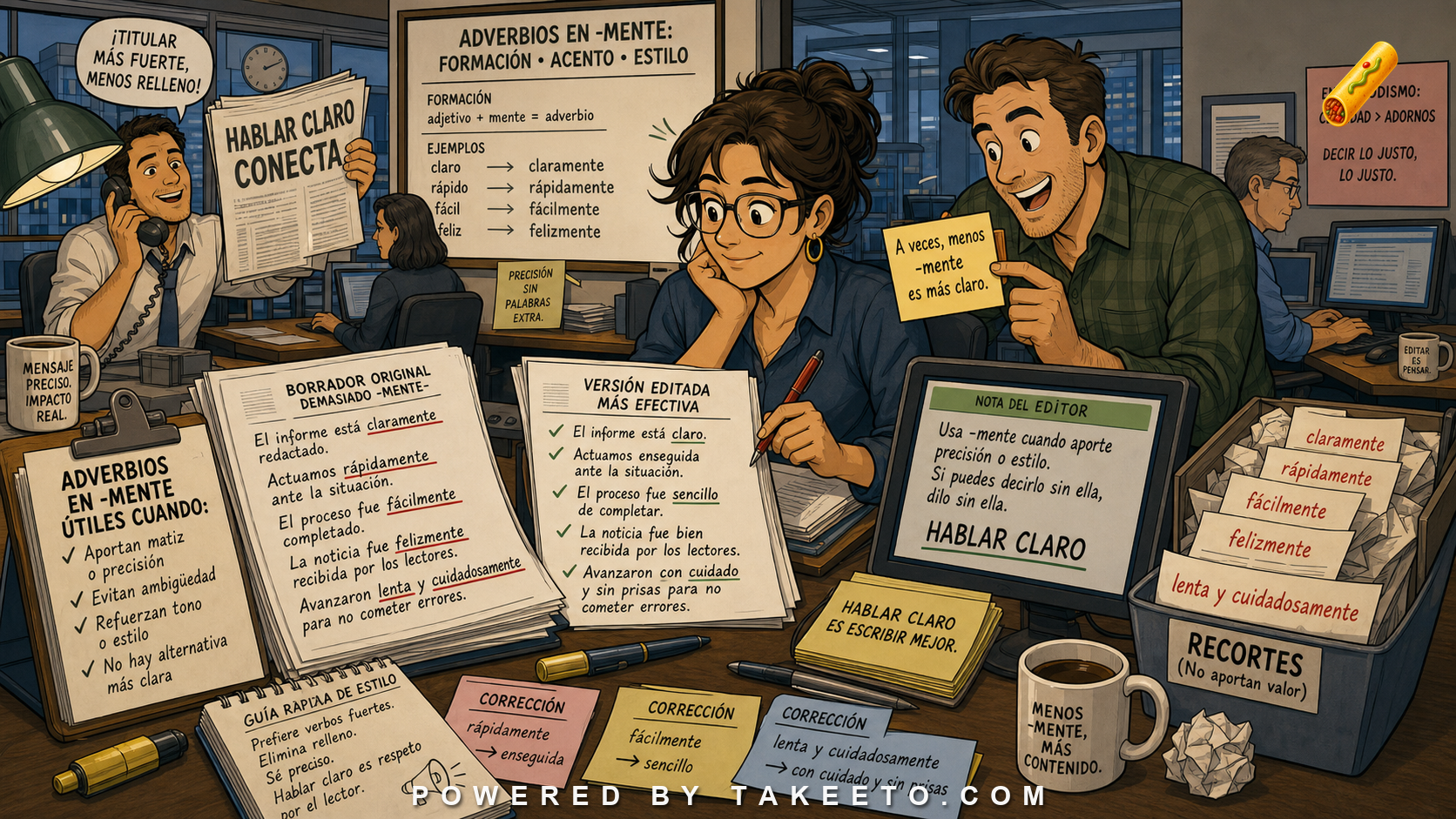
The reader can form -mente adverbs and understand their written-register weight.
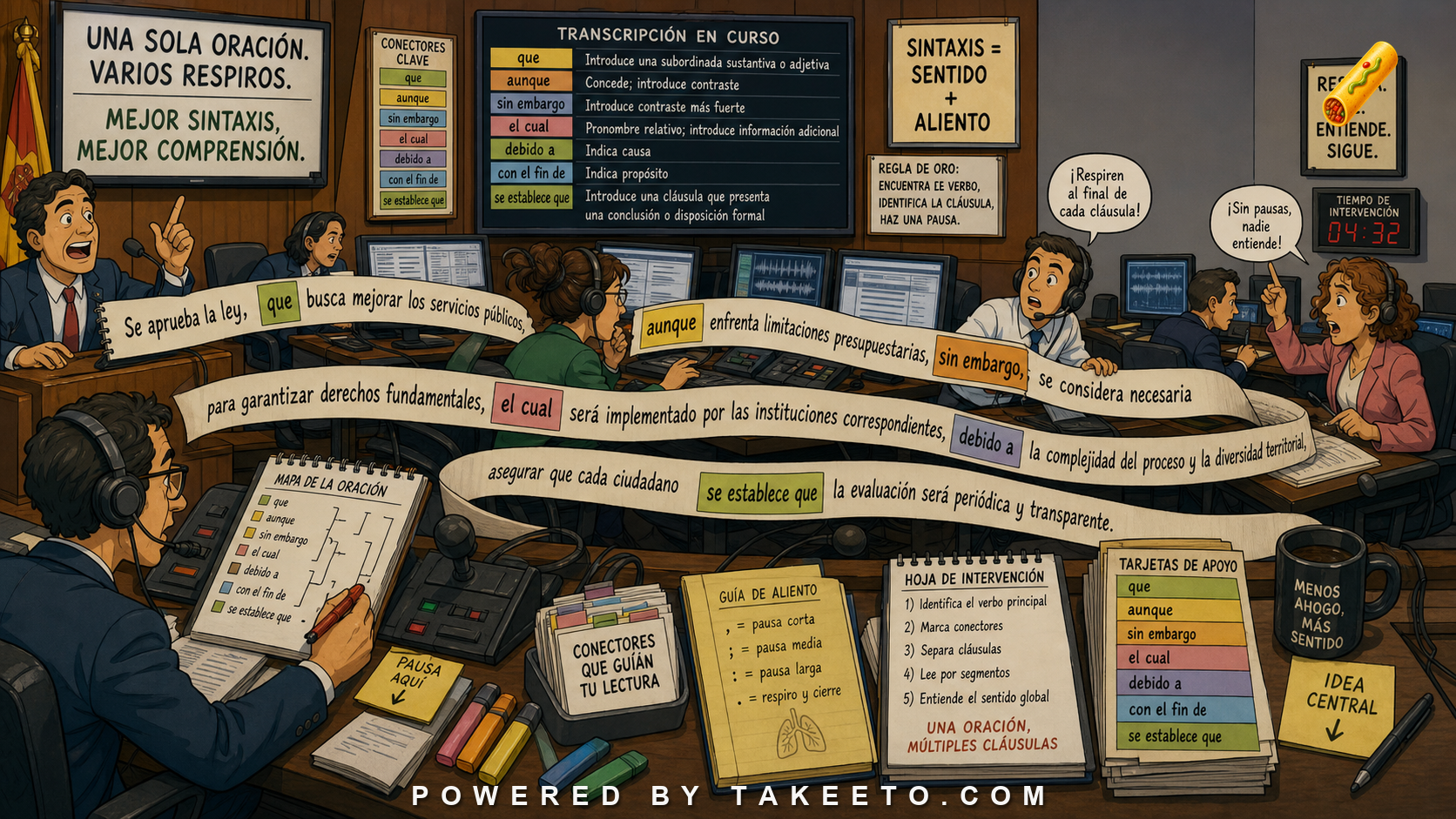
The reader can read long Spanish sentences by identifying clause structure.
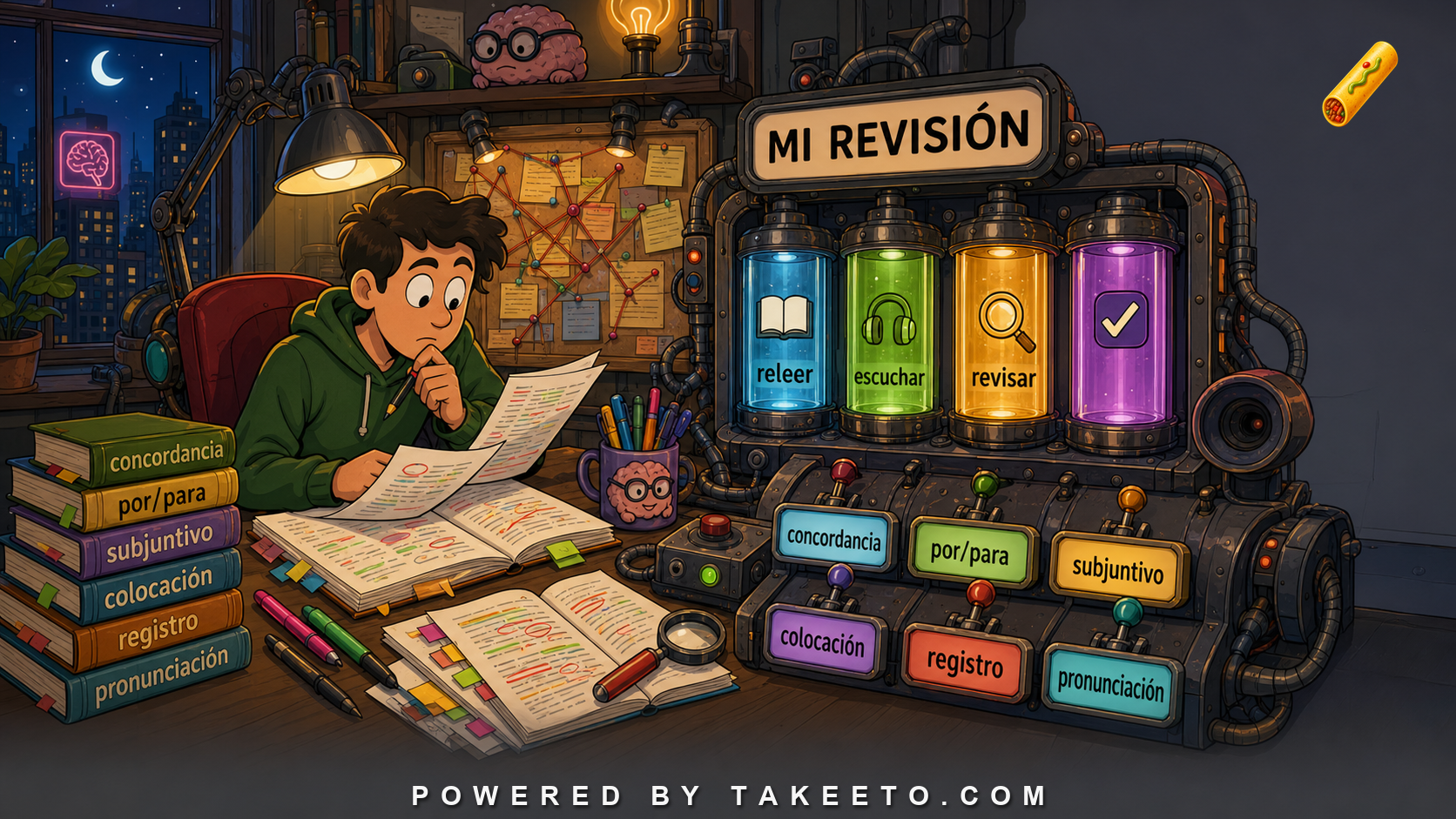
The reader can review their Spanish for structure, naturalness, and register.
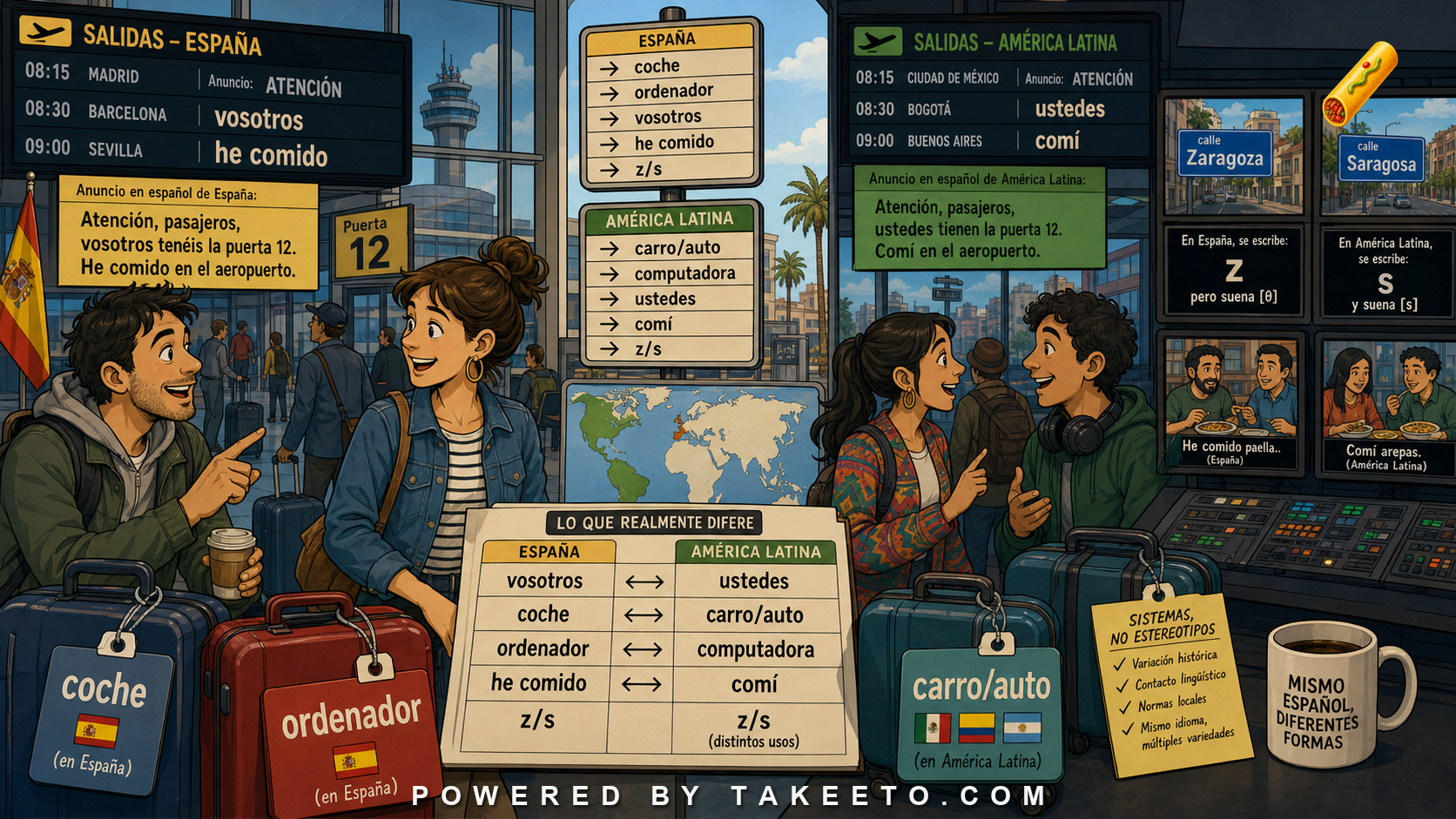
The reader can separate real systemic differences from stereotypes.
The reader can read public education debates in Spanish.
The reader can use neuter relative structures to refer to actions, ideas, facts, and whole propositions.
The reader can evaluate Spanish UI text by function, register, and clarity.
The reader understands how to attach explanations without overwhelming the learner.
The reader can separate auditory perception, intentional listening, and sound production.
The reader can interpret formal sensory descriptions in Spanish without treating every adjective as literal fact.
The reader can distinguish passive se from impersonal se by agreement and noun phrase behavior.
The reader can identify similarities and major divergences between Spanish and Portuguese.
The reader can design highlighted reading that supports both new learning and cumulative review.
The reader can decide between infinitive complements and finite que clauses.
The reader understands inclusive-language debates with grammatical and social precision.
The reader can identify the preterite as a bounded-event tense rather than simply “the past.”
The reader understands why vocabulary must be learned with frequent partners.
The reader can parse nominal structures that carry argument roles.
The reader stops memorizing trigger lists as if they were explanations.
The reader can read Spanish forecasts and weather alerts.
The reader can distinguish un/una as article, numeral, and discourse marker.
The reader can distinguish everyday health vocabulary from clinical terminology.
The reader can use shadowing to improve rhythm and articulation while respecting regional models.
The reader can use word families to build vocabulary systematically instead of memorizing isolated items.
The reader can identify actors, decisions, deadlines, and appeal language in official Spanish.
The reader can describe Spanish vowels as stable phonemes rather than English-style moving targets.

The reader understands Andean Spanish as shaped by geography, history, and indigenous-language contact.
The reader can read museum labels, captions, and curatorial prose by separating object data, interpretation, provenance, and uncertainty.
The reader can distinguish interrogative/exclamative words from relative and conjunction forms.
The reader can detect stance encoded in attribution verbs.
The reader understands how PDFs can extend app learning into paper study and marketing.
The reader can express belief, opinion, reasoning, and evaluation with appropriate syntax.
The reader can identify core fields in vital records while understanding when official translation or legal help is needed.
The reader can use personal a as differential object marking, not as a translation of "to."
The reader can use country names, demonyms, and regional adjectives accurately.
The reader can use images to support memory without flattening meaning.
The reader understands parecer as a bridge between appearance, judgment, and stance.
The reader can use titles and honorifics appropriately.
The reader understands Spanish future as both temporal and modal.
The reader understands Spanish language institutions and their descriptive-prescriptive balance.
The reader can revise Spanish for clarity while preserving legal or technical meaning.
The reader can use mood in relative clauses to distinguish known referents from hypothetical or desired ones.
The reader can read and write basic literary criticism in Spanish.
The reader can distinguish existence, location, and institutional or abstract existence.
The reader can read school and university Spanish across countries.
The reader can recognize nasal place assimilation as normal Spanish phonetics.
The reader can use cognates intelligently while avoiding high-cost false friends.
The reader can recognize basic lab-report structure without attempting diagnosis.
The reader can explain why casa and caza may or may not sound alike depending on region.
The reader can identify major object-pronoun variation and its social meaning.
The reader can write App Store Spanish that is concise, credible, localized, and persuasive without hype.
The reader can distinguish relative superlatives from absolute intensification.
The reader can choose contrast markers by logic and register.
The reader sees why isolated-item audio must be especially accurate, because it often becomes the learner’s first sound model for a Spanish word or phrase.
The reader can use weather language with the correct impersonal structures.
The reader can read reviews with attention to stance, credibility, evidence, and emotion.
The reader understands de as a relation marker rather than a single English preposition.
The reader can describe spatial relations with adverbs, prepositions, and de phrases.
The reader can evaluate subscription learning products by pedagogy and transparency.
The reader can distinguish physical arrival, reaching, and successful accomplishment.
The reader can understand Spanish scientific prose at a structural level, especially how claims are made cautiously.
The reader can use the pluperfect to order past events and manage narrative background.
The reader can analyze U.S. Spanish as a real Spanish-speaking ecology.
The reader can replace common shortcuts with more accurate models.
The reader can form and interpret -ra and -se imperfect subjunctive forms.
The reader can approach older Spanish documents without assuming modern spelling and style.
The reader understands the Spanish present tense as a multi-use tense rather than a one-to-one English present.
The reader can handle travel Spanish in forms, notices, and unexpected changes.
The reader can interpret nuanced change verbs in research and policy writing.
The reader can parse the density of official and academic Spanish.
The reader can parse basic employment-contract Spanish.
The reader can explain why h is written but not pronounced in most Spanish words.
The reader can make requests without translating English modal politeness mechanically.
The reader can use Spanish grammar references critically, turning rules into testable usage questions instead of memorized traps.
The reader can read and use ordinals beyond the small set common in speech.
The reader can interpret lo bueno, lo difícil, lo importante as abstract nominalizations.
The reader understands the Takeeto thesis: serious Spanish learning combines explanation, structure, repeated review, reading, audio, assessment, and concrete study artifacts.
The reader can decode common Spanish abbreviations in formal and everyday texts.
The reader can evaluate public-facing science Spanish for accuracy and rhetorical choices.
The reader can use Spanish boundary markers precisely.
The reader can separate structural meaning from surface word matching.
The reader can write example sentences that teach more than isolated meaning.
The reader can distinguish verbs around entering, taking out, and removing.
The reader can understand public-transport Spanish in signage and announcements.
The reader understands pronominal verbs as lexical entries, not always literal reflexives.
The reader can parse Spanish technical vocabulary built from Greek roots.
The reader can use contrastive listening to sharpen perception.
The reader recognizes future subjunctive forms in legal, proverbial, and archaic Spanish.
The reader can recognize religious vocabulary across formal and everyday contexts.
The reader sees conjugation classes as predictable paradigms rather than isolated endings.
The reader can approach Spanish poetry through sound structure, not only translation.
The reader can improve naturalness by learning high-value collocations.
The reader can place object and reflexive pronouns correctly across finite and nonfinite verbs.
The reader can write and understand customer-support Spanish with appropriate tone.
The reader understands why el agua is grammatically feminine and why agreement still matters.
The reader can recognize and produce the architecture of Spanish academic argument.
The reader sees the intermediate plateau as a structural problem involving register, discourse, syntax, morphology, collocation, and volume, not as a personal failure.
The reader can recognize shortened forms before nouns and understand their limits.
The reader can identify the basic architecture of a Spanish contract.
The reader can choose a primary Spanish model while remaining broadly literate.
The reader understands Mexican Spanish as internally diverse and globally influential.
The reader can analyze public-health messaging in Spanish.
The reader can choose relative pronouns based on animacy, preposition, clarity, and formality.
The reader understands query Spanish as compressed language with its own patterns.
The reader can label Spanish learning items accurately and usefully.
The reader can choose speech verbs according to content, interaction, and region.
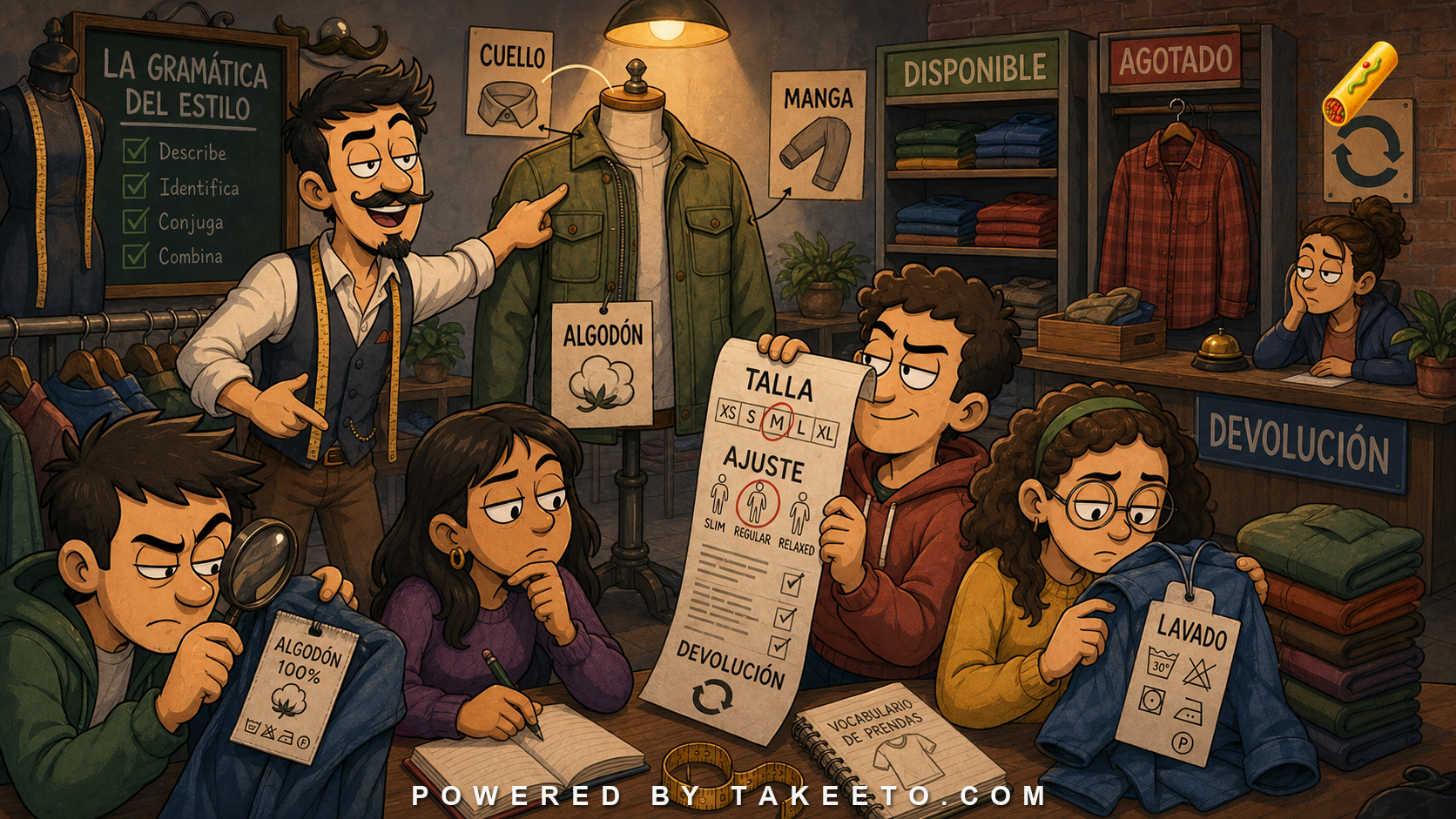
The reader can parse product descriptions, sizes, fabrics, fit, care instructions, and return-policy language.
The reader can use direct object pronouns with gender, number, placement, and discourse awareness.
The reader understands Catalan as a separate Romance language in contact with Spanish.
The reader understands why paired slow and natural audio supports different learning tasks.
The reader can distinguish obligation, necessity, and probability across Spanish modal constructions.
The reader can approach identity terms with historical and regional sensitivity.
The reader can use the imperfect to frame ongoing, habitual, or descriptive past situations.
The reader can use corpus evidence to answer usage questions responsibly.
The reader can recognize event nouns packaged with light verbs.
The reader understands subjunctive in clauses expressing desired or influenced events.
The reader can parse sports reporting and live commentary.
The reader can track gender and number agreement as part of sentence architecture.
The reader can parse Spanish finance and banking language in real documents.
The reader can analyze Spanish pronunciation using basic linguistic categories.
The reader can interpret major Spanish prefixes without assuming English equivalents always match.
The reader can parse basic incident-report structure and vocabulary.
The reader can predict default stress, explain written accents, and avoid treating accent marks as decoration.
The reader can approach Chilean Spanish as a coherent system rather than a comprehension failure.
The reader can read tourism Spanish critically as promotional place-making rather than neutral description.
The reader can use Spanish negative concord without treating it as faulty logic.
The reader can write and read opinion with appropriate certainty and register.
The reader can interpret study time, reviews, accuracy, and mastery estimates responsibly.
The reader can distinguish self-directed and mutual actions.
The reader can understand documentation-chain vocabulary without confusing informal translation with official validity.
The reader understands gustar-like verbs as predicates organized around experiencers and stimuli.
The reader can interpret Spanish place names and their grammar.
The reader understands what each exam direction measures.
The reader can interpret verbs that express how events turn out.
The reader can discuss courses, requirements, research, and academic support in Spanish.
The reader can use ir a + infinitive for planned, imminent, and evidence-based future situations without equating it mechanically with English “going to.”
The reader can discuss standard Spanish as a social and pedagogical construct.
The reader understands why grammar explanations must match cognitive and educational context.
The reader can distinguish factual concession from hypothetical or irrelevant concession.
The reader can parse and write Spanish abstracts.
The reader understands Spanish possession, obligation, age, physical state, and auxiliary patterns.
The reader can identify core immigration vocabulary in Spanish documents.
The reader can distinguish vowel sequences and understand accent marks that break diphthongs.