
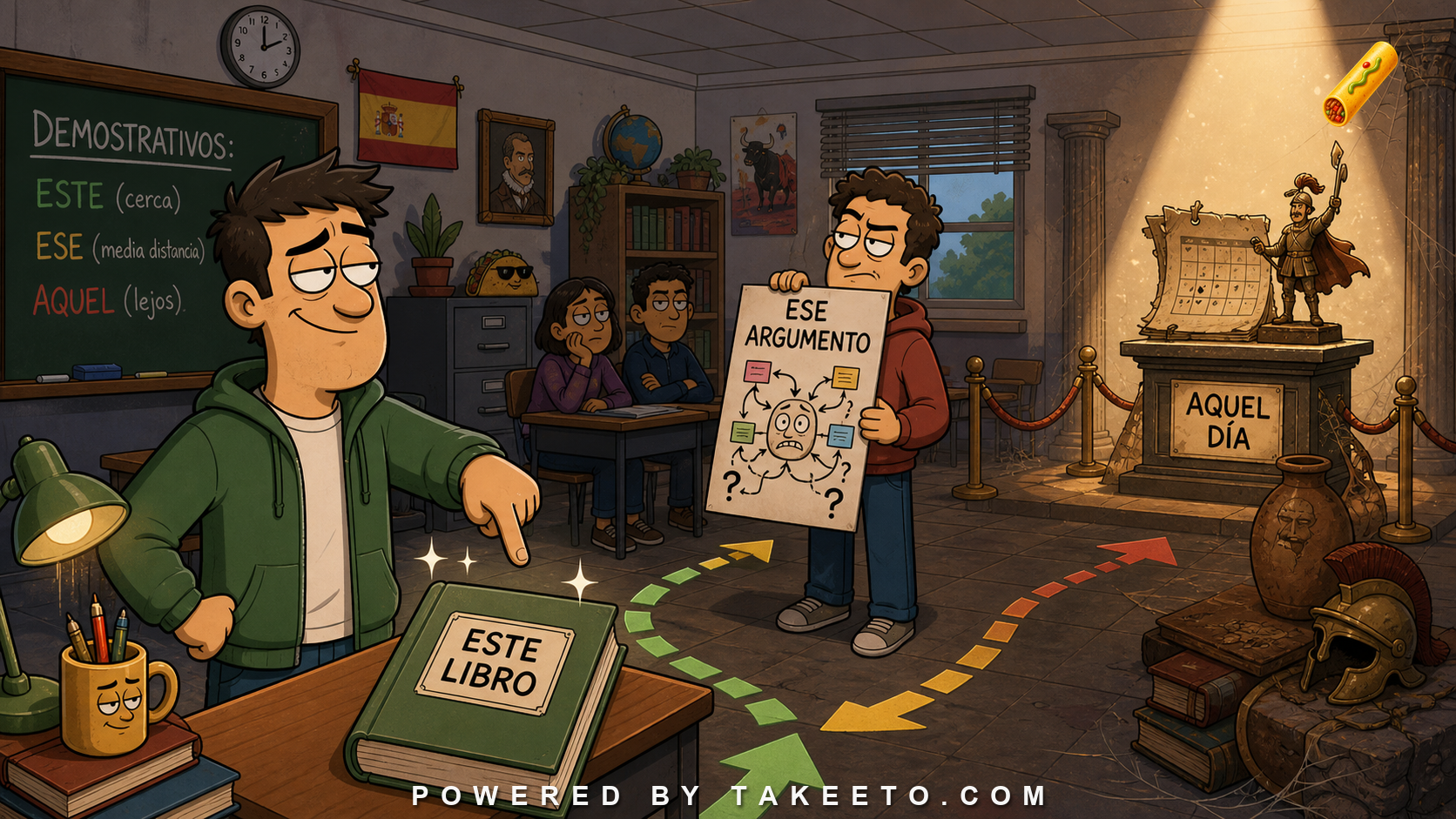
Demonstratives: Este, Ese, Aquel and the Grammar of Distance
The reader can use demonstratives for physical, temporal, textual, and emotional distance.
Long-form Spanish articles for learners who want structure, evidence, examples, and linguistic explanations that do not collapse into slogans.
105 articles tagged Syntax & discourse.
The reader can use demonstratives for physical, temporal, textual, and emotional distance.
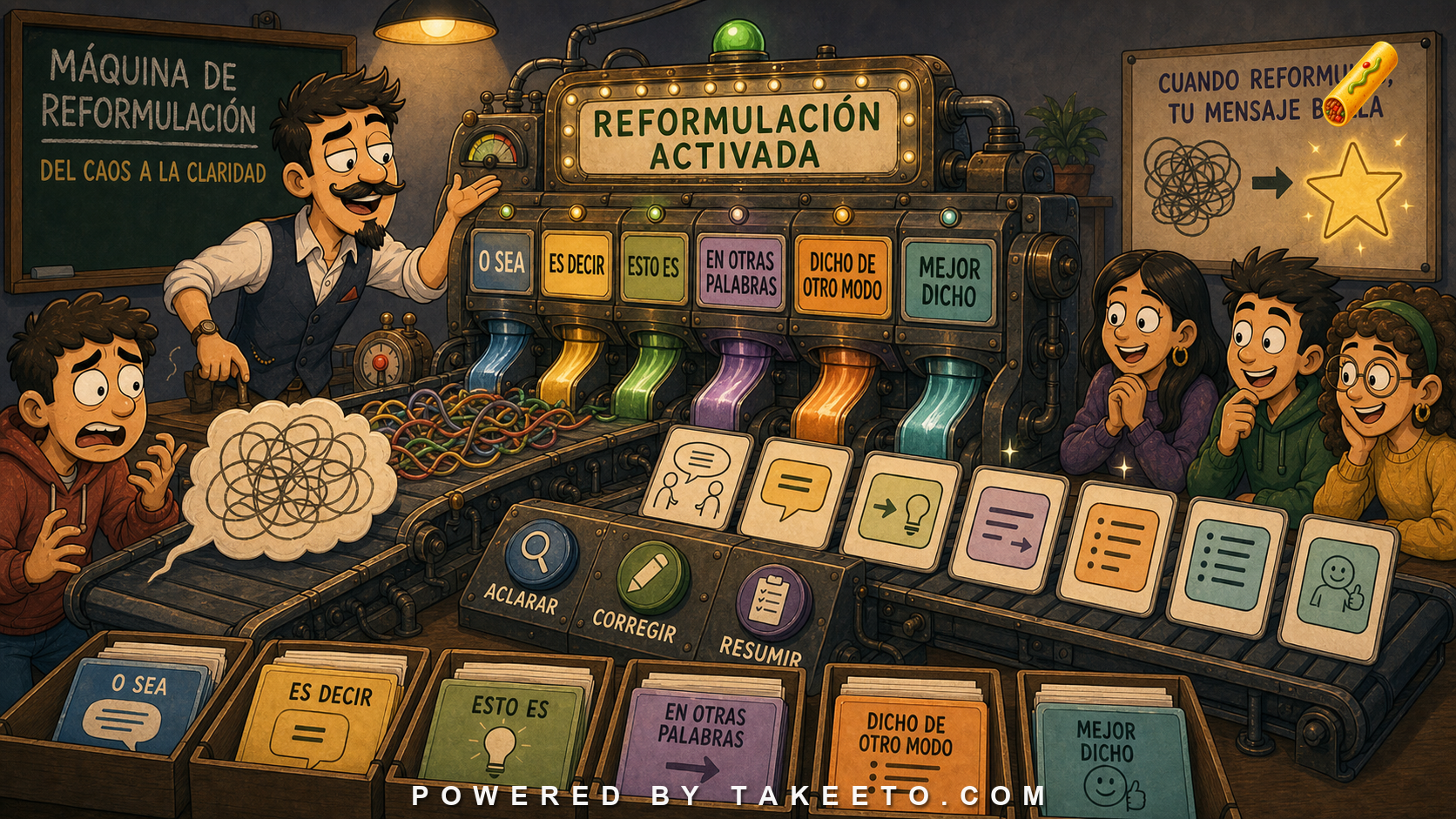
The reader can identify clarification, correction, summary, and technical restatement.
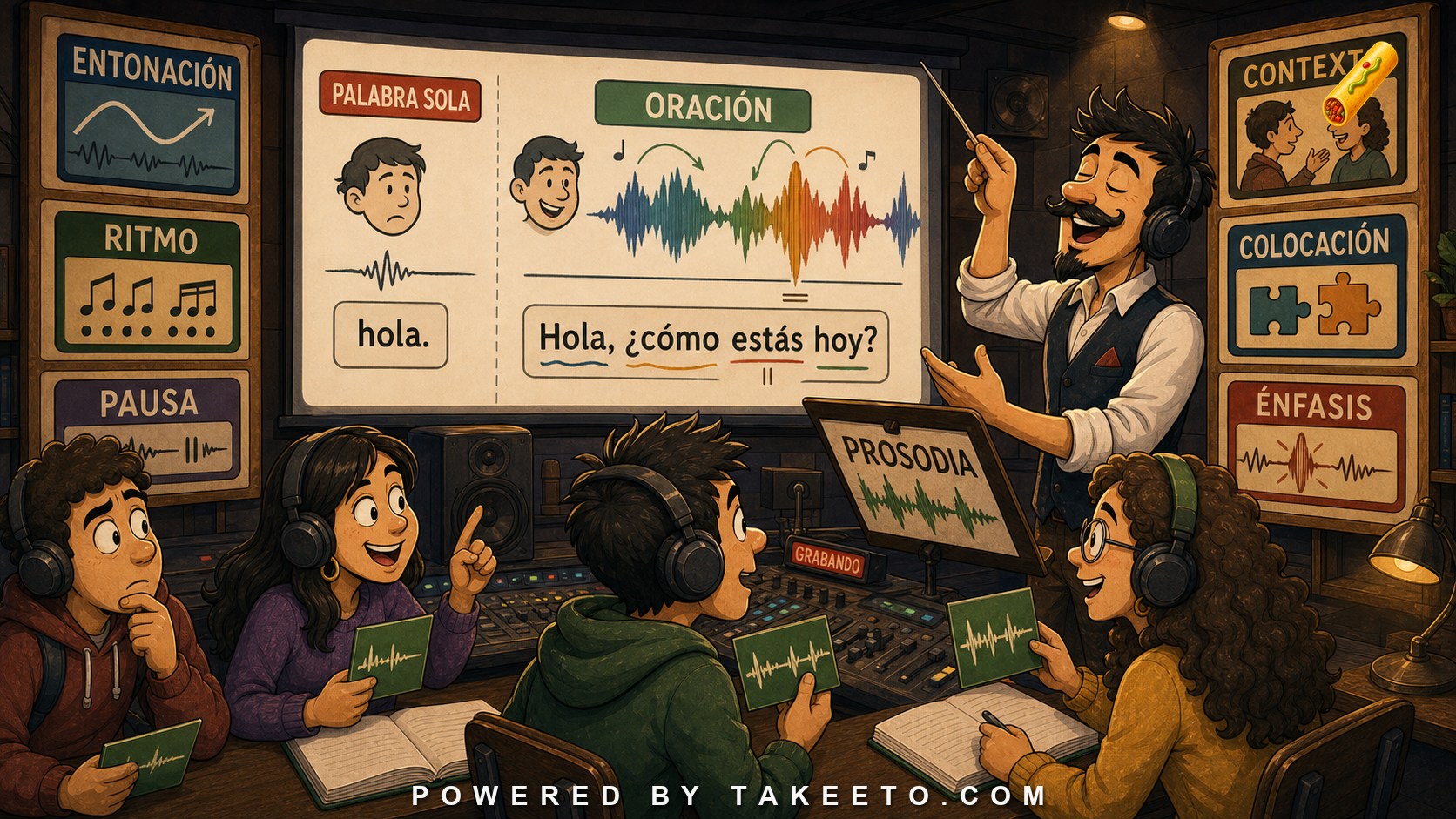
The reader understands why sentence audio teaches rhythm, syntax, and collocation differently from isolated word audio.
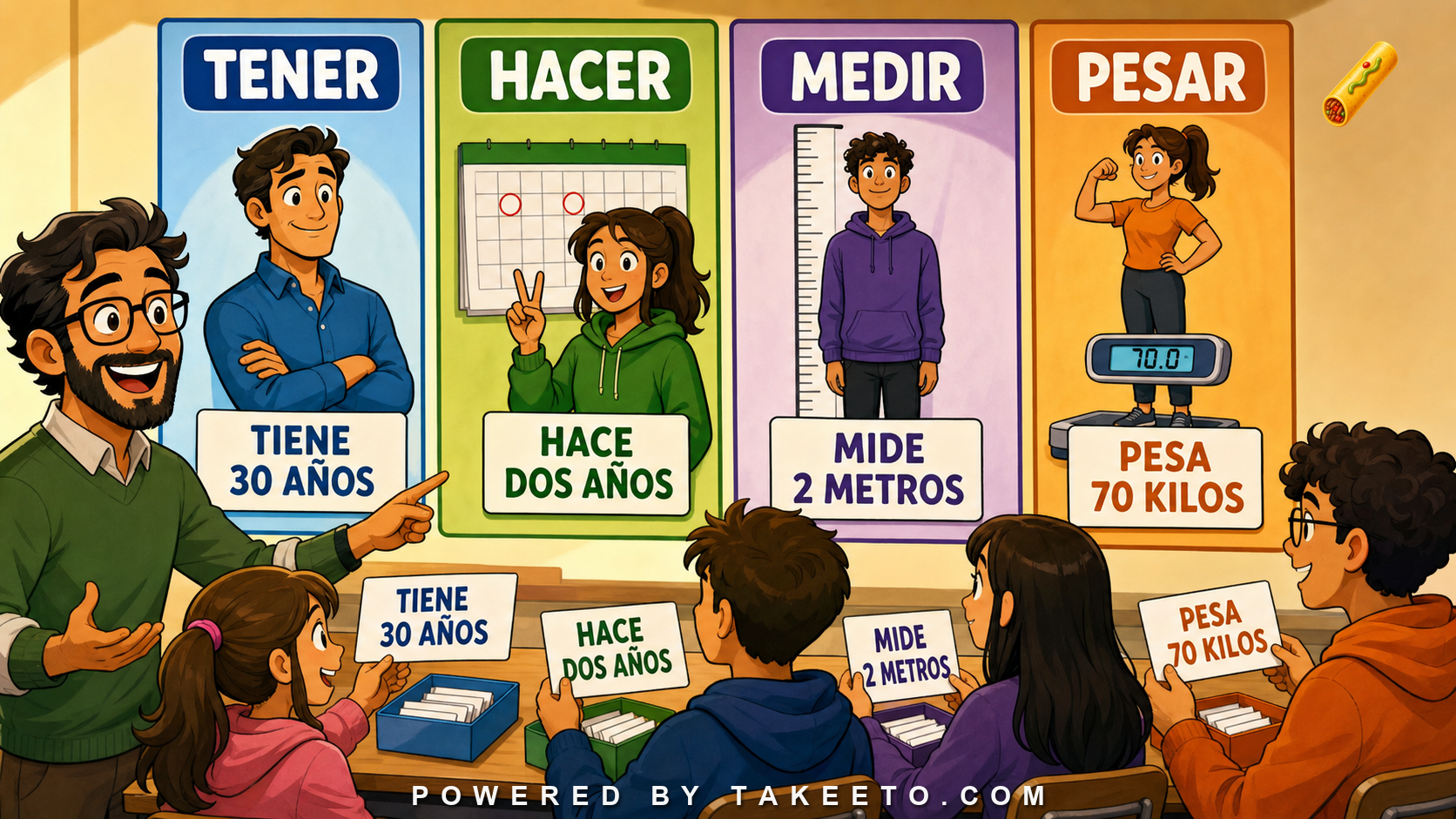
The reader can express age, duration, height, weight, and measurements naturally.
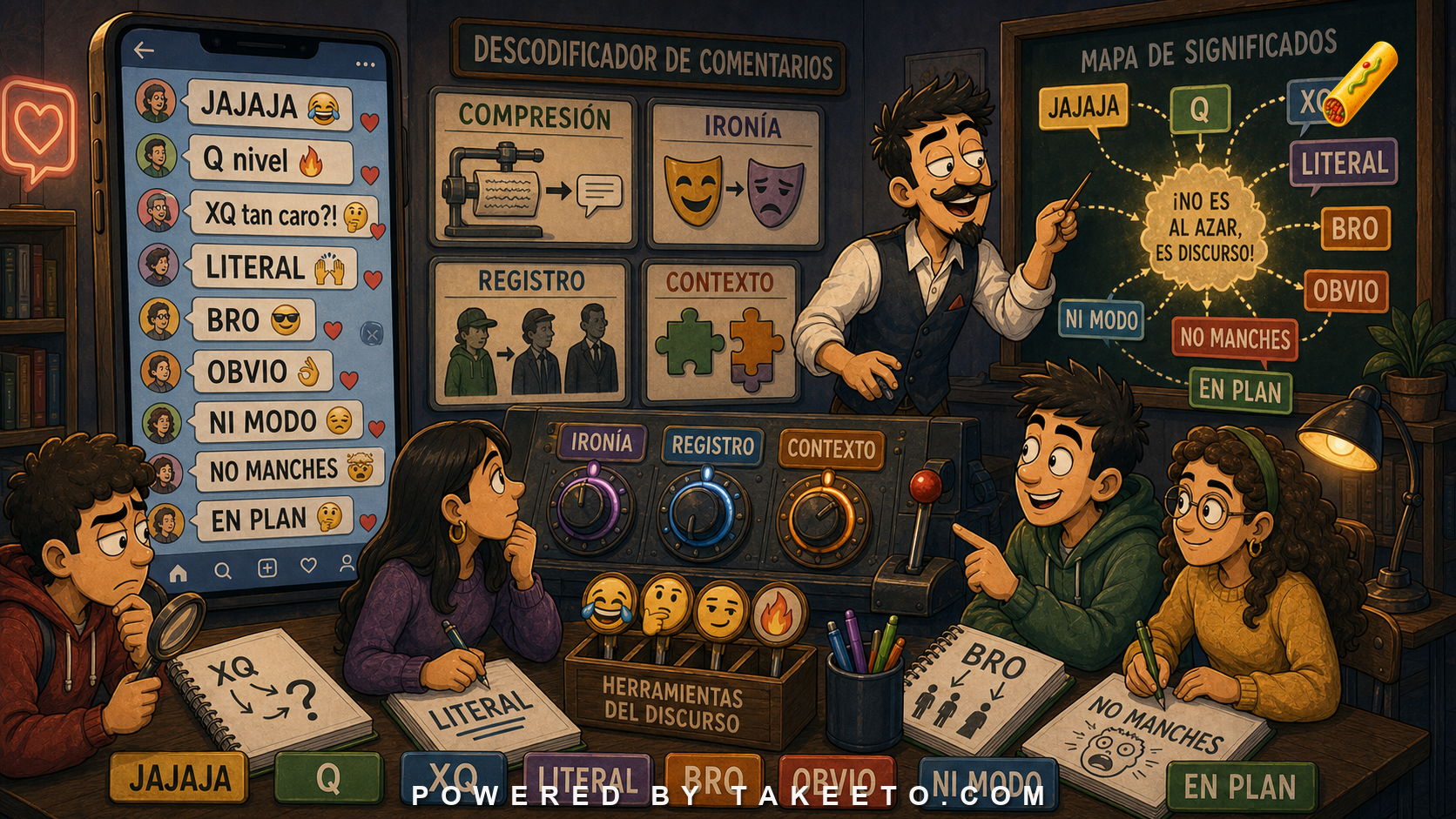
The reader can interpret comments without mistaking informal forms for random errors.
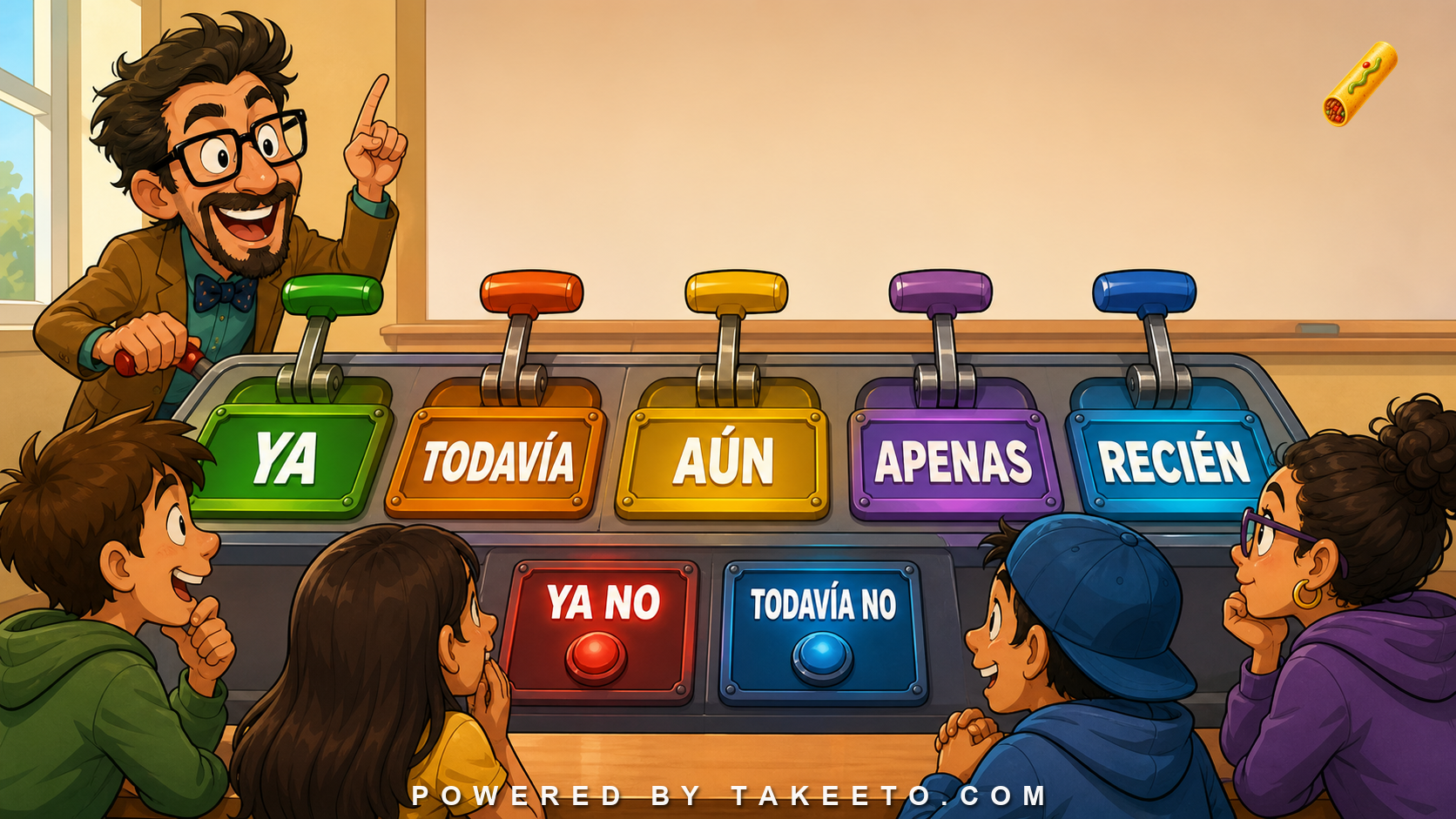
The reader can interpret temporal adverbs that manage expectation and sequence.
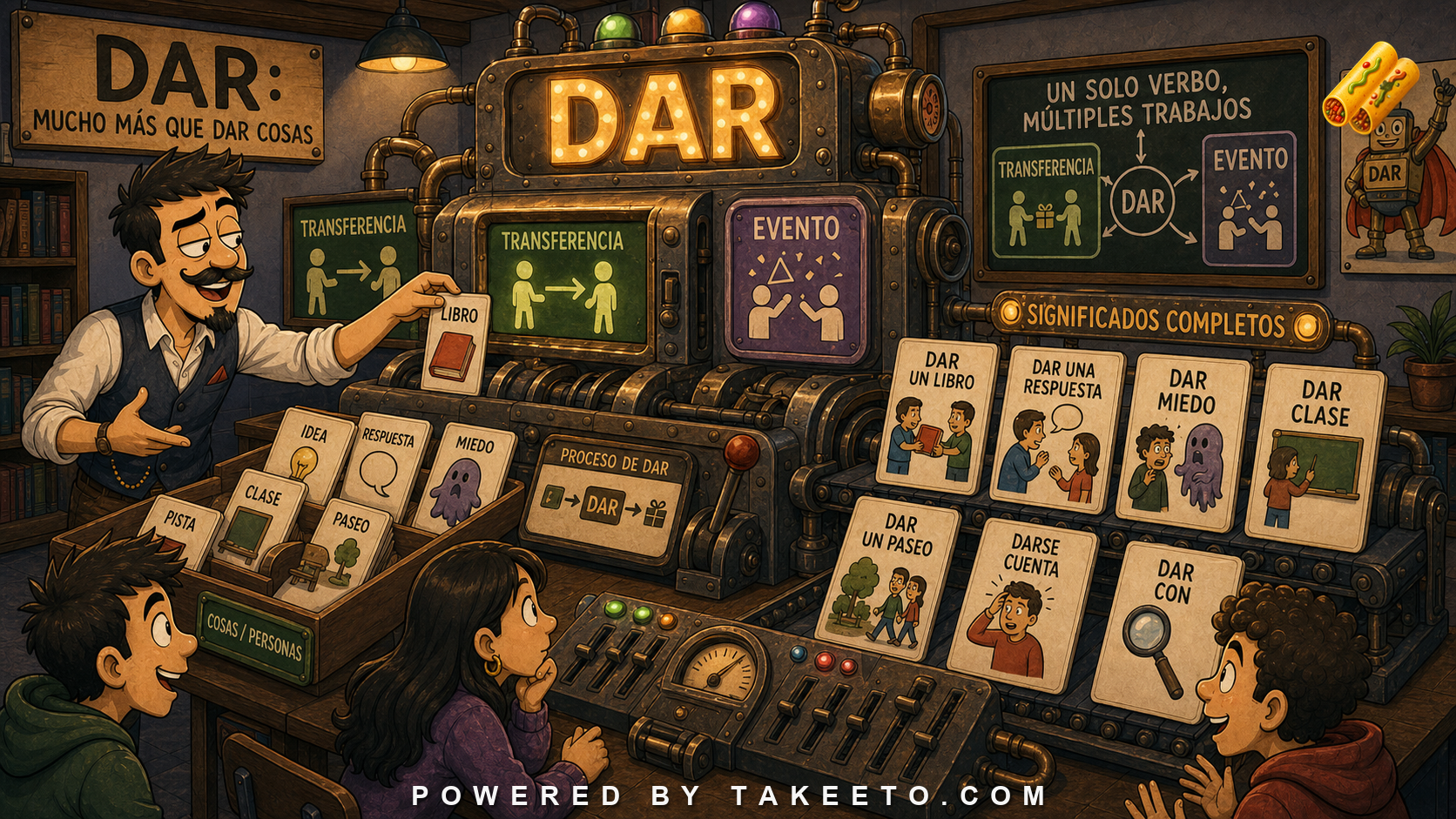
The reader can recognize dar in literal transfer and abstract event constructions.

The reader can follow scholarly argument through reporting verbs.
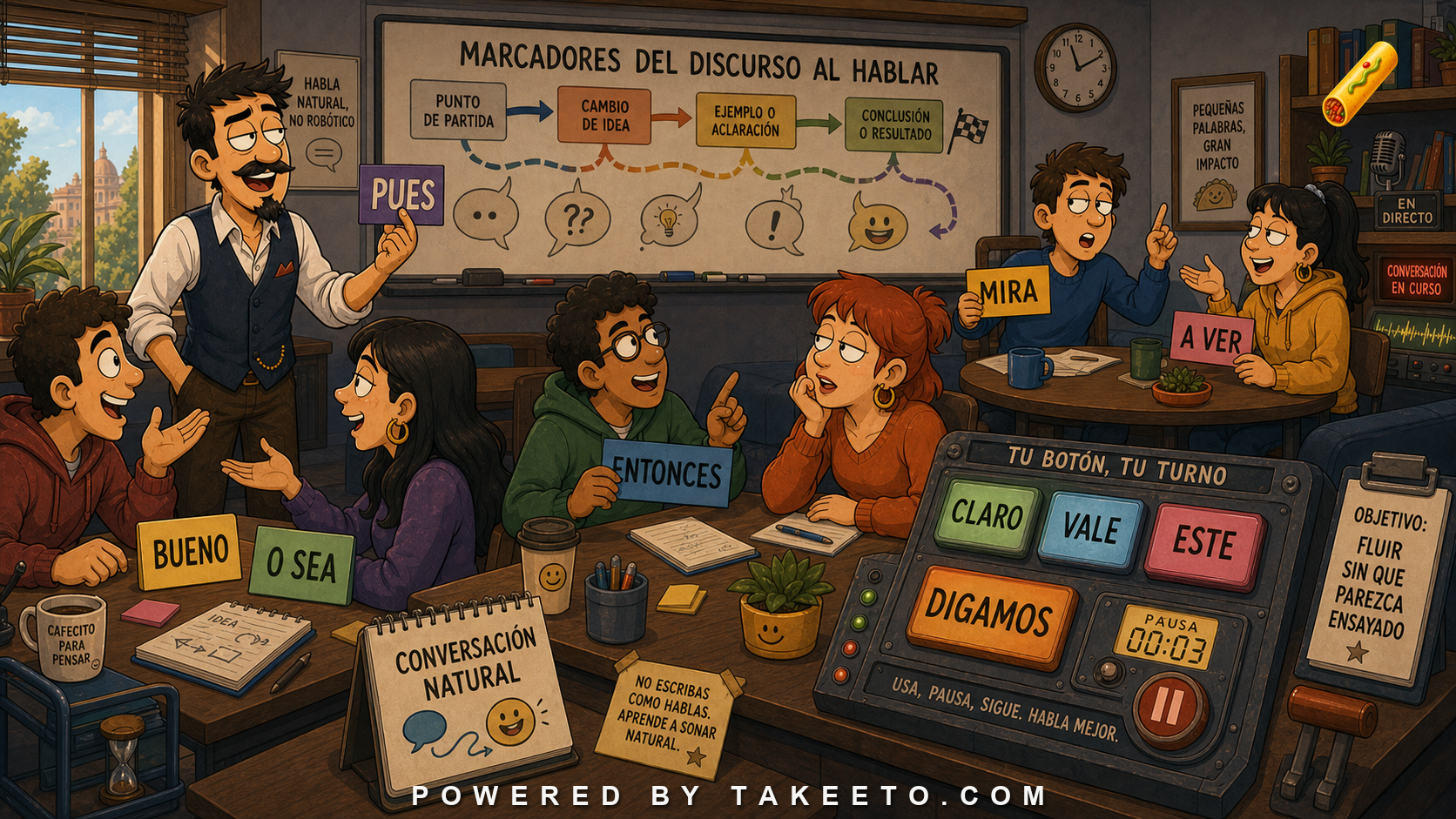
The reader can hear discourse markers as conversation-management tools rather than filler.
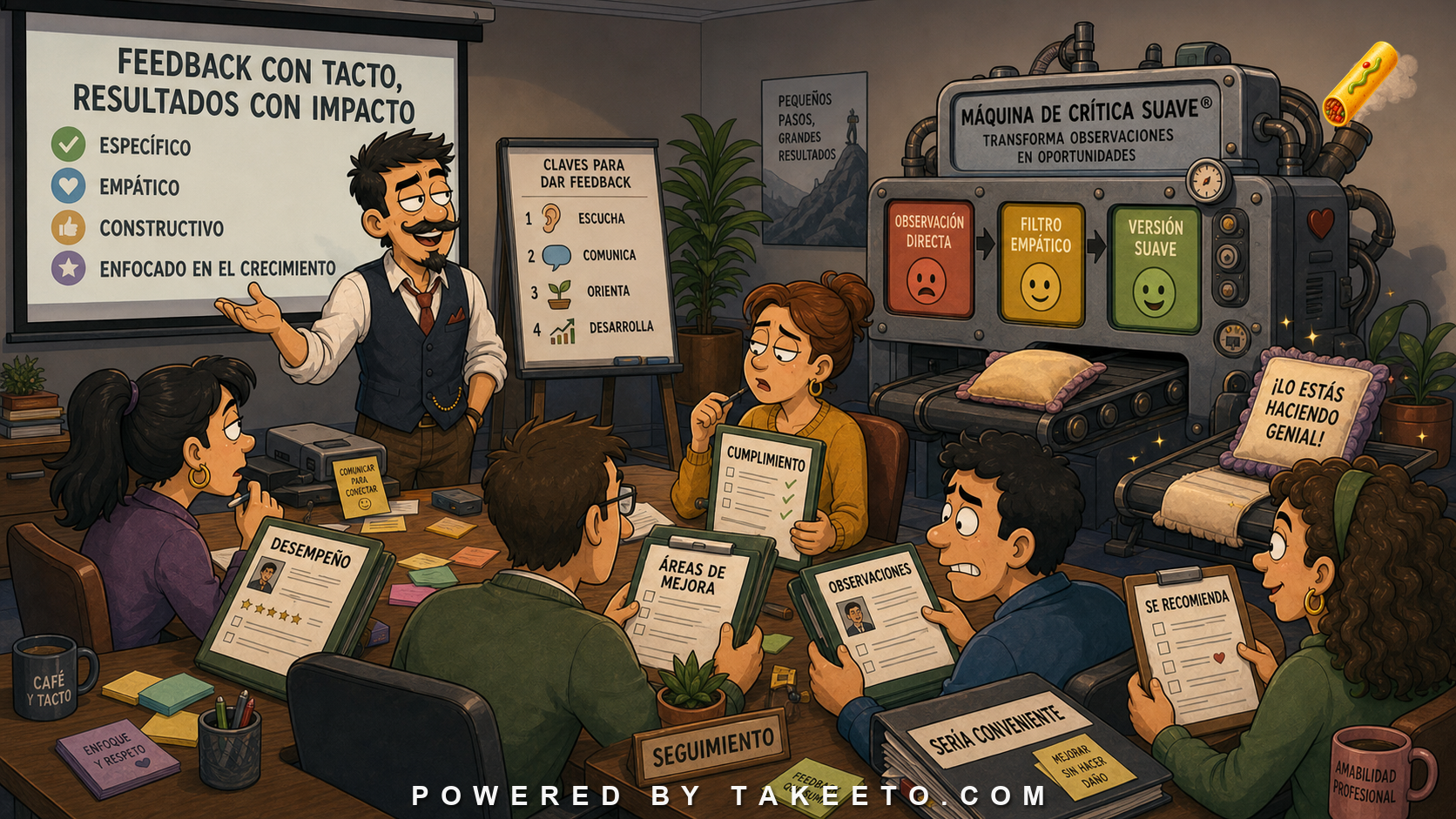
The reader can understand feedback language and indirect criticism in professional Spanish.

The reader can choose apology and attention-getting formulas appropriately.
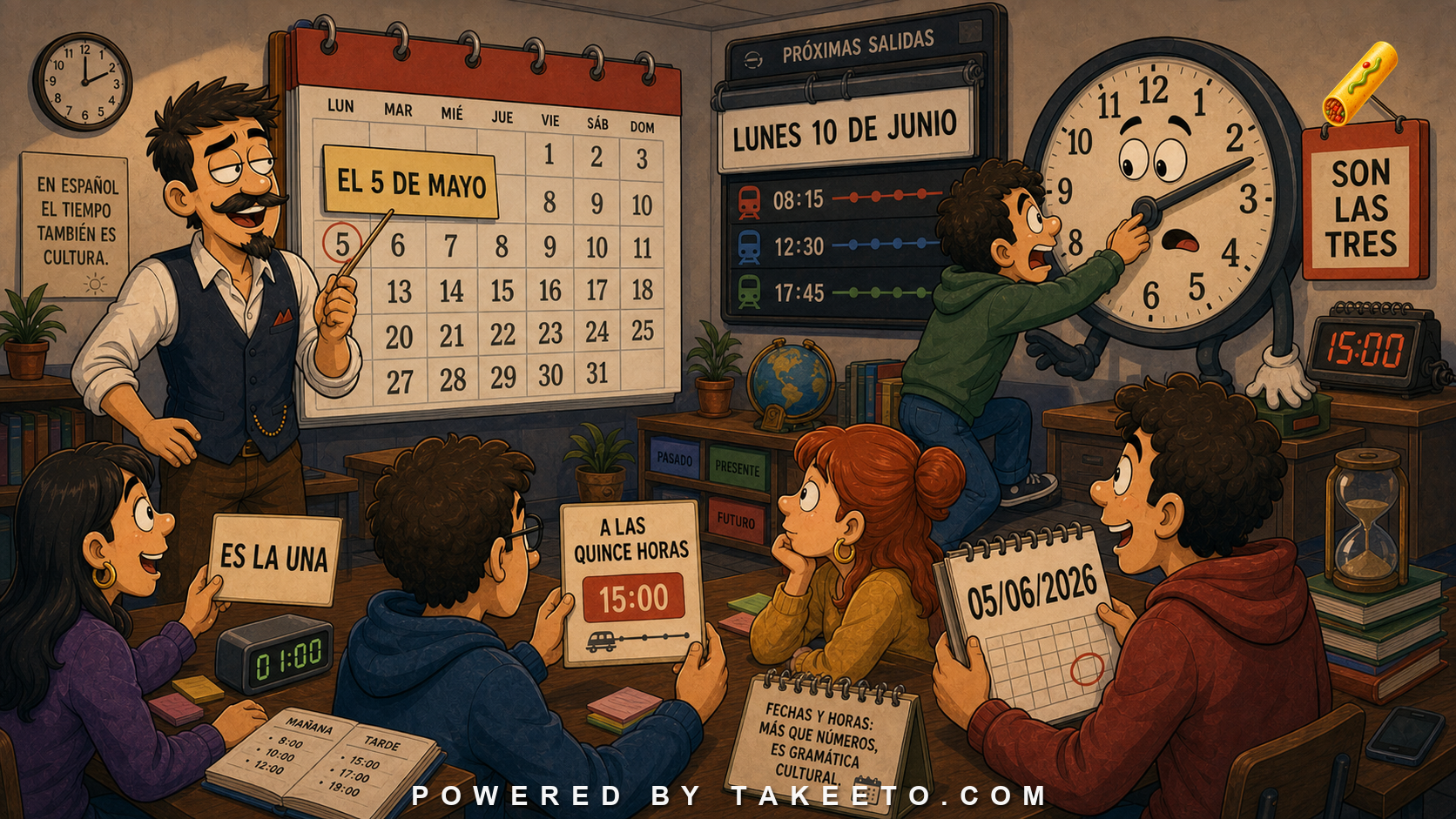
The reader can read and produce dates, clock times, and calendar phrases in Spanish.
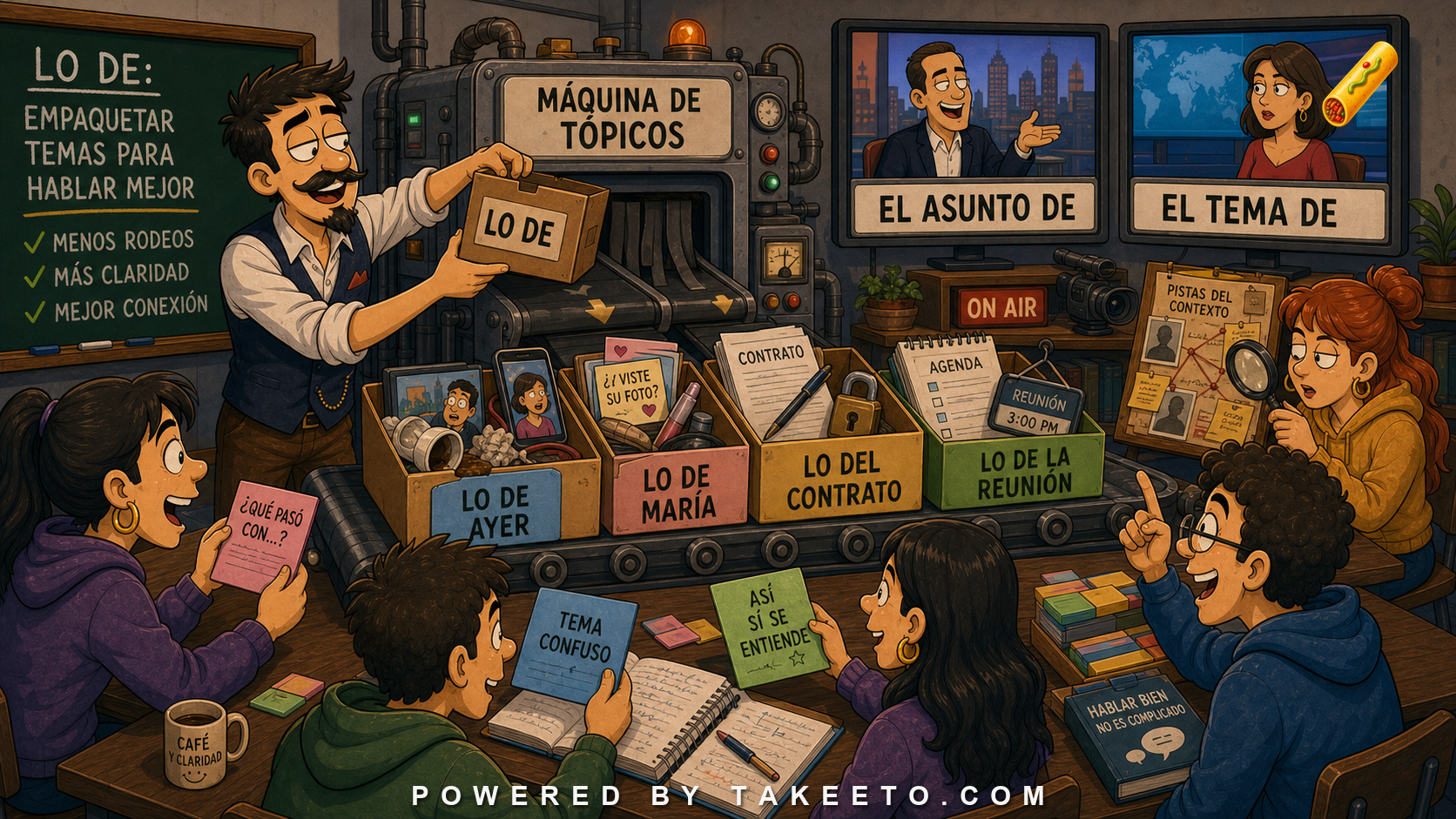
The reader can interpret lo de as a compact reference to events, issues, and topics.
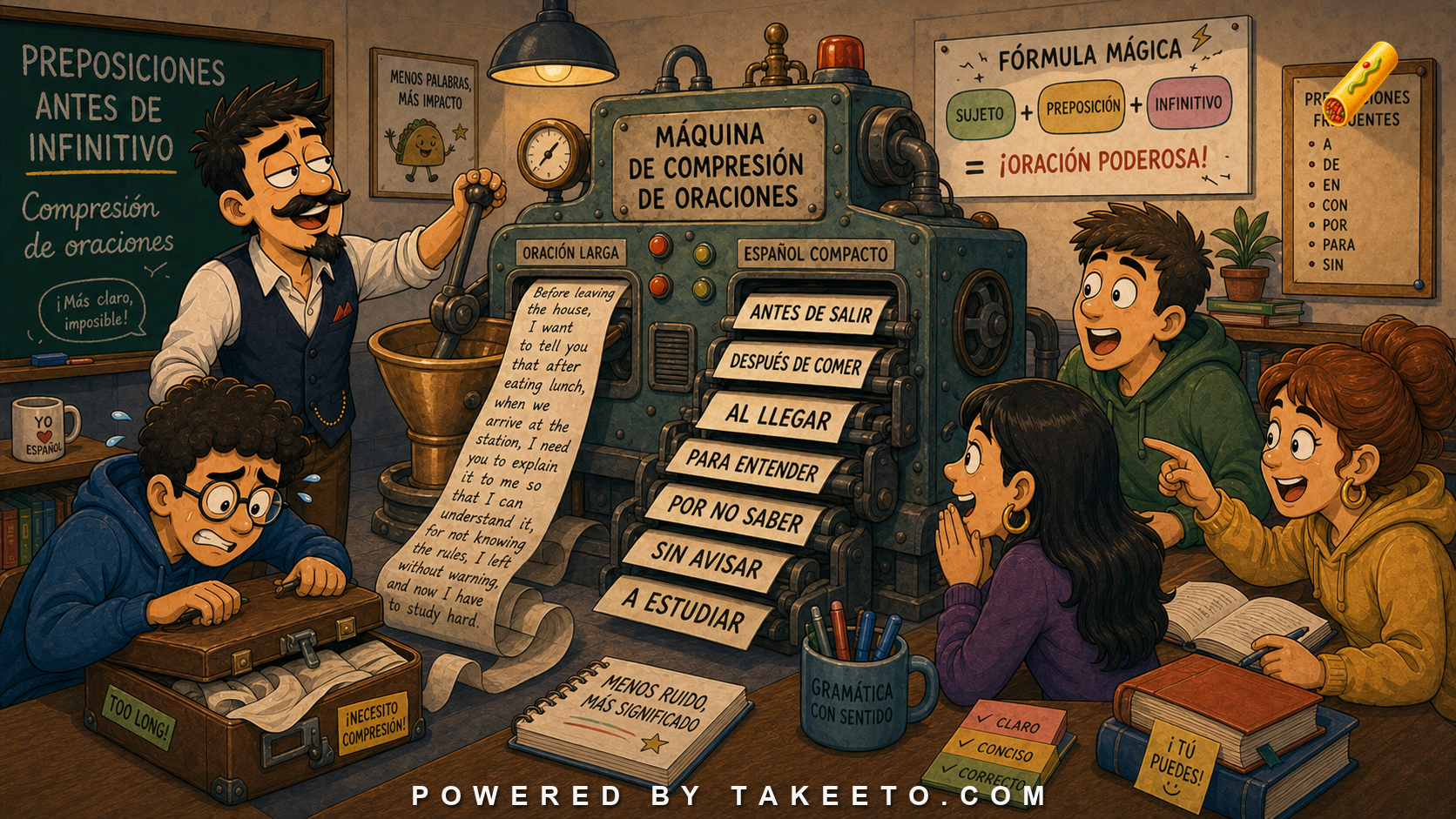
The reader can read and produce preposition + infinitive structures in dense Spanish.
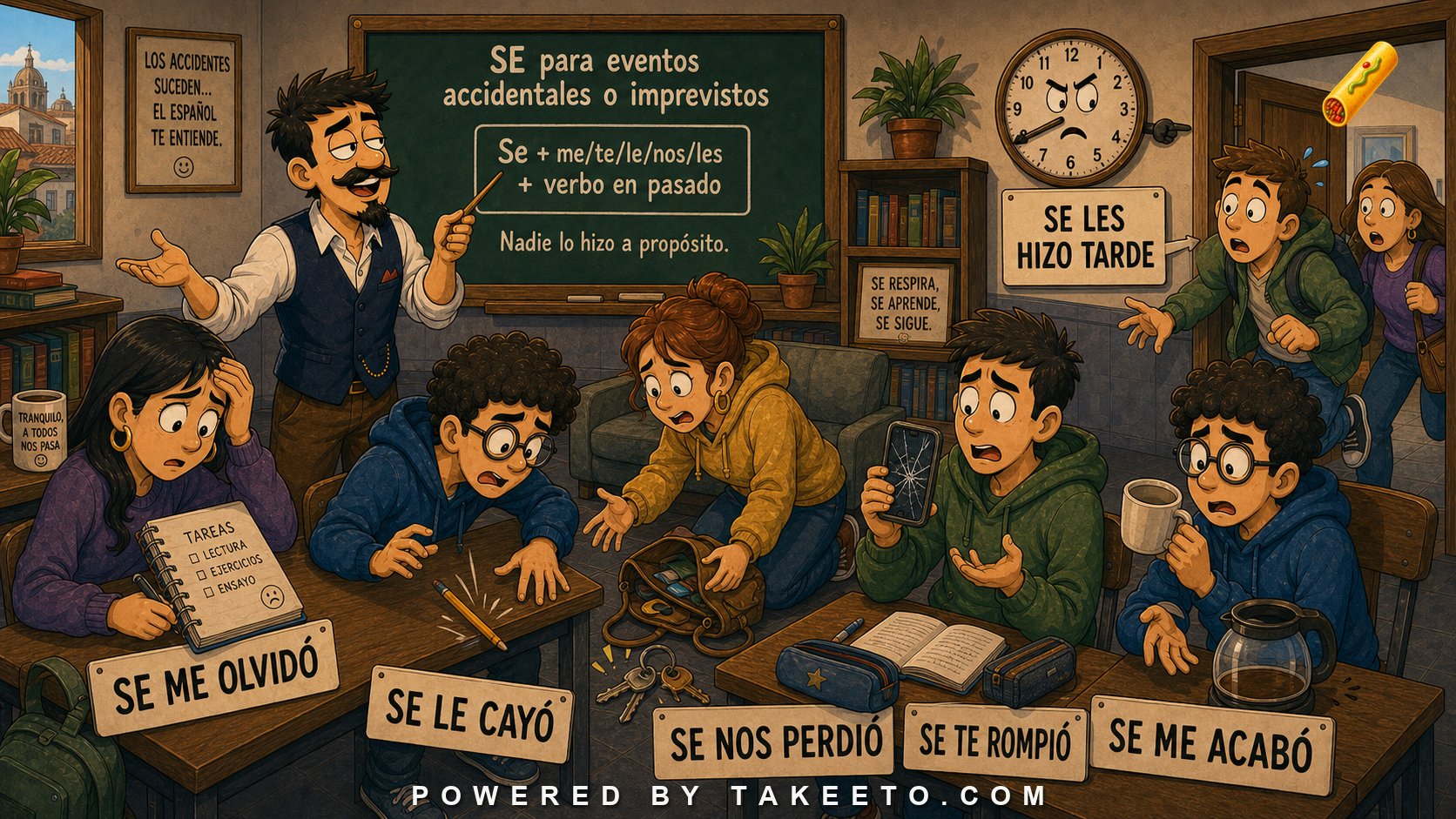
The reader can interpret se constructions that background agency and foreground affected participants.
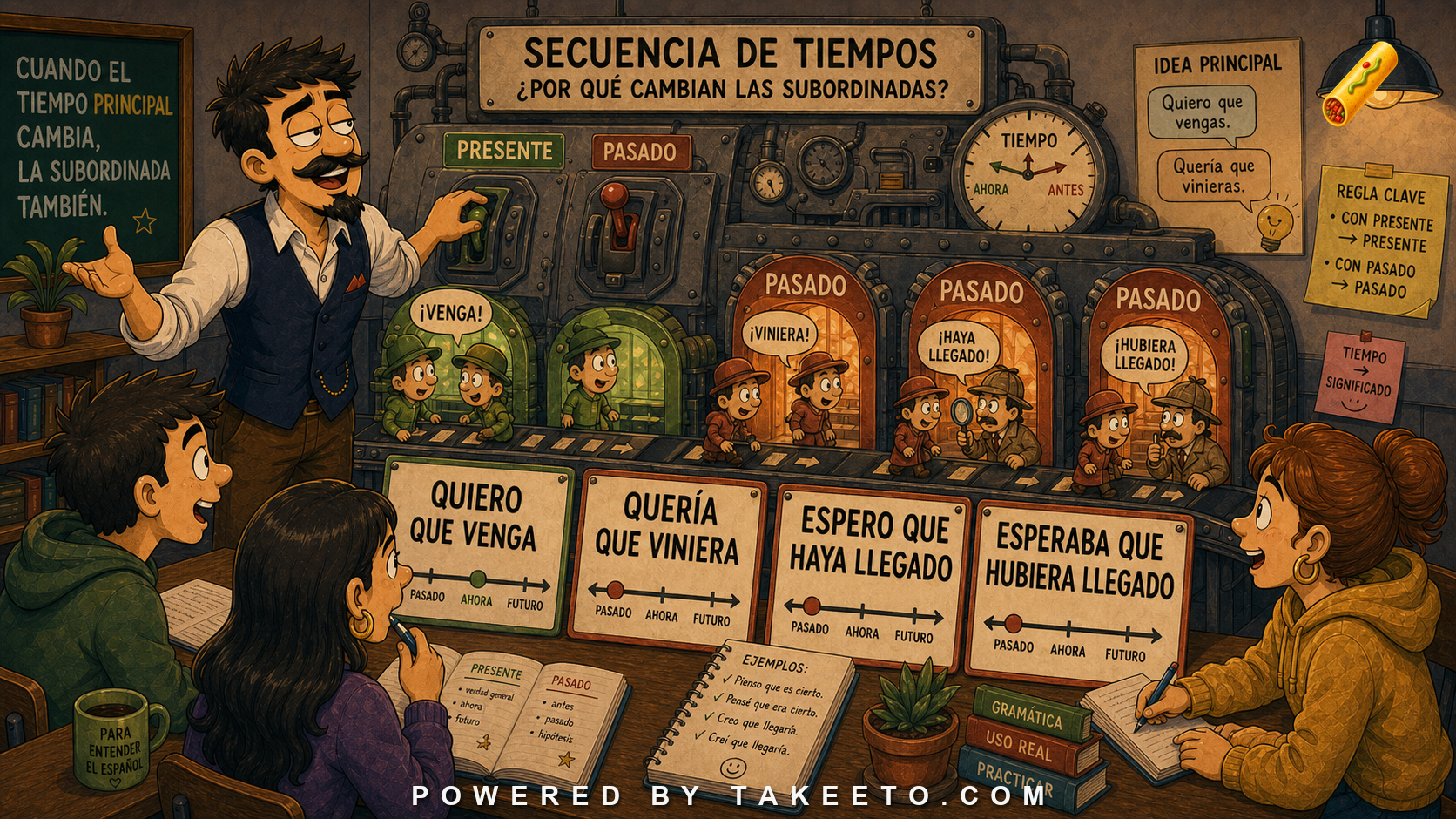
The reader can manage tense relationships across main and subordinate clauses.

The reader can form commands and understand their social force.
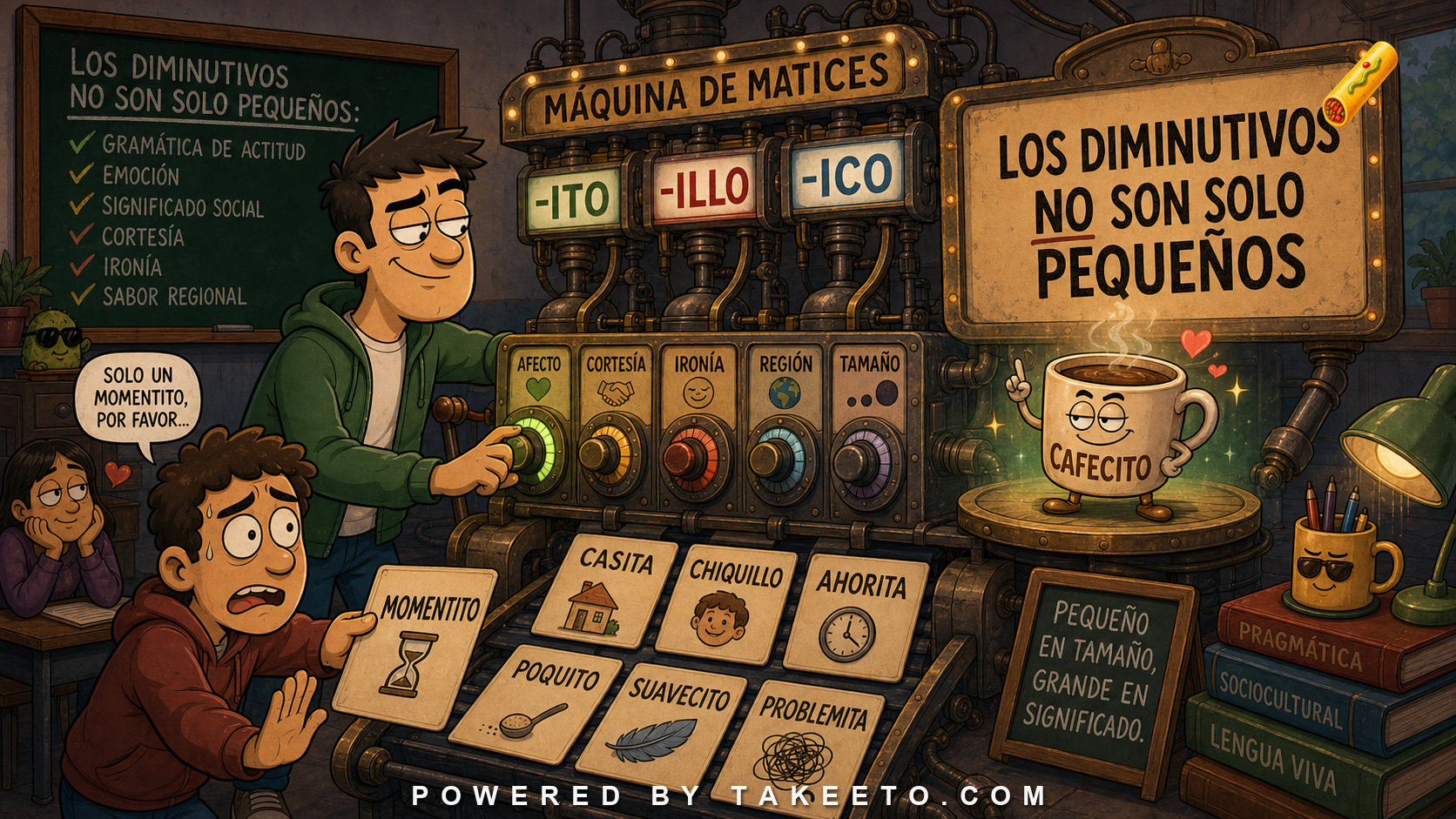
The reader understands diminutives as emotional, social, and regional markers, not only markers of small size.
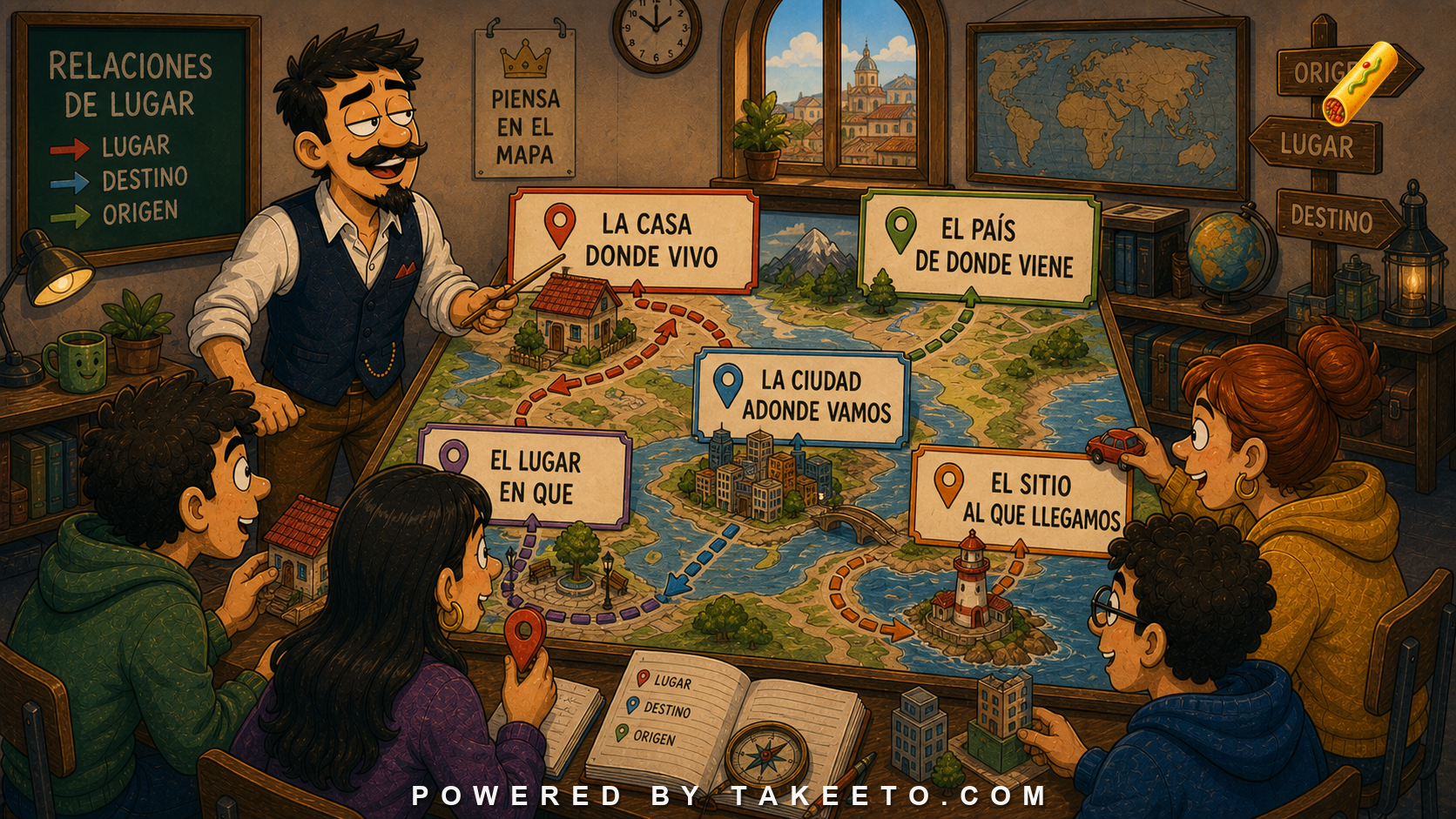
The reader can mark location, destination, and source in Spanish relative clauses.
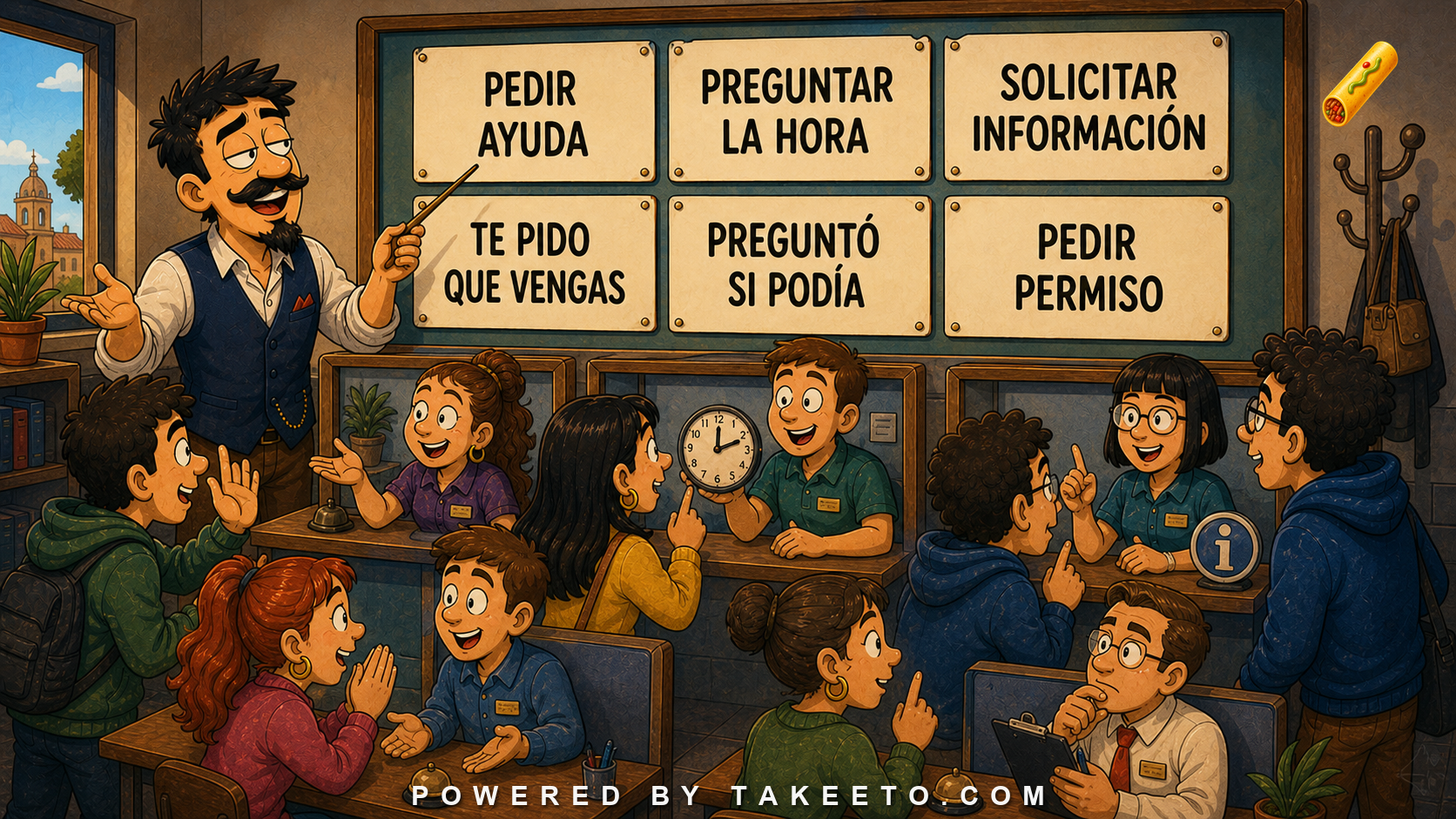
The reader can avoid the common error of using preguntar for requests.
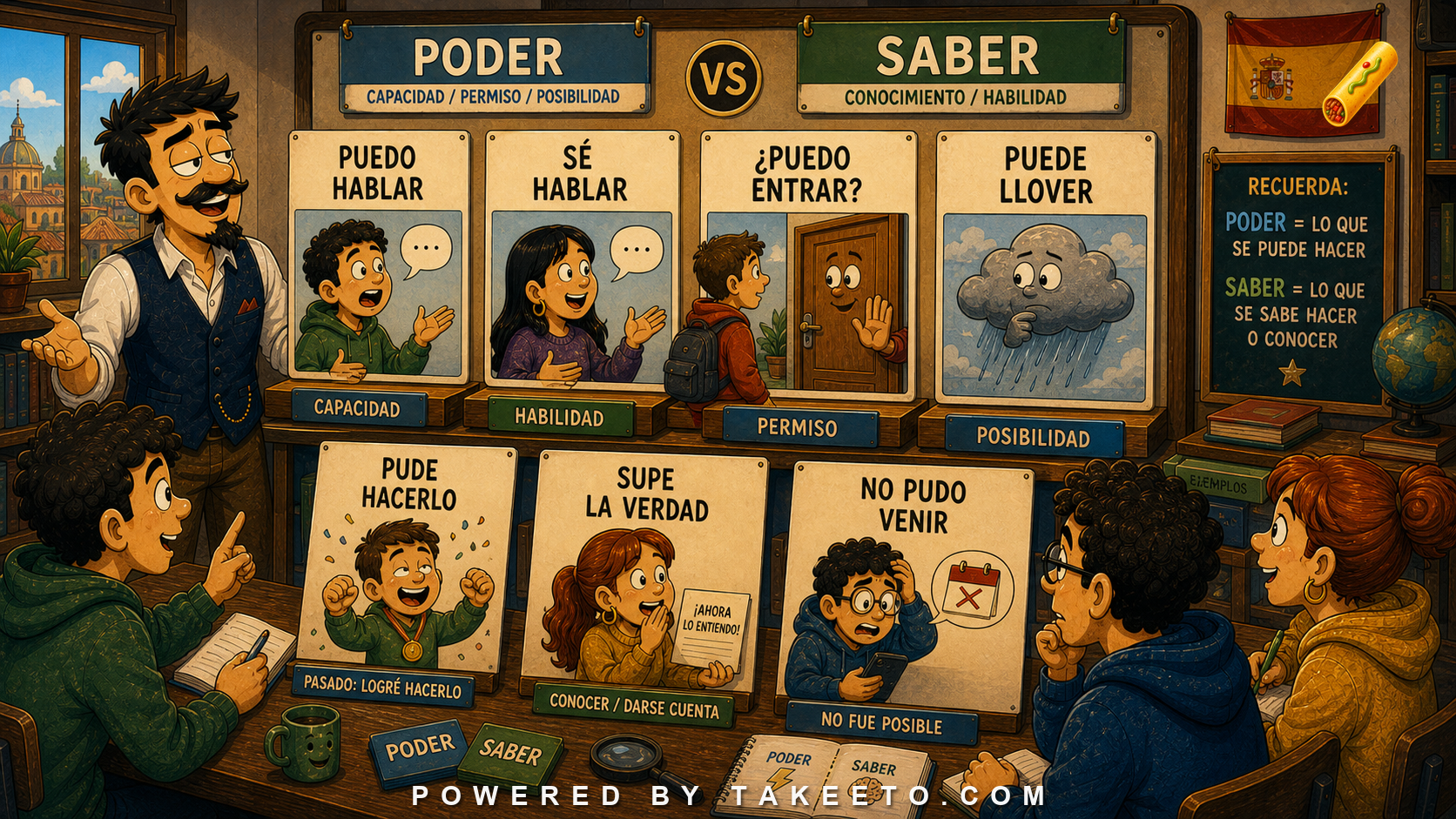
The reader can distinguish capacity, permission, possibility, and learned skill.
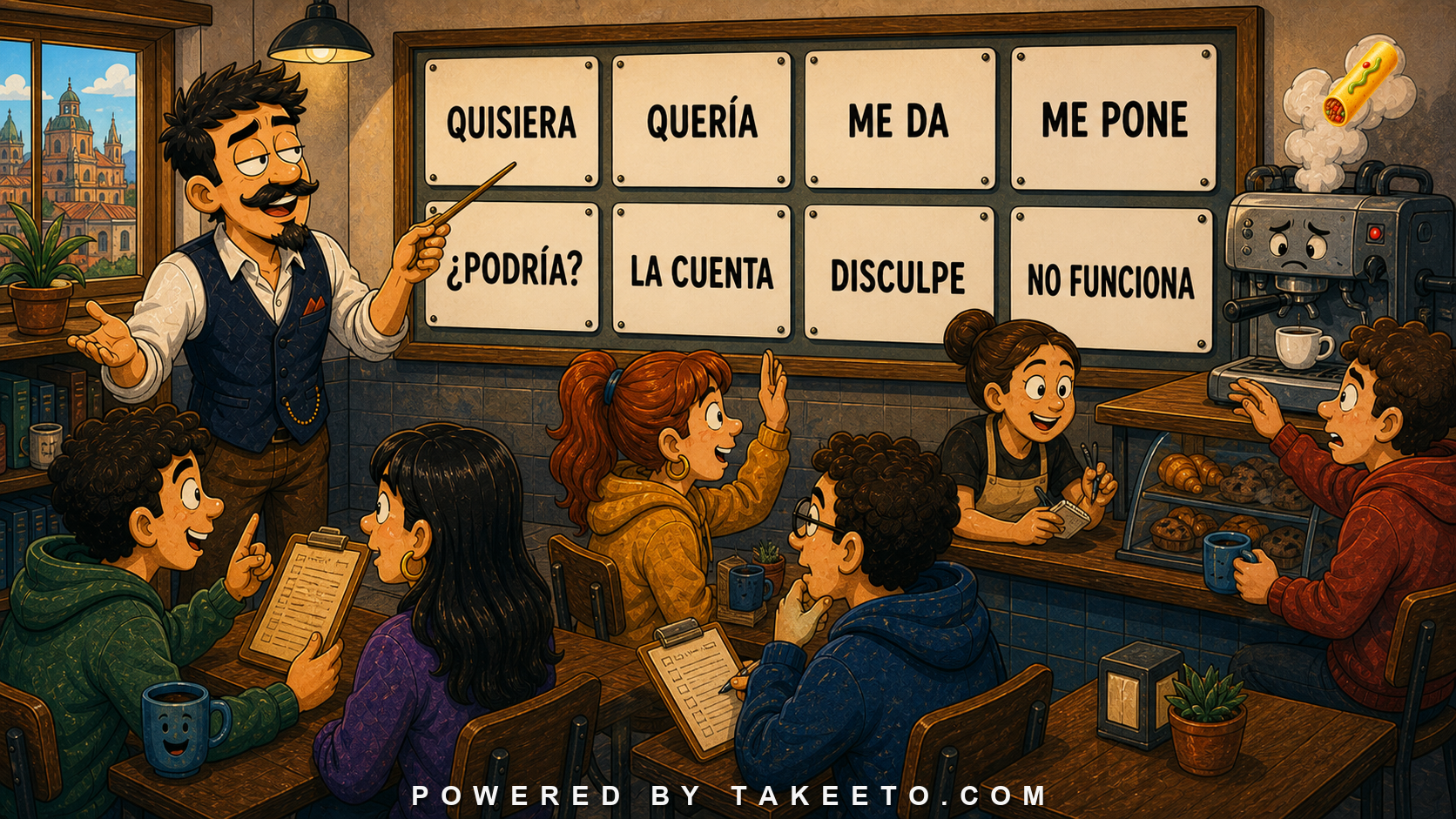
The reader can manage service interactions respectfully and precisely.
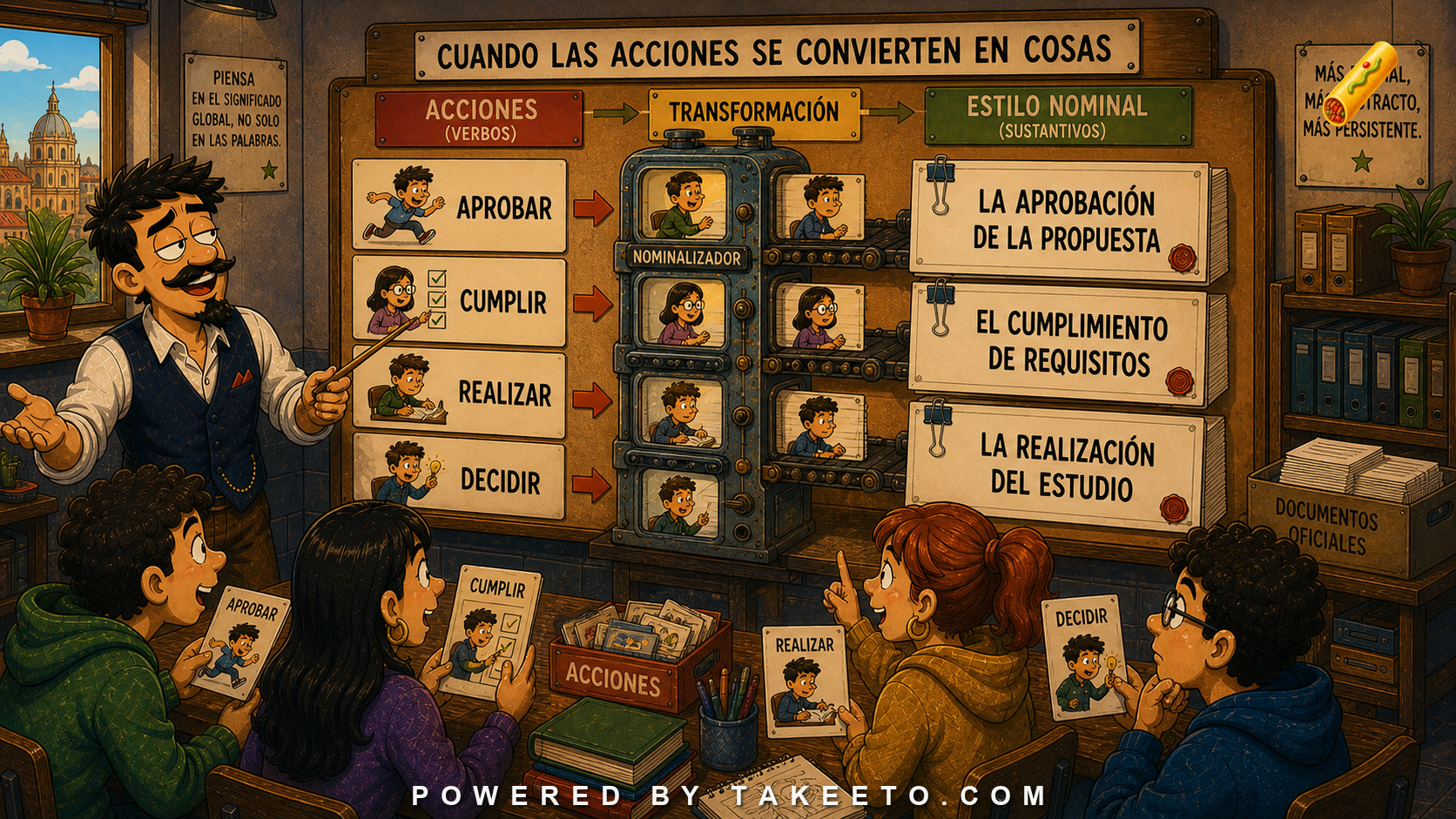
The reader can read nominalized Spanish and decide when to use it.
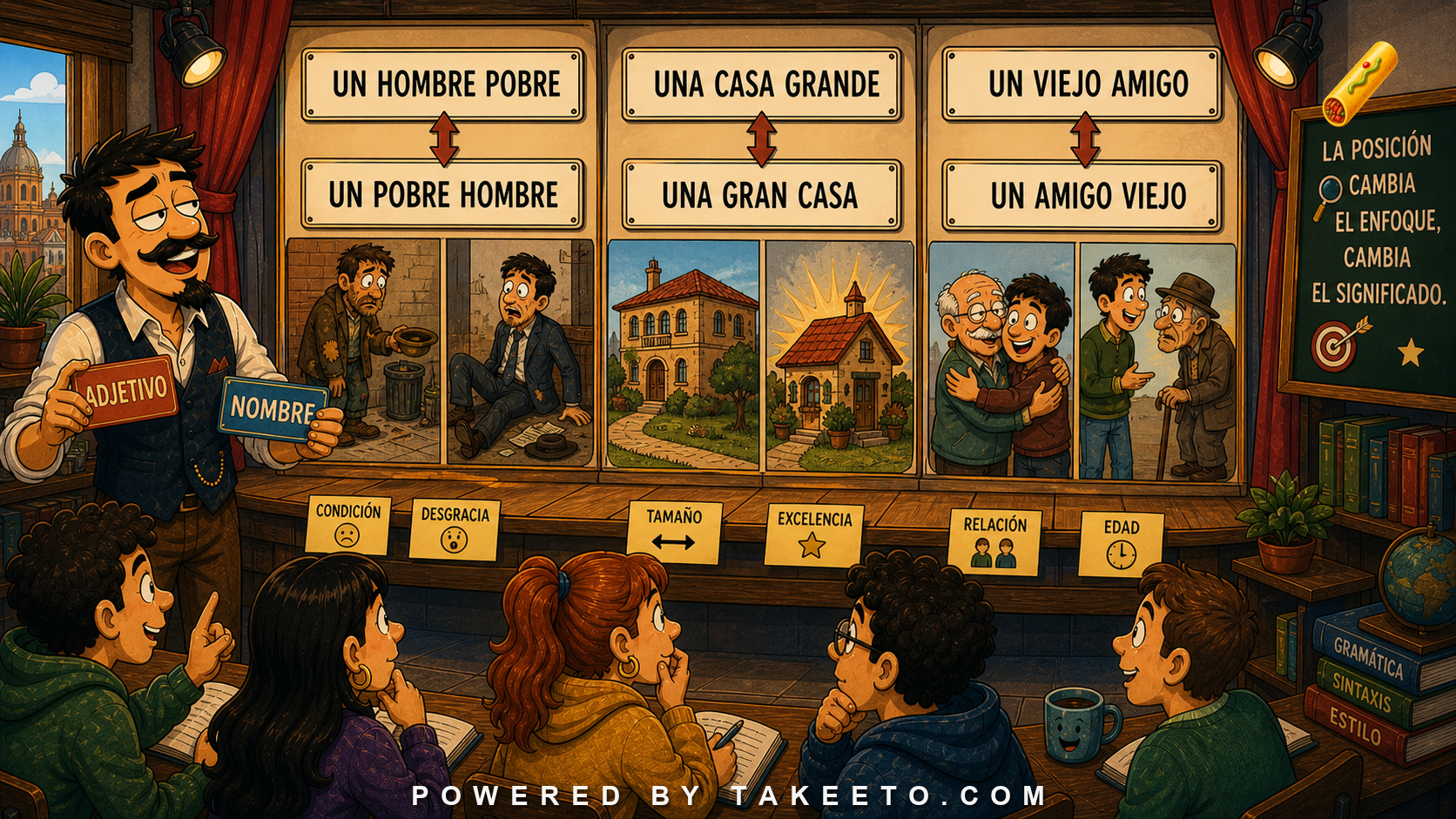
The reader understands how adjective placement affects meaning, evaluation, and discourse.
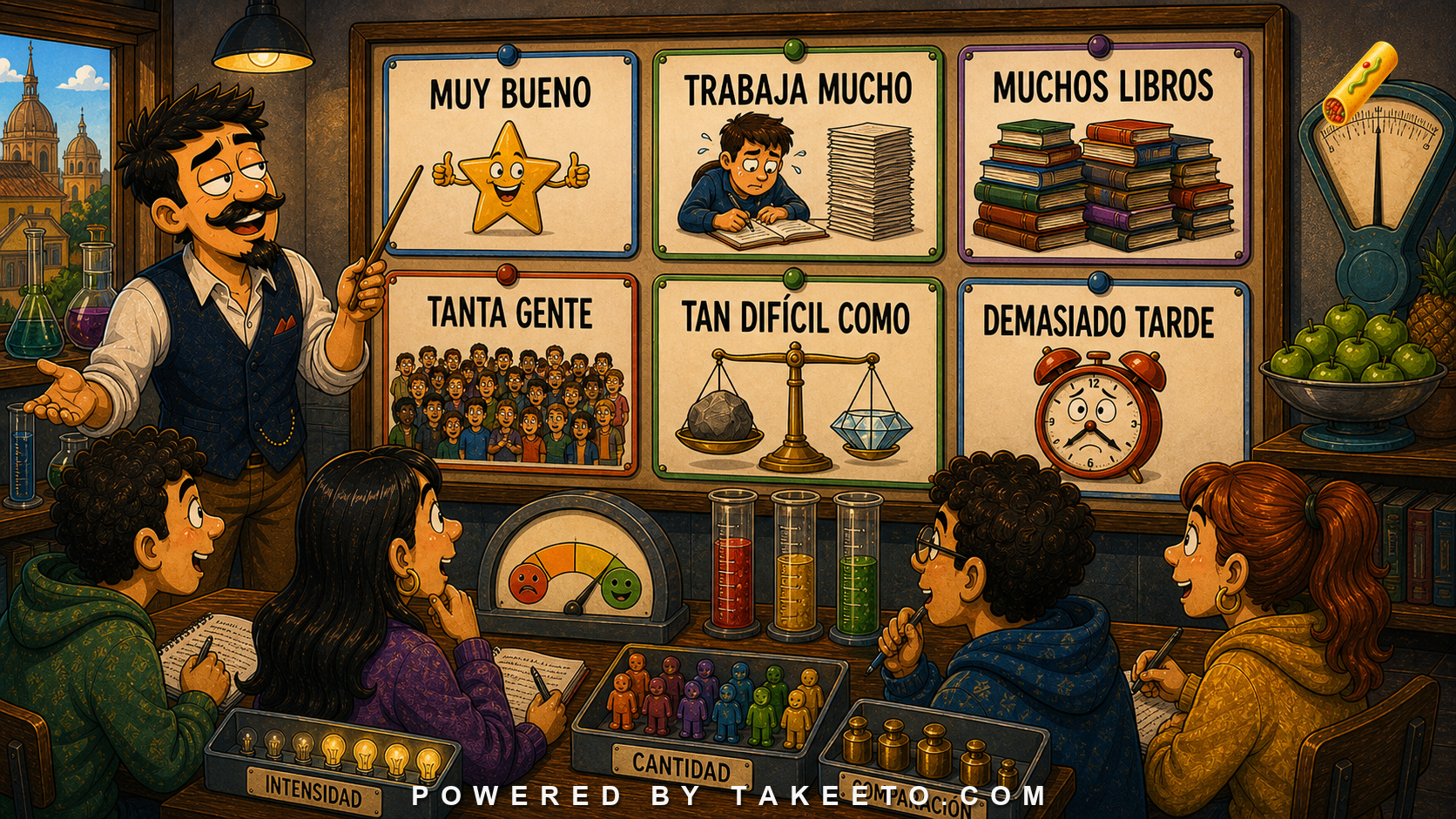
The reader can distinguish intensifiers, quantifiers, and comparison structures.
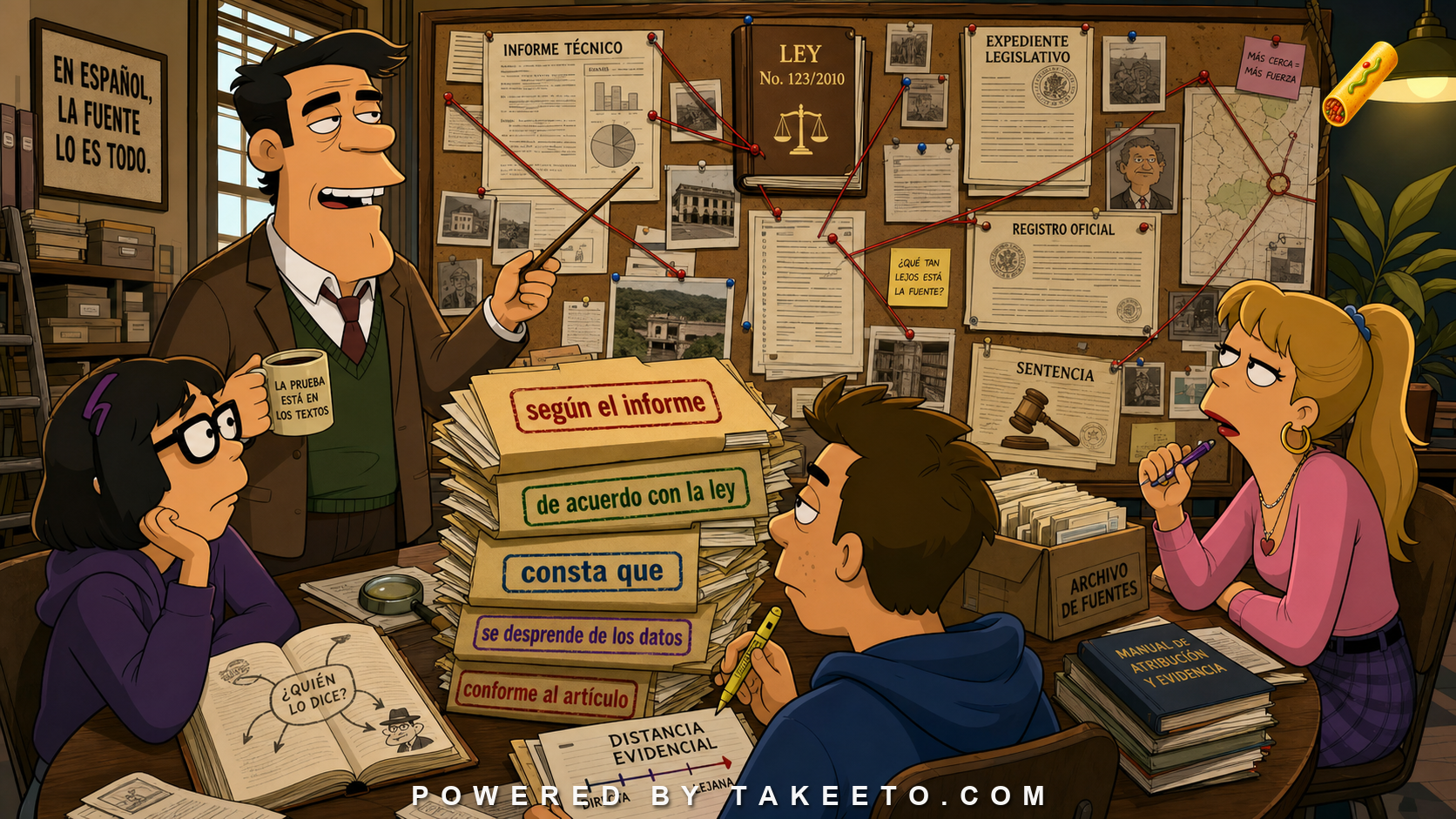
The reader can identify source attribution, documentary evidence, and evidential distance.
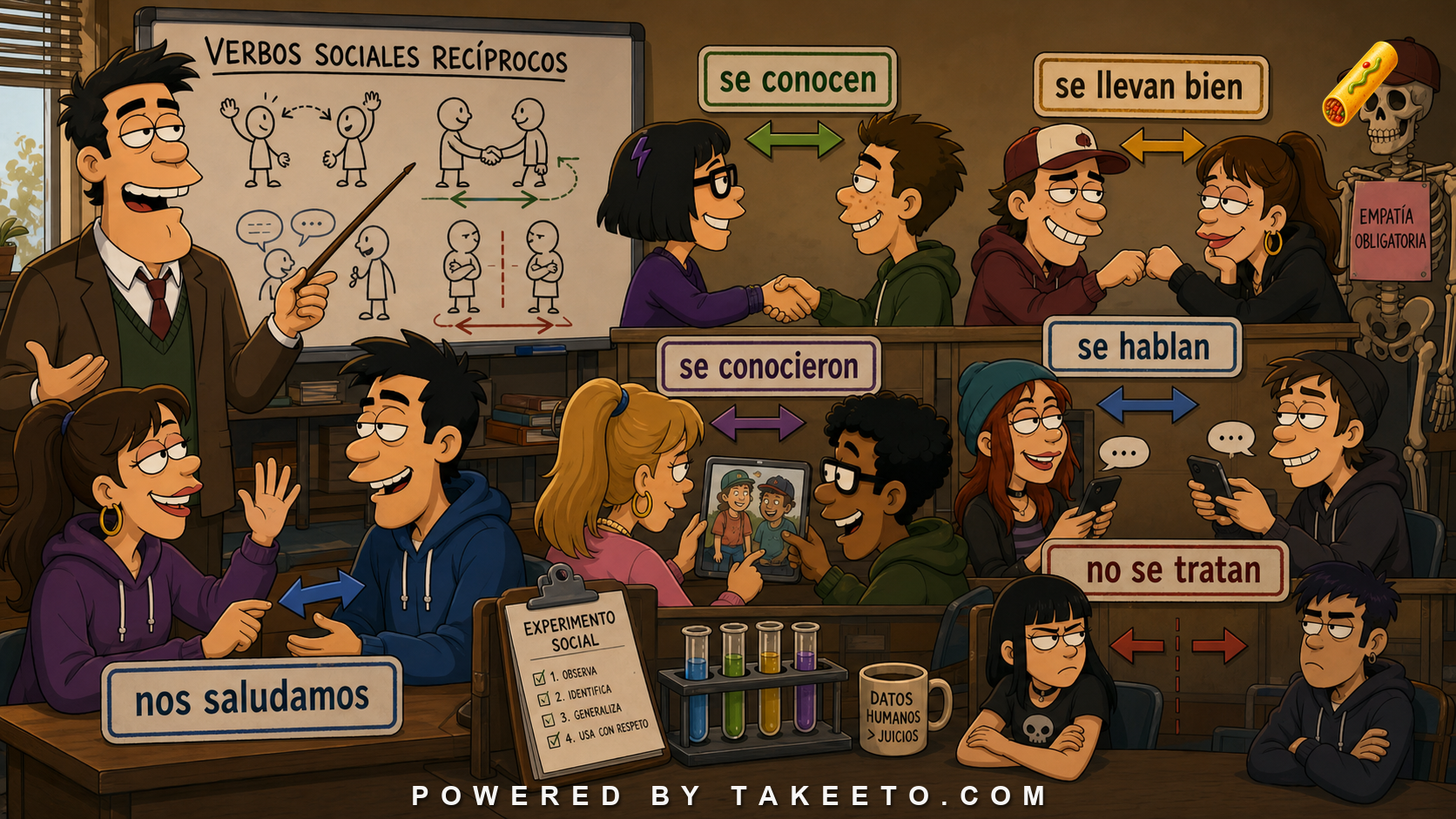
The reader can interpret reciprocal social actions and relationship predicates.
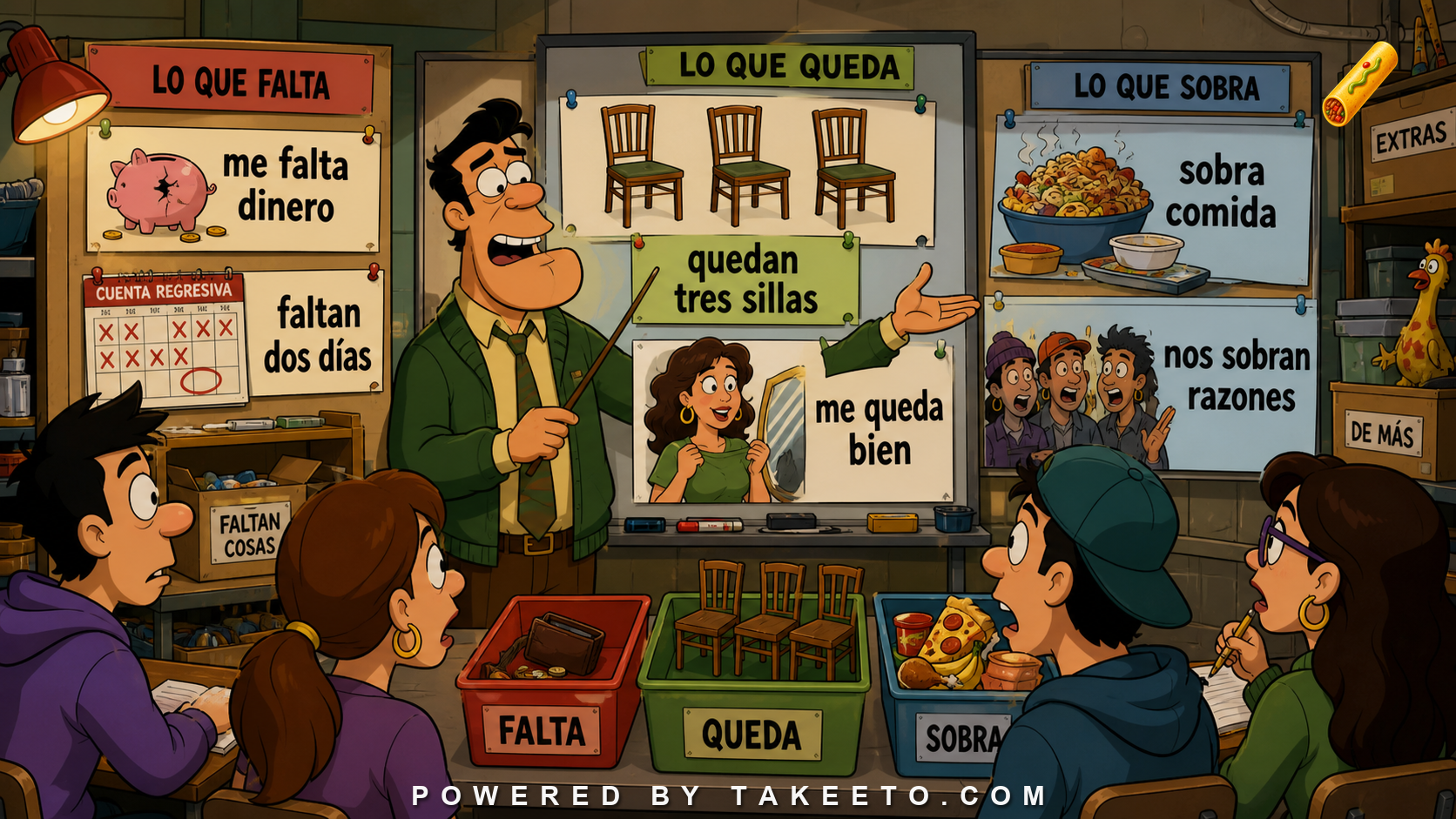
The reader can parse quantity-state verbs that often confuse English speakers.
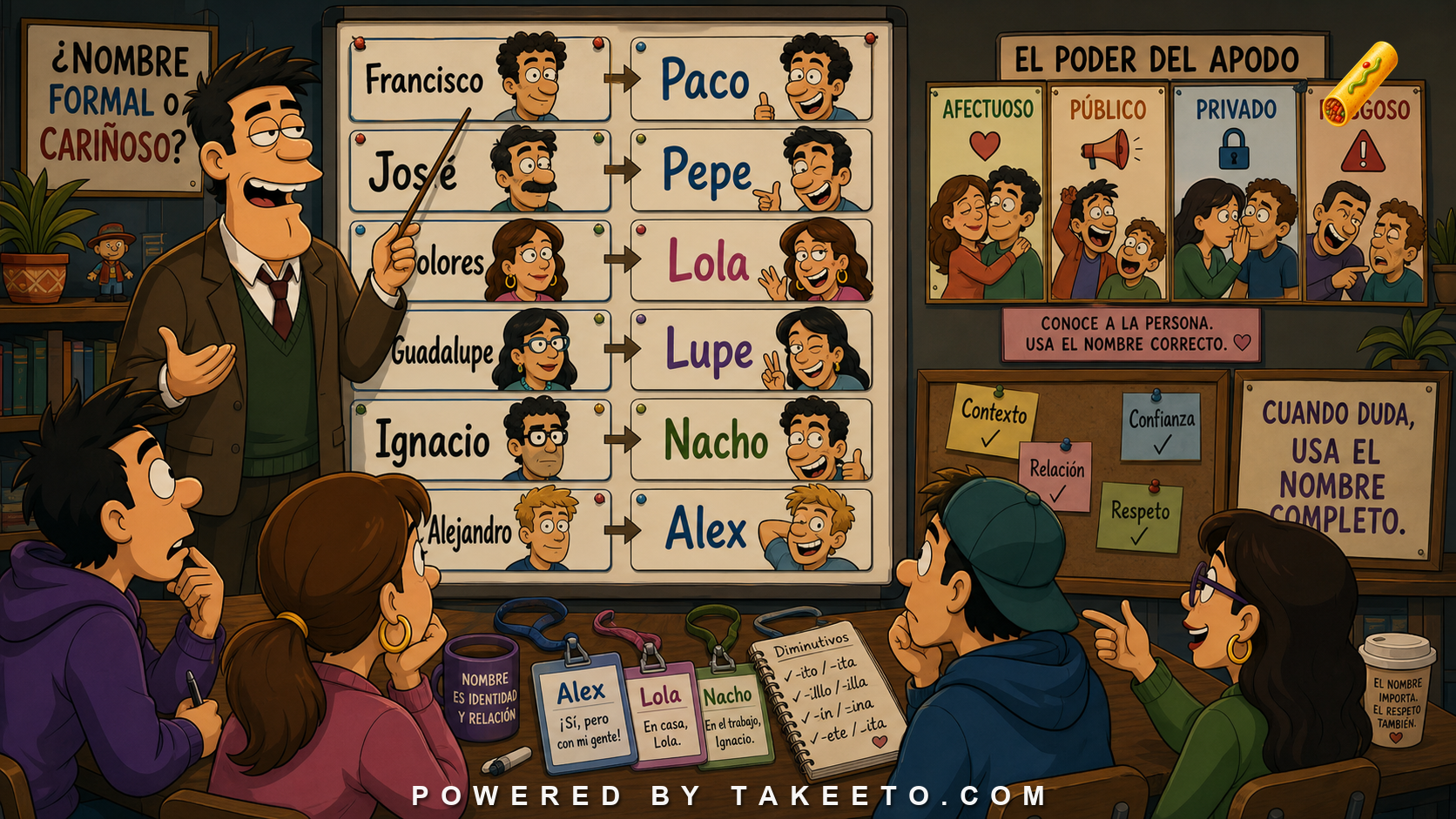
The reader can recognize common nickname formation and its social force.
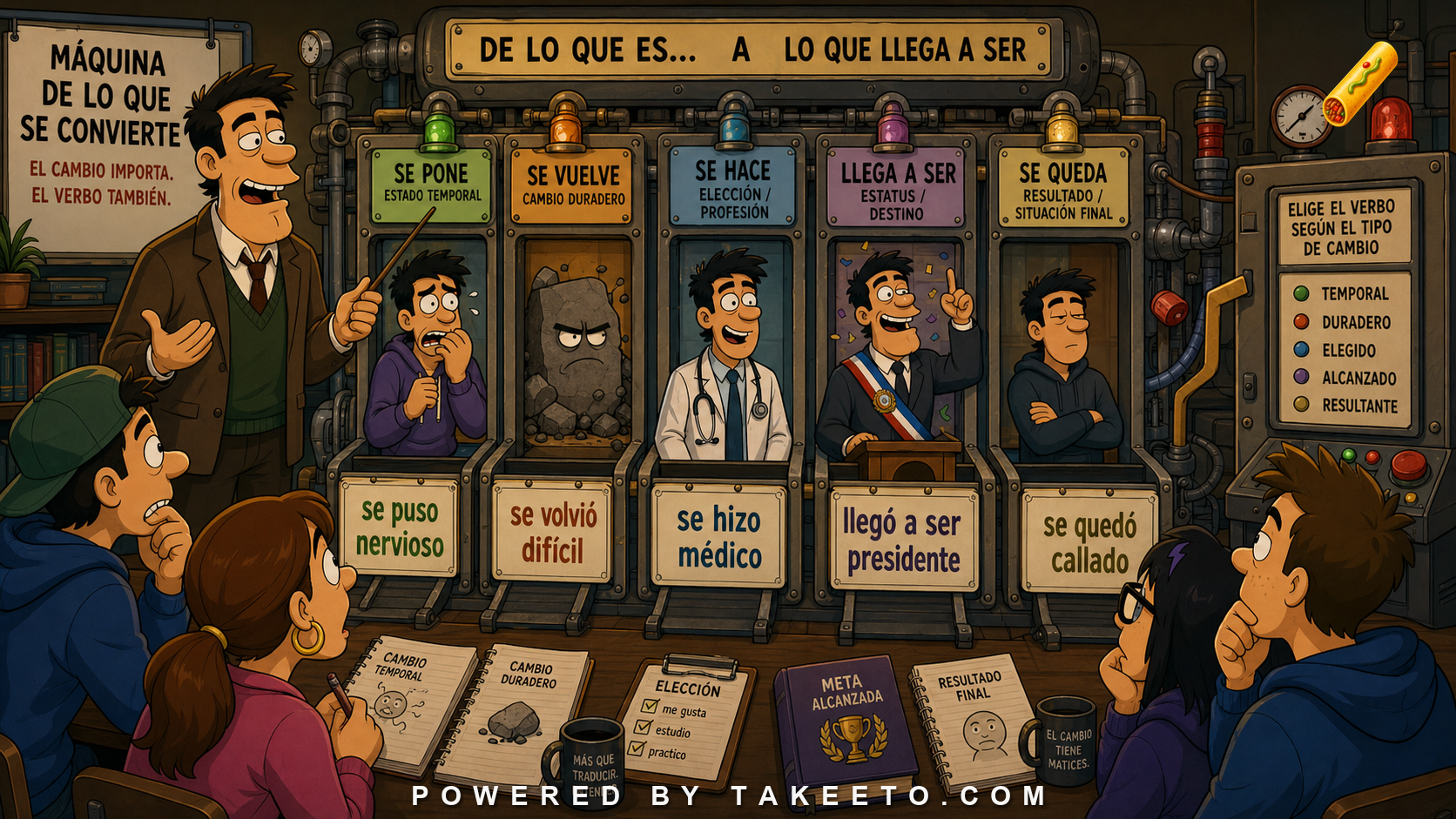
The reader can choose among Spanish becoming verbs based on type of change.
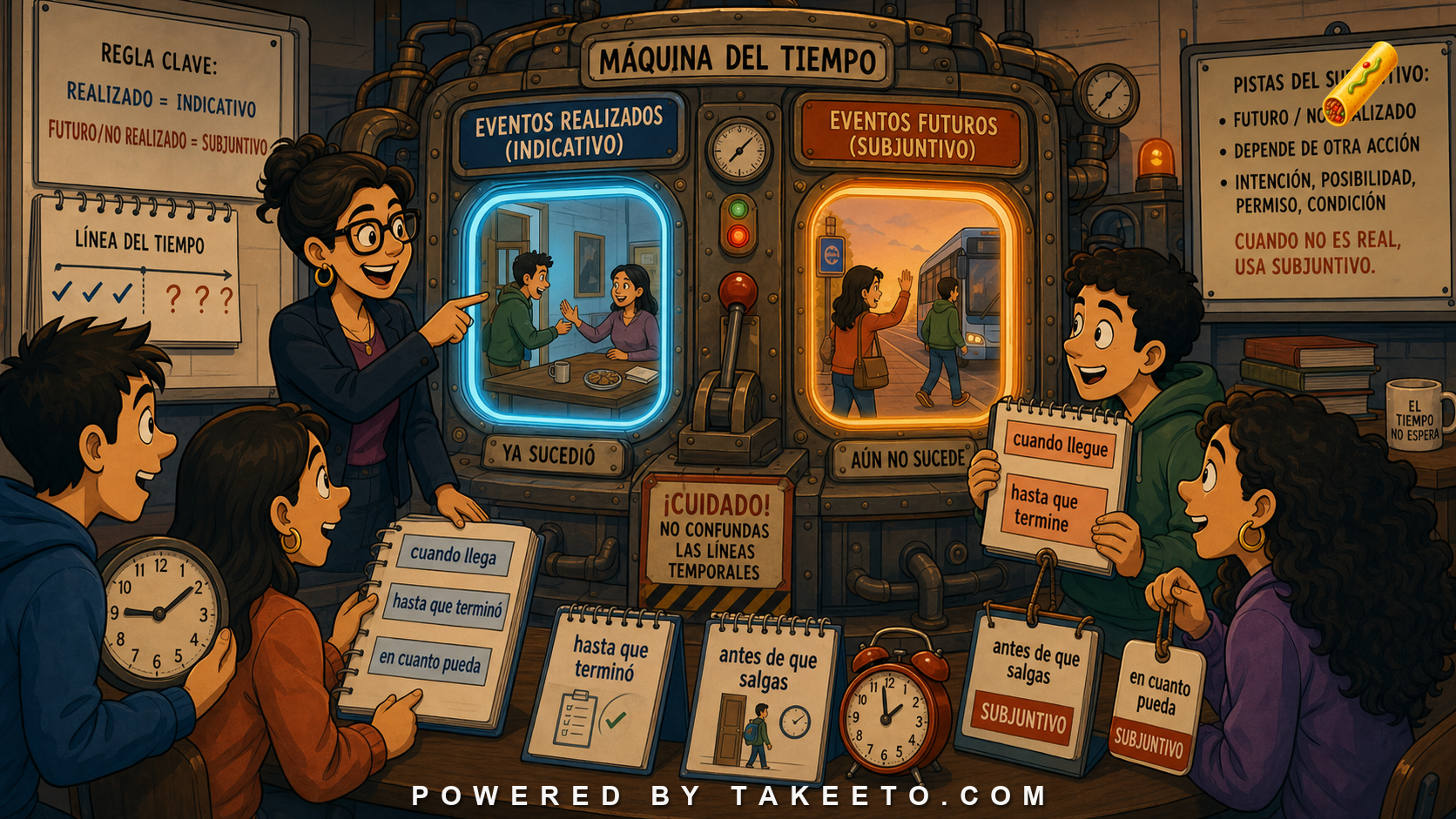
The reader can choose indicative or subjunctive in temporal clauses based on realized versus future events.
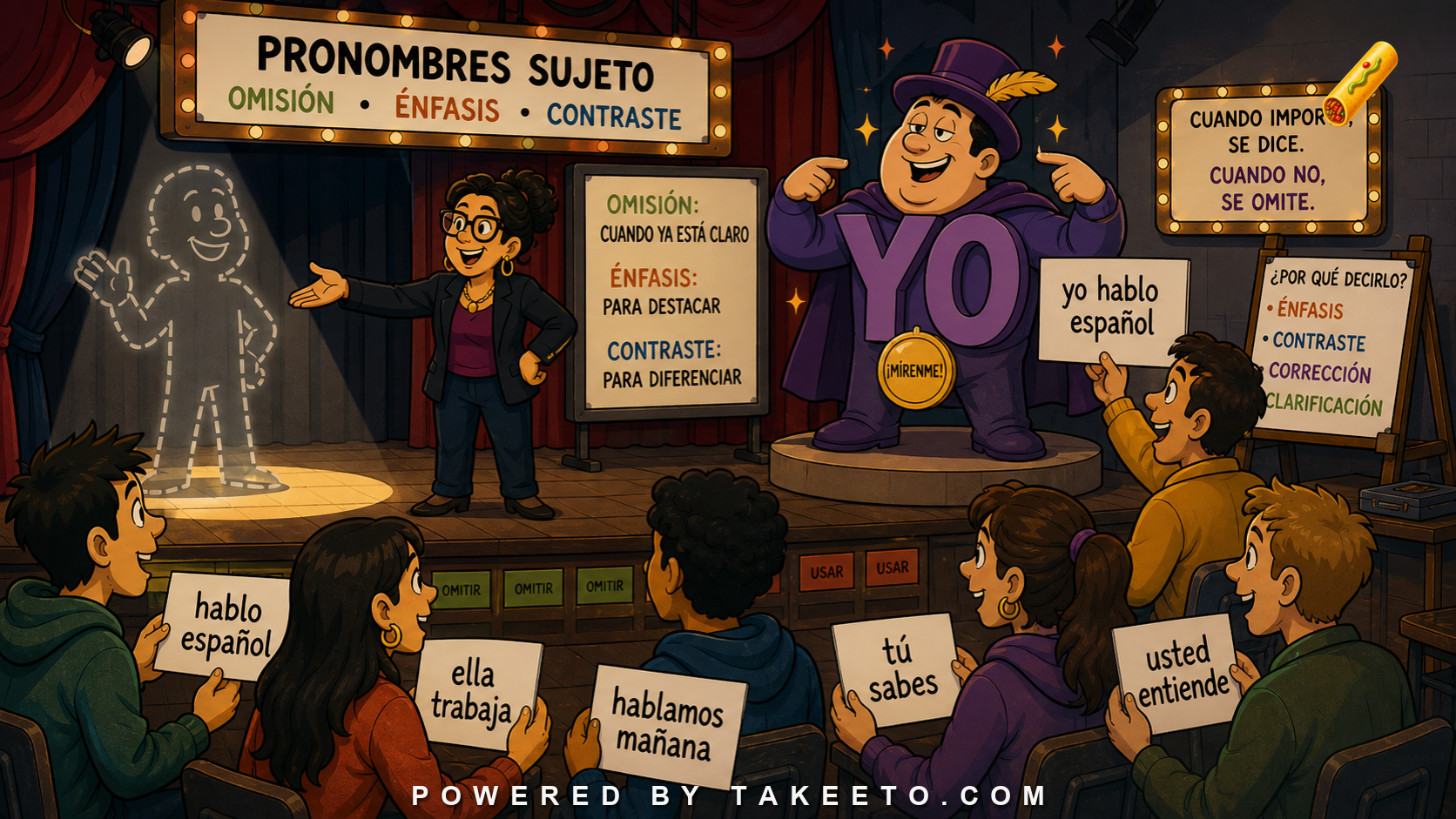
The reader can explain when Spanish omits subject pronouns and when explicit pronouns carry meaning.
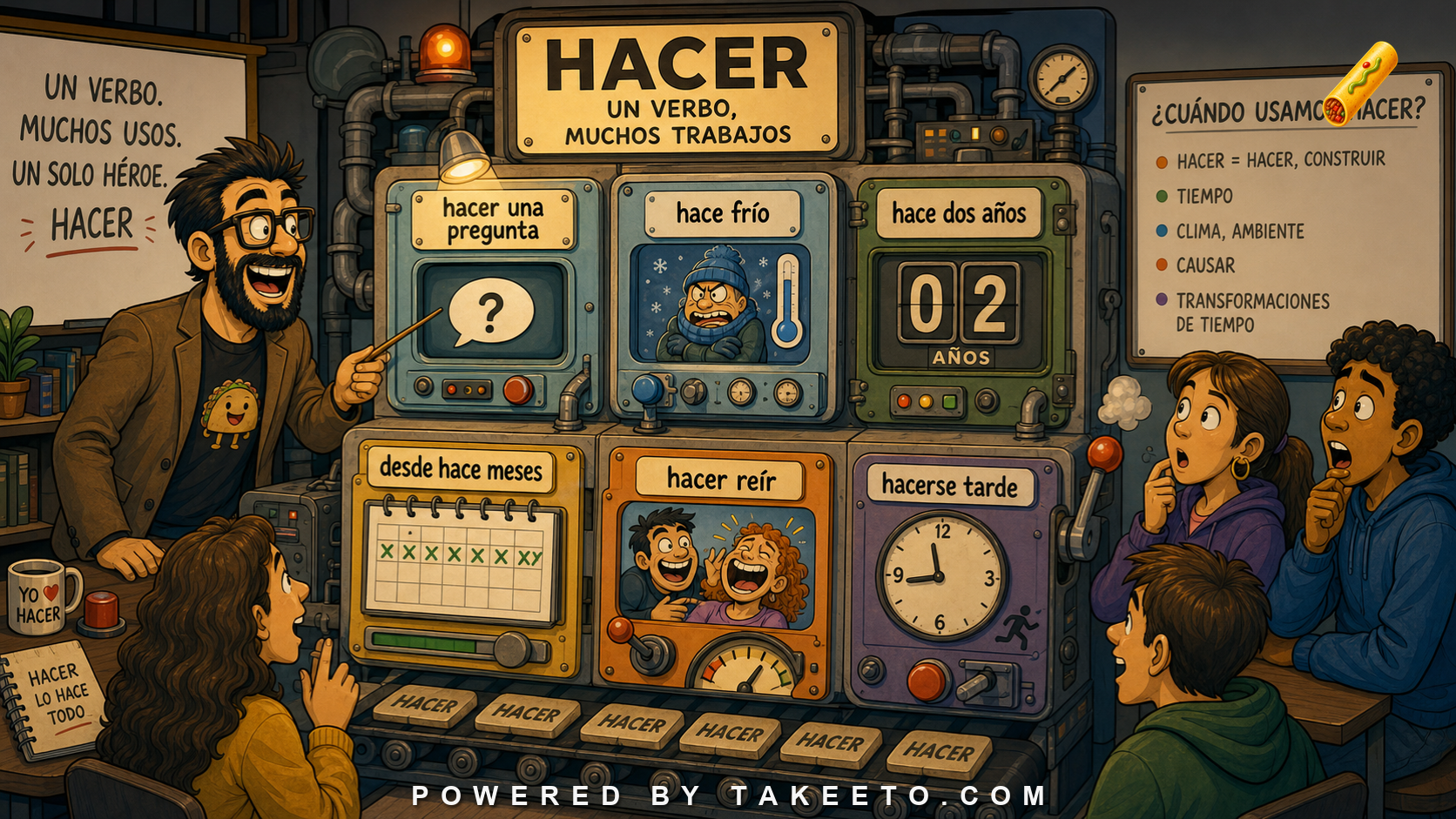
The reader can parse hacer across concrete, temporal, environmental, and causative uses.
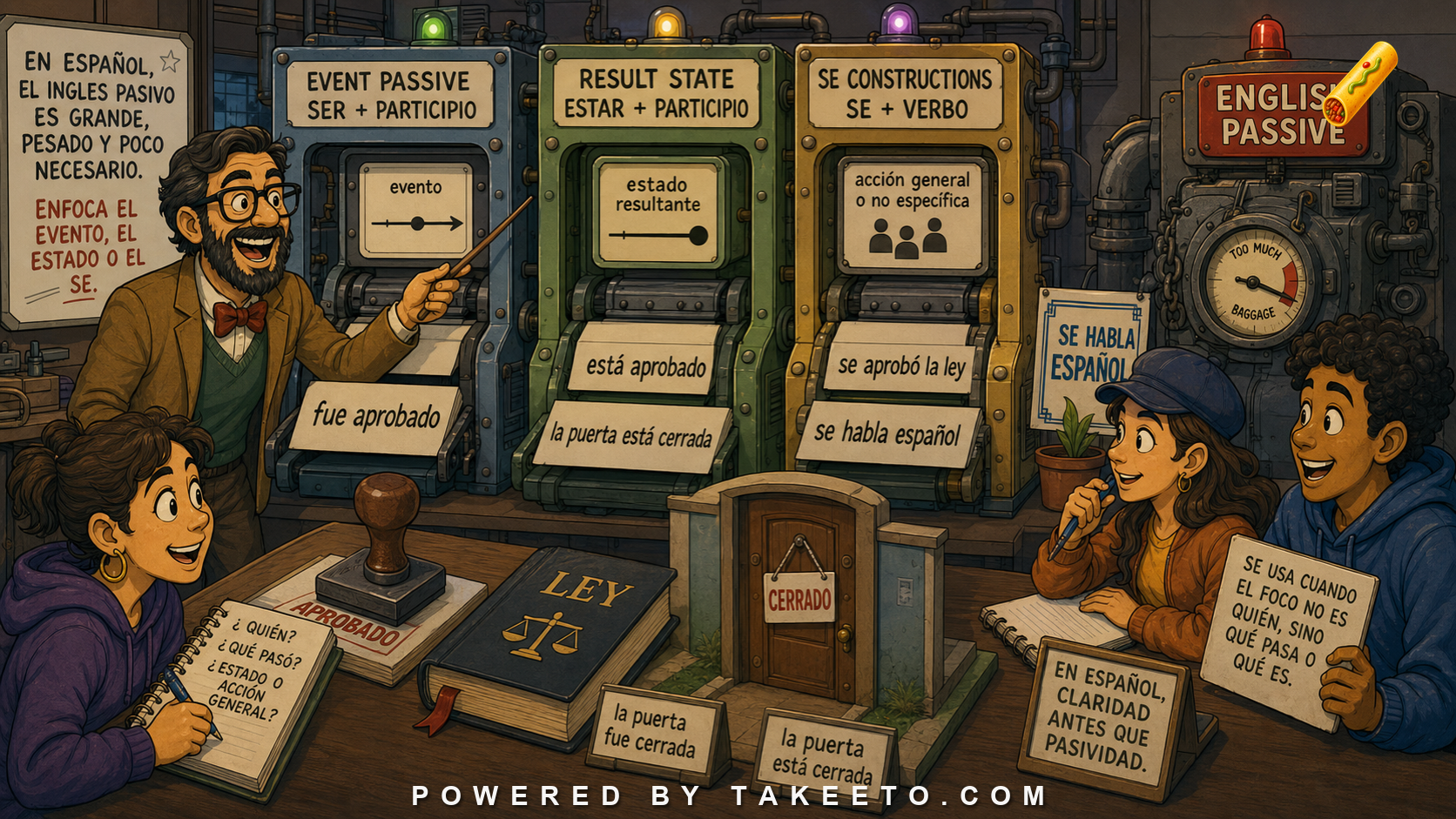
The reader can distinguish event passive, resultative state, and se constructions.
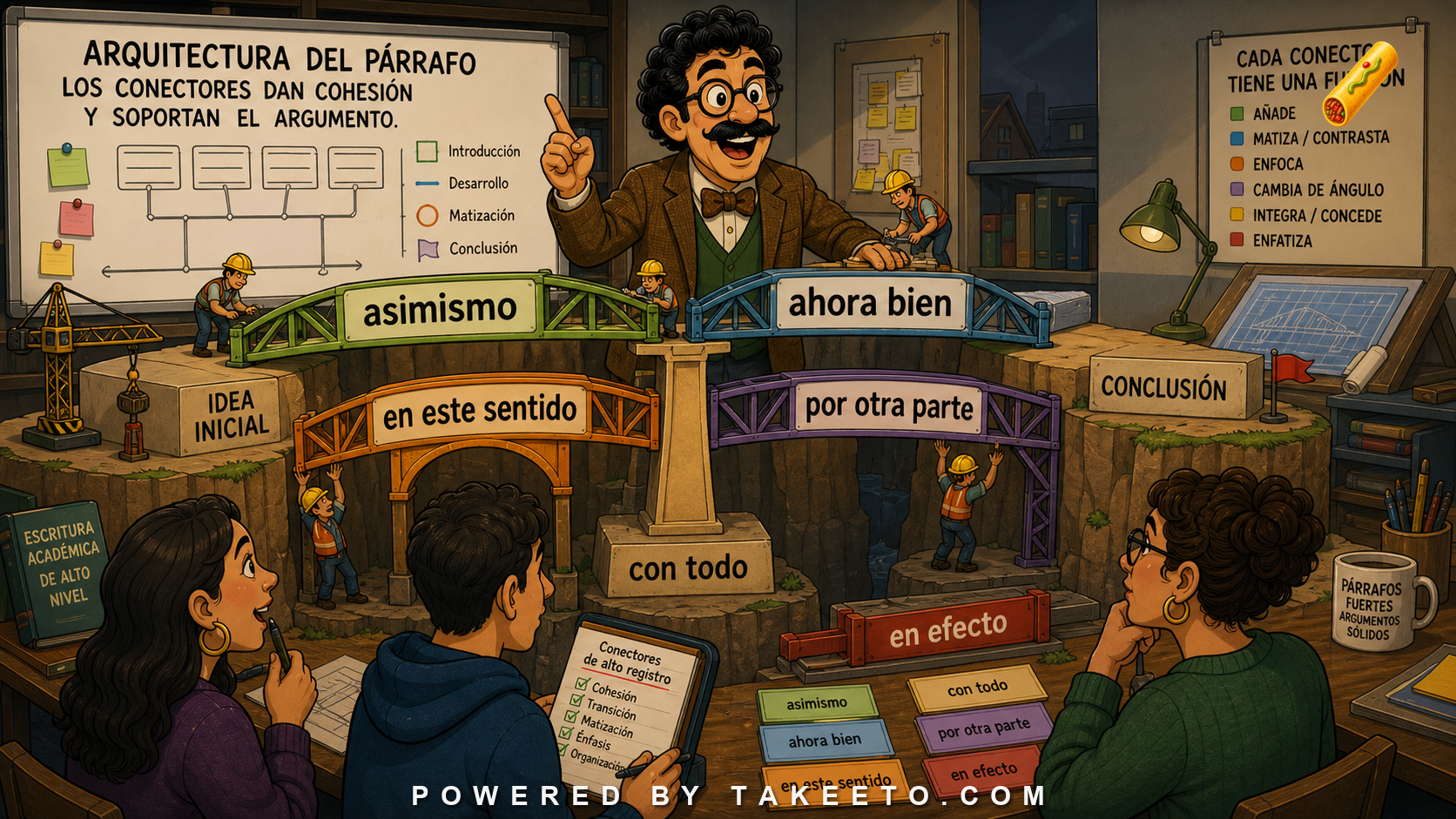
The reader can interpret high-register connectors as paragraph architecture.
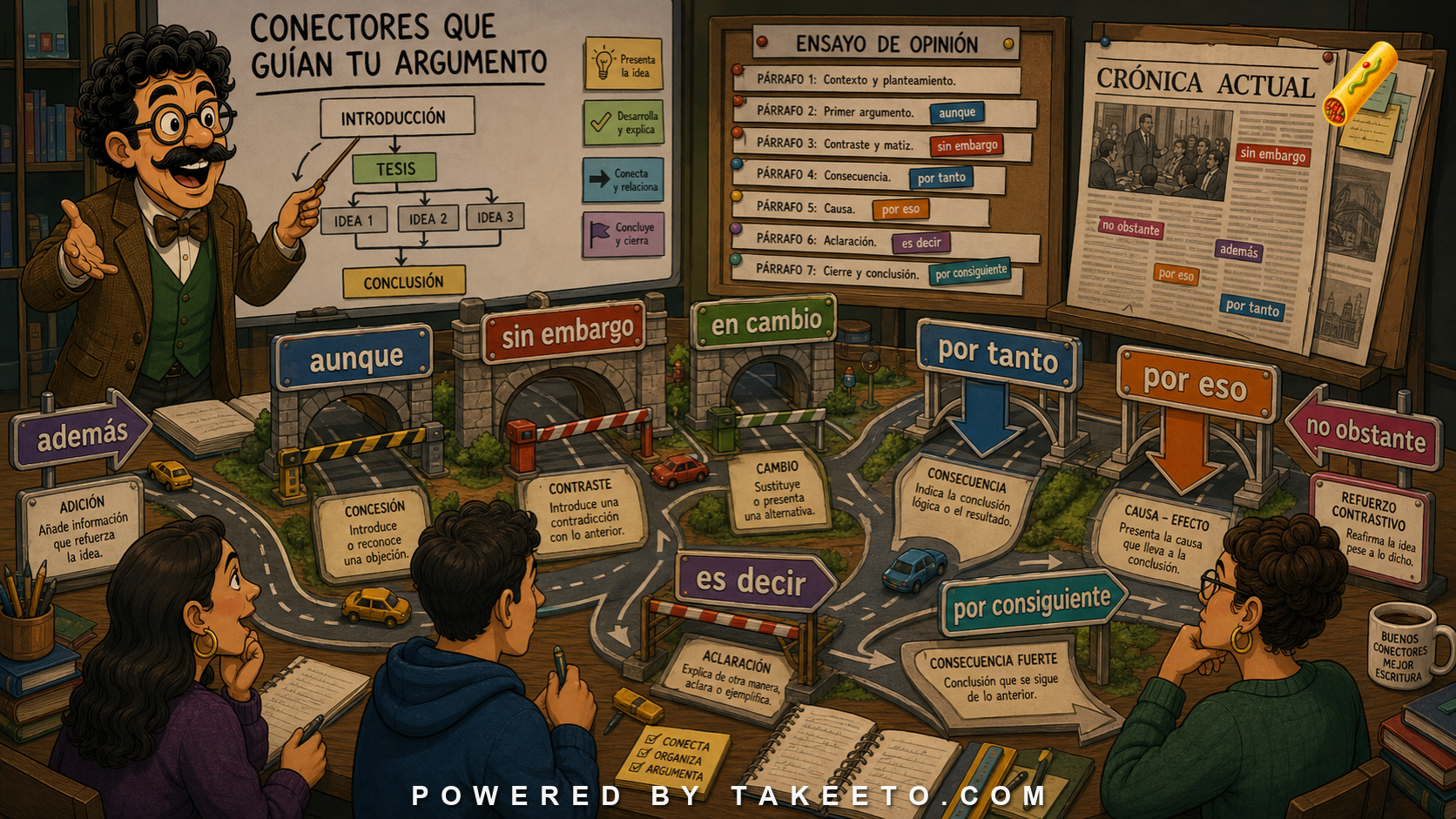
The reader can follow argument structure in essays, journalism, and academic prose.
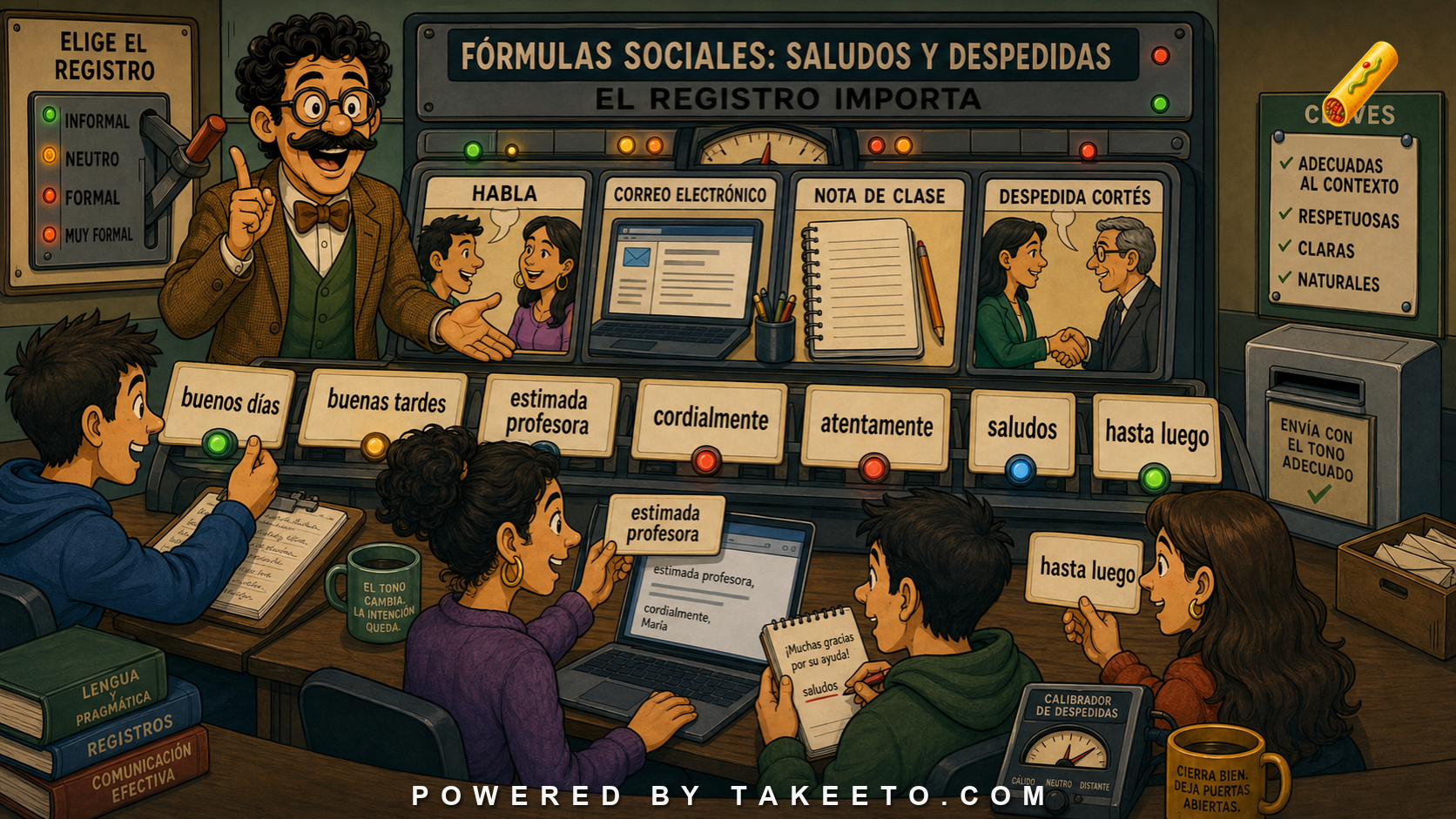
The reader can open and close interactions naturally in speech, email, and formal writing.
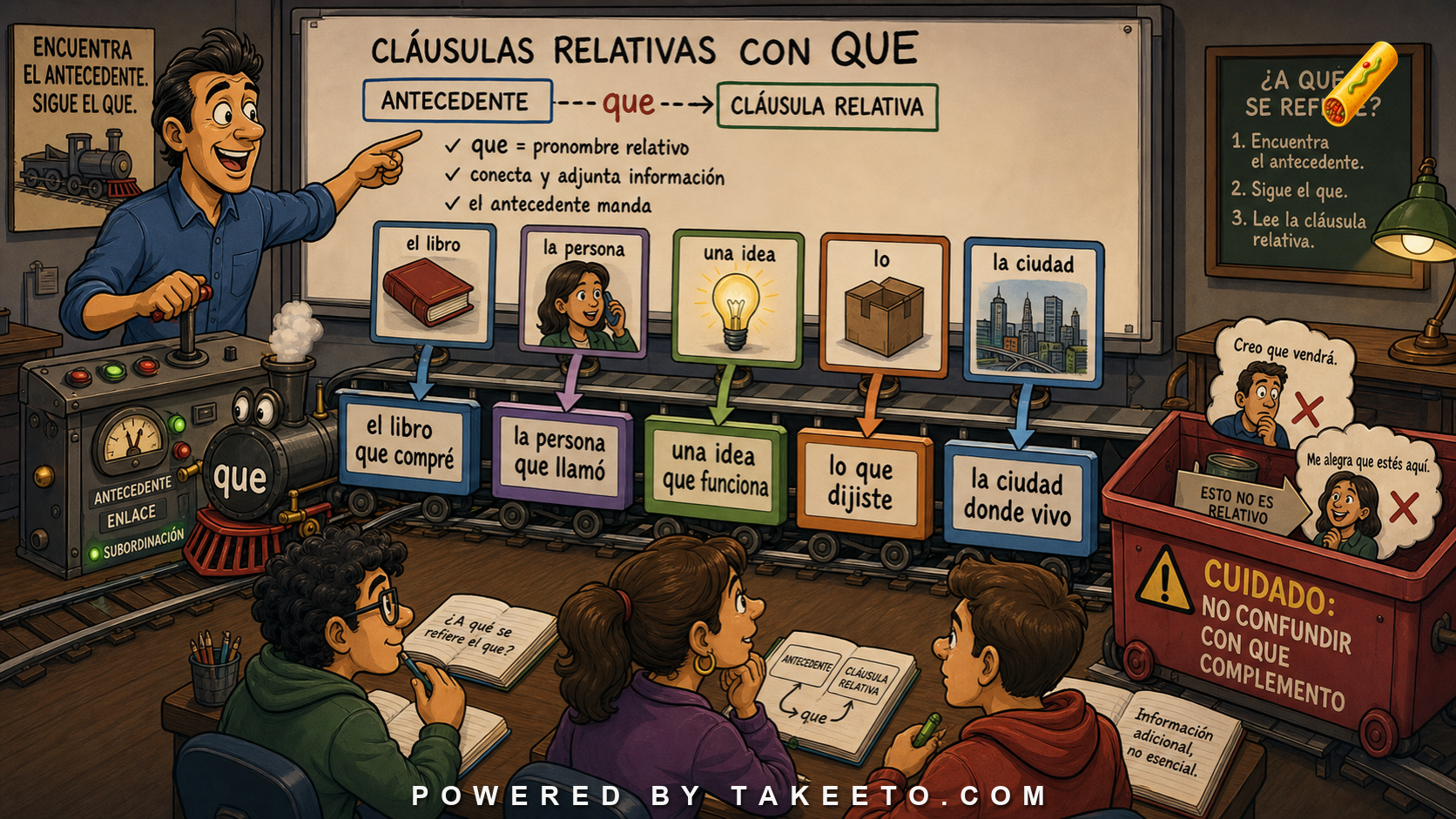
The reader can parse que relative clauses, find their antecedents, and avoid confusing relative que with complement que.
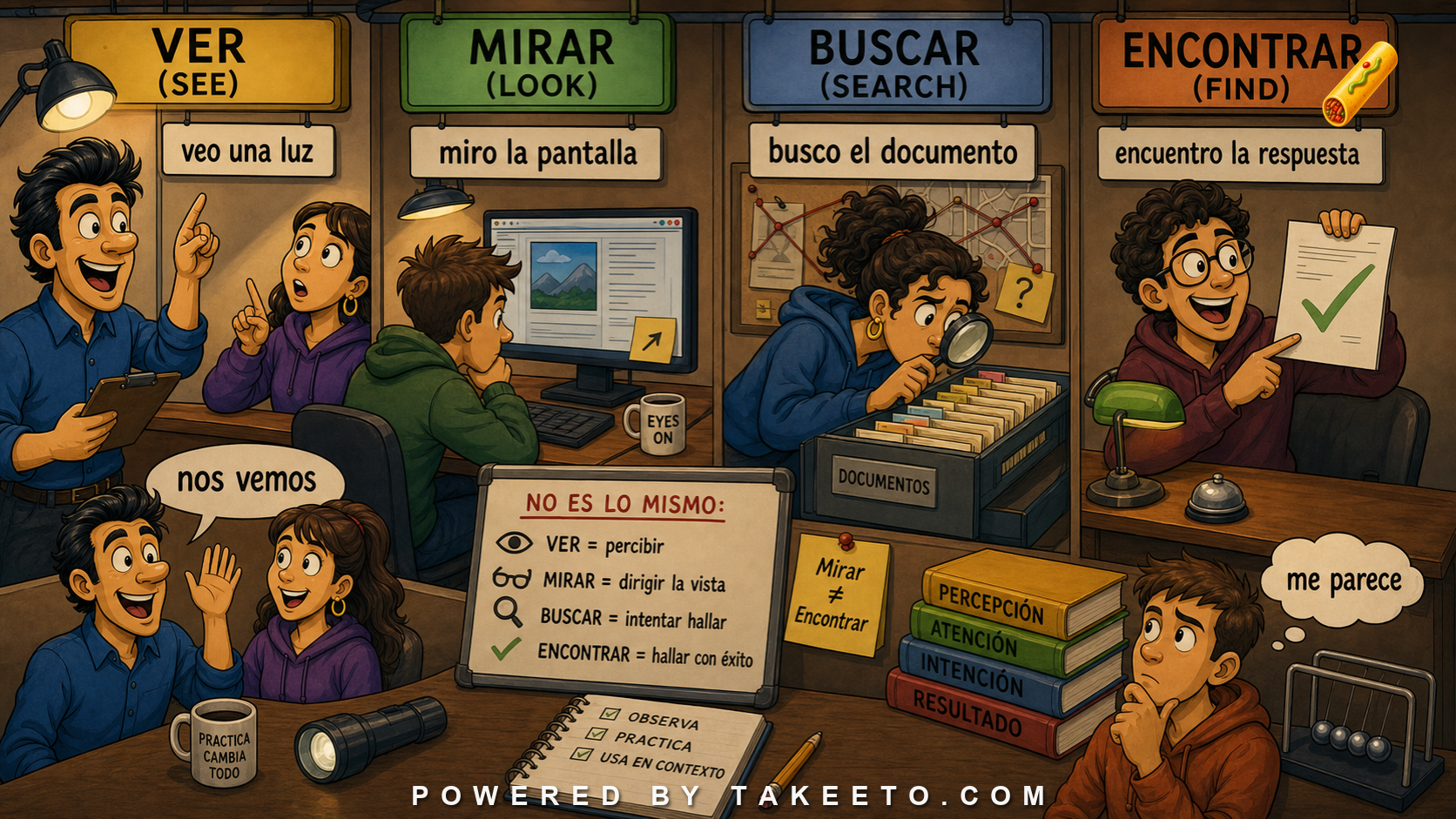
The reader can distinguish seeing, looking, searching, and finding.
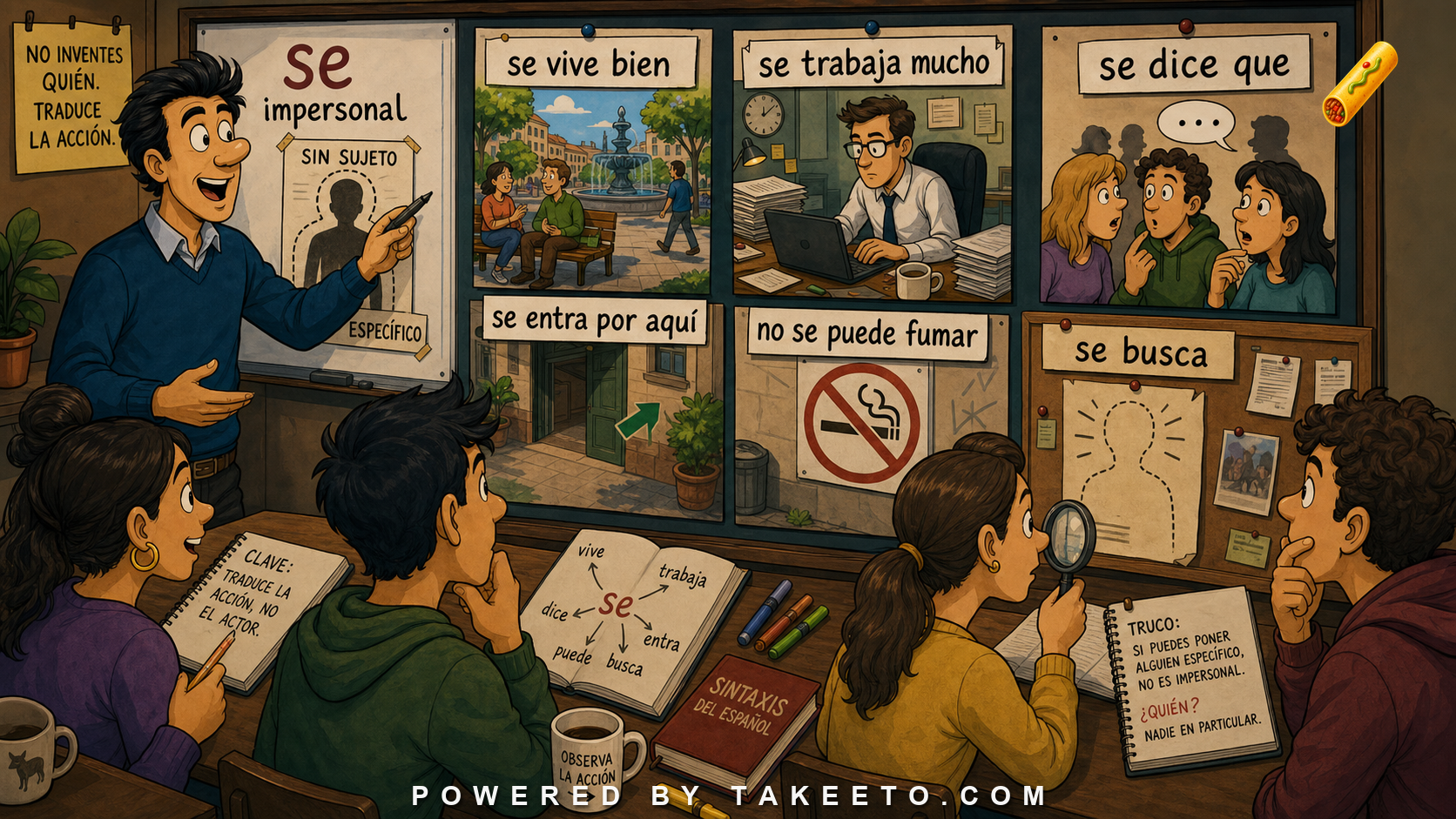
The reader can identify impersonal se and translate it without inventing a specific agent.
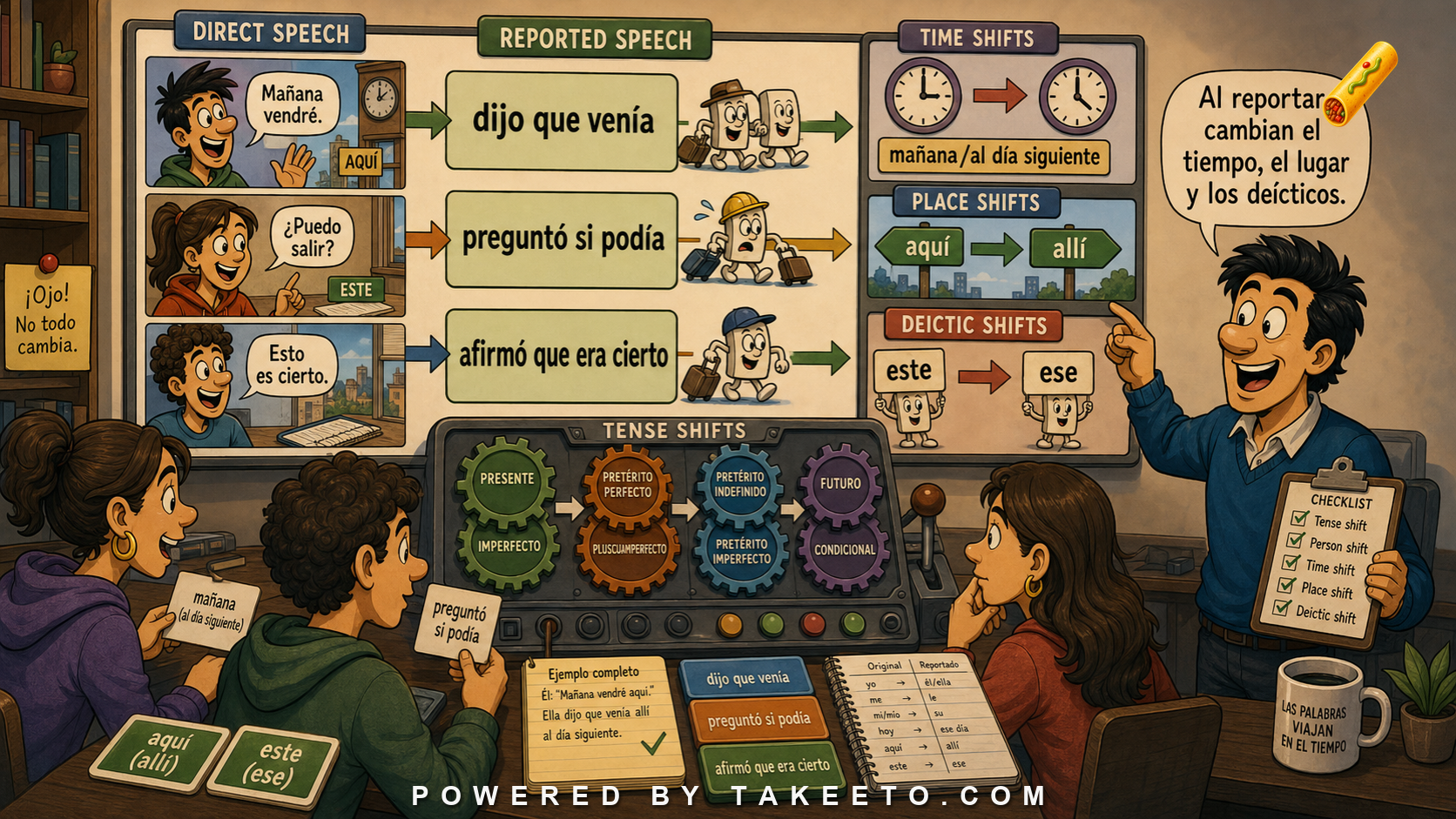
The reader can transform direct speech into reported speech while tracking tense, person, and time references.
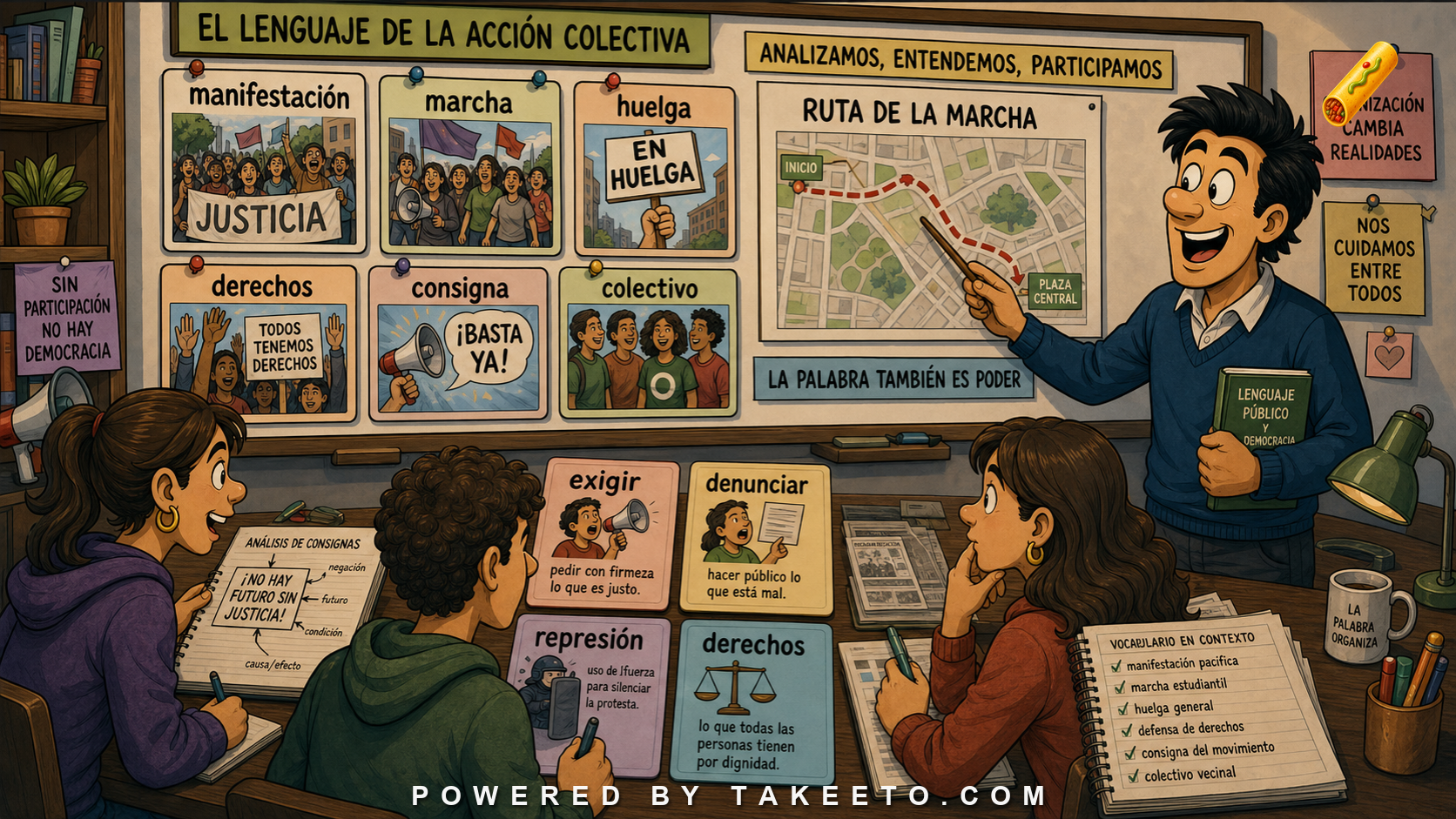
The reader can understand demonstration, activism, and rights language.
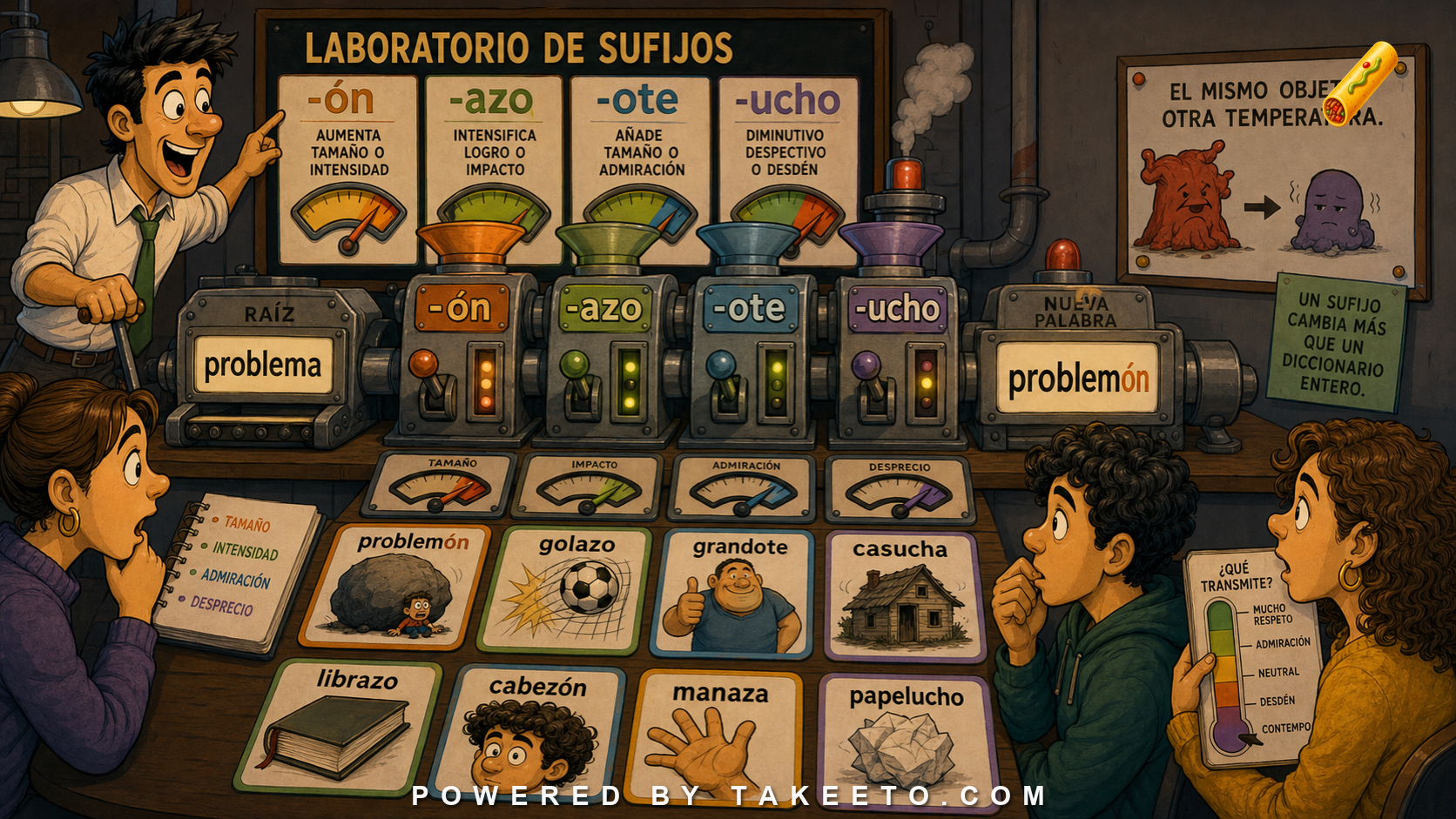
The reader can interpret size, intensity, admiration, and contempt in Spanish suffixes.
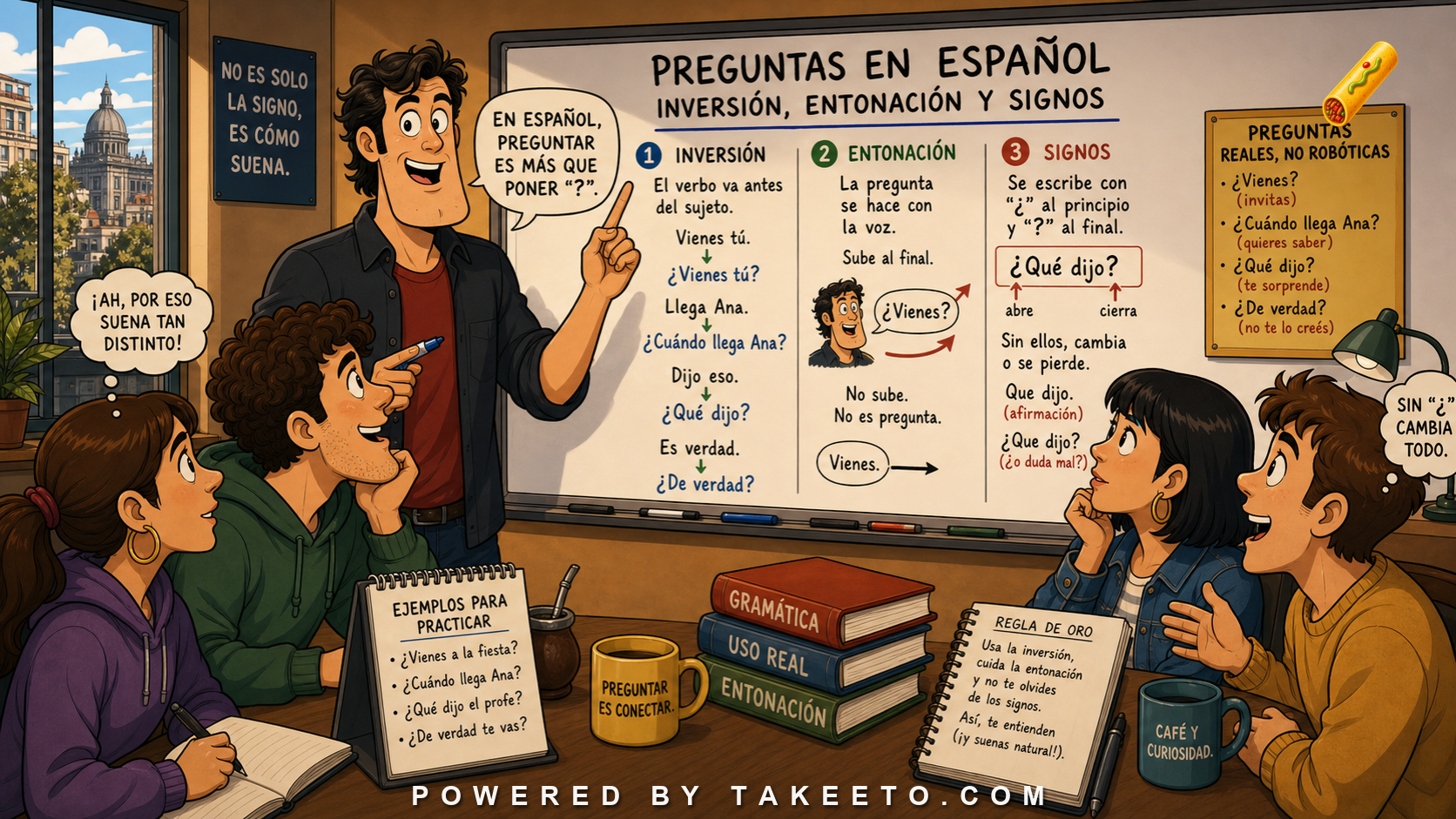
The reader understands Spanish question formation beyond adding question marks.
The reader can distinguish factual/skill knowledge from familiarity and acquaintance.
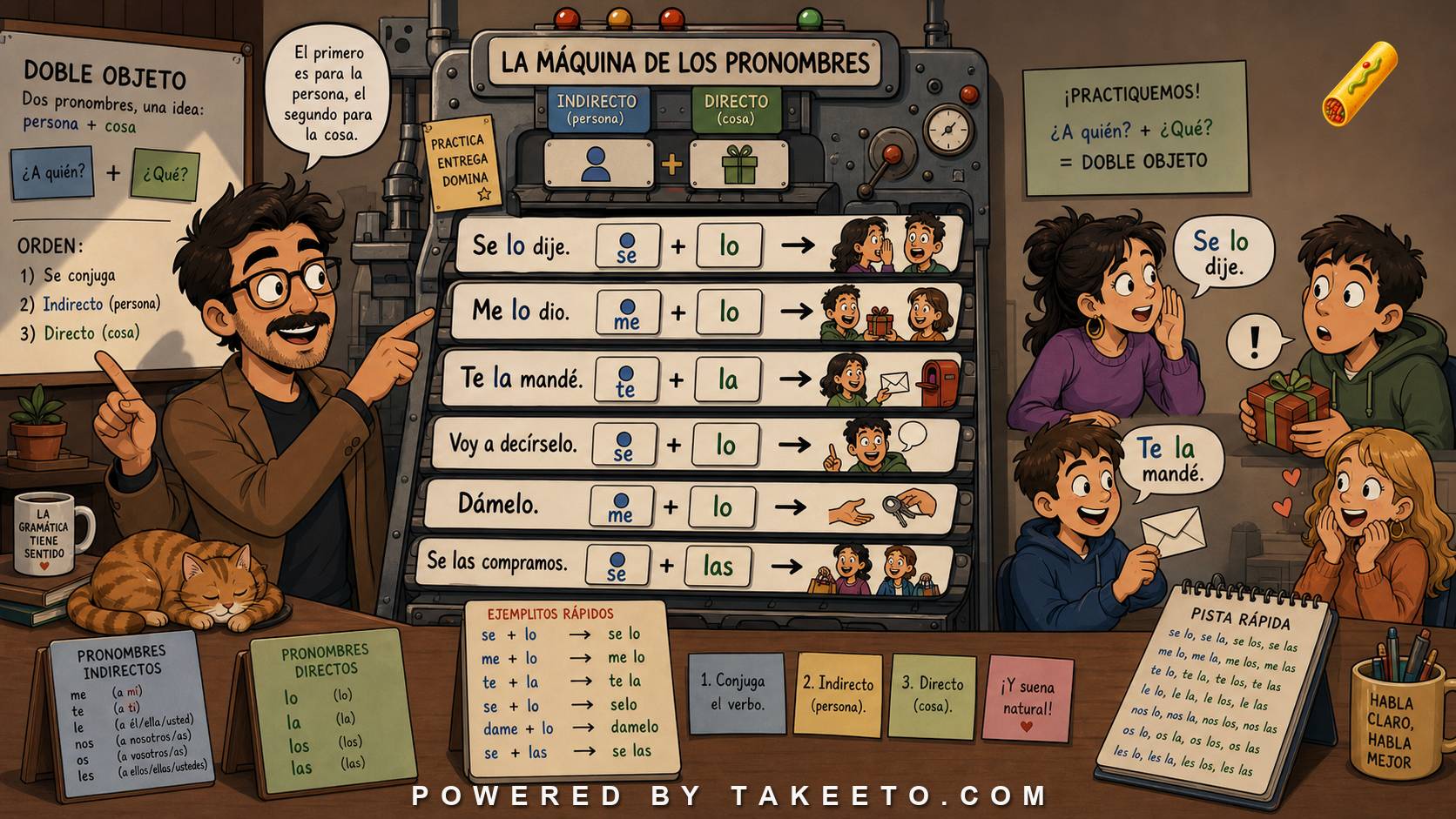
The reader can form and parse Spanish double-pronoun sequences.
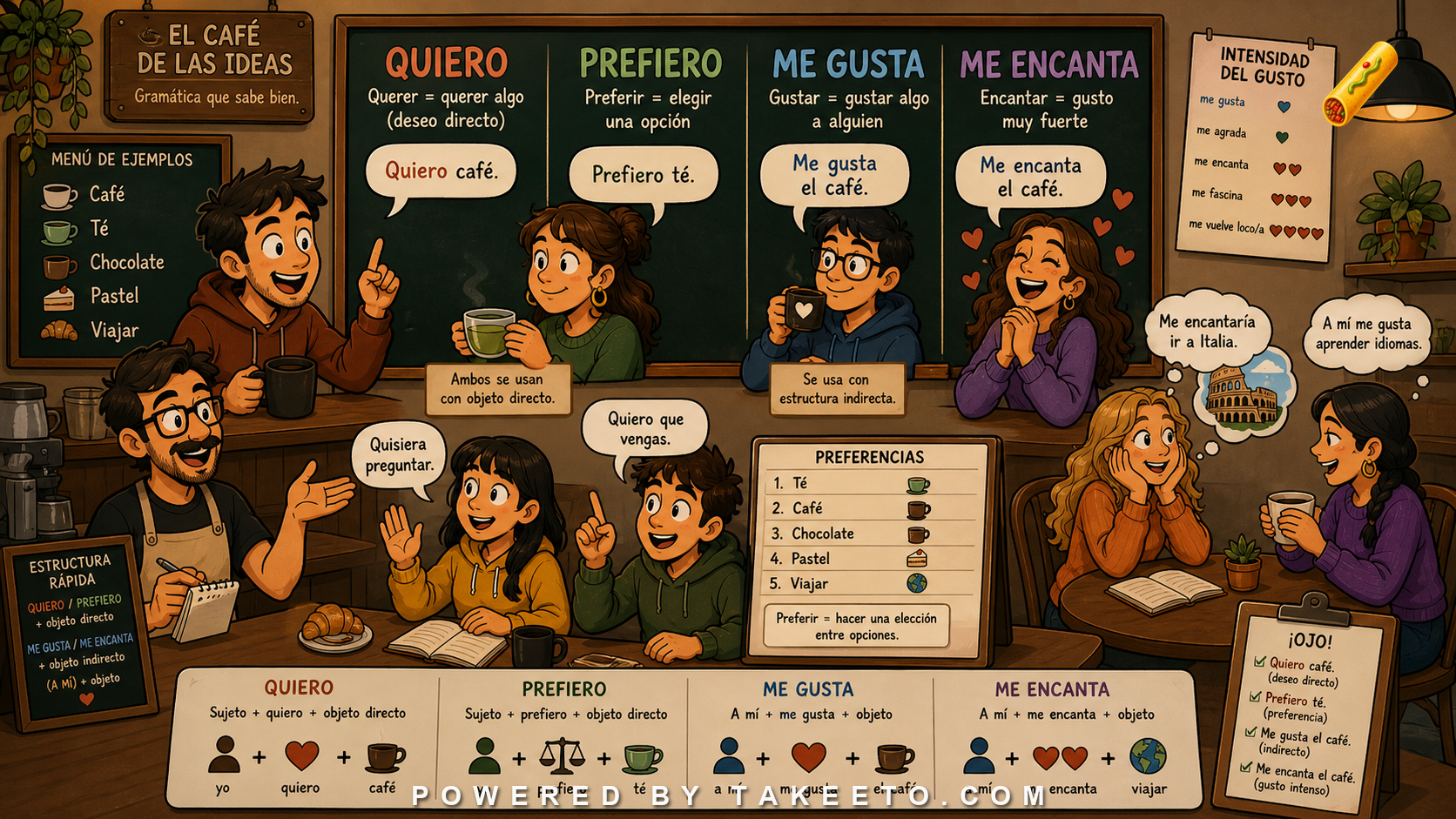
The reader can separate wanting, liking, preference, and affective intensity.
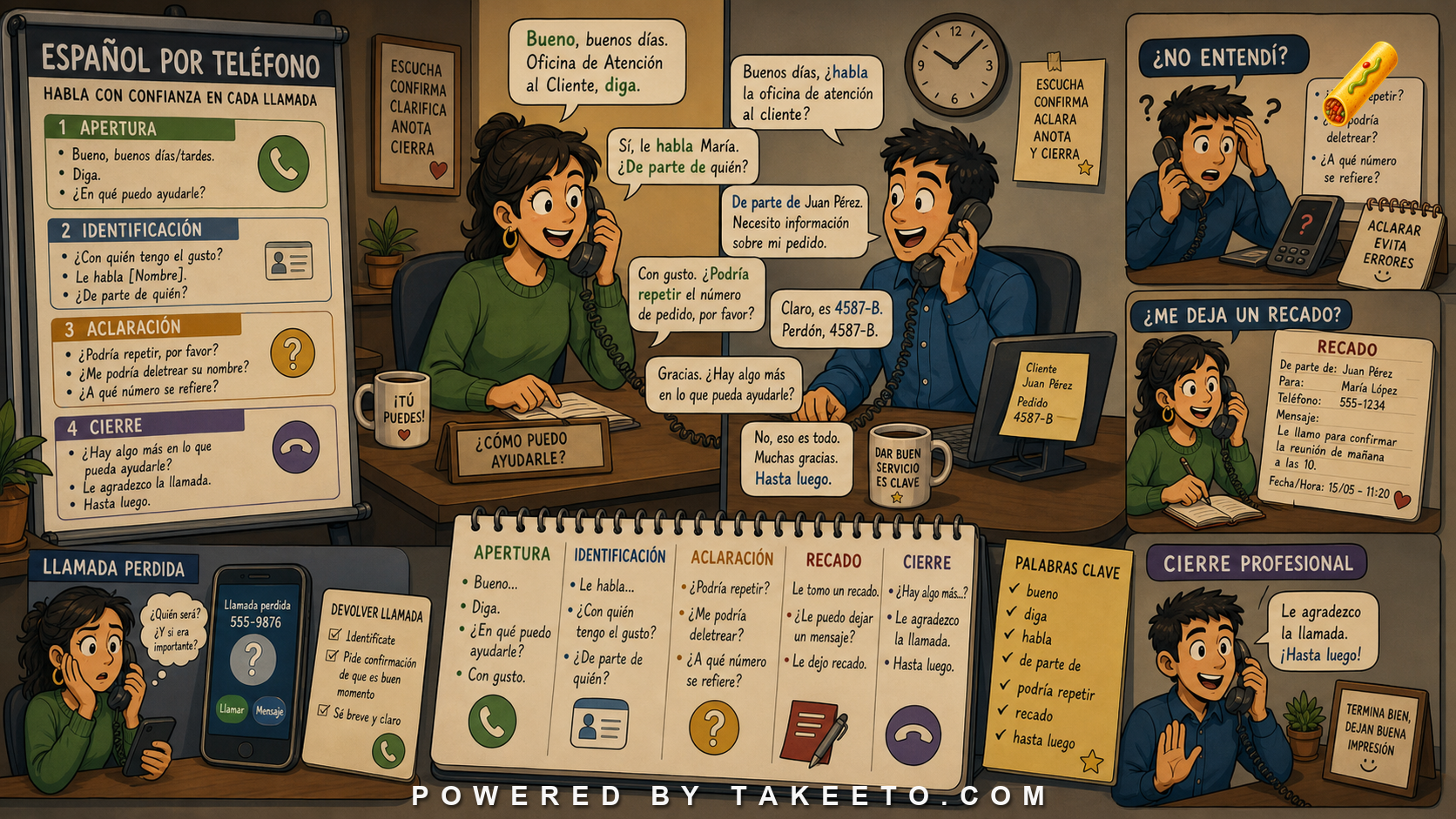
The reader can handle phone interactions with scripted confidence.
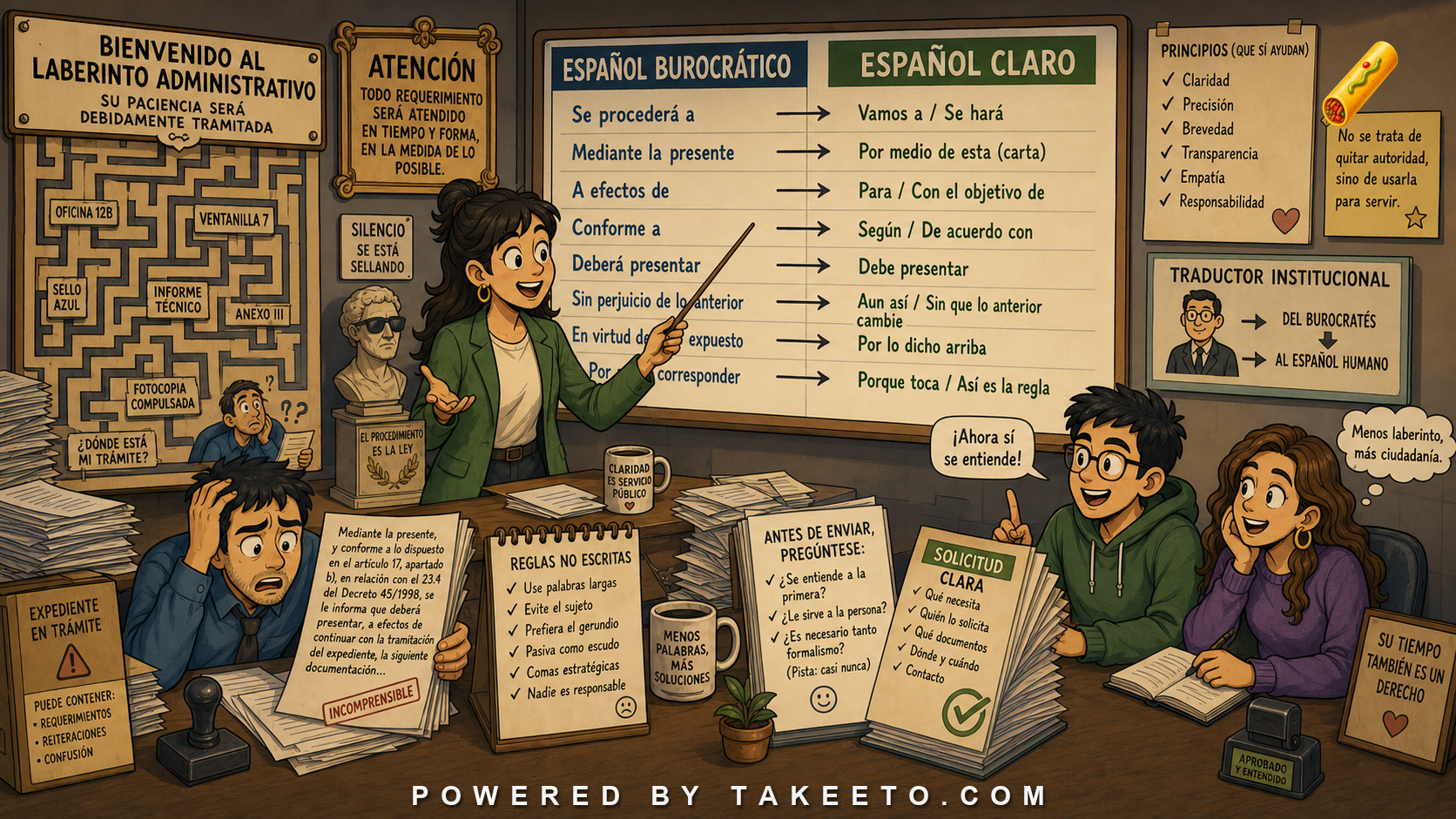
The reader can unpack bureaucratic Spanish without adopting its worst habits.
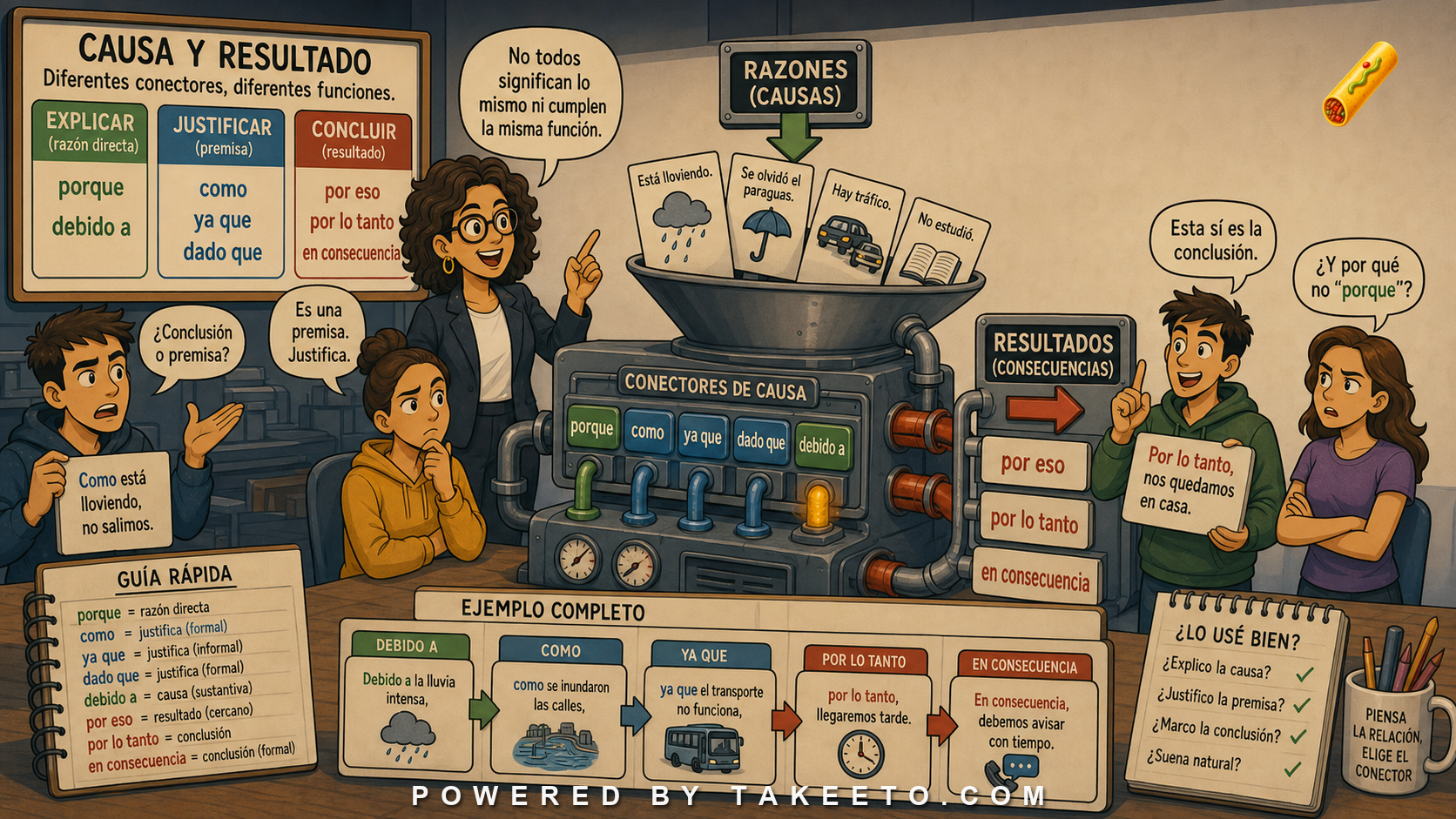
The reader can distinguish causal explanation, premise, and conclusion in Spanish.
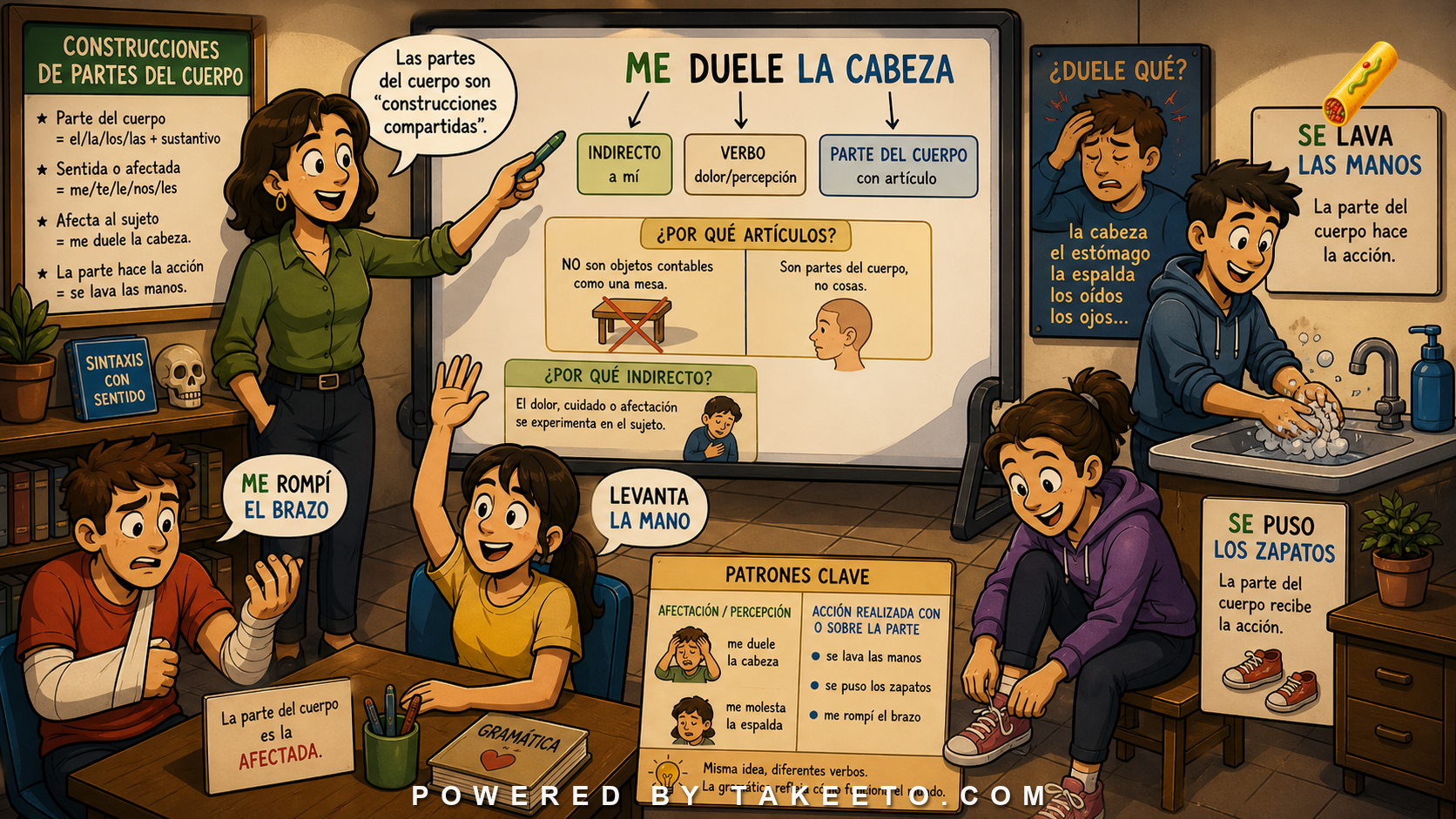
The reader understands why Spanish uses articles and indirect objects with body parts.
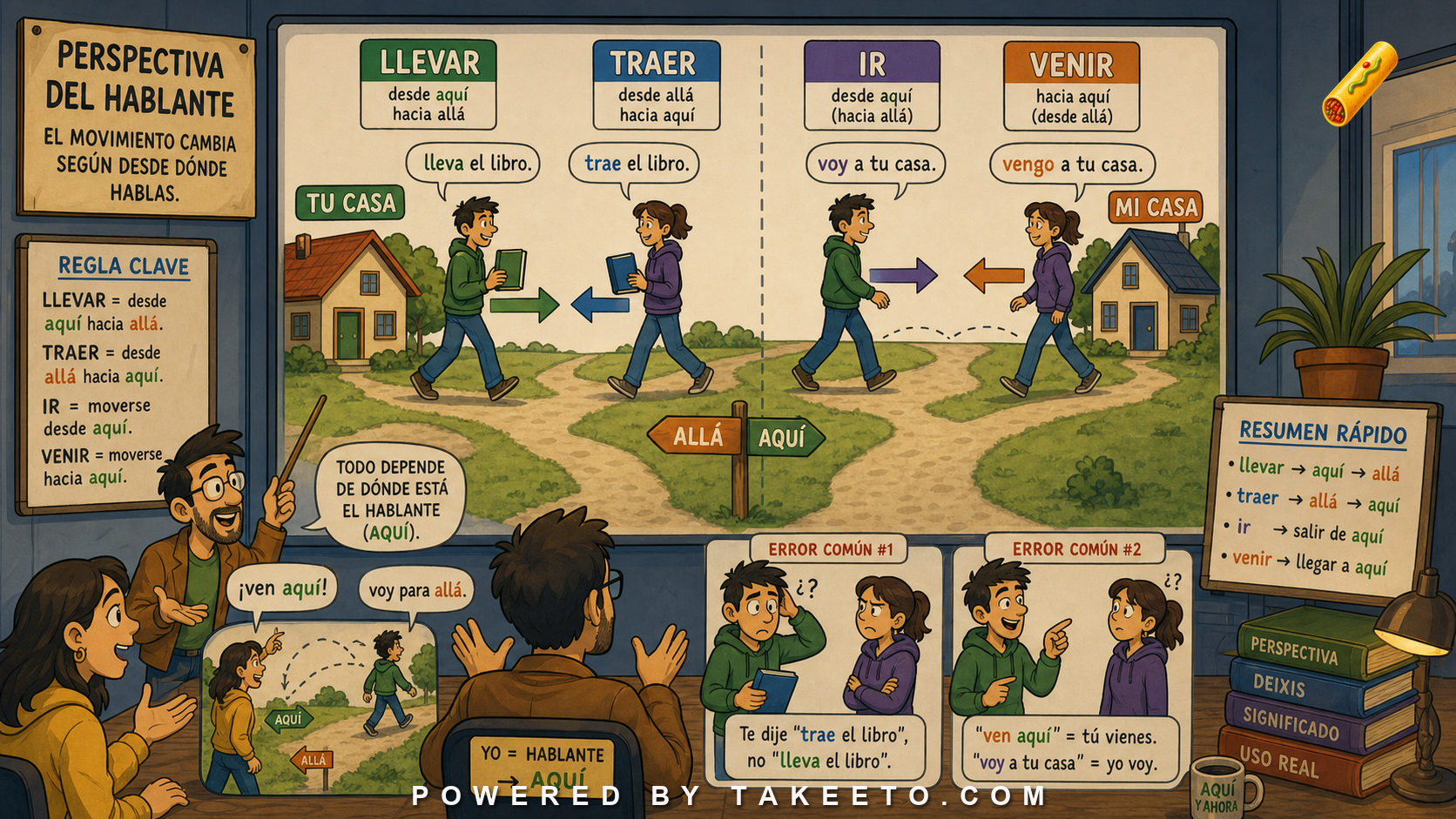
The reader can use motion and transfer verbs from the correct perspective.
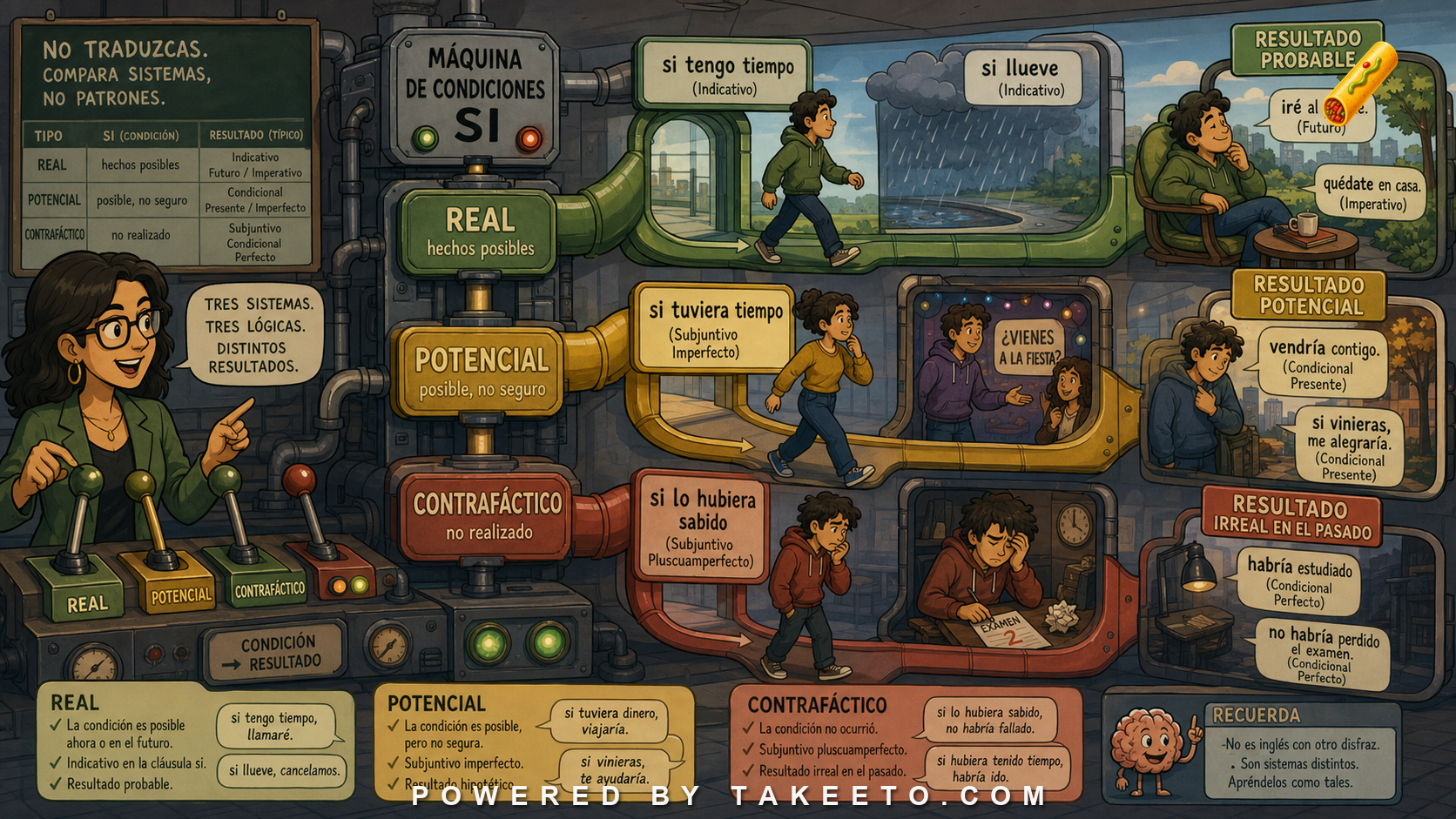
The reader can parse Spanish conditional systems without forcing English if-clause patterns onto them.
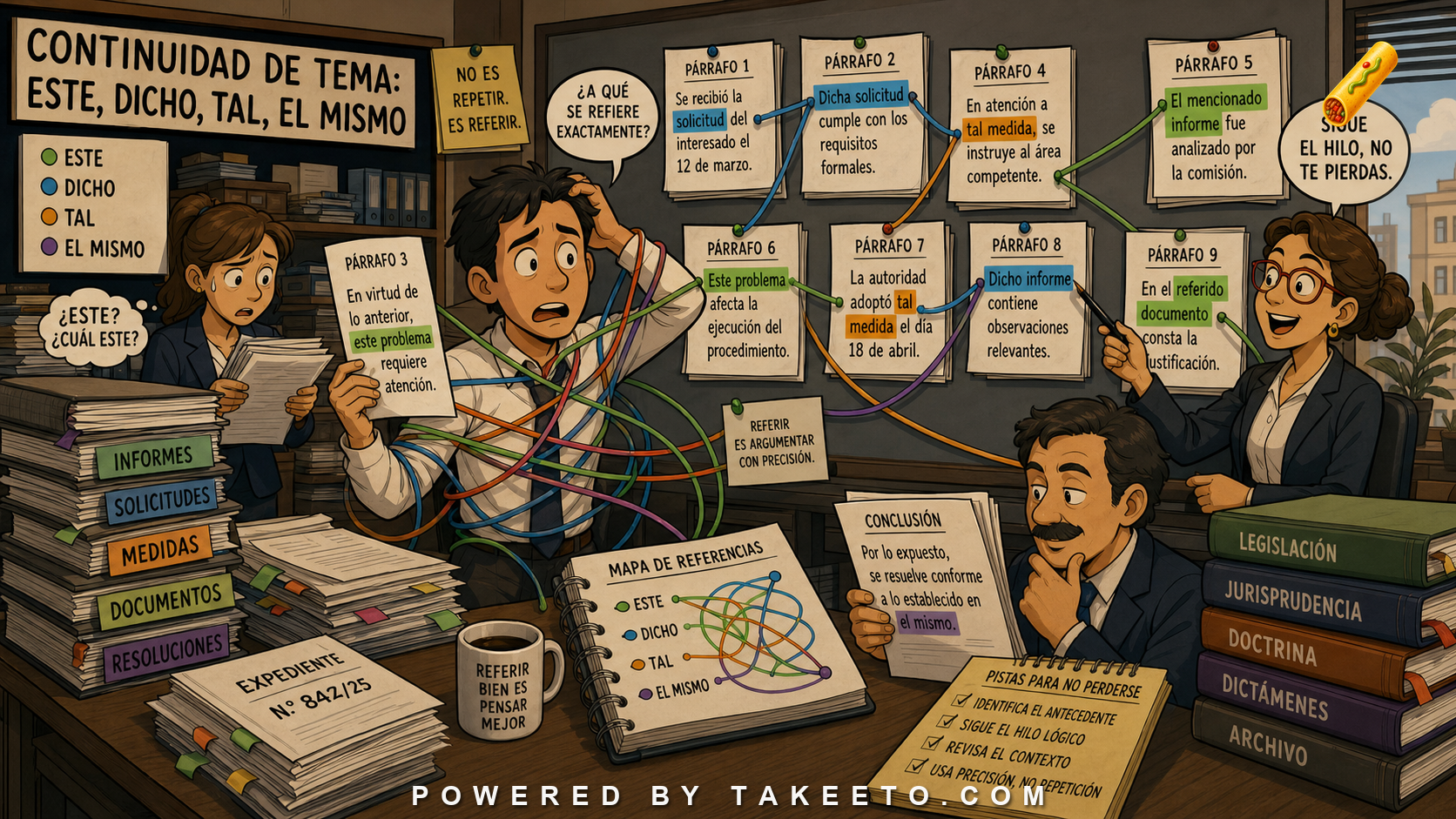
The reader can track reference across formal Spanish paragraphs.
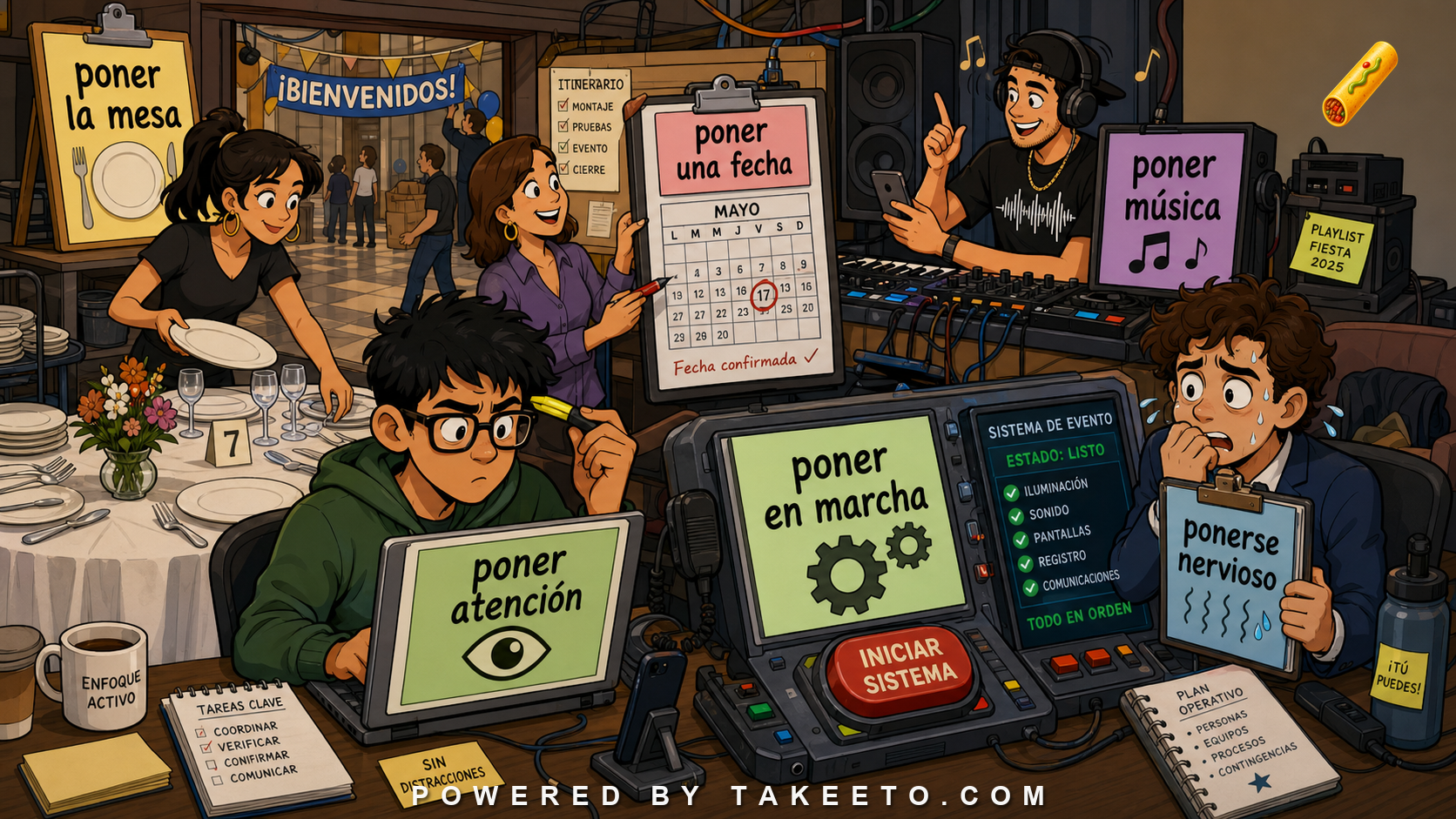
The reader can interpret poner beyond physical placement.

The reader can identify reflexive se and distinguish it from other se uses.
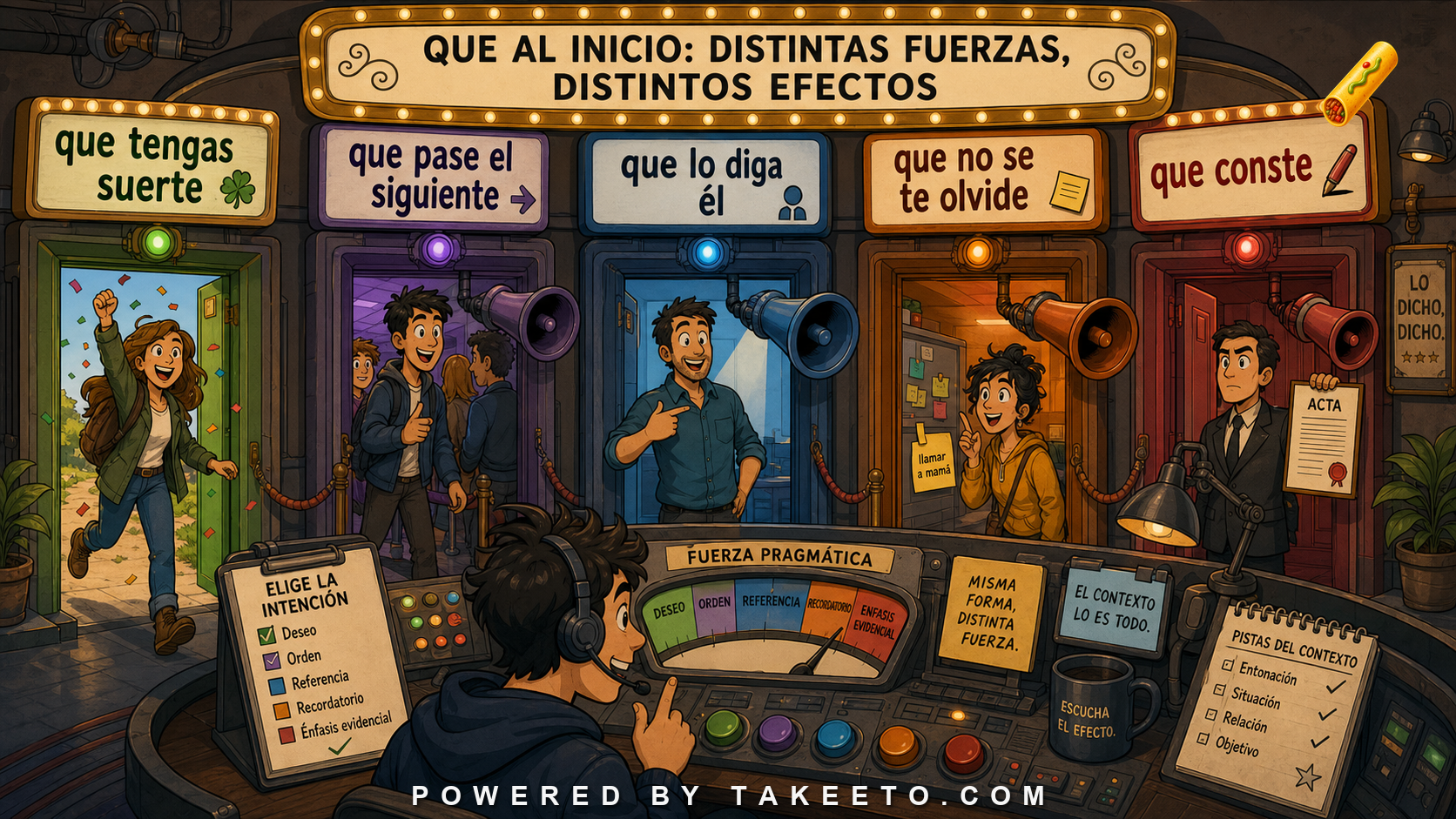
The reader can interpret independent que clauses and their pragmatic force.
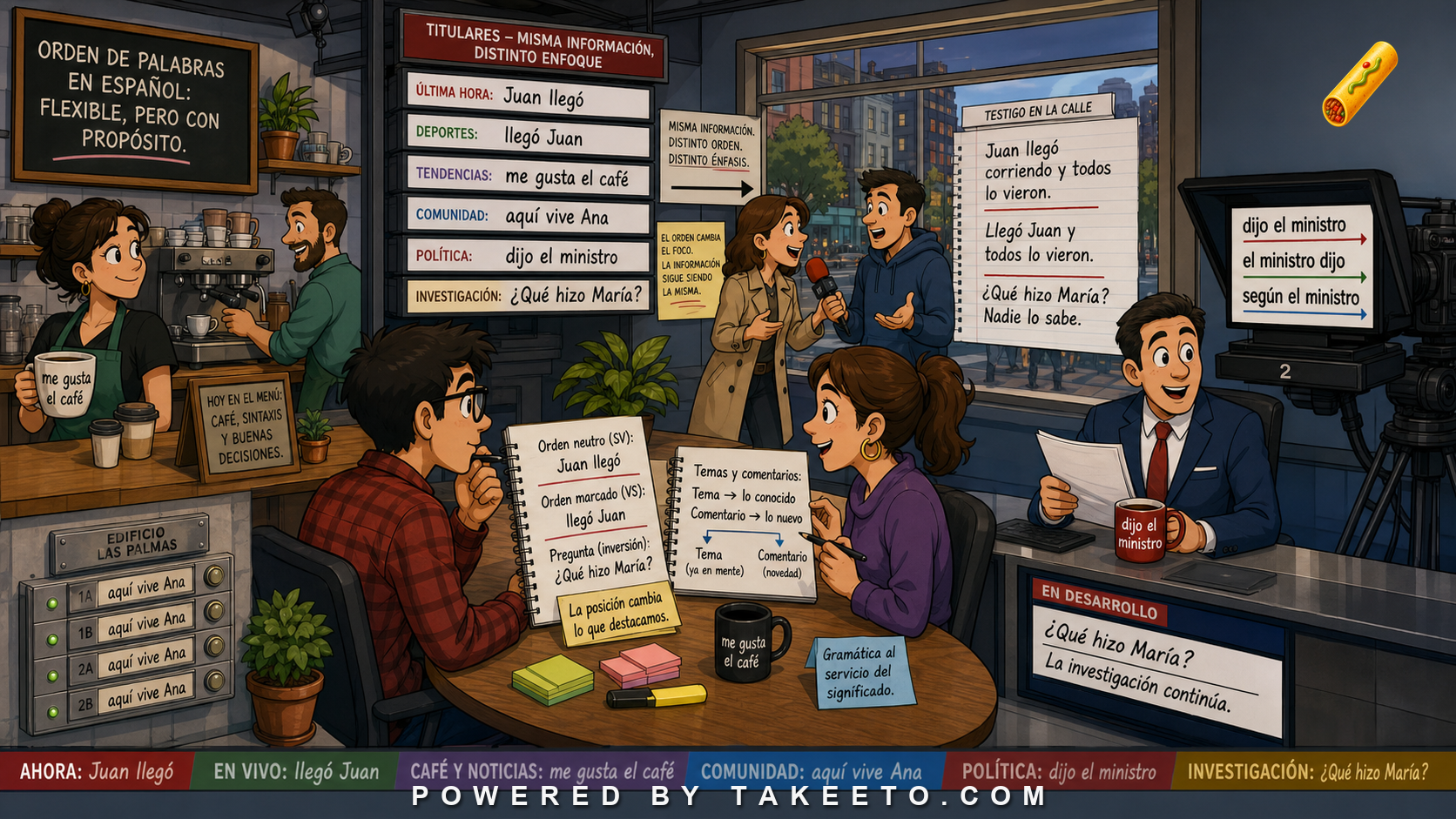
The reader understands Spanish word order as flexible but motivated by grammar and information flow.
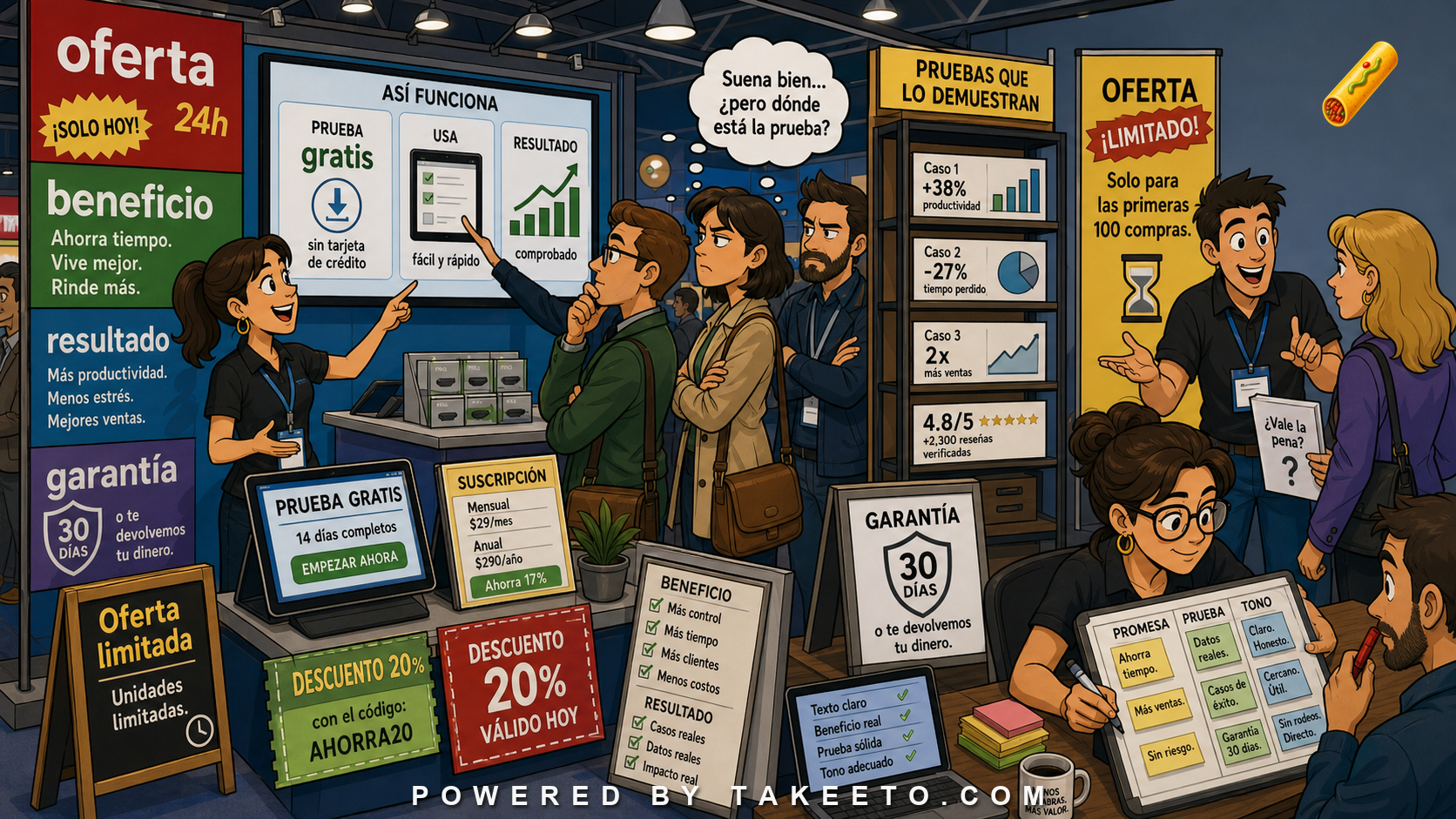
The reader can evaluate Spanish marketing copy for clarity, register, and evidence.
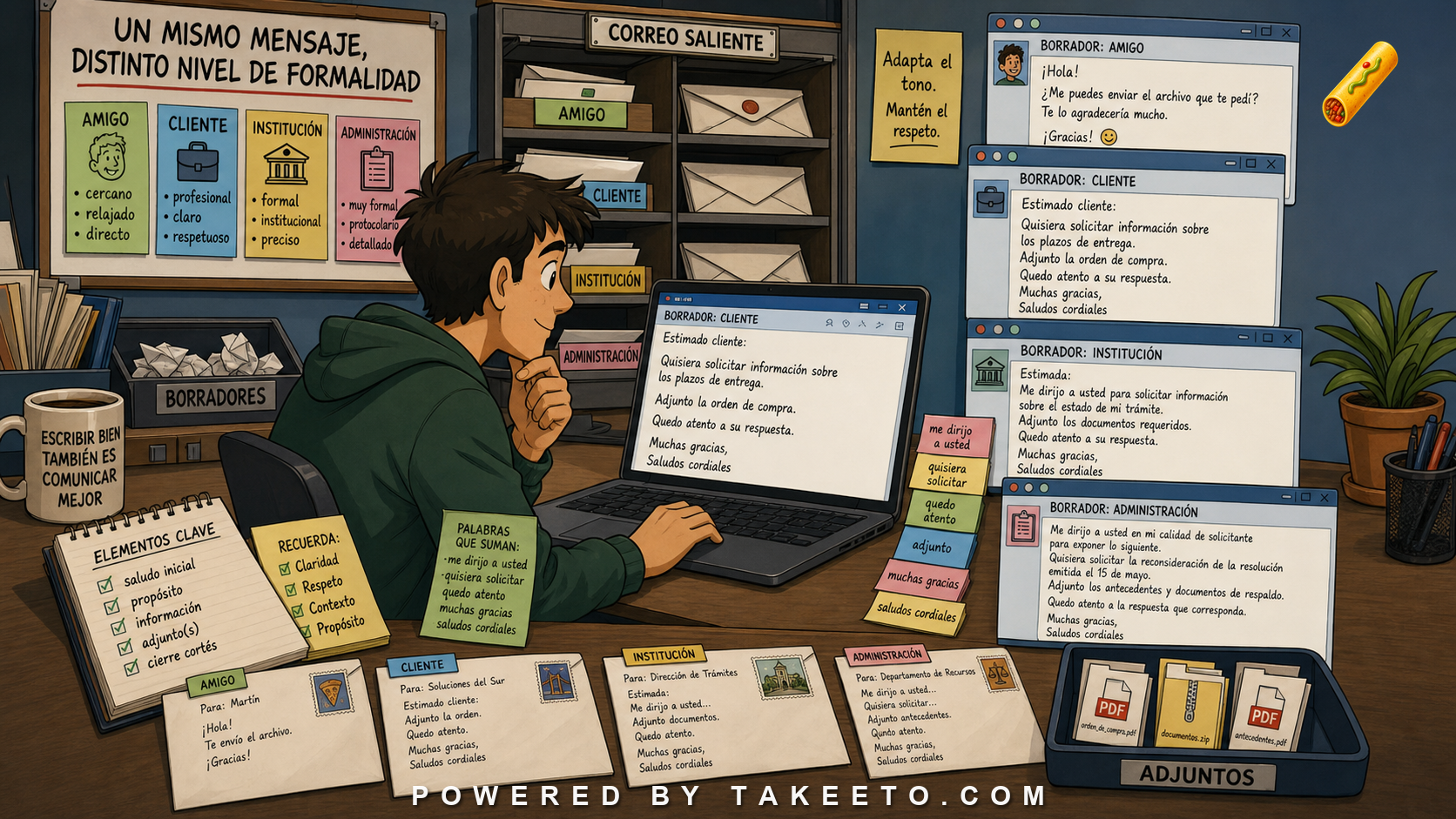
The reader can write Spanish emails with appropriate structure and register.
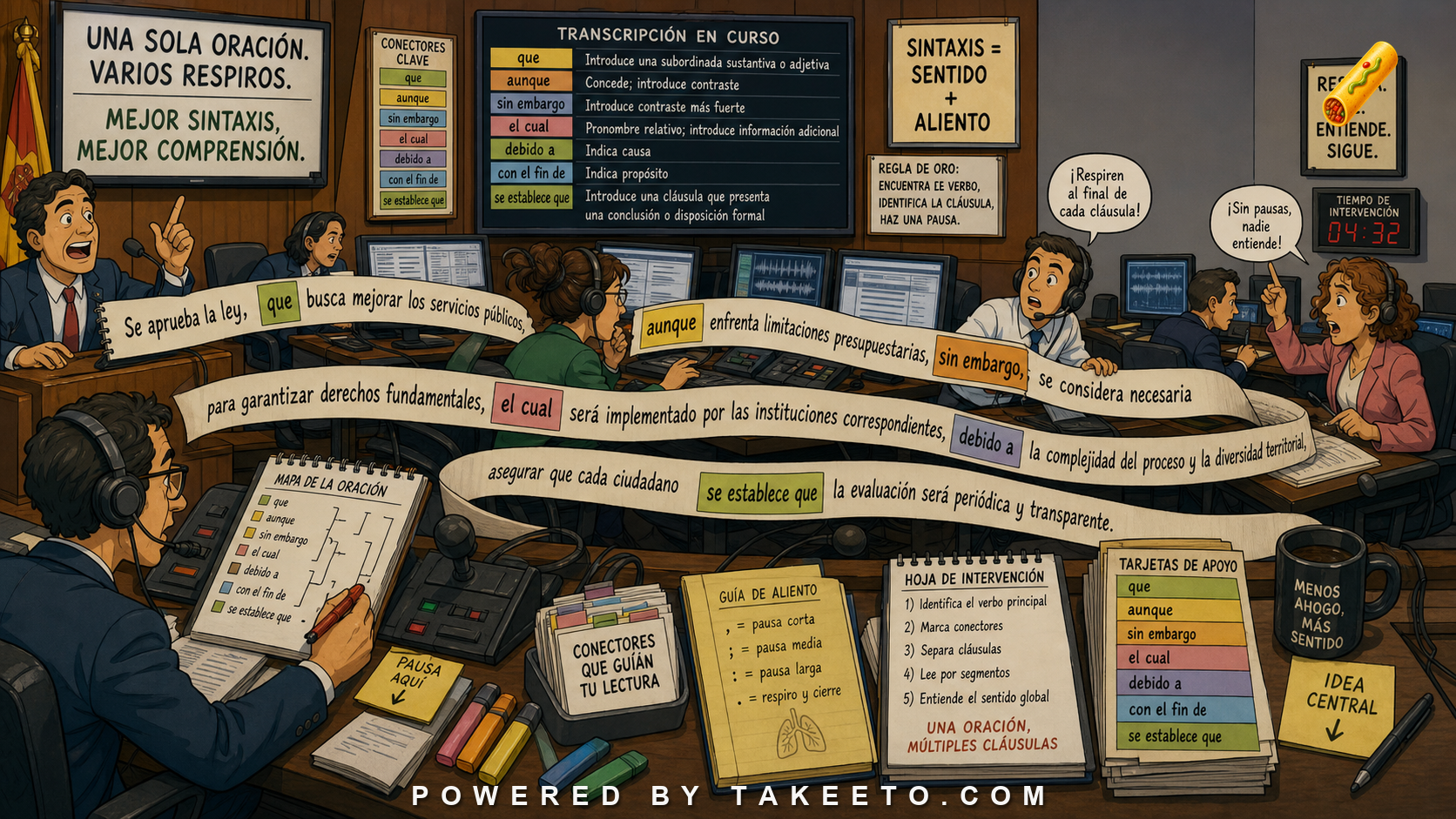
The reader can read long Spanish sentences by identifying clause structure.
The reader can use neuter relative structures to refer to actions, ideas, facts, and whole propositions.
The reader can separate auditory perception, intentional listening, and sound production.
The reader can distinguish passive se from impersonal se by agreement and noun phrase behavior.
The reader can design highlighted reading that supports both new learning and cumulative review.
The reader can decide between infinitive complements and finite que clauses.
The reader stops memorizing trigger lists as if they were explanations.
The reader can distinguish interrogative/exclamative words from relative and conjunction forms.
The reader can detect stance encoded in attribution verbs.
The reader can express belief, opinion, reasoning, and evaluation with appropriate syntax.
The reader can use personal a as differential object marking, not as a translation of "to."
The reader understands parecer as a bridge between appearance, judgment, and stance.
The reader can use titles and honorifics appropriately.
The reader can use mood in relative clauses to distinguish known referents from hypothetical or desired ones.
The reader can read and write basic literary criticism in Spanish.
The reader can use cognates intelligently while avoiding high-cost false friends.
The reader can identify major object-pronoun variation and its social meaning.
The reader can choose contrast markers by logic and register.
The reader can use weather language with the correct impersonal structures.
The reader can read reviews with attention to stance, credibility, evidence, and emotion.
The reader understands de as a relation marker rather than a single English preposition.
The reader can describe spatial relations with adverbs, prepositions, and de phrases.
The reader can distinguish physical arrival, reaching, and successful accomplishment.
The reader can use the pluperfect to order past events and manage narrative background.
The reader can parse the density of official and academic Spanish.
The reader can make requests without translating English modal politeness mechanically.
The reader can interpret lo bueno, lo difícil, lo importante as abstract nominalizations.
The reader can use Spanish boundary markers precisely.
The reader can write example sentences that teach more than isolated meaning.
The reader can distinguish verbs around entering, taking out, and removing.
The reader understands pronominal verbs as lexical entries, not always literal reflexives.
The reader can place object and reflexive pronouns correctly across finite and nonfinite verbs.
The reader can write and understand customer-support Spanish with appropriate tone.
The reader understands why el agua is grammatically feminine and why agreement still matters.
The reader can choose relative pronouns based on animacy, preposition, clarity, and formality.
The reader understands query Spanish as compressed language with its own patterns.
The reader can recognize event nouns packaged with light verbs.
The reader can track gender and number agreement as part of sentence architecture.
The reader can approach Chilean Spanish as a coherent system rather than a comprehension failure.
The reader can use Spanish negative concord without treating it as faulty logic.
The reader can write and read opinion with appropriate certainty and register.
The reader can distinguish self-directed and mutual actions.
The reader understands gustar-like verbs as predicates organized around experiencers and stimuli.
The reader can interpret verbs that express how events turn out.
The reader can distinguish factual concession from hypothetical or irrelevant concession.