
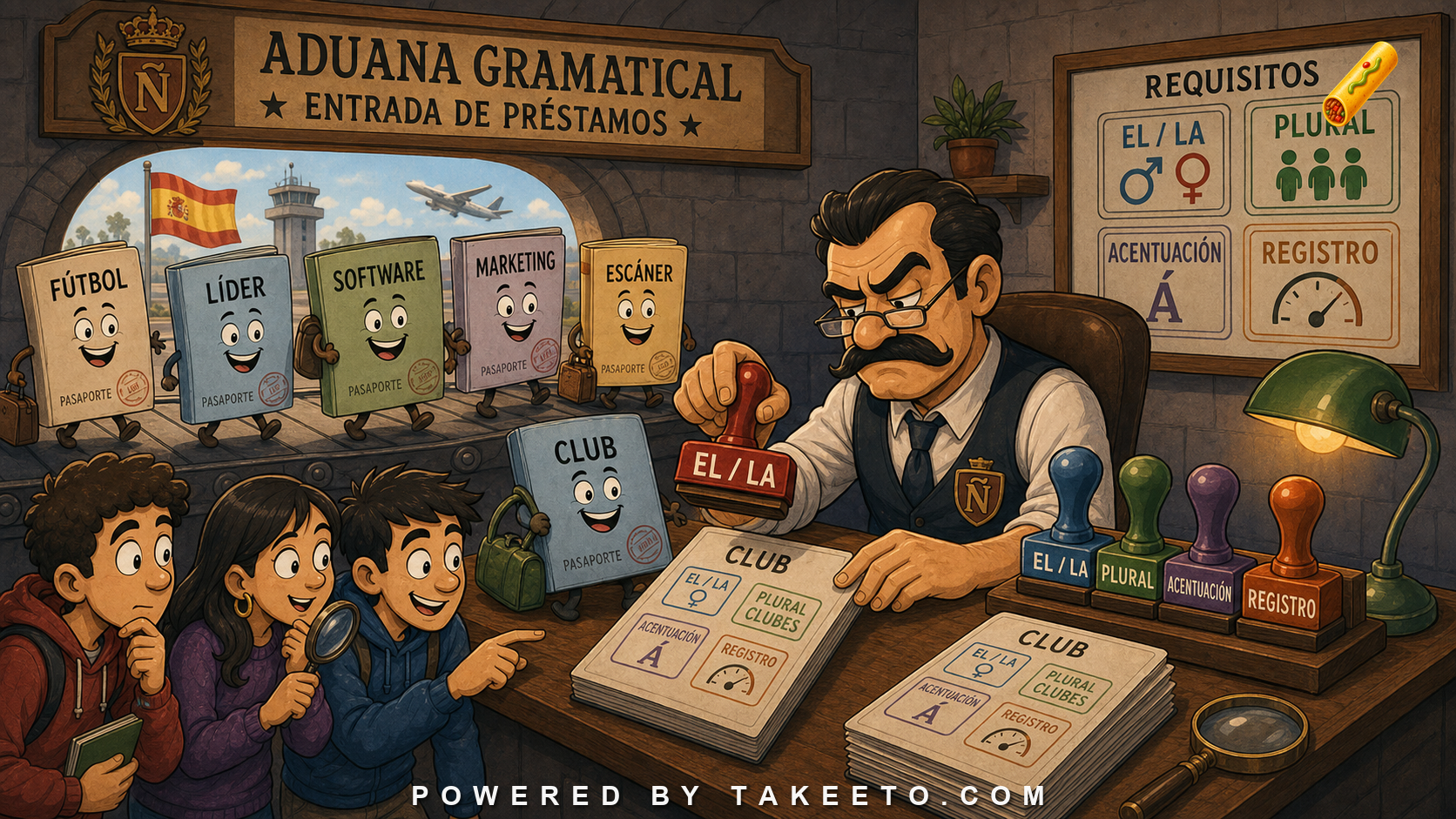
Loanwords in Spanish: Adaptation, Gender, Plural, and Register
The reader can analyze how borrowed words enter Spanish and become grammatical.
Long-form Spanish articles for learners who want structure, evidence, examples, and linguistic explanations that do not collapse into slogans.
100 articles tagged Foundations.
The reader can analyze how borrowed words enter Spanish and become grammatical.

The reader can decode Spanish j-like sounds across spelling, region, and historical spelling conventions.
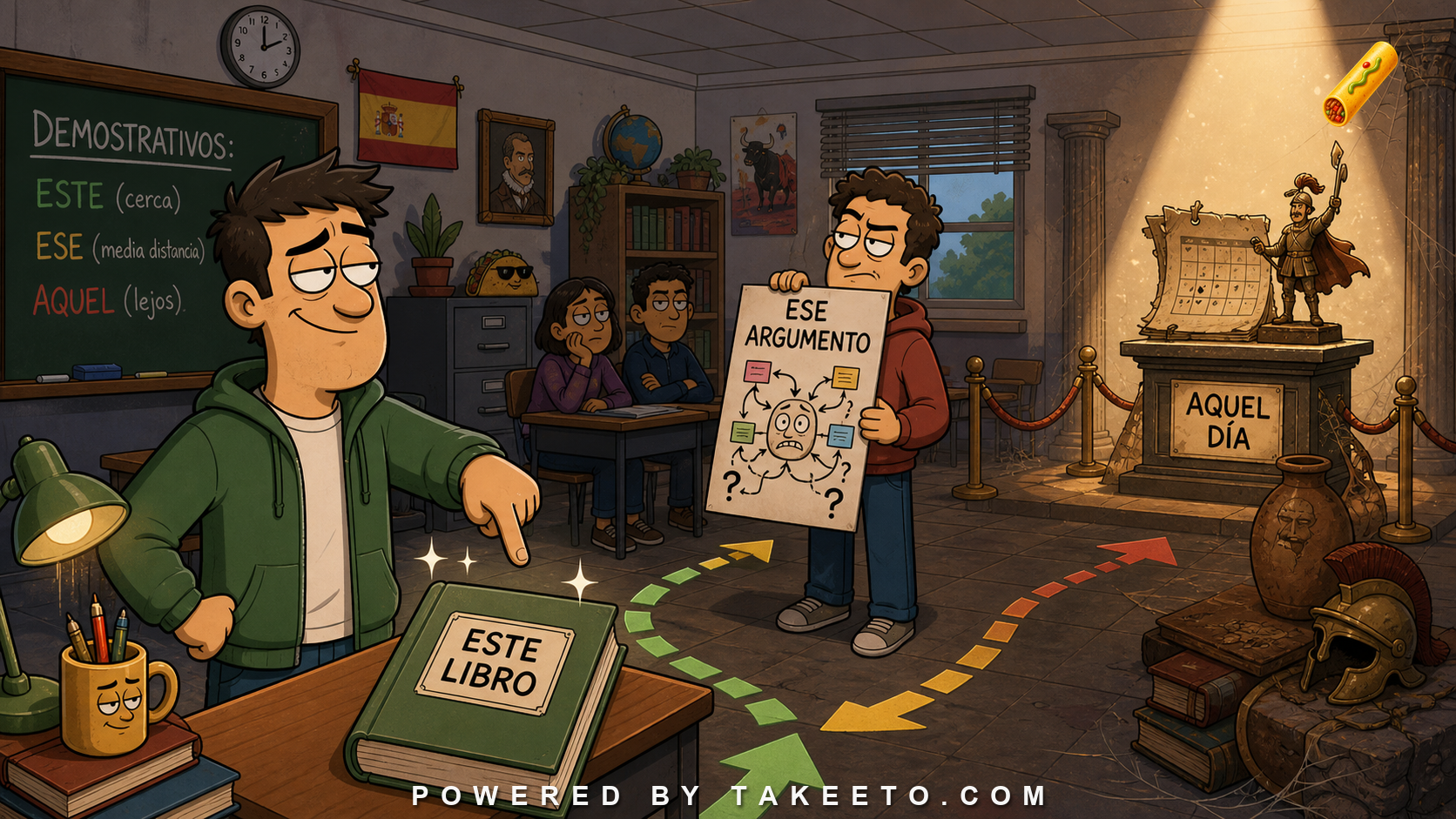
The reader can use demonstratives for physical, temporal, textual, and emotional distance.
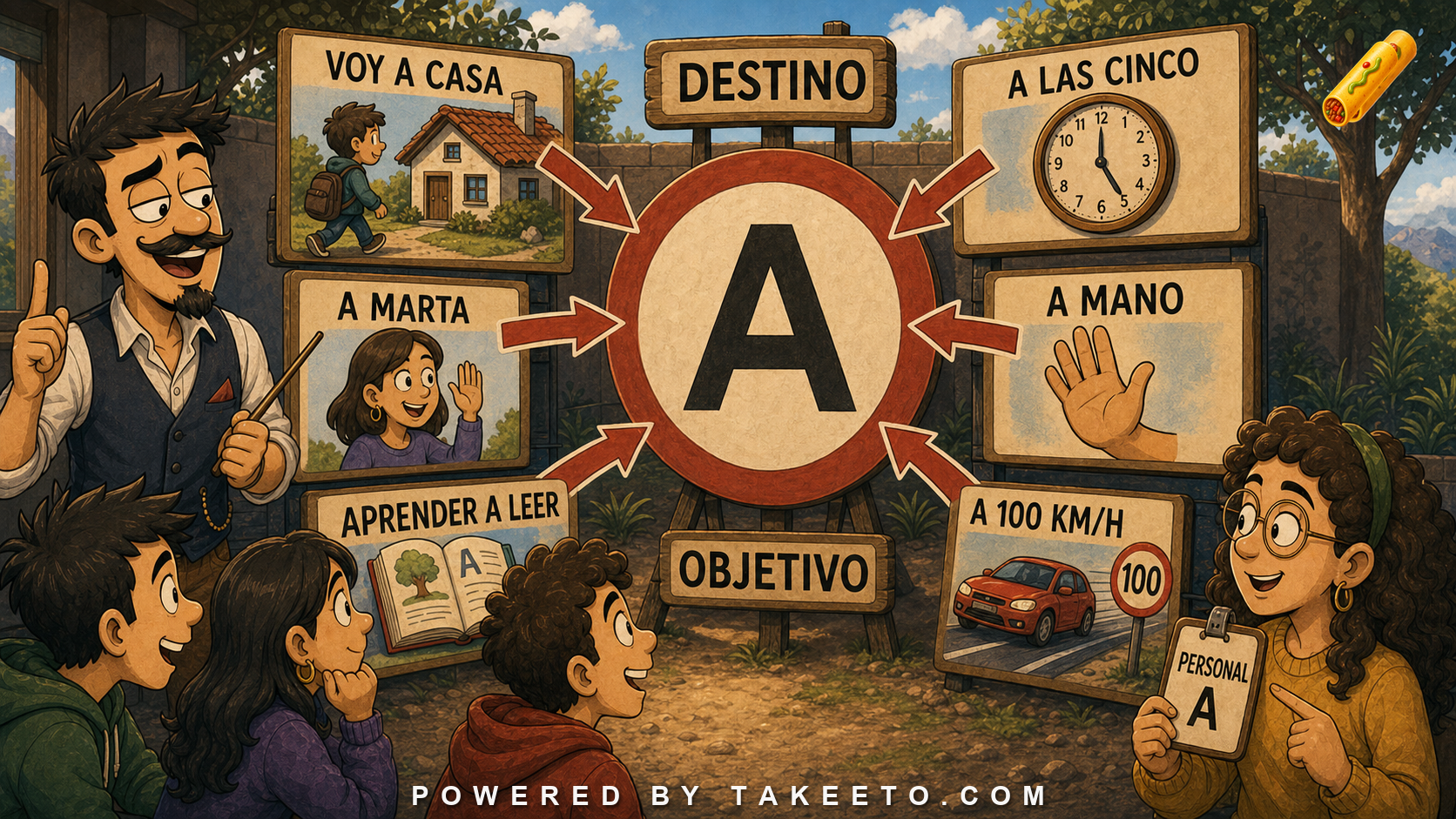
The reader can unify the many uses of a around endpoint, target, and relation.
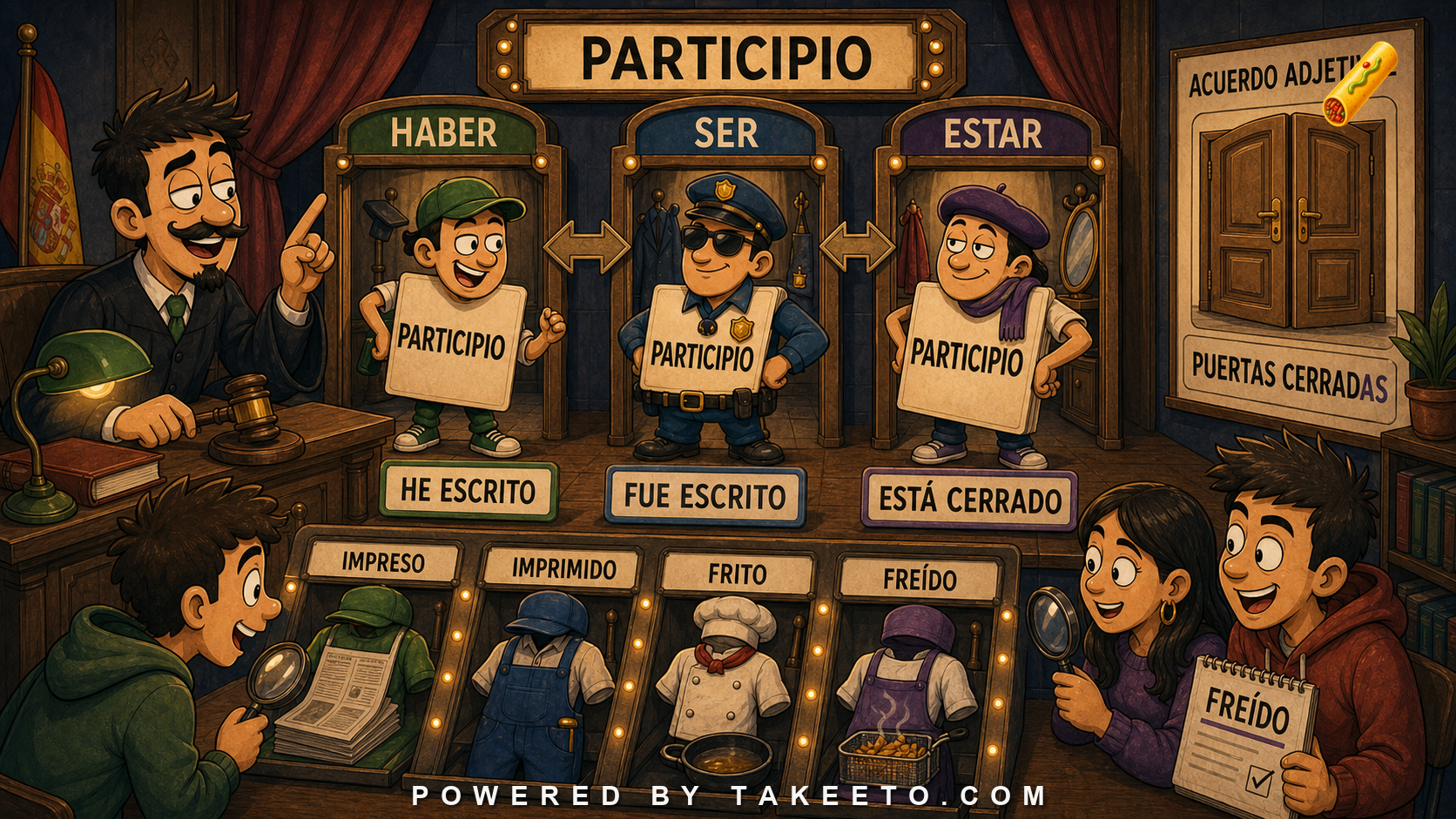
The reader can distinguish participles in perfect constructions, passive clauses, and adjectives.
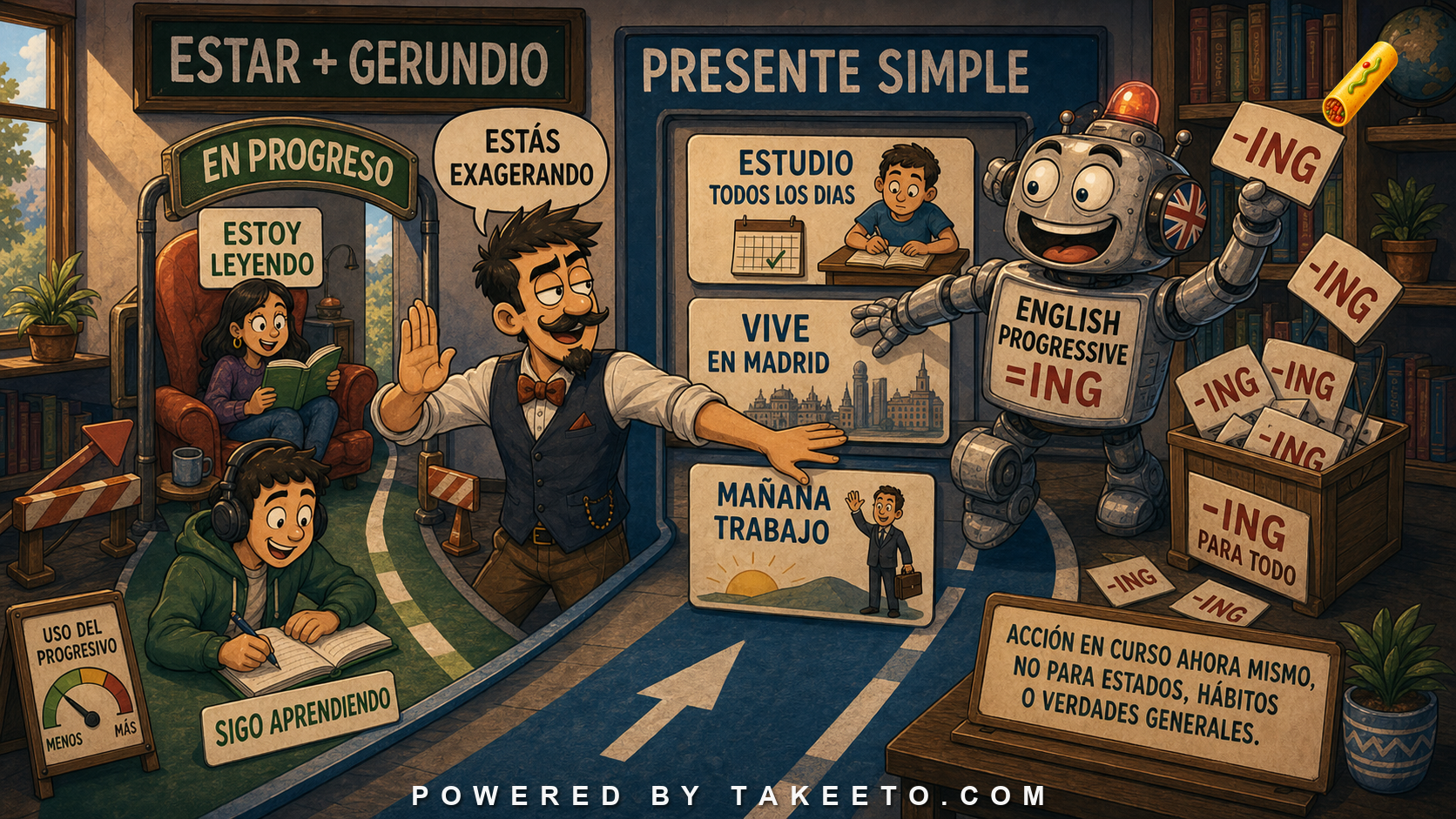
The reader can use the Spanish progressive for ongoing action without overextending it.
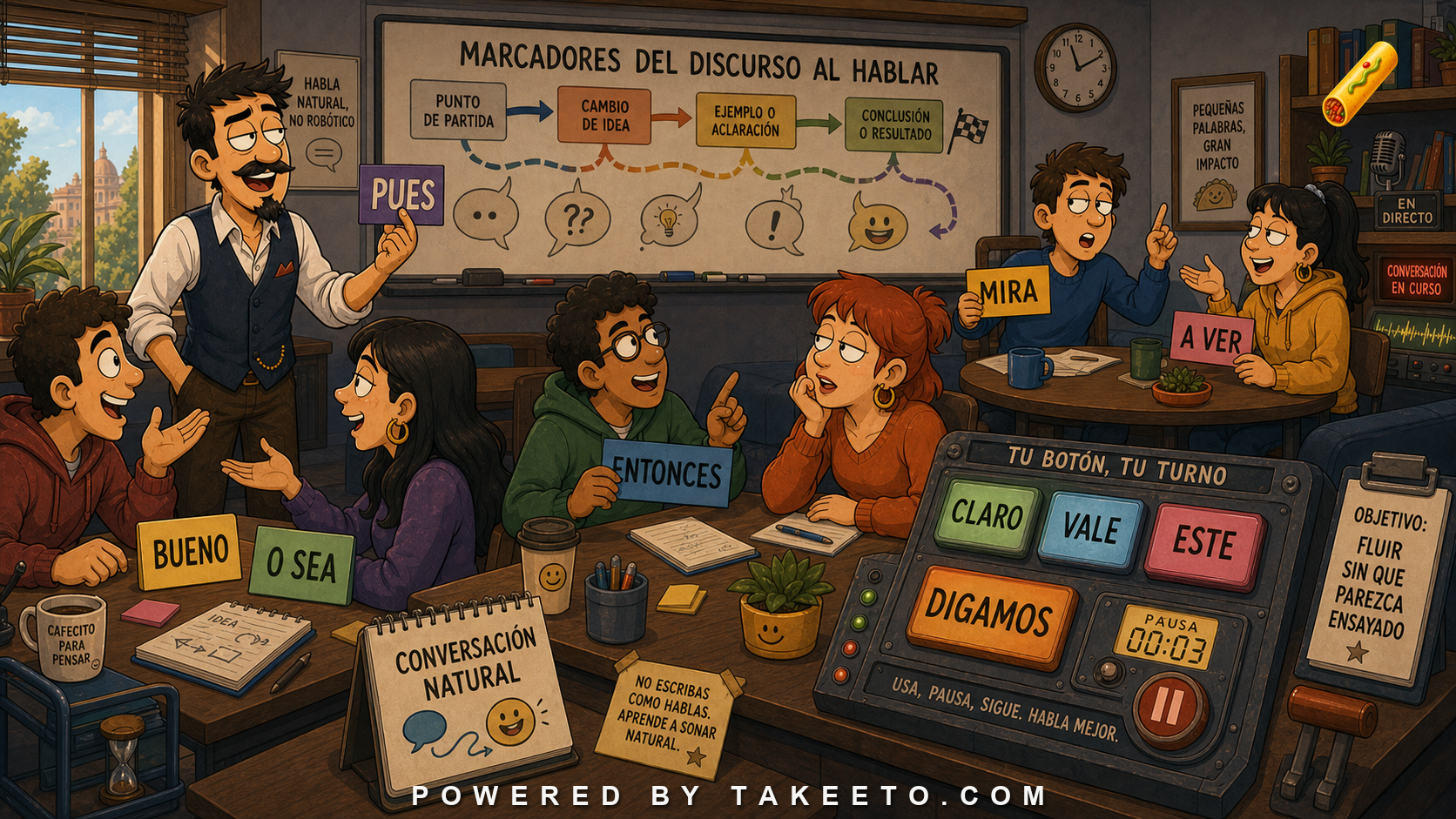
The reader can hear discourse markers as conversation-management tools rather than filler.
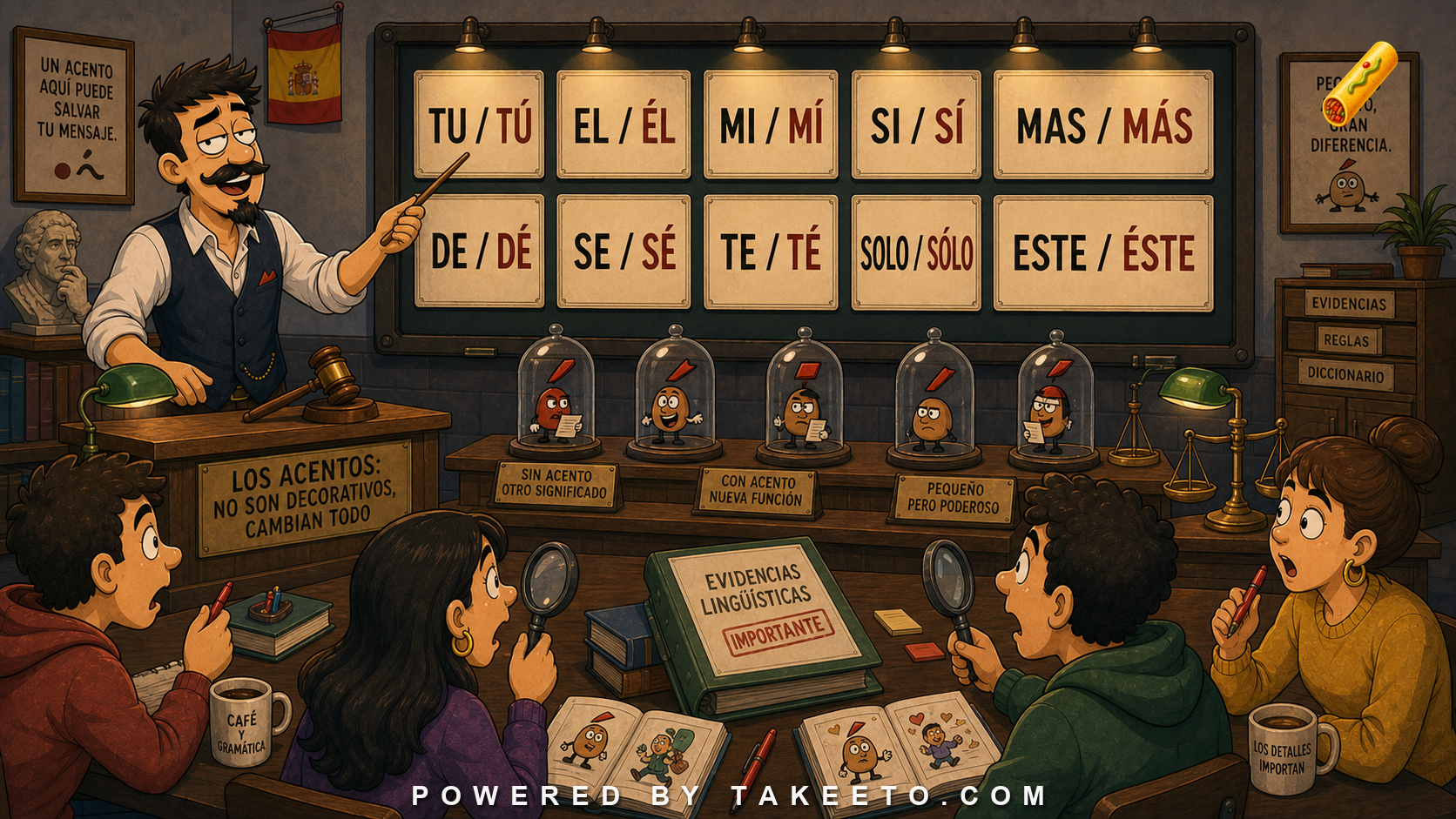
The reader sees diacritical accents as grammatical signs, not pronunciation aids alone.
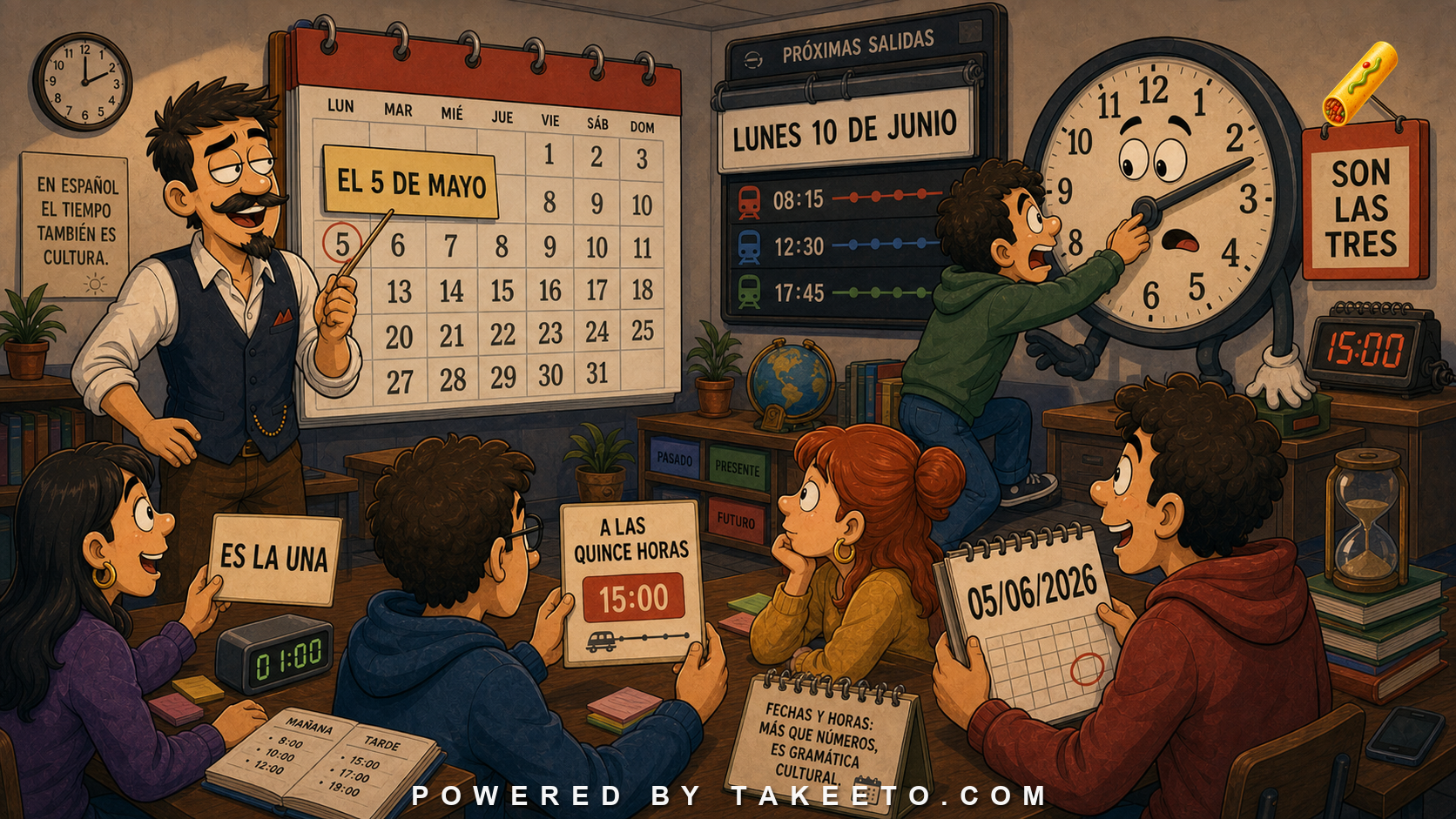
The reader can read and produce dates, clock times, and calendar phrases in Spanish.
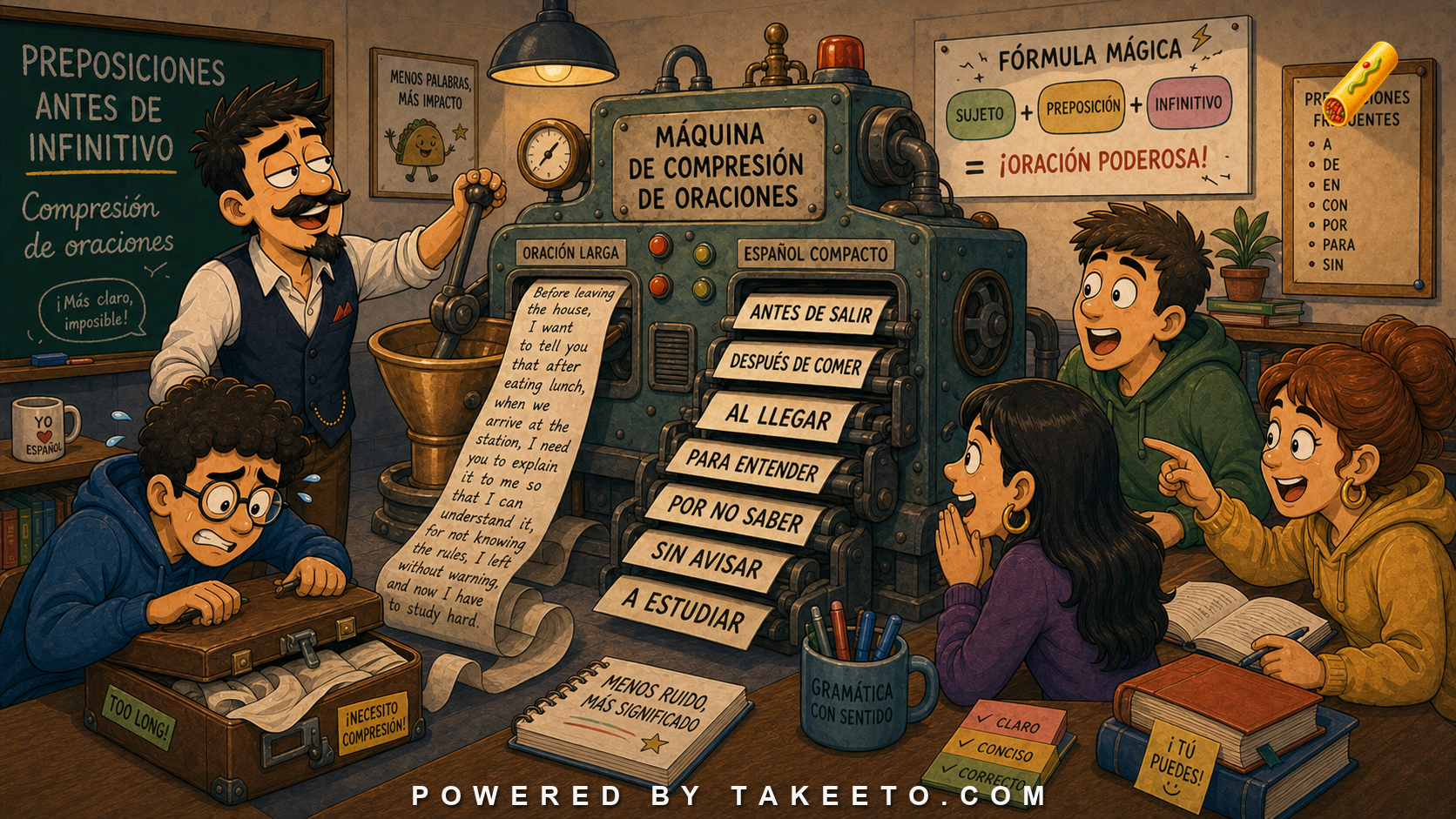
The reader can read and produce preposition + infinitive structures in dense Spanish.
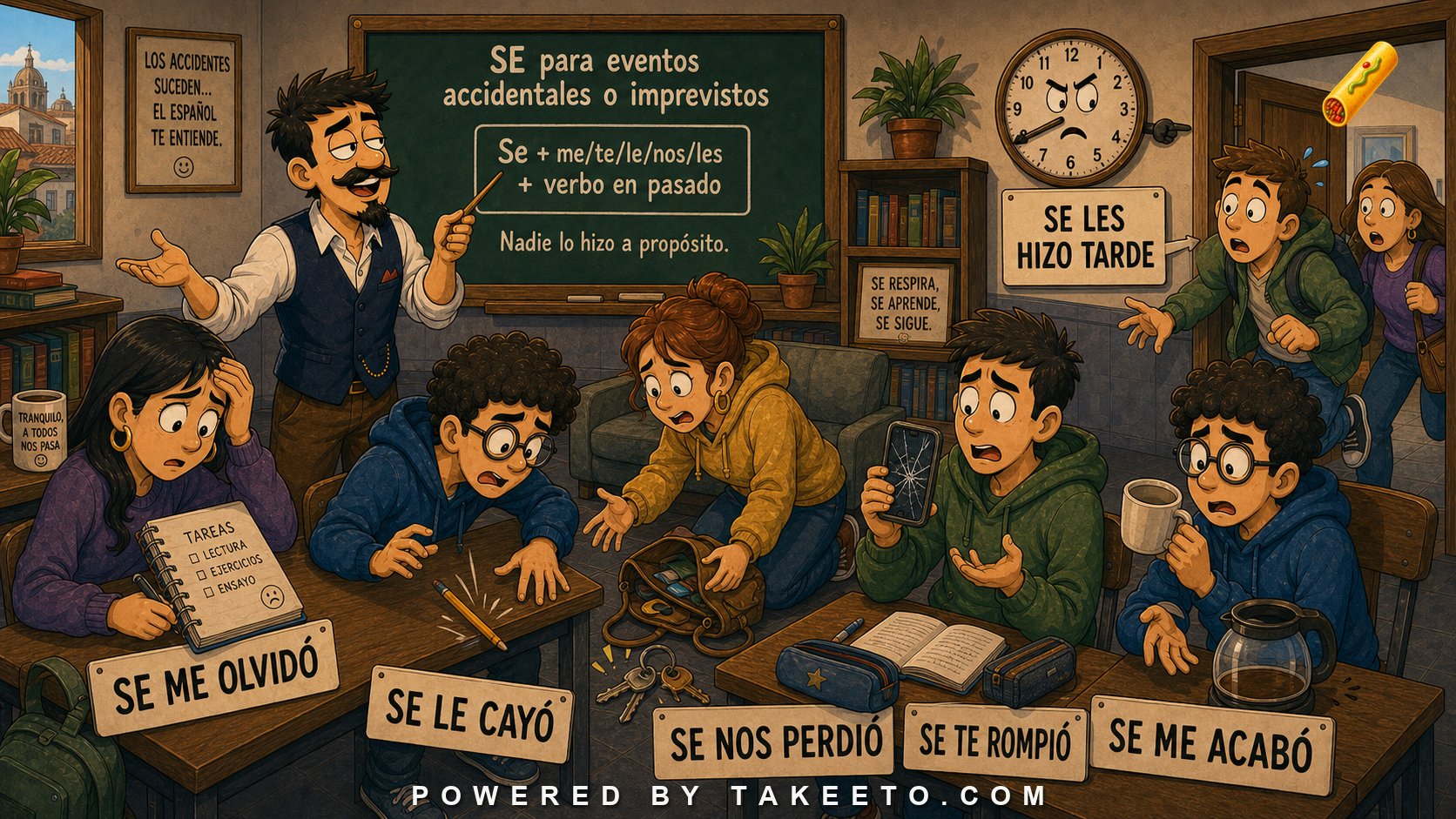
The reader can interpret se constructions that background agency and foreground affected participants.
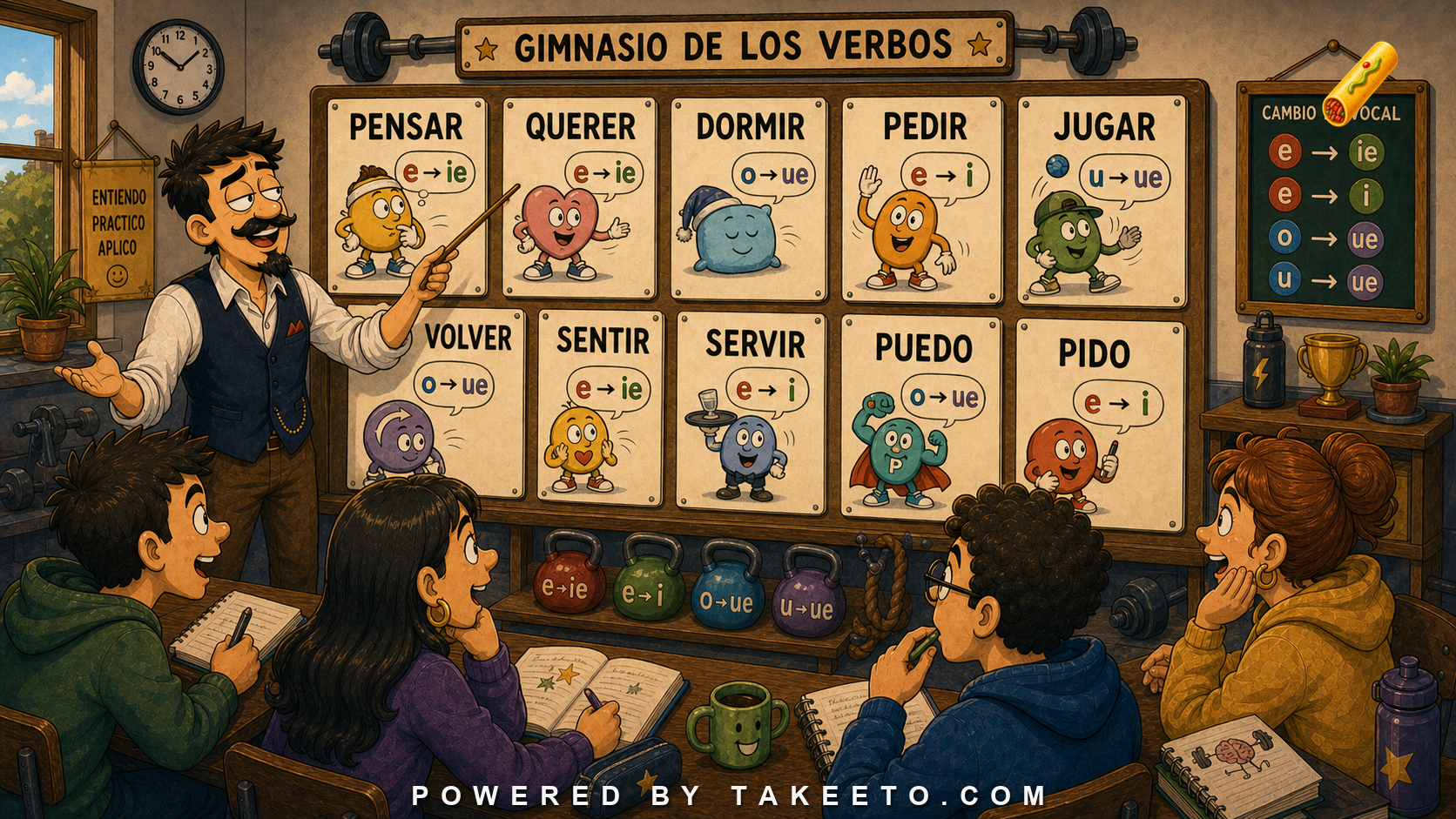
The reader can predict where and why stem changes appear in present and related forms.
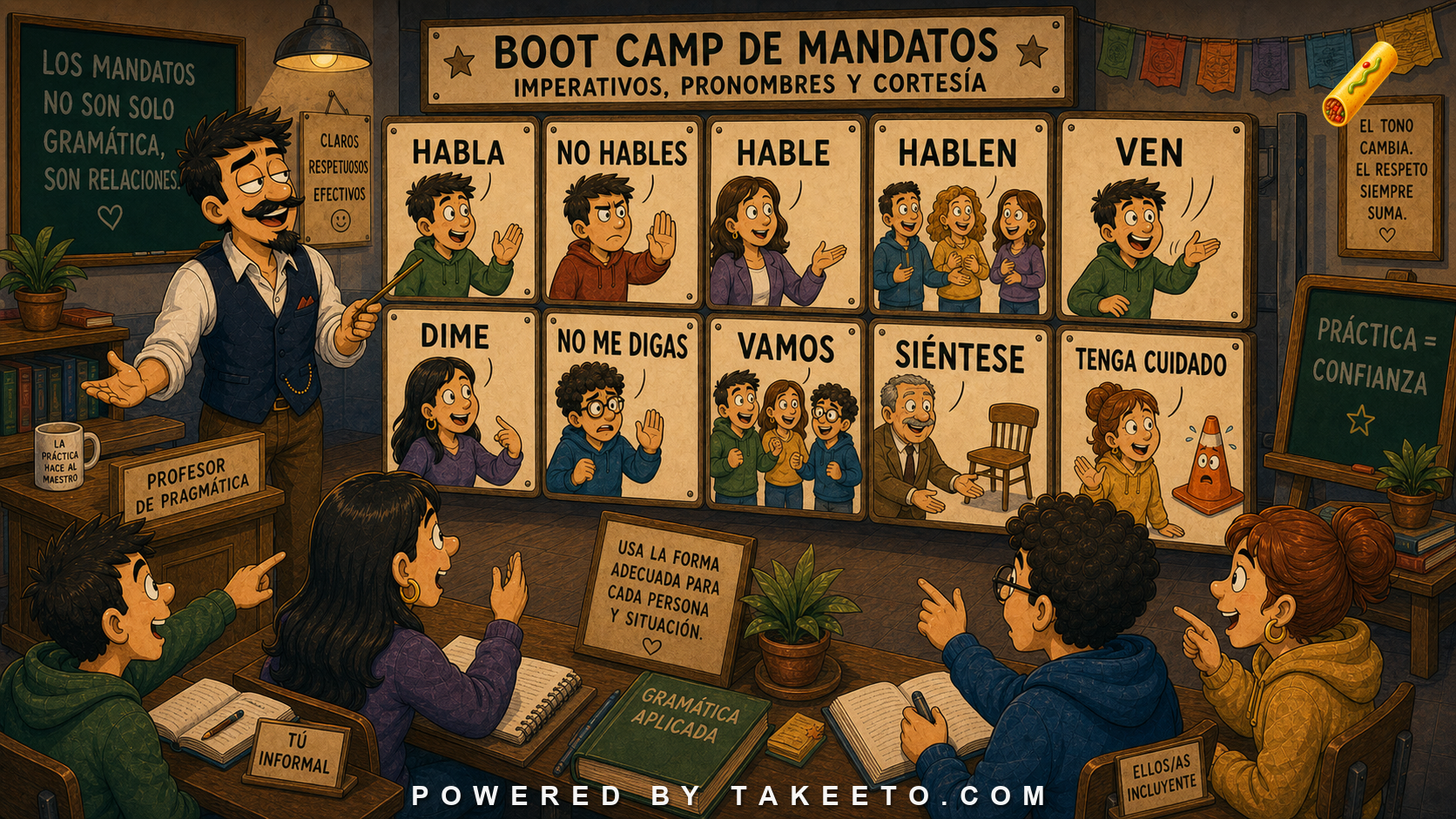
The reader can form commands and understand their social force.
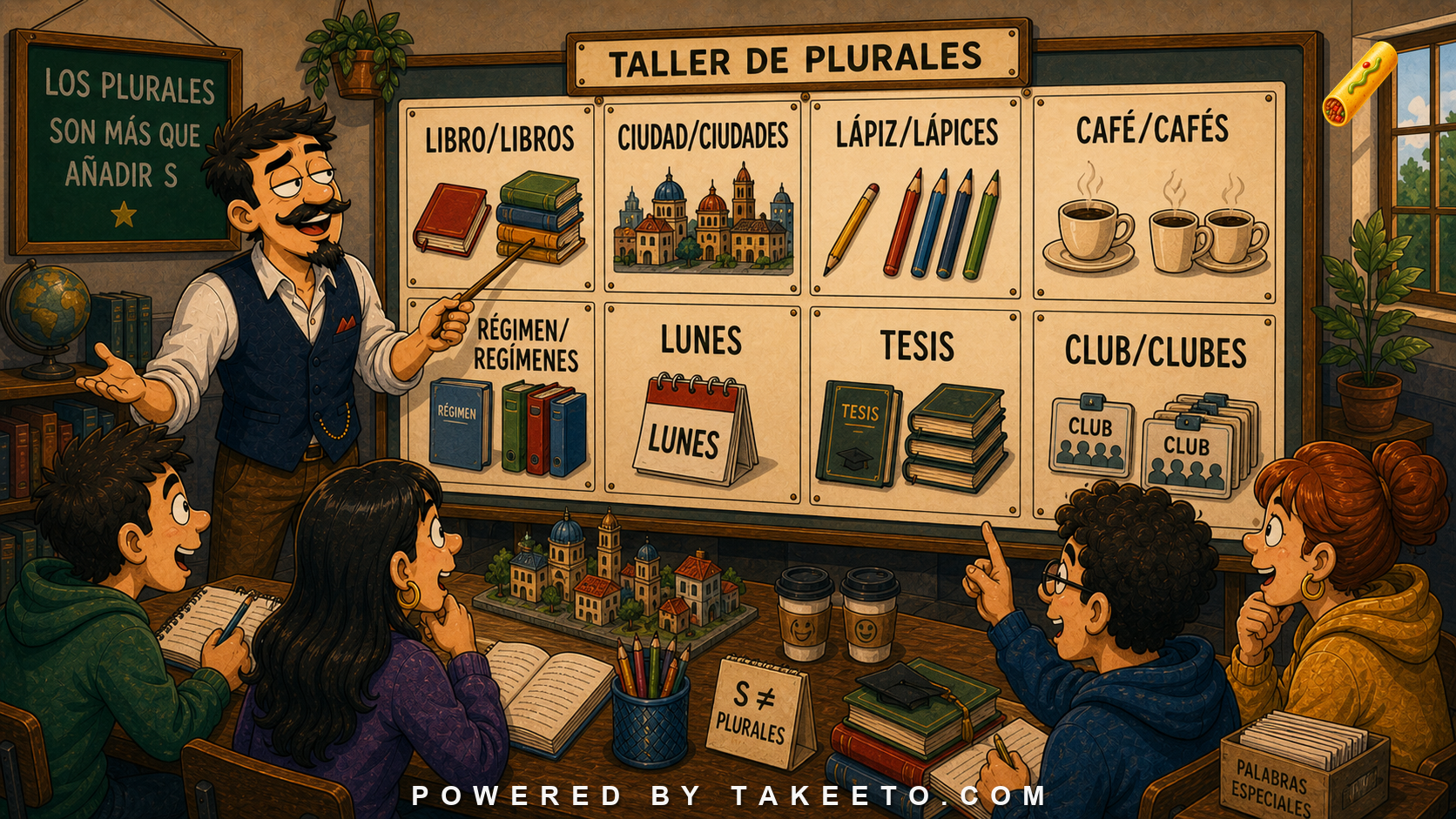
The reader can form and interpret plural nouns across stress changes, final consonants, and loanwords.
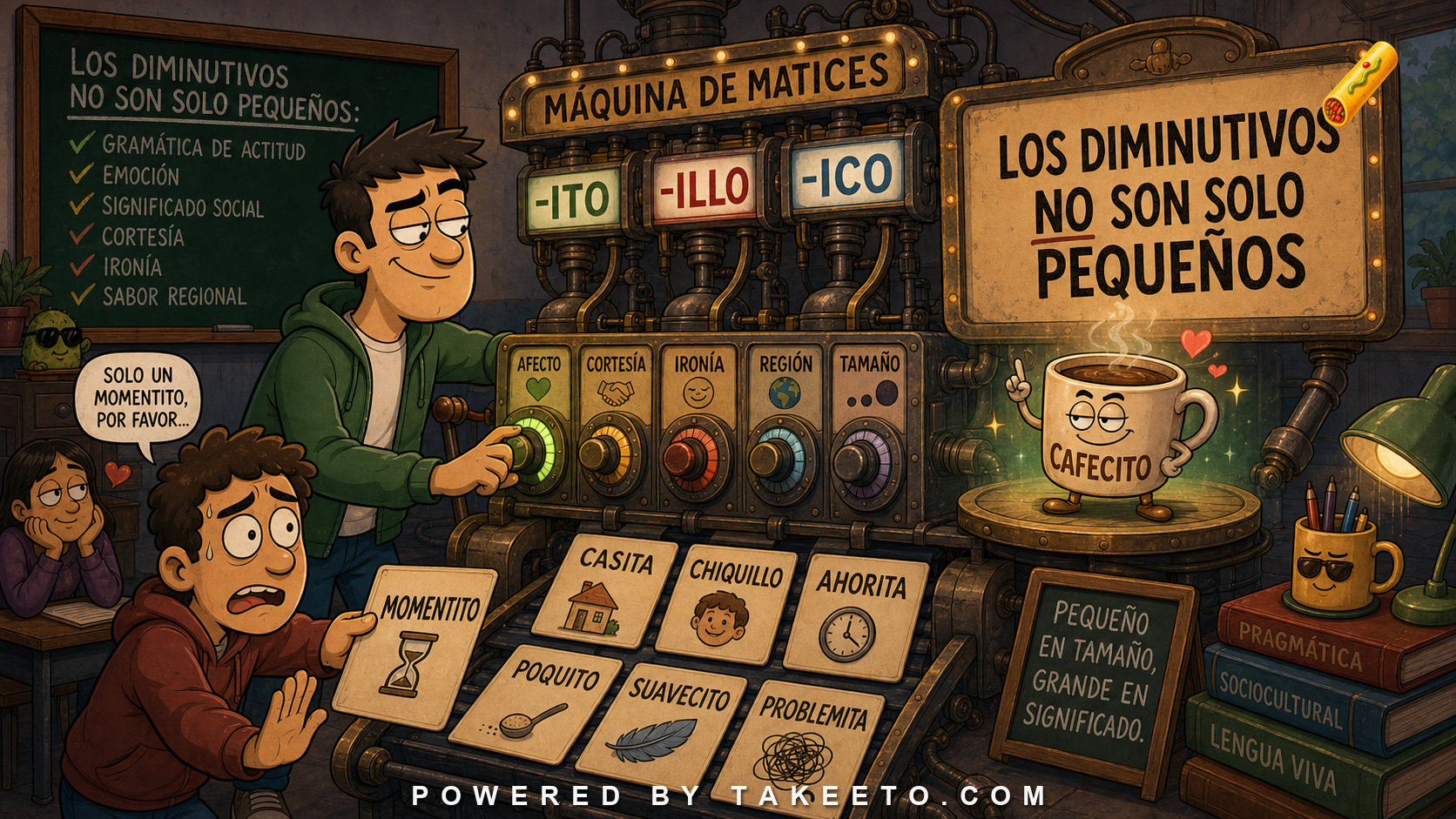
The reader understands diminutives as emotional, social, and regional markers, not only markers of small size.
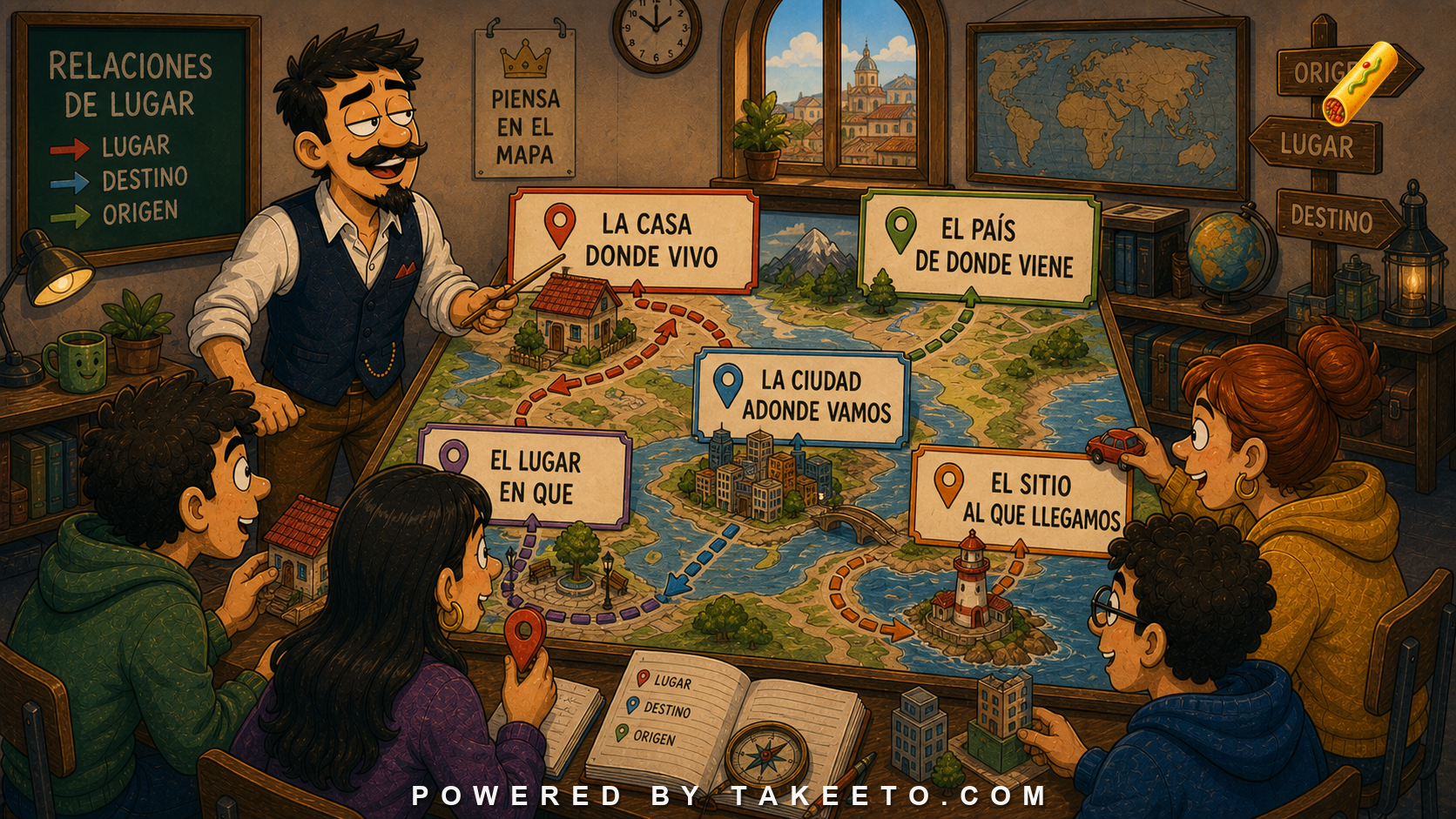
The reader can mark location, destination, and source in Spanish relative clauses.
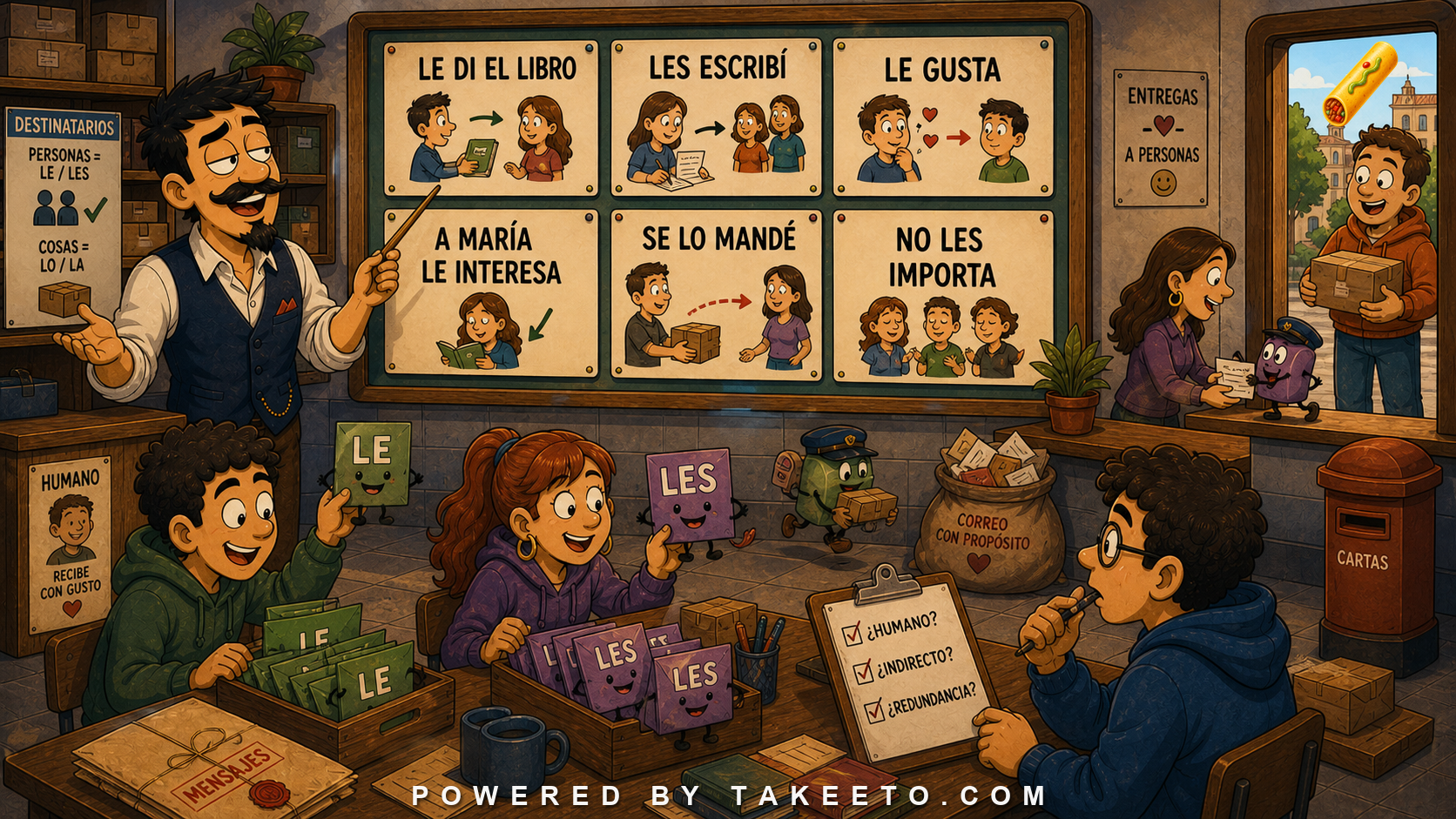
The reader understands indirect object pronouns as core argument markers, not optional clutter.
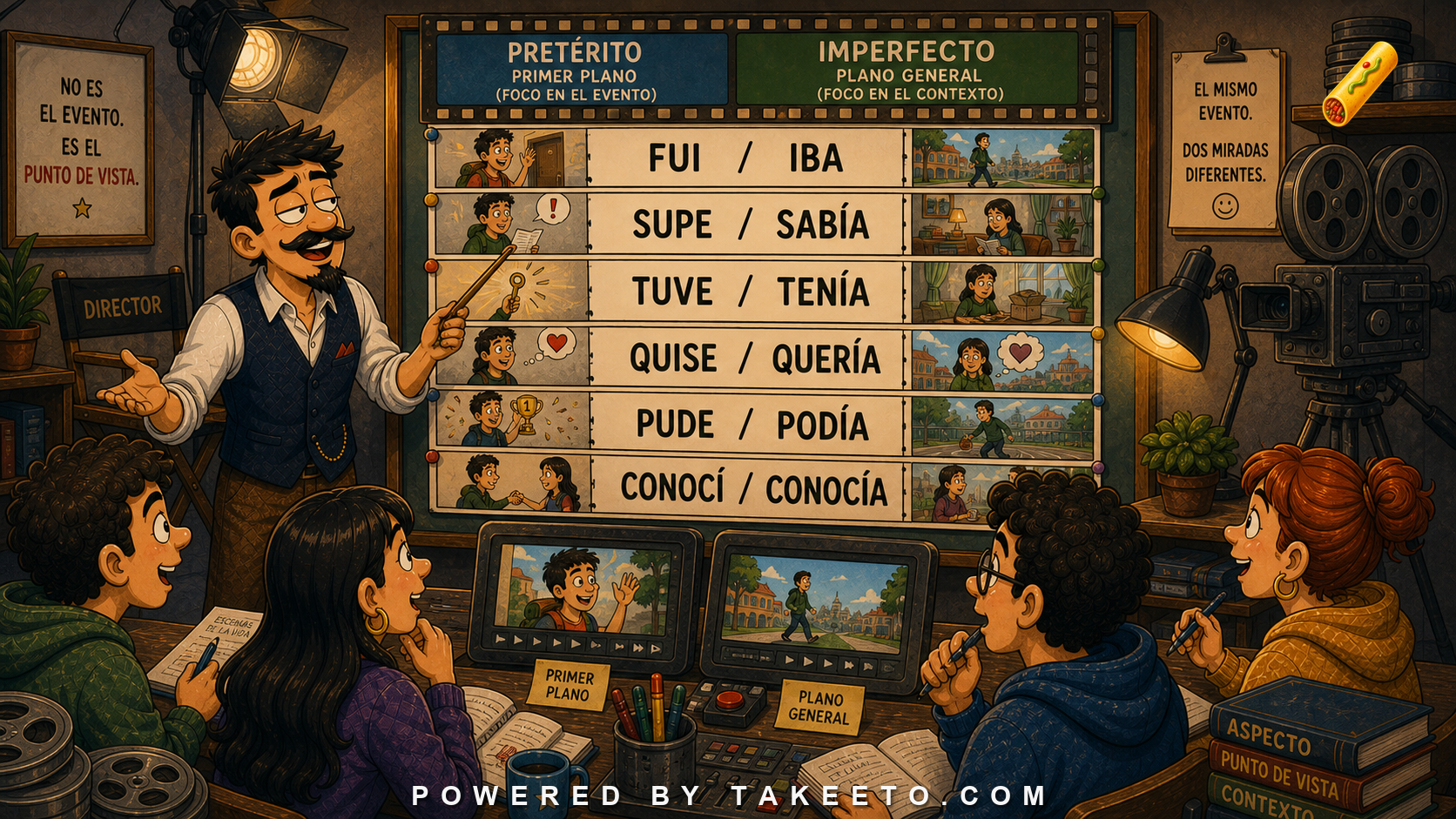
The reader learns to choose between preterite and imperfect by narrative viewpoint rather than vocabulary lists.
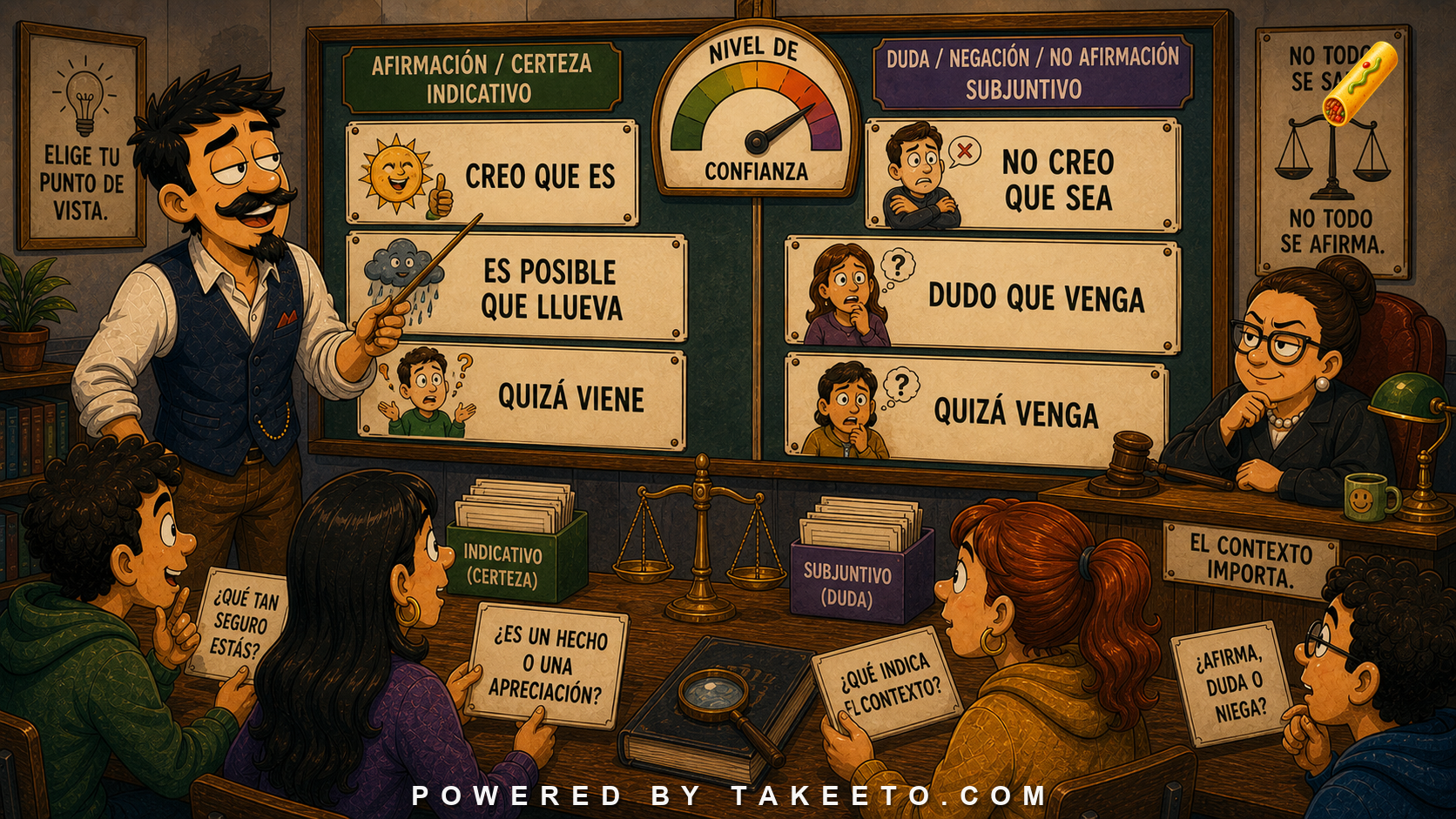
The reader can explain why negated belief and uncertainty often select subjunctive.
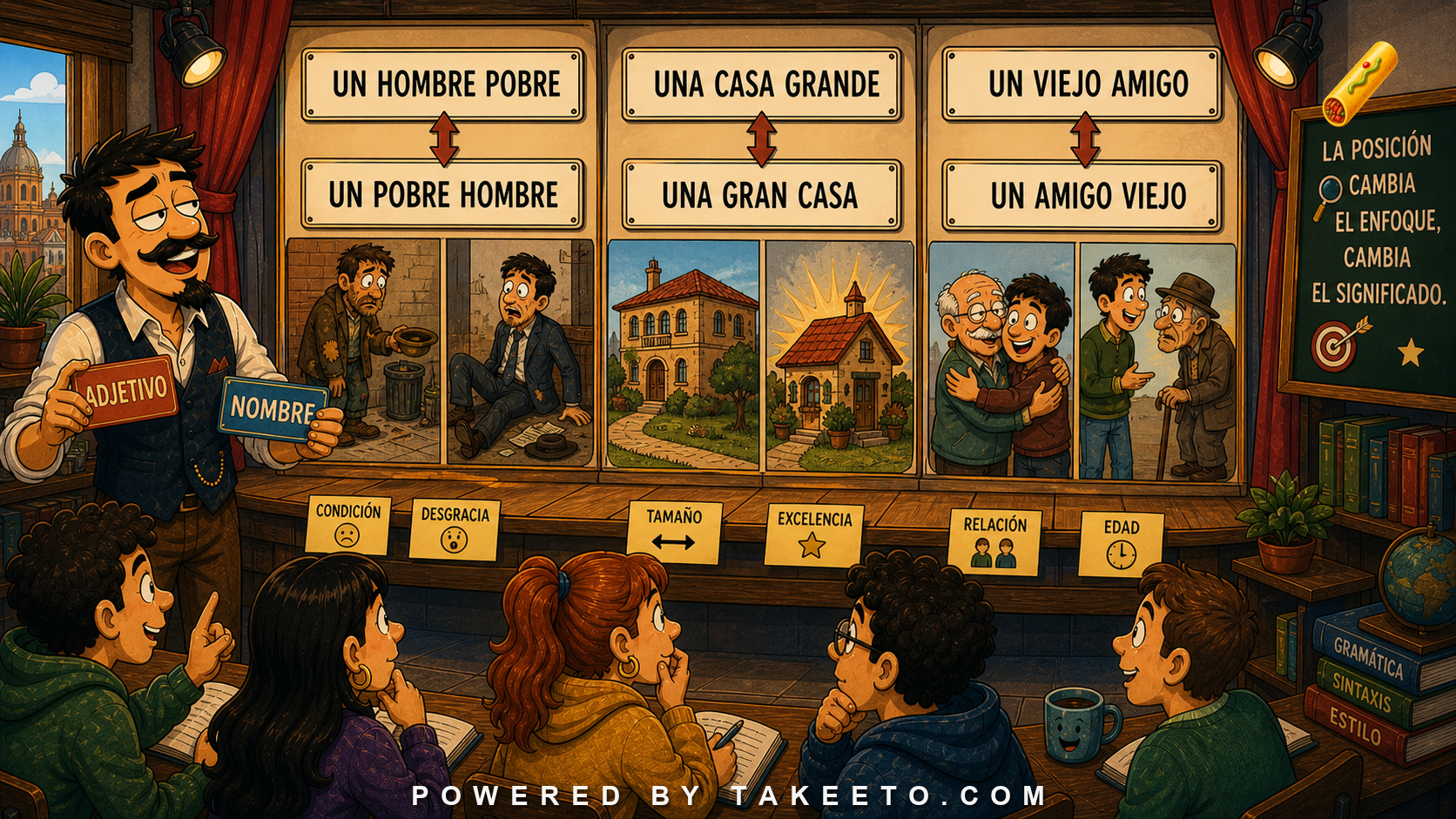
The reader understands how adjective placement affects meaning, evaluation, and discourse.
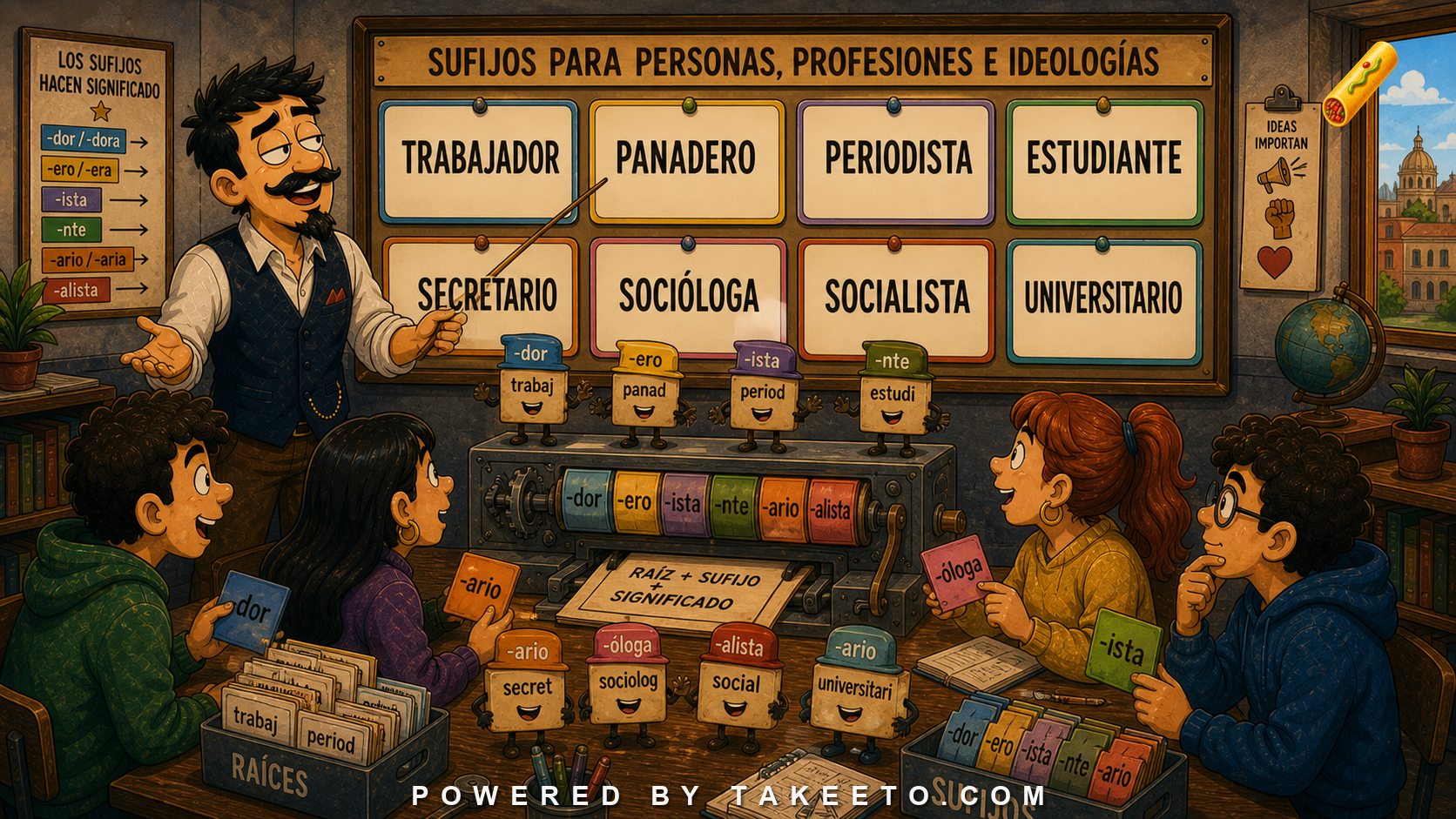
The reader can parse Spanish nouns for agents, professions, affiliation, and ideology.
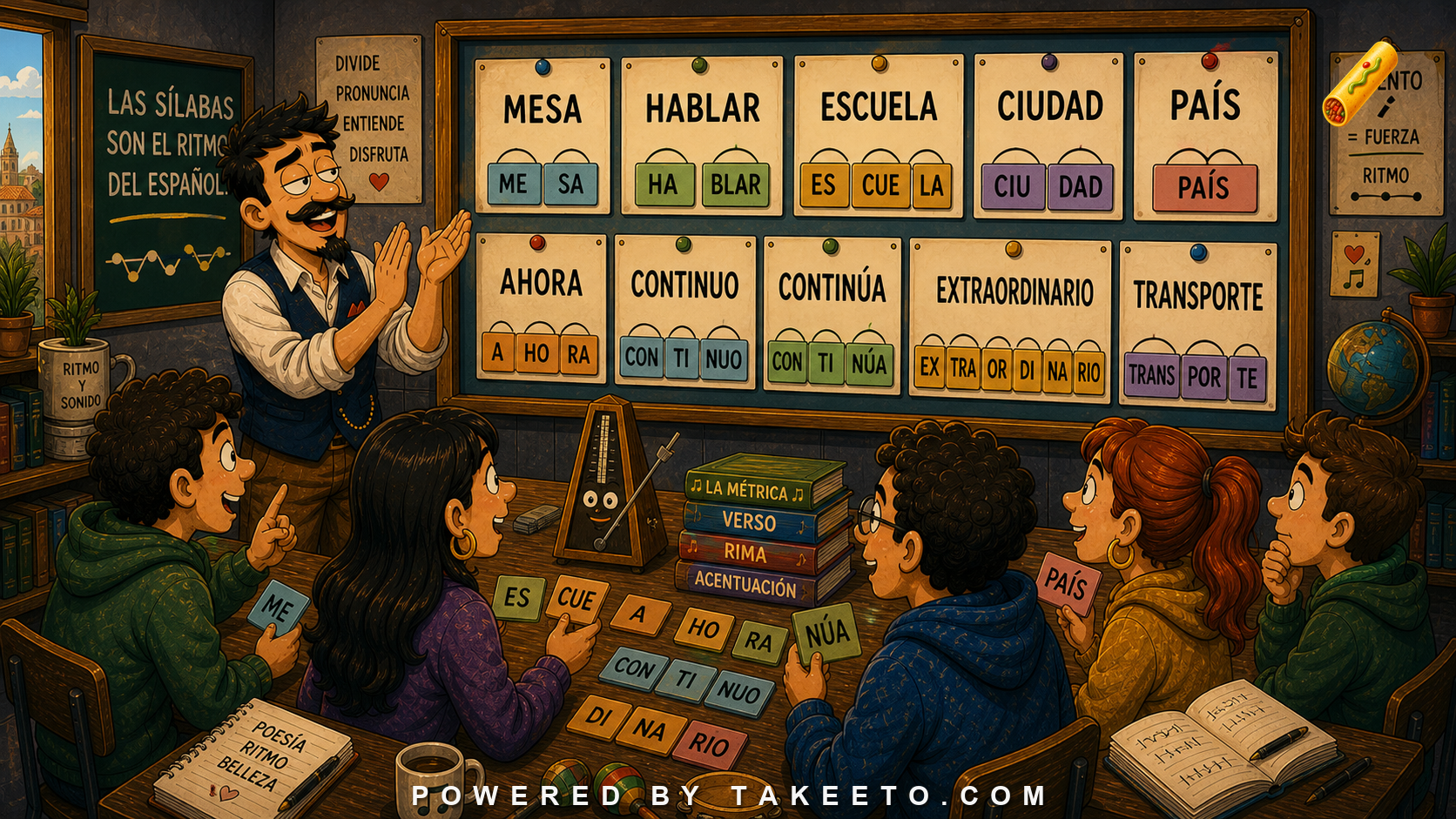
The reader can divide Spanish words into syllables and understand how syllable structure shapes stress and rhythm.
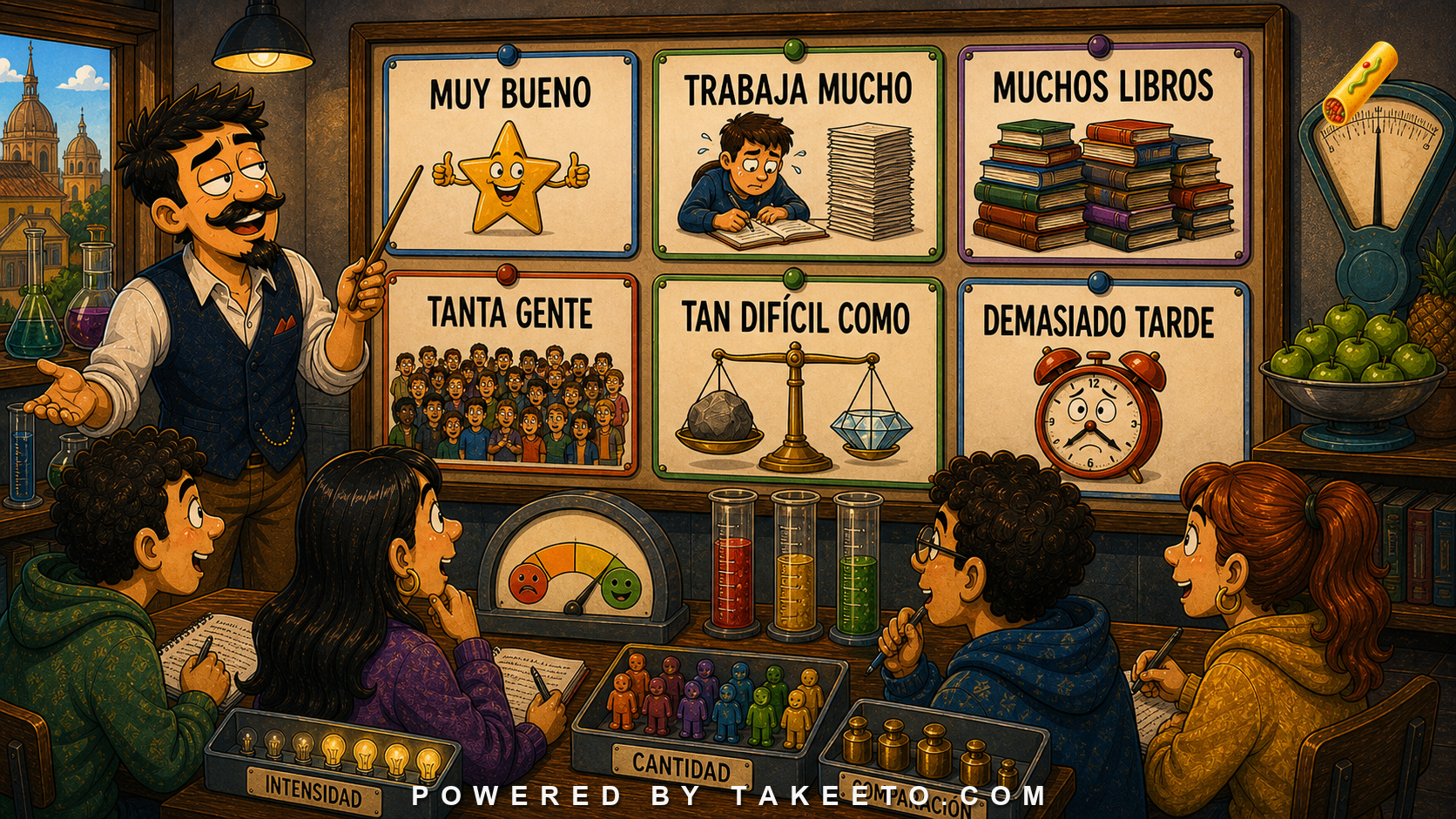
The reader can distinguish intensifiers, quantifiers, and comparison structures.
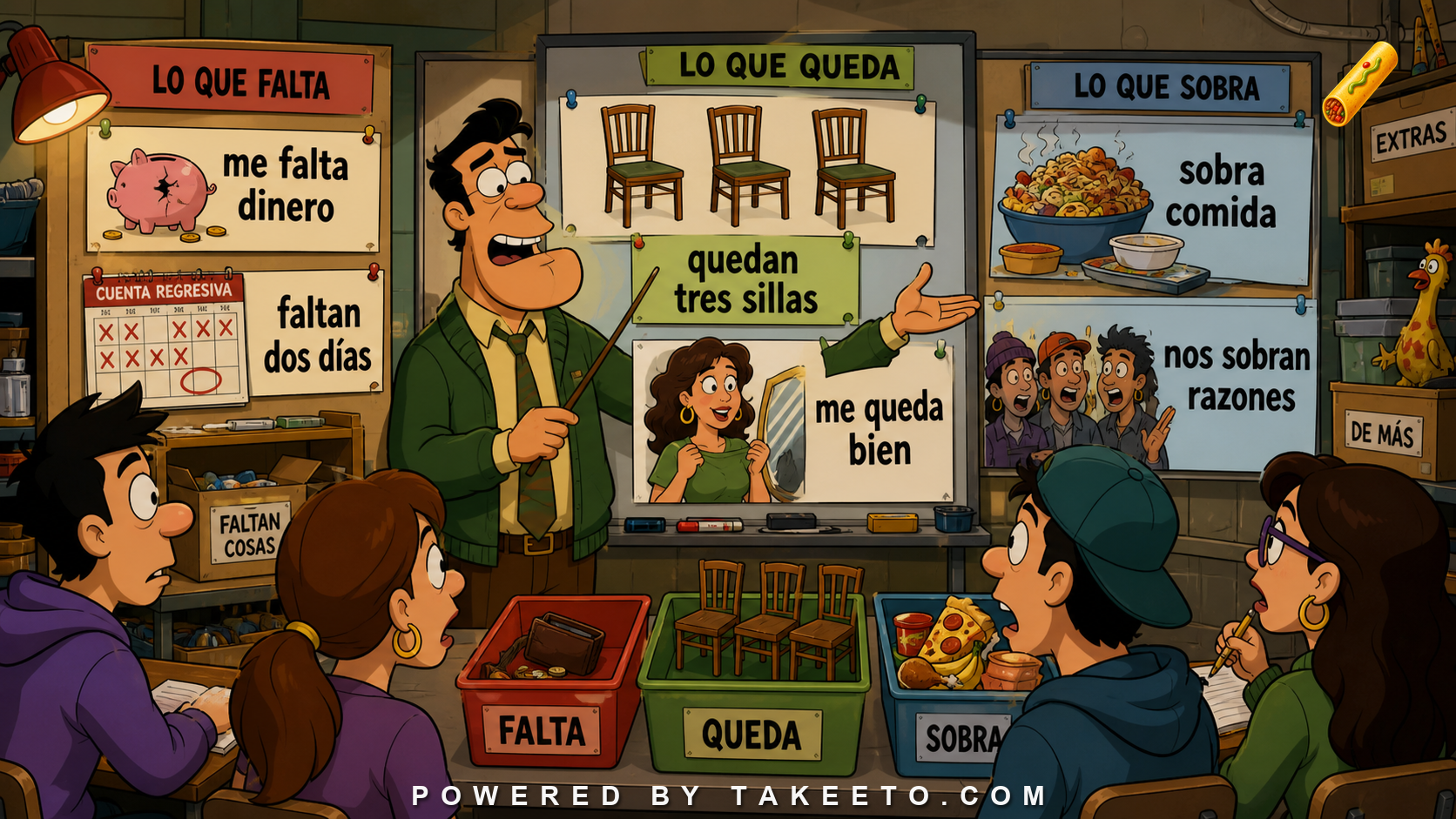
The reader can parse quantity-state verbs that often confuse English speakers.
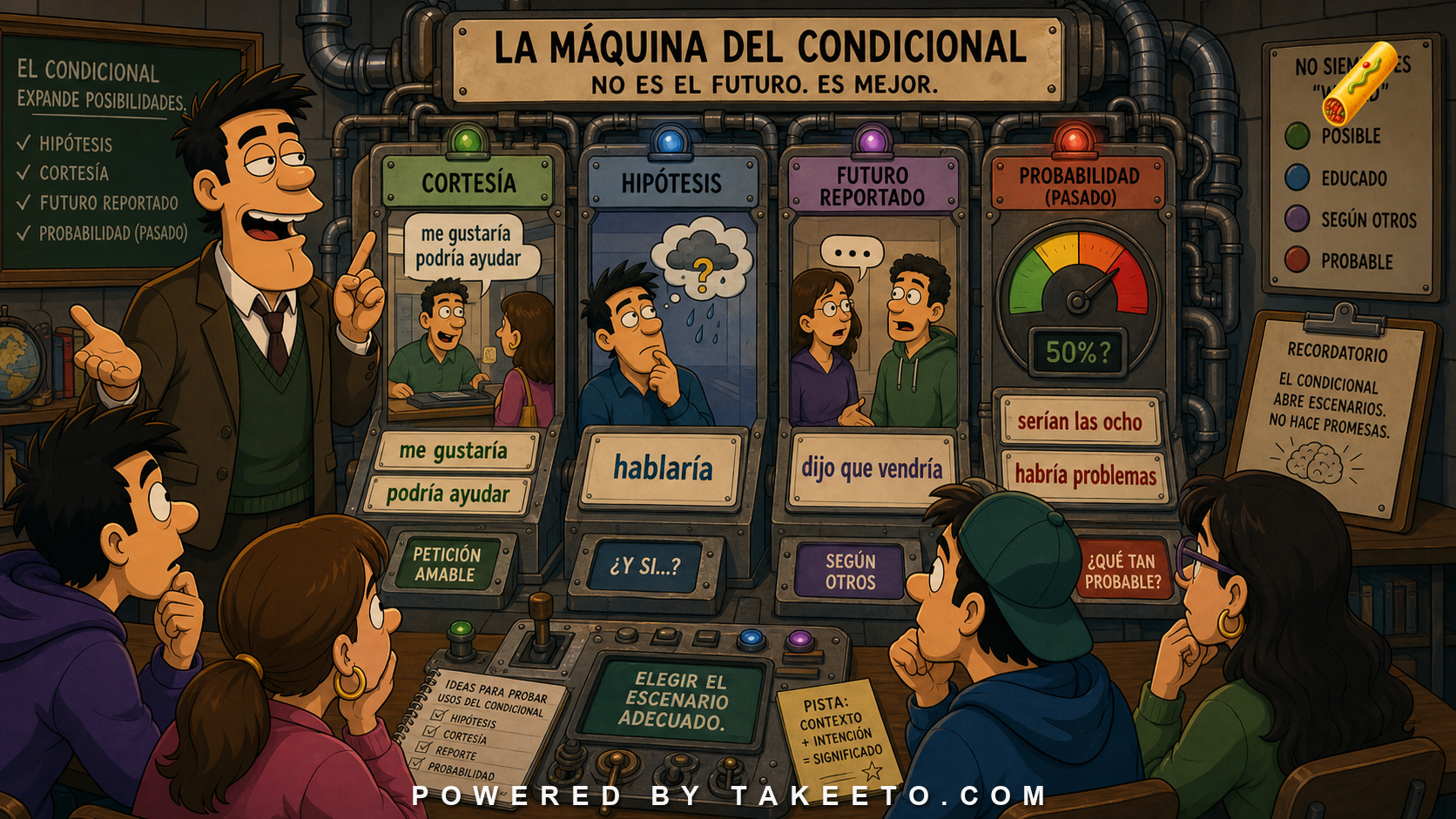
The reader can interpret the Spanish conditional beyond “would.”
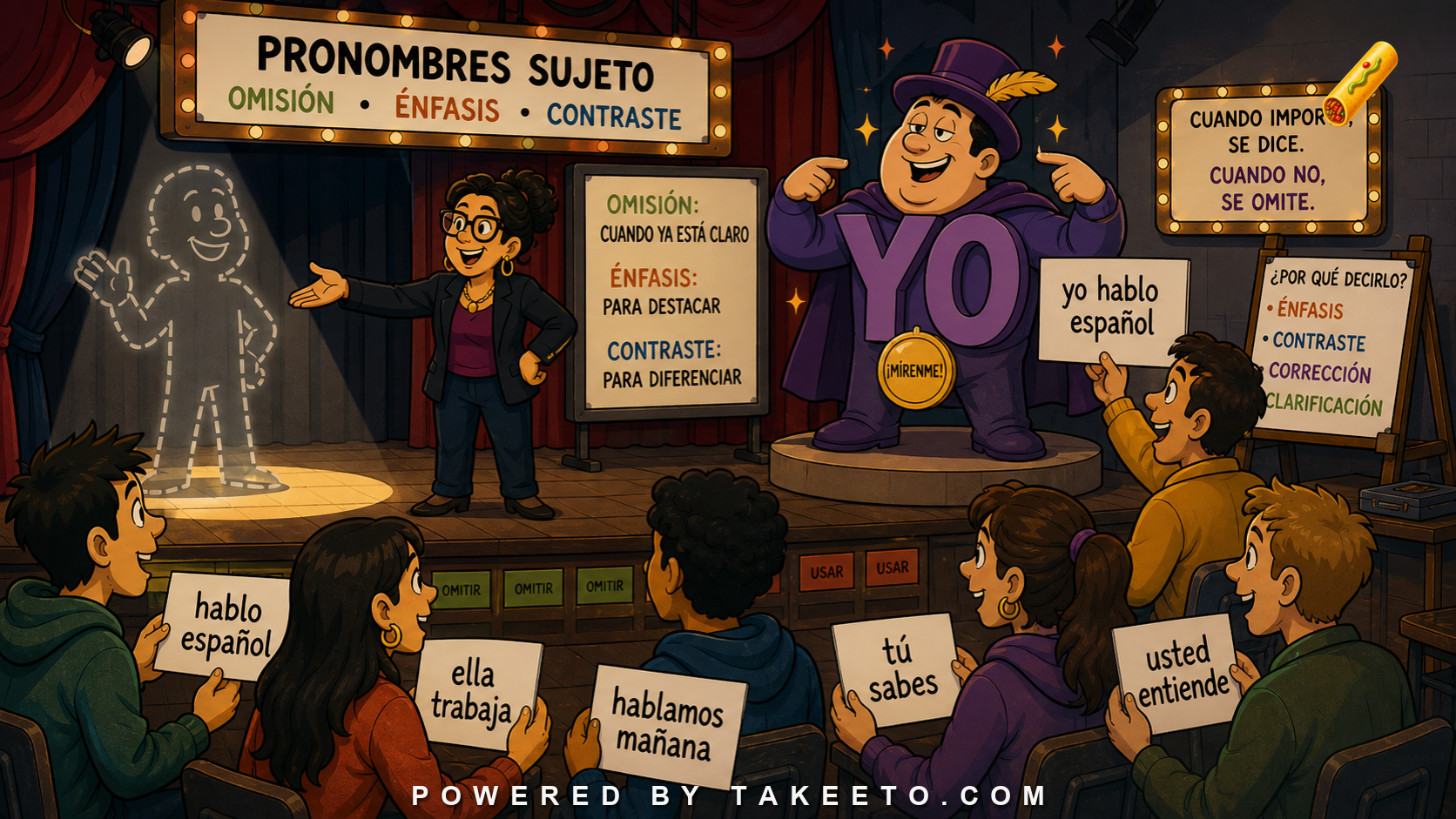
The reader can explain when Spanish omits subject pronouns and when explicit pronouns carry meaning.

The reader can identify calques and evaluate when they are accepted, contested, or awkward.
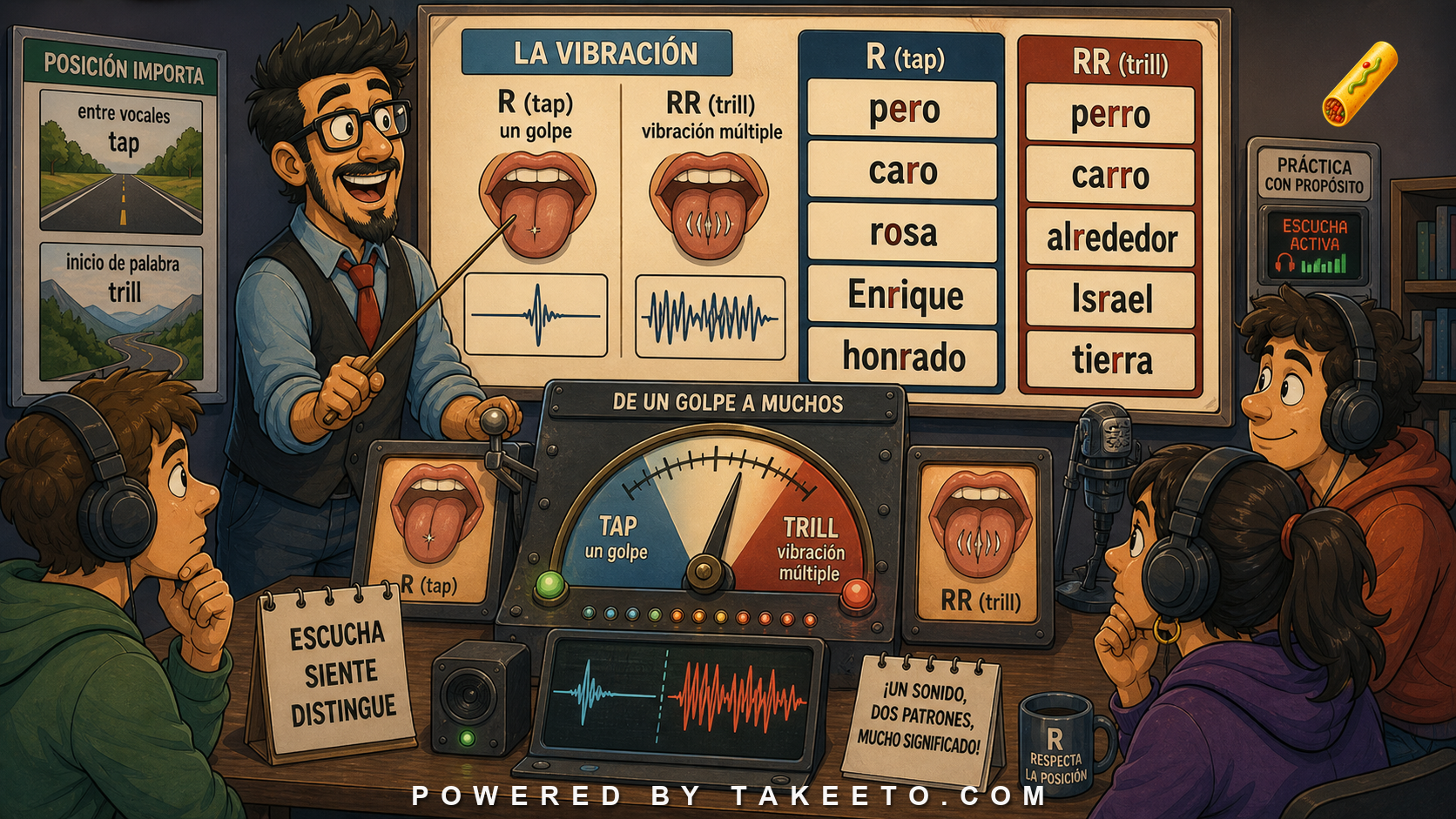
The reader can distinguish the Spanish tap and trill as separate phonemic and positional patterns.
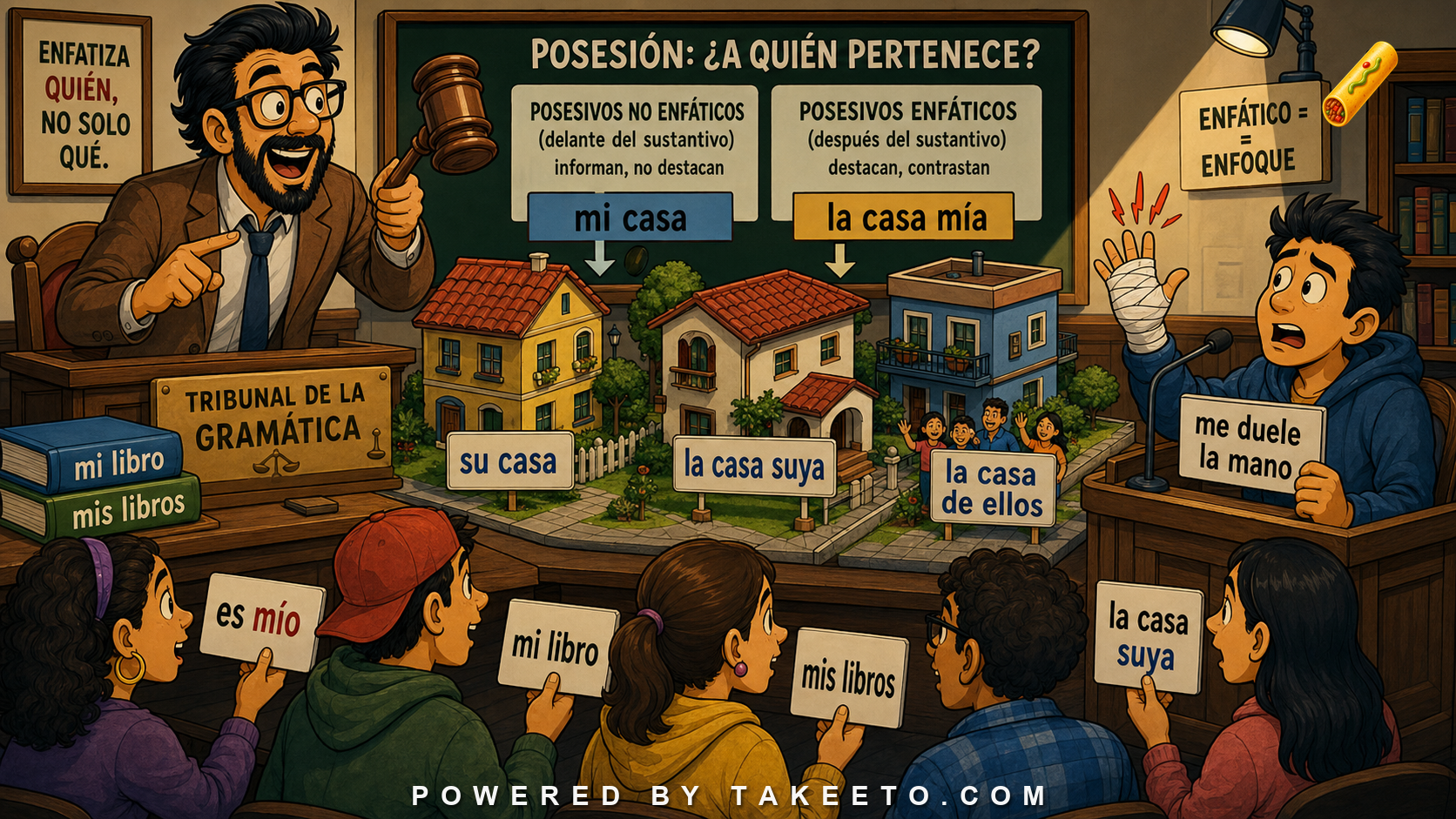
The reader can distinguish unstressed and stressed possessives and their discourse effects.
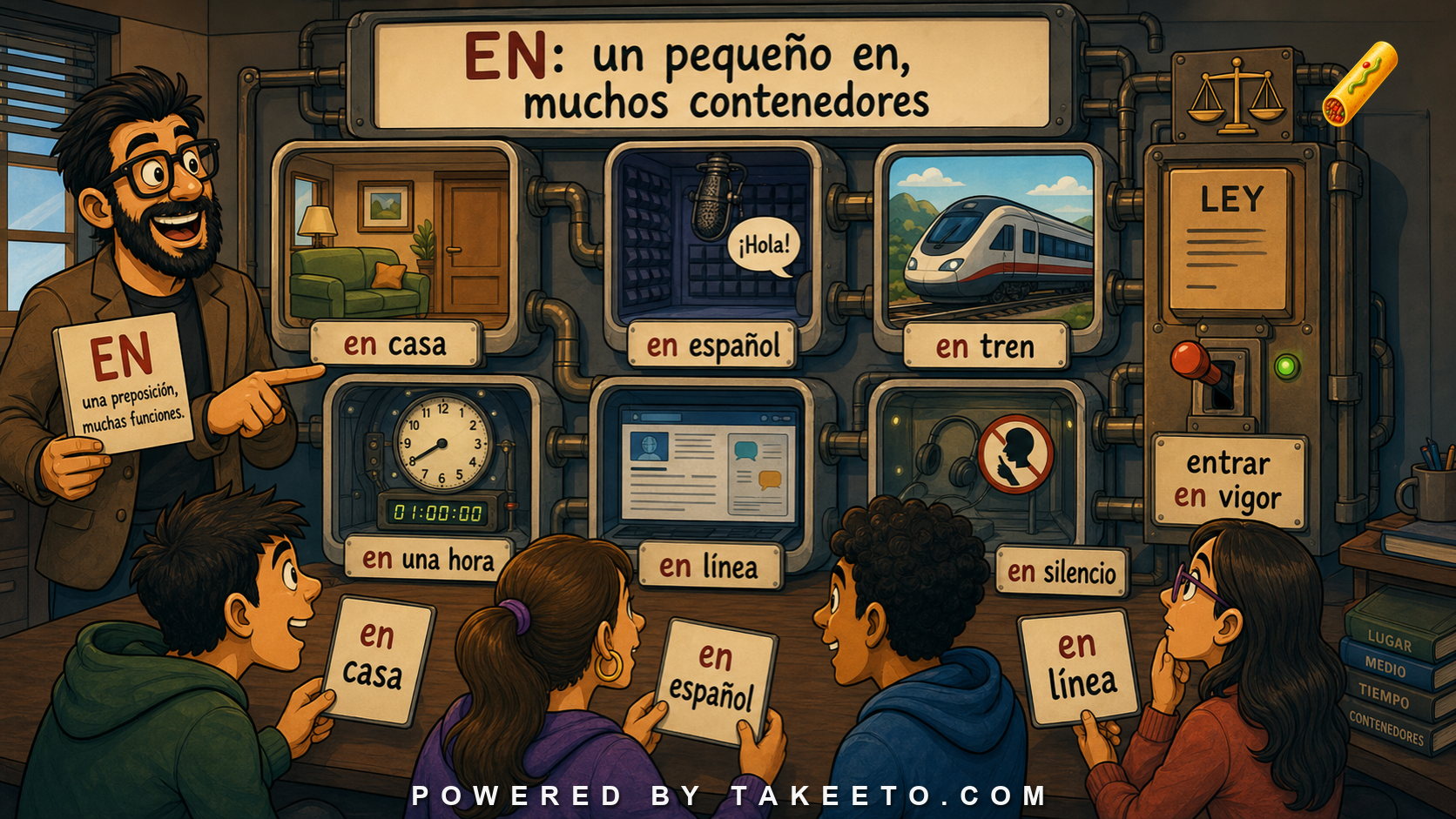
The reader can parse en across physical, temporal, and abstract contexts.
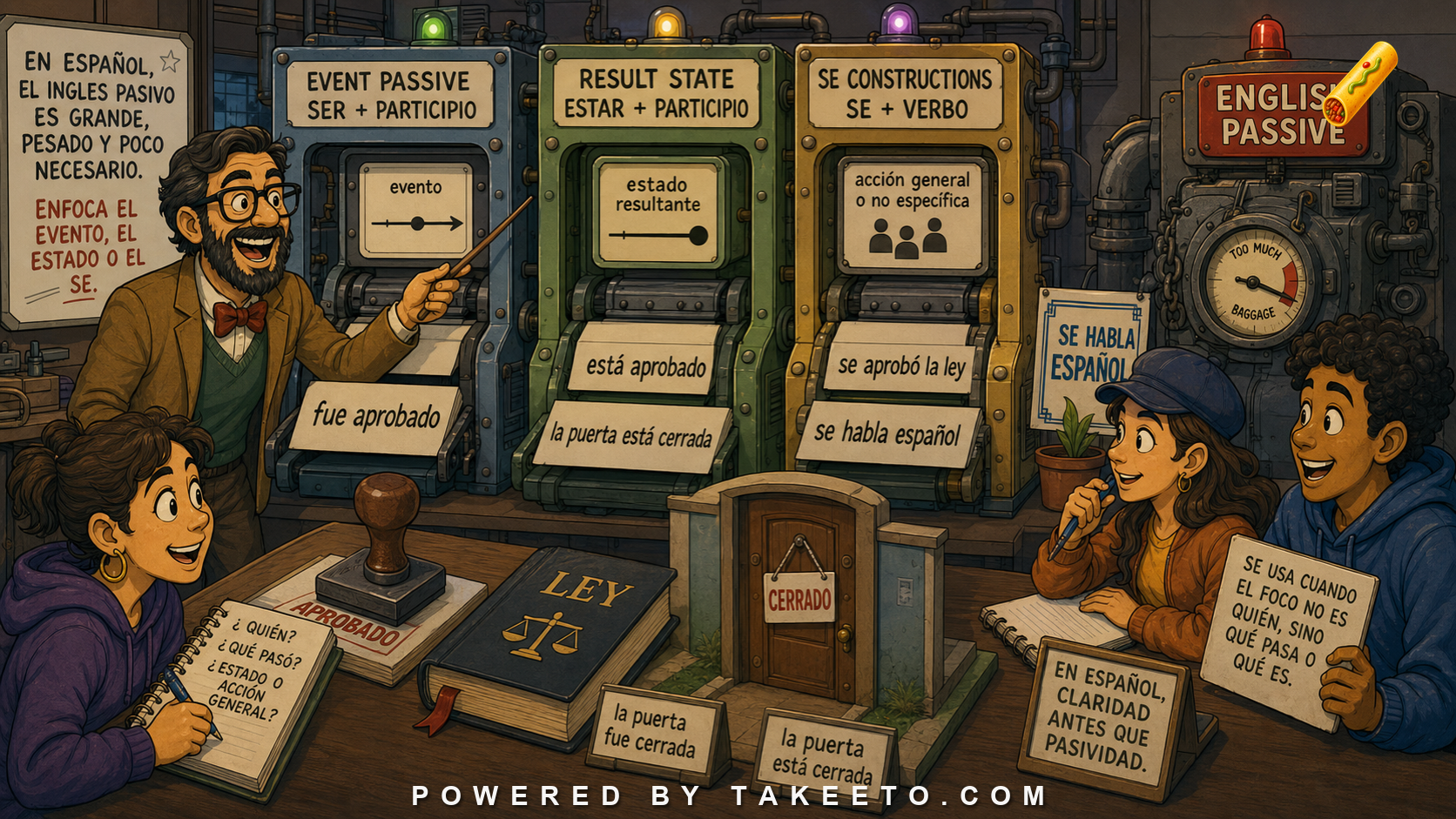
The reader can distinguish event passive, resultative state, and se constructions.
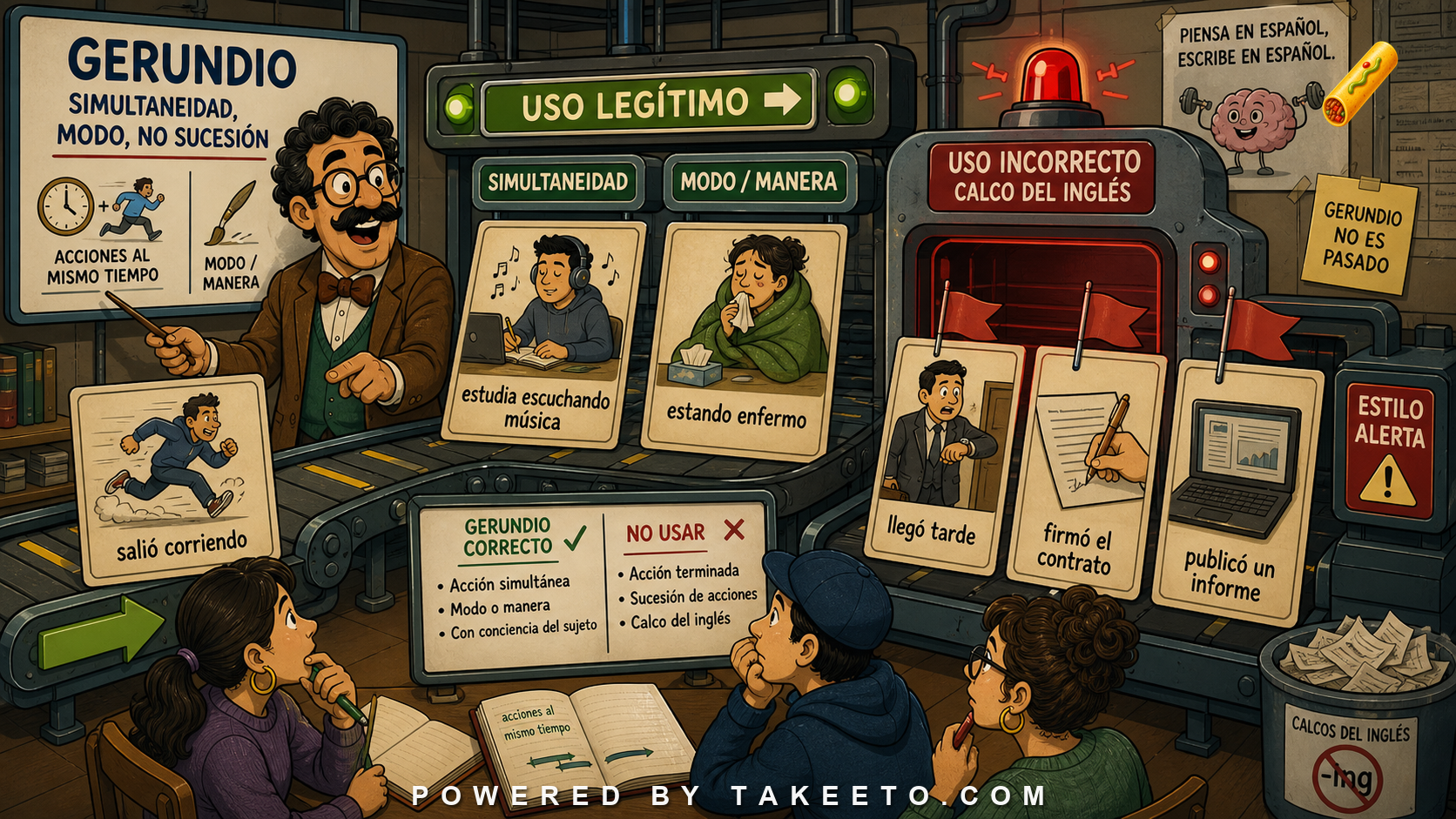
The reader can identify legitimate Spanish gerund use and avoid English-shaped participial clauses.
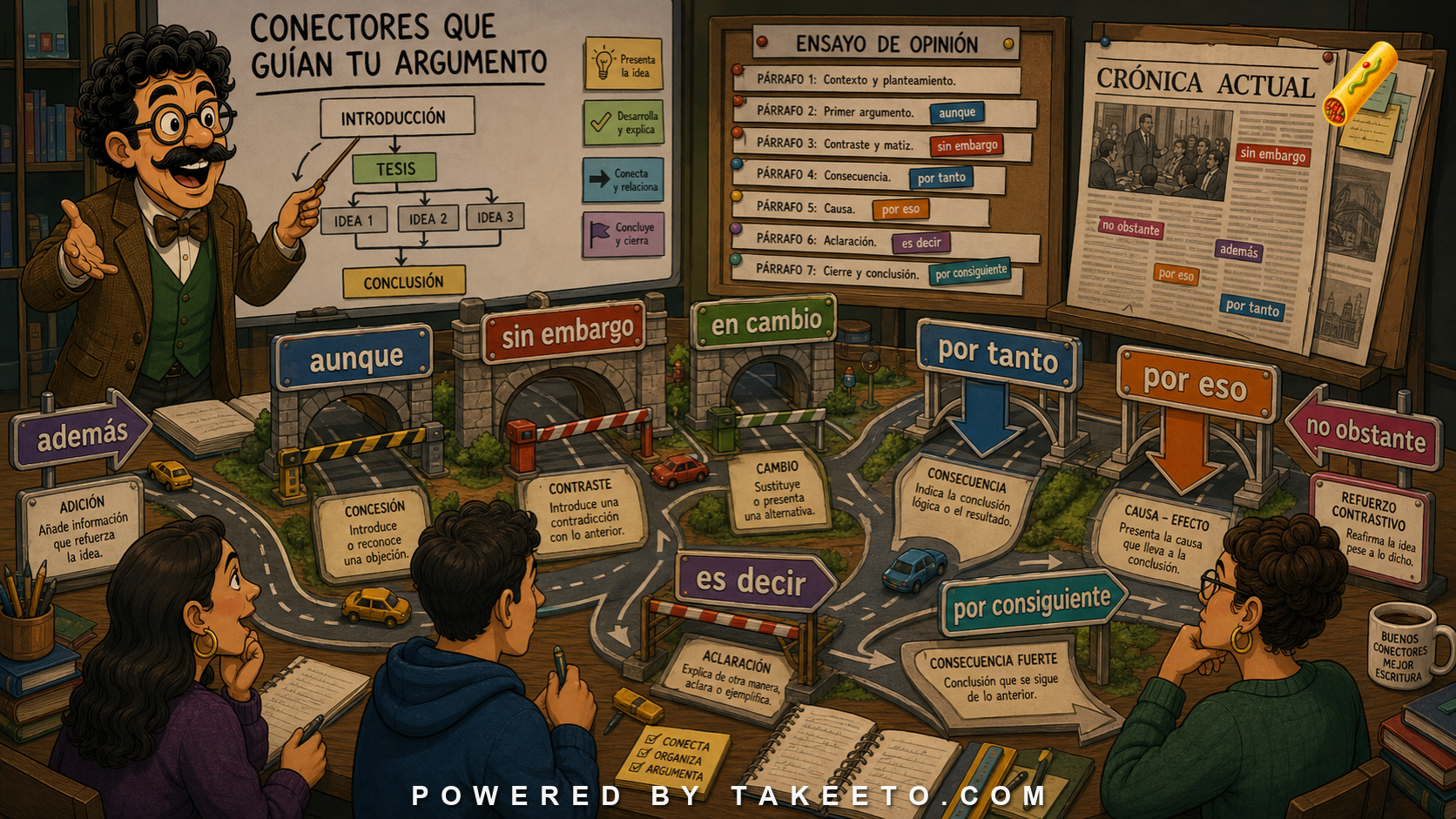
The reader can follow argument structure in essays, journalism, and academic prose.
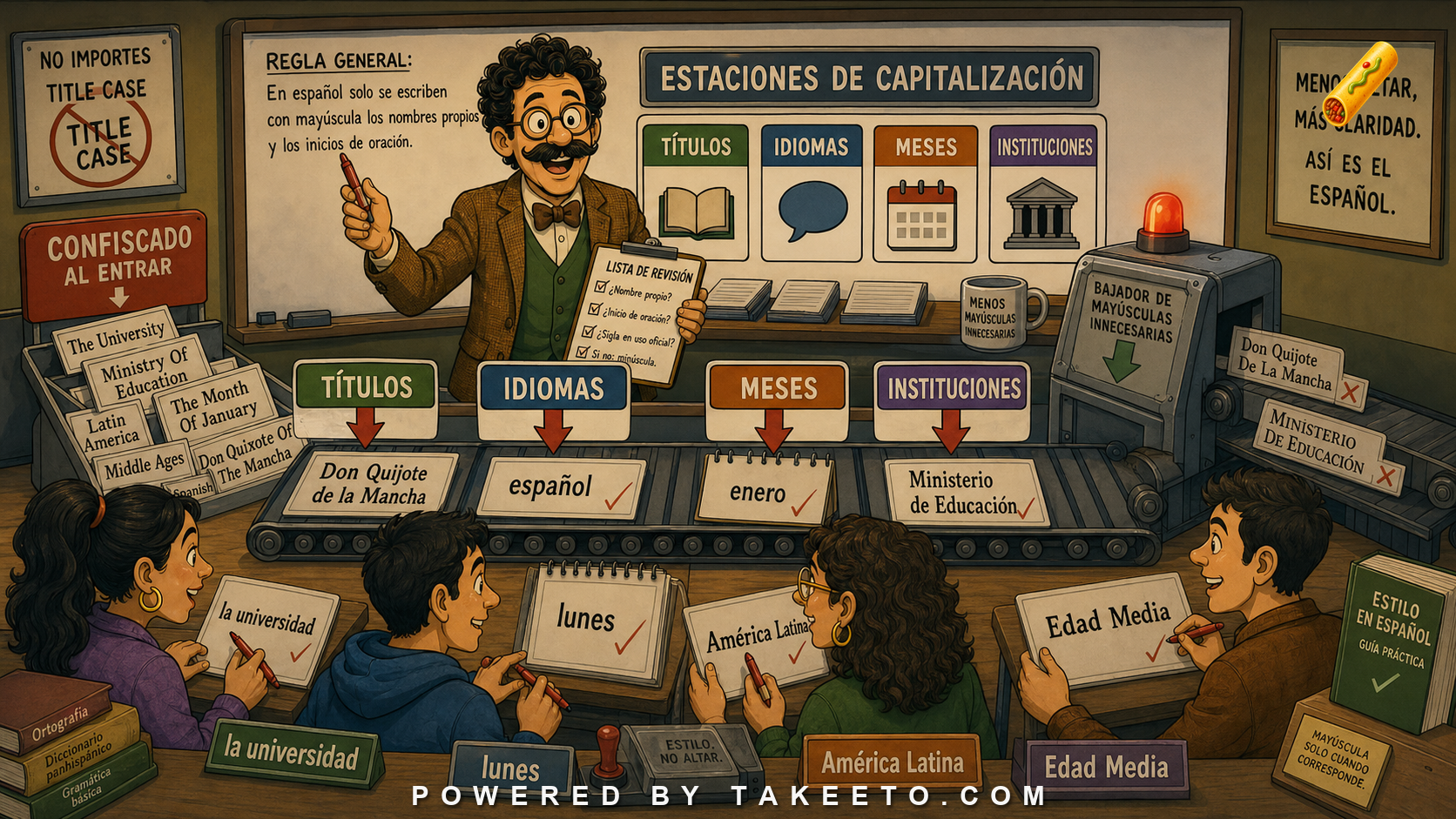
The reader can apply Spanish capitalization norms instead of importing English title-case habits.
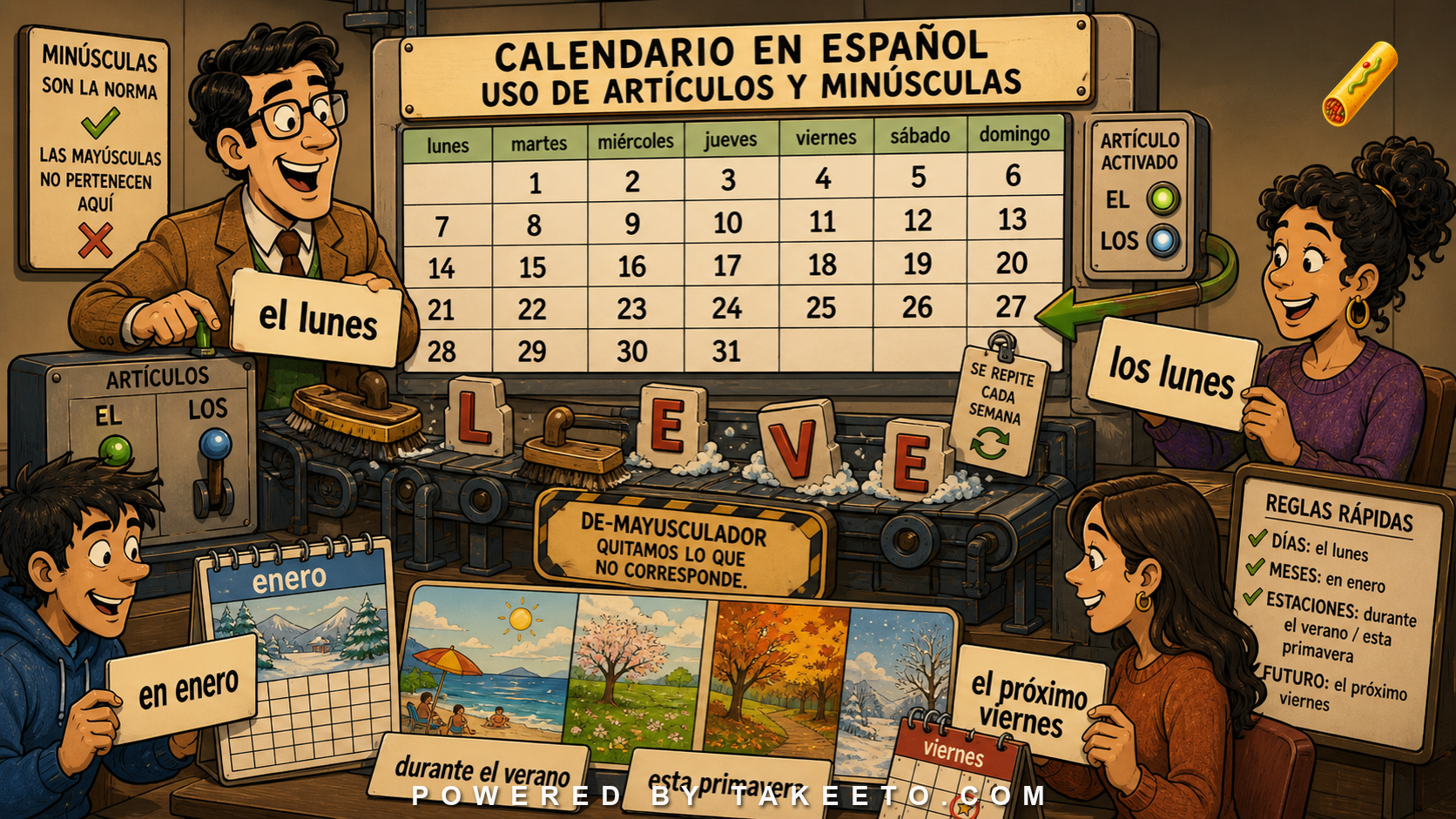
The reader can use calendar vocabulary in natural Spanish.
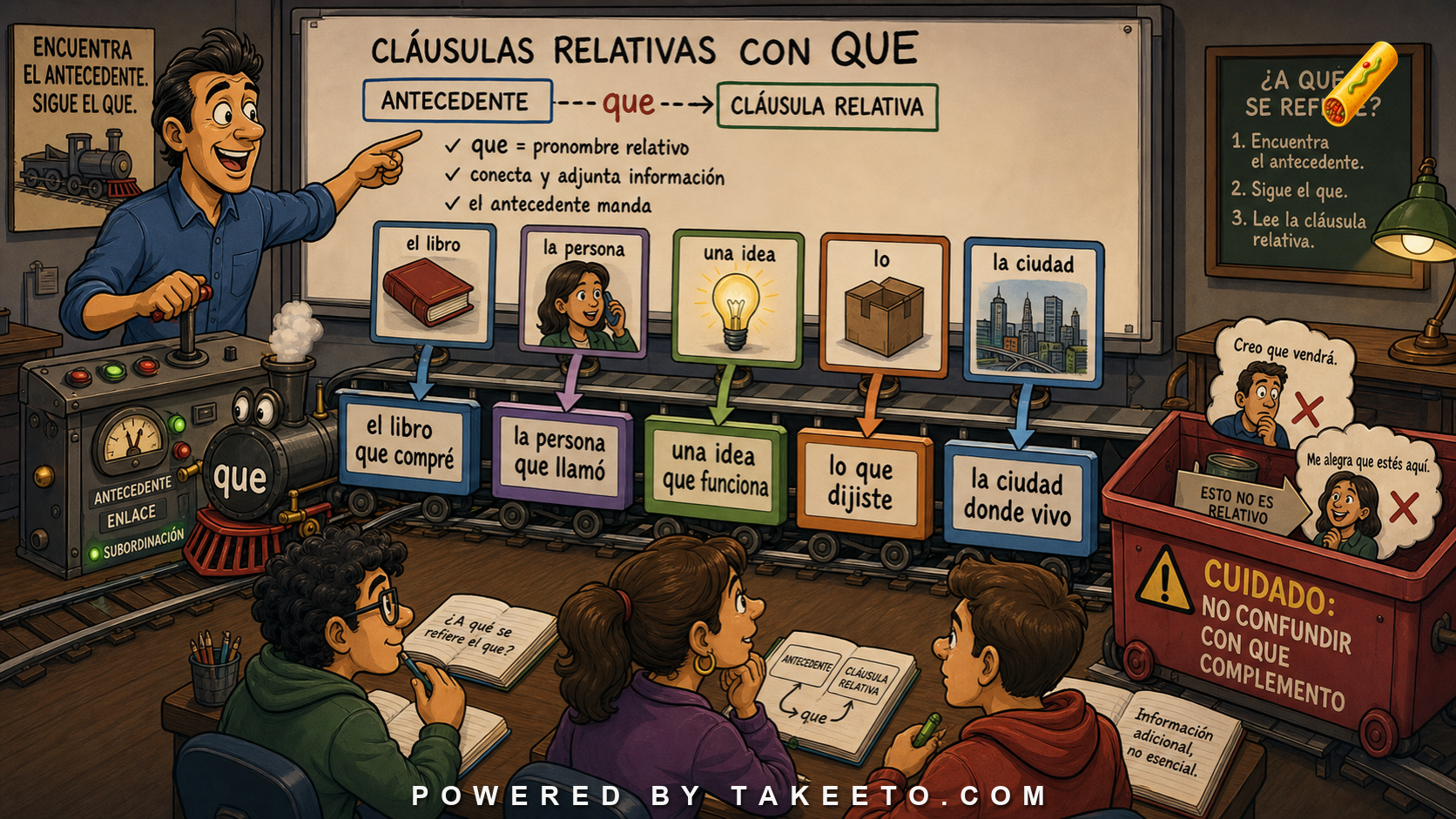
The reader can parse que relative clauses, find their antecedents, and avoid confusing relative que with complement que.
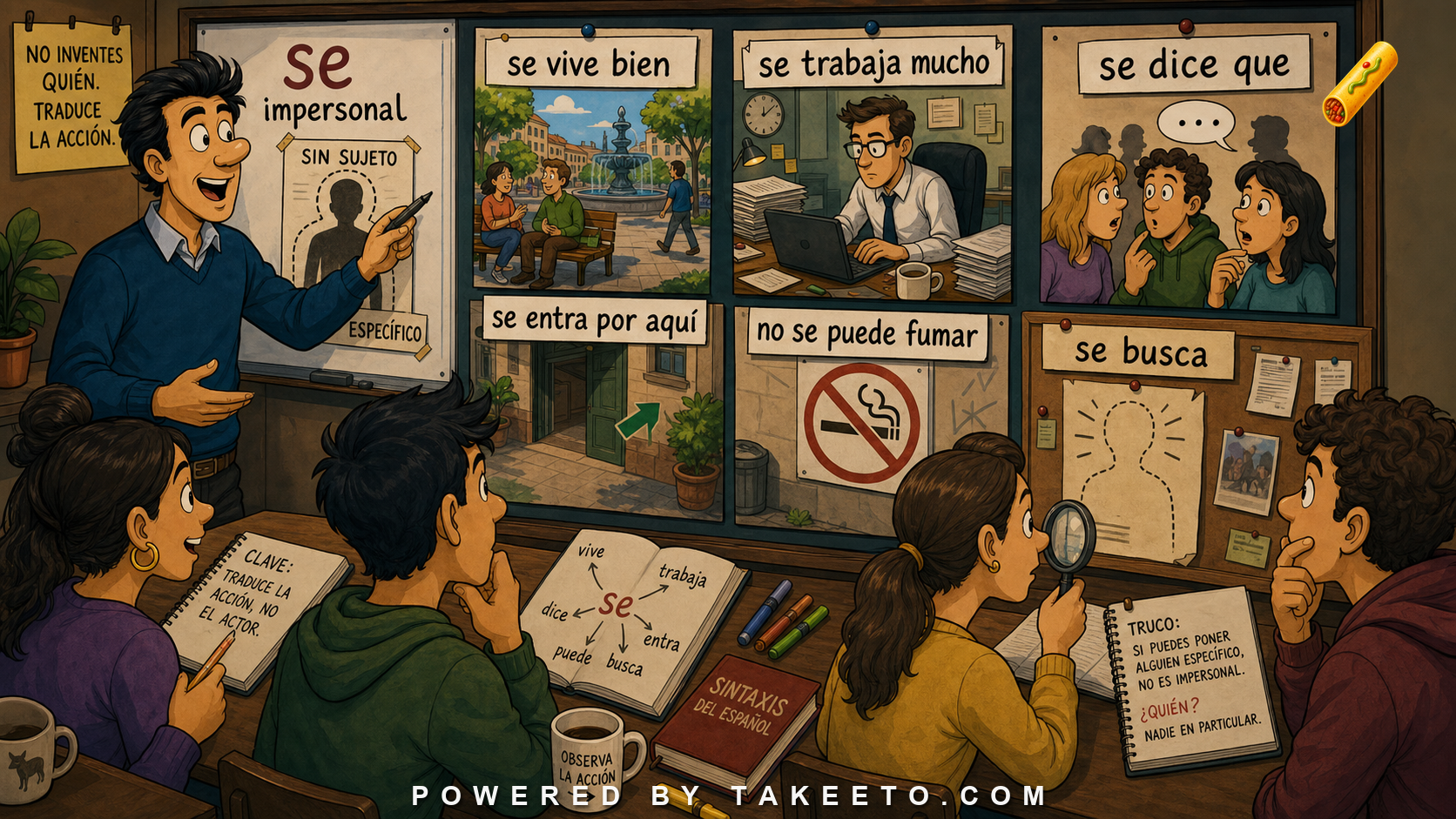
The reader can identify impersonal se and translate it without inventing a specific agent.
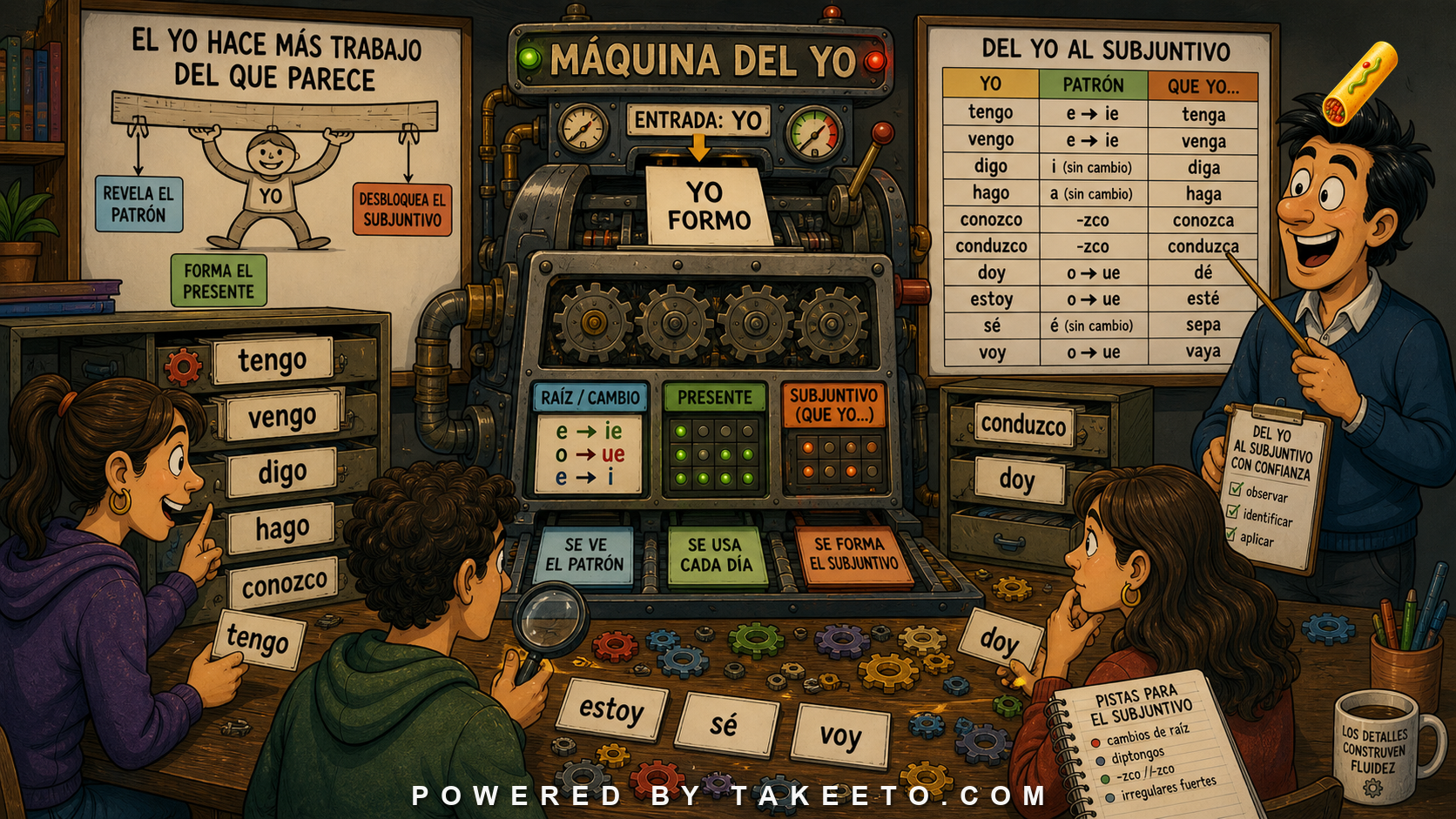
The reader understands common present-tense irregularities and their role in subjunctive formation.
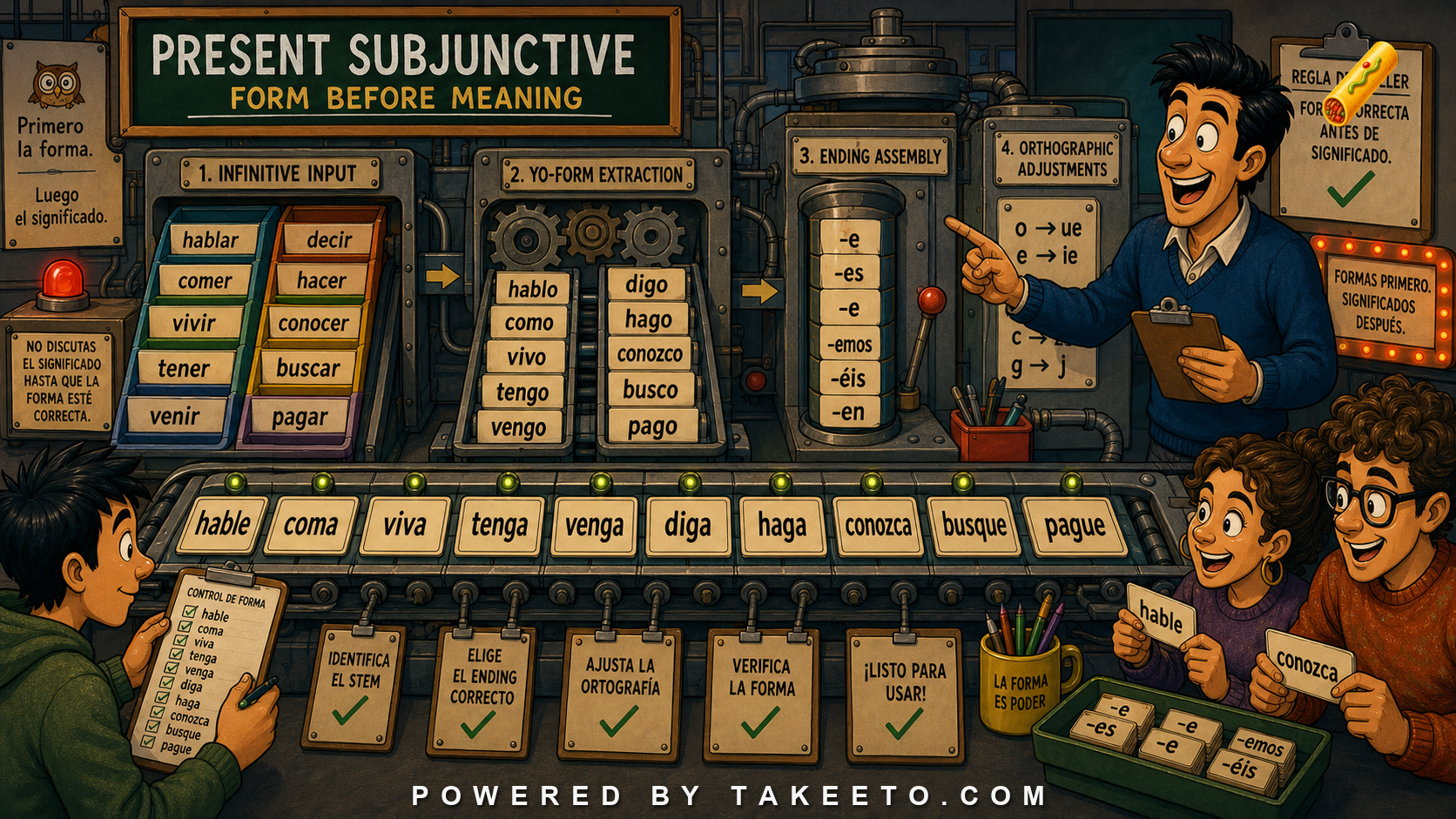
The reader can form the present subjunctive accurately before confronting its semantic range.
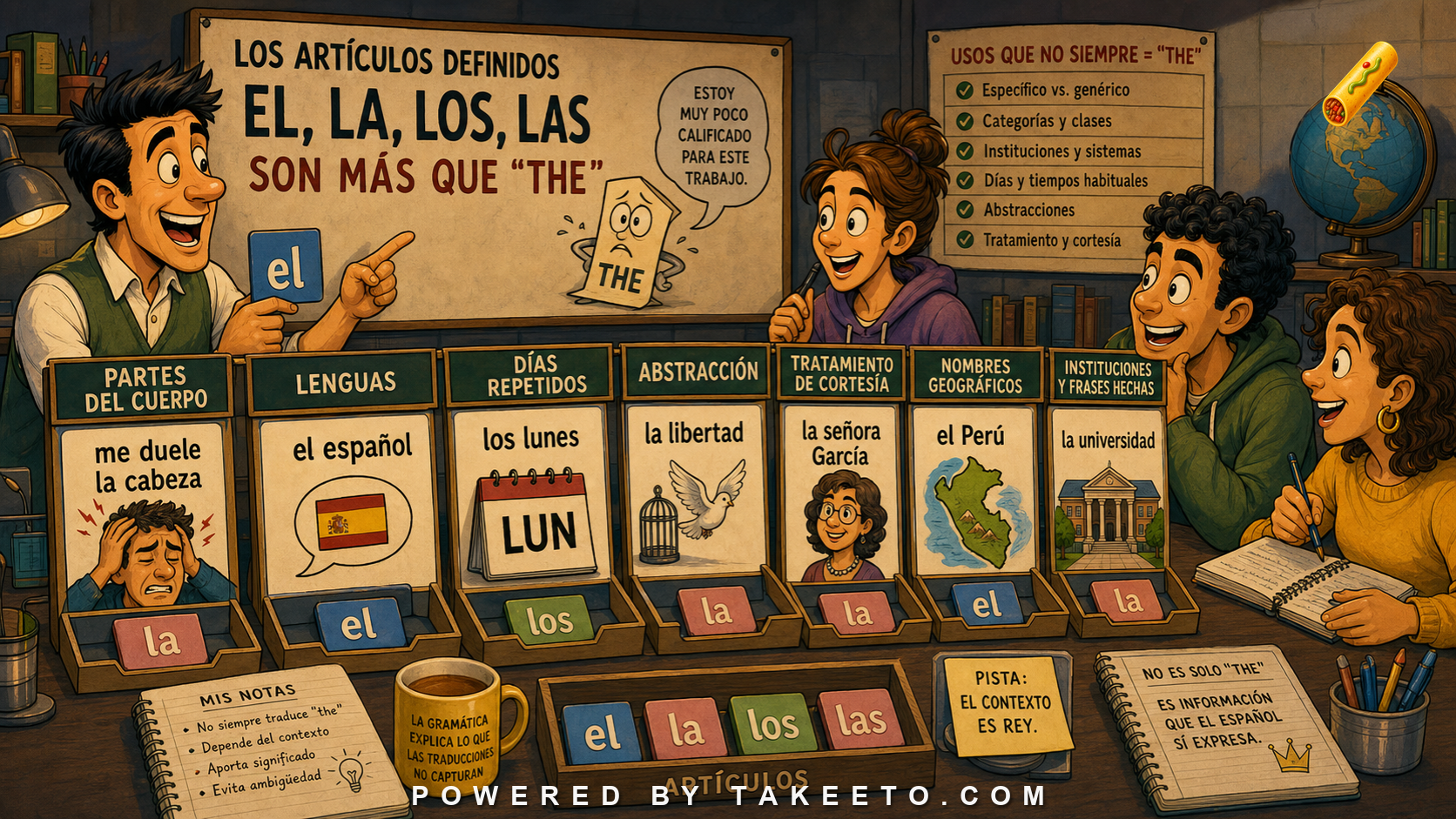
The reader can explain major Spanish article uses that do not map neatly onto English.
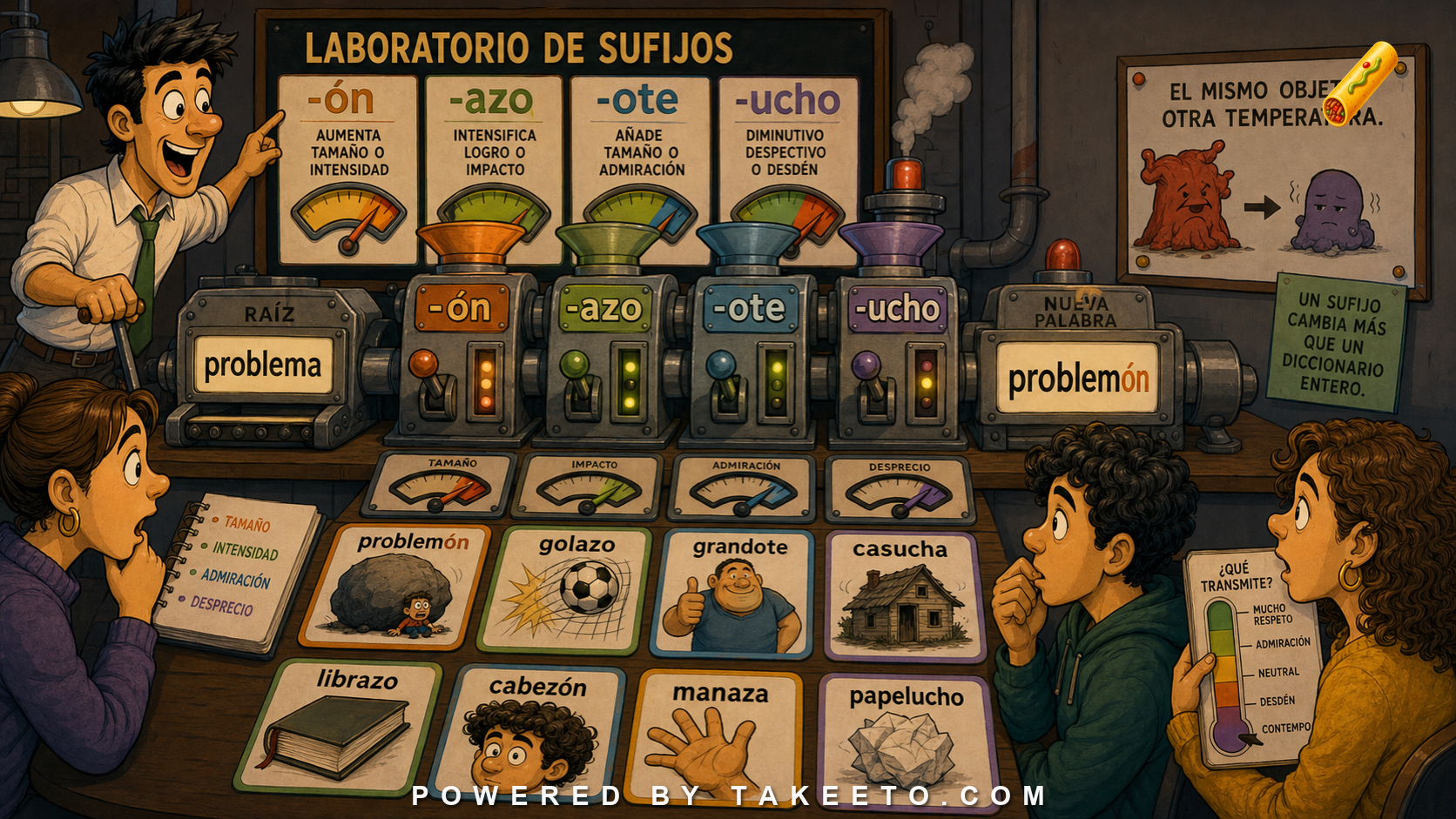
The reader can interpret size, intensity, admiration, and contempt in Spanish suffixes.
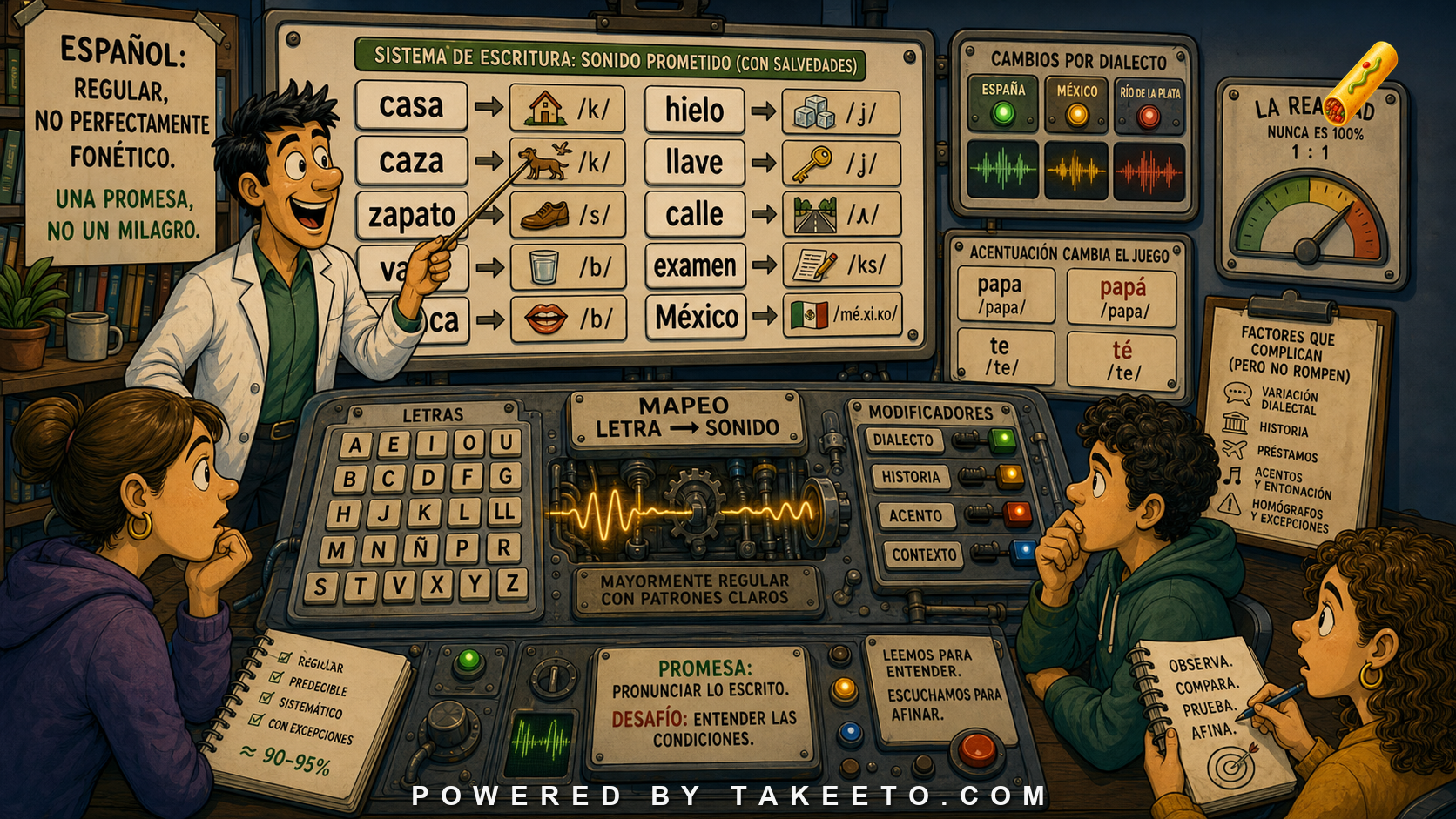
The reader understands Spanish spelling as a mostly regular mapping system with dialectal, historical, and stress-related complications.
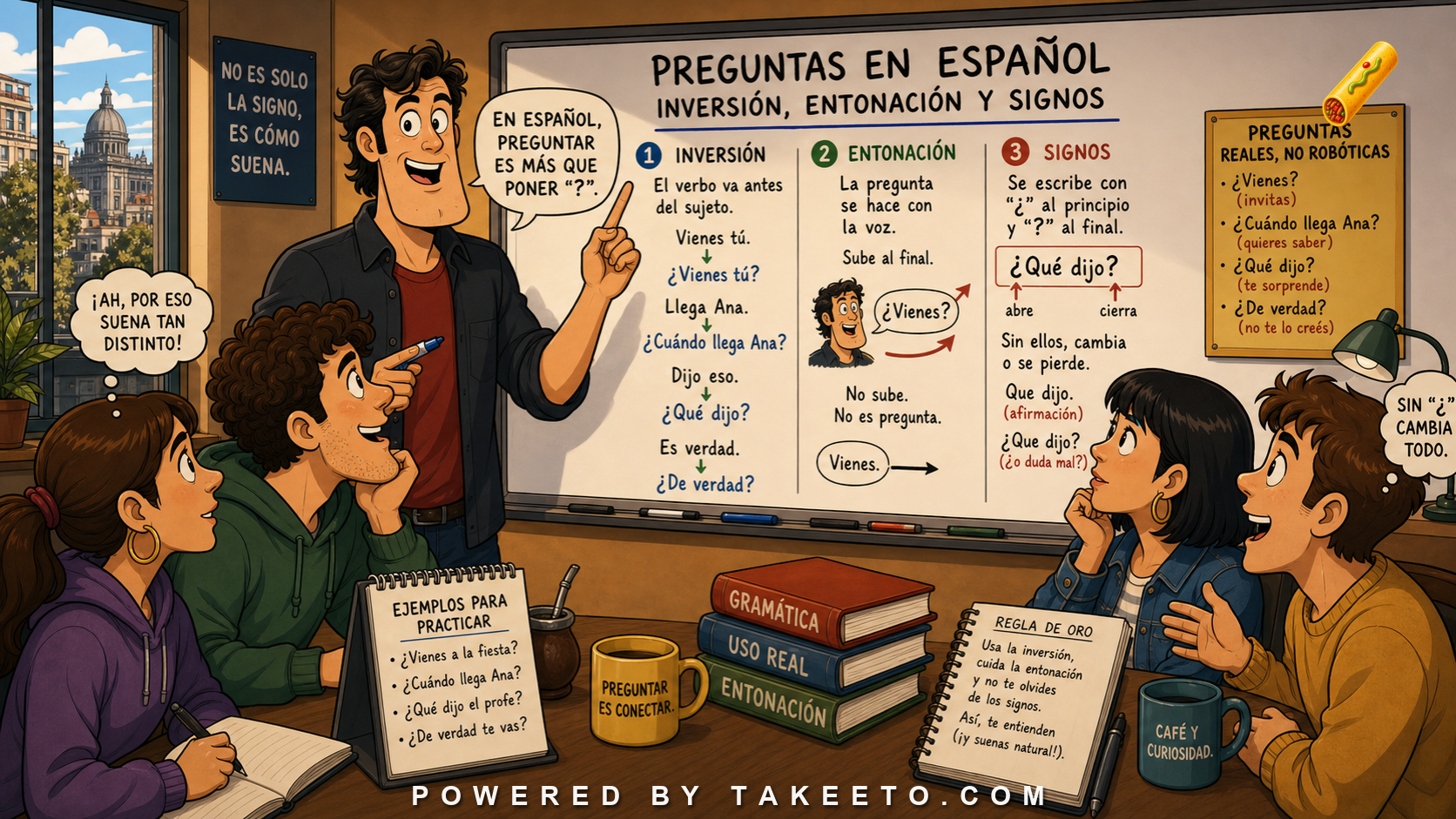
The reader understands Spanish question formation beyond adding question marks.
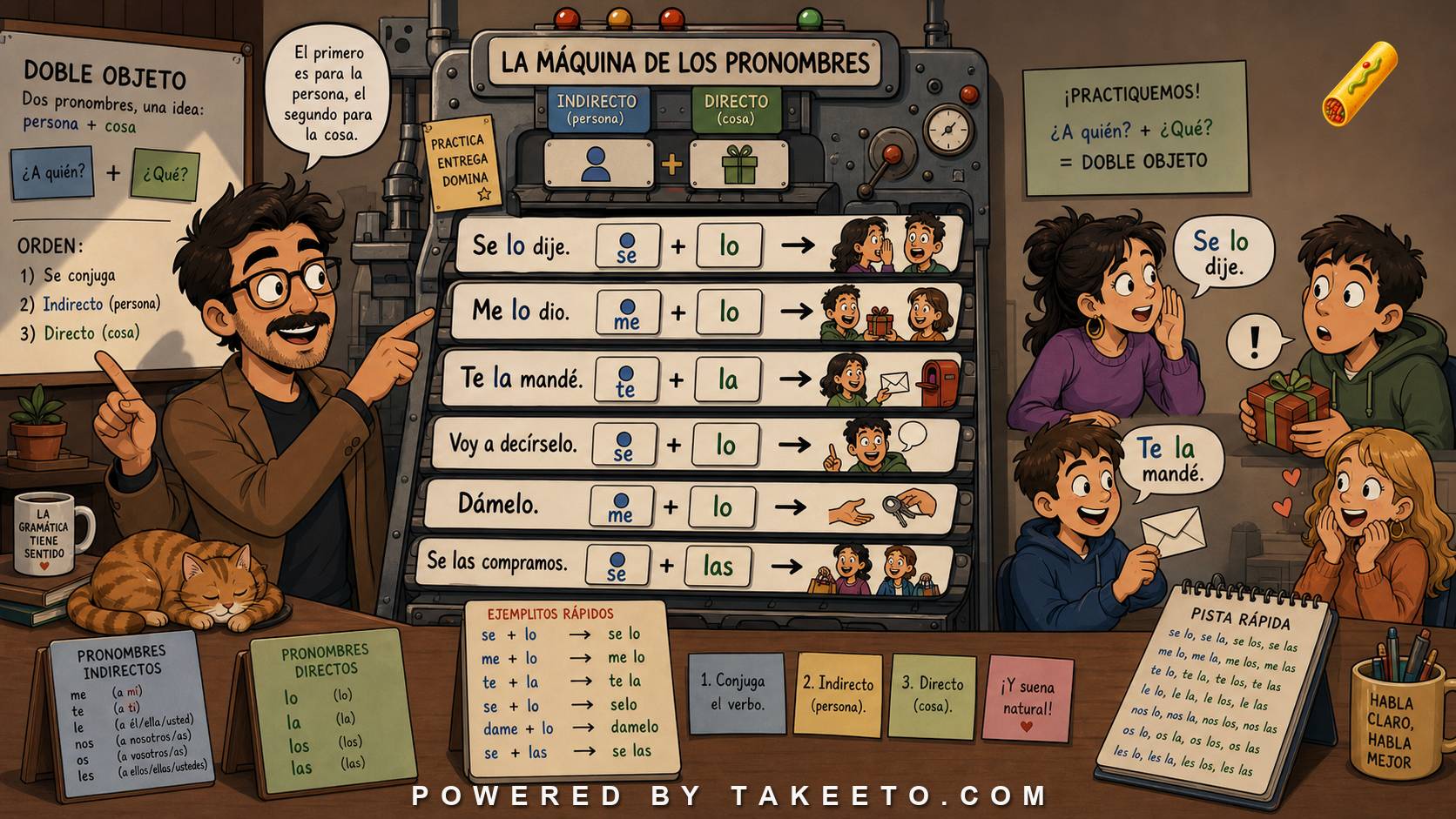
The reader can form and parse Spanish double-pronoun sequences.
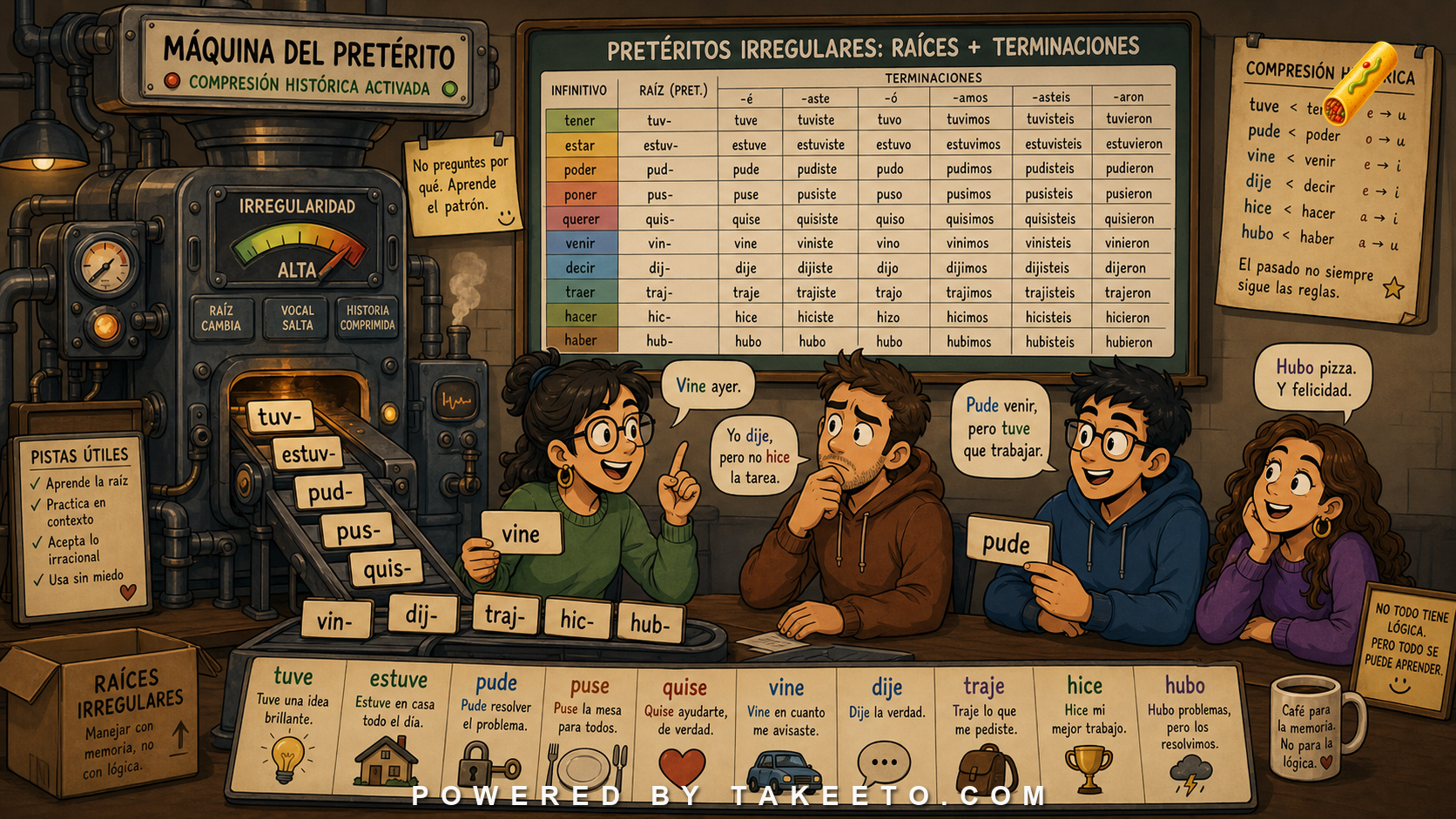
The reader can recognize and organize high-frequency irregular preterite stems.
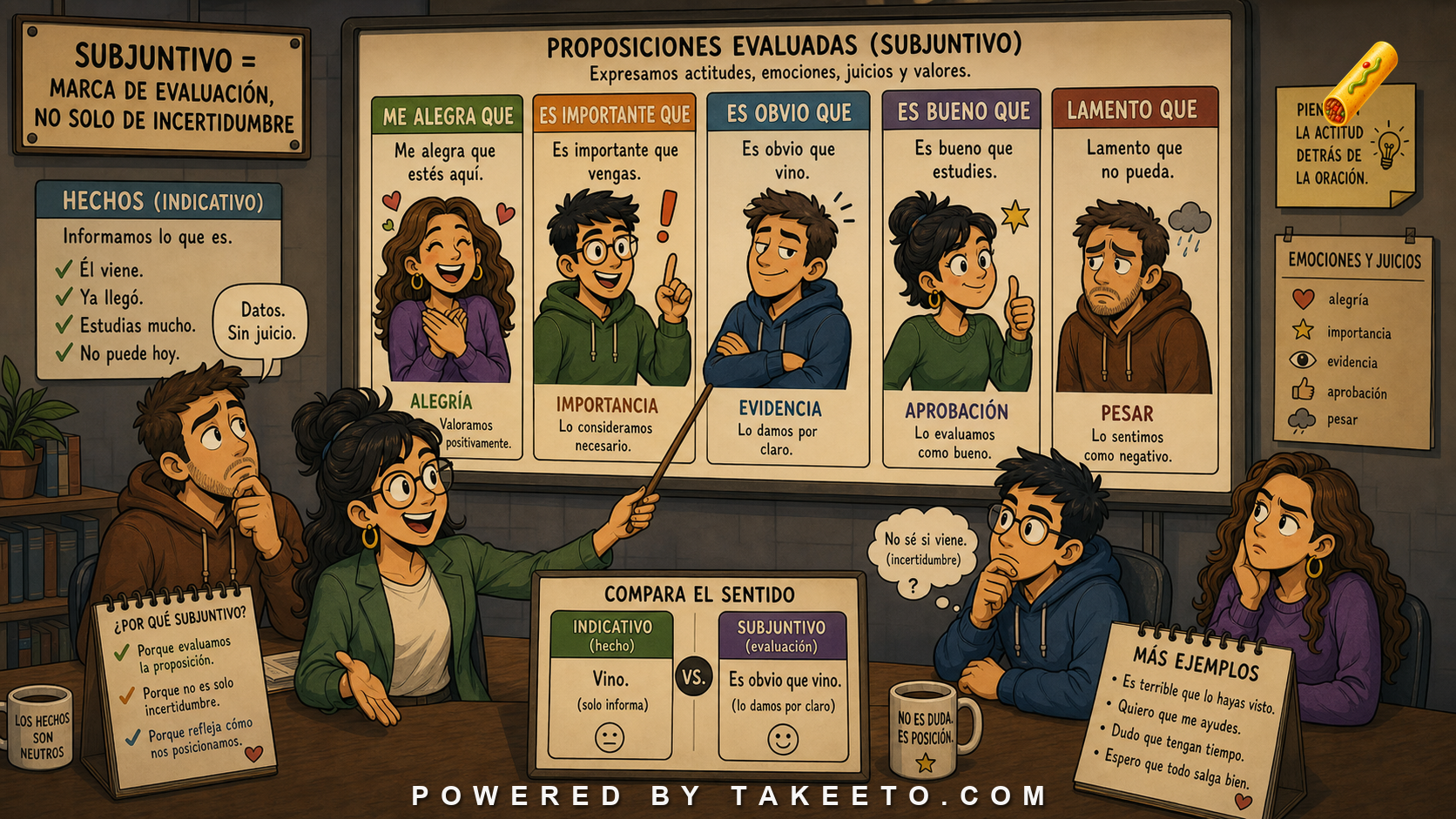
The reader sees subjunctive as marking evaluated propositions rather than simply uncertainty.
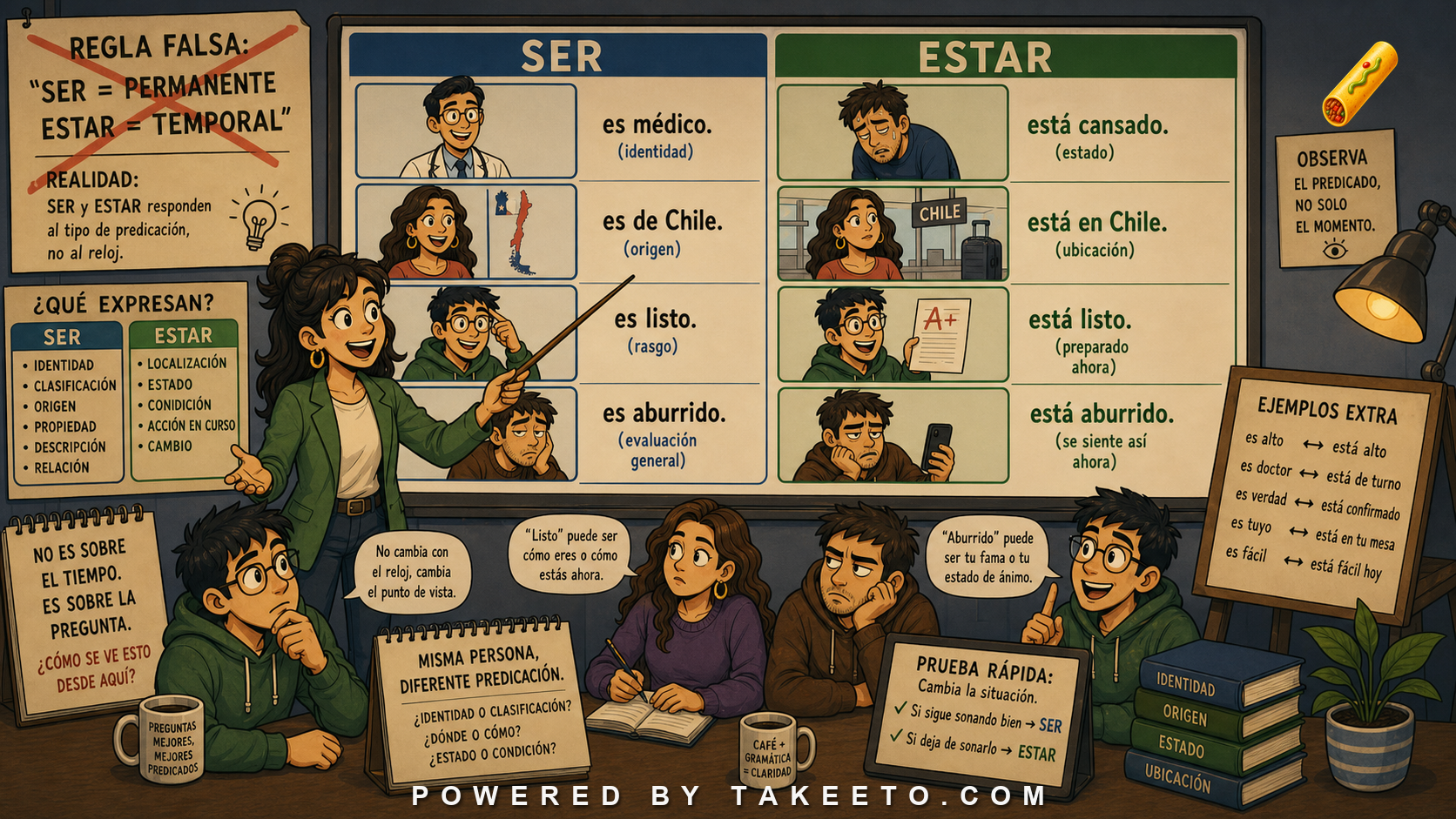
The reader replaces the permanent/temporary shortcut with a more accurate account of predication.
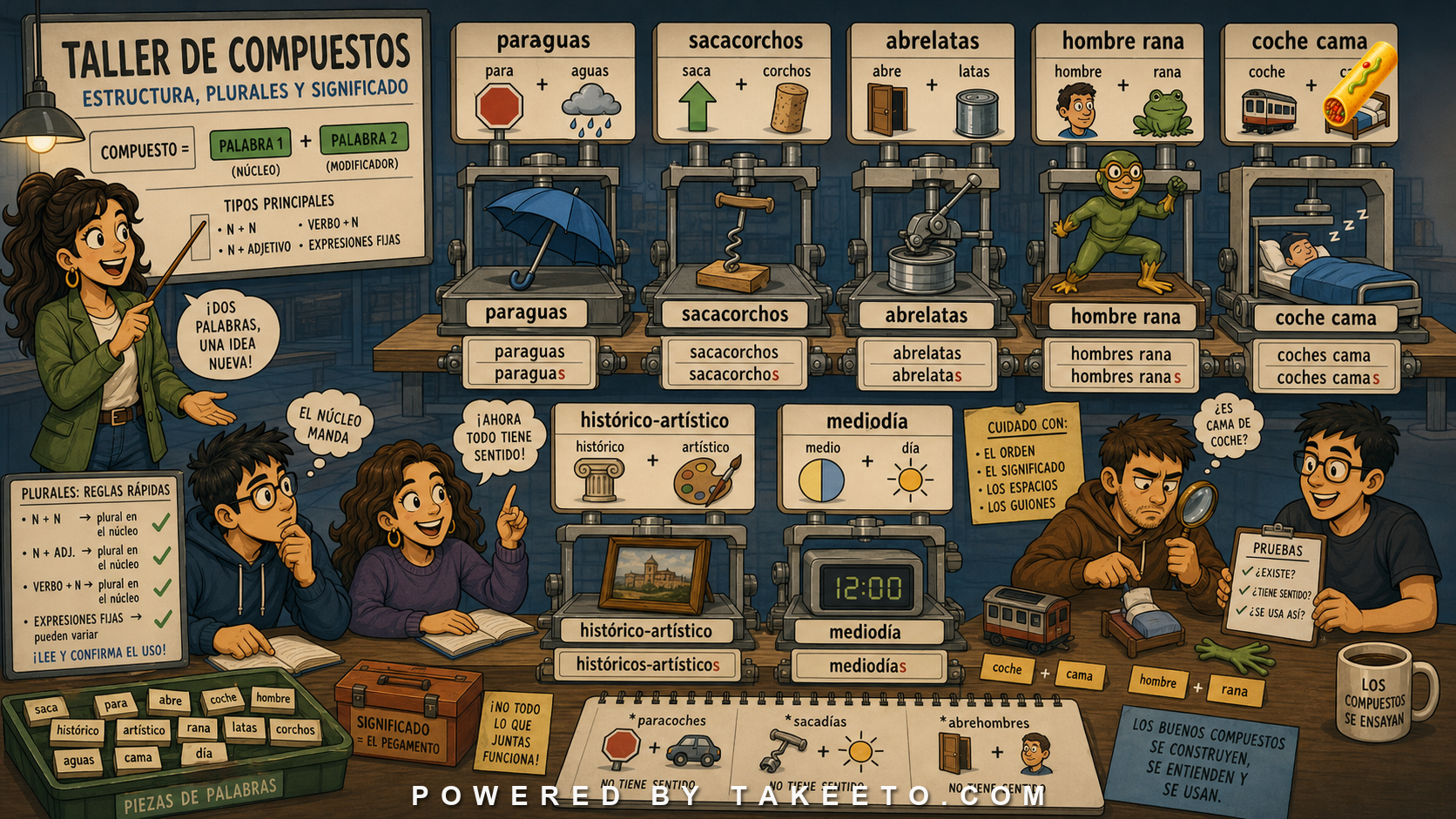
The reader understands how Spanish compounds are formed and pluralized.
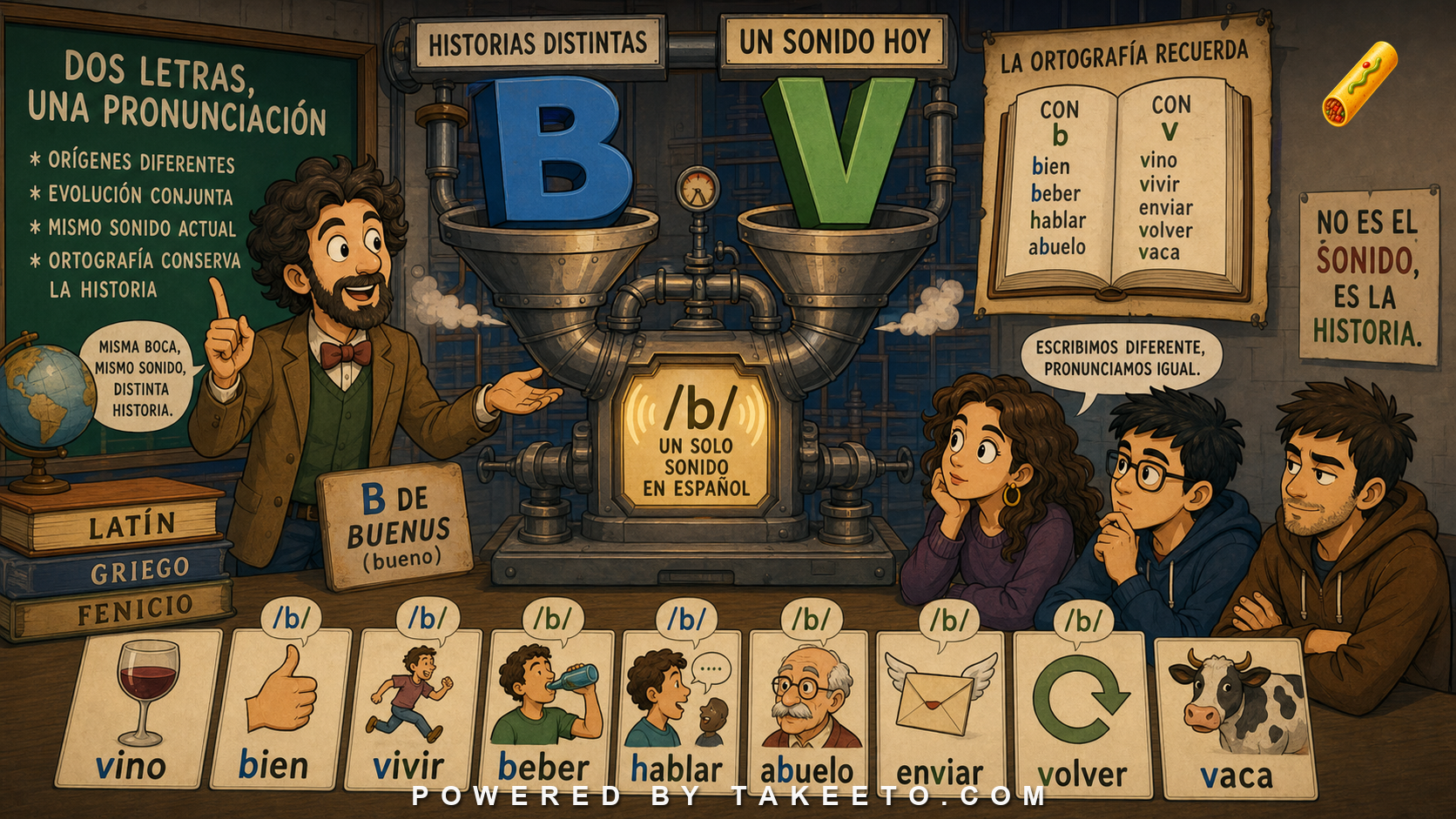
The reader understands why b and v are normally not separate sounds in modern Spanish and why spelling still preserves the distinction.
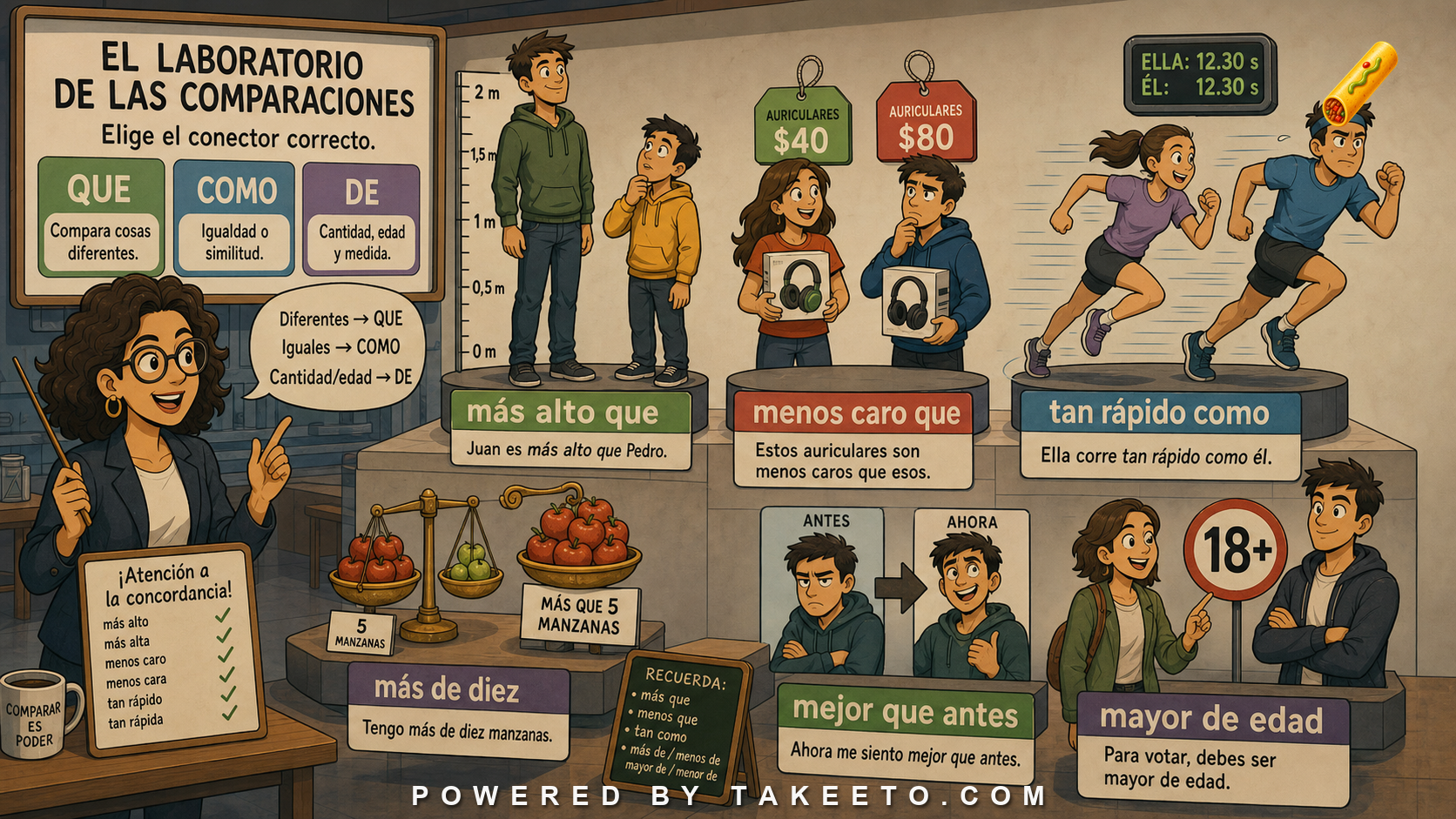
The reader can form Spanish comparisons with correct connectors and agreement.
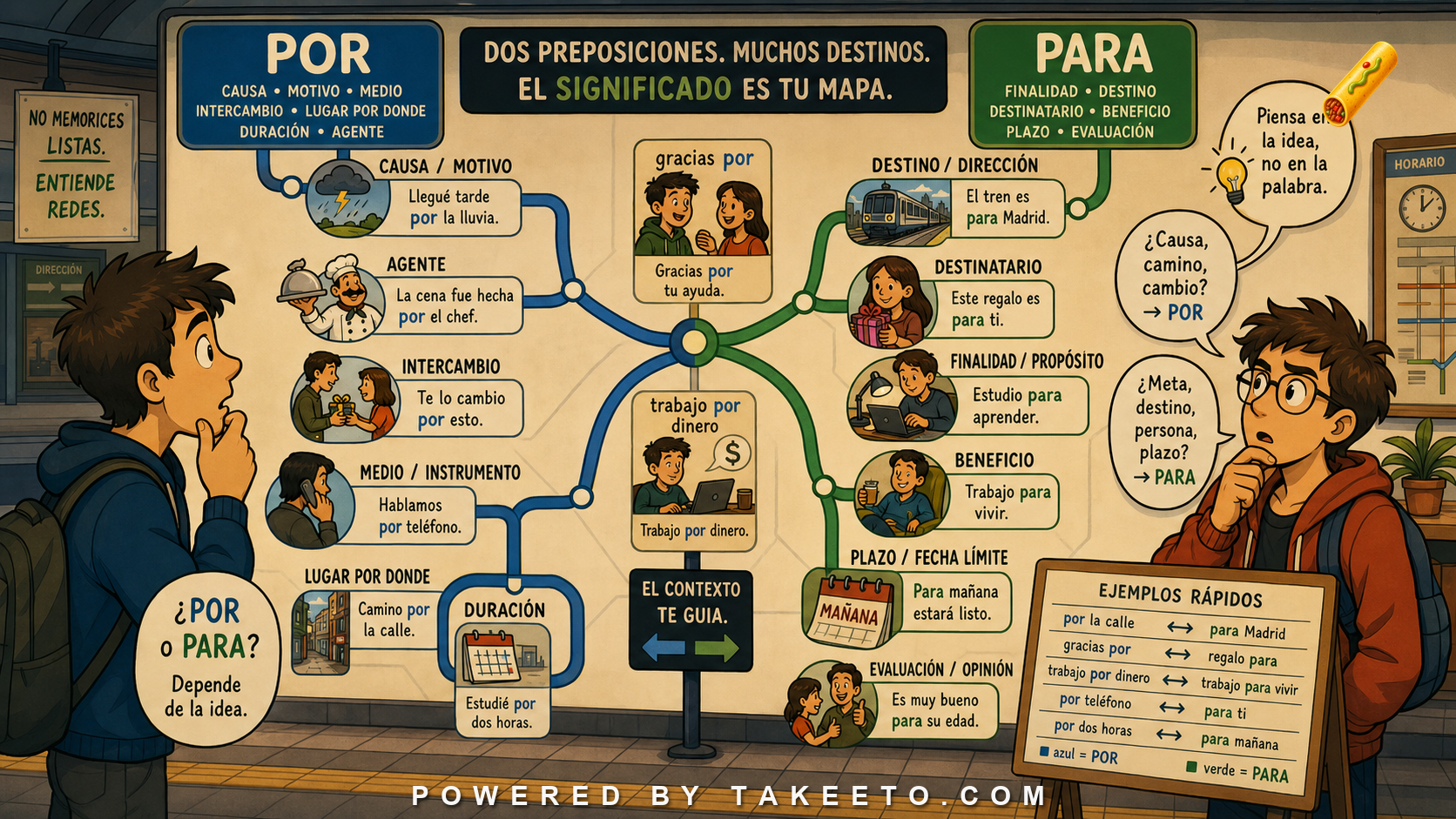
The reader replaces memorized lists with semantic networks for por and para.
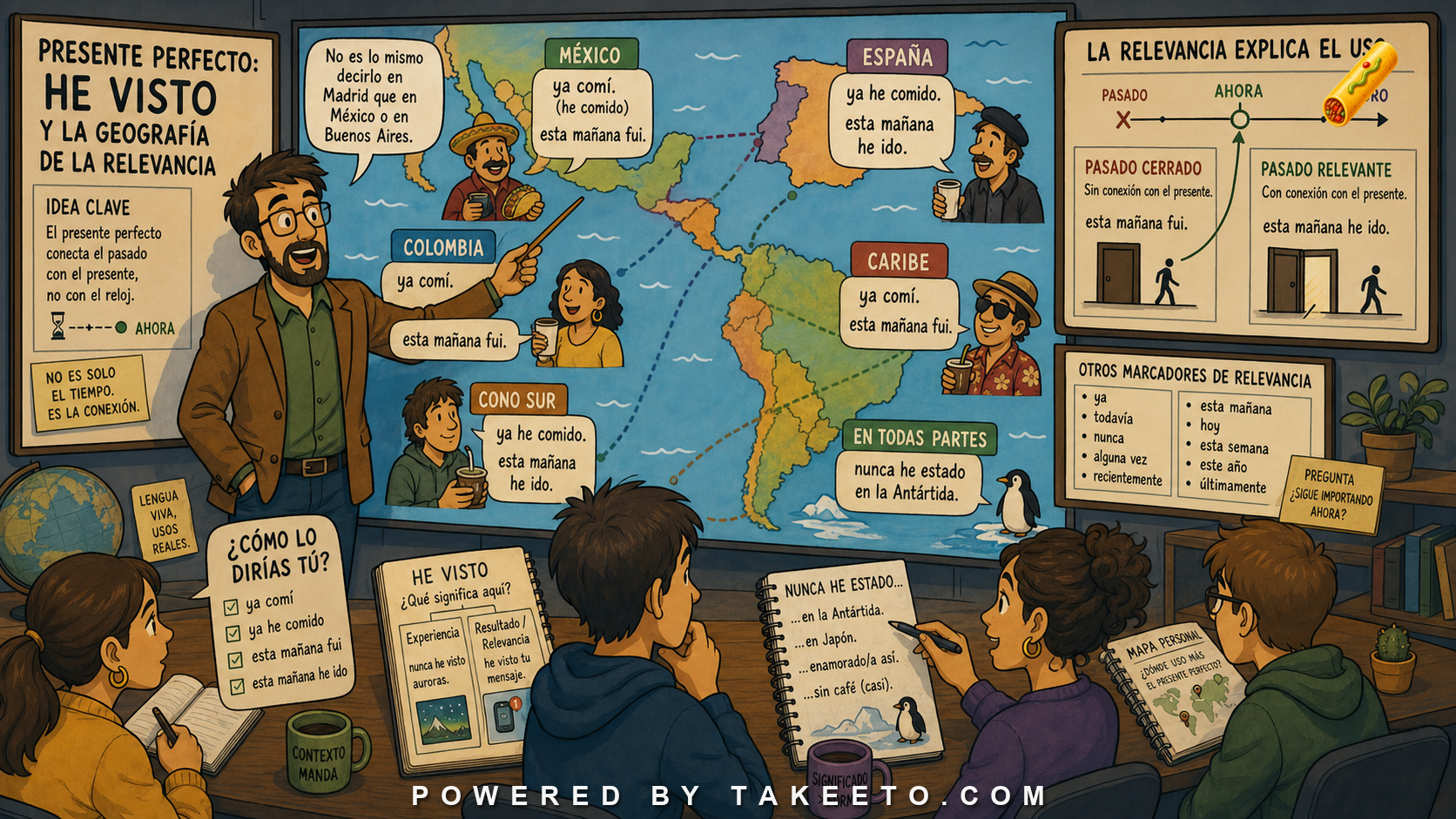
The reader understands present perfect as a tense whose usage varies sharply across the Spanish-speaking world.
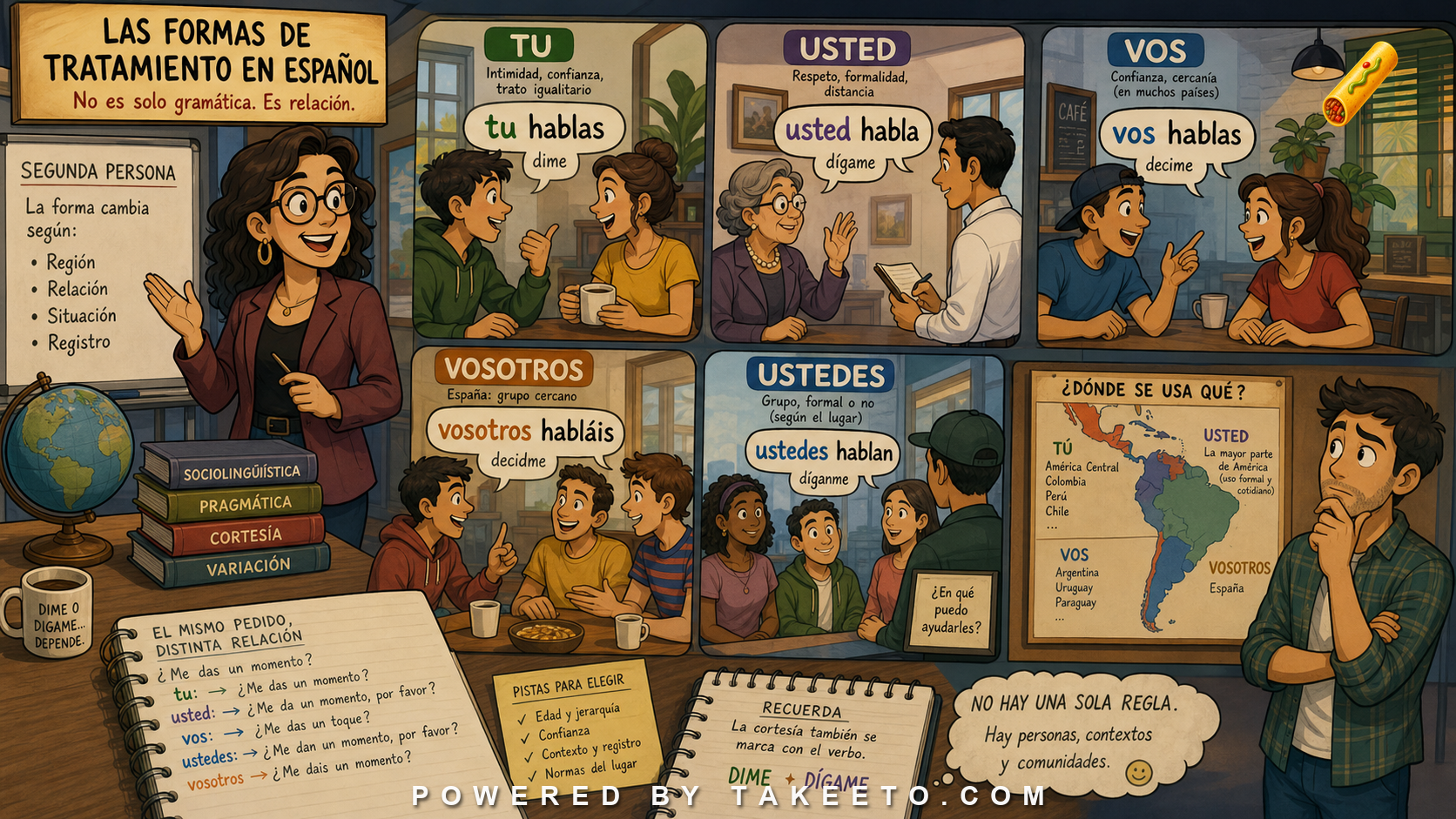
The reader can describe Spanish second-person systems across regions and social contexts.
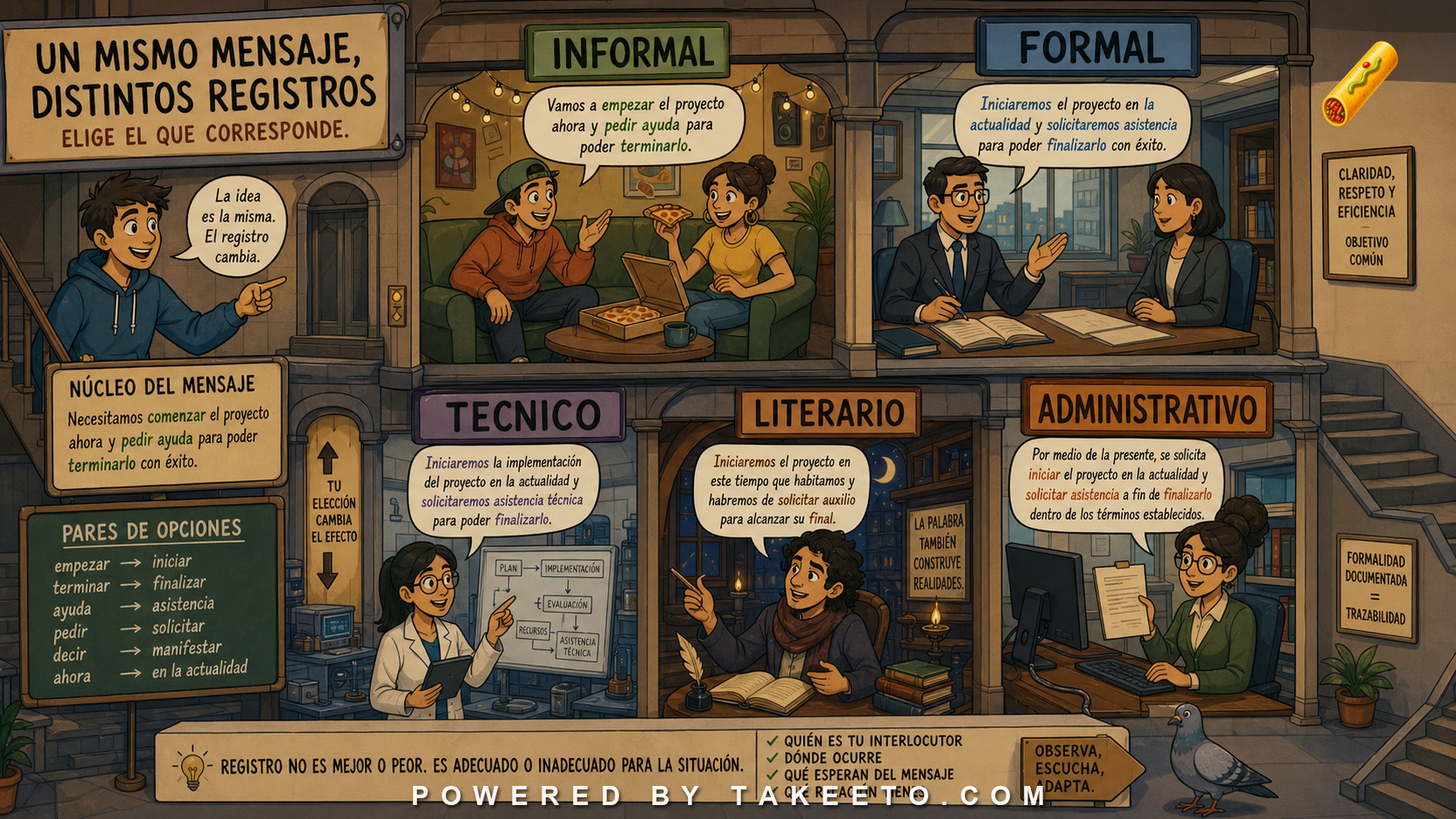
The reader can recognize register shifts and choose vocabulary appropriate to context.
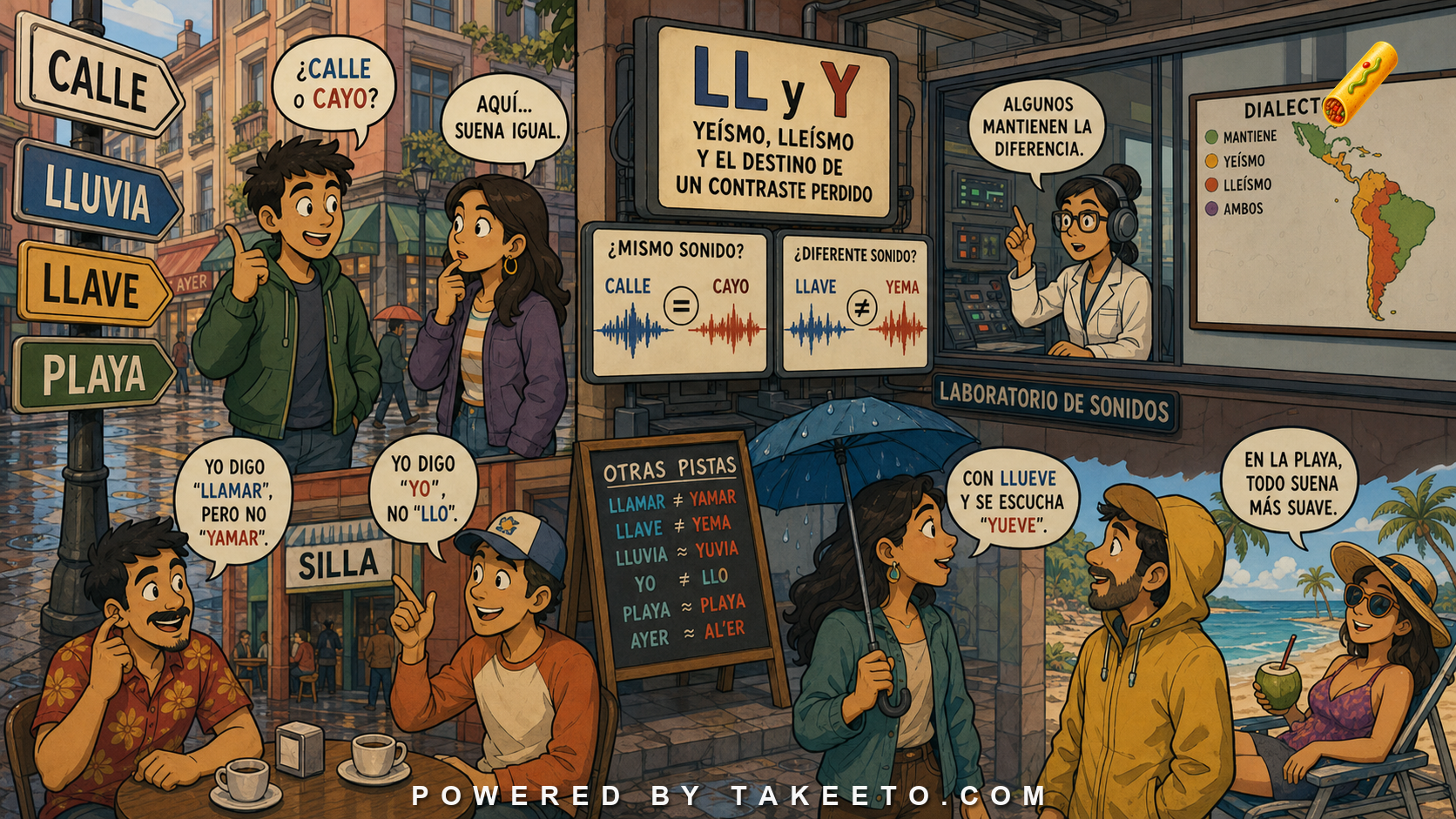
The reader understands why calle and cayó sound alike for many speakers but not all.
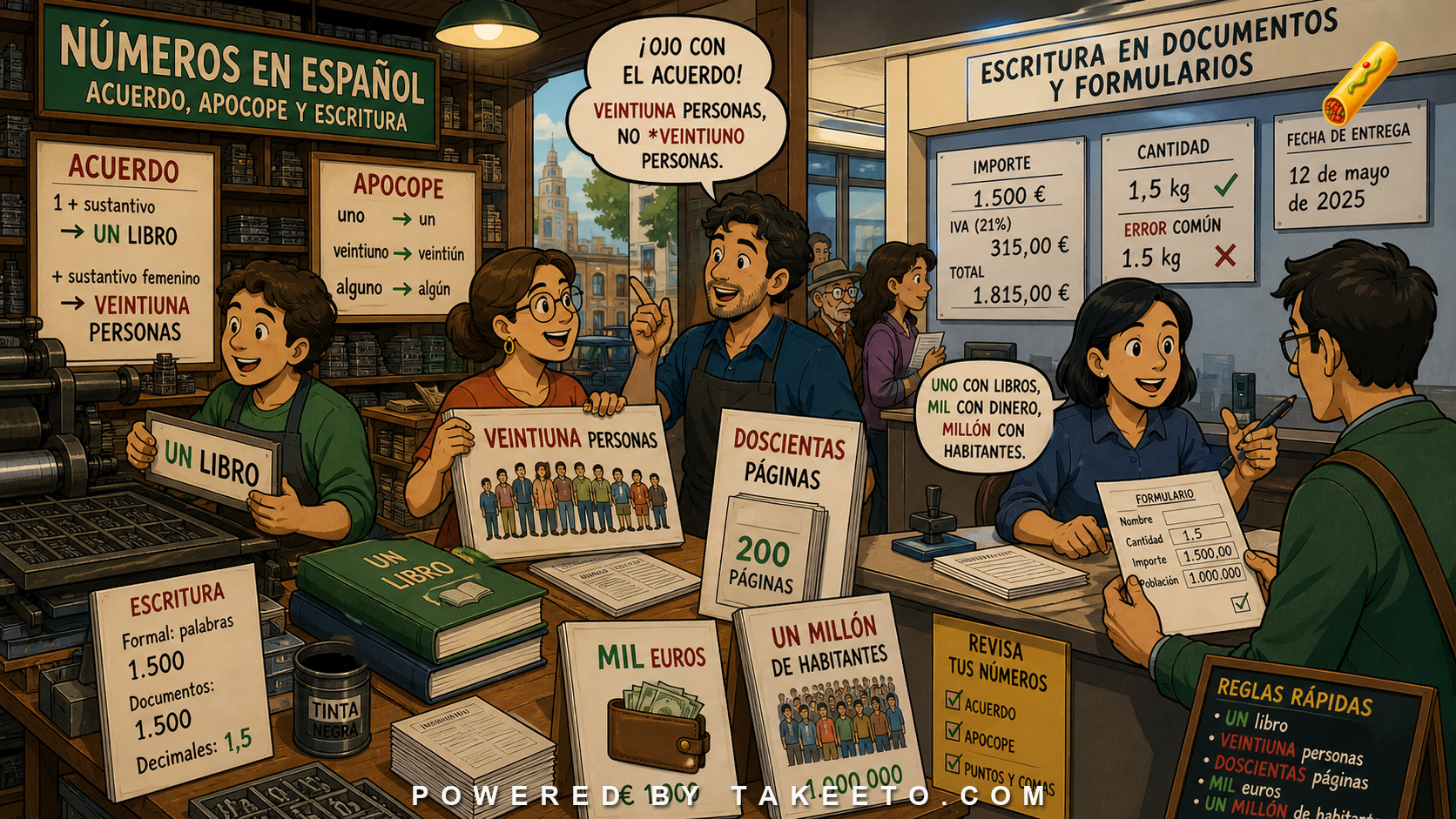
The reader can use cardinal numbers correctly in speech, forms, and formal writing.
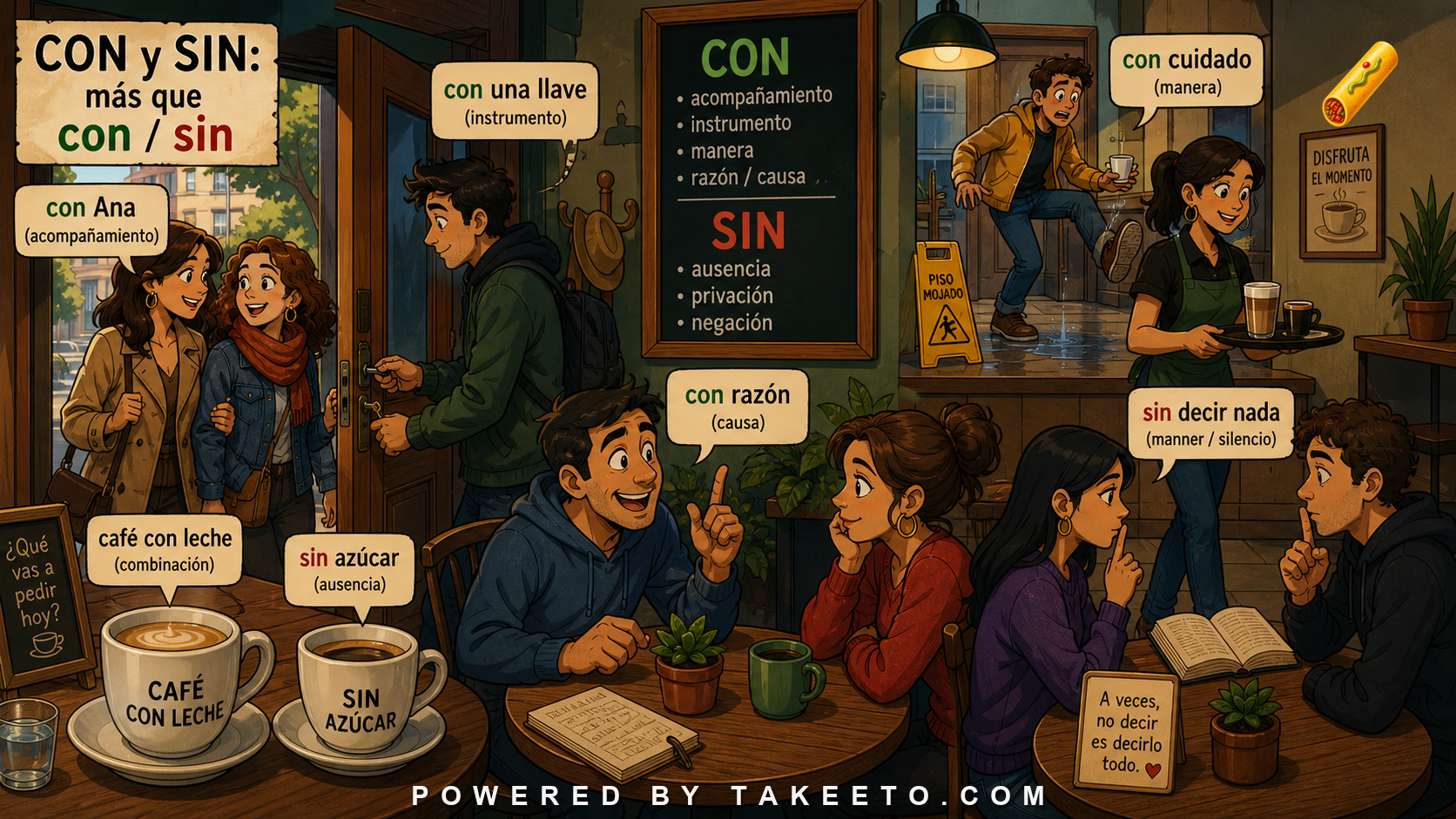
The reader can interpret con/sin as more than "with/without."
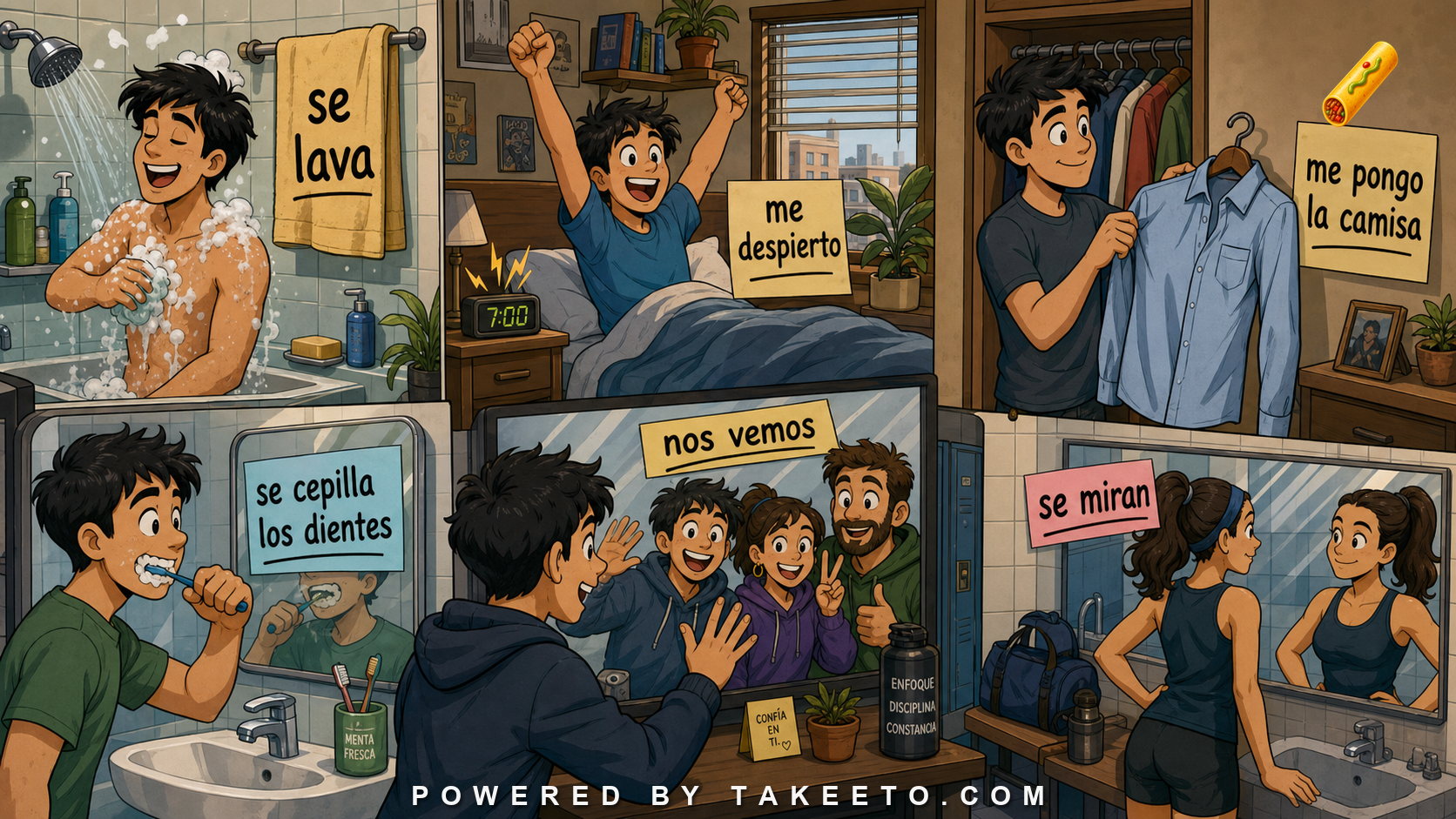
The reader can identify reflexive se and distinguish it from other se uses.
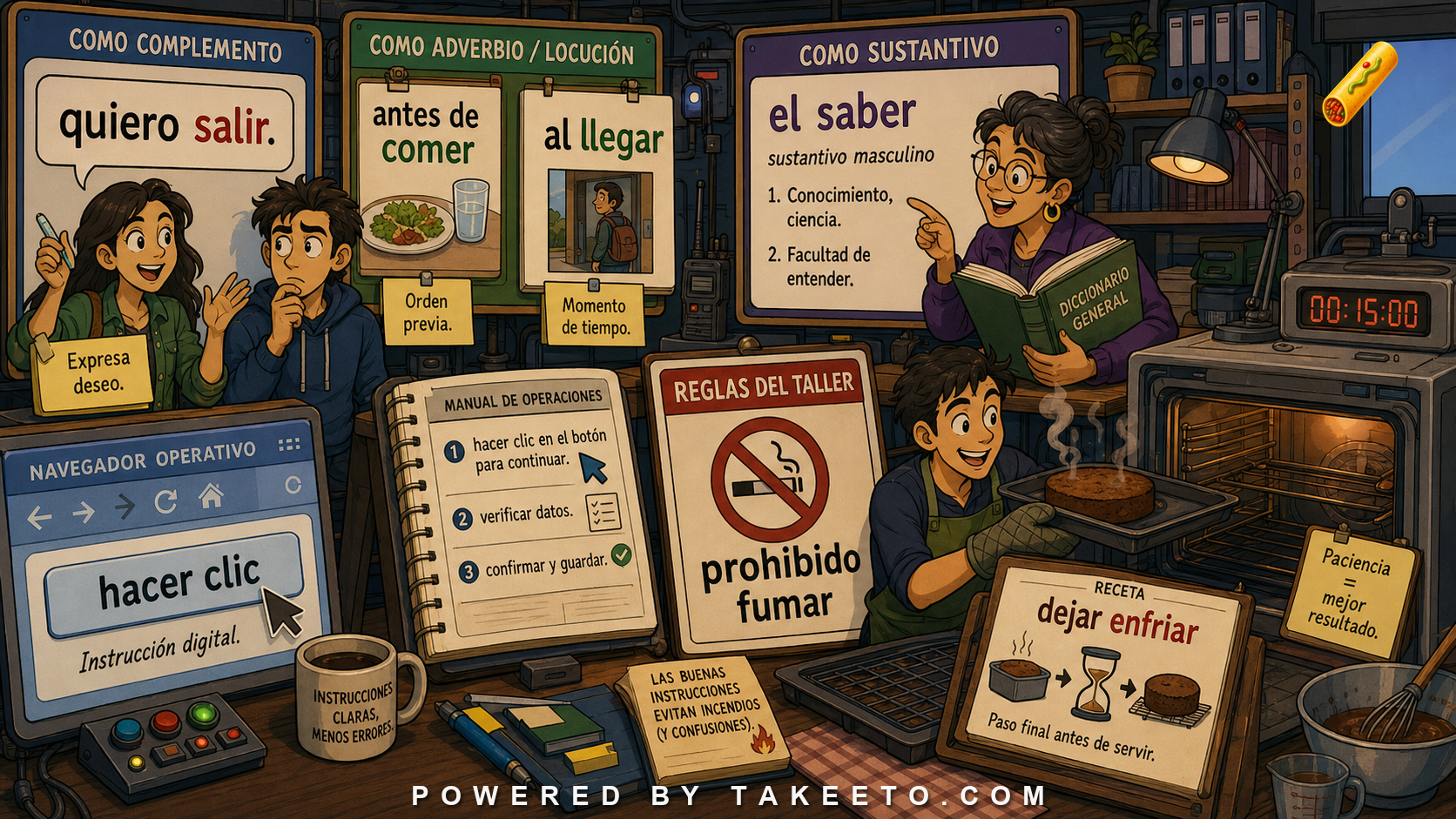
The reader can interpret infinitives in dictionary entries, instructions, complements, and nominalized uses.
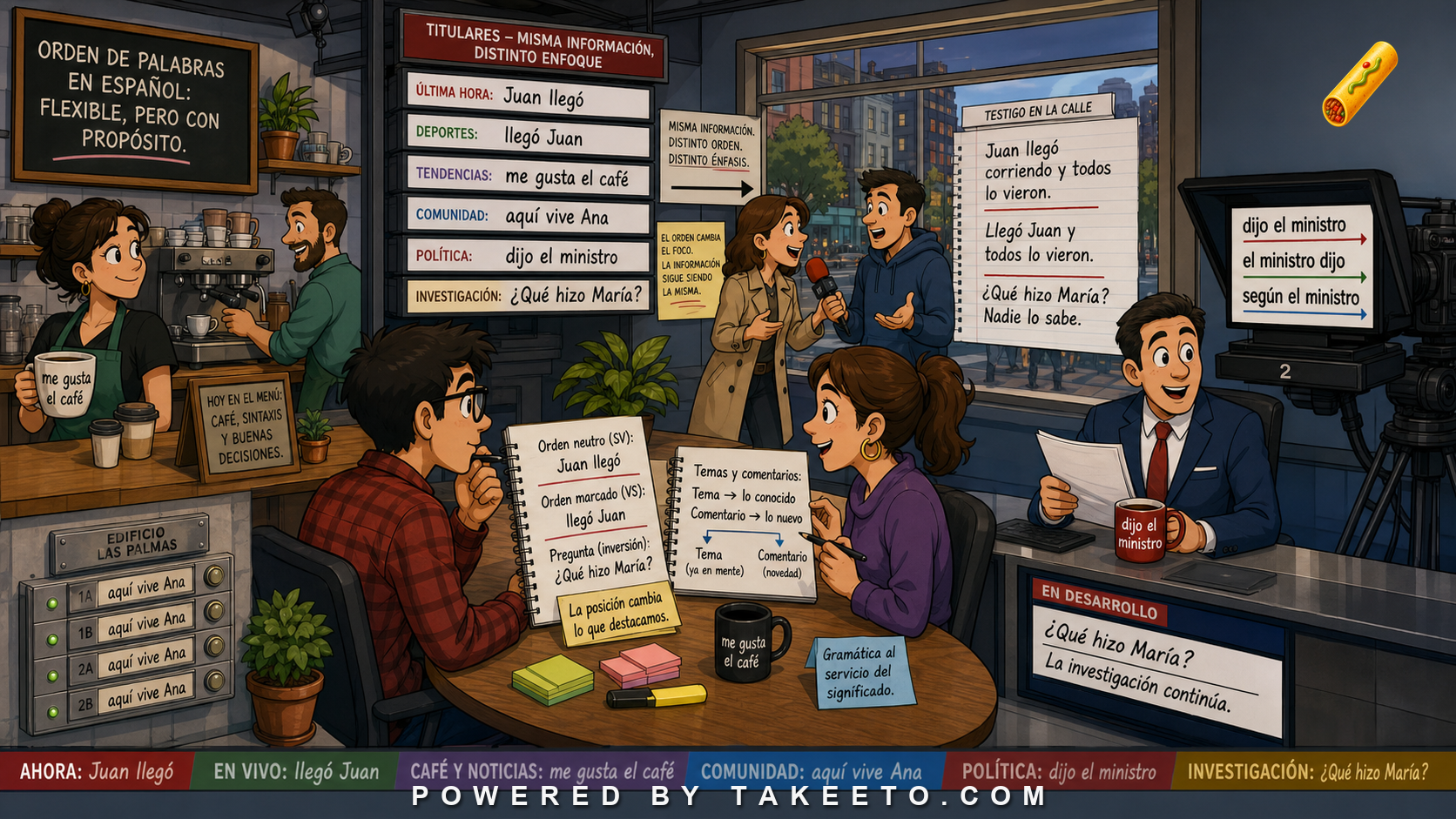
The reader understands Spanish word order as flexible but motivated by grammar and information flow.

The reader can predict many noun genders while recognizing lexical and semantic exceptions.
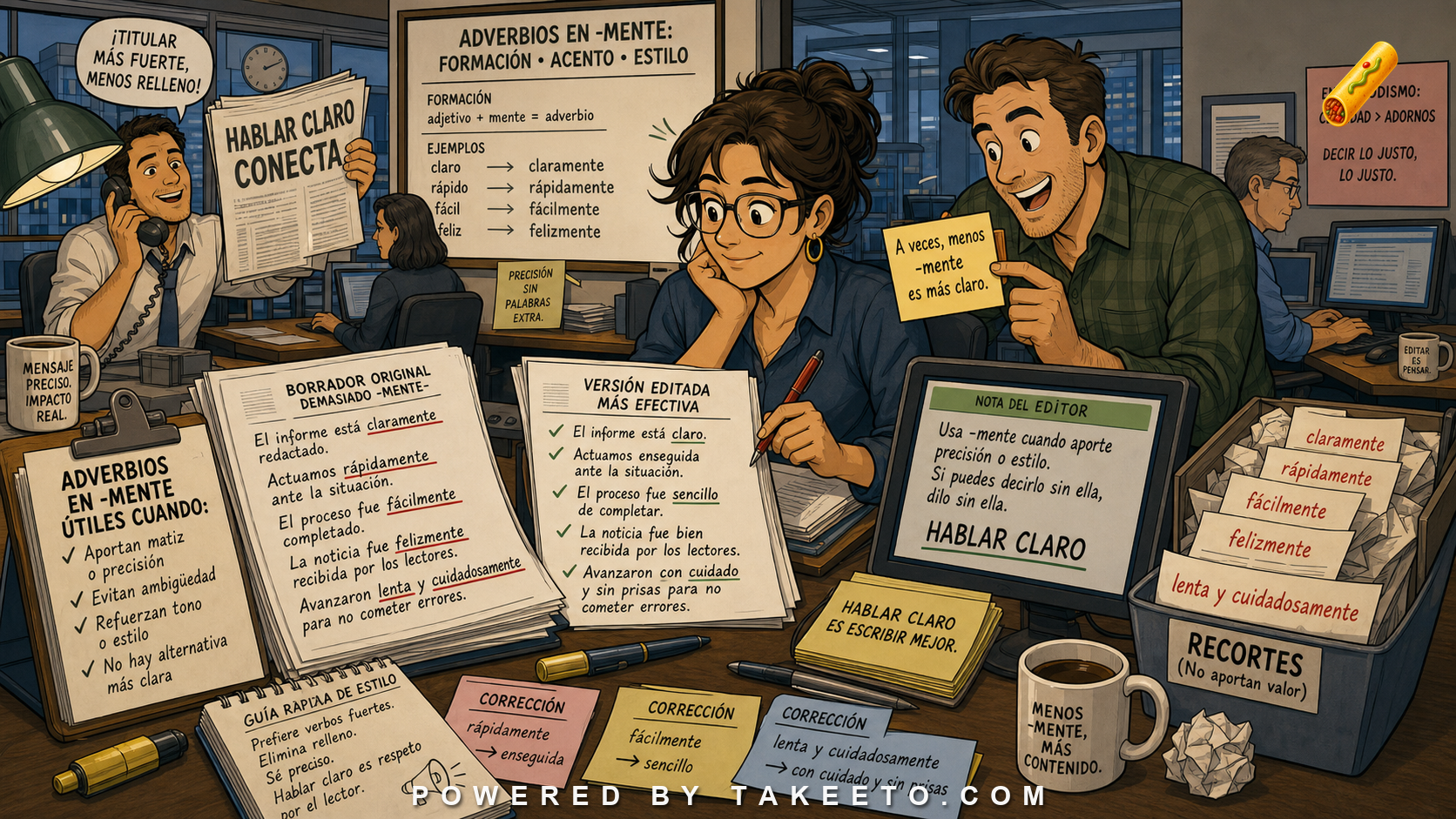
The reader can form -mente adverbs and understand their written-register weight.
The reader can use neuter relative structures to refer to actions, ideas, facts, and whole propositions.
The reader can distinguish passive se from impersonal se by agreement and noun phrase behavior.
The reader can identify the preterite as a bounded-event tense rather than simply “the past.”
The reader stops memorizing trigger lists as if they were explanations.
The reader can distinguish un/una as article, numeral, and discourse marker.
The reader can use word families to build vocabulary systematically instead of memorizing isolated items.
The reader can describe Spanish vowels as stable phonemes rather than English-style moving targets.
The reader can distinguish interrogative/exclamative words from relative and conjunction forms.
The reader can use personal a as differential object marking, not as a translation of "to."
The reader understands Spanish future as both temporal and modal.
The reader can use mood in relative clauses to distinguish known referents from hypothetical or desired ones.
The reader can distinguish existence, location, and institutional or abstract existence.
The reader can use cognates intelligently while avoiding high-cost false friends.
The reader can explain why casa and caza may or may not sound alike depending on region.
The reader can distinguish relative superlatives from absolute intensification.
The reader understands de as a relation marker rather than a single English preposition.
The reader can use the pluperfect to order past events and manage narrative background.
The reader understands the Spanish present tense as a multi-use tense rather than a one-to-one English present.
The reader can parse the density of official and academic Spanish.
The reader can explain why h is written but not pronounced in most Spanish words.
The reader can read and use ordinals beyond the small set common in speech.
The reader can use Spanish boundary markers precisely.
The reader understands pronominal verbs as lexical entries, not always literal reflexives.
The reader sees conjugation classes as predictable paradigms rather than isolated endings.
The reader can place object and reflexive pronouns correctly across finite and nonfinite verbs.
The reader understands why el agua is grammatically feminine and why agreement still matters.
The reader can recognize shortened forms before nouns and understand their limits.
The reader can choose relative pronouns based on animacy, preposition, clarity, and formality.
The reader can use direct object pronouns with gender, number, placement, and discourse awareness.
The reader can use the imperfect to frame ongoing, habitual, or descriptive past situations.
The reader understands subjunctive in clauses expressing desired or influenced events.
The reader can track gender and number agreement as part of sentence architecture.
The reader can interpret major Spanish prefixes without assuming English equivalents always match.
The reader can predict default stress, explain written accents, and avoid treating accent marks as decoration.
The reader can use Spanish negative concord without treating it as faulty logic.
The reader understands gustar-like verbs as predicates organized around experiencers and stimuli.
The reader can use ir a + infinitive for planned, imminent, and evidence-based future situations without equating it mechanically with English “going to.”
The reader understands Spanish possession, obligation, age, physical state, and auxiliary patterns.