
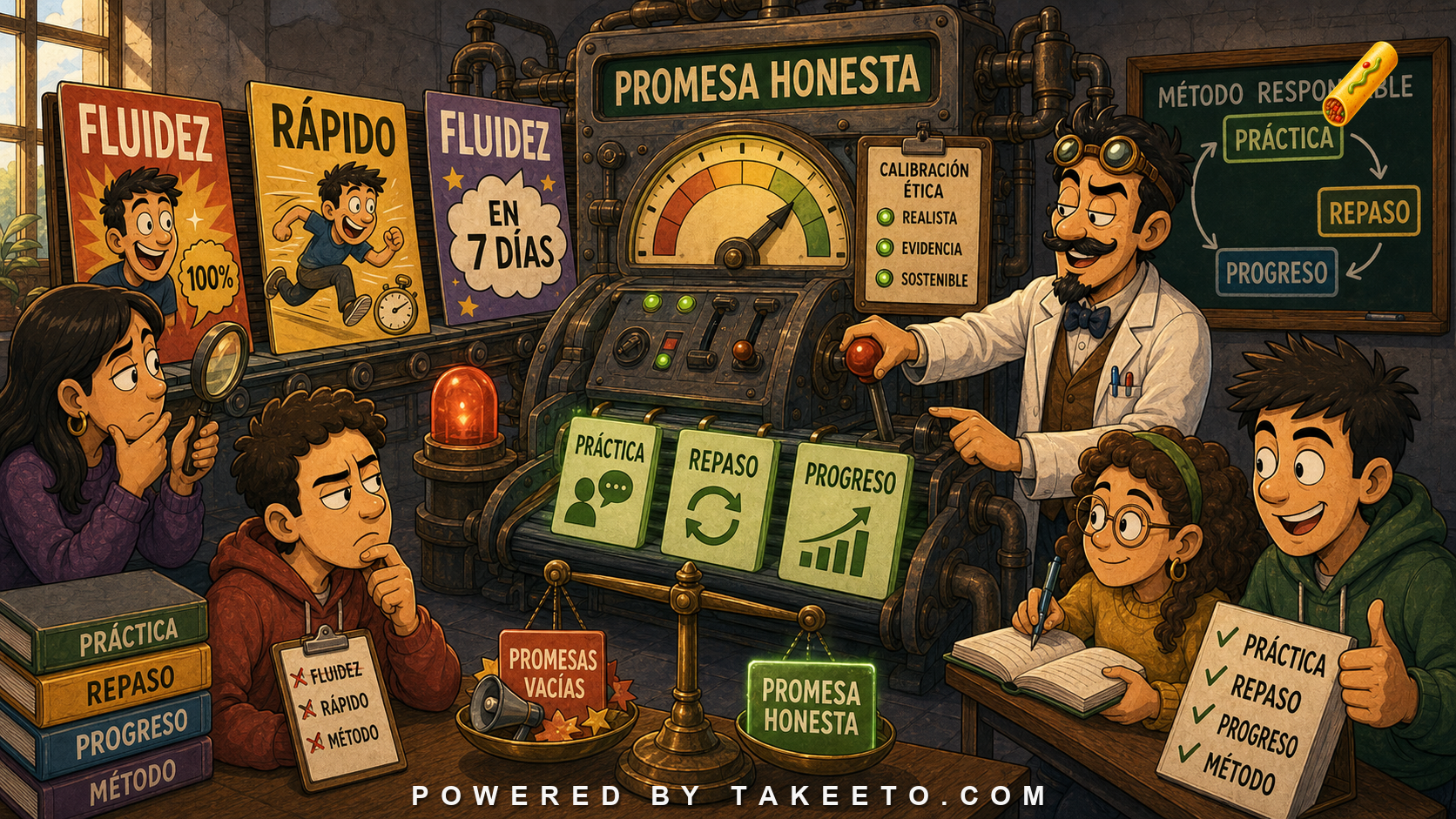
Spanish Learning Claims: “Fluent,” “Fast,” and the Ethics of Promise
The reader can evaluate Spanish-learning claims critically and replace vague promises with honest, evidence-aware product language.
Long-form Spanish articles for learners who want structure, evidence, examples, and linguistic explanations that do not collapse into slogans.
45 articles tagged Learning design.
The reader can evaluate Spanish-learning claims critically and replace vague promises with honest, evidence-aware product language.
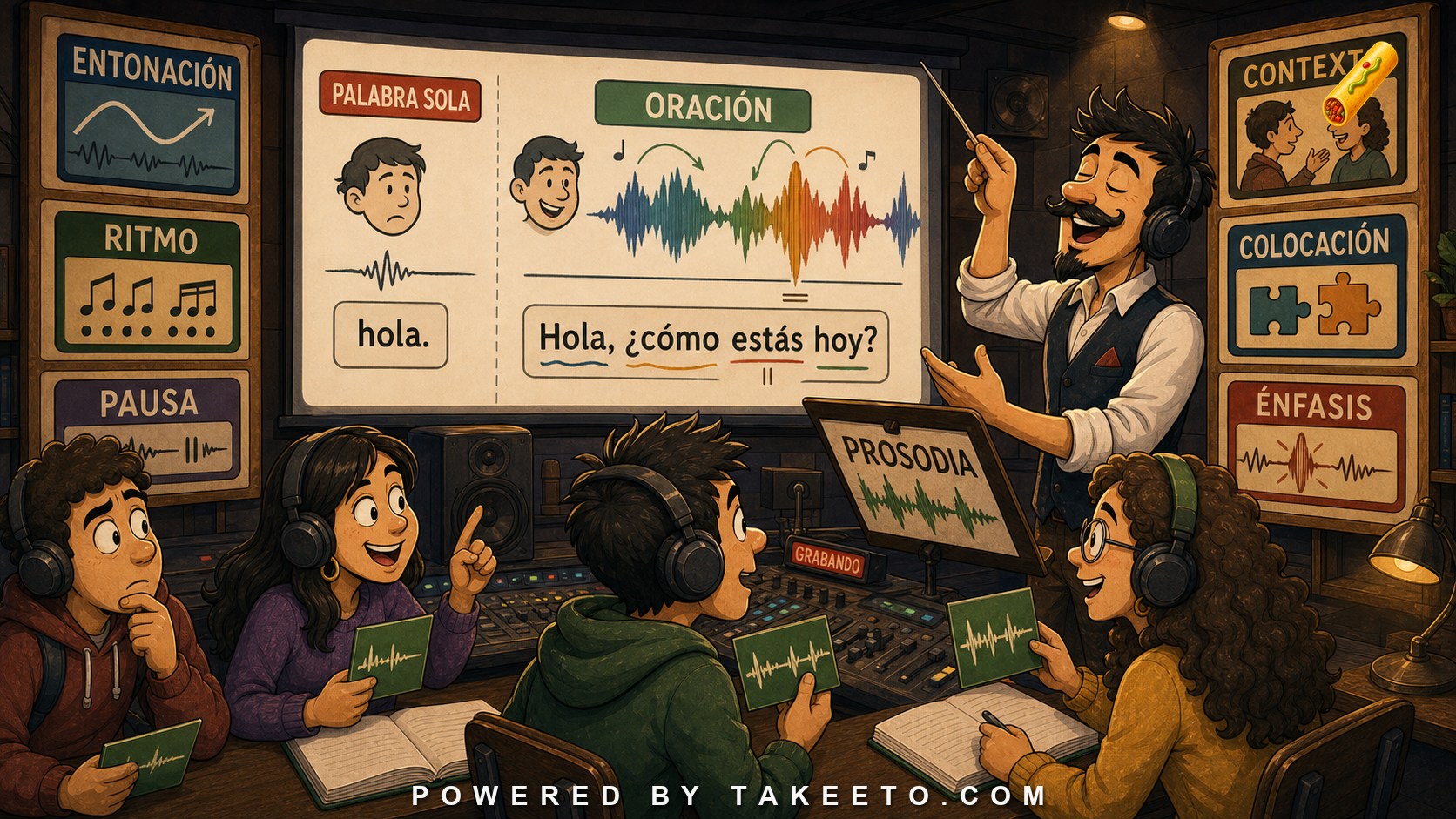
The reader understands why sentence audio teaches rhythm, syntax, and collocation differently from isolated word audio.
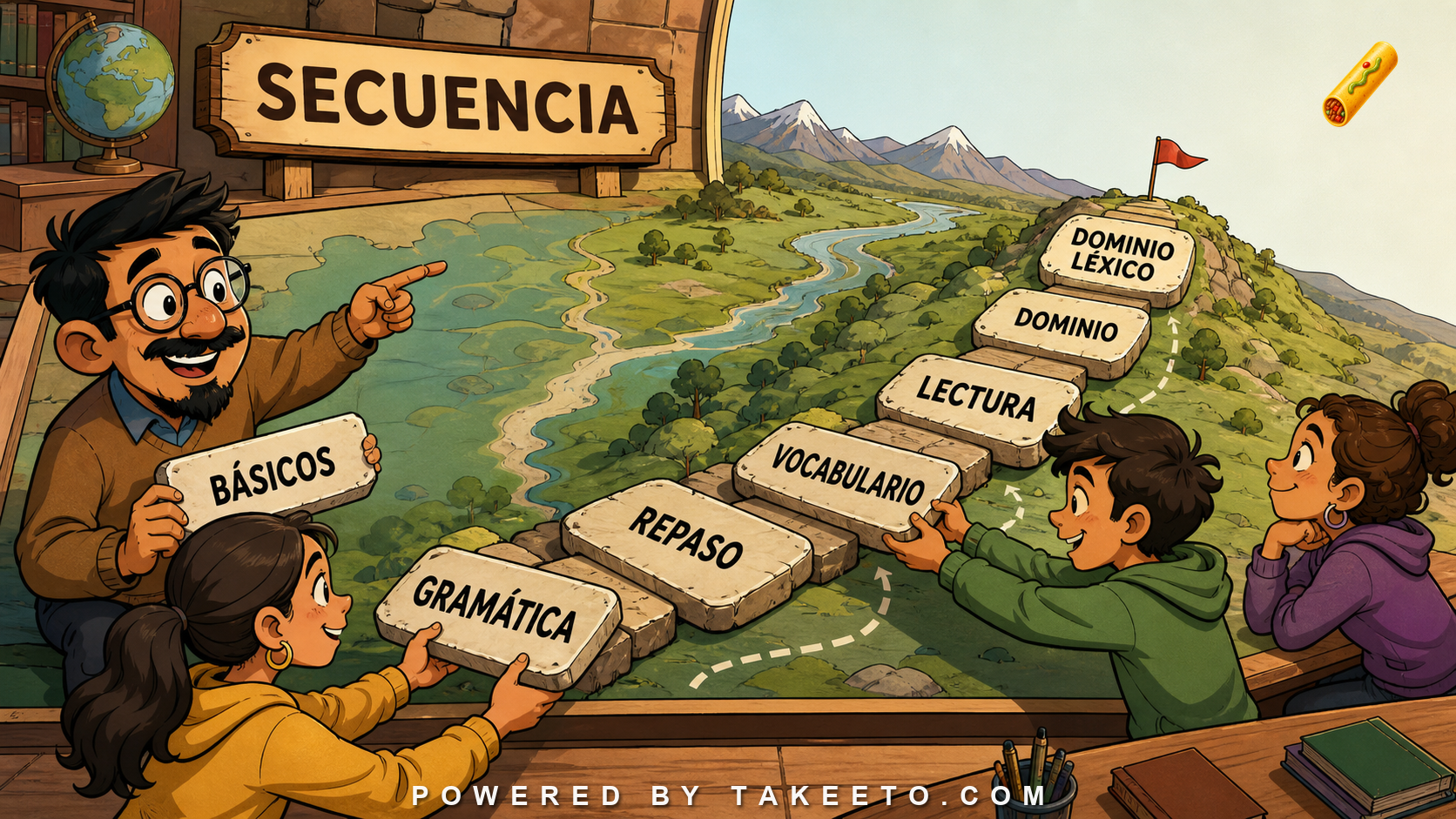
The reader can understand why a Spanish curriculum should progress from structure to text domains.
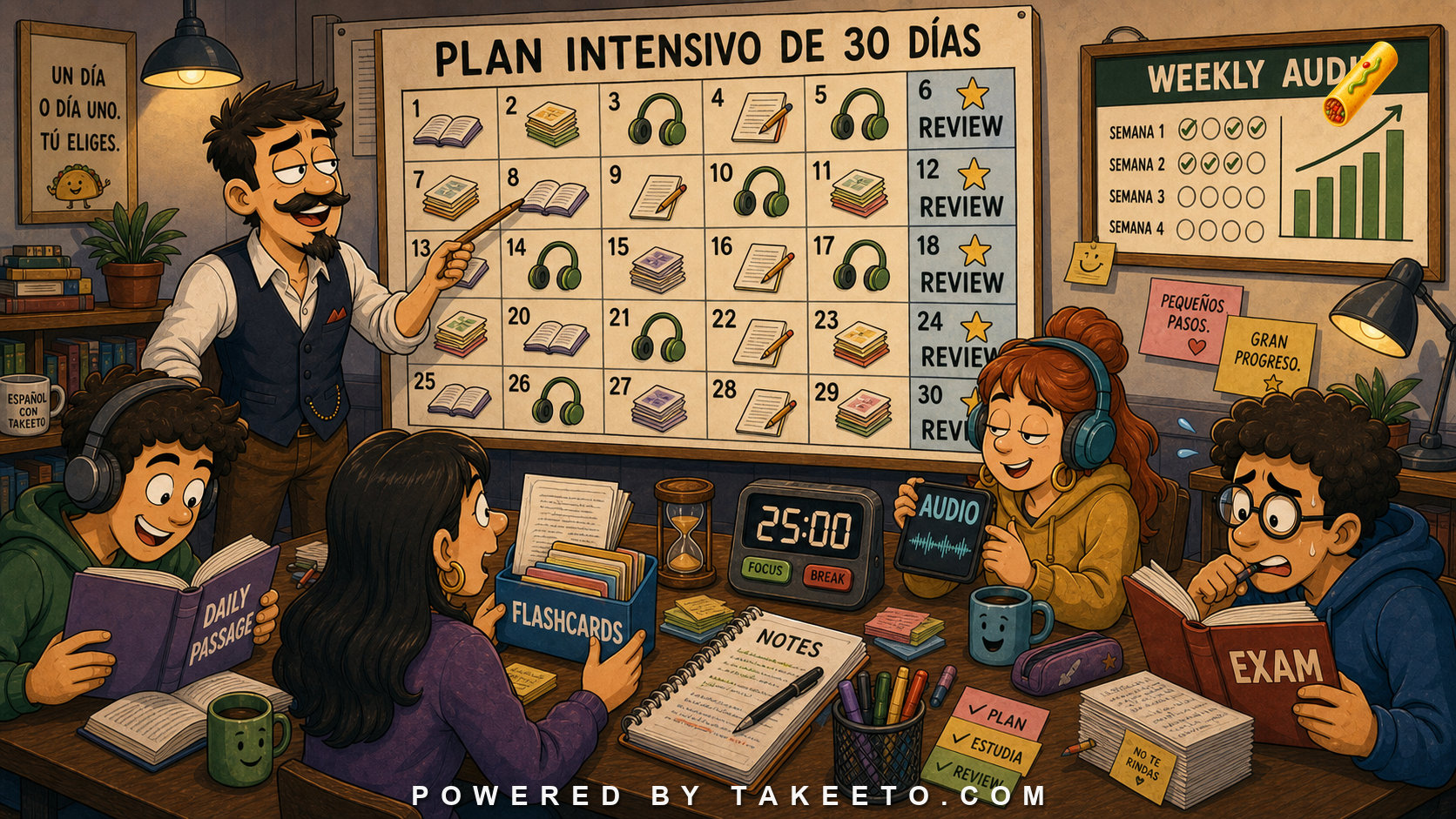
The reader can turn Takeeto-style materials into a month-long serious study routine.
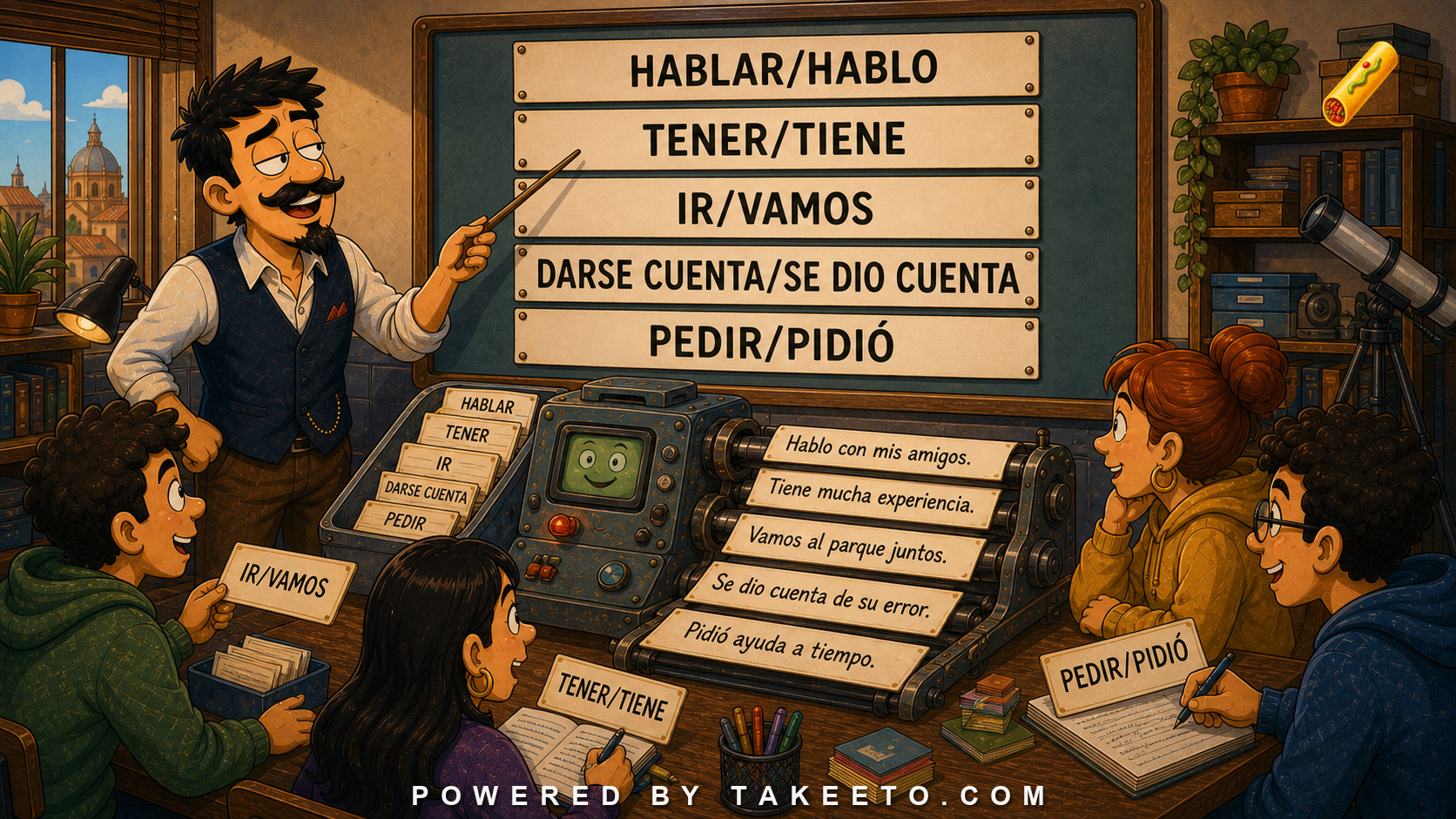
The reader understands how to represent verbs when passages need natural conjugated forms.
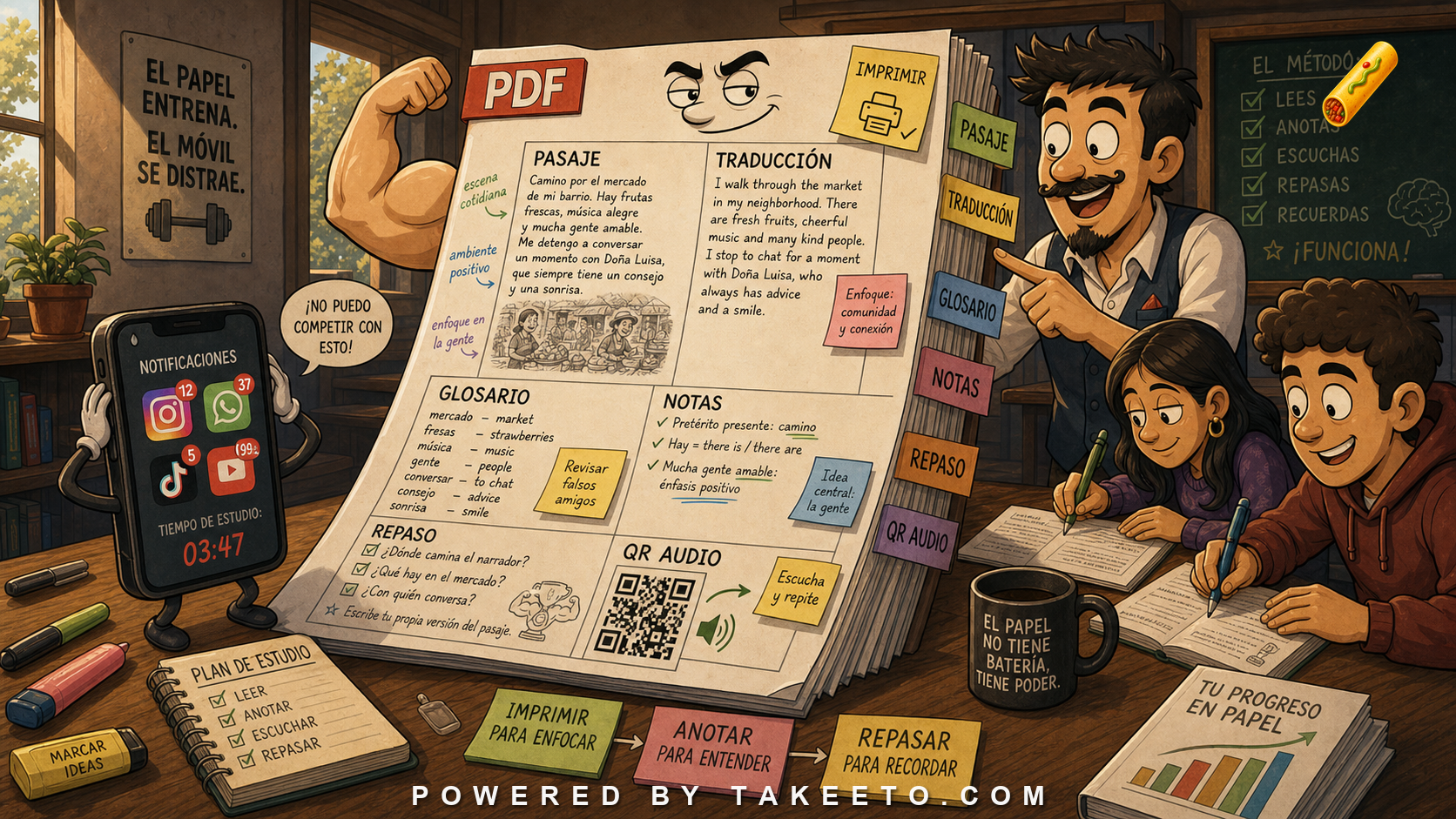
The reader understands the pedagogical role of printable passage packets.
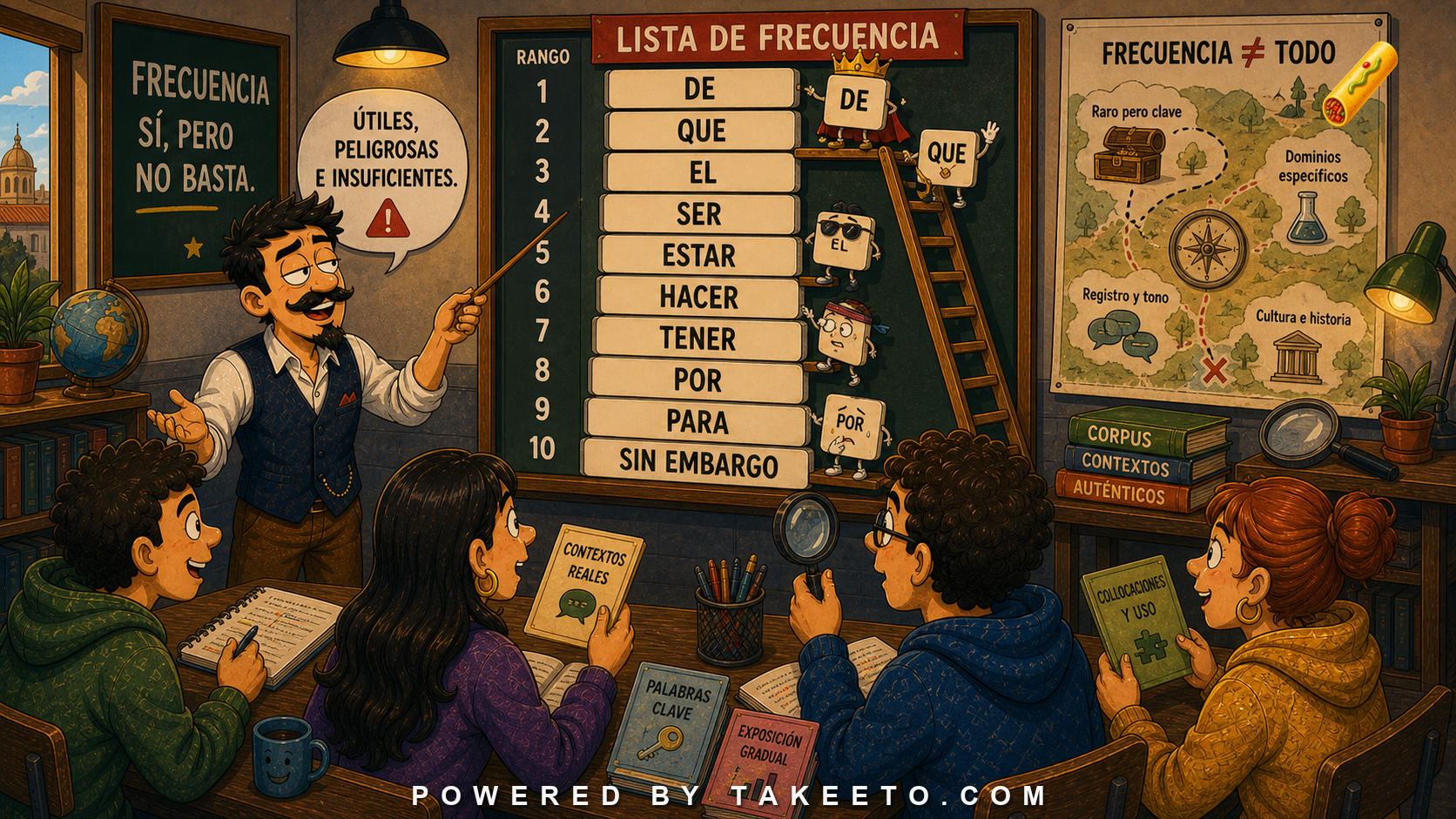
The reader can use frequency data without confusing it with curriculum design.
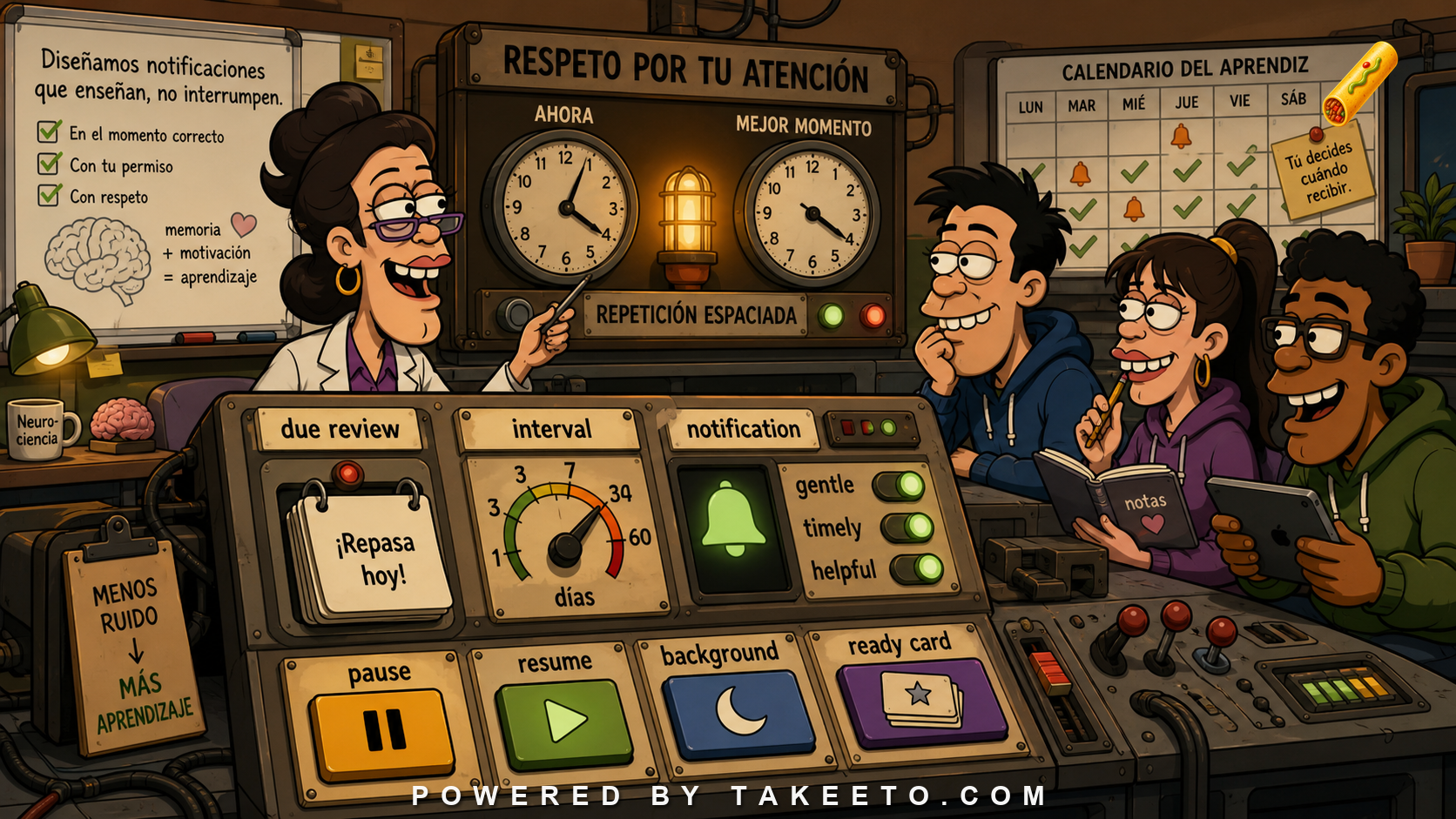
The reader understands notification design as part of pedagogy.
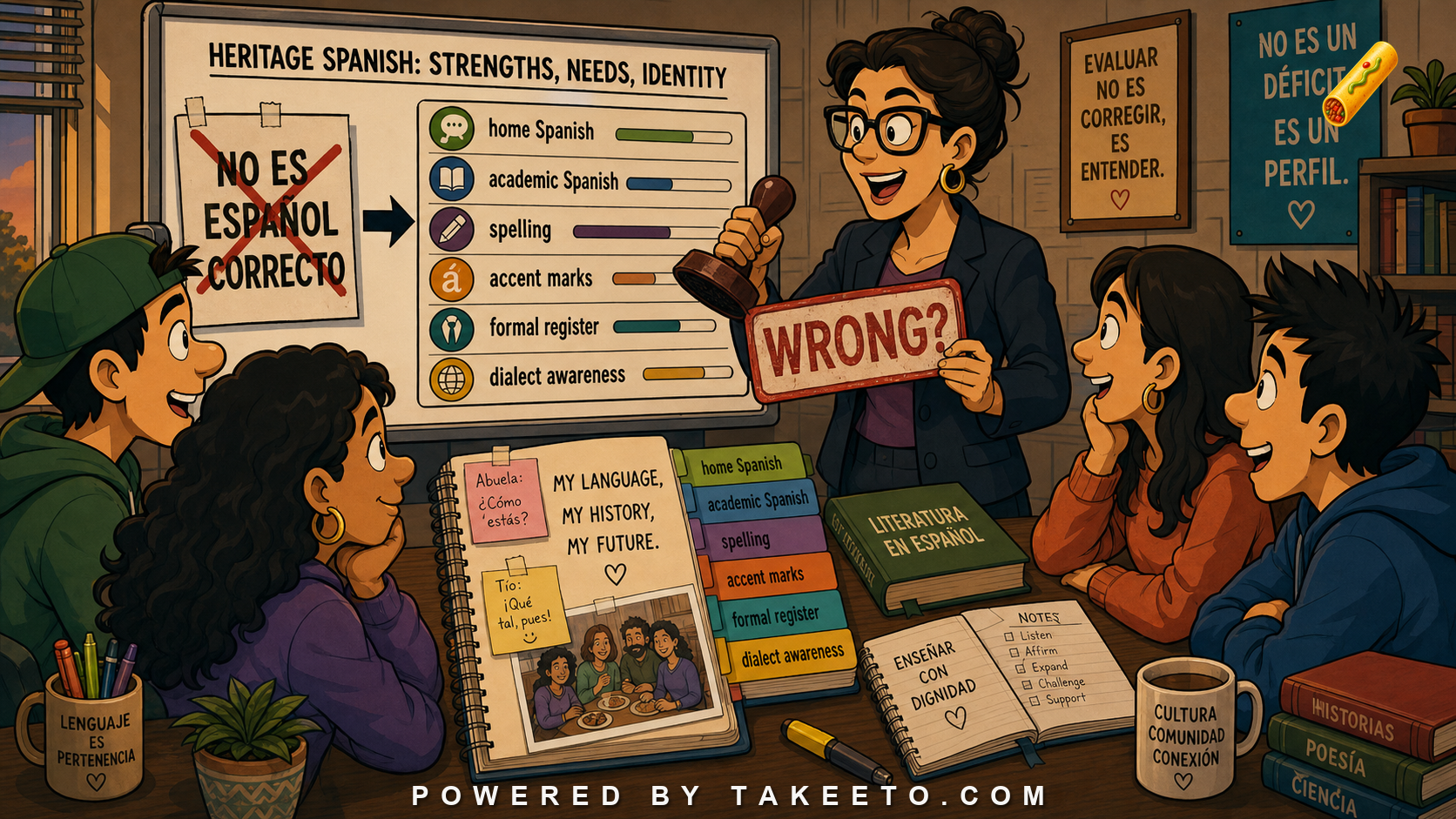
The reader understands heritage Spanish as a legitimate linguistic profile with specific learning needs.
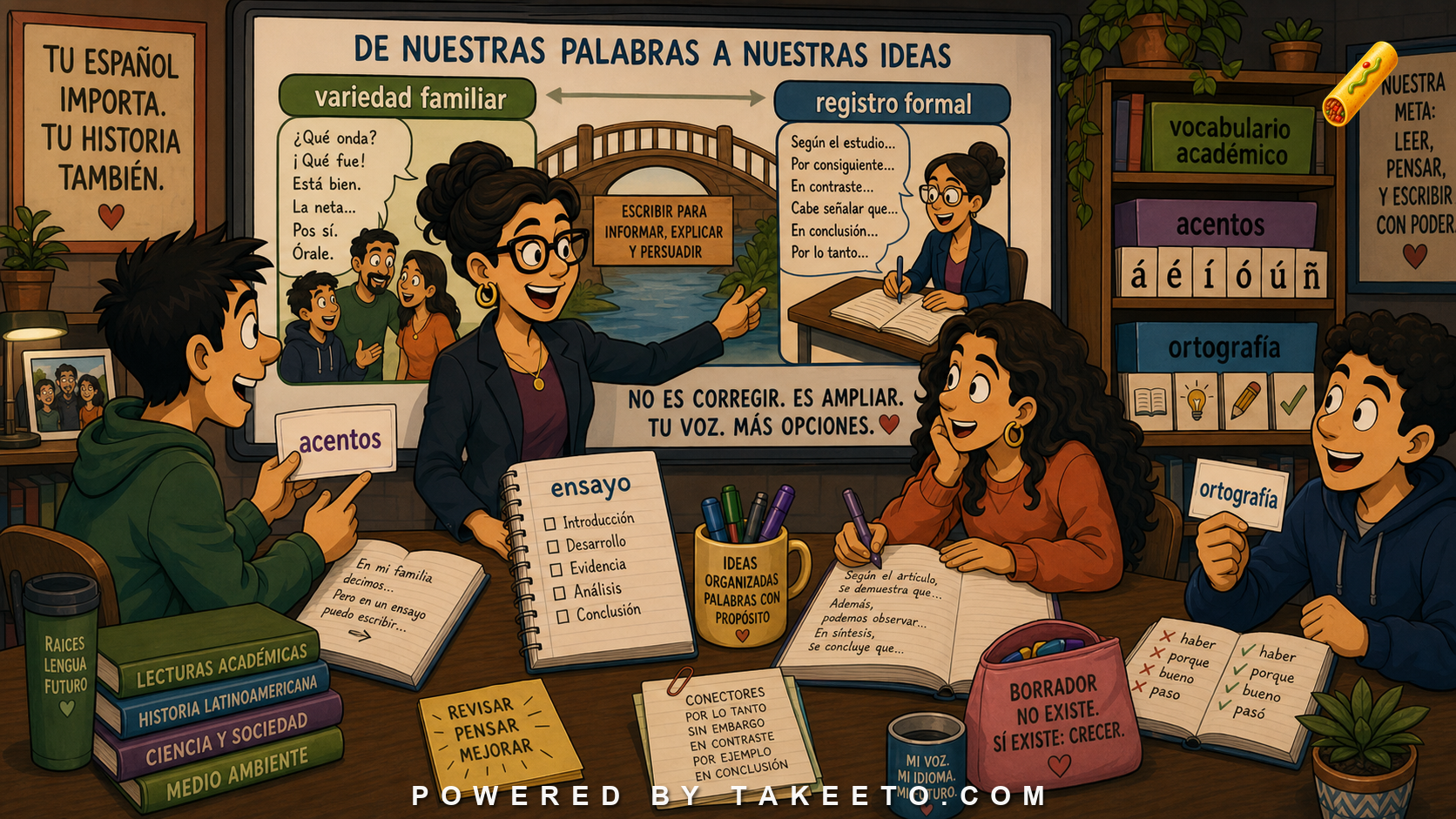
The reader can design study around literacy expansion rather than correction alone.
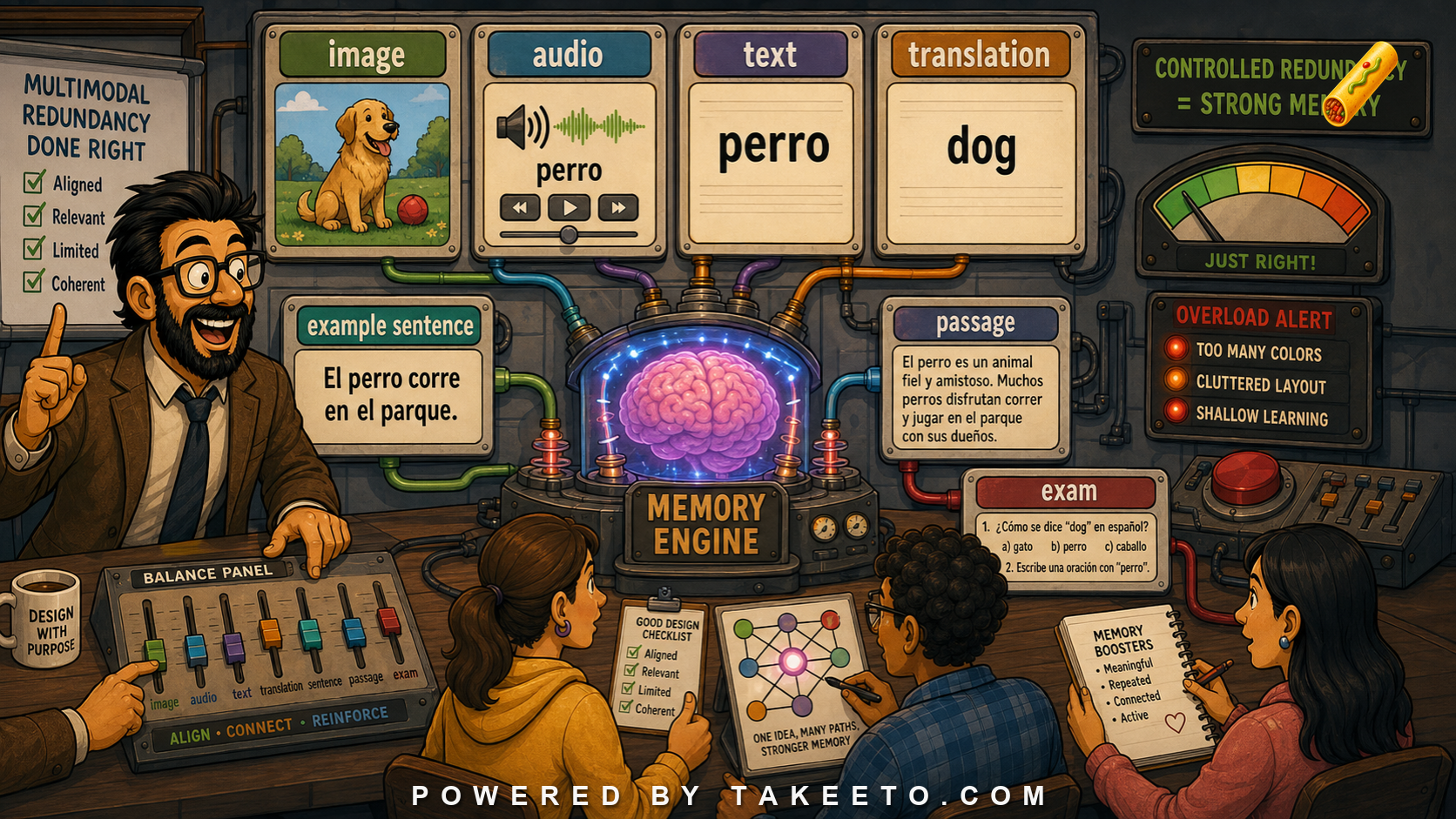
The reader understands how multiple cues can strengthen Spanish memory without creating visual clutter or shallow picture-dictionary learning.
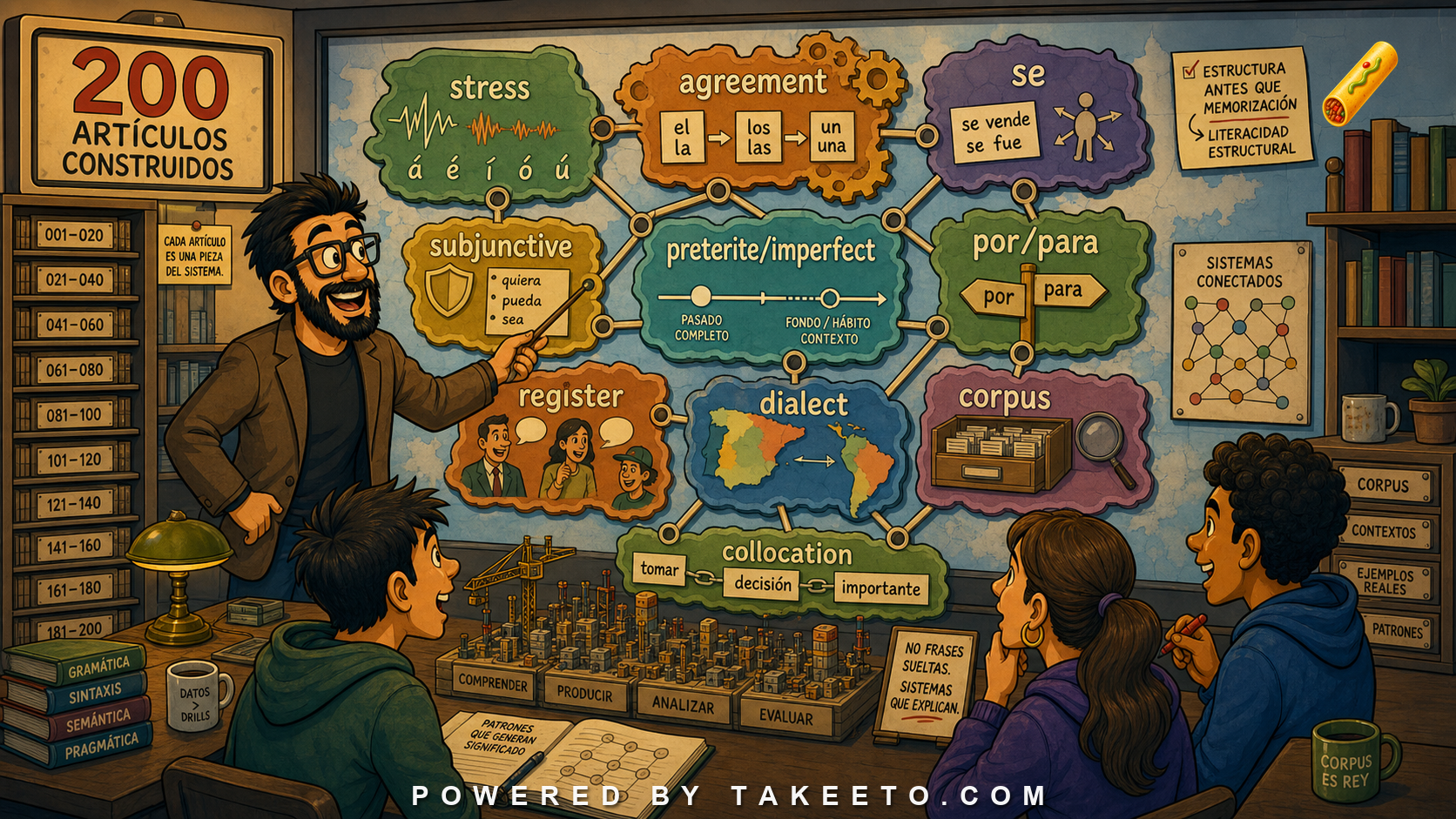
The reader sees Spanish study as cumulative structural literacy rather than memorized phrases.
The reader understands how changes in vocabulary lists affect passages, audio, PDFs, and exams.
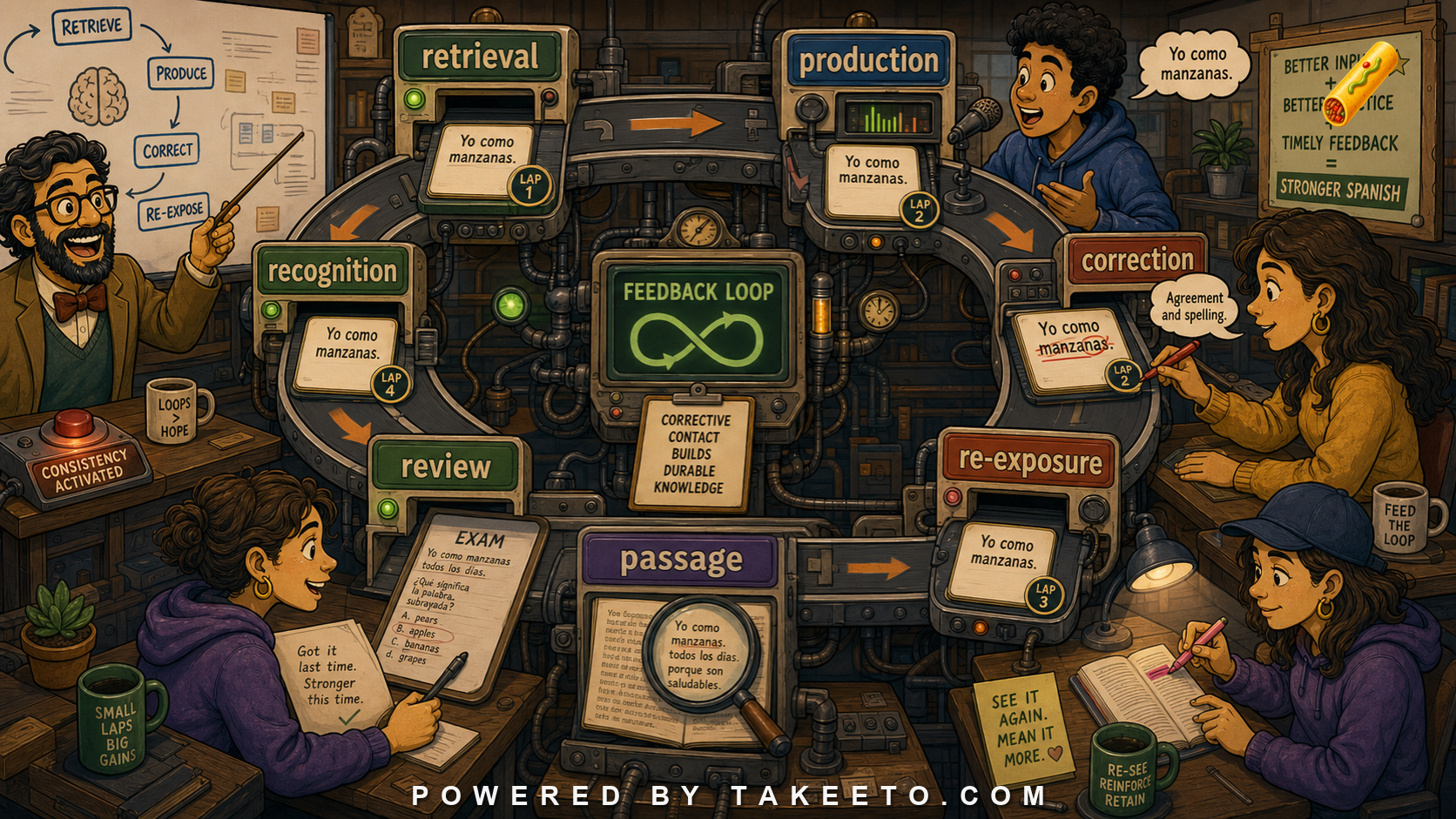
The reader understands how durable Spanish knowledge forms through repeated corrective contact.
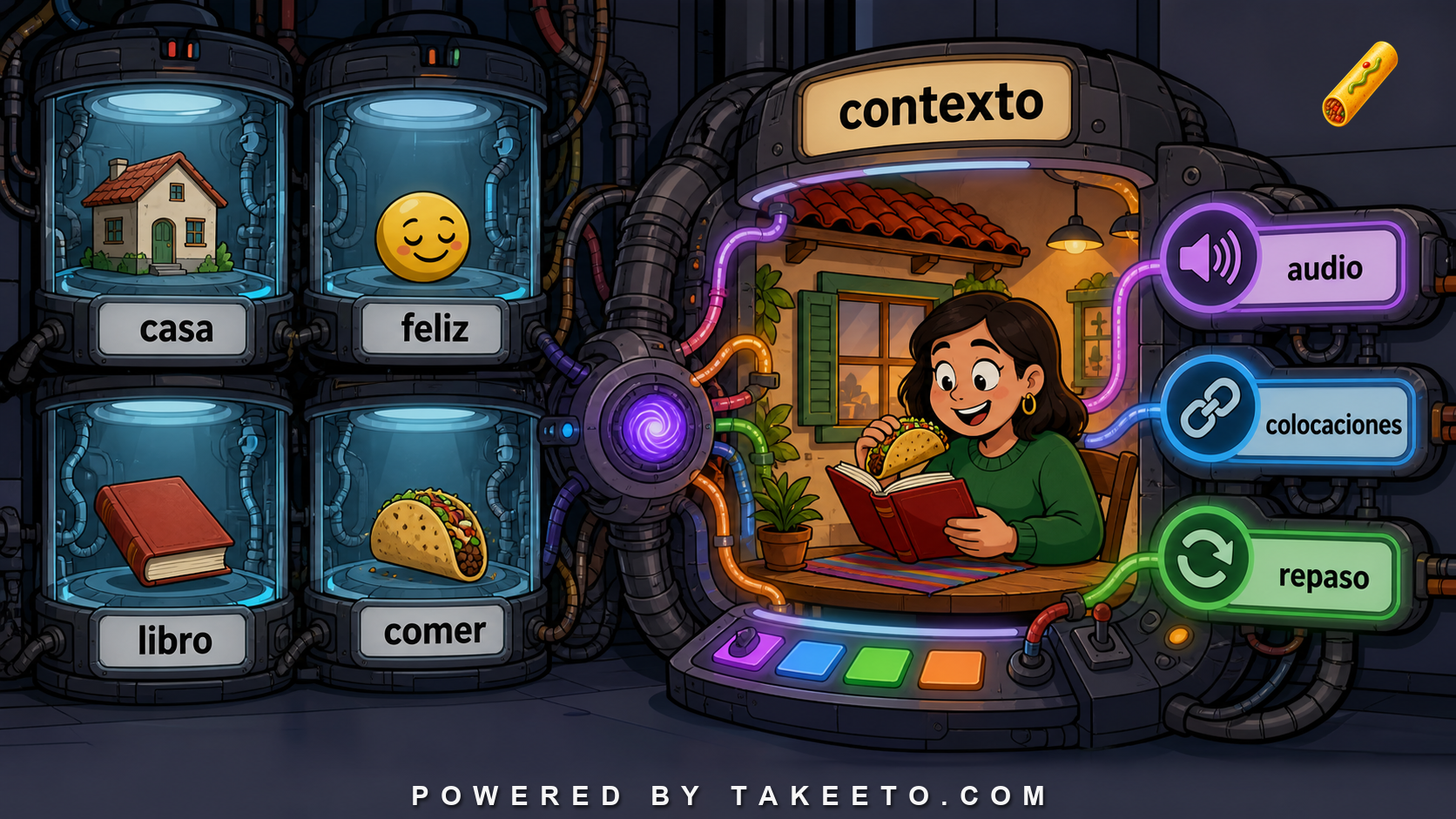
The reader understands why Spanish vocabulary should be reviewed with context, grammar, audio, collocation, and retrieval rather than isolated word-to-translation pairs alone.
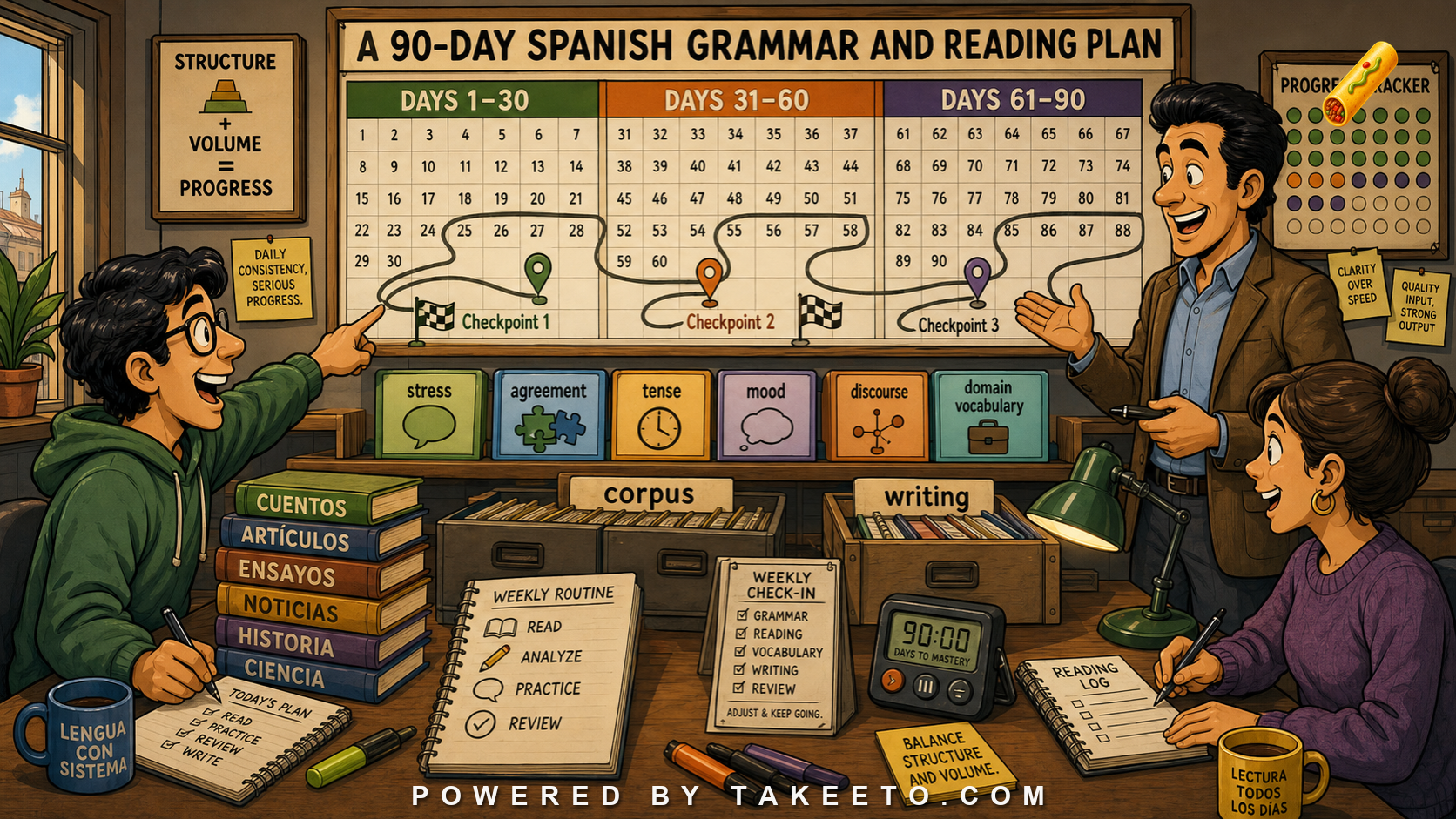
The reader can pursue a serious three-month program that balances structure and volume.
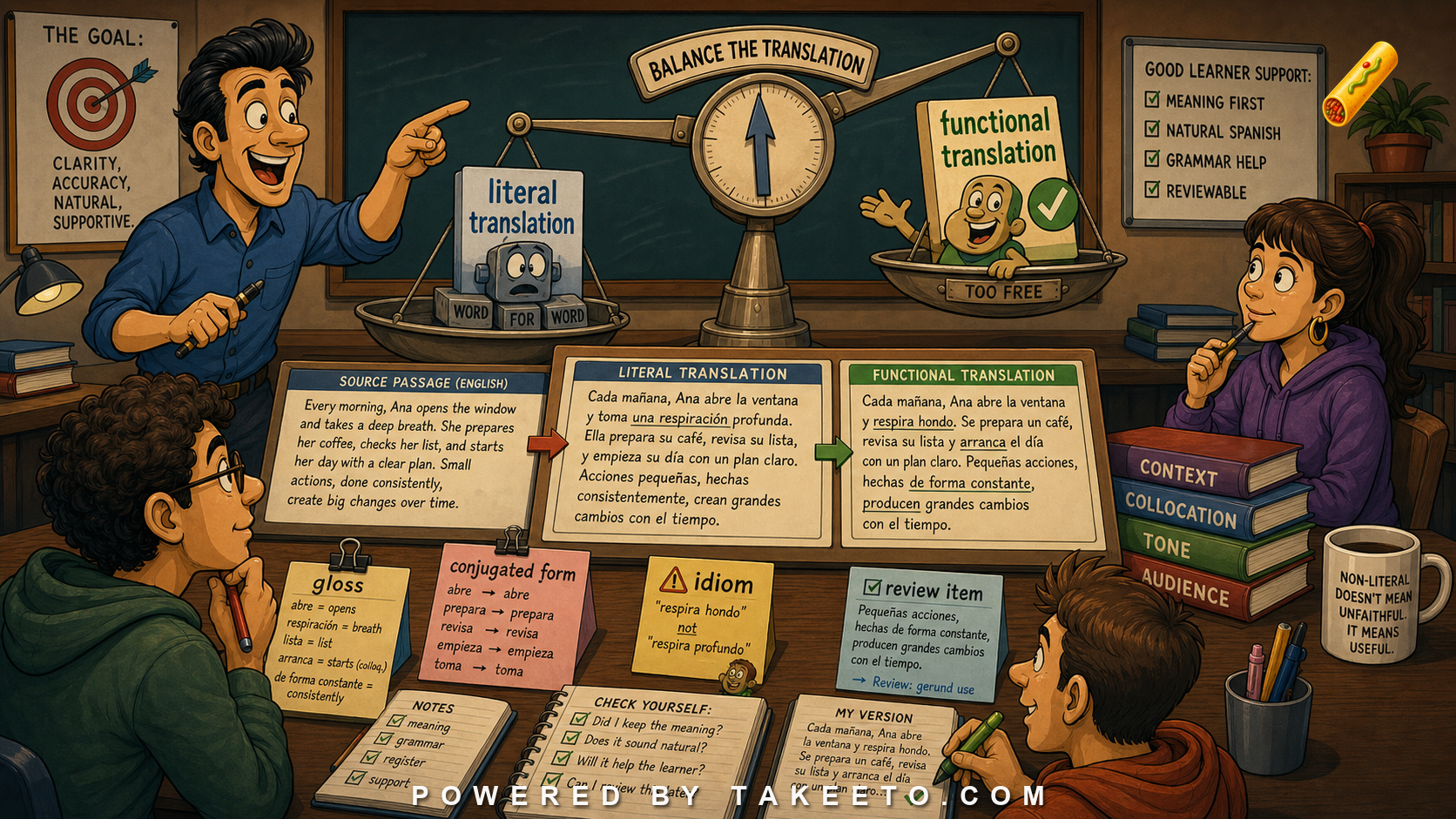
The reader can translate pedagogical passages while preserving meaning and learner support.
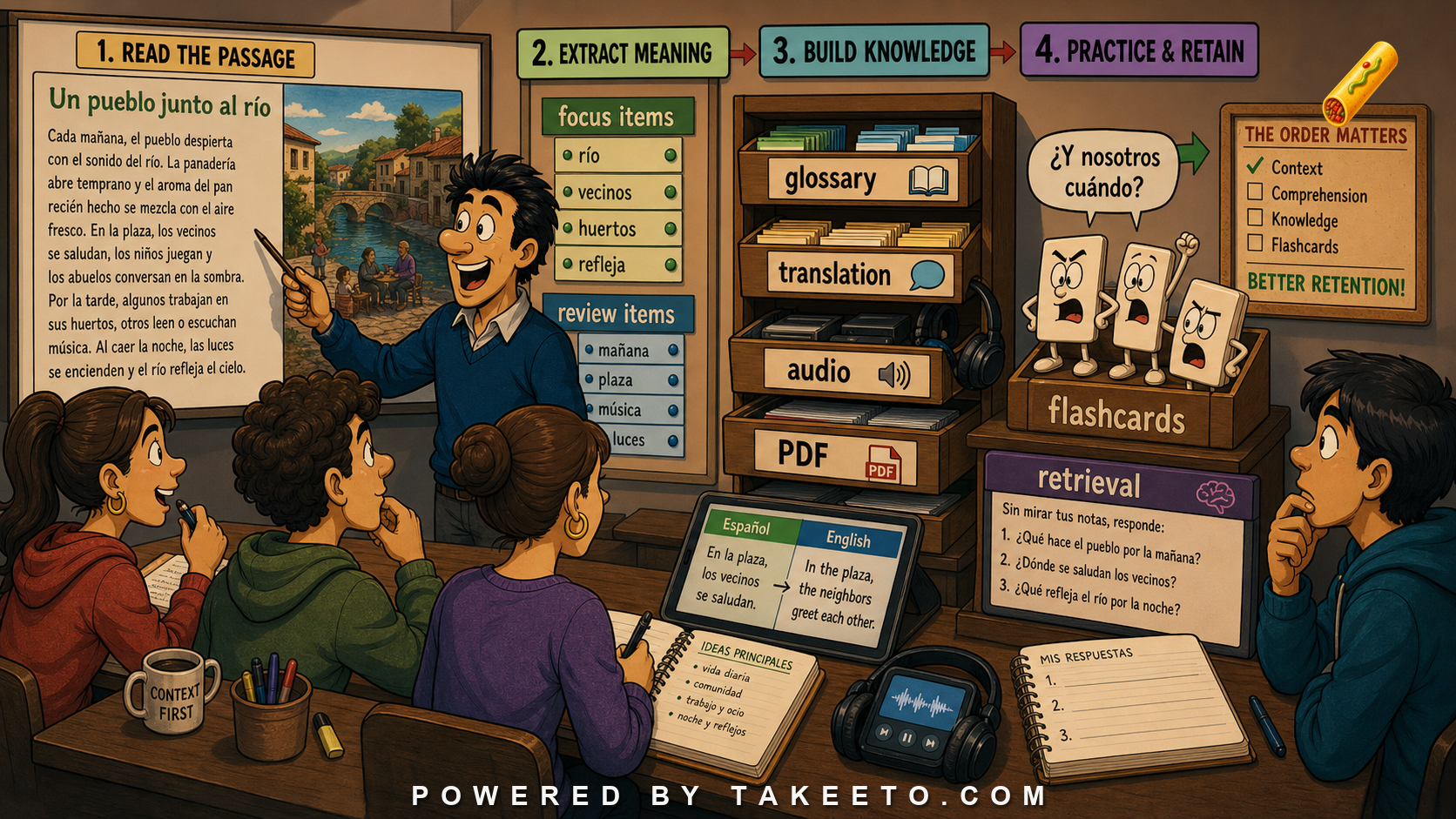
The reader understands why reading deck passages before flashcards improves comprehension and retention.
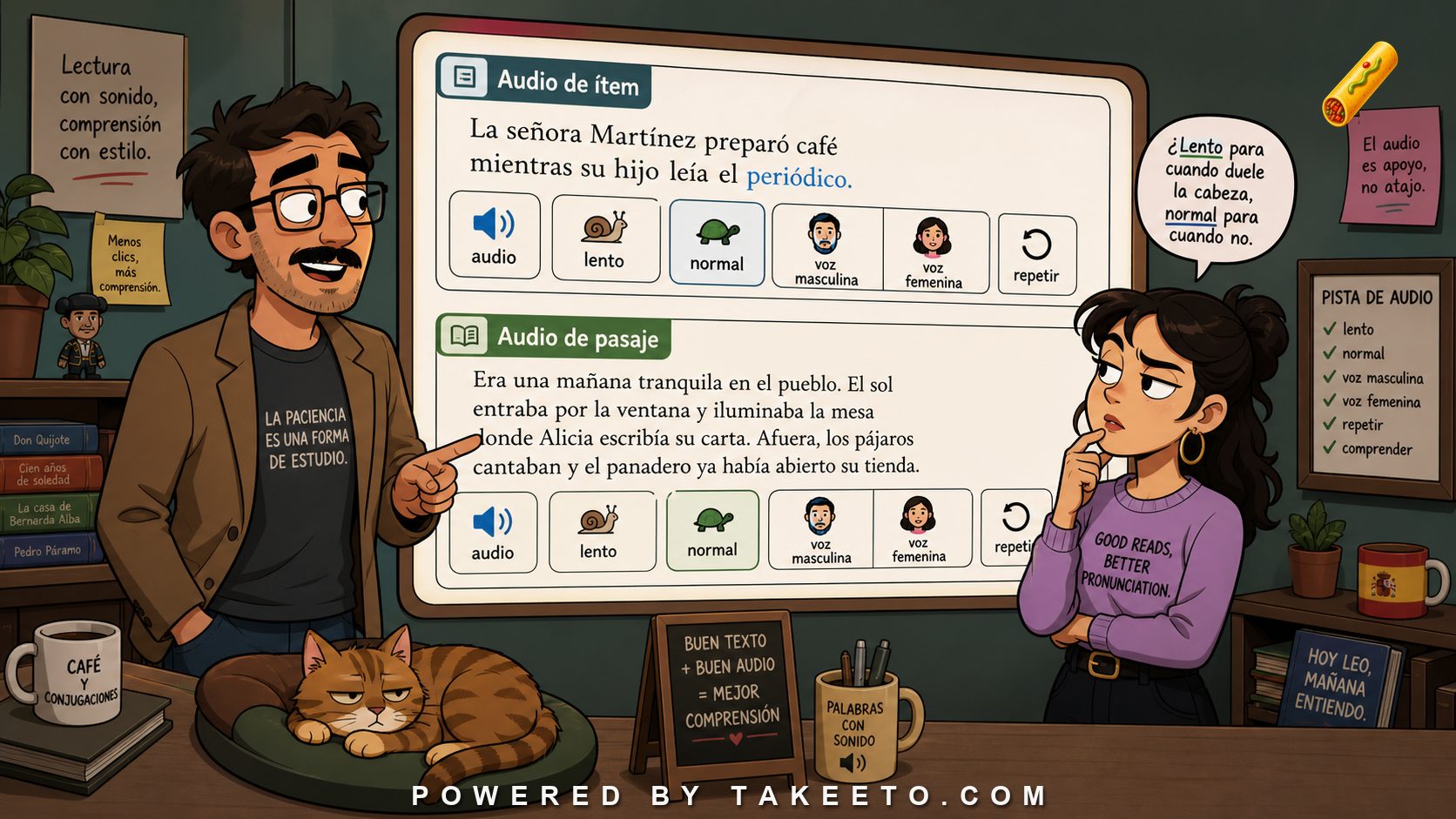
The reader can design audio affordances that reinforce reading without cluttering the page.

The reader can evaluate whether learning audio is useful, accurate, and consistent.
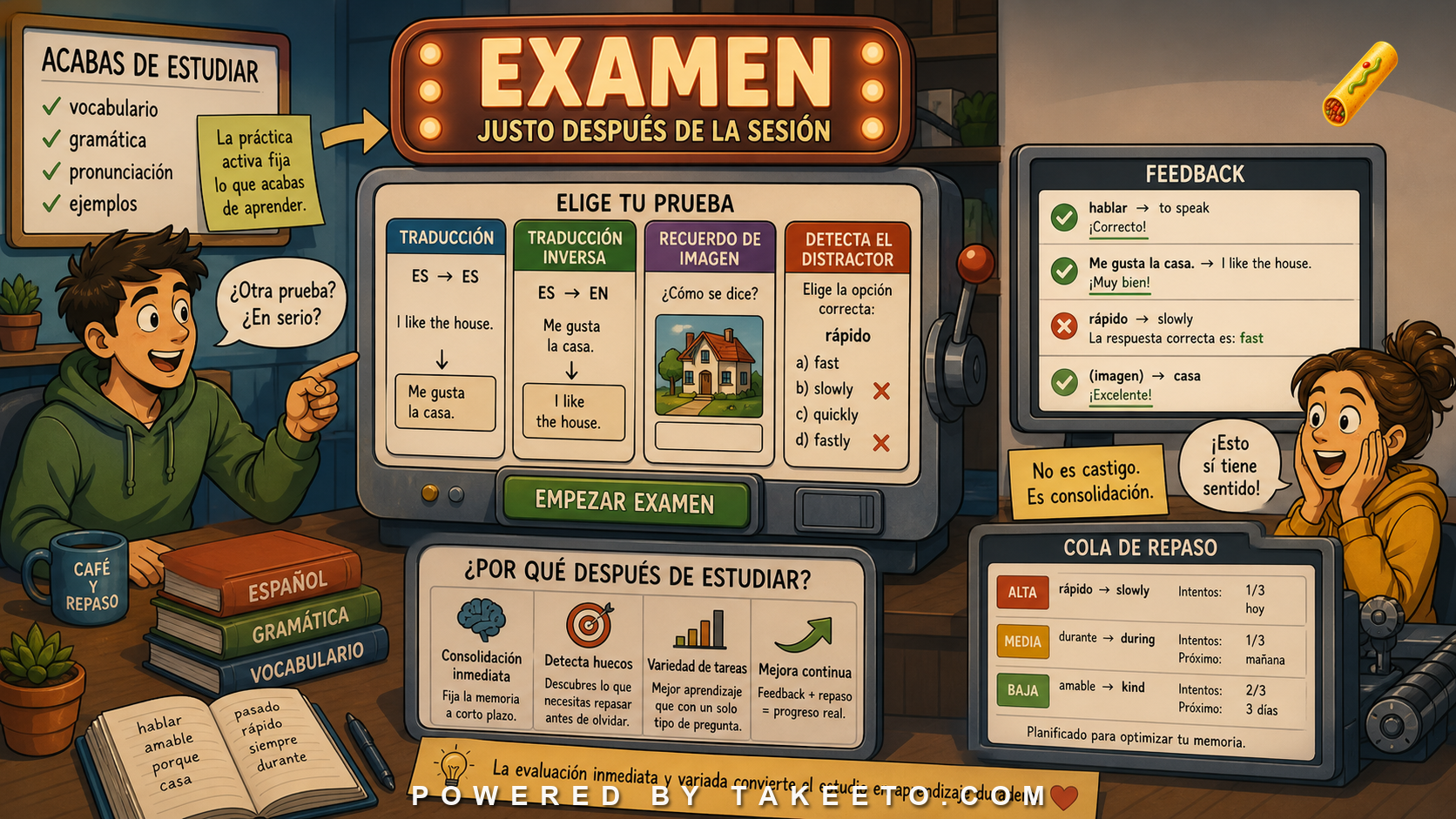
The reader understands post-session exams as consolidation rather than punishment.
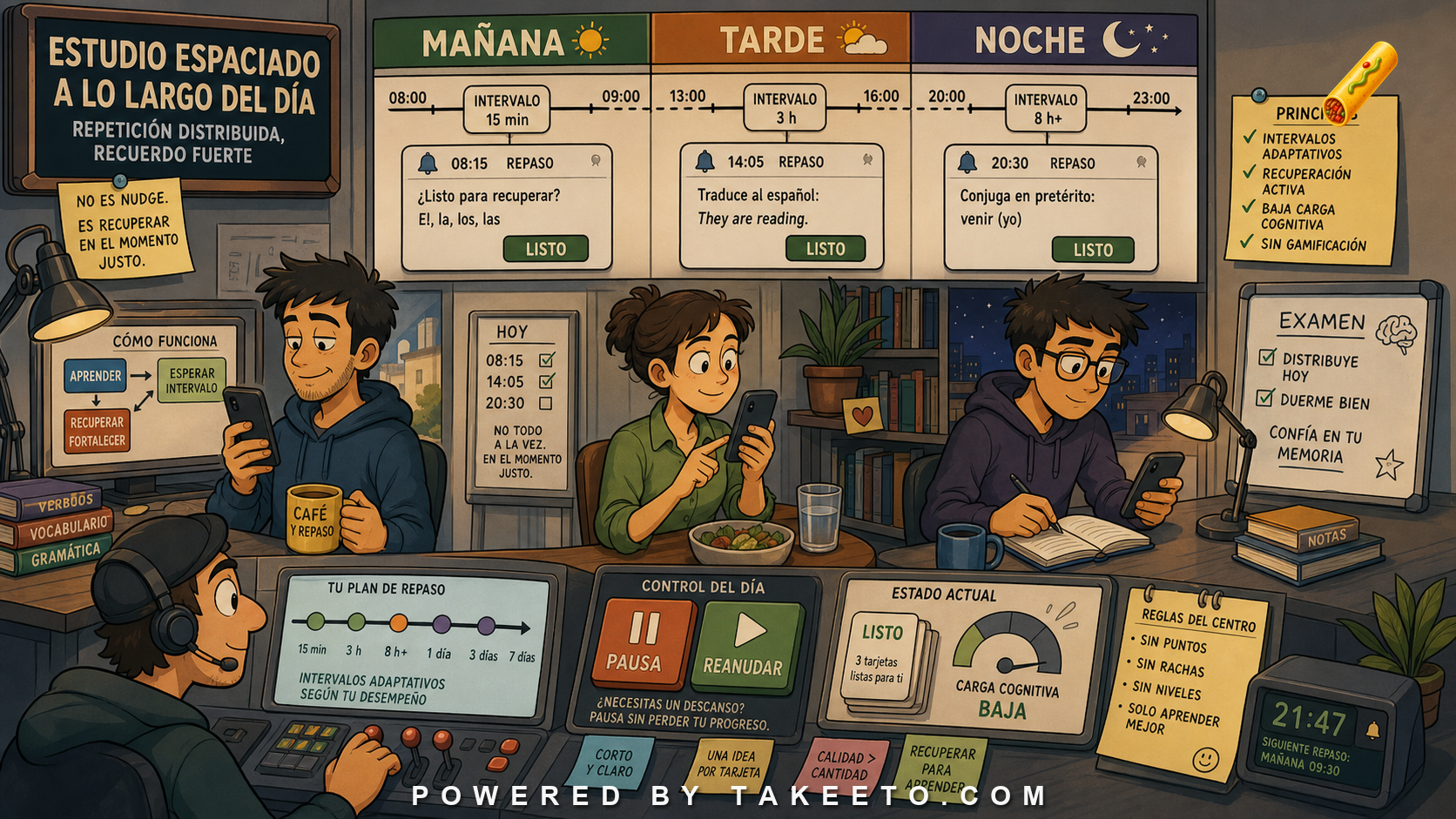
The reader understands interval-based study as distributed retrieval, not mere habit nudging.
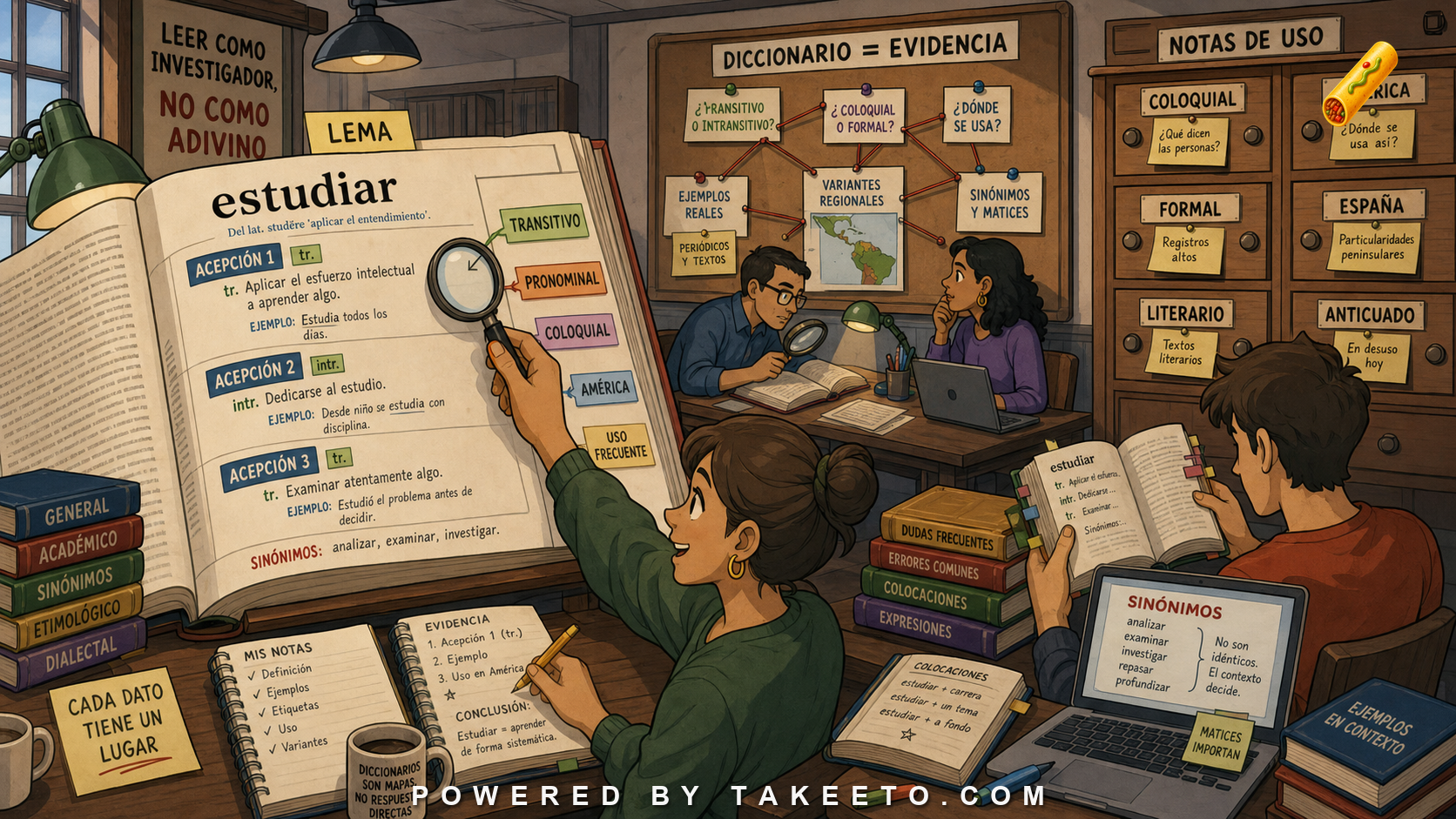
The reader can use Spanish dictionaries as structured evidence rather than answer boxes.
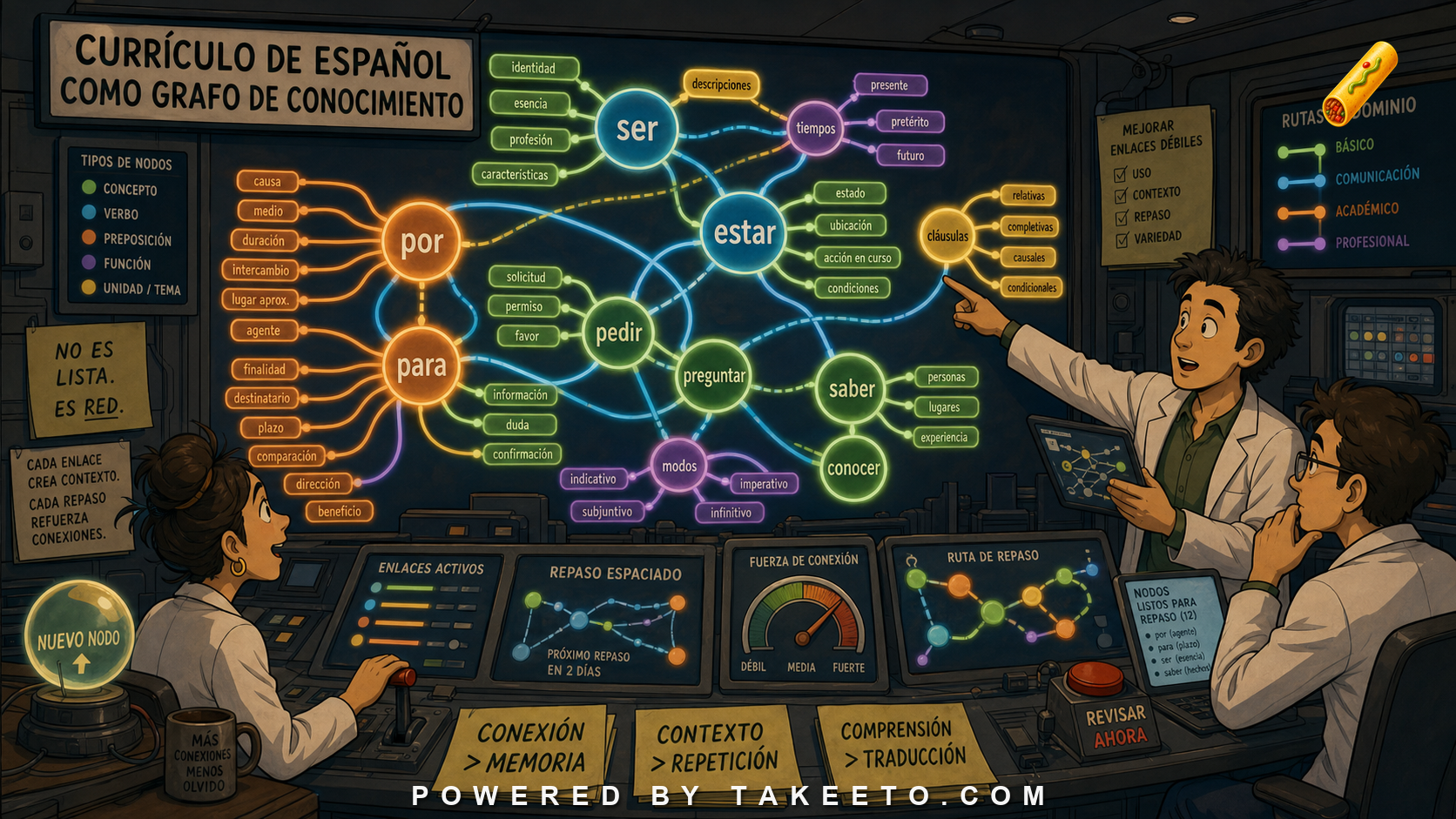
The reader can model Spanish learning items as connected nodes rather than a flat list of words, decks, and lessons.
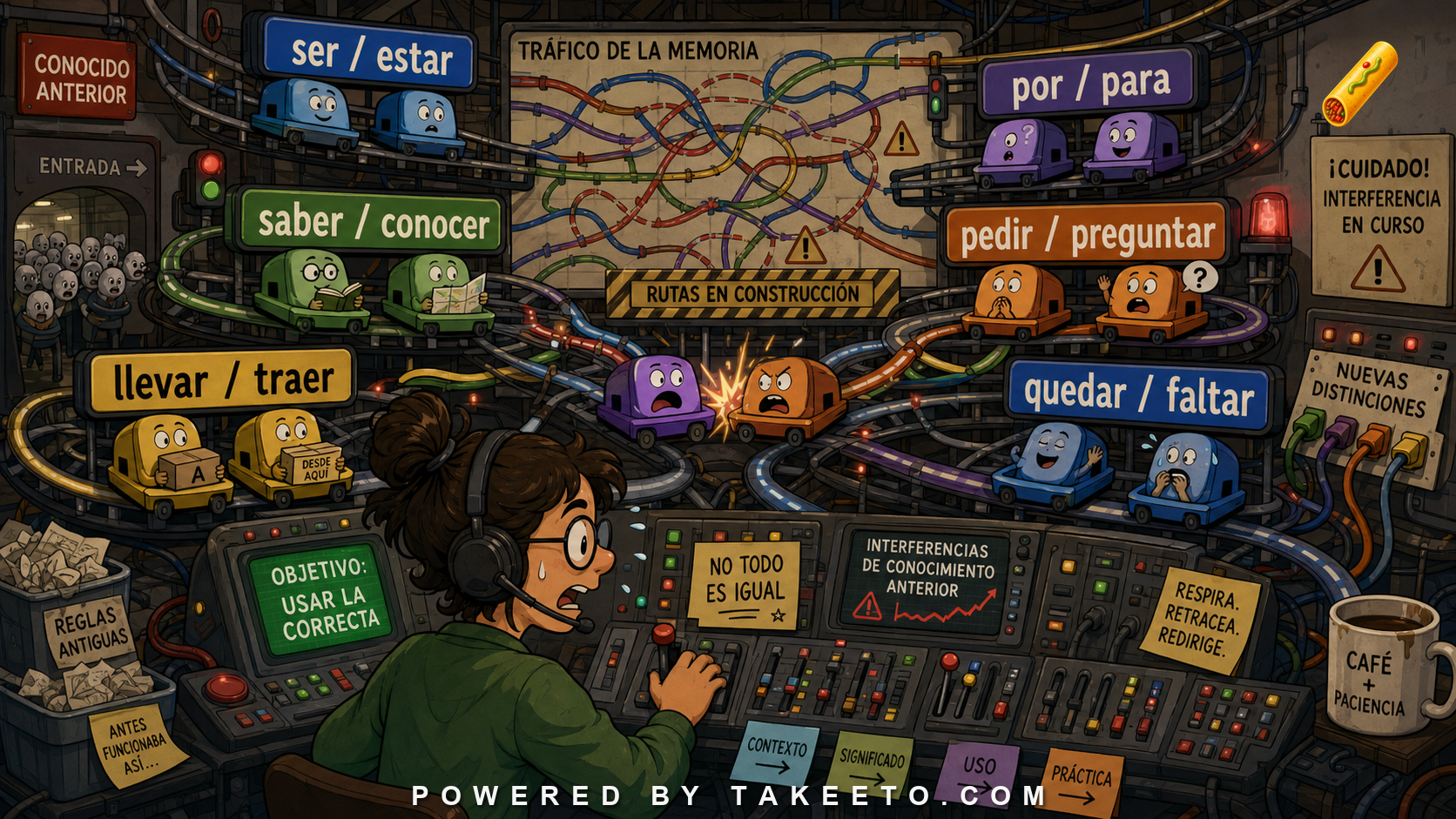
The reader can diagnose interference between similar forms and meanings.
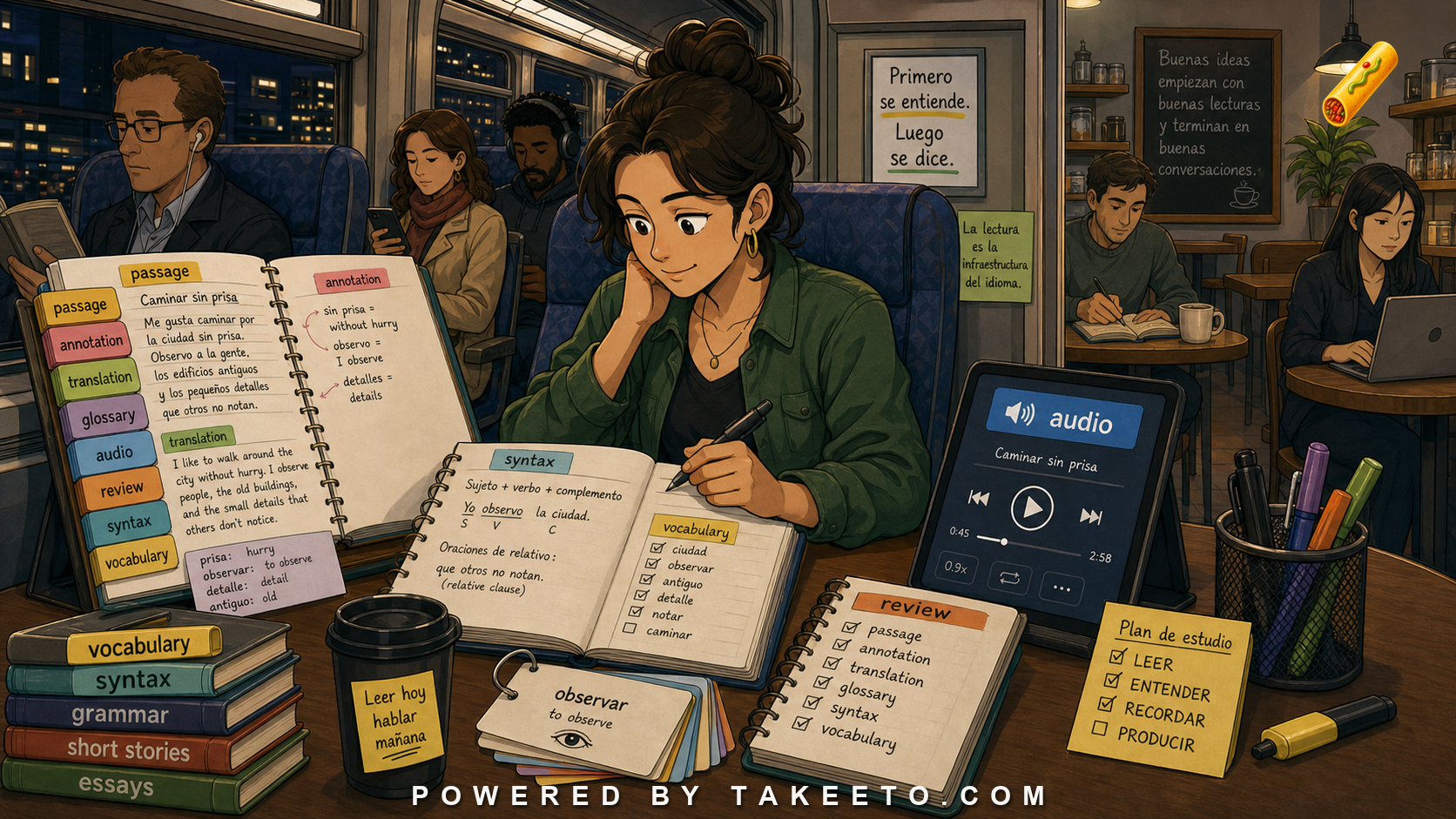
The reader understands reading as a serious foundation for grammar, vocabulary, discourse, and later production rather than passive avoidance of speaking.
The reader can read public education debates in Spanish.
The reader understands how to attach explanations without overwhelming the learner.
The reader can design highlighted reading that supports both new learning and cumulative review.
The reader can use shadowing to improve rhythm and articulation while respecting regional models.
The reader understands how PDFs can extend app learning into paper study and marketing.
The reader can use images to support memory without flattening meaning.
The reader can read school and university Spanish across countries.
The reader sees why isolated-item audio must be especially accurate, because it often becomes the learner’s first sound model for a Spanish word or phrase.
The reader can replace common shortcuts with more accurate models.
The reader can use Spanish grammar references critically, turning rules into testable usage questions instead of memorized traps.
The reader understands the Takeeto thesis: serious Spanish learning combines explanation, structure, repeated review, reading, audio, assessment, and concrete study artifacts.
The reader can write example sentences that teach more than isolated meaning.
The reader sees the intermediate plateau as a structural problem involving register, discourse, syntax, morphology, collocation, and volume, not as a personal failure.
The reader can choose a primary Spanish model while remaining broadly literate.
The reader understands why paired slow and natural audio supports different learning tasks.
The reader can interpret study time, reviews, accuracy, and mastery estimates responsibly.
The reader understands what each exam direction measures.
The reader can discuss standard Spanish as a social and pedagogical construct.
The reader understands why grammar explanations must match cognitive and educational context.